Stanbic Bank
Stanbic Bank
18.5 C
Kampala
Stanbic Bank
Stanbic Bank
Home Blog Page 1403

Andrew Kitaka appointed Acting ED for KCCA

Andrew Kitaka

Minister for Kampala, Betty Olive Namisango Kamya has appointed Eng. Andrew Kitaka Mubiru as the Acting Executive Director for Kampala capital city authority (KCCA).

The appointment proceeds the resignation of Jennifer Musisi Semakula after serving for seven years since her appointment in 2011. Musisi has always worked towards reorganization of the city, construction of roads and improving traffic flow through installation of traffic rights and cameras.

“This is to submit my resignation from the position of Executive Director, Kampala Capital City Authority with effect from December 15, 2018. Your Excellency, over the last seven and half years, we have made progress towards transforming Kampala and below are some of our performance highlights” reads in part of the resignation letter.

In the appointment letter, Kamya said to ensure continuity and smooth running of the city, “I have assigned the duties of the Executive Director to Eng. Andrew Kitaka Mubiru who is substantially the director engineering and technical services at KCCA,” read in part of that letter.

She confirmed powers to the Sam Serunkuuma to continue carrying out the duties of Deputy Executive Director until when the substantive one is appointed.

Kamya appealed to all KCCA workers to remain focused, objective and ensure performance to the expectation to the public and the nation at large and implored the general public to accord them maximum cooperation.

She lauded the former ED Jennifer Musisi for good work done and commitment in managing the city.
Kamya is reported to have submitted two names to the president for consideration of ED for KCCA and the two are Kitaka and Uganda’s Deputy Ambassador to China, Henry Mayega.

Stories Continues after ad

Cabinet clears Traffic and Road safety amendment bill-2018

Col. Bantariza

Cabinet has approved the Traffic and Road safety Amendment bill, 2018 that seeks to strengthen the management of road transport and road safety in Uganda.

The Bills entail matters of road designs, definition of highways and strengthening road safety management so as to thwart the shooting numbers of accidents on the country’s major and minor roads.

Recently the Speaker of Parliament, Rebecca Kadaga tasked the Minister of Works and Transport Monica Azuba to draft and table the bill after Lugazi Municipality MP, Isaac Mulindwa Ssozi raised the issue of concern on the increasing road carnage at various black spots between Mabira forest and Kitega in Buikwe district.

However, in a cabinet meeting held at State House Entebbe, ministers gave green light for the bill saying it will enhance and strengthen the traffic and road safety regulatory and enforcement regimes and improve the provision and management of road transport services.

Speaking at media Centre Deputy government Spokesperson rtd Col. Shaban Bantaliza said if passed into law, the act will harmonize the Traffic and Road safety law with the international, regional, national laws and protocols.

“The bill provide for continuous technology innovations including ICT innovation in the transport services sector in the country,” he said at media centre.

According to Global status report on road safety 2018, over 1.35 million have perished in road accidents implying that nearly 3 700 people die on the world’s roads every day with Africa having the highest proportion of pedestrian and cyclist mortalities with 44 per cent of deaths.

The report recommended for safer infrastructure like dedicated lanes for cyclists, pedestrians, motorcyclists and improve vehicle standards for scaling down on the number of accidents.

Stories Continues after ad

Bridge schools among the best in the Kenya National Exams

Pupils of the Bridge International Academies (BIA) in Uganda

Bridge Schools – which educates thousands of pupils in Uganda and Kenya – has achieved impressive results in the Kenya Certificate of Primary Education (KCPE) exams; for the fourth consecutive year.

Thousands of Bridge pupils sat the exam and excelled, despite coming from communities like Lamu and Garissa traditionally trapped in the poverty cycle; communities similar to Kasokoso and Namakwekwe where Bridge runs schools in Uganda. 59 per cent of Bridge pupils scored at least 250 marks – with an average of 262 marks. – and were 18 per cent more likely to do so than their peers.

Once again, multiple Bridge pupils have been placed in the country’s top 1 per cent of performers, giving them a highly competitive edge for elite national secondary schools admission. Bridge pupils scored an average of 12 points higher than other pupils nationally, a difference equivalent to almost one full additional year of schooling.

In Kenya, over a million children took the KCPE exam and for the first time there was no passing or failing. Following sweeping policy changes, all children are now eligible to attend secondary school. The KCPE score simply determines which type of secondary school. The results mean that many Bridge pupils will attend secondary education in some of Kenya’s top secondary schools as it was been the case in the recent past with bright pupils.

The performance of girls in Bridge schools is especially impressive. The individual performances of top scorers Stacy Linda Achieng from Bridge Getembe (409 marks) and Victoria Juarez from Bridge Lamu (403 marks) have paved the way for local and national celebration. For the fourth consecutive year, girls attending Bridge for five or more years were the highest performing cohort, averaging 281 marks. In four years, the number of girls attending Bridge schools achieving at least 250 marks has increased by 30 per cent. In communities where girls education often faces cultural challenges these outcomes show significant impact. It shows that strong community engagement, parental support and initiatives like the parent teacher associations can overcome barriers which have prevented girls attending and excelling in school.

The Bridge results have proved, once again, that poverty isn’t destiny. It has demonstrated that children from impoverished communities can successfully compete with the wealthiest sections of Kenyan society; all they need is opportunity. This is not only true in Kenya but, also in Uganda. Last year’s PLE results were another evidence to this. 100 per cent of all pupils that sat exams passed with flying colours and were admitted in good secondary schools. There is a great expectation for this year’s PLE results – due to be announced in January – and a lot of optimism that pupils will do as well as last year

With such evidence of learning gains and great results, is it time for government to consider a public private partnership with Bridge as one of the options to improve on the quality of learning in public schools?

Stories Continues after ad

Jose Mourinho sacked by Manchester United

mourinho

Manchester United have announced that they have parted company with their manager Jose Mourinho.

A club statement reads: “Manchester United has announced that Jose Mourinho has left the Club.

“We would like to thank him for his work during his time at Manchester United and wish him success in the future.”

“A new caretaker manager will be appointed until the end of the current season, while the club conducts a thorough recruitment process for a new, full-time manager.”

A three-time Premier League winner during two spells in charge of Chelsea, Mourinho took the helm at Man Utd in May 2016.

The 55-year-old won the UEFA Europa League and the League Cup in his first season in charge, ensuring the Red Devils qualified for the UEFA Champions League despite finishing sixth.

In 2017/18 United finished runners-up in the Premier League, 19 points behind winners Manchester City.

This term, however, domestic results have been disappointing. Although United qualified for the knockout stage of the Champions League, they lie sixth on 26 points after 17 matches, their worst start to a PL campaign.

Stories Continues after ad

Seven keys to business relationships that lead to success

Martin Zwilling

By Martin Zwilling

Investors invest in people, not ideas. Customers buy from people, not companies. Employees rally for a great leader, not a brand. As an entrepreneur, you need relationships to succeed. That means relationships with team members, investors, customers, and vendors. One of the best ways to build a good relationship with anyone is to make them feel important.

One of my favorite authors, Brian Tracy, in his classic book “No Excuses!: The Power of Self-Discipline,” outlined seven ways to make other people feel important, which I believe are extremely relevant to entrepreneurs and business:

Accept people the way they are. Because most people are judgmental and critical, to be unconditionally accepted by another person raises that person’s self-esteem, reinforces his or her self-image, and makes that person much more likely to accept you and follow your lead.

Show your appreciation for others. When you appreciate another person for anything that he or she has done or said, they will like themselves and you more as well. The simplest way to express appreciation is to simply say, “Thank you” for an idea, some good feedback, time spent together, or an order.

Be agreeable. The most welcomed people in every situation are those who are generally agreeable and positive with others. Entrepreneurs who like to be argumentative, complaining, or disagreeable, will have a hard time closing a contract, investment, or a customer contract.

Show your admiration. People invest a lot of personal emotion in their possessions, traits, and accomplishments. When you admire something belonging to another person, it makes him feel happy about himself. Everyone has positives, and it’s up to you to find them. In turn, these positives will be reflected back on you.

Pay attention to others. The most powerful way to pay attention to someone is to listen attentively first, even ask questions, before you launch into a monologue answering every question they might never ask. Believe it or not, before you even say a word, you will become a more interesting and intelligent person in their eyes.

Never criticize, condemn, or complain. In business as well as personal relationships, the most harmful force of all is destructive criticism. It lowers a person’s self-esteem, makes him feel angry and defensive, and causes him to dislike you. If your target is someone not present, it still causes a loss of trust in you, since your listener could be the next target.

Be courteous, concerned, and considerate of everyone you meet. When you treat a person with courtesy and respect, they will value and respect you more. By being concerned, you connect with their emotions. Consideration is the discipline to do and say things to people that are important to them.

Think back on your own recent experiences as a customer or contractor. You don’t always buy the cheapest product or service, if you have a good relationship with the people involved. On the other hand, I almost never buy from someone that treats me like I’m not important.

If you want to be a leader, you need to inspire followership. Great leaders develop a good relationship with good people, who are then inspired to follow. A successful leader inspires people to do more than they might have done without the relationship, and more than they may have even dreamed possible.

So, if you follow all these seven ways to make other people feel important, you will receive a seven-fold payback on your own objectives of being a leader and building a successful business. That’s a lot cheaper and lot longer lasting than the best advertising and public relations you can buy.

The writer is a veteran startup mentor, executive, blogger, author, tech professional, professor, and investor. Published on Forbes, Entrepreneur, Inc, Huffington Post.

Stories Continues after ad

22 Ugandan referees approved for 2019 FIFA badges

The Federation of International Football Associations (FIFA) has approved 22 referees from Uganda for the prestigious FIFA Badge for the year 2019.

The number has significantly increased by one slot from 21 last year, with four new faces added on the list.

Some of the new ones are; Murungi Diana and Ayaro Florence (FIFA Women Referees) while Kawagga Bazirio Keneddy is a FIFA Beach Soccer Referee.

“The office of the CEO is in receipt of the approved list of FIFA referees for 2019. FUFA would like to congratulate the referees as we continue to promote Integrity, Fitness and Performance (IFP) with a group that plays a key role in the beautiful game of football.” FUFA Communications Manager Ahmed Hussein told the fufa website.

He added, “The referees are expected to maintain high standards when selected for duty on the domestic and international scene. We are also glad that the number of FIFA referees has increased by one slot from 21 last year to 22 in 2019.”

The full list of Ugandan FIFA Referees 2019:

Referees (Men): Miiro Brian Nsubuga, Ssali Mashood, Muhabi Alex, Sabilla Ali Chelangat and Oloya William

Assistant referees (Men); Ssonko Mark, Okello Dick, Katenya Ronald, Okello Lee, Balikoowa Musa Ngobi and Masembe Issa.

Referees (Women): Nabadda Shamirah, Murungi Diana, Ayaro Florence

Assistant referees (Women); Nantabo Lydia Wanyama, Nagaddya Catherine Cynthia, Nakitto Marex Nkumbi and Mutonyi Jane.

Beach Soccer: Kintu Ivan Bayige, Mugerwa Shafic, Ssenteza Muhammad and Kawagga Bazirio Keneddy.

Stories Continues after ad

Kenyan girls sneak into Uganda for circumcision -campaigners

FGM

Kenyan girls are being pushed into Uganda and other countries like Tanzania, Somalia and Ethiopia for female genital mutilation (FGM) to avoid the on-going a crackdown on the injurious tradition at home, campaigners have said.

The government of Kenya criminalised FGM in 2011 with a minimum punishment of three years imprisonment and a U.S$2,000 fine, boosting efforts to curb the internationally condemned custom with the most comprehensive anti-FGM legislation in East Africa.

Campaigners say that while sensitisation on the effects of the practice has brought down the prevalence rates, it still persists as people discover new ways to evade prosecution in the country.

“Cross-border FGM is becoming an increasing trend in the areas we work along Kenya’s border with Uganda and Tanzania, especially in December during the school holidays,” said Agnes Kola, women’s’ rights coordinator for ActionAid Kenya.

Kola said there was no available data available on the numbers of girls in Kenya travelling to neighbouring countries for FGM as much of it was underground and that it was a new trend.

About 200 million girls and women worldwide have undergone FGM, which usually involves the partial or total removal of the external genitalia, according to the United Nations.

Seen as necessary for social acceptance and increasing a girl’s marriage prospects, FGM is prevalent across parts of Africa, Asia and the Middle East.

In Kenya, one in five women and girls aged between 15 and 49 in Kenya have undergone FGM, says the U.N.

“While some cases have been brought to court under Kenya’s anti-FGM law, implementation remains a challenge, largely due to a lack of resources and capacity of law enforcement agencies and difficulties reaching remote areas,” campaigners say.

U.N. data shows 75 cases of FGM were brought before Kenyan courts in 2016 but only 10 cases resulted in a conviction.

Campaigners said cross-border FGM is being seen among communities such as the Maasai, Pokot and Kuria who live along Kenya’s west and southwestern borders with Uganda and Tanzania.

Stories Continues after ad

Court orders Sebalu & Lule Advocates off Crane Management Services case

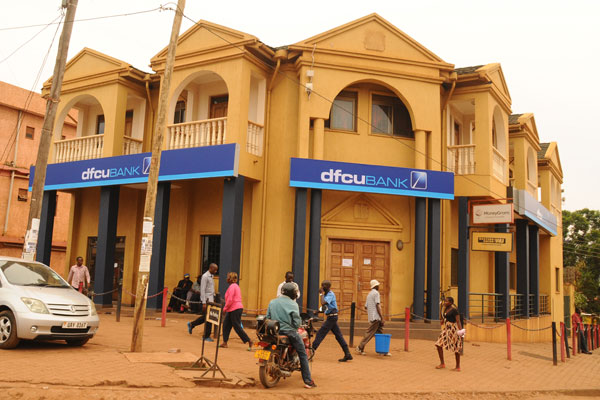
The Former Crane Bank Ntinda branch, which DFCU took over and illegally rebranded in its name, was ordered by the court to vacate and compensate Meera Investments because the property belongs to Meera.

Court has ordered Kampala law firm Sebalu & Lule Advocates to steer off the case in which Crane Management Services (CMS) Limited sued Dfcu Bank for breach of various tenancy agreements in respect to 13 properties in Kampala and Mbale.

CMS is the property managing entity of Ruparelia Group in charge of properties developed and owned by Meera Enterprises, a sister company.

Sebalu & Lule Advocates worked for Ruparelia Group and as such there is Advocate-client relationship, between the two which means it cannot represent Dfcu Bank in the case where CMS has sued the lender.

In the case, CMS is demanding US$385,728 and Shs2, 998,558,624 as rental arrears. This is before interest, general damages, interest on general damages and costs of the suit.

At the time of Dfcu taking over Crane Bank, CMS had existing contracts with Crane Bank that were automatically inherited by Dfcu as it took over Crane’s assets and liabilities.

CMS argues that after taking over Crane Bank assets and liabilities, Dfcu acknowledged being party to the existing agreement and assumed rights and obligations of the tenancy agreements.

“They took occupation of the premises and continued to operate from them, they removed all Crane Bank branding, adverts and notices, substituting them with their own, an indicator that they were the new tenant.”

Dfcu also paid arrears on part of the properties to the tune of US$81,408 (about Shs219 million), an indicator that they acknowledged occupancy of the premises.

However, on April 30, 2017, Dfcu vacated 13 properties or spaces that Crane Bank previously rented from CMS for use as bank branches, staff accommodation and ATMs in some cases without paying arrears especially covering the period between October 2016 when the central bank put Crane Bank under administration and January 2017 when BoU handed over Crane Bank to Dfcu.

On some properties where rent was prepaid, Dfcu did not bother to meet any of its obligations and continued occupying the premises till they elected to vacate the premises at the end of April 2017.

However, vacating the properties without serving the three months notice as stipulated in the contract was tantamount to breach. In so doing, DFCU was walking out of long term fixed rental contracts without renegotiating them.

“The plaintiff prays for judgement against the defendant for recovery of the sums of US$385, 728 and Shs2, 998,558,624 as rental arrears. Interest on the sum aforementioned at the prevailing commercial rate from the date the defendant was in default until payment in full, General Damages, interest on general damages and costs of the suit,” reads the plaint.

Plot 9 Market Street had rent prepaid up to September 2016 but by the time the central bank took over in October 2016 and eventually handed it over to Dfcu on January 27, there were rental arrears of four months. Dfcu continued to occupy it till April 2017–a total of 7 months–, thus amassing rent arrears of US$28, 730, which they did not pay.

In another case, Plot 1-13 Jinja Road was rented out for a fixed period of 5 years at a monthly US$9,800.34 payable one year in advance with 7 percent annual increment compounded and payable one year in advance.

By the time Crane Bank was put into receivership in October 2016, the one-year prepaid rent had just expired. For the period between October 2016- April 2017 that both the Central Bank and Dfcu occupied it, they never paid rent to CMS and when Dfcu closed that particular branch of Crane Bank and walked away, there were seven months of rent arrears and an unexpired period off the 5-year contract of 24 months amounting to total of US $242, 812.32.

In another rental agreement Crane Bank rented 38 apartments for staff on Plots 22, 24, 26 Kampala Road at a monthly Shs53,928,000. The contract was fixed for five years with a 7 percent interest. By the time Dfcu vacated the premises in April 2017 without renegotiating the contract, the unexpired period on the contract made them liable for Shs2, 873,246,953.

In the case of Mbale Branch, which Crane Bank was renting for US$8,361.77 per month, Dfcu left two months rental arrears and an unpaid three months’ notice period, altogether being liable for US $27,678.01.

“The defendants said nonpayment of rental arrears has not only caused the Plaintiff losses, deprived it of use of its money and interest, caused it more suffering and grave inconvenience, but it has also adversely affected the Plaintiffs’ businesses for which the Plaintiff claims general damages,” CMS’s suit reads in part.

CMS says that Dfcu has been notified of their grievances and demand notices sent to them but they have blatantly refused to pay up.

On top of $385,728.54 and Shs2, 998, 558,624, CMS has prayed to court to also grant it interest on the aforementioned sum at prevailing commercial rate until the arrears are cleared.

Stories Continues after ad

AMISOM, Somali army plan to battle Al-Shabaab

AMISOM and Somali army officials in meeting

The African Union Mission in Somalia (AMISOM) and the Somali government are planning joint military operations in Middle Jubba region, to flush out Al-Shabaab remnants.

The joint operations will involve troops from AMISOM, Jubbaland State Forces and the Somali National Army.

Speaking after holding talks with the Jubbaland State Deputy President, H.E Mohamud Sayid Aden, the AU Mission’s Deputy Force Commander in-charge of Operations and Plans, Major General Charles Tai Gituai, said the military operations are contained in the new Concept of Operations (CONOPs) document, which was approved by the African Union in November.

The document will guide AMISOM’s operations during the 2018-2021 period, which also marks AMISOM’s final transition and eventual exit from Somalia.

“We met the (Deputy) President of Jubbaland and held discussions on how to implement the Concept of Operations, which was approved by the African Union in Addis Ababa on 30th November this year,” explained Maj. General Gituai.

“We also discussed the issue of joint military operations; how best we can work together with Jubbaland State Forces and Somali National Army, in conducting targeted operations,” he revealed.

Middle Jubba is believed to be one of the last hideouts of Al-Shabaab militants, who have been driven out from most parts of the country. The militants have resorted to waging asymmetric war tactics to stay relevant.

Mohamud Sayid Aden, the Jubbaland Deputy President said preparations for the joint military operations were at an advance stage.

“The objective of this visit is to coordinate AMISOM troops operations in Jubbaland with Jubbaland State Forces and the Somali National Army, to be able to conduct joint military operations,” Mr. Sayid said.

He stated that Jubbaland administration and its partners were working on an elaborate plan to liberate Middle Jubba region from Al-Shabaab control.

Maj. General Gituai, who was accompanied by senior AMISOM military officials, also held discussions with sector commanders of multinational AU troops based in Kismayo. He lauded the troops for their dedication and exemplary work that has contributed to the relative peace in Jubbaland State.

“The visit is important because, we need to talk to our troops, get to know their needs and also motivate them to continue working hard in their duties,” Maj. General Gituai noted.

The Deputy Force Commander and his delegation also visited Dhobley in sector two and plan to visit Baidoa, Belet Weyne and Jowhar, to assess the welfare of troops and the level of coordination between them and the regional forces in the Federal Member States.

Attachments area

Stories Continues after ad
Gov’t earmarks Shs14.5b for ISO veterans

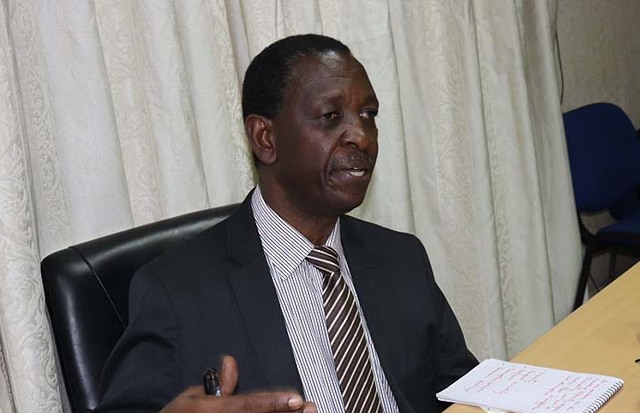
Col. Frank Kaka Bagyenda who has been appointed Uganda's Ambassador to Angola.

The Ministry of Finance, Planning and Economic Development (MFPED) has released Shs14.5 billion to meet part of the terminal benefits of the retired veterans of the Internal Security Organisation (ISO), according to a press release signed by ISO Director General Col (rtd) Frank Kaka Bagyenda.

The money arises out of the consent agreement in civil suit No.164/2004, Henry Waibale and others Vs Attorney General. The money will go to 874 veterans retired between 1993 and 1995.

The office of the President and the minister of security appointed a committee to verify and prepare a list for payments. The verification exercise at Nakasero Primary School runs from December 17-20, 2018.

According to a press release, among others, the beneficiaries are required to come with the National Identification Cards, discharge certificate, copy of bank statements.

For the beneficiaries who passed away, the estate administrators are required also to include death certificate, letters of administration, estate bank account and local council letters introducing them as the administrator of the estate.

Stories Continues after ad