Stanbic Bank
Stanbic Bank
17.3 C
Kampala
Stanbic Bank
Stanbic Bank
Home Blog Page 1404

Murder of Rwanda ex-spy chief, Karegeya: Family wants quick prosecution of suspects

Late Col. Karegeya.

Holding an inquest into the death of Rwanda’s former head of intelligence, Colonel Patrick Karegeya, is an abuse of process because the suspects have already been identified, says the head of AfriForum’s private prosecution unit, advocate Gerrie Nel.

Nel was in court on behalf of Karegeya’s family and the Rwanda Platform for Dialogue on Wednesday to determine why Karegeya’s death was not investigated with the aim of arresting and prosecuting those responsible.

ALSO READ: SA to probe Rwanda ex-spy chief mysterious murder

In response, the State argued that the court had no jurisdiction to overrule the Gauteng Director of Public Prosecutions’ (DPP) decision to not prosecute.

“I’m saying it is an abuse, because there is nothing in the case docket that the National Prosecuting Authority (NPA) put forward to explain why they decided not to prosecute; it is an abuse of process.

“Why would the NPA want an inquest? We should prosecute now,” Nel said in the Randburg Magistrate’s Court.

He also claimed that the assassination was not fully investigated and that it was used to cover up four years of NPA and SA Police Service (SAPS) inaction.

“The last witness statement was commissioned in April 2015. There is not a single statement that the SAPS took any steps to trace the suspect. There were no attempts to investigate or extradite well-known suspects but now we want to have an inquest,” he added.

In 2018, the DPP decided that an inquest should be established. Prosecutor Yusuf Baba argued that, until higher powers in the NPA decided to set aside that decision, the court couldn’t instruct the State to pursue any kind of prosecution.

Karegeya sought asylum in South Africa in 2008 when he had a fallout with the regime and set up an opposition movement, the Rwandan National Congress.

He was found dead in a hotel room at Michelangelo Towers in Sandton in 2013.

Soon after the incident, the BBC reported that Karegeya went to his suite to meet an informant. It’s alleged that the killers used this person as bait. The killers rented a room across the corridor.

ALSO READ: 3 held for Rwandan spy chief’s murder – report

Five years later, the NPA submitted the matter to the magistrate for an inquest to be held into Karegeya’s death after AfriForum approached the court about the matter.

His widow, Leah Karegeya, who was present at Wednesday’s court proceedings, believes that political interference caused the delay in justice.

“There is political interference in this case, absolutely,” she told the media outside court.

“We thought the delay was due to the fact that this is a high-profile case, but we have just heard from our lawyers that the police had evidence from February 2014.”

The matter has been postponed to Monday when the magistrate is expected to give judgment on AfriForum’s application to set aside the inquest and order that the suspects be prosecuted.


Stories Continues after ad

10 Scams to avoid while seeking new venture funding

Martin Zwilling

By Martin Zwilling

Some aspiring entrepreneurs are so desperate for funding, or naïve, that they ignore the obvious signs of scams and rip-offs on the Internet, praying for a windfall. One would think that with all the sad stories and tools published over the past twenty years, this problem would be behind us. But people are still begging for more technology or laws, often to protect them from themselves.

As examples, I present my list of ten of the most common ways entrepreneurs can be victimized by ignorance or greed, based on questions and stories I get from entrepreneurs and associates. Most of these are easy to avoid if you do your homework up front, but can cost you dearly if you get sucked in. Use the common sense suggestions to avoid the pain:

Decoy investor scam. Here someone who is not a registered financial broker contacts you on the Internet, tells you about all the people they know with money, then turns around to ask for a “retainer” or fee to cover their time and efforts. No real investor or venture capital firm asks for money from the company they are intending to invest in.

Off-shore unsolicited investor offers. Unsolicited foreign investors that contact you on the Internet need extra scrutiny. If you feel confused by conflicting time zones, differing currencies, and up-front costs, it’s time to run the other way. The SEC and local law enforcement agencies can’t help you much with foreign scams.

Deposit required to hold your terms. In this scam, you are offered a very attractive term sheet due to close in 90 days or so, with a deposit required to hold your position while due diligence is being conducted. Don’t count on ever passing due diligence, or even getting that deposit back. Professional investors don’t work this way.

Loan offer in lieu of investment. Watch out for unsolicited loan offers via the phone or Internet that seem to offer quick approval, but require mandatory “premium fees” or “processing fees” up front, payable by money order or electronic transfer. Even if you pay the fees, you probably won’t see the money and won’t find the lender.

Phantom fund investors. These solicitations, usually via the Internet, claim to represent a large fund that they can’t disclose, until you have been “qualified” for the investment. They promise to provide all the info at the time of close, after you sign a non-disclosure agreement. The close will never happen, but you will be stuck with large services fees.

Pump and dump stock schemes. Don’t fall for claims from “insiders” who offer stock that you can turn around quickly. It’s usually stock that has been artificially pumped up by their big buy, who take their gain when you buy, and leave you with a big loss on their dump. A variation is “short and distort”, where their profit comes from short selling.

Work at home to fund your startup. Beware of any offer that asks you to spend money before you can make money, to buy a starter kit, education, or tools. For more details, see this recent article from the The Penny Hoarder outlining the most common pitches to avoid.

Cash transfer assistance funding. I continue to be amazed that some government agency reportedly still gets 100 calls per day from victims of the Nigerian unclaimed cash scam alone. People who fall for this one must be really greedy. The best answer is the age-old wisdom that if it sounds too good to be true, it’s not true. Delete the message.

Chain emails leading to a windfall. This is the classic pyramid scheme where you get an email with a list of names, asked to send a few dollars to the person at the top of the list, add your own name, and forward the updated list to a number of other people, resulting in a huge return to you. You risk being charged with fraud if you participate.

Won the lottery. How can you win a lottery you never entered, usually in another country? A simple inquiry or response to one of these emails will get you permanently tagged as a prime scam candidate, meaning a flood of new deals. Delete these quickly.

Beyond the cases mentioned here, if the message or approach sounds suspicious, I recommend you visit Snopes.com, a website detailing thousands of known scams and hoaxes. With this website, and about 75 others like it, I find it hard to believe that user naïveté is the problem.

If people could get past their greed, hubris, sense of entitlement, and use common sense on the Internet, these problems would fade away due to lack of return. I’d much rather see your entrepreneur resources and energy focused on real opportunities to improve the world we live in.

Veteran startup mentor, executive, blogger, author, tech professional, professor, and investor. Published on Forbes, Entrepreneur, Inc, Huffington Post, etc.

Stories Continues after ad

Ugandan referee selected for 2019 Afcon U-20

Africa_U-20_Cup_of_Nations

Africa football governing body, Confederation of African football (CAF), has released a list of 24 referees and assistant referees who will officiate at the upcoming 2019 Under-20 Africa Cup of Nations.

Twelve (12) Referees and 12 Assistant Referees were selected for the tournament scheduled for 2nd to 17th February 2019 in the Nigerien cities of Maradi and Niamey.

Twenty-eight year old Dick Okello is the only Ugandan that has been selected to work at the finals as an assistant referee.

Cape Verdean Luis Fernandes Barbosa and Firmino Bassafim of Guinea Bissau, both 38 are the eldest amongst the Assistant Referees. Twenty-six (26) year old Louis Ralph Fabien Cauvelet from Mauritius is the youngest.

Hosts Niger, South Africa, Nigeria and Burundi make up Group A whilst Senegal, Mali, Burkina Faso and Ghana complete Group B.

All four semifinalists will fly Africa’s flag at the FIFA U20 World Cup in Poland, billed to hold from May 23 to June 15, 2019.

Full List:

Referees – Pacifique Ndabihawenimana (Burundi), Antoine Max Depadoux Effa (Cameroon), Souleiman Ahmed Djama (Djibouti), Amin Mohamed Amin Mohamed Omar (Egypt), Peter Waweru (Kenya), Boubou Traore (Mali), Heeralall Ahmad Imtehaz (Mauritius), Moussa Ali Mohamed (Niger), Jean Claude Ishimwe (Rwanda), Abdoul Aziz Moctar Saley (Niger), Hamza Hagi Abdi (Somalia), Haythem Guirat (Tunisia)

Assistant Referees – Luis Fernandes Barbosa (Cape Verde), Jospin Luckner Luckner Malonga (CAR), Gamal Saad Mohamed Samir (Egypt), Firmino Bassafim (Guinea Bissau), Lionel Hasinjarasoa (Madagascar), Louis Ralph Fabien Cauvelet (Mauritius), Akerkad Mustapha (Morocco), Mathew Kanyanga (Namibia), Hassan Mohamed Hagi (Somalia), Ntale Kokou Ognankotan (Togo), Dick Okello (Uganda), Samuel Temesgin Atango (Ethiopia)

Stories Continues after ad

UTB to participate at New York Times travel show

Outgoing CEO, Mr. Stephen Asiimwe will lead the team.

The Uganda Tourism Board (UTB) in its continued efforts to promote Uganda as Africa’s premier tourist destination will within the next few days participate in the New York Times Travel Show scheduled to take place from January 25-27, 2019 in New York City, USA.

The Board will alongside Uganda’s Market Destination Representative in North America (PHG Group) and 8 Uganda tour operators represent the country at the New York Times Travel Show which is considered the biggest travel show in North America; bringing together over 550 exhibitors from over 170 destinations.

According to the UTB Chief Executive Officer, Stephen Asiimwe, the show is part of major outlined activities to showcase Uganda to travel enthusiasts in the American market and ensure that the number of Americans coming to Uganda remains on the rise.

Leading the delegation, Asiimwe will engage among others travel agents and experts, airlines, embassies, media in a learning experience of Uganda’s offerings. “The number of tourists from the United States to Uganda has been on the rise with a 6.6 per cent increment registered from 2016-17. This is expected to increase in the coming years with funds concealed in aggressive marketing initiatives,” Asiimwe explains.

The United States remains Uganda’s biggest source market for tourists. According to statistics, there has been a spike in the number of tourists visiting Uganda. The year 2017 saw a record 1.4 million tourist arrivals to Uganda. This was a 6 per cent increase from the previous year of 2016. The number has grown steadily at an average increase of 49, 000 visitors each year from 2013-2017.

The tourism industry currently contributes 23 per cent export income and 10 per cent to gross domestic product, making it Uganda’s largest foreign exchange earner. The industry rakes in more than US$1.4b (About Shs5.1trillion) annually and is projected to earn about Shs10 trillion by 2020.

Stories Continues after ad

Local NGO urges Museveni to stop renegotiation of UMEME’s concession

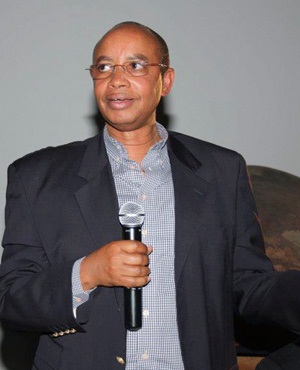
Dickens Kamugisha

Re-negotiations to enable power utility UMEME to operate in the country beyond 2025, when its current concession expires, are expected to take place this month but now the Africa Institute for Energy Governance (AFIEGO),a civil society organisation (CSO) has urged President Yoweri Museveni to stop the negotiations, citing corruption.

“The above is unacceptable especially when it is considered that in March 2018, the president wrote to the Minister of Energy and the IGG complaining about the cheating of customers through inflated power losses, mysterious investments and an unfair concession that guarantees UMEME a high return on investment,” says AFIEGO.

According to Dickens Kamugisha, the CEO of AFIEGO, the above result in high power tariffs which have a number of impacts such as denying businesses an opportunity to expand, denying youth job opportunities, failing hospitals to access power, increasing the burden on women who have to search for firewood to cook their families’ meals and others.

“To address corruption, you, in a March 12, 2018 letter to the Minister of Energy and Mineral Development (MEMD), directed the IGG to investigate the inflation of power losses by UMEME and the connivance of some Ministry of Energy officials who guaranteed UMEME a Return on Investment (ROI) of 20% . You also questioned the mysterious or unverified investments of US$500 million by UMEME that had failed to bring down electricity tariffs. 7. In your letter, you noted that the above and other factors were contributing towards the high power tariff,” says Kamugisha says in a letter dated January 17, 2019.

Nearly a year after the president ordered the IGG to carry out investigations on UMEME, the IGG is yet to issue a report of her investigations, he says.

Through the attached open letter therefore, AFIEGO is calling on the president to stop the renegotiation of UMEME’s concession until the IGG has issued her report and an independent audit into UMEME to determine the company’s reported added value to the country has been carried out.

Currently, government is implementing a number of key energy policies and projects including the ‘Free’ Electricity Connections Policy (2018-2027) under which three million new connections are planned by 2027. The above, for which US$212 million was borrowed, is part of Uganda’s Rural Electrification programme. Government is also building Karuma, Isimba and other dams to add 1,000MW to the grid. In addition, investments in the transmission and distribution segments are being made. Other energy projects such as the oil refinery, the crude oil pipeline to Tanga-Tanzania, solar projects, new mineral policies to among other things improve the artisanal mining sub-sector and others are also being implemented.

Stories Continues after ad

Gov’t should look forward to debt sustainability and development outcomes

Mr. Tumwebaze

By Patrick Mwebaze

The Government of Uganda’s objective to borrow external resources is valid to finance infrastructure projects as stipulated in the Vision 2040, the 2nd National Development Plan (NDPII) for 2015/16 to 2020/21 period and the public sector investment plan.

CSOs recognize government of Uganda’s efforts towards prudent management of public resources including debt resources as guided by key policy, legal and institutional regimes such as; The Public Financial Management Reform Strategy 2018, Public Finance Management Act 2015 (as amended), The Public Private Partnership Act (2015), Public Debt Management Framework 2013, Annual Medium Term Debt Management Debt and Cash Management Department at ministry of Finance.

CSOs commend Government towards capturing sector debt figures and consolidating a national sovereign debt position, mainly through Ministry of Finance (MoFPED) and Bank of Uganda. Whereas Government and some other institutions suggest a debt portfolio of US $10.5 million (approximately Shs41.3 trillion), this is on account of disbursed and outstanding debt (DOD). Beyond DOD, this narrative often does not account for: undisbursed debt, recoverable debt for instance, due to private sector capital investment in oil and gas exploration; domestic arrears had increased from Shs1.4 trillion in Financial Year (FY) 2014/15 to Shs3 trillion by end of FY 2016/17, contingent liabilities- having increased from Shs6.5 trillion in FY 2015/16 to Shs 7.5 trillion in FY 2016/17

Land Compensation

Over Shs4.9 trillion by beginning of FY 2018/19 was already accumulated in Land compensation. Its little wonder, therefore, that the following institutions of Government and associates give contradicting figures of the debt situation; Ministry of Finance with total debt stock at Shs 41.4 trillion (US $10.7 billion) in June 2018; Bank of Uganda at Shs42.4 trillion in October 2018 and others.

UDN contends that the suppress of the debt figures too, by institutions such as the International Monetary Fund (IMF) World Bank Group (WBG) is drawn from their motivation to lend to developing economies including Uganda and their impartiality risks being impaired.

Meanwhile, the UDN computation puts the said various categories of Uganda’s debt situation at excess of US $15.2 billion (approximate Shs52 trillion) by beginning of FY 2018/19 July 2018) against Uganda’s GDP value of US $26 billion, which represented a paltry 0.04 per cent of the world economy in the same period.

However, the capacity to utilize, absorb and manage; and sustain borrowed resources in relation to repayment, Balance of Payments (BOP) and domestic revenue mobilization are imbalanced. The BOP position has been characterized with fluctuating, but recorded negative returns for the past 4 years, average economic growth of 4.5 per cent for the last five years and revenue to GDP ratio stagnation at approximately 13 percent amidst increasing borrowing. The trend of rising debt accumulation has continued with limited effective solutions to address causes of indebtedness.

Both Government and associate institutions should profile the comprehensive sovereign debt portfolio for Uganda, upon which appropriate policy and programming measures are accordingly formulated, updated and implemented. Challenges around changing debt architecture and current funding modalities notwithstanding, Uganda should be strategic and not in a rush to the so-called 50 per cent debt: GDP threshold, to moderate such risks as: Front-loading future funds (such as anticipated oil revenues); Default on debt payment; and endangering future Uganda’s generations and development.

The writer is the Executive Director of Uganda Debt Network (UDN)

Stories Continues after ad

AGCO launches innovative Farm in a Box initiative for Africa

AGCO, a worldwide manufacturer and distributor of agricultural equipment, unveiled its pioneering Farm in a Box (FIAB) initiative for Africa at Germany’s International Green Week taking place from January 18-27, 2019.

“With this brand-new new concept, we aim to take farm mechanization plus all its necessary support facilities deep into previously underserviced rural communities in Africa,” said Martin Richenhagen, President, Chairman and CEO of AGCO at the launch event.

FIAB offers a package of essential farm equipment including a tractor and implements together with the crucial support mechanisms such as parts, workshop tools, training and expertise to ensure sustainable and productive machinery operations. Some of the equipment is packed inside a box – a modified shipping container – which is then used as an office or workshop.

In sub-Saharan Africa, humans provide 65% of the power required for land preparation. Capacity-building and agricultural mechanization are a priority to facilitate food security and unlock the potential of small-scale farming in Africa. AGCO’s FIAB is an innovative solution for small-scale farmers to gain access to the machinery they need to transform their operations and achieve profitable businesses.

Designed to provide a holistic solution, FIAB is localized farm support center which delivers mechanization services to rural communities. Research shows that demand for machinery is high in these remote areas but barriers such as affordability, availability, maintenance/repair services and inadequate farmer skills and training are hindering the uptake of mechanization.

FIAB offers a 45-80hp tractor and implements – such as a ripper, disc harrow, trailer and planter – to carry out land preparation, planting and crop transport, plus parts and workshop tools for their service and maintenance. The objective is to offer ‘for-hire’ mechanization services to small-holder farmers, enabling them to reap the benefits of agricultural equipment without having to invest in capital assets.

The package includes training programs and support from a dedicated AGCO Operations Support Center which provides technical advice and guidance. Importantly, FIAB takes maximum advantage of the latest telemetry and mobile technology to enable remote monitoring of the equipment and the use of mobile apps. This high level of monitoring, support and guidance from AGCO really sets the concept apart.

FIAB is very much an entrepreneurial platform and operates on a franchise model, with franchisees appointed and trained by AGCO and the in-country Distribution partners. Typical franchise holders would be those with relatively well-established businesses successfully serving the agricultural community within their sphere. This franchise model helps build the capacity of small-scale enterprises and provides business opportunities for entrepreneurs, contractors and the many specialty agricultural supply stores – known as agro-dealers – present throughout Africa’s rural areas.

“The thinking behind FIAB is definitely outside of the box but the benefits literally come inside a box!” remarked Mr Richenhagen at the launch event. “It’s a win-win situation for all participants.”

Acting as a localized hub of know-how and practical help, the franchise partner offers hire of equipment and drivers to local farmers and small-holders, enabling them to boost their crop production processes and output. Furthermore, franchisees expand their businesses and provide potential new employment opportunities in the locality. Local communities benefit from improved economies as a result of the enrichment of the agricultural value chain. For AGCO, it leads to increases in sales of products and services and further develops the company’s footprint in Africa.

“With AGCO’s wide-ranging experience serving African farmers, the company is uniquely positioned to develop innovative solutions to meet the challenge of sustainable and productive farming on the continent,” said Mr Richenhagen .“There is an urgent need to empower the millions of smallholder farmers in Africa to ensure food security. Tailored, inclusive and integrated approaches to agricultural mechanization can increase the welfare of farm households and create opportunities for economic growth in rural areas.Our Farm in a Box is yet another initiative fulfilling AGCO’s commitment to ‘Run Africa from Africa,” he said.

Stories Continues after ad

African petroleum producers call for unity, cooperation and reform at Cape VII congress & exhibition

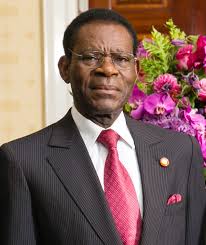
Equatorial Guinea President Teodoro Obiang Nguema Mbasogo

The African Petroleum Producers Organisation (APPO) and its member countries have called for unity, cooperation and reform amongst oil producers ahead of the Cape VII Congress and Exhibition, which will take place April 1-5, 2019 in Malabo, Equatorial Guinea.

APPO have invited all interested companies and organizations to participate in what it regards as an important gathering of oil and gas stakeholders including government and private sector leaders in Africa.

The theme of APPO Cape VII is ‘Pathways to Shared Prosperity in the African Petroleum Industry’ and is being held under the auspices of President Teodoro Obiang Nguema Mbasogo of Equatorial Guinea.

“We invite the global oil and gas industry to participate in this historic conference. Cape VII is like the Olympics of African oil and gas, it’s a time when the world comes together,” said Mahaman Laouan Gaya, the Secretary General of APPO. He says Africa needs unity and synergy in all sectors of its economies to boost growth. When we unite, it is easier to collaborate.

Taking place against a backdrop of greater African involvement in energy institutions, rising investment in upstream projects, a favourable oil price environment and the recent restructuring of APPO, the conference organised by Africa Oil & Power highlights regional cooperation and promotes alliances in African energy.

The event also shines a spotlight on key regional energy projects and initiatives such as Equatorial Guinea’s Gas Megahub, which will link domestic and cross-border gas projects; Equatorial Guinea’s LNG2Africa, which is promoting intra-African gas trade; Sudan and South Sudan’s cooperation on restarting oil production; licensing rounds in Nigeria, Gabon and the Republic of Congo; and key economic and investment reforms in Angola.

APPO is currently undergoing important reforms focused on creating a united African front on the global energy stage. The organization seeks to increase regional cooperation on upstream projects, infrastructure, refineries and other major projects. It also aims to attract more members as African countries make significant oil and gas discoveries, while growing their reserves.

“Regulatory and policy reforms are needed on a case-by-case basis. Countries like Ghana, Senegal and Mozambique have some of the most attractive and competitive market conditions in the world. Additionally, Africa has proven itself as a host of mega discoveries with a wealth of untapped and undiscovered potential,” said H.E. Gaya.

APPO Cape VII takes place during Equatorial Guinea’s Year of Energy, a series of events promoting Africa’s energy potential and positioning Malabo as a continental energy center. “Equatorial Guinea has a distinguished track record as a host country for events of continental importance, and this APPO meeting will be momentous,” said H.E. Gabriel Mbaga Obiang Lima, Minister of Mines and Hydrocarbons of Equatorial Guinea, host of the conference.

Speakers at APPO Cape VII include the ministers of petroleum of Algeria, Angola, Benin, Chad, Republic of the Congo, Democratic Republic of the Congo, Equatorial Guinea, Gabon, Ghana, Ivory Coast, Mauritania, Niger, Nigeria, South Africa, South Sudan and Sudan. The private sector is represented by international oil companies including ExxonMobil, Shell, Marathon Oil, Noble Energy, Kosmos Energy, Trident Energy, South Africa’s CEF Group, and GE Baker Hughes.

Stories Continues after ad

Caf Confederations cup: Confirmed teams for group stages

Caf confederations cup trophy

The total list of teams that have made it to the group stages of the CAF Confederation Cup 2019 is complete with Morocco leading with three teams in the group stage while Tunisia and Zambia have two teams with the rest nine nations with single teams.

KCCA FC were 2-0 winners against Congo’s AS Otoho in a game held at Startimes Stadium, Lugogo but fell short on qualification due to a 3-2 aggregate.

Vipers SC lost 3-0 on Sunday to Tunisia’s Sfaxien to bow out of the continental competition.

Kenya’s Gor Mahia and Al Hilal from Sudan are the only two teams from the CECAFA Region that qualified for the group stages of the 2018/19 Caf Confederation Cup.

There are sixteen teams and will be drawn into four groups. In the group stage, each group is played on a home-and-away round-robin basis. The winners and runners-up of each group advance to the quarter-finals of the knockout stage.

The draws of the Group Stages are scheduled for Monday 21st January 2019 and the first games in the will be played on the 3rd of February 2019.

The final will be played on 19th May and 26th May on the home and away basis.

The winners of the 2018/19 CAF Confederation Cup will earn the right to play against the winners of the 2018/19 CAF Champions League in the 2019 CAF Super Cup.

Qualified teams:

1. Étoile du Sahel -Tunisia

2. CS Sfaxien – Tunisia

3. ZESCO United – Zambia

4. Nkana – Zambia

5. RS Berkane – Morocco

6. Hassania Agadir – Morocco

7. Raja Casablanca – Morocco

8. Gor Mahia – Kenya

9. Zamalek – Egypt

10. NA Hussein Dey – Algeria

11. Petro de Luanda – Angola

12. Salitas – Burkina Faso

13. AS Otôho – Republic of the Congo

14. Asante Kotoko – Ghana

15. Al-Hilal – Sudan

16. Enugu Rangers – Nigeria

Stories Continues after ad

DRC Supreme court declares Tshisekedi legally elected president

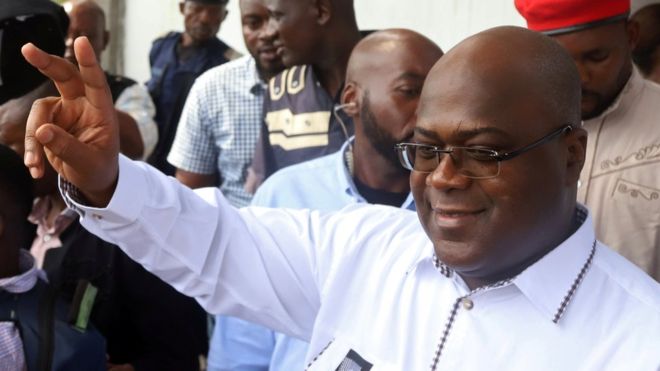
Felix Tshisekedi

Supreme court in the Democratic Republic of Congo has Sunday backed the contested presidential election victory of Felix Tshisekedi, as his main rival rejected the ruling and called for protests and declared himself leader.

As Tshisekedi’s supporters celebrated the ruling in the streets of Democratic Republic of Congo’s capital, runner-up Martin Fayulu said the decision had opened the way to a “constitutional coup d’etat”, raising fears of more violence.

Rwandan President Paul Kagame – the chair of the African Union which has said it has “serious concerns” about the vote and called for the results to be delayed – was due to arrive in Kinshasa with an AU delegation to discuss the crisis on Monday.

Last month’s delayed election was meant to mark the first democratic transfer of power in the vast central African country, where conflicts have regularly destabilized the region.

But monitors pointed to major flaws in the poll. Unrest over the vote has already killed 34 people, wounded 59 and led to 241 “arbitrary arrests” in the past week, according to the U.N. human rights office.

In the early hours of Sunday, the Constitutional Court ruled that a legal challenge to the result filed by Fayulu was inadmissible. “Felix Tshisekedi will become the fifth president of the republic,” government spokesman Lambert Mende said as he welcomed the judgment.

Fayulu issued statements dismissing the ruling. “The constitutional court has just confirmed that it serves a dictatorial regime … by validating false results, (and enabling) a constitutional coup d’etat,” he said in one.

“I am now considering myself as the sole legitimate President of the Democratic Republic of Congo,” he added in another statement. He called for people to mount peaceful demonstrations – though the streets of the capital were calm on Sunday afternoon.

“SERIOUS CONCERNS”
Fayulu says Tshisekedi and outgoing President Joseph Kabila made a deal to cheat him out of a more than 60-percent win – an accusation they both dismiss.

The provisional results, announced on Jan. 10, showed Tshisekedi winning with a slim margin over Fayulu.

In a speech, Tshisekedi welcomed the victory and said he would seek to mend divisions in the country.

“This is the end of one fight and the start of another in which I will enlist all the Congolese people: a fight for well-being, for a Congo that wins,” he said.

The Southern African Development Community (SADC), a bloc which includes South Africa and Angola, congratulated Tshisekedi and called for a peaceful transfer of power.

“SADC calls upon all Congolese to accept the outcome, and consolidate democracy and maintain a peaceful and stable environment following the landmark elections,” it said.

On Thursday, SADC eased pressure on Congolese authorities by backing off earlier calls for a recount.

Independent monitors flagged major problems with the election, including faulty voting machines and polling stations where many were unable to vote. The Catholic Church, which had a 40,000-strong team of observers, denounced the provisional result.

A tally from the church reviewed by Reuters from about 70 percent of polling stations suggested a victory of 62 percent for Fayulu, a former Exxon Mobil country manager. Tshisekedi and Ramazani were virtually neck-and-neck second place with 16.93 percent and 16.88 percent, respectively.

Congo – which was ruled by kleptocratic dictator Mobutu Sese Seko for 32 years before tumbling into chaos and war in the late 1990s – is a vital source of copper and other metals, including cobalt.

Stories Continues after ad