Stanbic Bank
Stanbic Bank
27.2 C
Kampala
Stanbic Bank
Stanbic Bank
Home Blog Page 1406

Ethiopian Airlines to unveil US $65m five-star hotel

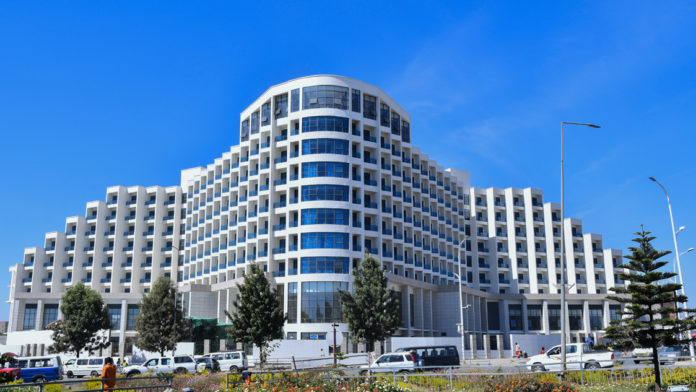
Ethiopian Skylight Five Hotel

Ethiopian Airlines is set to unveil US $65 million Ethiopian Skylight Five Hotel at the end of this month. This is according to the Airline’s Head of Infrastructure Planning and Development, Mr. Abraham Tesfaye.

The Head of Infrastructure Planning said the hotel whose construction started in 2016, will be officially opened to the public on January 28, 2018. The hotel is located five minutes from the Bole International Airport in Addis Ababa, Ethiopia. It covers 42000 square metres with a parking lot that can accommodate more than 500 cars.

“We are striving to make Addis Ababa the main gate way to Africa. The hotel will play a significant role in boosting the tourism sector and making Addis Ababa a conference hub,” said Tesfaye.

The hotel has 373 guest rooms and three restaurants – a Chinese restaurant, an Ethiopian restaurant and a European restaurant. The hotel also has three bars – lobby bar, executive (roof top) bar and Jazz club. Twenty seven of the guest rooms are spacious suites.

The hotel also encompasses a grand ballroom which has been designed to accommodate 2,000 persons convenient for conference and wedding parties. It also has five meeting rooms that can accommodate 20-30 persons, health center that provides spa, massage and gym services, an outdoor swimming pool with a pool bar and mini golf court in the premise.

Other recreational services such as a coffee shop, ticket office, and souvenir shop are also offered in the hotel. A large kitchen, laundry and cold room are ready service.

Ethiopian airlines is reported to have provided 35 per cent financing while EXIM Bank of China provided 65 per cent of the project’s financing. In addition to promoting Ethiopian tourism, this hotel will also welcome passengers during transits, stopovers or technical delays. It is expected to generate over 400 jobs.

“Ethiopian Airlines will have a sufficient number of internationally standard hotel rooms to create an environment conducive to tourists in addition to receiving passengers during transit, stopovers or technical delays,” said Tesfaye.

The airline is also preparing to launch the construction of a second 5-star hotel. The entry into service is scheduled for 2021. It will be built on an area of 22410 metres, the hotel will have 637 rooms.

Stories Continues after ad

Uganda misses out on Africa’s top 10 tech start-ups selected for new Airbus Bizlab program

Uganda misses out on Africa’s top 10 tech start-ups selected for new Airbus Bizlab program.

Airbus and the Deutsche Gesellschaft für Internationale Zusammenarbeit (GIZ) have announced the top 10 African tech start-ups that will take part in the latest Airbus Bizlab #Africa4Future accelerator program but Ugandan start-ups miss out on the list domited by Kenya with three start-ups.

The winners were selected after an open public pitch event in front of experts, potential investors, the media and other stakeholders in Nairobi, Kenya.

#Africa4Future is a joint business accelerator initiative of Airbus and GIZ’s Make-IT in Africa initiative together with the Meltwater Entrepreneurial School of Technology (MEST), a non-profit seed fund and pan-African organization that brings together startups, entrepreneurs and the tech community, and Innocircle, the South African-based innovation consultancy.

The top 10 start-ups were selected from 314 entries representing 19 African countries that were received when the challenge was opened in October last year.

The program aims to encourage and support entrepreneurship in Africa. The continent’s young and increasingly techno-savvy population is likely to be the driving force behind Africa’s socio-economic development. The competition identifies Africa’s own pool of talented entrepreneurs using innovative aerospace based solutions to tackle the continent’s most pressing challenges such as transportation, agriculture and healthcare.

As a global aerospace accelerator, Airbus BizLab is ideally suited to help African startups transform innovative ideas into viable and valuable businesses. In doing so, it increases the aerospace industry’s engagement with hardware and software innovators and entrepreneurs in Africa while helping to nurture the establishment of competitive entrepreneurial ecosystems on the continent.

The Nairobi event kicks off an intensive six-month business incubation and accelerator program involving technical, commercial and mentorship activities in France, Germany and South Africa. This includes workshops and coaching sessions with Airbus experts, GIZ’s Make-IT in Africa, MEST and Innocircle coaches.

The program will end with Demo Day events at the biennial Paris International Airshow and a special event in Germany from 19-26 June, when finalists will launch their products, define their collaboration with Airbus and announce their investment commitments in front of representatives from across the aerospace industry.

Finalists are:

1. Astral Aerial (Kenya) – using drones for humanitarian cargo transport, surveillance and emergency response.

2. Cote d’Ivoire drone (Ivory Coast) – locally-manufactured drones for various applications.

3. Elemental Numerics (South Africa) – applies computational fluid dynamics techniques to the design of machines and components, ranging from aircraft to heart valves.

4. Lentera Limited (Kenya) – applying remote sensors to monitor and transmit environmental data to enable more efficient and smarter farming.

5. Maisha ICT Tech PLC (Ethiopia) – deploying locally built drones for delivering medicines, blood and healthcare items to remote and rural areas.

6. MamaBird (Malawi) – provides a platform to help Governments, NGOs and other organizations deliver vital life-saving supplies to remote communities.

7. Map Action (Mali) – a solution offering real-time online urban mapping to identify problems affecting water supplies, hygiene and sanitation.

8. MobiTech Water Solutions (Kenya) – an online real-time water monitoring solution that allows businesses, homes and water-service providers to manage their available water using an app-based dashboard and instant messaging.

9. Track Your Build (Nigeria) – a novel infrastructure management tool for construction and operations.

10. WiPo Wireless Power (South Africa) – offers reliable and convenient wireless power chargers for businesses, conference centers, airports, restaurants and other venues for the charging of mobile devices, laptops and drones.

Stories Continues after ad

Makerere University suspends MUASA chairman, Deus Kamunyu Muhwezi

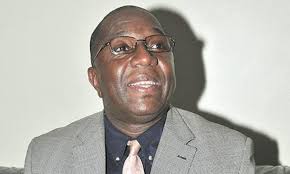
Dr. Deus-Kamunyu-Muhwezi

The Chairperson of Makerere University Academic Staff Association (MUASA), Dr. Deus Kamunyu Muhwezi has been suspended from the university for allegedly taking part in actions that disrupt and injure the reputation of the Institution.

His suspension comes at a time when President Yoweri Museveni has just lauded Makerere University administrators for expelling and suspending lecturers over indiscipline and participation in unlawful activities.

During the 69th graduation ceremony, Museveni said, there is no reason why lecturer averred of raping a student, should continue teaching in the top institution.

Deus Kamunyu Muhwezi is a lecturer in the department of forestry, Biodiversity and Tourism, College of Agriculture and Environmental science.

According to a letter signed by the Vice chancellor of Makerere University Prof. Barnabas Nawangwe, such acts bring the University and its officials into dispute and intimidation of the institution’s officials, using abusive and insulting language, slander and making false statements.

Nawangwe said, Despite various warnings, Muhwezi has continued to engage in acts that amount to misconduct including offences under computer misuse act and incitement with intent to cause disobedience or cause strike to undermine University administration.

“Unlawful activities contravenes the terms and conditions of your employment Act of the institution, Uganda public service standing orders 2010, Makerere university standing orders manual 2009 and other policies governing the University,” Reads in part of the suspension letter.

He said, security reports have shown that Mr Muhwezi has continued to incite other staff to distract the University activities and engage in related unlawful conduct.

“Therefore in order to protect the reputation of the University, its activities and personnel and property from your disruptive activities, I therefore suspend you from the University in accordance to section 5.9 of the university human resource manual,” he said in a statement.

Prof Nawangwe said a committee will be instituted to investigate all the allegations and will be invited to take part of the proceedings. During the suspension, Muhwezi will be receiving half pay of his salary and is barred from accessing the University nor its property.

Stories Continues after ad

World Bank Group earmarks $50 billion for climate adaptation and resilience

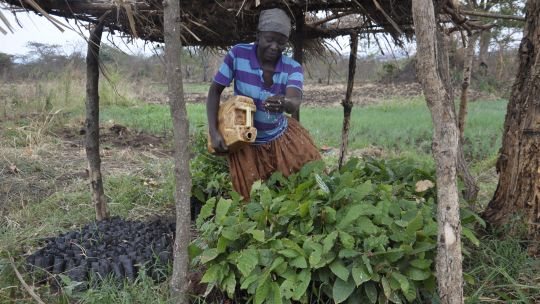
A farmer waters her nursery tree in Hoima, Uganda

The World Bank Group days ago launched its Action Plan on Climate Change Adaptation and Resilience. Under the plan, the World Bank Group will ramp up direct adaptation climate finance to reach US$50 billion starting June 30, 2021 through July 1, 2025.

This financing level, an average of US$10 billion a year, is more than double what was achieved during FY15-18. The World Bank Group will also pilot new approaches to increasing private finance for adaptation and resilience.

“Our new plan will put climate resilience on an equal footing with our investment in a low carbon future for the first time. We do this because, simply put, the climate is changing so we must mitigate and adapt at the same time,” said World Bank Chief Executive Officer Kristalina Georgieva. “We will ramp up our funding to help people build a more resilient future, especially the poorest and most vulnerable who are most affected.”

The increase in adaptation financing will support activities that include:

· Delivering higher quality forecasts, early warning systems and climate information services to better prepare 250 million people in at least 30 countries for climate risks;

· Supporting 100 river basins with climate-informed management plans and/or improved river basin management governance;

· Building more climate-responsive social protection systems; and

· Supporting efforts in at least 20 countries to respond early to, and recover faster from, climate and disaster shocks through additional financial protection instruments.

In addition to boosting finance, the Plan will also support countries to mainstream approaches to systematically manage climate risks at every phase of policy planning, investment design, and implementation.

“This Action Plan is a welcome step from the World Bank,” said Ban Ki-moon, former Secretary-General of the United Nations and co-chair of the Global Commission on Adaptation. “The world’s poorest and most climate vulnerable countries stand to benefit from its increased finance and support for longer term policy change.”

The Action Plan builds on the link between adaptation and development by promoting effective and early actions that also provide positive development outcomes. For example, investing in mangrove replanting may protect a local community against sea level rise and storm surges, while also creating new opportunities for eco-tourism and fisheries. Early and proactive adaptation and resilience-building actions are more cost-effective than addressing impacts after they occur.

The Action Plan also includes the development of a new rating system to create incentives for, and improve the tracking of, global progress on adaptation and resilience. The new system will be piloted by the World Bank in FY19-20 and rolled out to projects in relevant sectors by FY21.

The Action Plan on Climate Change Adaptation and Resilienceforms part of the World Bank Group’s 2025 Targets to Step Up Climate Action which were launched in December 2018, during the UN’s COP24 in Poland.

Stories Continues after ad

Open letter to ERA over plans to modify UMEME’S licence

Dickens Kamugisha

By Dickens Kamugisha

Reference is made to the Notice of intended modification of licence number 048 for supply of electricity issued to UMEME that was published in the New Vision newspaper on January 9, 2019. In this notice, ERA called for the public’s comments on the intended modification of UMEME’s licence.

Africa Institute for Energy Governance (AFIEGO) thanks you and the Electricity Regulatory Authority (ERA) for efforts to build and regulate an electricity sector that benefits Ugandan citizens. AFIEGO is a registered public policy research and advocacy organisation dedicated to influencing energy policies to benefit poor and vulnerable communities in Uganda and the Great Lakes region.

Among others, we appreciate that ERA has continued to involve the public in the affairs of electricity sector regulation through convening public hearings regarding a number of electricity sector matters such as tariff applications by power utility companies and others. This is commendable even when the quality of the hearings need to be improved.

As an organization that works to promote electricity policies that benefit citizens, AFIEGO would like to take this opportunity to inform you that we take an exception to your January 9, 2019 public notice regarding the modification of UMEME’s licence at a time when the public is still waiting for a report by the IGG following the president’s directive to investigate UMEME and at a time when the parliamentary recommendations to terminate UMEME’s concession have not been implemented.

We request you to read the March 12, 2018 letter titled, “UMEME concession and high tariffs for electricity consumers,” in which the president ordered for investigations into UMEME’s concession regarding their cheating of consumers through being guaranteed a high return on investment of 20 per cent, providing unverifiable information on how much they have invested in the electricity sector, inflation of and failure to reduce power losses among others.

In the letter, the president noted that the above UMEME failures and connivance with Ministry of Energy and Mineral Development (MEMD) officials to inflate power losses resulted in high power tariffs that Ugandans are saddled with todate. The president directed the Minister of Energy not to renew UMEME’s concession.

Urgent action on the president’s letter was required to assure Ugandans that government was taking steps to address problems in the electricity sector but it is now nearly a year after the president ordered the IGG to investigate UMEME but no report of the investigation has been made available to the public to help the public make informed input on the discussions regarding modification of UMEME’s licence. Instead, ERA is rushing to commence discussions on the same.

In the absence of such a report, we demand that ERA stops all plans to discuss the renewal of UMEME’s electricity supply license. This is because without the IGG’s report, no meaningful and robust modifications to ensure that accessible, reliable and affordable power is supplied by UMEME will be made.

We further demand that UMEME works with the IGG to complete investigations about UMEME’s failures in the electricity sector that have resulted into untold suffering to Ugandans in terms of lack of jobs, poor services in health, education, clean water and others.

We also demand that UMEME and MEMD hire an independent audit firm to do a forensic audit of the entire electricity sector with a view to assess the performance of all the sub-sectors including generation, transmission, distribution, rural electrification, regulations and others so that any future licenses and concessions are based on clear evidence, lessons and experiences of successes and challenges. Indeed, government cannot think of renewing the license of a company that has presided over a failing sector since 2005 before conducting a forensic audit on the performance of the said company.

Any efforts to discuss the renewal of UMEME’s license and concession before the report on the president’s directive and forensic audit will not help our country to provide sufficient access, affordable and reliable electricity services to Ugandans. Instead, it will worsen corruption in the sector to undermine plans by government to attain middle income status in the near future. We look forward to your co-operation on this matter. Thank you.

The writer is CEO of AFIEGO.

Stories Continues after ad

IGG orders OPM to terminate contracts for officials

George Bamugemereire

The Deputy Inspector General of Government, George Bamugemereire has directed the Permanent Secretary, Office of the Prime Minister to terminate or cause the termination of Safina Nanono and Moses Papa’s contracts over Causing financial Loss in the refugee department.

According to section 46 of the Anti-Corruption Act, 2009, person who is convicted of an offence under sections 2 to 25 shall be disqualified from holding a public office for a period of ten years from his or her conviction.

Ms Safina Nanono, the Programme Officer in charge of Accounts Department of Refugees in the Office of the Prime Minister (OPM) was last year prosecuted and convicted after caused Financial Loss, Contrary to Section 20 of the Anti-Corruption Act.

She was given and fine of A Fine of Shs7,320,000 or three years imprisonment in default and directed to refund Shs100 Million to OPM. Nanono was subsequently barred from working in public office for a period of 10 years.

The Inspectorate of Government also prosecuted Moses Papa the Finance Officer responsible for the Refugee Desk of Adjumani in the Office of the Prime Minister for various offences relating to financial impropriety.

Mr Papa was convicted of two counts of false accounting by a Public Officer contrary to section 22 of the Anti-Corruption Act and a Fine of Shs1,440,000 or three years imprisonment in default.

He was convicted for Causing Financial Loss contrary to section 20 of the Anti-Corruption Act and fine of Shs7,320,000 or three years imprisonment in default.

Stories Continues after ad

The Shakil Pathan Ismail Vs DFCU Bank case and what it means to major cases involving Ruparelia Group

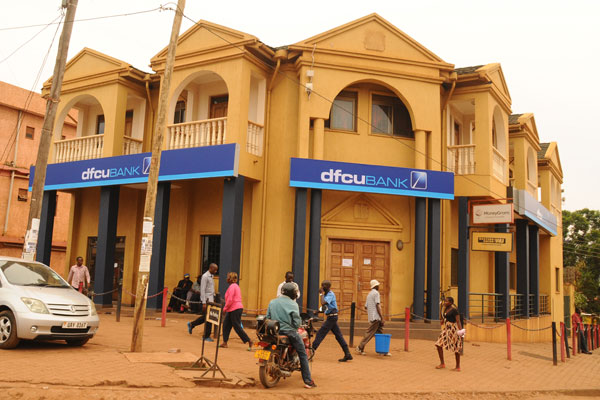
The Former Crane Bank Ntinda branch, which DFCU took over and illegally rebranded in its name, was ordered by the court to vacate and compensate Meera Investments because the property belongs to Meera.

By Our Reporter

On January 15, 2019, the Commercial Court ordered DFCU Bank to pay Mr. Shakil Pathan Ismail, a former employee of Crane Bank Limited (CLB) Shs62 million which he said was unlawfully blocked/deducted from his salary account after DFCU Bank took over CBL in January 25, 2017.

Justice David Wangutusi who delivered the ruling also awarded Mr. Shakil general damages worth Shs20 million. The special damages also come with 21 percent interest per annum from April 2016 on till payment is made in full. The judge also ruled that the bank pays a further 6 percent interest on damages from the date of judgement till the amount is fully paid. The ruling was the latest of blows to DFCU Bank’s reputation and image since the ruling taught the bank that it could not reap what it never sowed.

What was also key in the ruling was the quashing of MMKAS Advovocates’ request to bring in former CBL as second defendant CBL before its closure was part of Ruparelia Group. MMKAS Advocates who served CBL in the past were counsel to DCFU Bank in this case and were represented by Counsel Timothy Lugayizi.

Justice Wangutusi ruled that MMAKS Advocates had once served CBL and now could not be allowed to turn against the same bank (CBL) as ruled in; Bank of Uganda Vs Crane Bank Civil Suit No.493 of 2017.

“It did not matter whether the firm had many lawyers and the one now assigned with the new matter (Timothy Lugayizi) did not personally handle the complainant’s case. Conflict would still be imputed from the “Canteen factor”, he said.

“Canteen factor is this case included social chat between colleagues or with client that gave vital information so if the interaction is between one of the partners it will be imputed to the others,” Justice Wangutusi explained.

About two cases involving the Ruparelia Group are in court pending a hearing. But law firms representing the other sides have been told they cannot now argue in court against companies owned by Ruparelia Group due to conflict of interest, having worked for them.

For instance in the case where the Bank of Uganda (BoU) Ruparelia and his Meera Investments Company mid last year, for allegedly fleecing CBL of Shs397 billion in fraudulent transactions and transfers, Sudhir successfully asked court to first dismiss to AF Mpanga Advocates and MMAKS Advocates for conflict of interest, the two law firms having worked for Ruparelia Group. That meant that BoU had to look for new lawyers which was an additional cost.

Recently court also quashed Sebalu & Lule Advocates from representing BoU due to conflict of interest, the law firm having represented DFCU Bank which took over CBL. Sebalu & Lule Advocates also represented Meera Investments also part of Ruparelia Group in a case to recover Crane Bank’s branch network comprising 48 leasehold land titles was accordingly transferred to DFCU Bank. Meera is seeking an order directing the Commissioner for Land Registration to cancel the leasehold titles in respect of the contested properties and reinstate it as the rightful owner.

The three case scenarios above illustrate how filth some of the Kampala lawyers/law firms can be. It appears the lawyers are keen on cheating clients of billions of money well knowing that court will at a certain stage ask them to get out of the case. And that is what MMAKS Advocates, AF Mpanga Advocates and Sebalu & Lule Advocates have done. They have done it to BoU and DFCU Bank. Unfortunately BoU has spent taxpayers’ money on these lawyers in case against Ruparelia Group companies.

The maneuver by the above lawyers in the cases involving BoU, DFCU Bank, CBL and Ruparelia Group is likely to leave Sudhir Ruparelia on an upper hand. It’s only a matter of time.

Properties claimed by Sudhir

Plot 7 Rujumbura Block, Rukungiri
Plot 31 Margherita Road, Kasese
Plot 33 Margherita Road, Kasese
Plot 105 Customs Road, Busia
Plot 99 Customs Road, Busia
Plot 1162 Block 5, Mulago, Kampala
Plot 688, Nkumba
Plot 893 land at Nkumba
Plot 22, Kampala Road, Entebbe
Plot 106, Kireka and Banda
Plot 60, Nabingo
Plot 61, Nabingo
Plot 846, Block 652, Luwero
Plot 2A Broadway Road, Masaka
Plot 18, Jinja Rd, Gulu and Nasuuti, Mukono
Plot 20A Jinja Rd, Gulu and Nasuuti Mukono.
Plot 103 Customs Road, Busia.
Plot 101 Customs Road, Busia.
Plot 1B, Ntinda, Kampala.
Plot 93 Mengo, Kampala.
Plot 40 Lubas Road, Jinja.
Plot 80 & 82 Main Street, Iganga
Plot 2 Tanga Road, Malaba
Plot 4 Tanga Road, Malaba
Plot 4 Kennedy Square, Soroti
Plot 40, Main Street, Hoima
Plots 44 & 46 Kamwenge & Ibanda
Plot 143 Kabale Road,
Plot 145 Kabale Road,
Plot 5 Block 76, Kabula, Masaka
Plot 55 Main Street Jinja,
Plot 18 Old Kabale Road, Ntungamo
Plot 54, Rushere Nyabushozi.
Plot 52 Rushere, Nyabushozi
Plot 1, Adumi Road, Arua
Plot 51, High Street Mbarara,
Plot 38, Soroti Central ward
Plot 11 Babiiha, Kabarole
Plot 387, Block 18, Natete, Kampala
Plot 388, Block 18, Natete, Kampala
Plot 52, Port Road, Masindi
Plot 1419, Mulago, Kampala
Plot 1463, Kibuga Mulago, Kampala
Plot 817, Block 10, Nakulabye,
Plot 1, Cell 0, Fort Portal Rd, Bushenyi
Plot 7, Luthuli Lane, Bugolobi, Kampala
Plot 54, Masindi Port Road, Masindi
Plot 4360, Kyadondo, Kawempe

Stories Continues after ad

Meet Bridge Schools’ best 2018 PLE performers

A parent and daughter of bridge.

Bridge Schools/Academies have persistently performed well in national exams in all countries where they are established. Eagle Online brings you the Bridge Schools’ best performers in 2018 Primary Leaving Examinations (PLE).


Aniku Rogers

Aniku Rogers, a 14-year-old from Adalafu in Arua district scored 10 aggregates. He moved school to Bridge because there were never enough materials in his old school. He lives in a rural area with only three other houses around. It is at a very high altitude so it is hard to source fresh water, he says. “We walk long distances to find a water source, I have to do this every day after school. It makes me tired,” he says.

Aniku lives with his mother and father do small businesses to survive. In school, he says he loves Science because it makes sense to him. This is probably thanks to his science teacher who Rogers said “makes me understand everything”.

He hopes that his efforts in Science will assist him in his dream to become a doctor. Outside of the classroom he can be found playing sports – football is his favourite. Since he has started at Bridge he has been so happy with his progress. “Now I can speak and write very well in English, I am so pleased,” he says.

He says: “I am so happy about my results. I thank my parents for taking me to Bridge where I have managed to score these good results, the teachers are so great. I love science and want to be a doctor when I grow up. I want to build a hospital in Arua one day.”

Brenda Namusobya

The 14- year old Namusobya Brenda from Nalinaibi village, Mayuge district scored 10 aggregates. Like most in her village, Ms Namusobya’s father is a farmer while her mother is casual labourer. It is hard for them to support her so she lives with her grandmother.

Namusobya’s home is in a swampy area. Every time it rains, the house floods. It is a squeeze for the family as she has three sisters and seven brothers.

She joined Bridge, Magamaga in 2015 from a government school in Primary Four. Her uncle chose to take her to Bridge because he had heard about the quality education and excellent academic standards in the school. Her academic performance has improved greatly and her confidence too. “I can express myself in English and I can speak boldly, before I couldn’t.”

At school her best teachers are Ms. Norah Naisanga and Ms.Nulu Namulondo. She says: “I love Mathematics, Science and English. I can’t pick one that is my favourite.” Her dream is to become a doctor so that she can help all those who are sick in her village.

She says: “I have started my journey to becoming a doctor. I am so happy about my results and being in Division One. I want to say special thanks to my parents and my supportive and caring teachers at Bridge for helping me throughout my academics.”


Rogers Mugisha

Rogers Mugisha is a 13-years-old who scored aggregate 8. He comes from Kengere in Kasese District. His best subject was Science. And it’s no wonder he loves most his Science teacher, Mr Bonny. He says: “All teachers are excellent but I like Mr. Bonny most. I always understand what he teaches. He always repeats for me when I don’t understand.”

Before joining Bridge, he was studying at a neighbouring school but his parents were not happy with the quality of education and his progress at that school.
They later brought him to Bridge where he started making great progress. He says when he grows up, he would want to come back to the community and create jobs to solve the challenge of unemployment.

He says: “I want to thank my God for my results. I also want to thank my great teachers at Bridge for the support and belief I can succeed and get a score in Division 1.”

Stories Continues after ad

Kampala parents, other private schools top country in 2018 PLE

Some of Kampala Parents pupils who scored aggregate 4 pose for a photo.

Private primary schools have emerged top in the 2018 Primary Leaving Examinations (PLE) whose results were released today in Kampala by the Uganda National Examinations Board (UNEB).

The schools whose candidates passed mostly with aggregates 4 and 5 are’ Kampala Parents School, City Parents School, Victorious Primary School and others.

A total of 671,923 candidates registered to sit PLE at 13,072 centres across the country compared to 646,041 from 12, 751 centres in 2017.This is an increase of 25,882 (3.9) candidates. At least 71 per cent (476,131) of the candidates who sat for the examinations, are from government-aided schools, while 29 per cent (195,792) are from private ones.

Elizabeth Atukunda pose with her mother, she scored aggregate 4.

Speaking at the release of exams, Mr Dan Odong, the Executive Secretary for UNEB said male candidates have slightly performed better than female candidates. In division one, (41604) 13.1 per cent of the male passed in division one compared to (35529) 10.5 per cent.

Meanwhile the Minister of Education and Sports, Janet Kataha Museveni lashed out to school administrators saying no private school will be allowed to operate in the 2019 school year without a valid registration license.

Stories Continues after ad

Parents cite financial contributions to schools as biggest challenge

Secondary school students

Ugandan parents cite the excessive amount financials contributions to both primary and secondary schools as the biggest challenge, according to the latest Twaweza’s new Sauti za Wananchi (Voices of Citizens) survey.

The finding was one of several others dug out, as 1,878 respondents across the country were reached via mobile phone in the sixth round of calls to the Sauti za Wananchi panel, conducted between September 17 and October 5, 2018.

The above challenge, the survey says is a particularly a common problem cited in regard to secondary schools, where one out of four (23 per cent) cite the issue, but even for primary schools (14 per cent) it is cited more than any other issue.

In both levels of schooling, distance to the school is the second most cited issue, with one out of ten naming distance as a problem in both primary (12 per cent) and secondary (12 per cent) schools. Shortage of teachers and teacher absenteeism were also widely cited as serious issues facing schools.

The survey also established that almost half of parents do not speak to anyone about the problems they see at school. Just under half of parents (46 per cent) did not speak to anyone in the past year to see if they could help fix the main problem they saw at their children’s school. One out of four or 26 per cent spoke to the head teacher, and one out of six (17 per cent) spoke to the School Management Committee (SMC).

The survey found out that in majority of cases (61 per cent), the problem raised by parents was not resolved after they spoke to someone about it. “In most cases where some action was taken, the problem was only partially or temporarily resolved (32 per cent), leaving just a small number of cases (7 per cent) where the problem was resolved completely,” the report says.

The survey established that other than speaking to someone, very few parents (14 per cent) have taken any other action towards resolving problems they see at their children’s school while 8 out of 10 have not.

In 2017 baseline survey of Sauti za Wananchi Uganda found that citizens report higher levels of engagement in education matters than on issues relating to health services and water supplies

The survey established also that 1 out of 3 citizens has visited a school to ask about school finances. One out of three citizens (34 per cent) has ever visited a school to seek information about school finances and expenditure. This number is higher among men (38 per cent) than women (30 per cent) and higher in rural areas (36 per cent) than urban (30 per cent).

In more than half of such cases, citizens were able to find some financial information on display, either in the head teacher’s office (44 per cent), the staff room (6 per cent) or on a noticeboard within (5 per cent) or outside (3 per cent) the school grounds. In three out of ten cases (29 per cent), the information was not available, while in the remainder (10 per cent) the information was not displayed but was shared either at public meeting (9 per cent) or in some other way (not shown in charts).

Parents are split on whether head teachers would respond positively to requests for information, the survey says. 48 per cent think the head teacher would not provide such information, while nearly as many (41 per cent) think they would.

Around half of citizens are aware of the capitation grant Four out of ten citizens (41 per cent) are confident that they have heard of the capitation grant for primary schools, while a further one out of six (16 per cent) say they have heard of the grant when prompted with some details. Four out of ten (43 per cent) say they have not heard of the grant, even after probing.

The most common uses of capitation grant funds identified by citizens are the purchase of school materials (28 per cent), construction work (11 per cent), paying teachers (9 per cent) and teacher and student welfare (9 per cent). However, in all these cases, the numbers are dwarfed by the number of citizens who were not confidently aware of the capitation grant in regards to their children’s school (59 per cent).

Very few citizens (2 per cent) say they know how much capitation grant is provided to schools per pupil. Among those who do claim to know the amount, citizens gave estimates ranging from Shs300 to over Shs3,000,000 per pupil, with no consistency in these estimates, (not shown in charts). Reports in the media about the capitation grant amount also vary significantly.

5: 8 out of 10 parents continue to pay other levies to schools while eight out of ten parents (80 per cent) say they continue to pay money to schools for a range of purposes, including tuition or extra classes (68 per cent), food (60 per cent), school books or other materials (58 per cent), construction work (57 per cent) or to support volunteer teachers (48 per cent).

The survey established that parents in urban areas are more likely to pay for tuition or extra classes (75 per cent) than those in rural areas (65 per cent), but parents in rural areas are more likely to pay for volunteer teachers (50 per cent) than those in urban areas (42 per cent) However three in ten children (29 per cent) of school-going age attend private schools. As such, those paying these additional levies will include parents of children attending private schools (not shown in charts)

One out of 10 citizens say they are members of a school committee or board One out of ten citizens (10 per cent) say they are members of a school committee or board, and most of these (8 per cent) say they are active participants on the committee.

Parents’ representatives (68 per cent) and school staff (52 per cent) are widely recognised as members of the school committee / board, followed by representatives of the school’s founding body (24 per cent) and/ or the local council (24 per cent).

According to the survey, citizens are split on the proper role of school committees between those who prioritise planning, budgeting and decision making (33 per cent) and those who focus on maintaining academic and disciplinary standards (31 per cent). However the largest number of parents say that, in practice, committees focus much more on planning decisions (38 per cent) than on academic and disciplinary matters (9 per cent).

Still, half of citizens have seen a teacher absent from school in the past year, half of whom approached the teacher. Half of citizens (47 per cent) have, in the past 12 months, seen a teacher out of school at a time when he or she should have been at school and teaching. Half of this group – a quarter of the overall population (24 per cent) – approached the teacher to ask why he or she was not teaching.

Among those who saw an absent teacher but did not approach them, four out of ten (42 per cent) say this was because they feared it might have negative repercussions. Three out of ten (32 per cent) say they thought it was pointless as it would achieve nothing, and almost as many (27 per cent) say they would have felt uncomfortable doing so.

Stories Continues after ad