Stanbic Bank
Stanbic Bank
19.8 C
Kampala
Stanbic Bank
Stanbic Bank
Home Blog Page 1416

Abdu Katuntu: We didn’t seek for extension of our tenure in office

Former COSASE chairman, Abdu Katuntu.

The chairperson of the committee on Commissions, Statutory Authorities and State Enterprises (COSASE) who doubles as the MP for Bugweri County, Abdu Katuntu has refuted all allegations that he asked the Speaker of Parliament to extend committee’s tenure in office to finalize the issue at hand of investigating sale of seven defunct banks by Bank of Uganda.

In the recent reshuffles, Forum for Democratic Change (FDC) dropped Katuntu and appointed Kawempe South MP, Mubarak Munyagwa as the chairperson, superintending all the activities of the committee.

Speaking before committee, Katuntu said it is not true that approached the Speaker seeking extension of term in office, to 20 February, 2019.

“Like any serious chairman, we have always briefed the Speaker on the progress of work as the committee, as the head of the institution, I briefed her because she required us to complete the investigations before the expiry of our term which was not possible as decided to write to LoP.” he said for the sake of being on record.

The deputy chairperson of the committee Anita Among said Speakers word is final and they always told the public that they will not go without coming to conclusion in the sale of the seven commercial banks starting from Teefe in 1994.

“They chased us away in October, I told you people that we were not going. They chased us away again in December and we are not going,” She said

In December last year the Speaker of petitioned the leader of opposition (LoP), Betty Aol Ochan asking her to extend committee’s term to conclude the probe into the sale of banks by bank of Uganda.

Ochan declined on grounds that the move contravenes with the parliamentary rule of procedure that allows the committee to stay of two and half years in office. The committee’s tenure was ending on January 13, 2019.

Opposition Chief Whip Semujju Nganda said they are engaged Munyagwa to allow the committee complete and write a report about their findings.

Last week, Munyagwa revealed that the speaker is trying to cover up something in the committee and the Bank of Uganda and threatened to expose every wrong doing.

“Is that the first investigation by the committee on bank of Uganda, where is the report compiled about the 350 pens that were bought at a cost of US $100 each by the bank of Uganda as they celebrated 50 years?,” He said.

Stories Continues after ad

Uganda’s debt is sustainable- Kasaija

Finance Minister: Matia Kasaija.

The Minister of Finance Planning and Economic Development, Matia Kasaijja has said Uganda’s current debt is suitable given the average maturity rate of over 35 years and a grace period of not less than six years coupled with relatively low interest rate of less than 1.5 per cent every annually.

Last week, the Auditor General, John Muwanga table a report that indicated that the country’s domestic debt is at the cliff of swallowing Uganda’s total revenue collection. Currently, Uganda’s total debt stock (domestic and external) acquired from multilateral creditors and local creditors mounted US $10.7 billion (Shs41, 326.1 trillion).

According to Auditor general’s report of 2018, 50 per cent of the loans sampled totaling Shs39 trillion will expire in 2020 and if government is to service the loans as projected in the next financial years, it would require more than 65 per cent of the total revenue collections.

Apparently, the highest percentage of the budget for financial year 2018/2019 and that is about Shs10 trillion goes to loan servicing.

Speaking at Media centre, Mr Kasaijja said Ugandans should not worry of the country’s debt saying it is sustainable with nominal debt GDP of 41.4 per cent consistent with auditor general’s reports.

He said various loans have been acquired form different creditors to build flagship projects such as Isimba and Karuma Power dams, Kabaale airport, and Entebbe express highway among others.

“Government will continue to be cautious on taking new projects after the implementation of previous ones, continue investing in export- oriented areas to boost on country’s exports to increase on the forex inflow and servicing of forex denominated debt,” he said.

He said government moves on to enhance domestic revenue efforts through addressing through comprehensive domestic revenue strategy, peddled at raising revenue to the GDP ratio by 0.5 per cent annually.

“I would like to assure the country that our debt is sustainable and is projected to be sustainable in the medium long term. The debt levels are comfortably below operational threshold (50 per cent debt to GDP) and are subsequently below sub-Saharan average (45.5 per cent debt to GDP).

“All debt payments are programmed and prioritized to ensure that they are paid as and when it falls due. The risk of government defaulting on debt payment is nonexistent in the budgetary cycle and it should not be of concern,” said Mr. Kasaija.

Stories Continues after ad

Egypt to host 2019 Africa Cup of Nations

Afcon trophy

Confederation of African Football (CAF) have today announced Egypt as the new hosts of the 2019 Africa Cup of Nations.

The decision was made after an executive meeting in Dakar, Senegal on Tuesday morning ahead of the 2018 Caf awards ceremony.

Egypt beat South Africa to win the hosting rights after initial hosts Cameroon were dumped due to unpreparedness.

Egypt and South Africa are the two countries that bid to replace Cameroon but the South African Football Association (Safa) never got the backing from the government which reportedly made it difficult for Caf to accept their bid.

The North African country received 16 votes to South Africa’s one, Caf confirmed in a press conference.

Egypt last hosted the continental tournament in 2006, for South Africa it was 2013 – they’ve hosted on four occasions in total compared to South Africa’s two.

The Pharaohs are the record holders of the Afcon trophy having won it seven times.

Fourteen countries have already confirmed their places at the 2019 tournament and they are; Kenya, Ghana, Senegal, Madagascar, Morocco, Mali, Algeria, Tunisia, Nigeria, Egypt, Uganda, Mauritania, Guinea and Ivory Coast.

The other ten places will be decided during the final qualifiers in March 2019.

The 2019 AFCON tournament will be the first to host 24 teams. The competition will be held from 15th June to 13th July.

Stories Continues after ad

List of first class degrees as MUBS Student emerges overall best in MAK 69th graduation

Makerere-Main-Building

Makerere University Business School (MUBS) student, Namuwaya Hajarah Ali has been announced the best in Humanities and overall best performing student in the upcoming Makerere 69th graduation ceremony scheduled take place from January 15.

Ms Namuwaya obtained a CGPA of 4.94 in the Bachelor of Business Computing from the Nakawa based institute that’ll have over 3,000 graduate.

Click here to view list
Makerere-AR-69th-Graduation-Ceremony-First-Class-List

Meanwhile Mr. Steven Galiwango Kasozi came top in the Sciences with a CGPA of 4.84 in the Bachelor of Science in Food Science and Technology.

The Academic Registrar, Makerere University has released the list of candidates who attained First Class Degrees. The 69th Graduation Ceremony will be held from Tuesday January 15, 2014 to Friday January 18, 2019.

In total, 13,333 Graduands will receive their awards with 6,707 (50.3 per cent) being female and 6,626 (49.7 per cent) being male. A total of 368 graduands obtained a Cumulative Grade Point.

Stories Continues after ad

Crane Bank closure: MPs quiz BoU officials over controversial hiring of MMAKS Advocates

Hot seats, Kasekende consults Mutebile in the COSASE committee.

MPs on parliament’s Committee on Commissions, Statutory Authorities and State Enterprises (Cosase) put to task Bank of Uganda (BoU) senior staff to explain how they hired MMAKS Advocates and gave the law firm work without terms of reference as well as not having minutes of the meetings relating to the work the lawyers were to do in regard to the liquidation and sale of Crane Bank Limited (CBL).

MMAKS Advocates were paid Shs914, 272,722 for legal advice during CBL intervention, resolution and advice on the sale of CBL assets and assumption of liabilities. The firm would further be paid extra Shs 3 billion as 5 percent commission monies recovered from CBL shareholders. The MPs contend those payments were exaggerated to benefit some BoU senior staff involved in the sale of CBL.

The former director of Bank supervision at BoU Justine Bagyenda failed to convince the legislators on the business MMAKS did with BoU as some records were missing. Committee chairman Abdu Katuntu said it was wrong for BoU not to have records on the particular transaction.

Bagyenda read to the MPs a memo/document of November 30, 2016 requesting for payment of the lawyers without showing the work that was done. BoU governor would on December 12, endorse and approve the request for payment of over US$51000 dollars as part of their total fee.

The law firm was hired after On October 28, 2016, BOU engaged PWC to carry out a forensic review of Crane Bank Limited (CBL) focusing on a 48 month period before statutory management which was completed on January 13, 2017.

On November 28, 2016, BOU engaged MMAKS Advocates to provide transaction advice to take over CBL and the firm would on December 9, 2016, on behalf of BoU, invite 13 bidders to bid for the purchase of assets and assumption of liabilities of CBL. Between 12th and 15th December 2016, BOU issued the Inventory report to 6 bidders after signing a confidential agreement for them to undertake due diligence on the assets and liabilities of CBL. Subsequently on 20’h December 20, 2016, two bids were received and evaluated.

The costs to MMAKS are part of the Shs12 billion intervention costs BoU claims to have sunk in CBL during the takeover. Lawyers of MMAKS also ar4e directors of some commercial banks yet they do business with BoU which is the regulators. MPs said this creates conflict of interest and that BoU should have addressed the issue before giving the law firm the job.

Meanwhile, Committee Chairman Abdu Katuntu has ordered that BoU staff tomorrow appear again accompanied with representatives of M/S J.N. Kirkland & Associates and Sil, the two firms that participated in the sale of assets of Greenland Bank, International Credit Bank and Cooperative Bank to Nile River Acquisition at Shs8.89 billion.

Stories Continues after ad

Dates for Uganda Cup Round of 32 matches confirmed

Uganda cup trophy

FUFA has confirmed the dates and venues for the 2018/19 Stanbic Uganda Cup round of 32 stage.

The matches will be played between 11th and 22nd January 2019 across the different venues in the country.

The host region and ground for the final will be communicated.

Other schedules like the draws for the most prestigious knockout competition shall be provided in line with the FUFA Calendar.

The winner of the competition represents Uganda in the CAF Confederation Cup as per the rules of the competition. KCCA FC are the defending champions.

The competition which was commonly known as Kakungulu Cup started in 1971. KCCA FC and Express FC are the most successful clubs in the Uganda cup winning on 10 occasions each.

All the games will be played at 4pm.

Friday, 11th January 2019:

Kirinya-Jinja S.S.S Vs Onduparaka – Mighty Arena, Jinja

URA Vs Synergy – Mandela National Stadium, Namboole

Kyetume Vs St Stephen – Nakisunga Ssaza play-ground

Sunday, 13th January 2019:

Bumate United Vs Bright Stars – Christ High School play-ground, Bundibugyo

Tuesday, 15th January 2019:

Vipers Vs Kansai Plascon – St Mary’s Stadium, Kitende

Wednesday, 16th January 2019:

Nkambi Coffee Vs SC Villa – Masaka Recreational Stadium

BUL Vs Mbarara City – FUFA Technical Center, Njeru

U-Touch Vs Kitara – Pece Stadium, Gulu

Calvary Vs Police – Midigo play ground, Yumbe

Free Stars Vs Bukedea Town Council – Bishops S.S Play gound, Mukono

Thursday, 17th January 2019:

Water Vs Express – Muteesa II Wankulukuku Stadium

Saturday, 19th January 2019:

Nyamityobora Vs Proline – Kakyeka Stadium, Mbarara

Nebbi Central Vs Admin – Nebbi Playground

Tuesday, 22nd January 2019:

Kireka United Vs Wakiso Giants – Mandela National Stadium

Kiboga Young Vs St Mary’s – Bamusuuta Ground, Kiboga

Tooro United Vs KCCA – Buhinga Stadium, Fort Portal

Stories Continues after ad

FUFA summon Mutebi, Ssimbwa over match fixing allegations

The teams christened Dubymax Hasule and Dubymax Kirunda will be managed by former KCCA tacticians Sam Ssimbwa and Mike Mutebi respectively.

Coaches Mike Mutebi of KCCA FC and Sam Ssimbwa of URA FC have been summoned by the FUFA Competitions Disciplinary Panel over statements about match fixing allegations that tantamount to breach of FUFA Communications Code and Competitions rules.

Mike Mutebi has been summoned to explain the comments he made during a press conference in December last year when he said that: “All the titles that have been won in the last 20 years were fixed.”

“When I arrived here (KCCA), there used to be a budget for buying games. And it is not only KCCA, SC Villa, Express, URA and others. I am honest. Yes, there used to be a budget for those years not only at KCCA and these were found out at the continent where they were not aided.” He added.

Ssimbwa left KCCA where he served as an assistant to Mutebi after the club terminated his contract. He claimed (in an audio recorded on WhatsApp) that because he loved to win so much, he paid referees to fix a match without the knowledge of the club. FUFA then banned Ssimbwa from all football-related activities for eight months

However, in this case, Ssimbwa is being summoned for his remarks made after the Kirinya Jinja SSS game on Saturday.

The URA manager in a press conference said a tribal statement that they are Basogas and that’s why they don’t speak about poor officiating at Kirinya Jinja SSS FC’s home ground.

He added, “Either they are bribed or place bets against his team.” Before the game, he had told a group of journalists that he doesn’t release his line-ups to media early because “they bet his games.”

The two managers face off today at Namboole stadium in the last matchday of the first round of the 2018/19 Ugandan Premier League season.

Attachments area

Stories Continues after ad

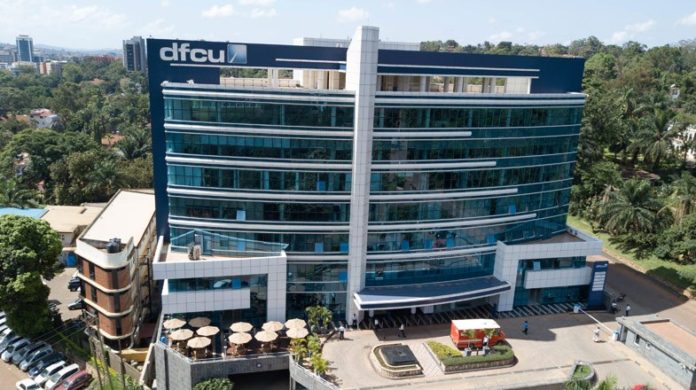
Time for Dfcu Bank to prove Global Trust and Crane banks acquisition were legitimate deals

Dfcu Bank headquarters in Kampala.

Parliament’s Committee on Commissions, Statutory Authorities and State Enterprises (Cosase) in late December 2018 is yet to conclude its probe of Bank of Uganda senior staff (BoU) over the liquidation of seven commercial banks between 1993 and 2016.

The banks closed by BoU included Teefe Trust Bank, Greenland Bank, International Credit Bank, Cooperative Bank, National Bank of Commerce, Global Trust Bank Uganda (GTBU) and Crane Bank Limited (CBL). The closure of some of the banks has left doubt in the minds of Ugandans as to whether some of the BoU senior staff deserve the jobs they are holding.

Dfcu Bank of which BoU Staff Retirement Benefits Scheme holds shares, respectively bought GTBU in July 2014 and CBL in January 2017 after the former executive director of bank supervision Ms Justine Bagyenda approached Dfcu top managers over phone about the availability of the two banks for acquisition.

Dfcu Bank top managers including the former Managing Director Juma Kisaame are expected to appear before Cosase soon. The Dfcu executives are expected to tell the MPs how they came to acquire both GTBU and CBL given that the transactions are questionable as BoU top managers failed to present related documents and gave conflicting answers regarding the transactions.

For instance, during the probe of BoU, MPs learnt that Dr. William Kalema who was a board member of BoU was also a Board member of DFCU in 2014 when it took over GTBU. Ms Bagyenda is also said to have shared confidential information of GTBU with DFCU Bank top managers, which is against the country’s established banking regulations.

According to the committee members, these factors is present a conflict of interest situation in which BoU staff might have benefited at the expense of shareholders of GTBU who are now demanding for over Shs300 billion compensation on top of other costs.

During the probe, BoU senior staff were tasked by the MPs to explain the taxpayers’ Shs 478.8 billion they claim to have spent on CBL takeover but failed to account for the money which is not reflected on CBL accounts. BoU claims it spent the money as liquidity support and other costs despite CBL only needing Shs157 billion to stabilise. That money was not given and instead BoU sold CBL to Dcu Bank on credit at Shs200 billion as cited by the Auditor General John Muwanga’s special audit report of BoU on defunct banks.

According to the report released in late August 2018, DFCU Bank had paid about Shs98 billion of the Shs200 billion. Dfcu agreed with BOU to pay Shs200 billion liability within 30 months commencing October 1, 2017 and was to provide security in form of treasury bills (with less than 91 days maturity) on the completion date.

In March 2018 Dfcu Bank announced an impressive Shs127.6 billion net profit in the year ended 31 December 2017, up from Shs46.2bn registered in 2016. The huge Shs81.4 billion profit leap, came in the aftermath of the takeover of CBL.

Despite the transaction that saw Dfcu Bank take over CBL, the Auditor General established that there was no guidelines in place to guide the process. “I observed that there were no guidelines… or polices in place to guide the identification of the purchasers of defunct bank. There were also no guidelines to determine the procedures to be adopted by the Central Bank in the sale/transfer of assets and liabilities of the defunct banks to the identified purchaser.

Further, the Auditor General noted that BoU did not carry out a requisite valuation of assets and liabilities of GTBU and CBL resolved using the purchase and assumption arrangement at the time of signing the P&A. “In absence of the valuation and or documented evaluation of alternatives and assumptions used, I could not establish how the terms for the transfer of assets and liabilities in the P&A were determined,” he said.

Upon the acquisition of CBL, Dfcu Bank’s total assets increased to a record Shs3 trillion, up from Shs1.7 trillion in 2016 while t’s core capital increased to Shs362 billion in 2017, up from Shs 188 billion in 2016.

Former Crane Bank shareholders led by majority shareholder Sudhir Ruparelia and family have vowed to recover CBL, claiming their bank was sold to Dfcu Bank without considering their interests in accordance with the Financial Institutions Act.

Dfcu Bank is partly owned by the Commonwealth Development Corporation (CDC), a British government-owned company, together with Rabo Development from the Netherlands and NorFinance from Norway, who are shareholders in Arise B.V together with Norfund, a Norwegian government-owned Private Equity firm and FMO, the Dutch Development Bank.

Shareholding percentages:

Arise BV 58.71 per cent

CDC Group of the United Kingdom 9.97 per cent

National Social Security Fund (Uganda) 7.69 per cent

Kimberlite Frontier Africa Naster Fund 6.15 per cent

2 undisclosed Institutional Investors 3.22 per cent

SSB-Conrad N. Hilton Foundation 0.98 per cent

Vanderbilt University 0.87 per cent

Blakeney Management 0.63 per cent

Bank of Uganda Staff Retirement Benefits Scheme 0.59 per cent

Retail investors 11.19 per cent

Stories Continues after ad

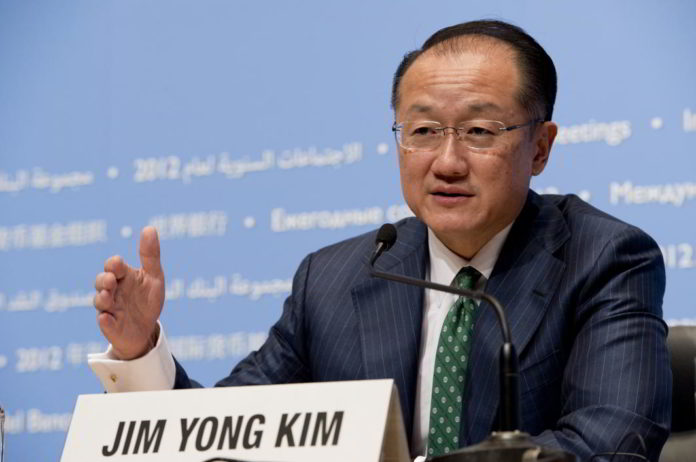
World Bank President Jim Yong resigns three to join investment firm

Jim Yong

World Bank President Jim Yong Kim unexpectedly announced his resignation on Monday, setting up a potential dispute between the U.S. and other member countries over selecting the next leader of the world’s largest development-finance institution.

Mr. Kim plans to leave the bank on Feb. 1, nearly three years before his term was set to expire, to join a firm focused on infrastructure investments.

He first became president of the World Bank in 2012, appointed by President Obama, and in 2016 he was appointed to a new term lasting through 2021, meaning his successor wouldn’t have been appointed during the first term of the Trump presidency.

Kristalina Georgieva, the current CEO of the World Bank, will become interim president effective Feb. 1.

Mr. Kim, 59 years old, said in an email to bank staff that his “opportunity to join the private sector was unexpected, but I’ve concluded that this is the path through which I will be able to make the largest impact on major global issues like climate change and the infrastructure deficit in emerging markets.”

He had previously been president of Dartmouth College, and before that was a physician known for his work combating HIV/AIDS. He will also rejoin Partners in Health, an international community health-care organization that he co-founded more than 30 years ago.

The World Bank said that details about the infrastructure fund that Mr. Kim is joining would be released at a later date.

In the bank’s seven-decade history, its president has always been picked by the U.S., but it isn’t guaranteed that Washington will get to make the new selection. Many countries and advocacy groups have sought an end to Washington’s control, and the prospect of President Trump making the selection could galvanize countries to fight for a change in this status quo.

“To have strong, good governance that is a globally representative, it shouldn’t be one country dominating the decision on leadership,” said Nadia Daar, the head of the Washington office for Oxfam International, a global relief and development organization. “The world is changing economically and politically and the institution really needs to modernize in that way as well,” she said.

In 2012, the U.S. faced a challenge to its primacy in appointing the World Bank’s president. Mr. Kim’s nomination by the U.S. faced contenders from Nigeria and Colombia. Many officials have argued that the World Bank’s role in development finance warrants leadership—at least occasionally—from countries in the global south.

“Jim Kim’s selection was controversial, mostly because much of the world was no longer satisfied with a pre-ordained arrangement where an American headed the bank and a European headed the International Monetary Fund,” said Scott Morris, a senior fellow at the Center for Global Development.

The U.S. Treasury Department, however, takes the lead on issues with the World Bank, and would likely be the agency on the front lines of any fight to appoint his successor.

A Treasury representative said in a statement: “We appreciate Mr. Kim’s service to the World Bank,” adding that Treasury Secretary Steven Mnuchin “looks forward to working with his fellow governors in selecting a new lead.”

The Treasury is the largest shareholder at the World Bank, controlling about 16% of voting shares. It has had a sometimes-antagonistic relationship with the bank under Mr. Mnuchin. The Treasury has criticized the World Bank for lending too much to China and for compensation packages that it says are too generous.

Newsletter Sign-up

But this past April, the Treasury backed a $13 billion funding increase for the World Bank. Securing the funding was a major victory for Mr. Kim’s legacy at the bank, especially when the Trump administration has been so critical of many international organizations.

“He secured a capital increase at a time that few would have thought it was possible,” said Mr. Morris, who had been the Treasury appointee responsible for development finance under Mr. Obama.

During his tenure, Mr. Kim also achieved two replenishments of funding for the International Development Association, the fund at the World Bank earmarked to support the world’s poorest countries.

Mr. Kim’s tenure wasn’t without controversy. He presided over a reorganization of the bank that drew some objections from both inside and outside the bank.

Mr. Kim had been credited for hiring a top economist, Paul Romer, to lead the bank’s economics department. But Mr. Romer shocked the bank last year by resigning and alleging that the bank’s scientific integrity was compromised. Mr. Romer, in particular, apologized to the country of Chile saying that it had been unfairly harmed by methodology changes used to calculate the bank’s flagship report on business competitiveness.

A bank review concluded that there had been no intent to manipulate World Bank reports for political purposes, but the bank also agreed to change the way it ranked countries’ business competitiveness, and the episode was a black eye for the institution.

Stories Continues after ad

Cryptocurrency In Uganda On the Rise

Bitcoin is becoming widely adopted throughout Africa.

Bitcoin is undoubtedly the biggest name in cryptocurrency, but it is by no means the only one. There are now thousands from which to choose, and the sheer number of businesses looking to cash in on this new economic frontier has also grown exponentially. All over the world, as people currently work to create, provide and mine value from cryptocurrencies, Uganda proves no exception. As the idea has become more popular and skepticism waned, Ugandans are increasingly more comfortable using currency like Bitcoin for everyday transactions. So far, we have seen restaurants accepting Bitcoin as payment, and doctors in Kampala buying medical equipment online with the cryptocurrency to avoid expensive transaction fees.

In October 2018, we saw the world’s largest cryptocurrency exchange by trading volume, Binance, launch its first exchange here, which also happens to be Binance’s only fiat-to-crypto exchange. The CEO of Binance, Changpeng Zhao, currently worth $1.4 billion, tweeted that their goal in establishing a Ugandan trading exchange was no less than ‘to support Uganda’s economic transformation and youth employment through [the] blockchain, embracing the fourth industrial revolution. We will do this [by] creating thousands of jobs and bringing investments to Uganda’.

They have also partnered with a company called CryptoSavannah, a company based in Kampala, to run the exchange. The blockchain is the technology that underpins nearly all decentralised digital currencies like Bitcoin, Litecoin, Monero and Ethereum. Blockchain technology is also referred to as distributed ledger technology, meaning that all transactions using a cryptocurrency are publicly recorded on millions of ledgers at once, instead of only one ledger owned by a private organisation like a bank. The benefit is that no one can counterfeit your transaction if verified in a million places rather than one.

Photo by Leamsii / CC0. You can access transaction ledgers anywhere in the world with any device capable of connecting to the internet.

Already, many life-saving endeavours have come out of digital currencies, with an example being the chance meeting between Victor Ramdin and Vanbex CEO Kevin Hobbs, which led to Vanbex funding Ramdin’s annual charity mission called the Guyana Watch Foundation. The Guyana Watch Foundation aims to provide medical treatment and heart surgeries for children in Guyana, South America.

The hopes for cryptocurrencies in Africa are high, with experts stating that the conditions on the continent may be ideal for digital currencies to flourish. That is mainly the case in countries that are affected by hyperinflation such as Zimbabwe where in 2015, inflation skyrocketed, and the central banks ended up printing $100 trillion notes, each worth about $40 (USD) (as reported by UN.org). Such has led many Zimbabweans to turn to Bitcoin and other cryptocurrencies for their day-to-day transactions. As cryptocurrency is internet-based, it means that rates are the same all over the world, and unlike traditional currencies, it is not centered in a specific region and controlled by a central bank, so it is not affected by financial policies of governments.

In addition, by 2020, estimates suggest that over 725 million Africans will have subscribed to mobile phone services and all that is necessary to transact in Bitcoin as is a mobile phone and an internet connection.

Ugandan Member of Parliament Mathias Mpuuga recently addressed the government stepping in to regulate the growing crypto marketplace with the finance minister and is quoted by The Independent as saying, ‘There are several agencies posing as cryptocurrency dealers, such as RipCoin, Namecoin and Bitcoin. The challenge is that while this is taking place, there is no legal framework for supervising these players’.

Over the past few months, the Ugandan Parliament has been looking into the possibility of providing some regulation in the growing cryptocurrency industry. Regulation, however, may prove to be as much of a challenge in Uganda as it has been elsewhere. The Apex Bank of Nigeria recently advised they could not control or regulate Bitcoin, ‘just the same way no one is going to control or regulate the internet. We don’t own it’.

Unlike traditional currencies, cryptocurrency is not in a single geographic area, but rather it is worldwide, and therefore, less prone to hyperinflation.

A central part of the appeal with cryptocurrency is that it is not owned or regulated by a single institution, or government, or country. Partly due to this lack of governmental oversight and partly to good investment practice and due diligence, it is critical for anybody wanting to invest in cryptocurrencies to research it first to have a comfortable understanding of the basic principles and choose reputable providers. Cryptocurrency in Africa looks promising. However, it is still speculative and may not have reached sound foundations yet. As Stephen Kaboyo of Ugandan financial firm Alpha Capital Partners recently stated, though it is unwise to dismiss cryptocurrencies at this stage, crypto investors must understand the risks before investing in what is still right now a ‘hugely speculative asset’.

Stories Continues after ad