Stanbic Bank
Stanbic Bank
18.8 C
Kampala
Stanbic Bank
Stanbic Bank
Home Blog Page 1417

Cryptocurrency In Uganda On the Rise

Bitcoin is becoming widely adopted throughout Africa.

Bitcoin is undoubtedly the biggest name in cryptocurrency, but it is by no means the only one. There are now thousands from which to choose, and the sheer number of businesses looking to cash in on this new economic frontier has also grown exponentially. All over the world, as people currently work to create, provide and mine value from cryptocurrencies, Uganda proves no exception. As the idea has become more popular and skepticism waned, Ugandans are increasingly more comfortable using currency like Bitcoin for everyday transactions. So far, we have seen restaurants accepting Bitcoin as payment, and doctors in Kampala buying medical equipment online with the cryptocurrency to avoid expensive transaction fees.

In October 2018, we saw the world’s largest cryptocurrency exchange by trading volume, Binance, launch its first exchange here, which also happens to be Binance’s only fiat-to-crypto exchange. The CEO of Binance, Changpeng Zhao, currently worth $1.4 billion, tweeted that their goal in establishing a Ugandan trading exchange was no less than ‘to support Uganda’s economic transformation and youth employment through [the] blockchain, embracing the fourth industrial revolution. We will do this [by] creating thousands of jobs and bringing investments to Uganda’.

They have also partnered with a company called CryptoSavannah, a company based in Kampala, to run the exchange. The blockchain is the technology that underpins nearly all decentralised digital currencies like Bitcoin, Litecoin, Monero and Ethereum. Blockchain technology is also referred to as distributed ledger technology, meaning that all transactions using a cryptocurrency are publicly recorded on millions of ledgers at once, instead of only one ledger owned by a private organisation like a bank. The benefit is that no one can counterfeit your transaction if verified in a million places rather than one.

Photo by Leamsii / CC0. You can access transaction ledgers anywhere in the world with any device capable of connecting to the internet.

Already, many life-saving endeavours have come out of digital currencies, with an example being the chance meeting between Victor Ramdin and Vanbex CEO Kevin Hobbs, which led to Vanbex funding Ramdin’s annual charity mission called the Guyana Watch Foundation. The Guyana Watch Foundation aims to provide medical treatment and heart surgeries for children in Guyana, South America.

The hopes for cryptocurrencies in Africa are high, with experts stating that the conditions on the continent may be ideal for digital currencies to flourish. That is mainly the case in countries that are affected by hyperinflation such as Zimbabwe where in 2015, inflation skyrocketed, and the central banks ended up printing $100 trillion notes, each worth about $40 (USD) (as reported by UN.org). Such has led many Zimbabweans to turn to Bitcoin and other cryptocurrencies for their day-to-day transactions. As cryptocurrency is internet-based, it means that rates are the same all over the world, and unlike traditional currencies, it is not centered in a specific region and controlled by a central bank, so it is not affected by financial policies of governments.

In addition, by 2020, estimates suggest that over 725 million Africans will have subscribed to mobile phone services and all that is necessary to transact in Bitcoin as is a mobile phone and an internet connection.

Ugandan Member of Parliament Mathias Mpuuga recently addressed the government stepping in to regulate the growing crypto marketplace with the finance minister and is quoted by The Independent as saying, ‘There are several agencies posing as cryptocurrency dealers, such as RipCoin, Namecoin and Bitcoin. The challenge is that while this is taking place, there is no legal framework for supervising these players’.

Over the past few months, the Ugandan Parliament has been looking into the possibility of providing some regulation in the growing cryptocurrency industry. Regulation, however, may prove to be as much of a challenge in Uganda as it has been elsewhere. The Apex Bank of Nigeria recently advised they could not control or regulate Bitcoin, ‘just the same way no one is going to control or regulate the internet. We don’t own it’.

Unlike traditional currencies, cryptocurrency is not in a single geographic area, but rather it is worldwide, and therefore, less prone to hyperinflation.

A central part of the appeal with cryptocurrency is that it is not owned or regulated by a single institution, or government, or country. Partly due to this lack of governmental oversight and partly to good investment practice and due diligence, it is critical for anybody wanting to invest in cryptocurrencies to research it first to have a comfortable understanding of the basic principles and choose reputable providers. Cryptocurrency in Africa looks promising. However, it is still speculative and may not have reached sound foundations yet. As Stephen Kaboyo of Ugandan financial firm Alpha Capital Partners recently stated, though it is unwise to dismiss cryptocurrencies at this stage, crypto investors must understand the risks before investing in what is still right now a ‘hugely speculative asset’.

Stories Continues after ad

Restricting civil space for opposition is limiting alternative leadership for Ugandans

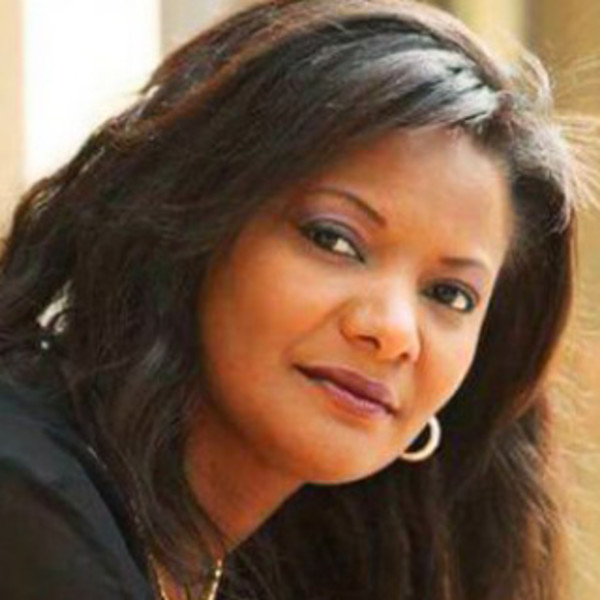
By Betty Aol Ochan

The opposition, generally speaking, is a government in waiting. And true to that, in democratic societies, tables often turn with the opposition taking over power and those in power becoming the opposition.

The regularity with which the power table swings from opposition to ruling party and from ruling party to the opposition is usually an indicator of the health of a countries’ democracy, and how much power citizens have in choosing those they deem qualified to manage public affairs on their behalf.
Equal access to civil spaces by both the ruling party and the opposition to sell their agenda to the electorate is sacrosanct. But in Uganda, this space is alarmingly shrinking and becoming a monopoly of the ruling NRM party.

Denying space for the opposition and critics of the NRM is now an established part of the power retention strategy for Museveni and his life- presidency project. Some mistake this act of opportunism for tactical astuteness on the part of Museveni. Nothing can be further from the truth. Bluntly put, this primitive hogging of power has a counterproductive effect on Uganda’s transitions to democracy.

Already, Uganda is a black sheep in the original East African region—we are the only country which hasn’t had a peaceful transition from one president to another. If the Democratic Republic of the Congo manages to pull off a peaceful transition from President Joseph Kabila to another president, despite its flawed electoral process, the blackness of Uganda will cast a dark shadow beyond East Africa.

Increasingly, it is no longer even ‘‘news’’ when the opposition is blocked from holding rallies, prayers, or music concerts, as is the case with singer and Member of parliament, Robert Kyagulanyi better known by his stage name—Bobi Wine. It is near- becoming acceptable in the eyes of Ugandans that the NRM and President Museveni can have as much access to the electorate using public resources while the opposition remains largely chained on poles planted by the police and military. That is how tragic it has got; normalization of the abnormal.

Who benefits from this cloudy, unbalanced and sad situation in which the opposition appears free but when in real sense is chained? Certainly not Ugandans. The sole beneficiary of this situation is Museveni.

But this comes at the cost of continuous psychological torture of Ugandans who are unsure of what will happen to the country without him. By gluing his raw life-presidency aspirations to Uganda’s, and fattening his ego by claiming to have grandeur ambitions that go beyond Uganda’s border, Museveni has become more opportunistic than nationalistic.

The limitation of civil space for Ugandans has dire consequences for Uganda, including but not limited to stunting the growth of state institutions critical for the growth and inculcation of democratic culture. It also undermines the growth of new emerging talent in both the opposition and ruling party—talent that could offer Uganda solutions to challenges Museveni has failed to address in the last 33 years.

Equal access to spaces in which the opposition and the NRM must coexist to sell their agenda to the public for the benefit of Ugandans is not debatable. If the opposition is perpetually stopped from accessing the electorate, it means, Uganda and Ugandans are being denied an opportunity for the sprouting of new political talent. Consequently, this has had the negative effect of disempowering Ugandans, making citizens weaker to demand for accountable leadership. This weakness of the citizenry is now best illustrated by the now infamous phrase: ‘‘we ask government to help us’’.

The writer is Gulu woman MP & Leader of Opposition

Stories Continues after ad

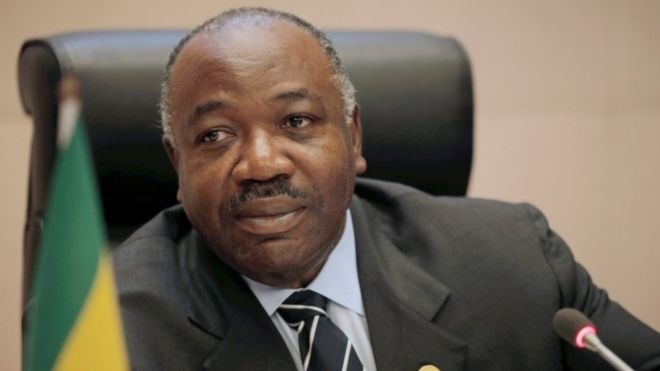
Gabon coup attempt: Gov’t says situation under control

Ali Bongo

The political situation in Gabon is “under control” following an attempted military coup, a spokesman for the government has said.

All five of the rebels who tried to take charge have now been arrested by the authorities.
The junior officers claimed they seized power “to restore democracy” in oil-rich Gabon, where the ailing leader’s family has ruled for 50 years.

Tanks and armoured vehicles could be seen in the capital Libreville.
One of the rebels was on the run for a brief period, before being found hiding under a bed, reports Radio France Internationale.

“The situation is calm. The gendarmes who are often stationed there have taken control of the entire area around the radio and TV headquarters, so everything is back to normal”, said Guy-Bertrand Mapangou. a government spokesman.

Mr Mapangou said that the army generals, civil society and opposition leaders mentioned in the rebels’ statement as potential supporters would be investigated.

Current leader Ali Bongo succeeded his father Omar Bongo as president in 2009. He narrowly won re-election in 2016 in a poll marred by violence and accusations of fraud.

What happened this morning?
The five soldiers took control of the national radio station at 04:30 local time (03:30 GMT) to read a short statement announcing a “National Restoration Council”.
In a video circulating on social media, three young soldiers can be seen in a radio studio wearing military fatigues and holding guns.

 How can you tell a coup is happening?

Lt Kelly Ondo Obiang, who said he represented a group called the Patriotic Movement of the Defence and Security Forces of Gabon, specifically appealed to young people to “take charge of their destiny”.

The insurgents called on soldiers to take control of the transport system, ammunition reserves and airports “in the interests of the nation”.
The BBC’s Firmain Eric Mbadinga said the coup attempt came as a huge surprise. The army has always been seen as loyal to the Bongo family, he said, because it is dominated by the presidential guard, who mostly come from Mr Bongo’s home region.

Most of the capital remains calm; an eyewitness told the Reuters news agency. The French government and the African Union condemned the attempted coup.

Five things to know about Gabon
 Compared to many other African states, Gabon has seen much less political turmoil, and has had just three presidents since 1960
 Former ruler Omar Bongo dominated Gabonese politics for almost four decades, crushing dissent
 It is a major oil producer but one third of its people live in poverty
 It has a population of 1.8 million people, with an average life expectancy of 62 years. The youth unemployment rate is around 35 per cent
 The country’s national symbol is the black panther

What more do we know about President Ali Bongo?

The president’s term in office has been overshadowed by a long-running French investigation into allegations of embezzlement involving the Bongo family’s assets.
Mr Bongo, who has been out of the country for two months, reportedly suffered a stroke in October and received treatment in Morocco,.

He sought to put an end to the rumours about his health with a televised New Year message in which he said he was feeling fine.
Soldiers said they had been disappointed by the message, calling it “a pitiful sight” and a “relentless attempt to cling onto power.”

Mr Bongo has been criticised over his prominent role in the Freemasons – an organisation whose Gabonese chapter he led as lodge master.

But his supporters point to his role in attempting to diversify Gabon’s oil-dependent economy, in the face of declining oil reserves.

President Trump has deployed soldiers to Gabon to protect US citizens amid fears of violent protests in the neighbouring Democratic Republic of Congo following its presidential election.

Stories Continues after ad

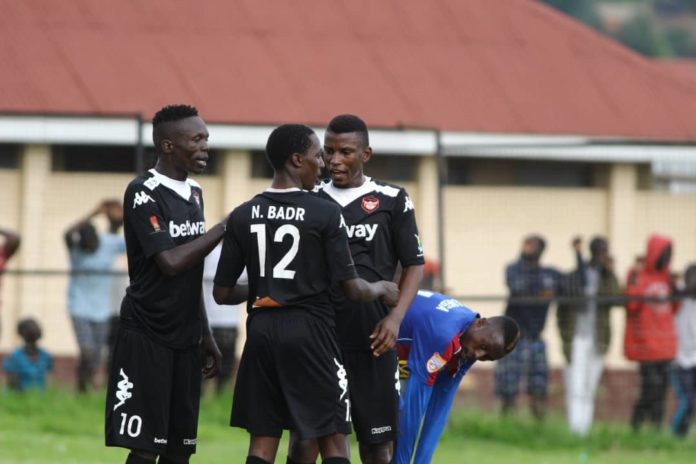
2018/19 UPL season first round enters final match-day

Express against Maroons

The first round of the 2018/19 StarTimes Uganda Premier League season enters the final matchday before the clubs go for a break.

Defending champions Vipers SC host Onduparaka tomorrow at St. Mary’s stadium as they seek to winning ways after two consecutive goalless draws against Tooro United and Bright Stars.

New signing Innocent Wafula from Kenyan side Gor Mahia will be in contention to start at right back while coach Edward Golola starts work as the interim.

On the same day, KCCA cross to Namboole to face URA while Police will host struggling SC Villa at the StarTimes stadium in Lugogo.

Only one game will be played on Wednesday when Kirinya Jinja SSS travels to Kakyeka stadium to face a much improved Mbarara City.

BUL host Nyamityobora in Jinja, Maroons travel to Greenlight stadium to face bottom side Paidha Black Angels while Tooro United FC entertain Bright Stars FC at Buhinga Stadium in Fort Portal, all on Thursday.

The final live game of the first round will be at the Betway stadium in Wankulukuku on Thursday as Express welcome league newcomers Ndejje University.

Joel Madondo of Kirinya Jinja SSS and SC Villa JOGOO’s Bashir Mutanda lead the top scorers chart as the first round comes to an end with both tied on nine goals each.

The second round fixtures and dates will be communicated by the competitions committee in due time.

KCCA FC still lead the 16-table log with 33 points while Paidha Black Angels SC are bottom with 6 points from 14 matches played.

Match day 15 fixtures;

Tuesday 8th

Vipers SC Vs Onduparaka FC, St. Mary’s -Kitende

Police FC Vs SC Villa, StarTimes Stadium-Lugogo

URA FC Vs KCCA FC, M. National Stadium-Namboole

Wednesday 9th

Mbarara City FC Vs Kirinya Jinja SSS FC, Kakyeka Stadium-Mbarara

Thursday 10th

Express FC Vs Ndejje University FC, Muteesa II Stadium – Wankulukuku

BUL FC Vs Nyamityobora FC, FUFA Technical Centre – Njeru

Paidha Black Angels SC Vs Maroons FC, Green Light Stadium – Arua

Tooro United FC Vs Bright Stars FC, Buhinga Stadium – Fort Portal

Stories Continues after ad

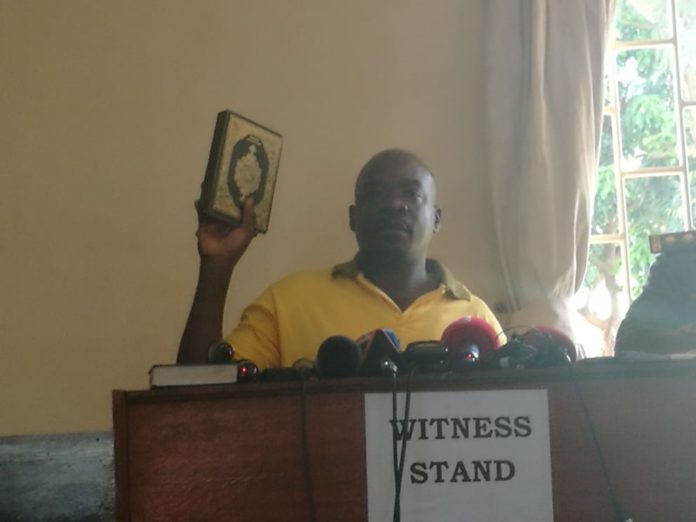
Abdu Kitata tells Court martial he isn’t a leader of Boda-Boda 2010 or its member

Abdu Kitata in the dock

The detained patron for Boda-Boda 2010, Abdallah Kitata has denied allegations of being a member or its leader of the group that is alleged to have terrorized the boda-boda community in Kampala.

Following cross examination of witnesses, in December last year, the chairman of Makindye General Court Martial (GCM), Lt. Gen. Andrew Gutti ruled that the embattled patron for Boda-Boda 2010 Abdullah Kitata has a case to answer in the criminal charges leveled against him.

Appearing before Court Martial earlier in the day, in his Defence, Kitata denied ownership of the golden pistol, rounds of ammunition and military fatigue that were brought to court last year,

“I don’t know about the Golden Pistol. I only saw and heard about it here in General Court Martial and I am not a member of boda-boda 2010 neither am I a leader of boda-boda 2010.” He said in a narration of what transpired during his arrest at Vine hotel in Wakaliga.

He contended that witnesses brought to court including Private Richard Kasaija were not at the scene at the time when he was nabbed and vowed to produce his own witnesses. He asked court to avail CCTV camera footage that was captured before, during after his arrest.

The matter was adjourned to 21st January 2018, a day after clocking one year on remand in Makindye military barracks.

Kitata was in January arrested by a joint force of Uganda People’s Defence Forces (UPDF) and Internal Security Organization (ISO) and is currently facing five counts including failure to protect war material and being in unlawful possession of military stores contrary to the UPDF Act.

Stories Continues after ad

Five startup intangibles that can energize your business

Martin Zwilling

By Martin Zwilling

Some investors seem to focus wholly on the strengths of the management team, or a sustainable competitive advantage, and in reality these are the core attributes for every funding equation. While these may be necessary for funding, they may not be sufficient to make your startup the great success embodied in your vision.

In the last few years, perhaps in reaction to the business integrity issues leading to the recession way back in 2008, I am seeing a renewed focus on other less tangible attributes which can set your startup apart. Examples include the Conscious Capitalism® movement, founded by John Mackey of Whole Foods, the B Team, founded by serial entrepreneur Sir Richard Branson, and the Benefit Corporation (B Corp) form of business now available in 33 states.

I have always struggled to communicate the multiple other relevant priorities, and the other intangibles required for a great execution. I found many of these in the classic book “Great From The Start: How Conscious Corporations Attract Success ,” by John B. Montgomery, which does a great job of laying out specifics.

It also starts with a good summary of the intangibles, summarized as the five rules of relevancy, by Mark Zawacki:

A startup needs to be relevant and stay relevant. Relevancy for an early-stage company is the discovery and understanding of the real addressable market for a product or service. This is not the total opportunity out there, and not the total target market, but the subset of customers who have and will spend the money you need to cure their pain.

A startup needs to find a voice relevant to its ecosystem. These days, you have to foster a community of support for your business. That means educating targeted supporters is key, even before you start to sell. Selling too early triggers customer defenses and drives them away. Everyone hates being sold to; we all prefer to buy.

A startup must gain balanced traction. This is not just sales traction, but a proper balance between resources, product, and customers. It means building a viable and desirable product before selling, assembling the right team with funding, and recruiting and educating enthusiastic customers who will be your best advocates.

A startup must form partnerships and alliances within its ecosystem. Today’s ultracompetitive global environment demands that you make alliances early. Startups often pay lip service to strategic partnerships, but they schedule these efforts far down the road. The right partnership strategy can make a company relevant.

A startup must maintain a relevant laser focus. Too many early-stage companies are so desperate for customers that they operate in a frantic and random sales mode. They sell into multiple verticals, or pursue multiple revenue streams, such that they can’t develop a repeatable, scalable sales process, and don’t do anything well.

Of course, relevancy doesn’t work if you don’t have a winning business model. In the traditional business environment, this means the priority is an adequate return for your stakeholders, but today it also means your company should provide a material positive impact on society and the environment.

Great companies recognize that there are now multiple interdependent stakeholders, including customers, business partners, and social groups, who need to be part of your equation since they can drive or limit your success, in addition to management and stockholders.

In other words, your startup needs to be a “conscious” entity, constantly aware of the complex eco-system around it, and the factors driving change and evolution. This requires conscious leaders who are passionately committed to personal and professional growth, as well as the greater good of society. These leaders then cultivate the consciousness of their team members.

In reality, your people are the consciousness and relevance of your startup, and your customers judge your startup as they would judge a person. No relevant company can afford to focus on short-term wins over the long-term effects of its behavior on other stakeholders. How much time and how many measures has your startup applied regularly to the relevance issues above?

The writer is a veteran startup mentor, executive, blogger, author, tech professional, professor, and investor. Published on Forbes, Entrepreneur, Inc, Huffington Post.

Stories Continues after ad

Private equity fund deals in EA hit $930.3m

Private Equity

Private equity (PE) deals in East Africa bounced back in 2018 after a seemingly tough year 2017, with 47 PE deals announced this year, up from 27 in the previous year, a report shows.

The increase in PE deals is indicative of East Africa’s growing prominence as a private capital destination, in part driven by the stability of the region’s economies.

During the year 2018, Kenya recorded the highest number of private equity investments made, with 24 transactions recorded compared to 18 in 2017. Uganda was second in terms of PE deals activity with a total of 6 deals recorded in 2018.

Ethiopia, whose profile has been steadily rising amongst the investing community recorded 5 PE transactions for the year. Rwanda had two while Tanzania had one.

“A relatively calm transition following the 2017 elections and the handshake by the leading parties’ political heads sent a strong signal on the country’s stability and reinforced investor confidence, resulting in the jump in deals done in 2018,” said Eva Warigia, Executive Director at the East Africa Private Equity and Venture Capital Association (EAVCA), the trade organization for private equity and venture capital firms operating in East Africa.

“Most of the investments had been in the pipeline during the election cycle waiting for the political tension to ease before conclusion,” Ms. Warigia added.

Private equity investment activity during the year was spread across multiple sectors from education with an investment by Fanisi Capital in Kitengela Group off Schools, to healthcare in Tanzania with Leapfrog Investments’ acquisition of stake in Pyramid Group.

2018 also saw a US$47.5 million investment in technology firm Cellulant, reinforcing East Africa’s position as a tech hub.

Ethiopia’s jump in deal activity from no deals in 2017 to 5 deals closed in 2018, was largely attributed to the growing network of country focused funds, which have dedicated funding to the growing Ethiopian market.

This year, Cepheus Growth Capital Partners, a fund dedicated to exclusively investing in Ethiopia closed its maiden fund at US$ 100million.

Zoscales Partners, another Ethiopia focused with US$ 75 million in assets under management, closed two deals in the manufacturing and consumer sectors in Ethiopia.

Disclosed deal value for 2018 deals was recorded at US $834.3 million, compared to US$ 446.78 million in 2017. Further, as East Africa’s attractiveness grows, the number of PE firms looking at investable businesses in the region also grew.

This year, Mauritius Based Adenia Partners, French Amethis Partners,South Africa’s Ethos Partners, and Washington D.C’s Capria Ventures were among the PE funds that opened their offices in the region, to tap into East Africa’s opportunities.

PE in East Africa provides growth capital for the rapidly expanding SME economy, investing in businesses with an annual turnover of less than US$ 30 million, employing less than 150 employees.

Businesses that meet this threshold are few which leads to competition for these deals, ultimately resulting in the steep company valuations.

“Going into 2019, we expect the momentum for deal activity to increase, at least for Kenya and Ethiopia,” said Ms. Warigia.

“We are optimistic that East Africa will remain a significant market for investors looking at Africa, backed by its economies’ resilience. Along with this is the diverse sectors available for investment, providing a wide spread for value generation to the investors’ portfolio.” She added

Some of the PE exits realized in 2018 were drawn from: healthcare, agribusiness, real estate and energy.

EAVCA is a business association that represents the voice of private investors in East Africa. The association was formed in 2013 by seven founding private equity funds: Abraaj Capital, Acumen Fund, AfricInvest, Centum, Catalyst Principal Partners, Fanisi Capital, and TBL Mirror Fund.

Today, EAVCA has grown to a membership of 65 entities comprising: development finance institutions, private equity and venture capital funds, and intermediary advisory firms.

The association represents approximately US $4.5billion in funds under management,looking at investments in scalable enterprises within the Eastern Africa region.

As a member association, EAVCA serves as the interlinking platform for public stakeholders, local businesses and private investors, building on dialogue and industry insights to create a sustainable, informed eco-system that advances sustainable wealth creation and economic development in the region.

Stories Continues after ad

AfDB to raise over $7 billion for investment in African economies in 2019

Hassatou N’Sele

The African Development Bank’s (AfDB) Board has approved the institution’s 2019 borrowing program to the tune of US $7.24 billion from capital markets.

The Bank accesses a wide array of capital markets with the majority of its borrowing in US dollars and Euros as well as issuances in other public markets such as Australian dollars and Pound sterling.

AfDB maintains an active presence in the socially responsible investment arena and continues to be a regular issue of Green and Social Bonds. These products serve to satisfy increasing demand for impact investment but also allow the Bank to highlight its development mandate and promote sustainable and inclusive growth.

The Bank also used its ‘High 5’ operational priorities as a platform to continue the issuance of theme bonds. These include an inaugural ‘Integrate Africa’ bond, a ‘Feed Africa’ bond awarded Asia Pacific Deal of the Year by mtn-i, more than forty ‘Improve the Quality of the Life for the People of Africa’ bonds, and two taps of its ‘Light Up and Power Africa’ bond.

The Bank is keen to innovate and diversify its product range and, as the financial markets continue to look to a future after Libor, was able to combine innovation with its social responsibility program and issue the first ever Green SOFR-linked bond, in November.

The Bank will continue to promote the development of African Capital markets with the issue of local currency denominated debt to facilitate the financing of its local currency operations, alongside other initiatives.

“We continue to raise our profile in the capital markets to provide cost-effective resources to finance projects and programs on the African continent. We have a strong track record, a diversified funding profile, investors across the world and the benefits of a AAA rating to strongly support the African Development Bank mandate,” the Bank’s Treasurer, Hassatou N’Sele said.

AfDB is rated triple-A by all the major international rating agencies and enjoys several solid Environmental Social and Governance ratings (ESG).

In 2017, the Bank disbursed US$7.51 billion to finance projects and programs in its Regional Member Countries, exceeding its target for non-sovereign operations by 56 percent.

Stories Continues after ad

Wayne Rooney arrested in U.S for public intoxication

Rooney was arrested in Washington last month

Former England and Manchester United captain, Wayne Rooney was arrested on 16 December 2018 at Dulles International Airport in Virginia after returning from a one-day trip to Saudi Arabia.

Wayne Rooney’s arrest for public intoxication was a result of feeling “disorientated” after taking sleeping tablets on a flight while drinking alcohol. He was arrested after triggering a door alarm at Washington’s Dulles airport, near the stadium for his current team, DC United.

The 33-year-old forward was charged and paid a $25 fine and $91 costs on 4 January 2019, according to court documents from Loudoun General District Court.

In a statement, his spokesman said: “During the flight Wayne took a prescribed amount of sleeping tablets mixed with some alcohol consumption and consequently was disorientated on arrival.

“He was approached by police who arrested him on a minor misdemeanour charge.

“He received a statutory automatic fine and was released shortly afterwards at the airport. The matter is now at an end.

“Wayne would like to put on record his appreciation for the manner he was treated by all involved.”

A statement from DC United said: “We are aware of news reports indicating that Wayne Rooney was arrested in December.

“We understand the media’s interest in this matter but we believe this is a private matter for Wayne that DC United will handle internally. We have no further comment on this situation.”

This is not the first time Rooney is getting himself on the wrong side of the law on similar grounds. In September 2017, he admitted on drink-driving charges after he was arrested over speeding a woman’s car.

He was banned from driving for two years in addition to unpaid community work.

Stories Continues after ad

New telecom company to launch in Uganda soon

Lycamobile

Lycamobile, a United Kingdom-based virtual network operator (MVNO) is laying the groundwork ahead of its launch in Uganda, betting on a market that was left by Vodafone.

Vodafone, which had been Uganda for four years, at the time of closure, had reportedly accumulated a debt of more than Shs300 billion, casting an impression that the market was not ready for new mobile network operators. The company had just over 60,000 subscribers, way below its competitors like Africell (above 2 million), Airtel (more than 8 million) and MTN Uganda (above 11 million).

The closure of Vodafone unfolded alongside troubling times that saw K2 Telecom temporarily close the business before being absorbed by Airtel Uganda.

The telecommunications market in Uganda is currently dominated by MTN Uganda, followed by Airtel and then Africell.

Other telecom companies and internet service providers in Uganda include Smile Communications, which also mid-2018 lost its interconnection deal with Airtel; Uganda Telecom, which is still struggling to regain its glory; Tangerine, Smart Telecom, truIT Uganda, CSquared and Liquid Telecom.

Why Lycamobile is interested in Ugandan market

Lycamobile, has been a player in the telecommunications sectors for more than ten years. An MVNO is a wireless communications services provider that does not own the wireless network infrastructure over which it provides services to its customers.

K2 Telecom is an example of an MVNO in Uganda.

Lycamobile has already sold its telecom services in twenty-three countries, including Denmark, Germany, The Netherlands, Sweden, Australia, Spain, Italy, France, Belgium and Switzerland.

In Africa, it is only present in South Africa, implying Uganda will be the second market, if nothing changes. The company will be partnering with Tangerine, one of the internet service providers in the country, according to sources, who refused to disclose details of the agreement, stating it was still premature to discuss the topic as they’re yet to agree on the launch program.

Tangerine is already in most towns in Mukono, Kampala and Wakiso, offering some of the most attractive internet rates to companies and individuals.

Leveraging Tangerine’s experience in Uganda, Lycamobile could strategize and win attention from the market.

Uganda has been ranked as having the most expensive internet rates in East Africa.

Apart from the high costs of the internet, the infrastructure is also still largely wanting, which is why, even with telcoms claiming the latest generations of cellular technology (4G LTE) to be existent in some areas, people still cry of poor connections.

According to our source, Lycamobile will focus only on 2G (for voice calls) and 4G (for internet users).

The company is already hiring for its operations in Uganda and close to twenty jobs in the marketing and engineering departments are open to applicants on the Fuzu platform.

Stories Continues after ad