Stanbic Bank
Stanbic Bank
26.9 C
Kampala
Stanbic Bank
Stanbic Bank
Home Blog Page 1417

Climate change: Gov’t launches national adaptation plan for agricultural sector

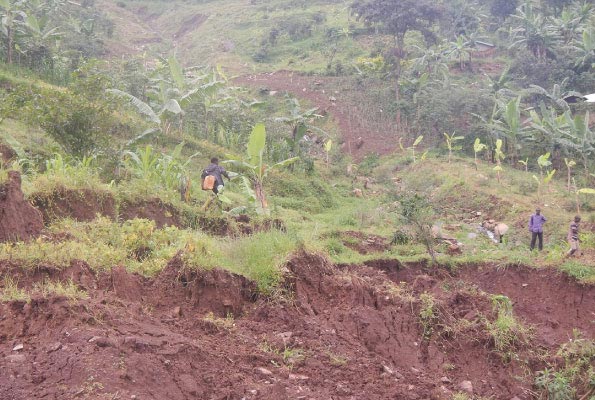
Scientists-say-the-landslides-that-hit-some-parts-of-Uganda-recently-are-a-result-of-climate-change.

The government of Uganda through the Ministry of Agriculture Animal Industry and Fisheries (MAAIF) has launched the National Adaptation Plan for the Agricultural Sector (NAP-Ag) aimed at integrating climate change concerns related to agriculture-based livelihoods within the existing national planning and budgetary processes.

The plan was launched in Kampala on Wednesday by Vincent Ssempijja, the minister of AAIF.

The formulation of the NAP-Ag was funded by German Federal Ministry of the Environment, Nature Conservation and Nuclear Safety (BMU) through its project on Supporting Developing Countries to Integrate Agricultural Sectors into National Adaptation Plans (NAP-Ag).

Ssempijja said the process has enabled Uganda to identify medium and long-term adaptation needs and develop Implementation strategies and interventions. The NAP-Ag presents 21 priority adaptation options in the key areas of Crop Production, Livestock Production, Fisheries Management, Climate Information, Early Warning and Disaster Preparedness, Forestry, Land and Natural Resources Management, Research, and Knowledge Management.

“The framework is a basis to mitigate climate change issues, farmers can’t achieve any goal without planning. Recently in 2016, change in climate led to a long dry spell that culminated into the fall of army warm and food insecurity, we need to plan for any in coincidence,” he said.

He said the framework ‘peddles the promotion and encouraging highly adaptive and productive livestock breeds, promote technologies for improved livestock feeds and sustainable management of rangelands and pastures through integrated management.’

The minister said the plan would help in adopting measures that focus on boosting productivity of both cash and food crops, building capacity of small holder farmers to increase yields and better understanding the impact of temperature rise and rain rainfall.

He said NAP-Ag contributes to achievement of Uganda’s National Determined Contributions (NDC) to Climate Change, contributes to the achievement of Sustainable Development Goals (SDGs) and is aligned to the Second National Development Plan (NDP II).

Formulation of NAP-Ag policy was flagged off by the state minister for agriculture Cristopher Kibanzanga on June 25, 2016.

Climate changes affects Uganda’s crop production, livestock as well as fisheries in many ways.

For instance, the Uganda Vulnerability Assessment study on crops most widely grown in all agro-ecological zones showed that many crops grown in the country are vulnerable to the rising temperatures, increasing dry season and unrealizable rainfall. Uganda grows crops such as coffee, maize, beans, millet, sorghum, sweet potatoes, Cow peace, soy beans and rice among others.

Crop production contributes about 12.4 percent of GDP, according to 2014 statistics provided by the Uganda Bureau of Statistics (Ubos). The subsector supports smallholder farmers, provides food and nutritional security and delivers foreign exchange earnings.

However, the ministry of Finance in 2015 reported that productivity growth in the country has been on a downward trend; averaging only around 1 percent per year over the last decade, as compared to around 6 percent per year in better-performing countries in the region. Crop productivity is the quantitative measure of crop yield in given measured area of field, experts say.

The increase in agricultural production in Uganda is attributed to farming area expansion rather than increase in productivity.

Stories Continues after ad

Makerere don wins global award for contribution to education and training

Prof. William Bazeyo, second on the left displaying his award.

Makerere University’s Deputy Vice Chancellor in charge of Finance and Administration, Prof. William Bazeyo is Continental Winner in the Education and Training – Academic sector of CEO Global’s Titans: Building Nations, 2018 Awards.

The Award was presented to Prof. Bazeyo by the Chief Executive of CEO Global, Annelize Wepener at a Gala Dinner held at the Apollo Hotel in Johannesburg, South Africa on Tuesday.

CEO Global hosted Africa’s Most Influential Women in Business and Government and Titans Building Nations Awards on the 26th and 27th November 2018. The Awards recognised Regional and Continental finalists and winners.

Fifty seven (57) countries participated in this year’s awards in 23 categories which included Education and Training, Media, Health, Tourism and Banking among others. The African continent was divided into 8 regions, each with a winner in the respective categories. The Continental Winner was then drawn from the eight regional winners in each category.

Prof. Bazeyo on November 3, 2018 emerged both Country and Regional Winner of the Great Lakes 2018/2019 CEO Global Pan African Awards and as such qualified for the aforementioned finals. He was recognized for his outstanding achievements in education and training sector in Africa.

Prior to the Gala Dinner, the awardees took part in a one day symposium which explored benefits and challenges of the African Free Trade Agreement (AcFTA). Attendees also had the opportunity to network with and meet potential business partners drawn from Africa’s Top Achievers across 23 Economic Sectors.

Stories Continues after ad

Carrefour signs major deal with Jumia as it prepares to launch in Uganda next year

Carrefour

Reports show that Carrefour, a French multinational retailer, which announced it would launch its operations in Uganda in the first quarter of 2019, has entered a new partnership with Jumia in Kenya.

It is not clear whether the deal will be extended to Uganda but past records show that Carrefour has been partnering with Jumia in most countries both commercial enterprises operate, for instance, in Ivory Coast, Cameroon and Senegal.

Carrefour is expected to operate its store in Mall Oasis in Kampala.

Carrefour operates in more than 30 countries in Europe, America, Asia, and Africa and it has previously expressed interest in Gabon and the DRC.

In 2017, they made 88.24 billion euros in sales, according to reports.

Through this partnership, more shoppers will now have access to a variety of Carrefour products, providing them with a shopping experience that is safe, convenient and stress-free from the comfort of their homes.

Speaking on the partnership, Franck Moreau of Carrefour Kenya said the company was excited to partner with Jumia in Kenya as it seeks to reach more customers by leveraging on Jumia’s network and e-commerce platform.

This decision is based on Jumia Kenya’s credibility and excellent performance over the years in online shopping management and is consistent with Majid Al Futtaim’s omnichannel strategy for Carrefour, he said.

Jumia Kenya Managing Director, Sam Chappatte said, “Carrefour is one of the largest retailers in the world and growing fast in Kenya. Through this partnership, we are pleased to offer the best of Carrefour’s products to our customers across Kenya.”

He said the partnership was part of Jumia’s continued commitment to conveniently offer customers the largest range of quality products at the best prices.

Carrefour is currently under Majid Al Futtaim, an Emirati holding company based in Dubai. Majid Al Futtaim operates several shopping malls, retail, and leisure establishments in the Middle East and Africa.

Majid Al Futtaim opened the first Carrefour store in Kenya in May 2016 at The Hub in Karen, followed by its second store in March 2017, at the Two Rivers Mall.

Stories Continues after ad

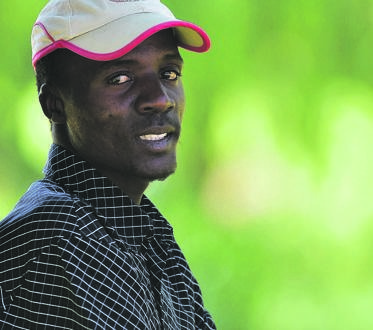
Meet Ugandan man who is paid to satisfy women in bed

Paul Zuluka’s says his job is to satisfy women

Meet Paul Zuluka, a Ugandan man living in South Africa whose job is to satisfy women in bed. He does it for only R400 per round, R2000 per night.

“This is the best idea I’ve ever had. I love sex and am great at it, so I enjoy every moment. I get money for doing something I love,” said 27-year-old Paul Zuluka from Meadowlands, Soweto.

“I help women keep their relationships going and reduce their stress.”

He said he started his business in September because he could not find work

“I’m a Ugandan. I came to South Africa to get a job, but that didn’t happen so I had to do something,” said Paul.

But Paul’s Man-For-Hire business also has its challenges.

“I also get calls from men who offer me a lot of money, but I’m a man and am only available to women,” he said.

Paul says it is also difficult when he has too many clients in one day. He says it becomes a problem when women book him for one round, change their minds and want three or four.

“It messes up my work schedule,” he said.

“They forget there are other women who want a piece of me as well.”

Paul explained that sometimes women start getting too attached.

“I’m just doing my job.”

He says most of the women come from Sandton.

“Some even offer more cash.”

Daily Sun spoke to a woman who said Paul was perfect.

“No boyfriend, no stress. I have Paul to satisfy me. I’m a businesswoman. Paul’s the best in the game,” she said.

Another woman said she has a boyfriend but he doesn’t satisfy her, so Paul saves her relationship.

“I love my boyfriend and don’t want to lose him. What he doesn’t know won’t hurt him,” she said. Paul charges R400 for one round and R2 000 for 24 hours.

Stories Continues after ad

Rich individuals threatening locals over land in Nwoya district

contested Apaa land

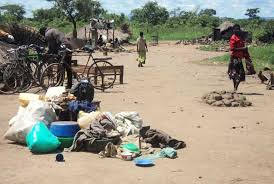
Residents of Lalur Okun village Koch Kalang Parish in Goma Sub County, Nwoya district are facing threats from some rich persons in the area.

The residents say that these persons always come with government soldiers to threaten their lives in the community ordering them demolish their houses and shift away from the 15, 000 hectres land from Ayego Village to Koch goma Road.

The residents claim that at least two different persons are personally claiming that the land belongs to them yet villagers have been in the area for decades.

Irene Alanyo a resident in the area says the tension is between the two rich persons Abe and Apia where Apia wants to take personal control over land belonging to clan members whereas Abe also wants to chase people because he is rich and want also to take over the land
Agness Obye says they are at risk because even when the axing fire woods in their homes for cooking, soldiers always ask where they collected the wood from.

Alfred Kibwota, secretary to the chairperson Kalang Village revealed to Eagle Online “Those people came to settle in the area in 1975 refugees during Amin’s time and found us already in the area but now they are claiming for land ownership by threatening people’s lives”. She said.

Justine Odong the local council one chairperson Lalur Okun village says they are scared and facing live threats and they could hardly sleep at night since all activity they are conducting in the village are being monitored.

“Over 2000 people of Lalur Okun are currently leaving on their toes due to the threats the community is receiving in their lives from some rich personalities who wants to own lands our village” .

Stories Continues after ad

Disappearance of BoU documents: Bagyenda’s aide, other security officers put on oath

Justine Bagyenda's security detail plus the driver taking oath before MPs.

Four Bank of Uganda security officers have been put on oath by Parliament’s Committee on Commissions, Statutory Authorities and State Enterprises (Cosase) which probing the central bank’s top officials over the irregular closure of seven commercial banks in the country.

The four officials including a bodyguard of Ms Justine Bagyenda, the former executive director of supervision at BoU, are expected to give more details of how Bagyenda was able to move documents out of the Bank without being checked.

However, Bagyenda’s aide Juliet caused drama in parliament, saying standing orders of the police do not permit her to appear before a committee or any other related organ. She was over ruled by Committee Chairman Abdu Katuntu who said standing orders of the police force are subject to the Constitution of the Republic of Uganda. She would later take the oath, with Katuntu tell her she will be protected in case she is apprehended by superiors.

The security officers were asked to give their testimonies to a subcommittee, Katuntu reasoning that it is not good idea to discuss security issues of BoU on camera.

BoU director of security Milton Opio on Tuesday told the MPs that the former executive director in charge of supervision Justine Bagyenda facilitated the theft of documents from the central bank.

Opio said that their CCTV camera’s captured Bagyenda’s personal aide (Juliet) smuggling bags of documents from the central bank on February 10, 2018. Mr. Opio made the revelation under the directive of BoU governor Emmanuel Tumusiime-Mutebile, who had been tasked to explain whether the central bank had any case of stolen documents.

The documents were carried by Juliet who loaded them in her boss’s car and they drove off to unknown place. She would later return some of the documents on March 14, 2018.

Bagyenda is currently out of the country and the committee expects her to appear before it tomorrow without fail or an arrest warrant will be issued against her. She is believed to have taken out some of the BoU documents and keeping them. They relate to the liquidation of the banks like; Greenland Bank, International Credit Bank, Cooperative Bank, Crane Bank Limited, Teefe Trust Bank, Global Trust Bank Uganda.

Stories Continues after ad

Nominees for 2018 FUFA Awards revealed

FUFA logo

Nominees for the 4th edition of the Airtel FUFA Awards have been revealed by Uganda’s football governing body in a press conference held today at FUFA house in Mengo.

The final list for the nominees for the male and female Most Valuable players (MVP’s) was generated by a panel of experts – the 16 coaches in the Uganda Premier League and FUFA Women Elite league.

There are 16 categories for the awards in total, four of which will involve the general public through SMS to choose their best.

The Fans’ Favourite Ugandan player (Foreign based) will be voted via SMS by fans (Fans name of player. Send to 8888).

This year’s awards ceremony will take place on 7th December 2018 at the Speke Resort Munyonyo in Kampala.

BBS TV will broadcast live the 2018 Airtel FUFA Awards.

List of Nominees:

FUFA Player of the year 2018: Allan Okello (KCCA FC), Moses Waiswa (Vipers SC), Vianne Sekajugo (Onduparaka FC).

FUFA Female Player of the year: Tracy Jones Akiror (Kawempe Muslim Ladies FC), Ruth Aturo (UCU Lady Cardinals FC), Shadia Nankya (Uganda Martyrs High School, Lubaga)

FUFA Referee of the Year: Mark Ssonko, Alex Muhabi, Mashood Ssali, Shamira Nabadda, Brian Miiro Nsubuga

FUFA Coach of the Year: Mike Mutebi (KCCA FC), Alex Isabirye (Kyetume FC), Ayub Khalifa (Kawempe Muslim), Raymond Komakech (Ndejje University), Miguel Da Costa (Formerly at Vipers SC)

FUFA Most Promising Player Award: Kizza Mustafa (KCCA FC), Geoffrey Wasswa (Vipers SC), Fred Amaku (Kirinya Jinja SSS)

FUFA Upcoming Talent (FUFA Juniors League U-19): Sadat Anaku (KCCA FC), Thomas Kakaire (Bright Stars FC), Idd Abdul Wahid (Onduparaka FC)

FUFA Best XI: Will be composed of players from the StarTimes Uganda Premier League

FUFA Presidential Award: Recipient of this award is selected by FUFA President.

FUFA Fair-play Award: The Award will go to the team with the least number of yellow and red cards last season in the StarTimes Uganda Premier League.

FUFA Individual Fair-play Award: The award will go to an individual who exhibited high levels of sportsmanship spirit that promoted fair play.

FUFA Upcoming Referee of the year (From FUFA Juniors League): Herbert Bwiire, Haula Namusoke, Bill Kitibwa, Shamirah Nabukenya, Zamuyati Kawala

FUFA Beach Soccer player of the year: Meddie Kibirige (Isabet), Isaac Eshioke (KIU), Suleiman Ochero (St. Lawrence University)

Fans’ Favourite Ugandan player of the year: This award will be determined by fans. It is limited to Ugandans irrespective of where they are playing their club football. To vote: Type FANUG leave a space player’s name and send to 8888

Fan of the Year award: This award will be determined by Uganda Premier League Secretariat

MVP (FUFA Big League): Will be awarded to the best player in the StarTimes Big League

Stories Continues after ad

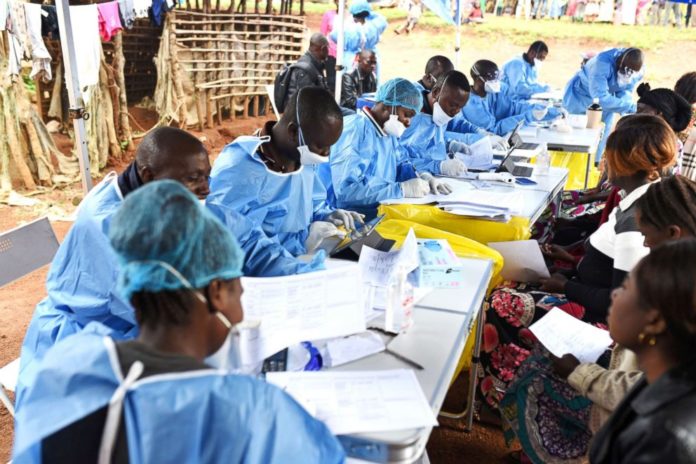
DRC begins first-ever multi-drug Ebola trial

DRC health officials attend to clients

The Ministry of Health of the Democratic Republic of the Congo (DRC) announced a randomized control trial that has begun to evaluate the effectiveness and safety of drugs used in the treatment of Ebola patients. The trial is the first-ever multi drug trial for an Ebola treatment. It will form part of a multi-outbreak, multi-country study that was agreed to by partners under a World Health Organization (WHO) initiative.

“While our focus remains on bringing this outbreak to an end, the launch of the randomized control trial in DRC is an important step towards finally finding an Ebola treatment that will save lives,” said WHO Director-General Dr Tedros Adhanom Ghebreyesus. “Until now, patients have been treated under a compassionate use protocol, with drugs that showed promise and had a good safety profile in laboratory conditions. The giant step DRC is taking now will bring clarity about what works best, and save many lives in years to come. We hope to one day say that the death and suffering from Ebola is behind us.”

Until now, over 160 patients have been treated with investigational therapeutics under an ethical framework developed by WHO, in consultation with experts in the field and the DRC, called the Monitored Emergency Use of Unregistered and Investigational Interventions (MEURI). The MEURI protocol was not designed to evaluate the drugs. Now that protocols for trials are in place, patients will be offered treatments under that framework in the facilities where the trial has started.

In others, compassionate use will continue up to the time when they join the randomization. Patients will not be treated noticeably differently from before, though the treatment they receive will be decided by random allocation. The data gathered will become standardized and will be useful for drawing conclusions about the safety and efficacy of the drugs.

“Our country is struck with Ebola outbreaks too often, which also means we have unique expertise in combatting it,” said Dr Olly Ilunga, Minister of Health of the DRC. “These trials will contribute to building that knowledge, while we continue to respond on every front to bring the current outbreak to an end.”

In October, WHO convened a meeting of international organizations, United Nations partners, countries at risk of Ebola, drug manufacturers and others to agree on a framework to continue trials in the next Ebola outbreak, whenever and wherever that is. Over time, this will lead to an accumulation of evidence that will help to draw robust conclusions across outbreaks about the currently available drugs, and any new ones that may come along.

At the heart of the long term plan and the current trial is always the goal to ensure that patients with Ebola and their communities are treated with respect and fairness. All patients should be provided with the highest level of care and have access to the most promising medications.

The current trial is coordinated by WHO, and led and sponsored by the DRC’s National Institute for Biomedical Research (INRB), in partnership with the DRC Ministry of Health, the National Institute of Allergy and Infectious Diseases (NIAID) which is part of the United States’ National Institutes of Health, The Alliance for International Medical Action (ALIMA) and other organizations.

Stories Continues after ad

ITC to launch SheTrades programme in Uganda and Egypt

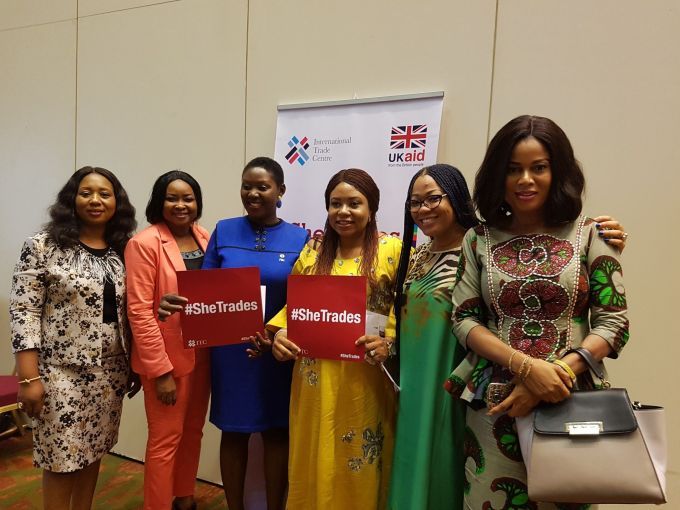
ITC launched the Nigeria chapter of SheTrades

The International Trade Centre (ITC) will next year launch the SheTrades programme in Uganda and Egypt bringing the number of COMESA countries implementing the programme to five. The SheTrades initiative provides women entrepreneurs around the world with a unique network and platform to connect to markets.

ITC Deputy Director Mrs Dorothy Tembo revealed this in Lusaka during her address to the 39th COMESA Intergovernmental Committee Meeting.

She said her organisation has implemented a number of trade-related technical assistance projects in COMESA Member States covering Trade Facilitation and Value Chain under the Regional Integration Support Mechanism (RISM) for Zambia and Comoros respectively.

In the broader ITC work, SheTrades Chapters were launched in Kenya, Rwanda and Zambia as part of efforts to connect three million women to markets by 2021.

ITC also intends to work in collaboration with COMESA for the implementation of the Tripartite COMESA-EAC-SADC Free Trade Area and the Continental Free Trade Area (CFTA).

Under the COMESA Cross Border Trade Initiative, ITC and COMESA signed a co-Delegation Agreement in June 2018 for the implementation of specific activities to help increase formal small scale cross border trade flows at five borders. This is expected to lead to higher revenue collection for governments and higher incomes for the traders.

Stories Continues after ad

French Development Agency commits to support EAC regional projects

The Secretary General of the EAC, Amb. Liberat Mfumukeko, on Monday held bilateral talks with a French government delegation led by the country’s Ambassador to Tanzania, Frédéric Clavier.

A French delegation was in Arusha on to discuss concrete priority areas at the EAC that could be supported by France through the French Development Agency (AFD). The EAC Secretariat initiated discussions with AFD in April 2018 to look into the possibilities of the latter supporting EAC priority projects in different sectors.

The visit by the French delegation was a follow-up to the French Development Agency (AFD) is a public development bank that works under the Ministry of Finance and Foreign Affairs and is fully owned by the French Government.

In April 2018, the Secretary General initiated discussions with the AFD on supporting EAC priority projects in different sectors. The EAC Secretariat presented a number of priority areas for consideration and the meeting agreed on coming up with a Memorandum of Understanding (MoU) between EAC and AFD to support EAC priority areas including feasibility studies and implementation of projects in the sectors of infrastructure and Energy; Support to the regional framework of Public and Private Sector Partnership; Harmonization of standards, and Customs interconnectivity.

The French delegation reiterated commitment to bring the French expertise on board to build high quality system that will interlink with Private Sector Development in the EAC Region.

The French Ambassador was accompanied by the Head of Regional Economic Department for East Africa and the Indian Ocean, Mr Benoit Gauthier, and the AFD Regional Director, Mr. Christian Yoka.

Speaking at the meeting, the EAC Secretary General, Amb. Mfumukeko, expressed his appreciation for the visit by the team AFD, which was a follow-up of his visit to the AFD in April 2018.

On his part, the Head of the French delegation, Frédéric Clavier said that France is very much committed to support the EAC integration as they do for other Regional Economic Communities like ECOWAS.

Amb. Clavier said that France was keen on supporting initiatives that will promote peace, political stability and political integration. He proposed that the cooperation between France and EAC cooperation should focus on resolving challenges such as job creation through Support to the Private Sector. Other areas of interest include the environment, sustainable agriculture, sustainable cities, transport, and water management.

Gauthier, Head of Regional Economic Department for East Africa and the Indian Ocean, on his part noted that France and Germany are the main investors in the EAC region because of the EAC integrated market. He emphasized the need to remove the Non-Tariff Barriers (NTB) and re-affirmed France’s commitment to supporting the resolution of NTBs.

Mr. Yoka, AFD Regional Director provided a brief on the AFD and its investments, adding that the agency works in 100 countries with 85 offices.

Mr. Yoka disclosed that during the last financial year, AFD invested 10 billion Euro out of which 50% was invested in Africa. The main areas of investment currently are in Energy, Water Manager, Education, and TVET. AFD has invested in the EAC Partner States (at bilateral level) to the tune of 4.5 billion mainly in Kenya with investments of 2.3 billion Euros. These investments are mainly in energy interconnection and water management.

He said that AFD is planning to diversify its operations to include a number of regional projects with the EAC.

Stories Continues after ad