Stanbic Bank
Stanbic Bank
24.5 C
Kampala
Stanbic Bank
Stanbic Bank
Home Blog Page 1420

FUFA sets guidelines and schedule for the 2018/19 Uganda Cup

Uganda cup trophy

The 45th edition of the Uganda Cup guidelines and schedule have been released by FUFA with registration for league and non-league teams at the Regional Football Associations underway until 30th November 2018.

FUFA says the competition will begin with a preliminary round at the regional level for teams from 3rd division and below, however the Regional Associations are authorized to stage the preliminary round fixtures that will be played from 1st to 23rd December 2018.

26 teams from the eight Regional Associations will qualify for the round of 64. Buganda and Kampala have 4 slots for qualification while the rest of the Regional Associations retained 3 slots each.

The StarTimes Uganda Premier League and StarTimes FUFA Big League teams will join the competition at the round of 64. The draws for the 64 teams will be held on 2nd January 2019.

Participation of top flight teams 2nd division teams and 3rd division teams (Regional teams) in the competition is mandatory, FUFA further states.

The Round of 64 ties will be played between 18th and 22nd January 2019 and other schedules for the competitions shall be provided in line with the FUFA Calendar.

According to FUFA, StarTimes Uganda Premier League Clubs will register with UGX 300,000, StarTimes FUFA Big league teams at UGX. 250,000 while the regional league clubs are required to pay UGX. 150,000.

The host region and ground for the final will be communicated.

The winner of the competition represents Uganda in the CAF Confederation Cup. KCCA FC are the defending champions.

The competition started in 1971. KCCA FC and Express FC are the most successful clubs in the Uganda cup winning on 10 occasions each.

FUFA Uganda Cup 2018/2019

Preliminary Round: 1st-23rd December 2018

Round of 64 Draws: 2nd January 2019

Round of 64 kickoff: 18th January 2019

Stories Continues after ad

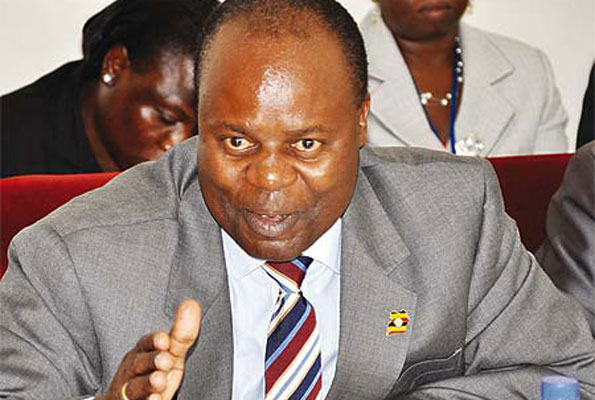
MPs bitter as Kasekende is also reported out of country

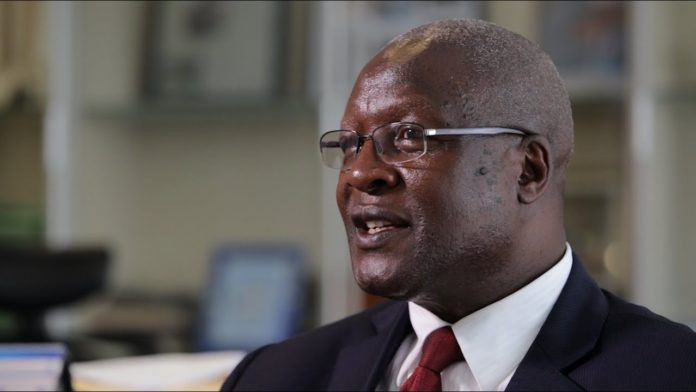
Former Deputy Governor, Dr. Louis Kasekende.

As the MPs on Parliament’s Committee on Commissions, Statutory Authorities and State Enterprises (Cosase) were coming to the terms that the former Bank of Uganda (BoU) executive director for supervision, Justine Bagyenda, is out of the country, it also emerged that the BoU deputy governor Dr Louis Kasekende, flew of the country a day before Bagyenda left on the evening of November 22.

Dr. Kasekende who is said to have traveled to China via Ethiopia and Bagyenda worked closely in the liquidation of some of the banks and are said to have kept away some of the documents concerning banks from the eyes of the MPs.

Last week when MPs asked Bagyenda about the quarterly reports concerning the liquidation process of Greenland Bank, she said she had handed them over to her successor Dr. Tumubweine Twinomanzi but he denied he ever received such reports from his predecessor.

The BoU governor Prof. Emmanuel Tumusiime-Mutebile also denied he has ever seen such reports in his office, something that pissed off Ms. Bagyenda who is said to be wealthy at the movement.

The MPs are probing BoU top officials based on the Auditor General John Muwanga’s special audit report of BoU on seven defunct commercial banks whose closure is controversial. They include; Teefe Trust Bank, International Credit Bank, Greenland Bank, Cooperative Bank, Global Trust Bank Uganda, National Bank of Commerce and Crane Bank Limited.

It should be remembered that Kasekende did not buy the idea of the Auditor General (AG) investigating BoU following an order by parliament that he (AG) carries out a forensic probe against the central banks after whistleblowers and owners of closed banks came out crying.

The wealth of Bagyenda and Kasekende has forced the Office of the Inspector General of Government (IGG) to launch an investigation into how the acquired such wealth that comprise billions of shillings on bank accounts and well as properties also worth billions of shillings.

Investigators says Bagyenda and Kasekende could have gotten some of the wealth through dubious deals related to their positions at BoU, though they have always denied the accusations. The IGG is following the Leadership Code 2002, to probe the wealth of the two officials.

Stories Continues after ad

Learning digital App for primary school learners launched

Katrina Stensson, the chief executive officer of Checheza, the organization that has developed the application

A new digital learning application (App) for primary school learners in Uganda was days ago launched in Kampala, which government said will help children in lower primary better understand literacy and mathematics.

Michael Ochero, who represented the ministry of Information and Communications Technology (ICT), at the launch of the application said technology has come up as a fundamental tool that is taking the world toward digitalisation.

He observed that having interactive learning tools for the children is a good step towards development in Uganda.

“If this App is fully utilized, it will be a way of keeping children alert and creative. It will also be a good way of encouraging children to use the Internet for better reasons. Checheza has the full support from the ministry of ICT and we shall work hard to ensure that its applicability spreads to the rest of the country, especially rural areas, so that the education ground is levelled for both urban and rural schools,” he said.

While Humphrey Mukooyo, who represented the Education ministry, said the integration of ICT in teaching and learning will create equality by enabling disadvantaged learners and teachers in rural areas to access the same information in real time like their urban counterparts.

He added that education institutions will be empowered to utilise more than one teaching method.

Mukooyo said the government would provide affordable computers to schools and connect them to the Internet to demystify ICT and prevent innovations such as Checheza from atrophying.

Katrina Stensson, the chief executive officer of Checheza, the organization that developed the application, said it will allow learners to read, write, count and play games anywhere on smartphones or tablets without an Internet connection.

There are currently 150 pupils at a digital learning center in Bududa District to pilot how the digital platform works.

“Many children leave school without essential skills. It is time to look for new solutions,” said Stensson, adding: “When we make learning practical and fun, it will improve the learning effects. Playing the learning game on a smart phone at home makes it possible to improve performance in school.”

The new application is currently available in English and Kiswahili, Uganda’s two official languages, but will be upgraded with time to include other local languages so that its content is localised for the children.

Stories Continues after ad

Victoria Beckham urges people to test for HIV and to seek treatment

UNAIDS International Goodwill Ambassador Victoria Beckham

A little over one week before World AIDS Day, UNAIDS International Goodwill Ambassador Victoria Beckham has visited the organization’s Geneva, Switzerland, headquarters to support calls for people to know their HIV status and to seek treatment for HIV if necessary.

“I am really happy to be in Geneva to support UNAIDS in the run-up to World AIDS Day,” said Ms Beckham during her visit. “We need to make sure that people feel supported to take an HIV test by ending the stigma and discrimination still too often associated with the virus. Today, we have the medicines to keep people healthy and to stop the virus being transmitted. AIDS isn’t over yet, but it can be.”

UNAIDS estimates that there were around 36.9 million people living with HIV worldwide in 2017, with around 21.7 million people accessing life-saving medicines that keep people alive and well and stop the transmission of the virus. However, UNAIDS also estimates that around one in four people worldwide continue to be unaware that they are living with HIV.

During the visit, the UNAIDS Executive Director, Michel Sidibé, met with Ms Beckham to thank her for her support and to discuss the latest developments in the AIDS response.

“We have made a lot of progress in expanding access to treatment, but the number of people who don’t know their HIV status is still far too high,” said Mr Sidibé. “We have to make sure that people have access to testing services and are provided with treatment immediately if they need it. We also have to make sure that people have access to the full range of HIV prevention options to bring down the number of new HIV infections.”

Thanks to antiretroviral therapy, AIDS-related deaths have been reduced by more than 51% since the peak in 2004. In 2017, 940 000 people died from an AIDS-related illness worldwide, compared to 1.9 million in 2004. In 2017, however, there were 1.8 million new HIV infections.

In many regions of the world, women continue to be the worst affected by the epidemic and every week 6600 young women aged 15–24 years become infected with HIV. In sub-Saharan Africa, three in four new infections among adolescents aged 15–19 years are among girls, and young women aged 15–24 years are twice as likely to be living with HIV than men.

In other regions, the epidemic is concentrated among key populations, such as gay men and other men who have sex with men, sex workers, transgender people, people who inject drugs, prisoners and other incarcerated people and migrants.

It is estimated that around 35.4 million people worldwide have died from an AID-related illness since the start of the epidemic.

Stories Continues after ad

Germany commits $34m for immunization programme in EAC

EAC Secretary General Amb. Libérat Mfumukeko and the Deputy Ambassador of Germany to the EAC, Jörg Herrera

The German government has committed a grant of US $34 million (EUR 30 million) to the East African Community (EAC) to support the regional organisation’s immunization efforts. The EAC Secretary General, Amb. Libérat Mfumukeko, and the Deputy Ambassador of Germany to the EAC, Jörg Herrera, jointly signed the agreement in Dar es Salaam, Tanzania.

With the additional grant, Germany will be financing the procurement of vaccines for children in the EAC against various diseases including measles, rotavirus, pneumococcus, Human Papillomavirus (HPV) and yellow fever. The programme will be financed through the German Development Bank (kfW) and implemented in collaboration with the Vaccine Alliance (Gavi). The cooperation aims at reducing child mortality in the region and mainly targets newborns.

This new commitment will bring Germany`s contribution to EAC’s regional immunization programmes to approximately US$170 million (EURO 150 million) since 2012. To date, German Development Cooperation with the EAC has financed over 60 million doses of life-saving vaccines for the region and the average immunization coverage in the region was substantially increased, making the EAC’s immunization programmes the strongest in Sub-Sahara Africa.

“Germany is a committed partner to the East African regional integration process. We are proud that our cooperation with the EAC and the Gavi Alliance is contributing greatly to improve child health in the region,” said Herrera.

Amb. Herrera further said that vaccinations were a highly effective and cost effective means to fight child mortality, adding that particularly focus needs to be put on children from poor families as they often lack sufficient access to quality health care.

Mr Herrera also commended the EAC for its comprehensive approach to address priority health issues in the EAC region such as the control and prevention of infectious diseases, and pandemics and mother and child health.

EAC and Germany celebrated their 20th anniversary of development cooperation last month after holding successful Government Negotiations at the EAC Headquarters. Health is one of the two focal areas of the two sides, the other being Regional Economic and Social Integration.

Germany development cooperation, through the German Federal Ministry for Economic Cooperation and Development (BMZ), has to date contributed to regional integration in East Africa through a variety of programmes and projects in these areas. With the new commitments signed today, Germany’s funding for Technical and Financial Cooperation with the EAC amounts to over US$350 million.

Stories Continues after ad

Administration of justice: case filing to go digital in Uganda

Justice Bart Katureebe

The Judiciary is in the final stages of introducing a digital platform that will allow plaintiffs file court cases online from wherever they are as part of measures to speed up the administration of justice in the country.

The new development was disclosed by the Chief Justice, Bart Katureebe, while meeting the legislators on Parliamentary Budget Committee at the High Court. He said the process would begin in January next year.

“We have the issues of petty corruption. You go to a court, you meet a clerk and will say ok, give me some money and I file your case and sometimes he will even tell you more than what is needed to file the case, then you come to follow your case he will tell either your file is missing or I need so much for the magistrates, the magistrate is asking for so much and yet many times these magistrates even don’t know that they have asked for money, this is corruption. In some cases, your case is progressing and they say you see your case has been pushed to next year so come next year but if you can do something I can convince them to bring it forward,” he said.

Justice Katureebe said: As the Judiciary, were are rolling out an automated system that will allow complainants to file cases without visiting the court premises.”

He said the system would be easy that each person can follow the status of his or her files from home, so long as the person has access to computer and internet.

He said any one who will file the case in the automated system will be given a log in number. “You can log in and check the status of your file and the supervisors can log in and see which case was filed and what its progress is,” he said, adding that the procurement of the systems is ongoing.

“Government started off by giving us Shs6 billion, the procurement is at an advanced stage and we are progressing. We think in the New Year this system will start,” he said.

But they will begin with the Supreme Court, the Appellate Courts, the High Courts and the Magistrates’ Courts of Nakawa, Mengo, and others in Kampala before it can be rolled to regional courts.

Stories Continues after ad

Family conflicts major cause of suicide in Pader District- minister

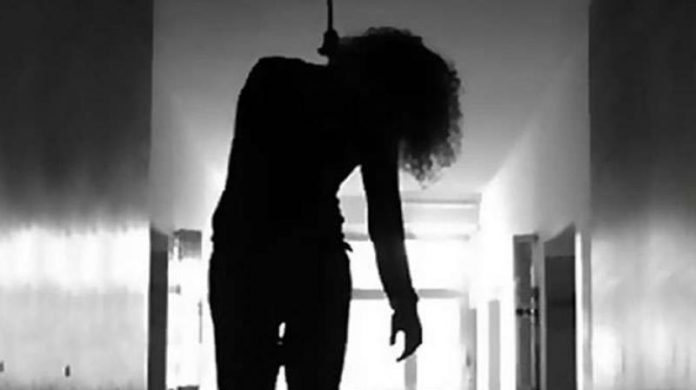
Suicide is prohibited by Ugandan laws

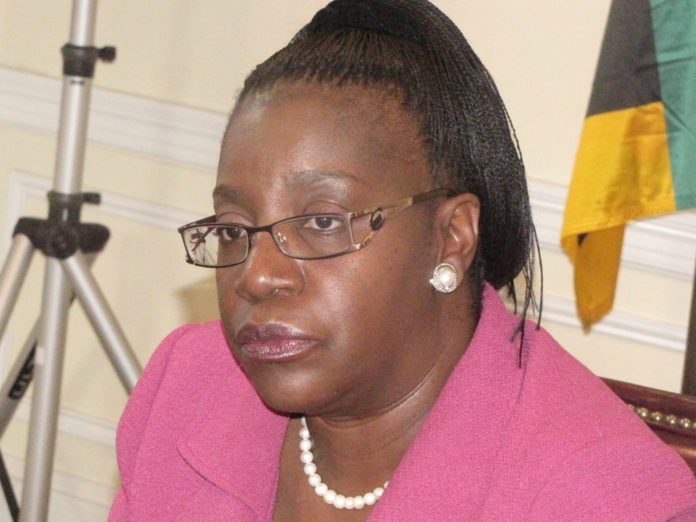
Family conflicts are the major cause of high incidences of suicide in Pader District, according to a report presented to parliament by the Minister of State Northern Uganda Rehabilitation, Grace Kwiyucwiny Freedom, who said there has been 15 cases of suicide in that district in 2018.

According to minister Kwiyucwiny, the domestic conflicts are between children and parents as well as wives and husbands and that the conflicts arise from various issues such as; early marriages, early pregnancies, land and related properties.

The minister in her report says people committed suicide using drugs /pesticides (Dudumaki).

On November 16, 2018, MP Lucy Aciro Otim (Aruu North) raised the concern over high suicide incidences in the district, which made legislators to demand that government investigate the matter and put in place appropriate interventions.

“As I investigated this fact I have established that there are indeed cases of suicide in Pader District. The reported cases of suicide in Aruu North since January 20I8 are as follows: Lapur Sub Countty,7 cases; Lagur Sub County, 4 cases; Taranga Sub County, 2 cases,” the minister says in his report.

The minister reports that in Aruu South Constituency suicide cases happened, with Ogom Sub County have one case, and Puranga Sub County had one case, giving a total of 15 registered in the district.

CASCS.

However in Acholi region, no suicide cases were established, say in Gulu, during the year, though there was a higher prevalence in Omoro District, especially Koro Sub County. “Mainly husbands kill their wives and children and also end up killing themselves,” the minister says in his report.

The minister’s investigations revealed that many suicide cases are not reported to police as the victims are quickly buried.

The minister said non-governmental organisations which were counselling people are no longer doing that. “It has also been confirmed that many Non-Governmental Organizations (NGOs) which carried out psychosocial support and counselling programmes have since closed their programmes,” he says in the report.

As such, he says, there is growing need for psychosocial support and counselling.

Steps taken by the minister to help address the matter are; working with Regional Security and District Security office to establish the scope of the matter. A final report will be share with the district leaders next week.

The says he has called NGO meeting to help reactivate psychosocial support and counselling programmes in Northern Uganda starting with Pader and Omoro Districts where the prevalence is high.

He plans to meet the Pader LC5 Chairperson on Tuesday to discuss further how this case can be addressed, He says he will request the leadership to include psychosocial support and counselling in the district budget.

“I will interact with the cultural and religious leaders and call upon their interventions to counsel and inculcate their cultural values in order to strengthen the family institution amidst the remnants of challenges from the long conflict in Northern Uganda,” he says.

“We have discussed the urgent need for psychosocial support and counselling, and for this FY (financial year) we shall try to adjust in order to get some funds but next FY it will be a fully budgeted for item,” he concludes.

Stories Continues after ad

COMESA moves to cut dependency on foreign donors

COMESA Secretary General Chileshe Kapwepwe

The mobilization of funds to support the implementation of the regional integration programmes is one of the key highlights of the 39th meeting of the COMESA Intergovernmental Committee meeting that began Friday Lusaka, Zambia.

The meeting brought together Permanent/ Principal Secretaries from ministries that coordinate COMESA activities in the Member States to consider – among others – a new resource mobilization strategy that will make COMESA financially sustainable. Uganda is a member of the 21-member bloc.

COMESA Secretary General (SG), Ms. Chileshe Kapwepwe told the delegates at the opening ceremony, that 65 percent of the current budget for programmes was supported by Development Partners. “It is even more challenging, to note that Member States contributions are not only inadequate but also, only a few of the Member States have been consistently able to pay the assessed contributions on time,” she said.

The SG called on Member States to review the current funding modalities of COMESA given that there was a steady reduction by development partners, of non-programme budget for the Secretariat.

The Secretariat has subsequently developed a comprehensive Resource Mobilization Strategy, to be considered and adopted by the permanent secretaries. It is intended to ensure a clear and well-coordinated approach to mobilize resources required to support the implementation of COMESA programs.

The SG also indicated that COMESA was rolling out digital trade facilitation programme to promote investments and industrialization especially on agro-based industries and agribusiness.

“The use of technology will underpin our commitment to finding innovative ways of facilitating trade through e-commerce, e-logistics and e-legislation,” she said.

“It is time to ensure that COMESA becomes the regional hub in developing and implementing of innovative ways of trade facilitation and maximise the use of the digital technology in regional integration,” she added.

To speed up the integration agenda, the SG identified the following initiatives to be carried out by the organization: rolling out COMESA video conferencing; developing an online market; eliminating inefficiencies in the existing one stop border post through use of digital technology; ensuring simultaneous information sharing at the border points and harmonization of the transit cargo regulations and customs documentation and procedures.

Heads of delegation representing development and cooperating partners addressed the meeting. These included Ambassador Allesandro Mariani (European Union) Ambassador Daniel L. Forte (USAID), the World Bank, the International Trade Centre and the International Organization for Migration.

Ambassador Mariani said the EU will launch two additional programmes in 2019: one worth 10 million euros to support private sector and Regional Value Chains; and another of seven million euros to strengthen the institutional capacities of the COMESA Secretariat.

The IC meeting comes to an end on Saturday, November 24, 2018 paving way for the 39th COMESA Council of Ministers meeting on Sunday November 25, 2018.

COMESA member countries include: Burundi, Comoros,D.R. Congo,Djibouti, Egypt, Eritrea, Ethiopia, Kenya, Libya, Madagascar, Malawi, Mauritius, Rwanda, Tunisia Seychelles, Somalia Sudan, Swaziland, Uganda, Zambia, and Zimbabwe. Tunisia and Somalia joined the bloc this year.

Stories Continues after ad

EC nullifies two strong candidates in Busia LCV race

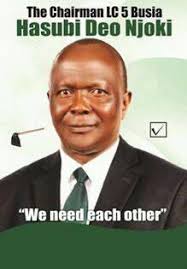
Deo Njoki

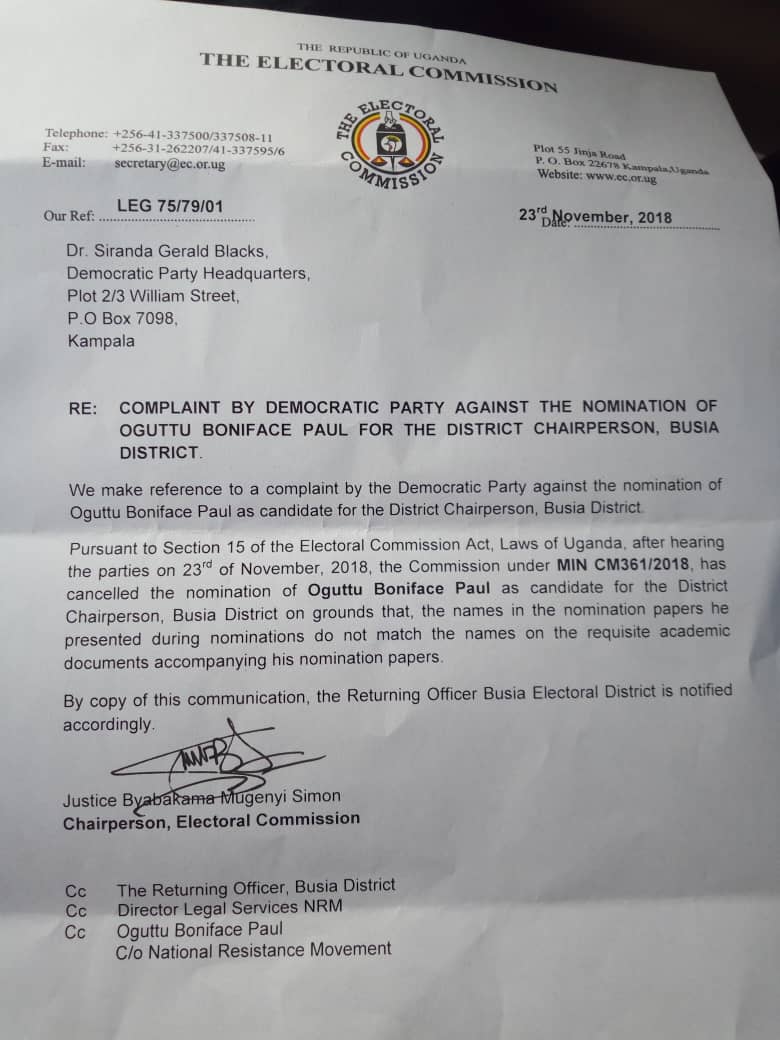
The Electoral Commission has this Friday evening cancelled the candidature of two candidates for the by-election of District Chairperson, Busia District.

NRM’s Boniface Paul Oguttu has been disqualified from the race on grounds that the names in the nomination papers he presented during nominations do not match the names on the requisite academic documents accompanying his nomination papers.

The candidature of Democratic Party’s Deogratius Hasubi Njoki has been cancelled because the names under which he was nominated are not in the National Voters Register.

The race now has only independent candidate candidates; Chrispus Bwire, Tony Ojambo and Geoffrey Wandera.

The cancellation of the two strong candidates is a result of counter accusation by each other in petitions presented to the electoral commiasion.

Today the NRM Secretary General, Justine Kasule Lumumba, her deputy, Richard Tadwong, party chief communications officer, Rogers Mulindwa and several other bigwigs had pitched camp in Busia to drum up support for their flag bearer, Oguttu.

Busia goes yo polls on Novermber, 2018.

The seat fell vacant in May this year after the Court of Appeal nullified the election of the incumbent,

Stories Continues after ad

Sand Cranes in Tanzania for 2018 Copa Dar es Salaam

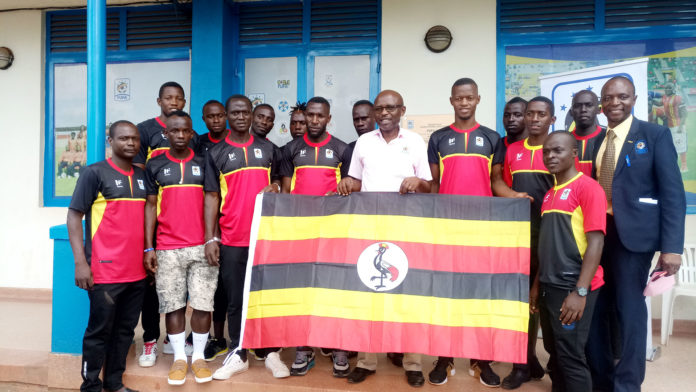
Sand Cranes team with FUFA finance Director Decolas Kiiza

The Sand Cranes arrived safely in Tanzania for the 2018 Copa Dar es Salaam beach soccer championship.

Uganda was set to play their opening fixture on Thursday 22nd November 2018 against Malawi but the match will now be honored on Saturday.

Malawi were yet to arrive for the tournament as they missed a flight connection. Uganda will play two matches on Saturday against Malawi and Seychelles.

Uganda will play its first match on Friday against the hosts Tanzania at 5pm.

Uganda finished fourth in the inaugural edition last year after losing to Tanzania in a third place play off.

Players;

Kibirige Meddie, Lwamunda Nasser, Kasujja Davis, Katwe Allan, Ochero Sulaiman, Byaruhanga Rica, Lwesibawa Godfrey, Magwali Ronald, Wasswa Emmanuel Alex and Kakwaya Swaibu.

Leader of Delegation – Mutabazi Deo

Technical Director – Mutyaba Bashir

Head Coach – Salim Muwonge Jamal

Team Physiotherapist – Bithum Codian Aduny

Team Manager – Ssebagala Tonny

Referee – Mugerwa Shafic

Referee – Ssenteza Muhammad

Sand Cranes fixtures;

Friday 23rd Nov 2018: Uganda vs Tanzania

Saturday 24th Nov 2018: Seychelles vs Uganda

Saturday 24th Nov 2018: Malawi vs Uganda

Stories Continues after ad