Stanbic Bank
Stanbic Bank
23.9 C
Kampala
Stanbic Bank
Stanbic Bank
Home Blog Page 1433

Categories for the 2018 CAF Awards unveiled

CAF 2018 awards

African football governing body CAF has unveiled the eleven categories for the 2018 CAF Awards after a meeting by the Organising Committee for the event in Dakar, Senegal.

The winners for the African Player of the Year and Women’s Player of the Year will be decided by the CAF Technical & Development Committee, Media Experts, Legends, coaches of the quarter-finalists of the CAF Champions League and CAF Confederation Cup as well as Coaches and Captains of the 54 Member Associations.

The categories – Youth Player of the Year, Men’s Coach of the Year, Women’s Coach of the Year, Men’s National Team of the Year and Women’s National Team of the Year will be elected by; CAF Technical & Development Committee, Media Experts, Legends, coaches of the quarter-finalists of the CAF Champions League and CAF Confederation Cup.

According to CAF, for the first time, FIFPro will coordinate the Africa Finest XI whilst the Goal of the Year will be decided via online public voting.

Nominees will be selected based on their performances from February 2018 to November 2018.

The Awards Gala, to honour footballers, officials and administrators who distinguished themselves during the year under review, will be held on Tuesday, 8 January 2019 in Dakar, Senegal.

The CAF 2017 Awards saw Liverpool and Egypt star Mohamed Salah win African Player of the Year, Egypt win Men’s National Team of the Year and Egypt’s former coach, Argentinean Hector Cuper, win Men’s Coach of the Year.

They 2018 categories are as follows;

1. African Player of the Year
2. Women’s Player of the Year
3. Youth Player of the Year
4. Men’s Coach of the Year
5. Women’s Coach of the Year
6. Men’s National Team of the Year
7. Women’s National Team of the Year
8. Goal of the Year
9. Africa Finest XI
10. Ydnekatchew Tessema Trophy for the Federation President of the Year
11. Platinum Award

Stories Continues after ad

Regional bank approves $229.5m loan for Kampala-Jinja Expressway

An artistic impression of the Butabika final close that is part of the Kampala-Jinja Expressway.

The African Development Bank (AfDB) has approved a sovereign loan of US$229.5 million to Uganda to finance phase one of the Kampala-Jinja Expressway project, with the expectation that the financing will reinforce Uganda’s position as a regional transit hub, supporting its ambition to propel its economy into middle-income status by 2020.

Approved by the Board of AfDB on October 31, 2018, the loan supports the Government’s Vision 2040 agenda. “It will co-finance, with the European Union and Agence Francaise de Developpement, US$400 million which will pave the way for private sector financing of the remaining US$800 million,” reads a statement.

The financing will support Uganda’s second National Development Plan 2015-2020, which aims to strengthen the country’s competitiveness for sustainable wealth creation, inclusive growth and jobs creation. Uganda’s road rehabilitation plans are anchored on its 15-year National Transport Master Plan (NTMP 2008-2023), aimed at facilitating efficient movement of passengers and freight across the country to support growth objectives.

Total project cost is estimated at US $1.55 billion, with financing from sovereign and non- sovereign facilities. The facility will finance infrastructure development, project implementation support and community livelihoods improvement activities along the proposed 95-kilometre expressway.

According to planners, over 2,000 direct and indirect jobs will be created during the construction and operational phases of the project. When completed, the Kampala-Jinja Expressway will boost national economic productivity, competitiveness, regional trade and integration. It will also alleviate congestion in and around Ugandan’s capital, Kampala and reduce travel time between the country’s two main economic hubs.

Scheduled to be managed over the next 30 years (including a five-year construction period) under a concession-based Public Private Partnership (PPP) arrangement, the project comprises of two phases: the Kampala-Jinja Mainline Expressway and Kampala Southern Urban Bypass (KSB), collectively known as the Kampala-Jinja Expressway PPP Project.

The project also has a human capital development component, focused on skills development for Uganda and East Africa. By 2028, over 200 PPP specialists (gender inclusive) are expected to have been trained to work in the region’s transport sector, under a graduate / professional work placement scheme.

The Board applauded the innovative financing structure which should serve as model to be replicated across the continent. The Bank’s leadership in transport infrastructure development, which is attracting interest and alliances with several development partners, was also acknowledged by the Board.

Uganda’s road network is the country’s predominant mode of transport and a key enabler of her trade and economic activities within the East African Community (EAC). The Kampala-Jinja corridor has experienced accelerated development over the last 20 years, and currently experiences traffic overload, registering over 1,000 vehicles per hour per lane, with consistent breakdown of traffic flows, according to a 2017 study conducted by the Uganda National Roads Authority.

The expressway is located along Uganda’s Northern Corridor, a strategic route within the EAC, linking Uganda, Rwanda, Burundi, Democratic Republic of Congo (DRC) and South Sudan with Kenya’s Mombasa maritime port. It is easily the most important route on the national road network, taking 30 percent of international traffic to Burundi, 60 per cent to Rwanda and almost 100 percent to Uganda. It also carries over 90 percent of Uganda’s imports and exports.

According to the AfDB statement, the project aligns with the Bank’s Ten-Year Strategy (2013-2022) and Uganda Country Strategy Paper 2017–2021, under its “Infrastructure Development for Industrialization” pillar. It is consistent with three of the Bank’s High 5 priorities: “Integrate Africa”, “Industrialize Africa” and “Improve the quality of life of the people of Africa.”

Stories Continues after ad

Arsene Wenger set to become AC Milan manager

Arsene Wenger

Arsène Wenger has been in negotiations with AC Milan for several weeks about becoming the Italian club’s new manager in January 2019, according to France Football.

The Frenchman has been out of work since ending his 22-year reign at Arsenal at the end of last season.

In a recent interview with England’s Sky Sports, Arsene Wenger said, “I’ll be somewhere early next year but I do not know where,” said the 69-year-old Frenchman. I got a good rest. “I watched a lot of football. I miss it.” He added.

Wenger would replace 40-year-old Gennaro Gattuso at the head of the Rossoneri. He would also have a larger role in his duties with the sports director, the Brazilian Leonardo.

Wenger has been linked with the managerial posts at Real Madrid and Bayern Munich since leaving Arsenal, and confirmed last month he would resume his football career in January.

Should Wenger accept Milan’s offer, he will manage in Italy for the first time ever in his career and will also reunite with former Arsenal CEO, Ivan Gazidis.

The former Arsenal manager has also previously managed at Nancy, Monaco and Japanese side Nagoya Grampus Eight.

Stories Continues after ad

Cabinet clears US$150m loan to boost water and sanitation in greater Kampala

Water flowing from tap

The Cabinet in one of the latest decisions has approved that government borrows US$150 million (about Shs555 billion) for water and sanitation in Uganda, according to government Spokesperson Ofwono Opondo.

“The purpose is to ensure proper water provision for the greater Kampala region, contribute to wetland restoration, reforestation among others,” Ofwono on Tuesday told the press at the government-owned Uganda Media Centre in Kampala.

The decision to borrow the money comes at the time when government is also running the Kampala Water – Lake Victoria Water and Sanitation Project whose objective is to ensure improvement of living conditions of the residents of Kampala through provision of safe and reliable water supply and improved sanitation until 2040.

Ofwono said Cabinet has realised the need for the public Investment management system that can be used to address the concerns on how investors are chosen to operate in Uganda.

On infrastructure development, he said Cabinet further noted the need for putting in place a project management fund that can be used to compensate land owners. “You have seen situations where a road is being built and people are not compensated. The real issue here is for proper coordination. There’ll be no promising without funds,” he said.

Recently a plan to reconstruct and expand a 28km-road from Kyotera town to Rakai town council as well as compensate affected residents flopped due to lack of funds.

The road is among those proposed by the ministry of energy ahead of the East African Oil Pipeline project and was allocated Shs43 billion.

Ofwono also said Cabinet also realised that there is need to give credit insurance to protect those who participate in trade. “Cabinet also noted the importance of the African Trade Insurance for which Uganda is part. This is to protect traders from unfair Government actions that will have consequences on trade. This affects any African country, not just Uganda,” he noted.

Experts say credit insurance is an insurance policy and a risk management product offered by private insurance companies and governmental export credit agencies to business entities wishing to protect their accounts receivable from loss due to credit.

Stories Continues after ad

Country risk from credit derivatives: Consequences of default could be on par with 2008 financial crisis

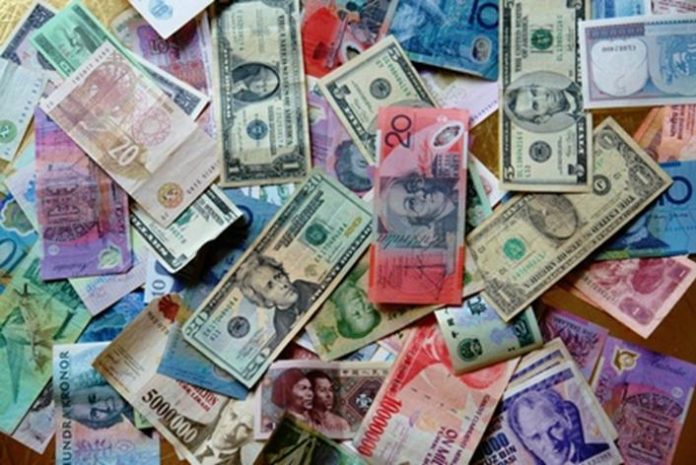
Currency notes

By Giancarlo Sallier De La Tour

Markets face severe disruption. Countries swapping their foreign currency debt back into their own currency or their domestic debt are as much at risk from credit derivatives as investment banks were 10 years ago.

Most sovereign issuers are happy to tap the capital markets in different currencies, as this gives them access to a large source of investors.

To avoid exposure to currency and interest rate risk, they use derivatives, mainly cross-currency and interest rate swaps. This is so their debt is in the currency and interest that best suits their needs. Some countries use such instruments to form an opinion on the direction of the market.

The problem, whether they are hedging or speculative transactions, is that most of the debt countries issue is sizeable. Cross-currency swaps are volatile, because the chance of one currency moving significantly against the other is great. This heightens credit risk.

If one counterparty defaults, this could be a huge cost to the other. Assuming the defaulting counterparty has issued some debt in a depreciating currency, it must, under the terms of the swap, pay the appreciating currency. As it can no longer do so, the other counterparty will incur a loss, the cost of substituting the defaulting counterparty.

To prevent this, most market participants agree to pay some form of collateral when the value of the swap moves one way or another. However, most countries cannot post collateral.

Banks have ways of protecting themselves against such risk. Agreements regulating such business contain ‘additional termination events’ clauses, whereby a counterparty must exit the swap if their rating falls below a certain threshold. Under the terms of such clauses, the exiting counterparty will have to pay the cost of substituting the swap with another counterparty. This cost is around the fair value of the swap. The payouts can be massive. Between 2011-12, Italy needed to exit some derivatives it had with Morgan Stanley and had to pay close to €3bn as its rating had been downgraded.

Italy entered into derivatives to hedge interest rate risk, but ultimately paid large sums of money following a credit event. This is equivalent to having sold a credit derivative to Morgan Stanley, because the cost was incurred as Italy’s credit deteriorated. This is similar to what happened to large financial institutions that, in 2008, directly sold credit default swaps or indirectly sold them through having large positions in their books of collateralised debt obligations.

The consequences are potentially alarming. Not only do cash-stripped sovereigns have to finance large payments, they also remain unhedged on debt issues that may lead to large future costs. Moreover, their national courts may prevent them from honouring commitments.

This is not a minute risk. Consider a counterparty calling an early termination event on one or more swaps with a large issuer. If that issuer refused to honour its commitments because of a court ruling – or fear of a court ruling – this would be seen as a default not only in that specific contract, but in hundreds of credit default swaps and bonds outstanding in the market where there is a cross-default clause. This could disrupt the working of the swap market and have a large impact on several institutions’ balance sheets.

The issuer would struggle to issue new debt, as many of the dealers that lead sovereign issues are also the banks that swap them. The problem would be exacerbated if the issuer was unable to refinance an existing foreign currency issue – or even a domestic bond issue – as its dealers would refuse to underwrite the bond. This would lead to a major debt default of a sovereign issuer.

Argentina’s default in 2001 caused mayhem in the market; a disorderly Greek default in 2010 would have caused further problems. If the issuer is much larger, it is best not to contemplate the possible consequences.

Giancarlo Sallier De La Tour is an independent financial consultant.

Stories Continues after ad

When History Rhymes

Christine Lagarde

By Christine Lagarde

Mark Twain once said that “History never repeats itself, but it does often rhyme.” As heads of state gather in Paris this week to mark 100 years since the end of World War I, they should listen closely to the echoes of history and avoid replaying the discordant notes of the past.

For centuries, our global economic fortunes have been shaped by the twin forces of technological advancement and global integration. These forces have the prospect to drive prosperity across nations. But if mismanaged, they also have the potential to provoke calamity. World War I is a searing example of everything going wrong.

The 50 years leading up the to the Great War were a period of remarkable technological advances such as steamships, locomotion, electrification, and telecommunications. It was this period that shaped the contours of our modern world. It was also a period of previously unprecedented global integration—what many refer to as the first era of globalization, where goods, money, and people could move across borders with relatively minimal impediments. Between 1870 and 1913 we saw large gains in exports as a share of GDP in many economies—a sign of increasing openness.

All of this created great wealth. But it was not distributed evenly or fairly. This was the era of the dark and dangerous factories and the robber barons. It was an era of massively rising inequality. In 1910 in the United Kingdom the top 1% controlled nearly 70% of the nation’s wealth—a disparity never reached before or after.

Then, as now, rising inequality and the uneven gains from technological change and globalization contributed to a backlash. In the run-up to the war countries responded by scrambling for national advantage, forsaking the idea of mutual cooperation in favor of zero-sum dominance. The result was catastrophe—the full weight of modern technology deployed toward carnage and destruction.

And in 1918, when leaders surveyed the corpse-laden poppy fields, they failed to draw the correct lessons. They again put short-term advantage over long-term prosperity—retreating from trade, trying to recreate the gold standard, and eschewing the mechanisms of peaceful cooperation. As John Maynard Keynes—one of the IMF’s founding fathers—wrote in response to the Versailles Treaty, the insistence on imposing financial ruin on Germany would eventually lead to disaster. He was entirely correct.

It took the horrors of another war for world leaders to find more durable solutions to our shared problems. The United Nations, the World Bank, and of course the institution I now lead, the IMF, are a proud part of this legacy.

And the system created after World War II was always meant to be able to adapt. From the move to flexible exchange rates in the 1970s to the creation of the World Trade Organization, our predecessors recognized that global cooperation must evolve to survive.

Today, we can find striking similarities with the period before the Great War—dizzying technological advances, deepening global integration, and growing prosperity, which has lifted vast numbers out of poverty, but unfortunately has also left many behind. Safety nets are better now and have helped, but in some places we are once again seeing rising anger and frustration combined with a backlash against globalization. And once again, we need to adapt.

That is why I have recently been calling for a new multilateralism, one that is more inclusive, more people-centered, and more accountable. This new multilateralism must reinvigorate the previous spirit of cooperation while also addressing a broader spectrum of challenges—from financial integration and fintech to the cost of corruption and climate change.

Our recent research on the macroeconomic benefits of empowering women and modernizing the global trading system provides new ideas on ways to create a better system.

Each of us—every leader and every citizen—has a responsibility to contribute to this rebuilding.

After all, what was true in 1918 is still true today: The peaceful coexistence of nations and the economic prospects of millions depends squarely on our ability to discover the rhymes within our shared history.

The Writer is the President of IMF

Stories Continues after ad

Will Bagyenda dodge MPs again as they prepare to quiz BoU officials over sale of banks?

Embattled former Executive Director in charge of Supervision at Bank of Uganda Justine Bagyenda.

Months ago, the former Executive Director of Supervision at the Bank of Uganda (BoU), Ms Justine Bagyenda declined to appear before parliament’s appointments committee for vetting, after the Finance Minister Matia Kasaija, recommended her to serve on the Financial Intelligence Authority (FIA) board for the second term.

Ms Bagyenda at the time claimed she was out of the country even though it was later discovered she didn’t cross any borders. Her refusal to appear before the committee meant she missed a chance to regain the FIA board. But she won’t regret that because she is so wealthy by Ugandan standards.

However, those who had been following events as they emerged at BoU understood why Bagyenda dodged the MPs who were ready to vet her in the process that had other individuals vetted. Bagyenda knew she had no chance to be approved given that her problems related to financial mischiefs yet the job required someone clean.

First Bagyenda’s name features prominently in the controversial sale of Crane Bank Limited (CBL) that forced parliament to order the Auditor General (AG) John Muwanga to carry out a special audit of BoU on seven defunct banks. The report came out late August 2018 and it is the one that parliament’s Committee on Committee on Commissions, Statutory Authorities and State Enterprises (Cosase) is using to quiz BoU board and top managers on the sale of defunct banks.

Secondly, leaked bank documents had disclosed Bagyenda’s bank accounts stashed with billions of shillings, raising eyebrows within the sections of the public that called for investigation into her wealth that includes real estate developments. The Inspector General of Government (IGG) is yet to release a report on Bagyenda’s alleged illicit accumulation of wealth. The FIA itself had done some investigations related to her wealth.

Members of the public are waiting for the recommendations of the IGG as regards Bagyenda’s wealth, especially that some of them, including Mps, the civil society and the youth groups have called for a severe punishment should Bagyenda be found to have amassed wealth through corrupt means.

But now that Cosase has started quizzing BoU officials in relation to the liquidation and sale of defunct banks, it is unlikely that Bagyenda will dodge like she did with the appointments committee. This is because as a former director of supervision, she played a huge role in the liquidation and transaction processes of some of the banks and therefore by all means she has no choice but to appear before the Mps who last week sent BoU Governor Prof. Emmanuel Tumusiime-Mutebile to pick all documents related to the transactions before the probe can continue.

Remember that at the height of CBL controversy, Mutebile when asked which BoU official would take responsibility for the disequilibrium in the local banking sector and particularly the mess at CBL, he seemed to suggest that Bagyenda was responsible. He would later sack her as he made changes that saw top directors switch posts and a new person, Dr Tumubweine Twinemanzi brought in to replace Bagyenda. That shows Mutebile was not happy with Bagyenda’s work and for that she will have to appear before Cosase to answer some queries related to her work.

Ms Bagyenda and Deputy Governor BoU, Dr Louis Kasekende are said to have spearheaded the forceful takeover and sale of some of the banks. The fact that Dr Kasekende has already appeared by Cosase means Bagyenda cannot escape especially that the two officials are cited in the AG’s report on defunct banks, having interrogated them. Each of the two transact billions on their money accounts and each own properties worth billions of shillings.

Last week Cosase promised to leave no stone unturned, which means Ms Bagyenda has no chance to absent herself when called upon to answer queries. She managed to dodge the appointments committee because she could do without that job and she knew the public was against her taking up that appointment to the FIA board for the second term. For Cosase she will have to appear because no one will be there to defend her, not even Governor Mutebile, her former boss.

Stories Continues after ad

Ugandans must respect animal rights

Pigs

On Monday November 5, 2018, unknown youth carried two piglets and stationed them in front of Bank of Uganda headquarters in Kampala, expressing their dissatisfaction over the outgoing managing director of DFCU bank, Juma Kisaame whose name has been common in the media of recent for not good reasons.

The latest seems to be a continuation of use of piglets by disgruntled groups to express their dissatisfaction. In the past groups have dropped piglets around parliament.

The above examples show how some Ugandans abuse the rights of animals. That you can get an animal carry it and drop to a spot it in town, leave it there without care.

peta.org says animal rights means that animals deserve certain kinds of consideration—consideration of what is in their best interests, regardless of whether they are “cute,” useful to humans, or an endangered species and regardless of whether any human cares about them at all.

From the above definition we can conclude that people who carry piglets and drop them to specific places as way of expressing their dissatisfaction abuse animal rights since they consider the interests of animals.

Such culprits should be apprehended by those that enforce the laws of the country-the Uganda police.

The 1964 animal rights clause bans any kind of animal torture, although the punishments for those found guilty of abusing animal rights are very minor. For example a person is supposed to pay sh300 or three months imprisonment.

Also part of the local governments (Kampala City Council) (Livestock and Companion Animals) Ordinance, 2006. Stipulates that a person shall not treat or subject any animal which is kept for agricultural purposes, to any form of cruelty or in any manner contrary to the provisions of the Animal (Prevention of Cruelty) Act.

Stories Continues after ad

NSSF’ defends 15% interest to members

NSSF Managing Director Richard Byarugaba, is credited with growing the fund.

The Managing Director of the National Social Security Fund (NSSF) has defended the recent decision in which the Fund in August raised interest rate of 15 percent to be paid to its members in financial year 2017/18.

“I recently heard of a subtle but quite vigorous debate regarding the Fund’s recently announced record interest rate to members of 15 per cent. Specifically, the debate has been centered around the sustainability of the interest rate declared. I believe these are pertinent matters where, unfortunately, facts may either get twisted or misplaced,” he says.

The interest rate for the year equates to Shs1.1 trillion shillings paid out in interest to members of the Fund. This is the very first time in the Fund’s history that the Fund has declared 15 per cent interest rate to its members.

Byarugaba’s defence of the hike of interest comes following accusations by top administrators of the National Organisation of Trade Unions (NOTU) who alleged that the rise in interest from 13.5 percent to 15 percent was meant to benefit a few individuals only.

The contestation was made by NOTU’s chairman General Br. Owere Wilson Usher and Secretary Peter Christopher Werikhe who say they were not consulted on the matter.

However, Workers’ Member of Parliament Dr Sam Lyomoki supports the 15 percent interest increment to workers, urging Owere and Werikhe to celebrate, saying that all workers who save with the NSSF had been waiting for the rise given the recent good performance of the Fund now worth Shs10 trillion.

According to Byarugaba, the NSSF Act empowers the Minister of Finance to declare an interest rate credited on the members’ accounts following the end of every financial year…“The interest rate decision depends on the financial performance of the Fund. The financial performance in turn relies on the return generated from the various investments of the Fund in the period,” he says.

Byarugaba says the Fund made money in dividends, capital appreciation and currency movements, which are all sources of income that led to the rise in 15 percent interest to members who usually spend over 20 years on average saving with the Fund.

“The Fund’s members usually spend over 20 years saving with the Fund. This means that their savings are invested over a long-term horizon. As a result, the Fund tends to invest in long-term assets to match its membership profile,” he says.

For example, he says the Fund bought Safaricom shares in 2008 at an IPO price of KES 5.0. Today, the price of these Safaricom shares is about KES 24. “This represents a gain of KES 19 per share over the last 10 years. This is alongside the annual dividends that the Fund has been able to receive from the company,” he says.

The capital gain component of return is typical in equities and real estate investments and in many such cases the largest source of return. “The third component of return is on currency movements. This applies when the Fund invests in assets denominated in currencies other than the Uganda Shilling. Extending the Safaricom example, the Fund made the initial investment when the KESUGX rate was 24.7. Today it is averaging 37.2. The difference represents a currency gain,” he says.

“Now, some people argue that interest declared by the minister should not include unrealized gains. That is, that only cash returns should be declared, and the unrealized gains be hived off until they are converted into cash. However, this reasoning has two major limitations. First, some leaving members would not fully benefit from investments made from their savings. For instance, a retiring member who was saving with the Fund in 2008 whose savings were used to make Safaricom investment would not benefit if capital gains made in that period are not distributed”.

Second, he says, such an interest distribution approach would also undermine the Fund’s number one role in the economy; being a source of long-term capital. By their nature and name, long-term investments generate less cash and more capital gains. It is for this reason that pension funds money is also labelled patient capital. “If the Fund were to ignore this cardinal role, it would have to resort to continuous selling of its assets or limit its investments to short-term assets. This would not only create volatility in the market but also push the Fund out of long-term investments resulting in a mismatch with its liabilities,” he says.

He says it is for the reasons above that “the Minister has taken a very measured approach in the Fund’s interest declaration process but obviously after reviewing the performance achieved in the period. The goal is for the Fund to maintain a premium of 2 per cent above the average 10-year inflation. This has been built in the Fund’s investment strategy”.

Pension funds all over the world, he says, have preserving members value against inflation as a key investment objective. The Fund has achieved this over the last 8 years making it one of the best performing pension funds on the African continent.

And that the Fund’s investment strategy has become a benchmark for many regional institutional investors and in return the Fund has received several global accolades. Consequently, the Fund is committed to maintaining this performance and in doing so continue to raise the Ugandan flag globally in terms of pension fund management.

The Fund had an impressive performance on key financial indicators for the Financial Year 2017/2018, with total income hitting a record Shs1.6 trillion before interest to members and taxes with the fund’s total Assets Under Management (AUM) hitting a record Shs9.98 Trillion as at June 30, 2018, a 26 per cent increase from Shs7.92 Trillion the previous Financial Year.

Performance

The 15 performance interest rate is attributed to the Fund’s improved performance on all financial and investment indicators, arising out of strategic exploitation of the investment environment within the region, despite modest growth in the economy over the same period.

The Fund’s performance shows total member contributions increased by 14 performance to Shs1.05 trillion in 2017/2018 compared to Shs917 billion in the previous Financial Year, the most ever collected by the Fund in a single year and total Income increased by 77 percent to Shs1.6 Trillion in 2018 from Shs912 Billion in 2017.

Member contributions also grew by 14 percent to Shs1.05 Trillion in 2018 from Shs917 Billion in 2017 and benefits paid out to qualifying members increased by 29 performance to Shs360 Billion in 2018 from Shs278 Billion in 2017.

“These milestones can be attributed to a steady rise in compliance levels now at 81 percent as more members continue to trust us with their money. There was also a drive towards innovations that saw us introduce new products like the Voluntary savers scheme which attracted even more members,” said Byarugaba, Managing Director.

Summary of the Fund’s 2017/2018 Performance

• The Assets Under Management (AUM) increased by 26 per cent from Shs7.92 Trillion in 2017 to Shs9.98 Trillion in 2018

• Total Income increased by 77 performance to Shs1.6 Trillion in 2018 from Shs912 Billion in 2017

• Member contributions grew by 14 performance to Shs1.05 Trillion in 2018 from Shs917 Billion in 2017

• Benefits paid out to qualifying members increased by 29 performance to Shs360 Billion in 2018 from Shs278 Billion in 2017

• Compliance Level rose to 81 performance in 2018 from 80 performance in 2017 leading to improved contributions

• Cost of Administration stayed flat at about 1.3 performance

• Cost to income ratio declined by 1 performance to 12.6 performance in 2018 from to 13.4 performance in 2017

The Fund has consistently paid a real and competitive return to its members over the last 6 years:

Year NSSF Interest

2012 10.00 per cent

2013 11.23 per cent

2014 11.50 per cent

2015 13.00 per cent

2016 12.30 per cent

2017 11.23 per cent

2018 15 per cent

Stories Continues after ad

The determination of the NSSF Annual Interest rate to members

By Richard Byarugaba

I recently heard of a subtle but quite vigorous debate regarding the Fund’s recently announced record interest rate to members of 15 per cent. Specifically, the debate has been centered around the sustainability of the interest rate declared. I believe these are pertinent matters where, unfortunately, facts may either get twisted or misplaced. Consequently, I feel it is necessary to make a few clarifications.

The NSSF Act empowers the Minister of Finance to declare an interest rate credited on the members’ accounts following the end of every financial year. This interest rate must be declared by the 1st of October every year. The interest rate decision depends on the financial performance of the Fund. The financial performance in turn relies on the return generated from the various investments of the Fund in the period.

The Fund’s members usually spend over 20 years saving with the Fund. This means that their savings are invested over a long-term horizon. As a result, the Fund tends to invest in long-term assets to match its membership profile. In investing in the various assets, the Fund seeks three sources of returns. The first component of return is cash returns which includes interest income (coupons) from fixed income investments, dividends from shares in companies and rent from real estate properties.

The second component of returns are capital gains or losses: this represents movements in market values of investments which the Fund is yet to exit. For example, the Fund bought Safaricom shares in 2008 at an IPO price of KES 5.0. Today, the price of these Safaricom shares is about KES 24.

This represents a gain of KES 19 per share over the last 10 years. This is alongside the annual dividends that the Fund has been able to receive from the company. The capital gain component of return is typical in equities and real estate investments and in many such cases the largest source of return.

The third component of return is on currency movements. This applies when the Fund invests in assets denominated in currencies other than the Uganda shilling. Extending the Safaricom example, the Fund made the initial investment when the KES UGX rate was 24.7. Today it is averaging 37.2. The difference represents a currency gain.

So, to conclude the example of Safaricom, the Fund made money in dividends, capital appreciation and currency movements. Because the Fund has never sold its shares, the currency and exchange rate gains represent unrealized gains.

Now, some people argue that interest declared by the minister should not include unrealized gains. That is, that only cash returns should be declared, and the unrealized gains be hived off until they are converted into cash.

However, this reasoning has two major limitations. First, some leaving members would not fully benefit from investments made from their savings. For instance, a retiring member who was saving with the Fund in 2008 whose savings were used to make Safaricom investment would not benefit if capital gains made in that period are not distributed. Second, such an interest distribution approach would also undermine the Fund’s number one role in the economy; being a source of long-term capital.

By their nature and name, long-term investments generate less cash and more capital gains. It is for this reason that pension funds money is also labelled patient capital. If the Fund were to ignore this cardinal role, it would have to resort to continuous selling of its assets or limit its investments to short-term assets. This would not only create volatility in the market but also push the Fund out of long-term investments resulting in a mismatch with its liabilities.

It is for these reasons that the Minister has taken a very measured approach in the Fund’s interest declaration process but obviously after reviewing the performance achieved in the period. The goal is for the Fund to maintain a premium of 2 per cent above the average 10-year inflation.

This has been built in the Fund’s investment strategy. Pension funds all over the world have preserving members value against inflation as a key investment objective. The Fund has achieved this over the last eight years making it one of the best performing pension funds on the African continent. The Fund’s investment strategy has become a benchmark for many regional institutional investors and in return the Fund has received several global accolades. Consequently, the Fund is committed to maintaining this performance and in doing so continue to raise the Ugandan flag globally in terms of pension fund management.

Stories Continues after ad