Stanbic Bank
Stanbic Bank
26.3 C
Kampala
Stanbic Bank
Stanbic Bank
Home Blog Page 1434

Burundi to host 9th Inter-parliamentary games

EAC Inter-parliamentary games.

Burundi is set host the East African Community (EAC) Inter-Parliamentary Games that focuses on building on relations between members nations and the National Parliaments in the region.

Under the theme ‘Accelerating a people-centered EAC by connecting Parliamentarians and citizens through Sports’, the tournament will bring together EALA and the National Legislatures.

The event will be graced by the Speaker of the Burundi National Assembly Pascal Nyabenda at the commencement of the games and flag-off the ten-day extravaganza. The tournament will take place at the Prince Louis Rwagasore Stadium and other venues in the City.

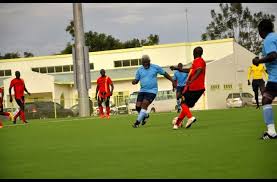
A special football match pitting Hallelujah FC, associated with President Pierre Nkurunziza and an EAC select side that features a mix of players from National Legislatures will be held at the Prince Louis Rwagasore Stadium on December 1st, 2018, ahead of the tournament kick-off.

The tournament disciplines include football, walk-race, netball, golf, athletics, tug-of-war and volleyball. Athletics which takes place at the Stade Olympique (in Nyabugete) will feature races in 100 meters, 200 meters, 400 metres, 800 and 1500 metres respectively for men and women. The 4x 400m relay and the 4x 100m races are also on the cards.

In football, defending champions, Parliament of Uganda will face stiff competition from the other Parliaments keen to dethrone them. Uganda won the title despite losing the last match (0-3) to an entire staff-side of the EALA.

In men’s Volleyball, Parliament of Kenya who are the champs will have to put up a good fight with all Parliaments going out guns blazing for the title. In women’s volleyball, all Parliaments are expected give themselves a good outing in a bid to dethrone, Parliament of Kenya. All games are expected to use the league format of play.

In athletics, Parliament of Uganda and Parliament of Kenya are the favorites in both male and female categories while Parliament of Tanzania, reigning champions in Tug of War, have similarly promised fireworks.

The games are held annually and on a rotational mode in the Partner States. Article 119 of the Treaty for the establishment of the East African Community obliges the Partner States to promote close co-operation amongst themselves in culture and sports, with respect to the promotion and enhancement of diverse sports activities among other areas.

Stories Continues after ad

Uganda Cranes nominated for CAF team of the year award

CAF 2018 awards

The Uganda men’s national football team, known as the Cranes have been nominated for the 2018 Caf team of the year Award after qualifying for the 2019 African Cup of Nations.

Uganda will battle for the top accolade with Guinea Bissau, Kenya, Madagascar, Mauritania and Zimbabwe.

Cranes captain Denis Onyango has also been nominated in the category of the African Player of the year alongside notable nominees; Egyptian striker Mohamed Salah, Sadio Mane, Crystal Palace forward Wilfried Zaha (Cote d’Ivoire), Riyad Mahrez of Manchester City and Arsenal star Pierre-Emerick Aubameyang.

Uganda Cranes was voted the best team of the year at the 2016 CAF Awards as goalkeeper Dennis Onyango scooped the player of the year based in Africa accolade in the same year.

Thirty-four (34) players and 15 women players have been nominated for the flagship awards; Player of the Year and Women’s Player of the Year based on the performance of the players during the year 2018.

The winners for the African Player of the Year and Women’s Player of the Year will be decided by the CAF Technical & Development Committee, Media Experts, Legends, coaches of the quarter-finalists of the CAF Champions League and CAF Confederation Cup as well as Coaches and Captains of the 54 Member Associations.

The categories – Youth Player of the Year, Men’s Coach of the Year, Women’s Coach of the Year, Men’s National Team of the Year and Women’s National Team of the Year will be elected by; CAF Technical & Development Committee, Media Experts, Legends, coaches of the quarter-finalists of the CAF Champions League and CAF Confederation Cup.

The CAF 2017 Awards saw Liverpool and Egypt star Mohamed Salah win African Player of the Year, Egypt win Men’s National Team of the Year and Egypt’s former coach, Argentinean Hector Cuper, win Men’s Coach of the Year.

The Awards Gala, to honour footballers and officials who distinguished themselves during the year will be held on Tuesday, 8 January 2019 in Dakar, Senegal.

Full list of nominees:

African Player of the year

1. Abdelmoumene Djabou (Algeria & ES Setif)

2. Ahmed Gomaa (Egypt & El Masry)

3. Ahmed Musa (Nigeria & Al-Nassr )

4. Alex Iwobi (Nigeria & Arsenal)

5. Andre Onana (Cameroon & Ajax)

6. Anis Badri (Tunisia & Esperance)

7. Ayoub El Kaabi (Morocco & Hebei China Fortune)

8. Ben Malango (DR Congo & TP Mazembe)

9. Denis Onyango (Uganda & Mamelodi Sundowns)

10. Fanev Andriatsima (Madagascar & Clermont Foot)

11. Franck Kom (Cameroon & Esperance)

12. Jacinto Muondo Dala ‘Gelson’ (Angola & Primeiro de Agosto)

13. Hakim Ziyech (Morocco & Ajax)

14. Idrissa Gueye (Senegal & Everton)

15. Ismail Haddad (Morocco & Wydad Athletic Club)

16. Jean-Marc Makusu Mundele (DR Congo & AS Vita)

17. Kalidou Koulibaly (Senegal & Napoli)

18. Mahmoud Benhalib (Morocco & Raja Club Athletic)

19. Mehdi Benatia (Morocco & Juventus)

20. Mohamed Salah (Egypt & Liverpool)

21. Moussa Marega (Mali & Porto)

22. Naby Keita (Guinea & Liverpool)

23. Odion Ighalo (Nigeria & Changchun Yatai, Nigeria)

24. Percy Tau (South Africa & Union Saint-Gilloise)

25. Pierre-Emerick Aubameyang (Gabon & Arsenal)

26. Riyad Mahrez (Algeria & Manchester City)

27. Sadio Mane (Senegal & Liverpool)

28. Taha Khenissi (Tunisia & Esperance)

29. Thomas Partey (Ghana & Atletico Madrid)

30. Wahbi Khazri (Tunisia & Saint-Étienne)

31. Walid Soliman (Egypt & Ahly)

32. Wilfried Zaha (Cote d’Ivoire & Crystal Palace)

33. Yacine Brahimi (Algeria & Porto)

34. Youcef Belaili (Algeria & Esperance)

Women’s African player of the year

1. Abdulai Mukarama (Ghana & Northern Ladies)

2. Asisat Oshoala (Nigeria & Dilian Quanjian)

3. Bassira Toure (Mali & AS Mande)

4. Chrestinah Thembi Kgatlana (South Africa & Houston Dash)

5. Desire Oparanozia (Nigeria & Guingamp)

6. Elizabeth Addo (Ghana & Seattle Reign)

7. Francisca Ordega (Nigeria & Washington Spirit)

8. Gabrielle Aboudi Onguene (Cameroon & CSKA Moskow)

9. Gaelle Enganamouit (Cameroon & Avaldenes)

10. Janine Van Wyk (South Africa & Houston Dash)

11. Marlyse Ngo Ndoumbouk (Cameroon & Nancy-Lorraine)

12. Onome Ebi (Nigeria & Hekan Huisanhang)

13. Portia Boakye (Ghana & Djurgardens)

14. Raissa Feudjio (Cameroon & Aland United)

15. Tabitha Chawinga (Malawi & Jiangsu Suning)

Youth player of the year

1. Achraf Hakimi (Morocco & Borussia Dortmunmd)

2. Wilfred Ndidi (Nigeria & Leicester City)

3. Andre Onana (Cameroon & Aax)

4. Ismaila Sarr (Senegal & Rennes)

5. Mahmoud Benhalib (Morocco & Raja Club Athletic)

6. Franck Kessie (Cote d’Ivoire & AC Milan)

Men’s coach of the year

1. Corentin Martins (Mauritania)

2. Florent Ibenge (AS Vita & DR Congo)

3. Juan Carlos Garrido (Raja Club Athletic)

4. Moine Chaabani (Esperance)

5. Nicolas Dupuis (Madagascar)

6. Patrice Carteron (Al Ahly)

7. Rachid Taoussi (ES Sétif)

8. Herve Renard (Morocco)

9. Aliou Cisse (Senegal)

10. Gernot Rohr (Nigeria)

Women’s coach of the year

1. Bruce Mwape (Zambia)

2. Desiree Ellis (South Africa)

3. Joseph Brian Ndoko (Cameroon)

4. Saloum Houssein (Mali)

5. Thomas Dennerby (Nigeria)

Men’s national team of the year

1. Guinea Bissau

2. Kenya

3. Madagascar

4. Mauritania

5. Uganda

6. Zimbabwe

Women’s national team of the year

1. Cameroon

2. Ghana

3. Mali

4. Nigeria

5. South Africa

Stories Continues after ad

Dfcu’s Kisaame carries documents as he exits office

Juma Kisaame

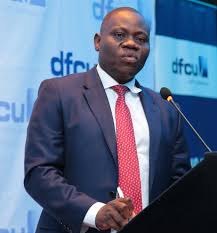
Reports coming in indicate that the outgoing Managing Director of DFCU Bank Juma Kisaame has packed all documents and moved them out of office. Dfcu Bank has already recruited his successor.

Mr. Mathias Katamba will replace Kisaame, whose 11 year stint at Dfcu bank will end in the first quarter of 2019.

Dfcu has had major changes in this year, beginning with the exit of CDC Group from the bank’s shareholding, which leaves Arise Investments BV majority shareholding. His stay at Dfcu Bank has also seen changes on the board of directors.

Kisaame led the acquisitions in the banking industry in Uganda, as Dfcu Bank acquired the assets and some liabilities of Global Trust Bank Uganda in 2014 and later Crane Bank Limited in 2017. The two acquisitions have been queried by the Auditor General John Muwanga’s special audit report of Bank of Uganda on seven defunct banks such as; Crane Bank Limited, Teefe Trust Bank, Greenland Bank, International Credit Bank, National Bank of Commerce, Global Trust Bank and Cooperative Bank.

Parliament’s Committee on Commissions, Statutory Authorities and State Enterprises (Cosase) is probing Bank of Uganda (BoU) top officials based on Mr. Muwanga’s report and given that Kisaame led the purchase of Crane Bank Limited (CBL) and Global Trust Bank Uganda, he remains to be a key witness when the committee scrutinizes the controversial sale of the two banks. Dfcu Bank bought CBL at Shs200 billion and is paying in installments.

Sources say Kisaame could have profiteered from that deal. Recently it was discovered he held US $40,000 on his account in one of the banks in Kampala. Inside sources say some shareholders were not happy with the way Kisaame handled the bank’s business, the reason why some opted to exit.

Kisaame has seen tremendous growth increasing shareholders value, key among which included dfcu becoming the second largest bank, which resulted in three-fold balance sheet growth to more than Shs3 trillion, a customer base of close to one million and a network of 65 branches.

Mr Katamba, who replaces Kisaame from Housing Finance Bank, has more than 15 years of finance and banking experience, 12 of which have been at executive level.

He has previously worked at Finance Trust Bank, Orient Bank, Postbank and Barclays Africa.
Dfcu Bank Chairman Jimmy Mugerwa says the bank believes Katamba is well placed to continue the progress of Dfcu by building on the successes of his predecessor to the benefit of all shareholders.

Stories Continues after ad
Uganda Tourism Board hosts UN delegates to cultural gala

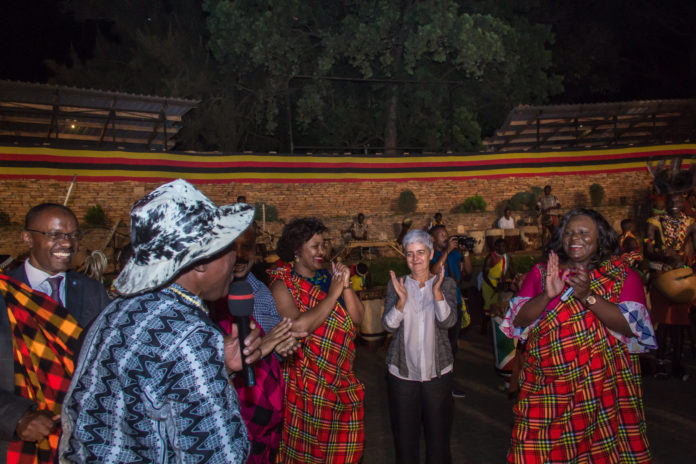
Guests at the event.

In continued efforts to promote Uganda as a tourist destination, the Uganda Tourism Board (UTB) Thursday hosted a cultural gala for UN delegates who are in the country for the Intergovernmental Authority on Development (IGAD) Conference currently ongoing at Speke Resort Munyonyo.

The Gala held at the Ndere Cultural Center with also attracted government representatives, the media and other members of the public. It was meant to showcase the beauty of the Pearl of Africa through cultural performances, food, cuisine and true Ugandan hospitality so as to leave a lasting memory in the minds of the delegates for repeat visits after the conference.

Addressing delegates at the event, the UTB Marketing Manager, Ms. Claire Mugabi, said, “Uganda is a culturally diverse and rich country—a key selling point for us as a tourist destination. We wanted treat the delegates to a true Ugandan cultural experience at the Ndere Cultural Center. They enjoyed various cultural performances from different parts of Uganda, folklore, food and drink among others.”

Rose Malango, the UN resident coordinator extended her sincere gratitude to UTB for hosting the delegates to a delightful evening of beautifully choreographed cultural performances.

She said, “Uganda is truly an endowed country and the cultural experience we have reveled in today highlights the country as culturally diverse and rich but more than that, we were able to see art, unity and enjoy story telling. The delegates have seen Uganda in a way many has never seen or heard about.”

Uganda has a rich cultural diversity and is endowed with 64 tribes and language each with a distinct cultural heritage, history, language, food, dance, dressing, beliefs, customs, music and folklore. The country is also known for its food and cuisine punctuated with a wide variety of tropical fruit and organic food, its diversity but also has various uniqueness cultures observed as one moves from region to region.

“We hope that we can see repeat visits in big numbers by engaging delegates and other visitors who come to Uganda for conferences and events,” Ms. Mugabi said.

The vast majority of tourist arrivals in Uganda are continental visitors from African countries. In 2017, these constituted 80 percent of the total 1,402,409 arrivals for the year while overseas visitors/tourists made up 20 percent or 273,731 of the arrivals.

The tourism industry IN Uganda currently contributes 10 per cent to gross domestic product (GDP), making it the country’s leading foreign exchange earner. The industry contributes more than US $1.4b (Shs5.1 trillion) annually and is projected to earn the country the much needed forex of about Shs10 trillion (US $2.7 billion) by 2020.

Stories Continues after ad

PIDA Week 2018: Experts weigh Africa’s infrastructure needs against rapid urbanization and growing population

Programme for infrastructure development in Africa

Experts attending this year’s Africa infrastructure conference say the continent needs to accelerate its infrastructure development to match the continent’s growing population and rapid urbanization to achieve development goals.

The experts from multilateral development institutions observed that with rapid urbanization and a tenfold increase in water needs for energy production, there is an urgent need to mobilize more financial and technical resources for infrastructure projects and plans, to support the continent’s economic development goals.

Furthermore, Africa’s population is projected to reach 1.6 billion by 2030, according to the United Nations, that would further put pressure on water resources and food production sectors.

According to the African Union Commission, the poor state of infrastructure in Sub-Sahara Africa in respect to electricity, water, roads and ICT, reduces national economic growth by 2 percent and productivity by as much as 40 percent.

“Empirical evidence however suggests that PIDA is already moving the development needle. It will provide the backbone for Africa’s regional integration, trade, investment, food security and competitiveness as economic corridors are beginning to develop through newly constructed road networks and one-stop border posts,” Moono Mupotola, The Bank’s Director for Regional Development and Integration, said.

Mupotola’s remarks underscored expert reviews of regional infrastructure projects in the transportation (roads, rail, aviation), energy and power sectors, under the first PIDA Priority Action Plan (PIDA- PAP 1:2012 -2020) being showcased and profiled at PIDA Week 2018.

Infrastructure transport projects being discussed include the Central Corridor Dar es Salaam to Chalinze Toll Road; the Kinshasa-Brazzaville Road and Railway Bridge; the High-Speed Rail Network (HSRN); the Abidjan-Lagos corridor and Praia-Dakar-Abidjan corridor projects; and the Single African Air Transport Market (SAATM) initiative.

Four regional power projects are also being showcased, namely, the Ethiopia-Sudan Power Interconnector, Zambia-Tanzania-Kenya Power Interconnection, Batoka Hydropower Plant, and Inga III Hydropower project.

The capital cost of delivering the PIDA-PAP is estimated at US$68 billion or US$7.5 billion annually.

Projections by analysts at the African Development Bank and the Common Market for Eastern and Southern Africa (COMESA) show that delivery of the PIDA Energy Road Map would also boost industrialization and promote regional cooperation and energy efficiency through regional power pools.

Presently, 32 percent or 131 of all 433 PIDA projects under the PIDA priority action plan are under construction or already operational, says Symerre Grey-Johnson, Head of NEPAD’s Partnerships, Regional Integration, Infrastructure and Trade Division.

According to officials from the PIDA Secretariat, the continent did not have any One-Stop-Border Post prior to 2009. Currently, 76 One-Stop-Border Post projects have been identified across Africa’s regional economic communities and PIDA: 10 have been completed in East, Southern and West Africa, 12 are under construction, five are being planned and 49 are awaiting possible design and construction.

Africa’s integration agenda is currently experiencing a momentous phase with the recent launch of the African Continental Free Trade Area (AfCFTA) and the creation of the SAATM. The PIDA agenda is critical to both initiatives. Forty-four African states have signed the soon to be ratified consolidated text of the AfCFTA.

The Core Team on SAATM Infrastructure led by NEPAD is partnering with the Bank, the African Union Commission, the International Civil Aviation Organization and other partners to reduce fares and costs of travel by 50 percent. It hopes achieve air traffic double-digit growth rates in Africa by 2023.

Deliberations at this year’s gathering of key players in Africa’s infrastructure space are being held on the theme, ‘PIDA Implementation through Good Governance – Realizing Smart Infrastructure for Africa’s Integration.’

Stories Continues after ad

Gov’t installs single central online data centre to curb duplication

Server racks in server room data center

Government has created one central online data center to avoid duplication of information and wastage of resources by the different government departments in the country.

To be managed by the National Information Technology Authority (NITA-U), the national data centre will house all government ICT infrastructure and will host disaster recovery services for government applications and data.

Peter Kahiigi, the acting Executive director of NITA-U made the revelation about the centre as he hosted the Members of Parliament on the ICT committee.

“This upgrade in design and capacity meets current and future demands because it is scalable. These data centers not only enhance service provision and data security, but they also eliminate duplication and wastage of resources arising from the implementation of parallel systems in Government,” said Kahiigi.

He urged the MPs to ensure that the data center and data recovery services are fully utilized by supporting the drive to ensuring all government services are hosted at the DC and DR to ensure confidentiality, integrity, and availability of Government systems.

He said the data centre will also host the Government Cloud, MyUG Cloud. MyUG Cloud will enable ministries, departments, and agencies to focus their resources on service-based delivery rather than asset-based delivery.

MyUG Cloud has been established to support the following service delivery models; Infrastructure as a Service, Software as a Service, Backup as a Service and Platform as a Service.

The Members of Parliament commended the authority for work well done and pledged to support it in ensuring that Uganda’s cybersecurity meets the best international standards.

MP Annet Nyakecho, the chairperson ICT Parliamentary Committee, said the center would save some of resources that different government ministries, departments and agencies have been using to provide isolated data storage facilities.

She said her team will push for better facilitation to NITA-U to scale up its efforts in providing robust and secure data center and risk recovery facility in the country.

In the financial year 2012/13, Cabinet of Uganda approved the Strategy for Rationalization of Information Technology Service across Government entities. The purpose of the strategy is to eliminate duplication and wastage of resources. A total of 34 entities and 36 E-Government Applications are currently hosted at the National DC and DRS.

Stories Continues after ad

BoU officials fail to explain Shs8.89b deal with Nile River Acquisition Company

Hot seats, Kasekende consults Mutebile in the COSASE committee.

The Bank of Uganda top officials on Friday failed to explain to parliament’s Committee on Commissions, Statutory Authorities and State Enterprises (Cosase) how they came to sell loans of three defunct banks at 93 percent discount to Nile River Acquisition Company (NRAC) registered in Mauritius, a tax haven.

Cosase is now in the third week of probing BoU officials on the controversial closure and liquidation of seven commercial banks including Teefe Trust Bank, International Credit Bank (ICB), Greenland Bank, Cooperative Bank, Global Trust Bank, National Bank of Commerce and Crane Bank Limited which was sold in January 2017.

Mr. David Opio Okello who once served at BoU as Executive Director Supervision and Acting deputy governor could not explain the role of M/S J.N. Kirkland & Associates which was contracted to identify a buyer of loans of Greenland Bank, Cooperative Bank and ICB.

M/S J.N. Kirkland & Associates would later identify Octavian Advisors, LP which expressed interest to purchase the assets of the three banks at US $.10.0 million from BOU but Following further negotiations with BoU, N4/s Octavian Advisors, LP registered Nile NRAC in order to transact with BoU and finally bought the assets at US $5.2 million (Shs8.89 billion). The assets which included secured loans worth Shs35 billion, unsecured loans, poorly secured loans and unknown loans were sold in a lump sum, thus devaluing secured loans.

The debt portfolio comprised of Secured, Poorly secured, unsecured and unknown loans amounting to Shs135, 054, 430, 888,” Auditor General John Muwanga says in his special audit report of BoU on defunct banks. According to the report, the sale of the loans to NRAC resulted in a variance of about Shs126.2 billion.

Mr. Opio could not explain the rationale for selling assets of the three banks at 93 percent discount. MPs as such directed BoU officials to produce minutes of the meeting that led that decision, list of buyers of the assets from NRAC, the evaluation reports from BoU.

Asked why BoU had to sell loans of the three banks at US $5.2 million and not at US $10 million as early agreed with Octavian Advisors, LP, the holding company of NRAC, Opio could only say that BoU had collected Shs2 billion of the US$10 million before NRAC bought off the loans at a paltry Shs8.89 billion.

He also surprised the MPs when he said that Octovian Advisors LP did a due diligence of the loans and decided to buy at US$5.2 million, which price BoU accepted without even going to the ground to evaluate the assets attached to loans. BoU explained that they did desktop evaluation.

Ms Justine Bagyenda, the former executive director of supervision at BoU, who has dodged the MPs, is also wanted to explain on the same issue because she appended her signature on one of the documents.

Brig Francis Tukahiirwa said BoU was in a hurry to sell the loans and asked whether there were no other buyers at the time NRAC bought the assets.

The MPs have now tasked BoU to produce a list of the buyers of the assets as well as the list of the assets handed over to NRAC and the list of the details of the assets for easy crosschecking. The MPs contend that the sale was not done according to the related laws.

The Legal Counsel at BoU Margaret Kasule also shocked MPs when she said they are unable to find some of the documents related to the sale of the loans since they are in possession of NRAC. The MPs could not buy her argument and asked the officials to bring the documents with them when they appear to parliament again next week.

BoU management also explained that estimating the recoverable amount of a closed bank’s loan portfolio cannot be done with precision. “Because of uncertainty in the recoverable value and the costs related to recovery, it is always true that any buyer will be unwilling to pay the full book value of a portfolio of bad debts. It is inevitable that these portfolios will always be sold at a discount,” they responded. But this response did not catch the attention of the MPs.

Stories Continues after ad

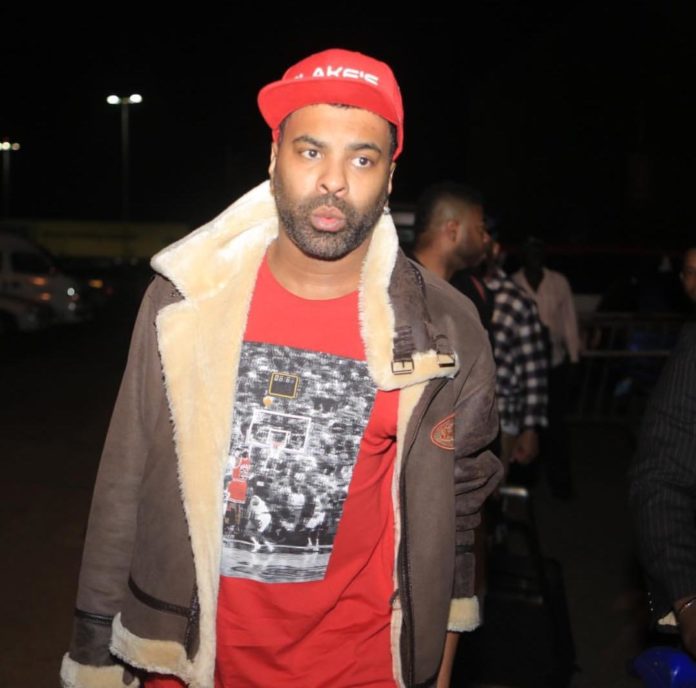
Ginuwine concert’s promoter flees with service providers’ cash

Ginuwine

American music icon Ginuwine arrived in the country to headline the Jazz Safari concert scheduled for Saturday 1st December at Speke Resort Munyonyo.

The Singer’s R&B live concert is set to be called off after the promoter, Shaka Mayanja disappeared with cash meant to pay service providers who are the organizers of the weekend concert.

Elgin Baylor Lumpkin better known by his stage name Ginuwine an American singer, songwriter, dancer and actor who is set to be performing in Uganda for the first time.

However, to the information on our table, the concert will not take place after promoter Mayanja disappeared with money and refused to pay service providers who are the organizers of the weekend gig.

The organizers include Silk Events the providers of stage and sound and Speke Resort Munyonyo who will host the event.

It is also indicated that Mayanja obtained shs 300m from Uganda Breweries Limited (UBL) who are the official sponsors of the event.

A source further narrated that the poor Mayanja has since resorted to hopping from hotel to hotel to find cheap accommodation for the Pony.

Stories Continues after ad

Uganda embarks on new plan to boost AGOA exports in next five years

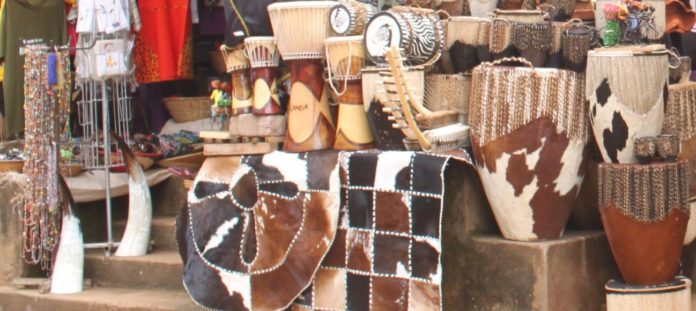
Traditional crafts in Uganda

The government of Uganda is developing a plan to increase its exports to the US under the Africa Growth and Opportunity Act in the next five years.

AGOA, a US trade legislation enacted in May 2000, was is meant to help sub-Saharan African countries export to the US more than 6,000 different products duty free.

The Act originally covered an eight-year period from October 2000 to September 2008, but legislative amendments signed into law by former US president George Bush in July 2004 extended AGOA to 2015. The legislation was further extended to 2025.

Trade, Industry and Co-operatives Minister Amelia Kyambadde says the new plan aims to restructure Uganda’s AGOA business. The minister says much as Uganda has participated in AGOA, the country has no strategy to the extent that some players didn’t know who to work with or the quality and standards of goods to export.

Uganda currently lags behind its neighbours Kenya and Tanzania in exports to the US.

In 2017 Kenya’s exports were worth US$454 million, Tanzania’s were US$145 million, Uganda’s $108 million and Rwanda exported just US$66 million’s worth.

She hopes engaging SMEs will help the country realise over US$200 million per year.

Under the new strategy government wants to put emphasis on coffee, spices, crafts, and casein as the main preferences of the US market.

Since its inception in 2000, AGOA has given duty-free and quota-free access to the US market on around 6,000 products from qualifying sub-Saharan African countries – with textiles and apparel accounting for some 90% of total exports.

The trade pact was renewed for a further ten years in 2015, which means it is due to remain in place until 2025 – a decision that has given renewed impetus to sub-Saharan Africa as an apparel sourcing destination.

Stories Continues after ad

Economic Gains from Gender Inclusion: Even Greater than You Thought

Christine Lagarde

By Christine Lagarde and Jonathan D. Ostry

Despite some progress, the gaps in labor force participation between men and women remain large. To take just one example, no advanced or middle-income economy has reduced the gender gap below 7 percentage points.

This uneven playing field between women and men comes at a significant economic cost as it hampers productivity and weighs on growth. A recent IMF staff study finds that barriers to women entering the labor force—think of tax distortions, discrimination, and social and cultural factors—are costlier than suggested by previous research and the benefits from closing gender gaps are even larger than thought before. Policymakers should therefore focus on removing such barriers urgently.

Gender diversity matters

Our analysis springs from the observation—supported by considerable microeconomic evidence—that women and men bring different skills and perspectives to the workplace, including different attitudes to risk and collaboration. Studies have also shown that the financial performance of firms improves with more gender-equal corporate boards.

Surprisingly, previous studies have not looked at the macroeconomic implications of this micro evidence.

In the standard textbook analysis, the labor force is the sum of the headcounts of male and female workers. Because replacing a man by a woman in this sum does not affect the labor force, there are no gains from gender diversity: men and women are assumed to be perfectly substitutable.

But our evidence—from macroeconomic, sectoral, and firm-level data—shows that women and men complement each other in the production process, creating an additional benefit from increasing women’s employment on growth. In other words, adding more women to the labor force should bring larger economic gains than an equal increase in male workers (reflecting the fact that, in economists’ jargon, the elasticity of substitution between women and men in production is low).

The implications of this finding are significant.

A bigger boost to growth: Because women bring new skills to the workplace, the productivity and growth gains from adding women to the labor force (by reducing barriers to women’s participation in the labor force) are larger than previously thought. Indeed, our calibration exercise suggests that, for the bottom half of the countries in our sample in terms of gender inequality, closing the gender gap could increase GDP by an average of 35 percent. Four fifths of these gains come from adding workers to the labor force, but fully one fifth of the gains are due to the gender diversity effect on productivity.

Higher productivity: When interpreting past data in situations where the gender gap has been narrowing over time, the contribution to growth from improved efficiency (or total factor productivity gains) is overstated. A portion of the gain attributed to productivity is actually due to the increased participation of women over time.

Higher male incomes: Our results suggest that men’s wages will also increase as a result of greater inclusion of women in the labor force since productivity will increase. This is important because these higher wages should strengthen support for removing barriers that hold women back from decent work.

A bigger payoff to reducing gender barriers along development paths: The rise of the services sector driven by economic development brings more women into the labor force. But our work shows that barriers to women’s employment slow this process. These barriers vary across regions and countries, and are very large in some parts of the world—equivalent to tax rates on women’s employment of up to 50 percent. And the corresponding welfare losses (which take into account consumption and leisure time) are large, even when allowing for the fact that “home production” is reduced when women enter the labor force. For example, we find that welfare costs exceed 20 percent in the Middle East and North Africa region and in South Asia.

Reaping the benefits

While there is no silver bullet, there are several policies that can help narrow gender gaps. These include enacting laws to ensure that women have equal rights to own property and access credit. Reforming taxes (for example, by replacing family taxation with individual taxation and providing tax credits) can incentivize labor force participation among low-income earners. Tackling gender inequality in education and health care, including publicly financed maternity and paternity leave, expanded childcare, and elder care availability can increase women’s participation in the labor market. Improving access to transportation, electricity, and water infrastructure can also help lift women’s participation in the workforce.

The big picture

These are not all new concerns, but there is a renewed sense of urgency. For years, the IMF has been at the forefront of policy analysis highlighting the economic costs of inequality and possible remedies. We know that the unlevel playing field between women and men has substantial economic costs and can impede the economic health of nations. What we are now learning is that these costs are even larger than we thought. Now that we see the full picture, the case for greater gender equity has become even more compelling.

Christine Lagarde is the President of International Monetary Fund. Jonathan D. Ostry is Deputy Director of the Research Department at the International Monetary Fund

Stories Continues after ad