Stanbic Bank
Stanbic Bank
18.5 C
Kampala
Stanbic Bank
Stanbic Bank
Home Blog Page 1441

Meeting to discuss AMISOM’s 2018–2021 Concept of Operations opens in Nairobi

Uganda's Deputy Head of Mission to Somalia Simon Mulongo receiving the equipment from Maundrell

The African Union Mission in Somalia, (AMISOM) is holding a crucial meeting with key stakeholders, to develop its Concept of Operations (CONOPS), which will provide an effective framework for implementation of the gradual transition from Somalia.

The five-day meeting in Nairobi, will develop a three-year transition plan of action, that takes into consideration the evolving political and security situation in the Horn of Africa country.

AMISOM has identified priority areas for action, including the clearing of Main Supply Routes, securing of population centers, creating security and access conditions, for stabilization and service delivery to populations, through a renewed joint-offensive against Al-Shabaab.

The CONOPS “describes AMISOM’s assumptions and intent regarding plans and aspirations, in the three phases of Somalia’s Transition Plan that will culminate in the slated (year) 2021 one-person-one-vote election and consequently the gradual transfer, of the security responsibilities from AMISOM to the Somali security forces,” noted the Head of AMISOM, Ambassador Francisco Caetano Madeira, in his speech read by the Deputy Head of Mission Mr. Simon Mulongo, during the opening of the high-level meeting on Monday.

“It provides a clear guidance to AMISOM for the next three years,” Mulongo said.

The CONOPS, which aims to provide a structure for AMISOM operations from 2018 – 2021, marks the final phase of the AU Mission’s transition and its eventual exit from Somalia. It is expected to provide a comprehensive basis for conducting operations in including, the training and mentoring of the Somali Police and the national army, whole at the same time creating a useful framework for stabilization, civil military activities, early recovery and reconstruction.

“This new CONOPS aims at heightening and strengthening the degradation of Al-Shabaab and other armed opposition groups, and at the same time, support the implementation of the Somali Security Architecture, whereby in three years, we should be having a fully functional Somali-led security establishment,” Mulongo said.

Key stakeholders at this pivotal meeting include the United Nations Support Office in Somalia (UNSOS), which is mandated by the UN Security Council, to provide logistical support to the AU Mission. UNSOS also provides limited support to the Somali National Army during joint operations with AMISOM.

“It is important that this CONOPS be based on reality both in terms of resources, timelines and what is achievable. And that will be one of our goals as UN,” Mr. Amadu Kamara, the Director of UNSOS told the meeting.

“We therefore hope the outcomes will define the support needs of AMISOM and SNA in implementation of transition and beyond, and serve as a guide for UNSOS strategic support,” added Kamara, who noted that decisions made at the meeting will inform budgetary decisions for the next financial season.

The National Security Advisor to the Somali President, Mr. Abdisaid Muse Ali, told the meeting that the Federal Government had embarked on a comprehensive security sector reform, to strengthen its security capabilities.

He detailed the Federal Government’s elaborate plans aimed at assuming the national security responsibility upon AMISOM’s exit. The plans include, “force generation, training, equipping and regularly paying our security services, strengthening the ministries’ agencies which support our services to develop the policies and reach agreement on key issues such as command and control integration,” he said, adding, “the Federal Government of Somalia looks forward to the CONOPS review translating that political commitment and support into concrete steps to support Somalia’s priorities, agreed with our partners in the Transition Plan”.

The meeting was officially opened by Lieutenant General Robert Kibochi , the Deputy Chief of the Kenya Defense Forces (KDF), who cautioned stakeholders against compromising Somalia’s security, through a hurried drawdown of troops.

Lt. Gen. Kibochi stressed that the withdrawal of AU troops from the Horn of Africa country should not “prejudice force protection, protection of population centres and jeopardize the security situation”.

Apart from reviewing the political and security situation in Somalia, the meeting whose participants include officials from AMISOM, the Addis Ababa based African Union Commission, UN and other key partners, is expected to brief participants on the AU Mission’s Transition Plan.

Stories Continues after ad

Nigeria announce squad for international friendly against Cranes

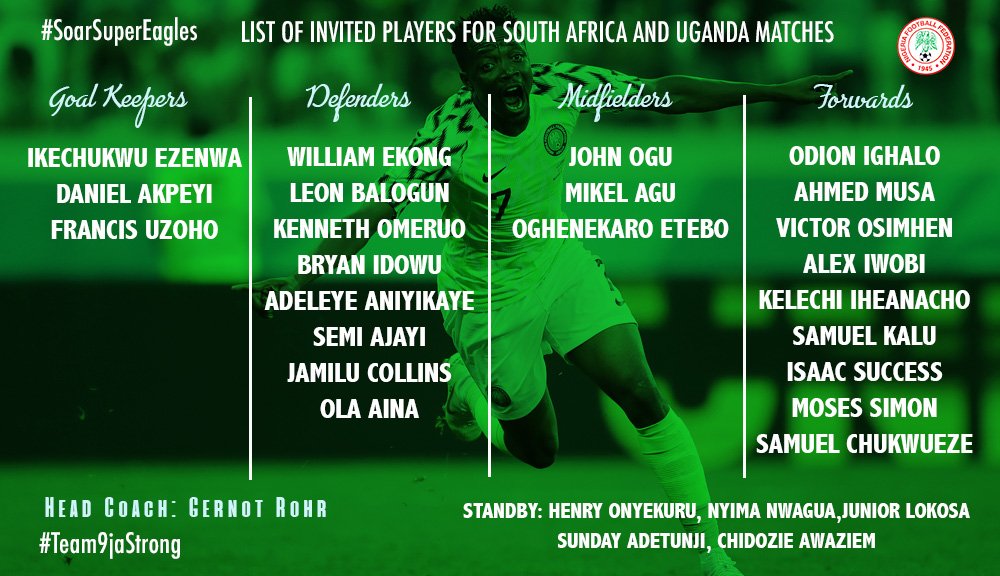
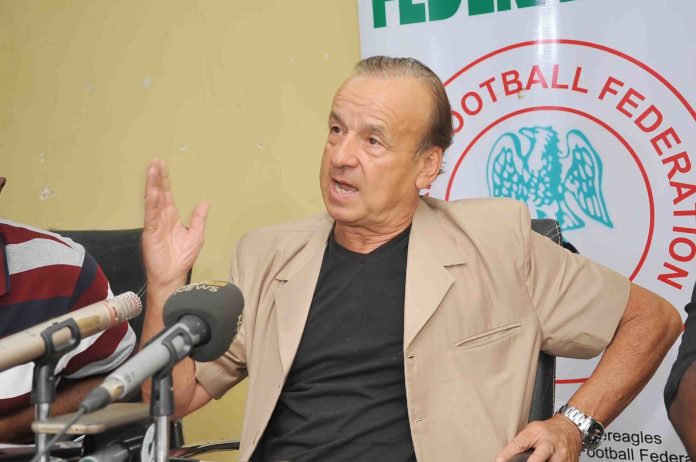
The super Eagles of Nigeria have named their squad to play South Africa on November 17th at the FNB stadium in Johannesburg in a 2019 Africa Cup of Nations qualifier and then Uganda in an international friendly on Tuesday 20th November in Asaba.

The 23-man squad named by Nigeria’s German coach Gernot Rohr is spearheaded by Odion Ighalo‚ who scored five goals in this month’s two qualifiers against Libya‚ which the Super Eagles won 4-0 at home and 3-2 away to go top of the standings.

Former captain John Obi Mikel has been left out of Nigeria’s squad‚ signaling a potential end of his international career. Only four local-based players have been named in the squad.

The friendly game between the Super Eagles and the Cranes of Uganda will take place after both sides are through with their AFCON qualification matches against South Africa and Cape Verde respectively.

Nigeria squad

Uganda are top of the group L AFCON qualification group with 10 points and only need a point to secure a place in the final tournament in Cameroon next year.

The Super Eagles of Nigeria top group E and need a win against South Africa at the FNB stadium to secure qualification.

The two teams last met in 2015 when Uganda Cranes edged the Super Eagles 1-0 at Ibo Akwa Stadium, courtesy of a Miya Farouk goal.

The Nigeria Super Eagles squad:

Goalkeepers: Francis Uzoho (Elche FC, Spain); Ikechukwu Ezenwa (Enyimba FC); Daniel Akpeyi (Chippa United, South Africa)

Defenders: Ola Aina (Torino FC, Italy); Adeleye Aniyikaye (FC Ifeanyi Ubah); Semi Ajayi (Rotherham United, England); Bryan Idowu (Lokomotiv Moscow, Russia); William Troost-Ekong (Udinese FC, Italy); Leon Balogun (Brighton & Hove Albion, England); Kenneth Omeruo (CD Leganes, Spain); Jamilu Collins (SC Paderborn 07, Germany)

Midfielders: Oghenekaro Etebo (Stoke City FC, England); John Ogu (Hapoel Be’er Sheva, Israel); Mikel Agu (Vitoria Setubal FC, Portugal)

Forwards: Ahmed Musa (Al Nasr FC, Saudi Arabia); Kelechi Iheanacho (Leicester City, England); Moses Simon (Levante FC, Spain); Victor Osimhen (Royal Charleroi SC, Belgium); Odion Ighalo (Changchun Yatai, China); Alex Iwobi (Arsenal FC, England); Samuel Kalu (Bordeaux FC, France); Isaac Success (Watford FC, England); Samuel Chukwueze (Villarreal FC, Spain) Standby: Henry Onyekuru (Galatasaray SK, Turkey); Chidozie Awaziem (FC Porto, Portugal); Nyima Nwagua (Kano Pillars FC); Sunday Adetunji (Enyimba FC); Junior Lokosa (Kano Pillars FC).

Stories Continues after ad

No fake eggs in Kampala-standards agency

UNBS Eexcutive Director Dr Ben Manyindo

The Uganda Bureau of Standards (UNBS) has come to refute reports that fake eggs exist on the Ugandan market, especially Kampala.

The agency says that the article published in one of the leading weekly papers in the country was misleading. “The story contains inaccuracies and misrepresentation of facts particularly on comments attributed to our market surveillance officer,” the agency says.

“The products referred to in the article by our market surveillance team were actually sweets in packages that looked like egg shells but clearly labelled as Funny Toys. Apart from the appearance of the package, the product did not contain any features meant to mislead the public into believing that they are actual eggs,” it says.

The agency says its intervention meant to due to suspected tampering with expiry dates and labels in Chinese language in violation of the standard for labelling pre-packaged foods.

“We have not received complaints or come across cases of fake eggs on the market,” it says.

The agency says it is a mandated to enforce standards to protect the health and safety of consumers and the environment against dangerous substandard products. “We would like to urge any person with information that can help us in our investigations to report on our toll free line: 0800133133,” it says.

“Fighting substandard products needs a concerted effort involving UNBS working together with manufacturers, traders, consumers, and other government agencies. We would like to urge the public to always look out for UNBS Distinctive Mark as a quality assurance that a locally manufactured product meets the required standards,” it says.

Stories Continues after ad

Ugandan among top 2018 Anzisha Prize winners

By Fred Mukhwana

The Mastercard Foundation and African Leadership Academy have selected 22-year-old healthcare entrepreneur Melissa Bime as winner of the US$25,000 Grand Prize at the 8th annual Anzisha Prize awards gala. She is the founder of INFIUSS, an online blood bank and digital supply chain platform that ensures patients in 23 hospitals in Cameroon have life-saving blood when and where they need it. She is only the second woman to win the grand prize since Best Ayiorworth took it home in 2013.

“Today, I stand here to represent every young girl out there that just has her dreams,” said Bime during her acceptance speech. Melissa was selected from among 20 finalists during a ceremony on 23 October that was live streamed to over 3,000 viewers and created a social media buzz across the continent.

The first runner up, 18-year-old Alhaji Siraj Bah will receive US$15,000 in prize money. He is the founder of Rugsal Trading in Sierra Leone, a company that produces handcrafted paper bags as well as briquettes for cooking fuel. Alhaji hopes that the funds will boost the impact his business is already having and will enable him to hire more youth from his community.

Joan Nalubega, 21, was the second-runner up. She is the co-founder of Uganics, which produces mosquito-repellent soap to combat malaria in Uganda. With the US$12,500, she will conduct a certification study for the company’s products and prepare Uganics for export to neighboring countries which will help to widen her impact in the fight against malaria.

The keynote speaker, renowned entrepreneur Sim Shagaya was confident that young entrepreneurs are best placed to solve challenges facing the African continent.

“We are proud of all 20 finalists and are excited to see two young and dynamic women taking home top prizes,” said Koffi Assouan, Program Manager, Mastercard Foundation. “Their contributions will continue to impact their countries and they are role models for other young women across the continent. They are demonstrating how to turn obstacles into opportunities that create value and jobs for others.”

The Anzisha Prize, the premier award for Africa’s youngest entrepreneurs, is a partnership between African Leadership Academy and the Mastercard Foundation. The 20 finalists spent 10 days in a business accelerator camp strengthening their business fundamentals before presenting their ventures to a panel of judges that included Ntuthuko Shezi, Bita Diamomande, Saran Kaba Jones, and Polo Leteka. They join a pool of more than 85 Anzisha Fellows and a network of support that includes access to mentors, experts, and networking. Each returns home with a US$2,500.

“This year was exciting in that we announced our new efforts to support the parents of very young entrepreneurs in Africa,” said Josh Adler, Vice President of Growth and Entrepreneurship at African Leadership Academy. “Our new book – Raising the Boss – uncovers the critical role they play and how we must invest in them if we are to see more young people confidently choosing an entrepreneurship career path post school.”

Applications for the next cycle of the Anzisha Prize will open on 15 February in 2019.

Stories Continues after ad

Cabinet approves ratification of AFCFTA

President Museveni

Cabinet in its sitting of yesterday approved the ratification of the agreement establishing the African Continental Free Trade Area (AFCFTA), according to the government spokesperson Ofwono Opondo who was addressing journalists at the Uganda Media Centre Tuesday morning.

The agreement signed in Kigali months ago by African presidents aims to create a single market for goods and services and the movement of business persons in accordance with Agenda 2063. So far, less than 10 countries have ratified the agreement.

The AfCfTA is also expected to promote economic, social and cultural development & the integration of African economies in order to increase economic self-reliance.

Cabinet has also approved the proposal to borrow US$87.5 million and accepted a grant of US$62.5 million from the International Development Association (IDA) of the World Bank as additional funding for the Development Response to Displacement Impacts Project (DRDIP).

Cabinet also yesterday agreed on Zero Tolerance to Corruption Policy 2018, with a number of objectives such as firmly renewing Government’s commitment to fight corruption by strengthening synergies.

“Inculcating a culture of integrity, accountability & patriotism at all levels is another objective of the approved Zero Tolerance to Corruption Policy 2018,” it was said.

The Zero Tolerance to Corruption Policy 2018 also has the objective to institute and effectively enforce anti-corruption measures. This includes strengthening and enforcing existing policies.

Uganda is the 151 least corrupt nation out of 175 countries, according to the 2017 Corruption Perceptions Index reported by Transparency International.

Stories Continues after ad

AfDB, partners, launch e-Learning program for African financial institutions

By George Mangula

The Trade Finance Division of the African Development Bank (AfDB) and the International Islamic Trade Finance Corporation (ITFC), have teamed up with the International Chamber of Commerce (ICC) to launch a Joint AfDB-ITFC Trade Finance E-Learning Program for African financial institutions.

The program will provide online post-training to about 500 trade finance staff of 200 local partner banks in more than 35 African countries over a three-year period. Part of the program will be funded by German international cooperation agencies (BMZ/GIZ) under the MFW4A Trade Finance Initiative, which aims to improve the understanding of the trade finance market in Africa, and promote sound financial sector policy, regulatory reforms and joint thematic research.

The initial phase of the program will deliver the Global Trade Certificate (GTC), a nine e-courses curriculum designed to sell, deliver and process global trade finance solutions, including Islamic (Trade) Finance courses. The Global Trade Certificate (GTC) is offered by the ICC Academy, the educational arm of the International Chamber of Commerce.

Proponents say the partnership has two objectives. First, it will help local partner banks to strengthen their trade finance capacity, required to extend superior services to SMEs and local businesses clientele engaged in international trade. Second, it is expected that the partner banks experiment and introduce more sophisticated trade finance products in line with the evolution of the market and the needs of their clients, including in the area of Islamic finance.

The skills acquired will contribute to reduce operational risks inherent in trade finance, to access untapped markets, diversify the product portfolios and improve the perception that global banks have about the capacity of local African banks to manage trade finance transactions. Ultimately, the program will increase the volume of lending and contribute to reduce the trade finance gap, estimated at US$1.5 trillion with almost US$120 billion in Africa.

According to a recent survey conducted by AfDB, one of the major constraints African banks face in growing their trade businesses is inadequate staff capacity in trade finance. “In this context, the beneficiary banks must possess the requisite infrastructure and skills required to absorb further financing, compete globally and capture the diversity and appetite of clientele for various products,” organisers of the programme say.

The training program is being implemented within the context of AfDB’s and ITFC strategic priorities to promote financial inclusion, private sector development and integrated trade solutions. The International Chamber of Commerce via its education arm has a groundbreaking e-learning platform for trade finance practitioners. It delivers online certification and professional development services to meet the educational needs of banks, corporates, and other organizations at the forefront of international trade.

Stories Continues after ad

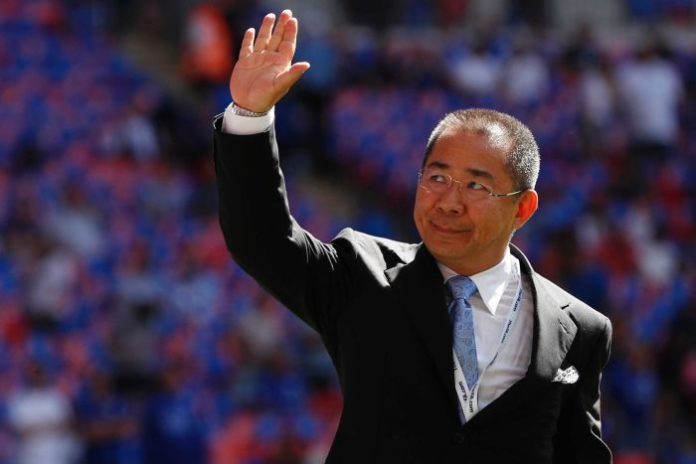
Football world mourns Leicester City owner

Vichai Srivaddhanaprabha

The entire footballing community has joined Leicester City football club in mourning the loss of their owner Vichai Srivaddhanaprabha who died on Saturday evening in a helicopter crash.

Srivaddhanaprabha was one of the five people on the helicopter when it crashed in the car parking lot of King Power stadium, Leicester City’s home ground few moments after the game with West Ham.

Leicestershire Police named the other people killed in the crash as Nursara Suknamai, Kaveporn Punpare, pilot Eric Swaffer and his partner Izabela Roza Lechowicz.

Several football stars, fans and people all over the world paid tributes to the Thai billionaire businessman and four other people who were killed in the crash.

Leicester goalkeeper Kasper Schmeichel, who reportedly witnessed the crash, wrote a letter to Srivaddhanaprabha expressing his sadness.

“I just cannot believe what I saw last night. It is difficult to put into words how much you have meant to this football club and the city of Leicester. Never have I ever come across a man like you. So hardworking, so dedicated, so passionate, so kind and so generous in the extreme.” Part of the letter reads.

Liverpool star Mohamed Salah also sent his prayers and thoughts to those involved in the accident.
“A truly sad day for football. My thoughts and prayers are with the family and friends of those who tragically passed away. #LCFC” Salah tweeted.

Defender Danny Simpson also paid tribute to the man who had owned the club for eight years:
“Thank you for everything you have done for me, the players, the fans, the club and the whole city of Leicester. You made mine and everyone else’s dream come true.I am devastated and can’t quite process what has happened but we will do our best to help this club grow. RIP #TheBoss” he tweeted.

Forward James Maddison also expressed how much the boss death had impacted him. “Devastated and heartbroken at the news that no one survived the helicopter crash yesterday. Life isn’t fair sometimes. A wonderful thoughtful man who lived and breathed Leicester City Football Club. Rest in Peace Boss #ThanksBoss

Spanish giants Real Madrid also paid their tribute in a statement:
“Real Madrid C. F. are saddened to hear of the passing of Leicester City FC owner, Vichai Srivaddhanaprabha, as well as the others involved in the helicopter accident.
The club would like to send their condolences to their families, friends and all fans of Leicester.”

FC Barcelona also tweeted: Our thoughts are with the whole @lcfc family. Rest in peace.

A book of condolence, which will be shared with the Srivaddhanaprabha family, will be opened at King Power Stadium from Tuesday 30th October for supporters wishing to pay their respects.

As a result of the incident, Leicester’s First Team fixture against Southampton on Tuesday in the EFL Cup has been postponed.

Stories Continues after ad

Uganda urged to recognise customary rights of small farmers

Agro-tourism farm in Uganda

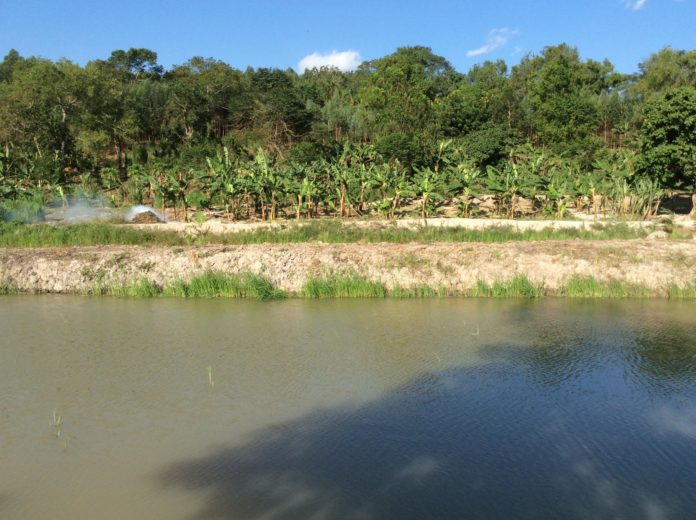
The government of Uganda and others in Africa should recognise customary rights to water for millions of small farmers who have been sidelined or “criminalised” by permit systems created during the colonial era, according to a report published on Monday as the continent marks the Africa Water Week in Libreville, Gabon.

Restrictive permit systems in Uganda, Kenya, Malawi, South Africa and Zimbabwe have left more than 100 million people without access to enough water, says the report by the Sri Lanka-based International Water Management Institute (IWMI).

Those countries should “decolonise statutory water law through a hybrid approach”, according to the report.

A hybrid system that recognises both existing permits and includes customary laws would improve water access for small farmers, says Barbara Schreiner, a co-author of the report.

“This is critical for expanding smallholder irrigation,” says Schreiner, who is executive director of the South Africa-based advocacy group Pegasys Institute.

About half of sub-Saharan Africa governments recognise customary rights to water, according to the Washington-based think tank World Resources Institute, but most are restricted to home use and limited farm irrigation.

In the five countries surveyed, researchers found that laws restrict small farmers to irrigating less than one acre of land without a permit, says Barbara van Koppen, a co-author and principal researcher at IWMI.

Recognising customary rights would help small farmers expand their agricultural production through irrigation, she says.

She said state agencies mandated to license water use have concentrated on large commercial users and failed to reach small farmers.

While many countries promoted water permits as the best practice in the 1990s, poorly-funded state agencies mandated with this task could not reach millions of small farmers, leaving many at risk of prosecution, the report says.

Recognition of customary water rights would also help strengthen land rights for a majority of communities whose land is still untitled across Africa, said Timothy Williams, IWMI’s director for Africa.

About 90 percent of rural land in Africa is undocumented, according to the World Bank, with most of it held under customary law.

Stories Continues after ad

UPL: SC Villa eager to edge URA in search of first league win

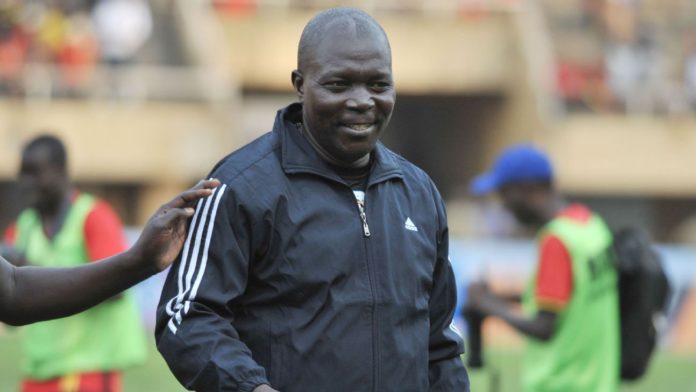
SC Villa manager Moses Basena under pressure

SC Villa Jogoo is one of the two teams yet to earn maximum points this season and they must find new ways of winning games when they host URA FC at Namboole Stadium on Tuesday afternoon.
The Sixteen time champions are struggling this season as they are 15th on the 16-table log with just 2 points from the four games played this season.

Last season, the Jogoos picked four points off the Tax Collectors including a 3-0 thrashing in Masaka and thus revenge will also be one of the mission.
Moses Basena’s side are yet to pick a point at home while URA have won all their games at Namboole which the two teams share.

The Jogoos will hope forwards Bashir Mutanda, Joseph Semujju and Ambrose Kirya are in fine form if they are to score against a defence that has only conceded once in four games.
Elsewhere, Maroons picked up their first point of the season at home against URA and they will be looking for the first win when they host Bul in Luzira. Maroons is one of the two sides in the league yet to win a game.

Nsimbe’s Maroons are bottom of the table while Bul FC come into the game in fifth place with 7 points. The Jinja based club drew away to Express and a won at home against new league entrants Paidha Black Angels in their previous two games.
Hamis Tibita will be the star man for the visitors while the hosts will rely on the experienced duo of Brian Majwega and Derrick Walulya.

After both teams getting off the mark last week, new boys Nyamityobora and Police now target successive victories when they face off at Mutesa II stadium, Wankulukuku.
Nyamityobora came from a goal down to win 2-1 against rivals Mbarara City while Police beat new league entrants Ndejje University by the same score line away in Bombo.

Ndejje University will also host fellow debutants Paidha Black Angels in Bombo. Ndejje lost 2-1 to Police in their last game while Paidha drew with Tooro United 0-0 at home.
Kirinya Jinja SS will host on-form Vipers at the Mighty Arena on Tuesday while Onduparaka will be out to get their second home win in three games when they host Bright Stars at the Green Light stadium.

Tuesday, 30th October fixtures:
SC Villa Vs URA, Mandela National Stadium – Namboole 4:00 pm Live on Sanyuka TV
Nyamityobora Vs Police, Muteesa II Stadium – Wankulukuku 4:30pm
Onduparaka Vs Bright Stars, Green Light Stadium – Arua 4:30pm
Ndejje University Vs Paidha Black Angels, Arena of Visions – Bombo 4:30pm
Maroons FC Vs BUL FC, Luzira prisons Grounds 4:30pm
Kirinya Jinja SSS Vs Vipers, The Mighty Arena – Jinja SSS 4:30pm

Stories Continues after ad

Security officers behind torture should be dismissed or tried in civilian courts-FDC

Forum for Democratic Change (FDC) has called for dismissal and trial of the five suspects who brutally tortured Yusuf Kawooya, a Democratic Party (DP) member.

Party Spokesperson who doubles as Kira Municipality MP, Ibrahim Semujju Nganda has said.
Semujju was responding to President Yoweri Museveni’s guidelines to security agencies.
In a footage that went viral, Kawooya was 10 days back arrested by plainclothes men in broad daylight on Colville Street near Christ the King Church in the city centre, boxed and beaten with rifle butts as he pleaded for mercy.

The Five military suspects were paraded before the UPDF Unit Disciplinary Court and pleaded guilty to unprofessional conduct while carrying out the arrest.
In the guidelines, Museveni said, concerned people told him the suspect had fought the arresting security officer. “That is very serious because some of the criminals have got infectious diseases. Our officer can be infected in that way and that should be an extra charge put on him. The appropriate response would have been to box him hard so that he stops biting our office,”

Semujju Contended that the perpetrators should be ashamed, tried in civilian courts under ant torture act and everyone know that these are the security officers who beat and assault people on streets.

“But by the moment you do a cover up like president Museveni is doing, under disciplinary and management action, you will be encouraging others to do the same thing. The video was all over social media and aired by all local televisions, he should learn to look for correct information even when people tell him lies,” he said

Museveni implored his officers to use fire arms only when it cannot be avoided, use them if other means are ineffective to achieve, in self-defense or in defence of others against imminent threat of death or serious injury and other guidelines.

Stories Continues after ad