Stanbic Bank
Stanbic Bank
24.6 C
Kampala
Stanbic Bank
Stanbic Bank
Home Blog Page 1443

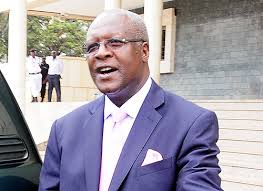
Chief Justice Katureebe attacks Bamugemereire over land grabbing allegation

CJ. Bart Katureebe

The Chief Justice Bart Katureebe has attacked Justice Catherine Bamugemereire’s land commission for the recent press release regarding the handling of land issues in courts of judicature, arguing that the Commission should have presented an interim report on the matter to president Museveni instead of running to the media.

“We would have expected the commission to communicate findings of such a serious nature in form of an Interim Report to the president not a Press Release,” Justice Katureebe says in a press release for Monday.

The Commission on October 26, published a press release accusing the judiciary of corruption tendencies in land adjudication.

He says had the Commission presented the report to the president, the judiciary as well as the government, would have studied that report and taken appropriate action, “including giving the officers mentioned in there …an opportunity to defend themselves”.

Nonetheless, we will further study the Press Release and try to work on it appropriately. Any judicial officer found to have acted outside the law, will be dealt with accordingly,” he says.

The judiciary has on occasions acted interacted with the Commission including on 25 September 2017 when it formally presented a detailed memorandum with recommendations regarding land administration and adjudication in Uganda, the Press Release notes.

The Principal Judge, Yorakamu Bamwine also blasted the Commission, saying that: “Actions of a few judicial officers should not be used to brand the entire judiciary a culprit.” Lately, we are encouraging judicial officers to conduct judicial processes in a more transparent manner so as to enhance public trust and confidence in the judiciary,” he says.

Stories Continues after ad

African governance progress lagging behind needs and expectations of growing population, finds 2018 IIAG

Mo Ibrahim

The 2018 Ibrahim Index of African Governance (IIAG), launched Monday by the Mo Ibrahim Foundation, highlights that public governance progress in Africa is lagging behind the needs and expectations of a growing population, composed mainly of young people.

Over the last decade, Overall Governance has on average maintained a moderate upward trajectory, with three out of four of Africa’s citizens (71.6 per cent) living in a country where governance has improved, says the Index.

African governments have struggled to translate economic growth into improved Sustainable Economic Opportunity for their citizens

According to the Index, since 2008 the African average score for Sustainable Economic Opportunity has increased by 0.1 point, or 0.2 per cent, despite a continental increase in GDP of nearly 40 per cent over the same period. There has been virtually no progress in creating Sustainable Economic Opportunity, meaning it remains the IIAG’s worst performing and slowest improving category. Defined as the extent to which governments enable their citizens to pursue economic goals and prosper, the almost stagnant Sustainable Economic Opportunity trend strikes a concerning contrast with demographic growth and youth expectations. Africa’s population has increased by 26.0 per cent over the last ten years and 60 per cent of the continent’s 1.25 billion people are now under the age of 25.

A diverging picture across Africa

African countries show increasing divergence in Overall Governance performance. Continental progress is mainly driven by 15 countries that have managed to accelerate their pace of improvement over the last five years. Progress is most striking in Côte d’Ivoire, Morocco and Kenya. Divergence is also reflected in Sustainable Economic Opportunity trends. While 27 of Africa’s countries have shown some improvement, in 25 countries, accounting for 43.2 per cent of Africa’s citizens, Sustainable Economic Opportunity performance has declined over the last ten years.

There is no strong relationship between the size of a country’s economy and its performance in Sustainable Economic Opportunity. In 2017, four of the ten countries with the highest GDP on the continent score below the African average score for Sustainable Economic Opportunity and sit in the lower half of the rankings, namely: Algeria, Angola, Nigeria, and Sudan. Meanwhile two of the smallest economies on the continent, Seychelles and Cabo Verde, reach the 5th and 6th highest scores in providing Sustainable Economic Opportunity for their citizens.

Declining Business Environment runs counter to the growing working age population

Calling for attention is the trajectory of the African average score for Business Environment. Deteriorating by almost -5.0 points over the last ten years, this is a worrying trend given that the number of working age Africans (15-64 years old) is expected to grow by almost another 30 per cent over the next ten years.

This will increase demand for jobs in an environment where on average progress in Sustainable Economic Opportunity is almost non-existent. Such demographic figures create a further striking contrast with the drop of -3.1 points in Satisfaction with Employment Creation since 2008.

Additionally, the indicator measuring Promotion of Socio-economic Integration of Youth registers an average continental decline of -2.3 over the last decade.

Education outcomes are worsening

Further cause for concern is Education. While Human Development is one of the bigger success stories of the 2018 IIAG, driven by improvements in Health, the stalling progress in Education seen in last year’s IIAG has now turned to decline.

For 27 countries, Education scores registered deterioration in the last five years, meaning that for more than half (52.8 per cent) of Africa’s youth population, education outcomes are worsening. This drop is driven by a fall in the indicators measuring whether Education is meeting the needs of the economy, education quality, and citizens’ expectations of education provision.

Civil society space is shrinking

Progress in Participation & Human Rights has been made on average. Almost four out of five of Africa’s citizens (79.6 per cent) live in countries that have progressed in this dimension over the last decade. However, ‘free and fair’ executive elections do not always translate into a better participatory environment. Alarmingly, citizens’ political and civic space in Africa is shrinking, with worsening trends in indicators measuring Civil Society Participation, Civil Rights & Liberties, Freedom of Expression and Freedom of Association & Assembly.

Welcome progress in Rule of Law and Transparency & Accountability, which are key to sound governance performance

Although Personal Safety and National Security continue to show average decline over the last decade, Rule of Law and Transparency & Accountability have begun to register welcome progress. Rule of Law is the most improved sub-category in the IIAG over the last five years. African average performance in Transparency & Accountability has also improved, though more needs to be done as it remains the worst performing sub-category.

The IIAG highlights that citizens’ rights and welfare are key to progress in public governance. Overall Governance scores are strongly correlated with citizen-centred measures, including property rights, civil rights & liberties, government accountability and social welfare policies.

The IIAG results also confirm that Rule of Law and Transparency & Accountability are key pillars of good governance. These two sub-categories show the strongest relationships with Overall Governance scores in Africa, with strong performance in these areas being the most common components of countries that perform well. Transparency & Accountability is also strongly related to the Sustainable Economic Opportunity categoryand Business Environment sub-category, indicating that improvements in these areas will support progress and economic opportunity in Africa.

Mo Ibrahim, Chair of the Mo Ibrahim Foundation, said:

“We welcome progress in Overall Governance, but the lost opportunity of the past decade is deeply concerning. Africa has a huge challenge ahead. Its large and youthful potential workforce could transform the continent for the better, but this opportunity is close to being squandered. The evidence is clear – young citizens of Africa need hope, prospects and opportunities. Its leaders need to speed up job creation to sustain progress and stave off deterioration. The time to act is now.”

Stories Continues after ad

Dfcu Bank should apologise to Eagle Online and others

Former Dfcu Managing Director, Juma Kisaame

Dfcu Bank should to apologise to Eagle Online and other media houses after the bank threatened recently that it would sue them for what it called malicious information against it.

The bank has now realised that the issues that Eagle Online and others have been writing about are factual and now should make an apology to the media houses. Otherwise short of that, allegations against Eagle Online and other media house make the bank leadership and their lawyers look unserious in the eyes of the readers.

For instance, when Eagle Online some time back reported that the sale of Crane Bank Limited (CBL) by Bank of Uganda (BoU) to Dfcu Bank was controversial, both Dfcu Bank managers took that piece of information to be malicious. The recent special audit report of BoU on defunct banks as written by the Auditor General John Muwanga revealed that certain guidelines were not followed, making the transaction unclean.

Some of Muwanga’s statements read: “I observed that there were no documented guidelines/regulation or policies in place for the identification of the purchasers of the 3 defunct banks (GTB, NBC and CBL) closed using the purchase and assumption arrangement. There were also no guidelines to determine the procedures to be adopted by the Central Bank in the sale/transfer of assets and liabilities of the defunct banks to the identified purchaser. In the absence of guidelines, I could not establish the basis used to select the purchaser and determining the values of assets and liabilities transferred by BOU to the purchaser.”

“I noted that BOU did not carry out a requisite valuation of assets and liabilities of the three defunct banks (GTB. NBC and CBL) resolved using the purchase and assumption arrangement at the time of signing the P&A. In absence of the valuation and or documented evaluation of alternatives and assumptions used, I could not establish how the terms for the transfer of assets and liabilities in the P&A were determined.”

Further Eagle Online would report on the intention by Britain’s CDC Group to exit from Dfcu Bank as shareholders but the bank management came out to say all that was false news meant to tarnish the bank’s image. The top gurus at the bank would only be silenced by CDC’s Investment Director Irina Grigorenko who circulated the letter of the Group’s intention to leave.
Still Eagle Online reported of management changes at the Dfcu Bank especially after it acquired CBL via a controversial transaction but managers said nothing like that was happening there. Yet recent developments indicate that Managing Director Juma Kisaame is to be replaced by Mathias Katamba who resigned his job at Housing Finance Bank (HFB) as MD.

Another story Eagle Online published and which Dfcu contested as false is the story of the bad book which belong the the CBL which and which Dfcu took over illegally. The bad book belonged to shareholders of CBL and therefore, the shareholders are entitled to have the book so that they can collect the money and whichever security was deposited can be reclaimed by owners. However, they continued refusal could lead to legal battle between CBL shareholders and Dfcu and in particular Mr.Jimmy Mugerwa.

Dfcu should take the bull by its horns rather than hiding behind the false news crusade and like they say, TIME is the best ally and indeed as time goes on, more revelations will be made and see who was telling the truth. And as the truth unmask themselves, we will not fear to task Dfcu to clarify on the allegations that we were being used by businessman Rajiv Ruparelia.

Stories Continues after ad

Speaker Kadaga urges Ugandan youth to go digital

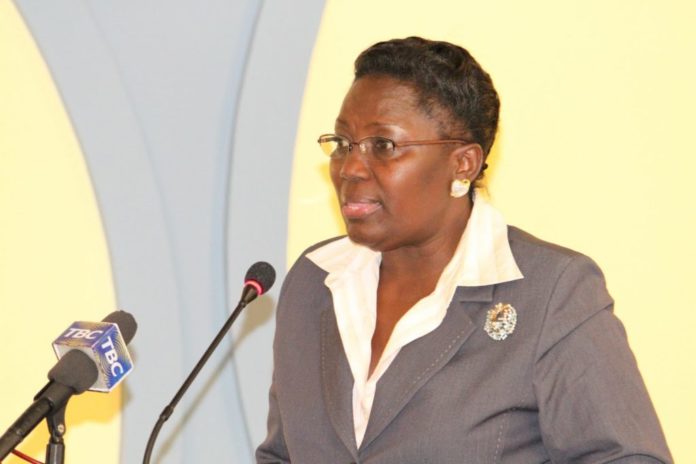
Speaker Rebecca Kadaga

The Speaker of Parliament, Rebecca Kadaga, on Thursday launched the Digital Literacy Programme to give the youth in rural areas computer skills.

At the Launch, Kadaga called on the youth to maximize the benefits of the initiative saying that it will enable young people in the informal sector to take computer lessons while they work.

The Speaker launched the initiative at the African Square in Kampala.

“The people for whom the programme is targeted are busy. They are hustling and trying to make a living. They neither have the time nor the money to attend classes,” said Kadaga.

The digital literacy programme is an initiative of Craft Silicon Foundation, a non-profit organisation working towards empowering youth, children and communities through free ICT education and services. This is in partnership with Finance Trust Bank, a local financial institution.

The Speaker called on the youth to take advantage of the initiative so as to improve their livelihoods, and to also increase their opportunities of getting better jobs.

“ICT helps one to work from anywhere. I ask you to study computer since you now have the opportunity. The good news is that in Uganda today, we have very many smart phones,” said Kadaga.

The Chief Executive Officer Craft Silicon Foundation, Priyah Budhabhatti, said the programme was started following a discovery that a big percentage of youth in rural areas are computer illiterate.

She said ICT has become a part of today’s lifestyle, and hence the need to bridge the digital divide, irrespective of gender and background.

“It is going to put all of us at the same level so that we can all participate in ICT related jobs, business and government jobs,” said Budhabhatti.

She added that the programme is in line with the rapid technological changes in Uganda, including the shift from analogue to digital broadcasting, transition from satellite to fiber optics, connectivity and adoption of E-commerce technologies.

She however called for support from government to enable the programme succeed, saying that it has registered successes in Kenya.

“Over the last eight years, we have educated 10,500 students from the less privileged areas who cannot afford college fees and a bus fare in Kenya. In Uganda our agenda is not different,” said Budhabhatti.

The Managing Director, Finance Trust Bank, Annet Nakawunde Mulindwa said that the programme will prepare and empower young people to reach their full potential as productive members of the society.

“We are certain that it will give youth the tools they need to distinguish themselves in the competitive global economy,” said Nakawunde.

Stories Continues after ad

Women ask Kadaga to talk to donors over GBV financing

UWONET boss Rita Aciro

Women under the umbrella of Uganda Women’s Network (UWONET) have pleaded with the Speaker of Parliament Rebecca Kadaga to plead on their behalf so that Ireland does not withdraw from funding the Gender Based Violence (GBV) programmes in Uganda.

The government of Ireland funds GBV activities through Irish Aid but the funding comes to an end next month.

Ms.Rita Aciro, the Executive Director of UWONET said that the programme has improved social tolerance among communities on GBV, adding that because of the programme, communities have broken silence on GBV.

“As a result of the programme and other stakeholder’s actions, the recent Uganda Health Demographic Survey indicates that violence against women has reduced from 56 percent to 28 percent,” Aciro said during a meeting with Kadaga at her Chambers at Parliament.

She said that through the project, UWONET established and was managing two shelters for women and children in Kamuli and Namutumba, and one advisory centre in Mayuge.

Aciro, who led a delegation of women activists including MPs under the Uganda Women Parliamentary Association, told Kadaga that there are no clear signs of how the shelters will be used in the event that that the support ends.

“Our people will lose a lot if this support ends. We believe that due to the good work, if you put in a good word and support to the Ambassador of Ireland, there is a possibility of additional funding especially for the advisory centre and for the shelter related work,” she said.

She also asked the Speaker to lobby for increased government support towards GBV activities, especially shelters which she said are run by civil society. She also urged Parliament to ensure that Civil Society benefits from the World Bank loan for GBV.

“We are looking forward to Parliament approving the World Bank funding because Kamuli has been identified as one of the beneficiary districts,” she said.

Kadaga promised to discuss possibilities of additional funding from the government of Ireland, with the new Ambassador of Ireland.

She also revealed that she held discussions with the World Bank in regard to funding of GBV projects.

“It is fortunate that I held a meeting with World Bank officials this morning and GBV funding was among the issues discussed. I will make sure that UWONET is among the beneficiaries of the GBV loan,” said Kadaga.

She encouraged UWONET to engage government to support civil society activities, rather than relying on development partners.

“I was able to do this with the campaign against female genital mutilation and it was successful. We cannot rely on development partners alone,” she said.

Other activities for which UWONET requires Parliament’s intervention are; fast tracking of the Marriage and Divorce Bill and the Sexual Offences Bill, and engaging government to ensure affordability and accessibility of services at the new Women’s Specialized Hospital in Mulago by women in rural areas.

Stories Continues after ad

New global commitment to primary health care for all at Astana conference

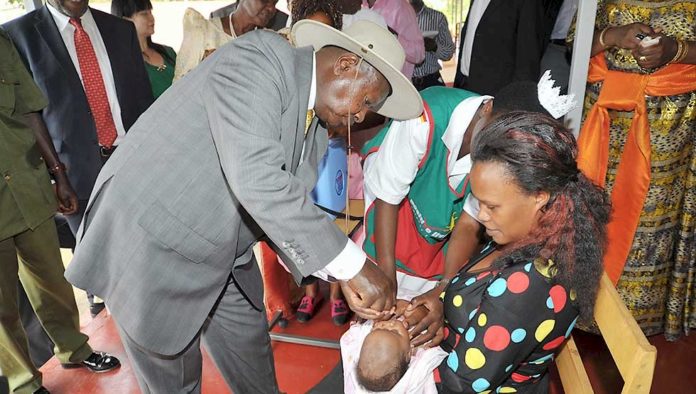
President Musevni administers a dose of medicine to a child

Countries around the world including Uganda on Thursday agreed to the Declaration of Astana, vowing to strengthen their primary health care systems as an essential step toward achieving universal health coverage. The Declaration of Astana reaffirms the historic 1978 Declaration of Alma-Ata, the first time world leaders committed to primary health care.

“Today, instead of health for all, we have health for some,” said Dr. Tedros Adhanom Ghebreyesus, Director-General of the World Health Organization (WHO). “We all have a solemn responsibility to ensure that today’s declaration on primary health care enables every person, everywhere to exercise their fundamental right to health.”

While the 1978 Declaration of Alma-Ata laid a foundation for primary health care, progress over the past four decades has been uneven. At least half the world’s population lacks access to essential health services – including care for noncommunicable and communicable diseases, maternal and child health, mental health, and sexual and reproductive health.

“Although the world is a healthier place for children today than ever before, close to 6 million children die every year before their fifth birthday mostly from preventable causes, and more than 150 million are stunted,” said Henrietta Fore, UNICEF Executive Director. “We as a global community can change that, by bringing quality health services close to those who need them. That’s what primary health care is about.”

The Declaration of Astana comes amid a growing global movement for greater investment in primary health care to achieve universal health coverage. Health resources have been overwhelmingly focused on single disease interventions rather than strong, comprehensive health systems – a gap highlighted by several health emergencies in recent years.

“Adoption of the Declaration at this global conference in Astana will set new directions for the development of primary health care as a basis of health care systems,” said Yelzhan Birtanov, Minister of Health of the Republic of Kazakhstan. “The new Declaration reflects obligations of countries, people, communities, health care systems and partners to achieve healthier lives through sustainable primary health care.”

UNICEF and WHO will help governments and civil society to act on the Declaration of Astana and encourage them to back the movement. UNICEF and WHO will also support countries in reviewing the implementation of this Declaration, in cooperation with other partners.

Stories Continues after ad

Housing Finance Bank replaces Mathias Katamba with Michael Mugabi

Michael Mugabi

Housing Finance Bank (HFB) has appointed Michael Mugabi as the Acting Managing Director after Mathias Katamba tendered in his resignation letter, hoping to join DFCU Bank early next year.

The announcement was made in a press release by David Geoffrey Opio-Okello, Chairman Board of Directors who disclosed Katamba’s departure saying: “The Board of Directors of Housing Finance Bank has appointed Michael K. Mugabi as the Acting Managing Director effective 25th October 2018. Housing Finance appreciates the services and contributions of the outgoing Managing Director, Mathias Katamba and wish him well in future endeavours.”

However, in a bid to restore investor confidence after Katamba’s departure, Opio-Okello reaffirmed the Board and Management’ commitment to providing efficient, innovative customer-centric financial services to its customers.

Katamba joined HFB in 2014 and now, leaves it as the 12th largest bank in Uganda by assets.

Eagle Online days ago reported of Katamba’s departure which would see him join DFCU Bank as its new MD as the current MD Juma Kisaame plans to exit in December 2018.

Leaked documents showing Kisaame’s bank statements from Bank of Africa that showed he had over USD40 million on in his account, caused commotion within DFCU Bank. That was not also helped by DFCU Bank board which declined to hand the position of MD to William Sekabembe who declined to join Kenya Commercial Bank (KCB) Uganda as Managing Director with the hope that he would replace Kisaame.

By August 2017, the two largest shareholders in HFB, the Uganda government and NSSF Uganda, had each contributed US$8.2 million in fresh capital to boost the bank’s ability to provide mortgages.

Stories Continues after ad

Accounts of relatives of BoU bosses to be investigated

Bank of Uganda

Reports that the Inspector General of Government (IGG) Irene Mulyagonja is tracking the wealth of about 100 top officials of Bank of Uganda (BoU) has raised temperatures in that institution to the extent that some of the top gurus have stashed millions of money on their relatives’ bank accounts to avoid being nabbed.

For instance, the Deputy Governor BoU Dr. Louis Kasekende’s son, George Kasekende has a fat account (3200xxxxxx) in Centenary Bank with over Shs780 million credits and over Shs500 million debits as of June 1, 2018. Now that revelation has forced investigators also to track the accounts of family members of the targeted BoU staff.

Recently Eagle Online reported on a leaked document showing Kasekende’s wife Edith as transacting millions of shillings in a city bank, which would later come out in a press statement to say that the leaked document was fake.

Edith runs an Easy Go account at StanChart Bank number 01001116xxxx, which is used to transact hundreds of millions of shillings.

However, investigator are working to trace the source of this money which is transacted through her account, because she is not known to own any business venture that can accrue several millions of shillings within a short period of time.

A source at the Bank says Edith receives questionable deposits of Shs1.6 billion from BoU which she pays back after making a profit. A source says Edith and other people, including her husband Kasekende could be using BoU’s liquid cash to boost their daily businesses and then send back the money back before it is detected.

The Leadership Code Act 2002 requires all specified leaders to declare their Incomes, Assets, and Liabilities to the IGG.

Last year the IGG asked all BoU officials to declare their wealth but some were against it especially those who are believed to have benefited in the controversial sale of Crane Bank and six other commercial banks.

A recent special Auditor General’s the officials at BoU for squandering billions of taxpayers’ money purportedly to support Crane Bank as they said it was insolvent at the time of takeover before they sold it to dfcu Bank at Shs200 billion.

Former BoU director for supervision of commercial banks Justine Bagyenda has already been investigated by the Financial Intelligence Authority (FIA) over allegations of illicit accumulation of wealth and allegations of money laundering. The IGG has also investigated Bagyenda who is also believed to have hiden cash on accounts of her children.

The IGG is believed to be shocked at the wealth of some of the BoU officials have amassed and has already summoned some of them to verify whether they were not acquired using stolen public funds.

Some officials declared ownership of assets in upscale city suburbs such as Ntinda, Bukoto, Makindye and Ggaba.

One of the declarations of income, assets and liabilities forms filled by Dr Kasekende shows that he owns property worth about Shs8 billion in upscale areas of Kampala, Wakiso and other areas. He is also a shareholder of Green Hill schools, a farm in Bukasa valued at Shs500 million and several commercial buildings which fetch millions of shillings in rent per year. In the declaration form, Dr Kasekende says he picked loans from commercial banks and used his statutory salary, savings from research, gratuity payments and travel allowances to build rentals and acquire the assets.

It is not clear whether the IGG started investigating the BoU officials in relation to the sale of Crane Bank.

A report by the Auditor General, John Muwanga, submitted to Parliament recently, indicates that during the period Crane Bank was under statutory management after being taken over by Bank of Uganda, more than Shs12 billion was spent by BoU on lawyers and consultancy fees without following the procedures or any indication that the money was meant to revive the bank.

The BoU officials under probe include the Governor, Emmanuel Tumusiime-Mutebile and his deputy Louis A. Kasekende who head the BoU Board.

Other Board members are; Judy Obitre Gama, James Kahoza, William Kalema, Keith Muhakanizi and Josephine Ossiya. Mr Tumubwine Twinemanzi the director for supervision, Mary Katarikawe- operations director, Joyce Okello, PA to Governor, Richard Mayebo, Director Risk and strategic management, Elliot Mwebya, IT director and Phillip Wabulya, Director Petroleum Fund are all under investigation.

More thers are Deborah Kabahweza, ED Finance, David Kalyango, Chief Internal Auditor, Charles Abuka, Director Statistics, Kenneth Egesa, Director Financial Stability, Valentine Otangole, Director Banking, Olive Kamuli, director Medical Administration, Macky Aomu, Director National Payment Systems and Christine Alupo, Director Board Affairs.

Charity Mugumya, communication director; Hannington Wasswa, Director Commercial Banking, Ben Sekabira, director financial markets, Edward Mugerwa, director IT operations, Lorna Nzaro, Director IT Business automation, Kande Sabiti, procurement manager, Joanita Babumba, deputy director Agricultural credit schemes, Hassan Nyangabyaki, deputy director board affairs, Natamba Bazinzi, assistant director administration currency, and Angella Kasirye, assistant director corporate affairs are also named.

Others are Balam Sempala, deputy director Deposit protection fund, Vito Semakula, assistant director security and compliance, James Banda Byamukama, ITO operations, Kalisa Katongole, assistant director operations, Kezekia Kizito, Deputy director microfinance institutions, Isaac Seguya, Deputy director statistics department, Michael Senkubuge, Deputy director systems and assurance, David Gulemye, Deputy director Financial policy and strategic risk, Solomon Kavuma, deputy director domestic market operations, Timothy Sekirayi, deputy director banking (customer services), Allan Lwetabe, assistant FMD, Cynthia Nakayizza, assistant director banking department, Sophie Kironde, assistant director commercial banking operations and Oscar Edwin for pension administration.

Bosco Bainamazima, Fortportal branch manager, Francis Kakeeto, Mbale branch manager, Julius Turyamwijuka, Masaka branch, Alex Owiny, deputy director Gulu Branch, Milton Opio Orech, Director Security, Stephen Semuga, Director administrative services, Charles Mugisa, chief accountant, Yusuf Mukiibi, assistant director accounts department, Sylivia Juuko, head media relations and Kelvin Kizito Kiyingi, communications are also named.

Stories Continues after ad

Gov’t makes shortfall of Shs10b tax revenue in September

Finance Minister, Matia Kasaija who is worried of the sinking economy.

Government’s tax revenues in September 2018 totaled just over Shs1.2 trillion, registering, a shortfall of Shs9.9 billion and thereby offsetting the surplus recorded in non-tax revenues, according to the Performance of the Economy Report published by the Ministry of Finance Planning and Economic Development (MFPED).

According to the report, tax revenue collections were affected by international trade taxes whose collections were Shs51.6 billion lower than the projected target of Shs578.5 billion for the month of September. “This was due to lower than projected taxable imports during the period that affected both import duty and VAT on imports,” the report reads in part.

The report which tracks the performance of the Ugandan economy monthly, notes that shortfalls of Shs37.7 billion and Shs 21.7 billion were registered in VAT on imports and import duty respectively.

Meanwhile the report indicates that direct and indirect taxes amounted to Shs64.6 billion and Shs335.1 billion, performing above their respective targets by 2 per cent and 10 per cent respectively. “The performance in direct taxes mainly resulted from surpluses received in Pay As You Earn (PAYE) and earnings from withholding tax on treasury bills while indirect taxes benefited from surpluses on the mobile money levy and phone talk time,” says the report.

However, revenue and grants in September 2018 amounted to about Shs1.3 trillion performing at 94.3 per cent against the target. “This performance was mainly attributed to lower than anticipated grants received which performed at only 48.5 per cent against the target of Shs143.7 billion,” the report says.

Government Expenditure
Preliminary data indicates that Government expenditure during the month totaled to about Shs1.4 trillion, which translates into a performance of 65.0 per cent against the programmed expenditure, the report says. This, the report says, mainly resulted from lower than planned external project disbursements.

Current expenditures in the month of September 2018 were Shs906.1 billion against the program of about Shs1.1 trillion. “This mainly resulted from frontloading of the quarter one expenditure in the first two months of the Quarter coupled with the downward revision of domestic interest payable in the period,” the report says.

Meanwhile development expenditures in the month performed at only 43 per cent of the program or about Shs1 trillion. “This was on account of lower than anticipated external project disbursements and absorption of monies in the external project accounts,” the report says.

Backwards, the total budget value is Shs32.7 trillion for the current financial year (FY) which is 13 per cent up on FY17/18. Domestic revenue will fund 64 percent of the total outgoings, down from 67 per cent budgeted in the prior year. The planned deficit is Shs7, 428 billion (6.6 percent of projected GDP), which will be funded by increased domestic borrowing of Shs1, 785 billion along with external borrowing.

The Uganda Revenue Authority (URA), which is a national tax collector, has been given a tax collection target of Shs16.4 trillion in the current financial year.

Stories Continues after ad
EC resolves to renew its relationship with CCEDU

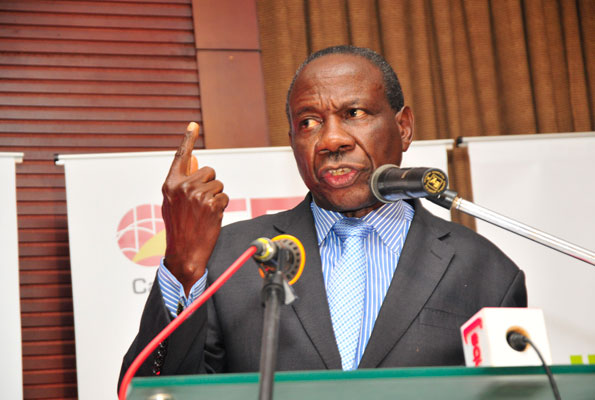
Electoral Commission and CCEDU officials

The electoral commission has resolved to renew its partnership with citizen’s coalition for electoral democracy in Uganda (CCEDU) months after the latter was suspended from observing any elections.

CCEDU was on July 4th 2018 suspended from conducting election-related activities over allegations that the organisation has been partisan in the way it has been conducting its activities, breaching electoral observation guidelines for benefits of stake holder in the electoral process.
EC, chairman Justice Simon Byabakama said, the commission and the nation wants credible, honest and impartial partners to access electoral process and make pertinent recommendations, it is upon that background that EC suspends your relationship until further notice,” the statement said.
The suspension followed CCEDU position of opposing voting by lining up behind candidates, “therefore we will not observer LC1 elections,” they wrote.

However, in a meeting held at Electoral Commission headquarters, the two bodies agreed to form a joint committee comprising of three officials from each organisation to expeditiously harmonize the parameters of their working relationship and communication strategy while engaging in election related activities.

The committees will be mandated with presenting mutually binding positions on both sides and pave way for lifting the suspension of CCEDU.

According to Crispin Kaheru, the chairperson of CCEDU, the allegations are baseless since they have done reports before, “so it’s not true that we are just on the other side,” he added.
“While performing our election observation duties, we have to work with the EC because it is them that are directly mandated to manage elections, that is one fact that was clear in the meeting we had,” he said.

Stories Continues after ad