Stanbic Bank
Stanbic Bank
18.4 C
Kampala
Stanbic Bank
Stanbic Bank
Home Blog Page 1445

Seven steps to meeting your goals with your new venture

Martin Zwilling

By Martin Zwilling

Successful entrepreneurs are usually hard-driving, and highly focused on some specific goals, like being the dominant player in a given domain, or the low-priced provider of their product. Yet other entrepreneurs will talk for hours about all their ideas, and how they intend to change the world, but I don’t hear any specific goals or milestones.

Many people are very hesitant to set specific goals, due to lack of self-confidence or whatever. The result is that they don’t ever get anywhere, because they never really knew where they wanted to go. If you find yourself in this category, try the following simple steps highlighted by Brian Tracy in his classic book “No Excuses: The Power of Self-Discipline”:

Decide exactly what you want. If you want to increase your income, decide on a specific amount of money, rather than just “make more money.” Without precise goals, you can’t measure progress, and you miss the real satisfaction of knowing when to declare success.

Write it down. A goal that is not written down is like cigarette smoke; it drifts away and disappears. It is vague and insubstantial. It has no force, effect, or power. It’s too easy to forget or push aside when outside forces arise that you hadn’t anticipated – and they will. On the other hand, most people don’t hesitate to write down excuses.

Set a deadline with specific milestones. Pick a reasonable time period and write down the date when you want to achieve it. If it is a big enough goal, set intermediate milestones for measurement reference points. The rule is “There are no unrealistic goals; there are only unrealistic deadlines.” Don’t be afraid to change the deadline – for cause.

Make a list of things you need to do to achieve your goal. The biggest goal can be accomplished if you break it down into enough small steps. Make a list of obstacles and difficulties, knowledge and skills required, necessary people, and everything you will have to do to meet the goal. Add to these lists as you learn more.

Organize your list by both sequence and priority. A list organized by sequence requires that you decide what you need to do in what order. A list organized by priority enables you to determine what is more important. Then develop a business plan which embodies all of the above.

Take action on your plan immediately. Don’t delay. Move quickly. Procrastination is the thief of time, and it shortens your life. Winners in life take the first step now. They are willing to overcome their normal fear of failure and disappointment, and take a small step, and then other one, until they reach the goal.

Do something every day that moves you in the direction of your major goal. This is the key step that will guarantee your success. Do something every day that moves you at least one step closer to the goal. In this fashion, you develop momentum, which further motivates, inspires, and energizes you. Soon it becomes automatic and easier.

You can’t control the future, and that’s not the purpose of goal setting. It’s also a recipe for failure to assume that the path to your goal will require suffering and sacrifice. In fact, the whole objective of all steps above is to allow you to avoid stress and suffering, and be more fully motivated by your progress.

As you adopt a goal-setting mindset, you will find yourself setting different kinds of goals. These are lifetime goals, not just a collection of near-term objectives. It’s these really big objectives, that seem unachievable even to you right now, that will inspire you the most, and motivate you to real success and happiness.

The writer is a veteran startup mentor, executive, blogger, author, tech professional, professor, and investor. Published on Forbes, Entrepreneur, Inc, Huffington Post.

Stories Continues after ad

25% of urban households in Uganda have ‘hanging pit latrines’

An example of hanging latrin

As Uganda joins the rest of the world to celebrate World Toilet Day which falls on November 19 every year, and take action to ensure that everyone has a safe toilet by 2030, a report published by the World Health Organization and UNICEF in 2015, estimated that about 2.4 billion people or roughly one –third of the world’s population lack access to proper toilets.

Inadequate sanitation is said to be the cause 280 000 diarrhoeal deaths annually and is a major factor in several neglected tropical diseases, including intestinal worms, schistosomiasis, and trachoma. Poor sanitation also contributes to malnutrition and diarrhea.

Relatedly in Uganda, according to Sauti za Wananchi data on Ugandan citizens’ experiences of education, health and water services and access on affordable access to clean and safe water, it was established that citizens suffer the same consequences of poor sanitation.

Sauti za Wananchi is a nationally-representative, high-frequency mobile phone panel survey is an initiative designed to regularly collect views and perceptions on issues of public interest from a broad cross-section of Ugandan citizens.

For instance the study established that one out of four urban households in urban areas use “hanging latrines” situated above water, either a stream or lake, or piped directly into drains or streams. This arrangement can be very bad for public hygiene, encouraging the spread of water-borne diseases such as typhoid and cholera.

It was established that 5 per cent of urban households use flush toilets and one in five use a ventilated pit latrine. In rural areas, four in ten use ventilated pit latrines.

Meanwhile the survey found out that seven out of ten citizens use an improved source of drinking water in the dry season, rising to eight out of ten in the wet season

Household access to improved water supplies is slightly higher in the wet season compared to the dry season. Eight in ten households (80 per cent) access water from an improved source during the rainy season, up from seven in ten (73 per cent) in the dry season.

At all times of the year, households in urban areas have better access to clean and safe water than their rural counterparts. Similarly, wealthier households are more likely than the poor to access drinking water from an improved source.

The survey further found out that health services are citizens’ top problem for the country as well as the cost of living for households. 59 per cent cite poor health services as one of the top three problems facing Uganda today, more than for any other issue. Inflation and the high cost of living is cited by four in ten (38 per cent) and a lack of jobs by one in three (33 per cent).

Also cited by substantial numbers are poor transport services (30 per cent), hunger/drought (30 per cent), corruption (26 per cent), poor quality of education (24 per cent) and poor access to clean water (24 per cent).

Just one in a hundred people cite terrorism as among the top three problems in the country.

Use of government health facilities

According to survey findings, when seeking treatment for illness or injury, half the population (51 per cent) turn first to government health facilities. “A further one out of four (24 per cent) turn first to private or NGO health facilities, and others go to the pharmacy (12 per cent),” the survey states.

Nationally insufficient water points is the main challenge mentioned by four out of eight citizens. The three main challenges cited by citizens in accessing clean drinking water are linked: a shortage of water points (43 per cent) distance to water points (39 per cent) and dirty water (28 per cent). In urban areas, the cost of water (36 per cent) and irregular supply (29 per cent) are mentioned the most.

Citizens are most engaged with the management of education

Over half of all Ugandans (54 per cent) say they have attended an education committee meeting in the past 12 months, compared to four in ten (39 per cent) who have done the same on water services and just over three out of ten (34 per cent) on health services.

Similarly, public engagement in other forms – raising issues at community meetings, speaking to authorities about an issue, and discussing in a community group – is higher in the education sector than on health or water issues.

And poor sanitation is linked to transmission of diseases and yet the most commonly encountered problems at government health facilities are long waiting times or queues (30 per cent) and a lack of medicines or other supplies (29 per cent).

Stories Continues after ad

BoU top officials clash before Mps over Nile River Acquisition Company

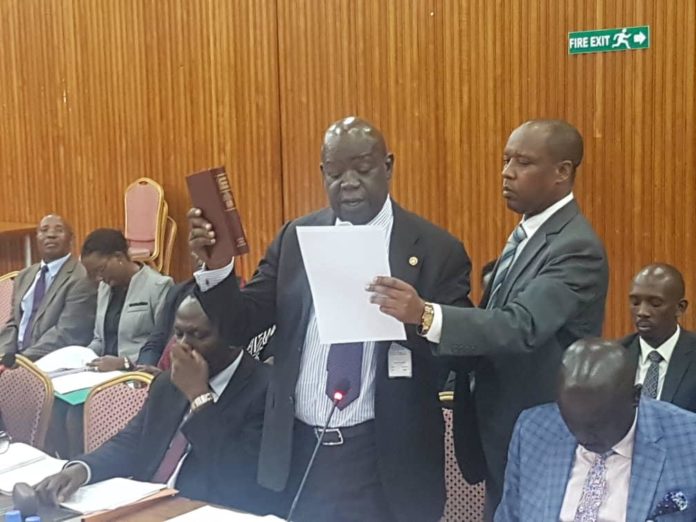
BoU officials take Oath before COSASE-MPs.

Bank of Uganda top officials have clashed over documents of Nile River Acquisition Company with the seasoned officials stating the only had an agreement with the company while Executive Director-Supervision, Dr. Tumubweine Twinemanzi insisted that there are other documents.

On Nile River Acquisition Company the officials said BoU only had an agreement with company, however, E Dr. Tumubweine said he would avail more documents on the company that acquired the assets of three banks (International Credit Bank, Greenland Bank and Cooperative at 93 per cent discount.
Last week, this website revealed that Nile River Acquisition Company (NRAC) to which Bank of Uganda (BoU) sold assets and liabilities of International Credit Bank (ICB) Limited, Greenland Bank and the Co-operative Bank at 93 per cent discount, paid Shs25, 000 as tax in Diamond Trust Bank on November, 2018.

“A search conducted on records revealed that the Nile River Acquisition is not reflected in our database. We therefore request for any documentation in your possession pertaining to the said name that can aid a further search,” said URSB’s Maureen Nabachwa on behalf the Registrar, Mr. Bemanya Twebaze.

Sources at Uganda Revenue Authority (URA) say the agency also doesn’t possess tax records of NRAC.

The unclear status of NRCA in Uganda raises questions as whether BoU carried due on the mysterious company that earned billions of shillings in profit as the central bank did away with Credit Bank (ICB) Ltd, Greenland Bank and the Co-operative Bank. BoU officials are expected to give more details of how they came into contact with the company as Cosase interfaces with them the coming week.

However, MPs on Parliament’s Committee on Commissions, Statutory Authorities and State Enterprises (Cosase) have grilled top BoU bosses over the fraudulent sale of International Credit Bank (ICB) in 1998.

Also read: https://eagle.co.ug/2018/11/12/new-twist-as-nile-river-acquisition-isnt-registered-in-uganda-pays-shs25-000-tax-in-diamond-trust-bank.html


BoU Governor Emmanuel Tumusiime-Mutebile and his deputy Dr Louis Kasekende were asked why they closed ICB without conducting an inventory as demanded by law. The officials presented a list of items which they thought would make up an inventory but were rejected by the MPs.

Committee Chairman Abdu Katuntu said BoU acted outside the law when it closed ICB in 1998.

“What we are looking at is whether you exercised these powers in accordance with the law. Where we think that you have not done things according to the law, it’s our duty to tell you so,” Katuntu said.

To ensure that the officials stick to the truth, BoU Director Benedict Ssekabira and Henry Katimbo Mugwanya were put on oath.

The MPs were surprised that BoU officials didn’t have reports on the movement of assets after they took over ICB, Greenland and Cooperative Bank whose assets they sold to a mysterious company Nile River Acquisition at 93 percent as reported by the Auditor General John Muwanga in his special audit report of BoU on defunct banks

“Because of the incomplete asset movement schedules, I was not able to verify the movement of assets from UGX.117,697,652,159 at closure to UGX.19,729,181,000 as stated in the Statement of affairs as at 30th June 2015 Documents presented 17th September 1998 financial statement, ”Muwanga noted.

When asked to state whether reports there were any reports on movement of assets, Sekabira, the Director, Financial Markets Development Coordination said there was none made. Since I am on oath I must be careful. They are no reports on ICB,” he said.

When Katuntu asked about the report, Mr. Mutebile said: “Mr. Chairman, I am sorry because I don’t remember receiving and reports in my office.”

Katuntu said the lack of reports indicates that BoU doesn’t have a regular reporting mechanism to ensure that the liquidation processes of banks go on well.

Section 33(5) (a) of Financial Institutions Statute (FIS) 1993 provides that where the Central Bank decides to liquidate a financial institution, it shall realise the assets of the insolvent financial institution. In doing so, the Liquidator is required to keep proper financial ledgers and financial records in which shall be recorded all financial transactions relating to the liquidation.

Stories Continues after ad

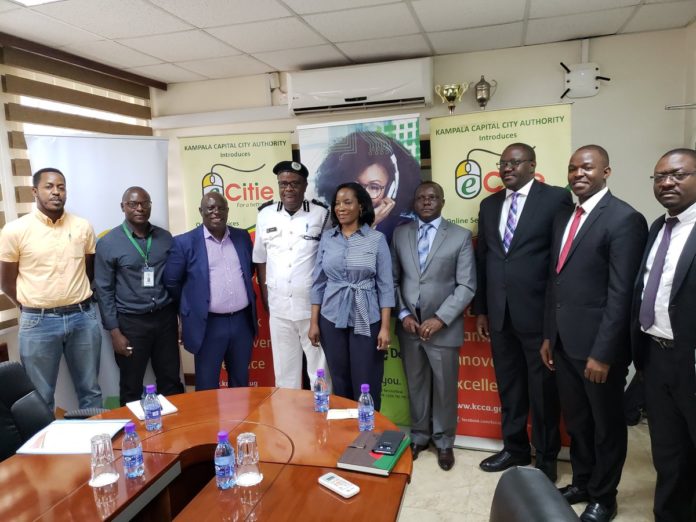
Jennifer Musisi launches traffic control centre

The Executive Director for Kampala Capital City Authority Jennifer Musisi Ssemakula, has launched traffic control centre which monitors mobility at 12 major junctions in the city.

Speaking at KCCA headquarters, Musisi said the system will remotely monitor what happens at the junction and performance of traffic signals.

With funds from World Bank, JICA and other patterns, Musisi said KCCA has managed to construct a number of roads in town and install cameras at major and crucial junctions. Some of the junctions include, Bukoto junction, Kira road traffic lights, Fairway, Jinja road traffic lights, Nakulabye, Wandegeya, and Makerere among other junctions.

She said the authority with its development patterns have installed 40 cameras at the junctions and a technical officer will be able to control traffic flow at one place to reduce on the jam that frustrates people during rush hours.

“We want to upscale this to mobile applications so the public can get information on which route is better to travel at what particular point in time to make traveling and mobility more efficient in Kampala,” She said.

There will be emergency support services in the event of an accident, cameras at the junctions will quickly pick this up and coordinate quick response with the different emergency response providers.

“We shall also offer parking guideline facilities, here we shall be able to advise citizens on where there is available parking within the city,” she said.

The head of traffic in the police, Dr. Stephen Kasiima, lauded KCCA for the commissioning of the smart traffic lights system, “This is an exciting time to be in Kampala, the time Ugandans spend in traffic jam will be greatly reduced,” he added.

The Permanent Secretary in the Ministry of ICT Vincent Bagiire congratulated KCCA on this milestone. ‘As the Ministry, we are always excited when agencies embrace ICT to enable the lives of citizens. This is the right step to Kampala becoming a smart city. He said”

Stories Continues after ad

Germany imposes entry ban on 18 Saudis over Khashoggi

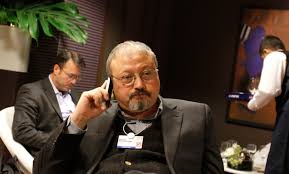
RIP Jamal Khashoggi

Germany is imposing an entry ban on 18 Saudi citizens who are believed to be connected to the murder of Saudi journalist Jamal Khashoggi, Foreign Minister Heiko Maas said on Monday on the sidelines of a European Union meeting in Brussels.

The Foreign Ministry in Berlin last week called on Saudi Arabia to conduct a seamless and transparent investigation after Riyadh announced it had charged 11 people in Khashoggi’s case.

Saudi Arabia’s King Salman set to address Shura council.

Saudi Arabia’s King Salman is expected to make his annual address to the kingdom’s Shura council, following a nation-wide tour with Crown Prince Mohammed bin Salman.

In his speech on Monday, King Salman bin Abdulaziz will present Saudi Arabia’s internal and external policy, and inaugurate the proceedings of the Shura council, the Saudi Press Agency reported.

The expected address comes as members of the US Congress renewed their calls to condemn the kingdom following an assessment by the CIA that the crown prince personally ordered the murder of Saudi journalist Jamal Khashoggi.

The US president said on Fox News there’s “no reason” for him to listen to an audio recording of Khashoggi’s murder at the Saudi consulate in Istanbul.

Trump confirmed the US has the recording, which was provided by Turkey, but told “Fox News Sunday” that “I don’t want to hear the tape, no reason for me to hear the tape”.

He said being briefed was enough and he did not want to hear the audio because it’s a “suffering tape, it’s a terrible tape”, in the interview recorded on Friday.

The killing was “very violent, vicious and terrible”, Trump said.

Later on Sunday, Trump said MBS told him directly he had nothing to do with Khashoggi’s killing. Trump also said he wonders: “Will anybody really know?”

Stories Continues after ad

18 Cranes players named for International friendly against Nigeria

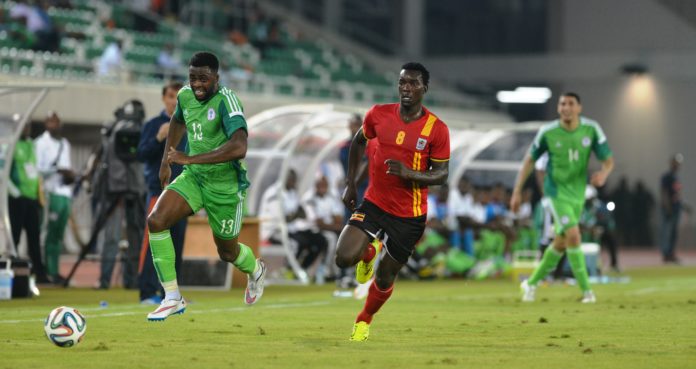
Aucho Khalid in action against Nigeria in 2015

18 Cranes players named for International friendly against Nigeria

After sealing 2019 Afcon qualification, Uganda Cranes head coach Sebastien Desabre has named the 18-man squad to travel to Nigeria and face the Super Eagles on Tuesday.

Captain Denis Onyango is not part of the squad due to a suspected injury and will travel back to his club Mamelodi Sundowns to be assessed ahead of their Caf champions league game next Tuesday.

Joseph Ochaya, Farouk Miya, Emmanuel Okwi and Murushid Jjuuko are also among those who didn’t travel to Nigeria.

The Uganda Cranes and Nigeria Super Eagles will face off in an international friendly after both sides confirmed their places in next year’s Africa Cup of Nations tournament to take place in Cameroon.

Patrick Kaddu was the hero for the Cranes heading home the only goal of the match in the 76th minute after a well delivered cross by Godfrey Walusimbi.

The Super Eagles of Nigeria booked their place at Cameroon 2019 despite playing a 1-1 draw against Bafana Bafana on Saturday at the FNB Stadium in Johannesburg.

The Cranes team departed on Sunday morning at 9am after the flight was delayed by six hours ahead of Tuesday’s international friendly match.

The two teams last met in 2015 when Uganda Cranes edged the Super Eagles 1-0 at Ibo Akwa Stadium, courtesy of a Miya Farouk goal in the 81st minute.

Traveling squad to Nigeria:

Goalkeepers: Salim Jamal, Charles Lukwago.

Outfield players: Nico Wadada, Godfrey Walusimbi, Hassan Wasswa Mawanda, Khalid Aucho, Denis Iguma, Moses Waiswa, Patrick Kaddu, Isaac Muleme, Timothy Denis Awany, Isaac Isinde, Allan Kyambadde, Taddeo Lwanga, Ibrahim Sadam Juma, Milton Karisa, Allan Kateregga, Derrick Nsibambi.

International Friendly

Tuesday 20th November 2018

Nigeria vs Uganda – Asaba Stadium

Stories Continues after ad

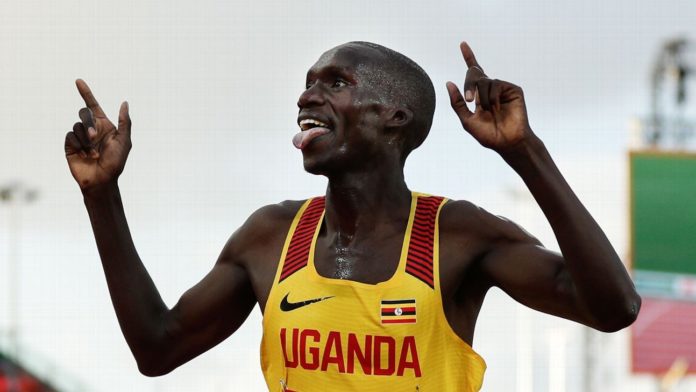
Joshua Cheptegei, Stella Chesang win gold at the NN ZevenHeuvenloop in Nijmegen, Netherlands

Joshua Cheptegei

Uganda’s Joshua Cheptegei has won the NN ZevenHeuvenloop in 41:05 to take eight seconds of the world best.

The world 10,000m silver medalist took the lead earlier than planned as the pacemakers struggled to maintain the required pace. He passed the first five kilometers in 14:07 but increased his pace and covered the next five-kilometer section in 13:42 to reach 10 kilometers in 27:49.

The double Commonwealth champion still had another gear to move into, though, and he upped his tempo in the final third of the race to get back on pace for a world best. Having covered the final five kilometers in 13:16 and the final three kilometers in 7:46, he crossed the finish line in 41:05.

“After 10km I was outside the schedule for the world best so I decided to accelerate at 12km,” said Cheptegei after winning this race for the fourth time. “The last kilometer was hard but I really enjoyed it. I am very proud of my achievement and want to thank the organization and my team.”

Eritrea’s Abrar Osman finished a distant second in 42:34, 22 seconds ahead of world 5000m champion Muktar Edris.

Cheptegei’s compatriot and fellow Commonwealth 10,000m champion Stella Chesang won the women’s race in a national record of 47:19. Kenya’s Evaline Chirchir finished one place higher than she did last year, taking second place in 47:35, while Susan Krumins of the Netherlands was six seconds adrift in third.

Stories Continues after ad

Thirteen nations qualify for Afcon 2019

Afcon 2019

With only one match left in the qualification group stages, the list of nations to take part in the 2019 Total Africa Cup of Nations is beginning to take shape.

A total of thirteen nations so far have booked places at the newly-extended 24-team finals scheduled to take place in Cameroon next year.

Madagascar became the first side to book their spot at the tournament for the first time in their nation’s history when they beat Equatorial Guinea 1-0 in October, to qualify for next year’s final tournament with two matches to spare.

Patrick Kaddu’s 76th-minute goal against Cape Verde in Kampala assured that Uganda qualified for back-to-back Afcon tournaments for the first time in 39 years.

Mauritania qualified for the first time from Group I as they came from a goal down to beat Botswana 2-1 at home scoring an 84th minute winner.

Guinea progressed yesterday before they even kicked a ball after Rwanda held the Central African Republic to a 2-2 draw in Group H.

Their 1-1 draw at home with Ivory Coast later in the day meant the Elephants also progressed to the finals in Cameroon in 2019.

The final matches of all the groups will be played on 22nd March 2019 on which the remaining eleven nations will seal their places.

The 2019 AFCON tournament will be hosted in Cameroon. The competition will be held in June and July 2019 to move it from January/February for the first time.

It will also be the first Africa Cup of Nations expanded from 16 to 24 teams.

Qualifed teams; Cameroon (Hosts), Senegal, Madagascar, Morocco, Mali, Algeria, Tunisia, Nigeria, Egypt, Uganda, Mauritania, Guinea and Ivory Coast.

Stories Continues after ad

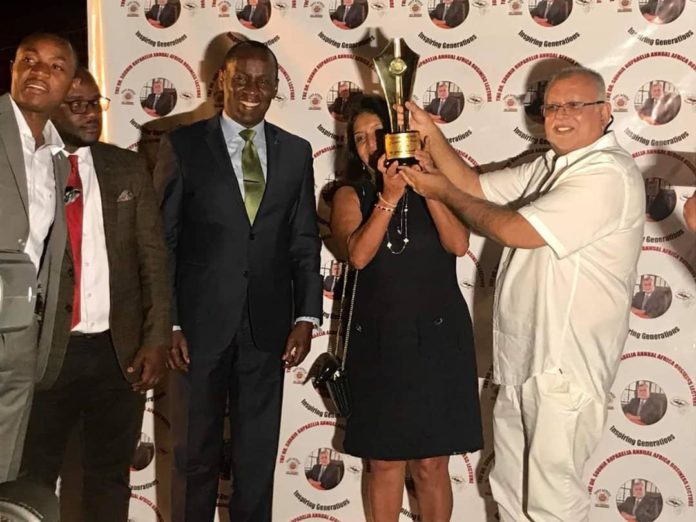
Sudhir Ruparelia scoops East Africa Business Leadership Award

Sudhir Ruparelia being helped by wife to raise the award.

Ugandan businessman Dr. Sudhir Ruparelia is all smiles after the East Africa Book of Records Secretariat days ago awarded him the East Africa Leadership Business Award 2018, in ceremony held at Kabira Country Club in Kampala. Ruparelia is the founder and Chairman of Ruparelia Group of Companies.

Simon Kamau, the Executive Secretary; East Africa Book of Records Secretariat, while addressing guests at the Award attended the ceremony said Ruparelia’s experience in business leadership and his inspiration of many people in the East African region made him win the coveted prize.

Kamau said Ruparelia’s success in business and entrepreneurship shoots from his humble life but that also has a great vision for his enterprises that employee a considerable number of Ugandans hence giving them a livelihood.

“Dr Sudhir has invested in a wide range of income generating business ventures which range from: Agro processing, Hotels, insurance, Banking, Education and Real Estates development among others”, he said.

Captain Mike Mukula, who was the guest of honour, lauded Ruparelia, saying he is a self-made entrepreneur, who built his business empire from a humble beginning.

“Munyonyo Resort Hotel, which belongs to Sudhir hosted the Queen of England and 53 Heads of States, during the 2007 Commonwealth Heads of Government (CHOGM) meeting, which pride is attributed to Sudhir’s business success,” Mukula said, adding that very few hotels in the world have hosted the Queen.

Captain Mukula felt sorry that Crane Bank was sold by the Bank of Uganda in 2017. He said: “Crane Bank will live in the hearts of Ugandan People. Crane Forex Bureau was among earliest Forex Bureaus in Uganda, which helped to facilitate Ugandan business community”

In his acceptance speech, Ruparelia appreciated said: “I take credit for this achievement. I would not be here where I am. I dedicate this achievement to President Museveni, for ushering in a favourable investment environment and supporting the private sector.”

The businessman dedicated the award to his wife Jyotsna Ruparelia and his business partners for the support they have rendered him over the years.

Stories Continues after ad

Comesa – EU to Sign €53m Trade Facilitation Programme

Crossing from Ethiopia to Kenya Through Moyale

Preparations for the signing of a 53 Million Euros trade facilitation facility between Comesa and the European Union are complete. The event will take place at the Comesa Secretariat in Lusaka on Tuesday, November 20, 2018.

COMESA Secretary General Ms. Chileshe Mpundu Kapwepwe and the Head of the European Union Delegation to Zambia, Ambassador Alessandro Mariani will jointly sign the Agreement in the presence of the Zambia Minister for Commerce, Trade and Industry Hon. Christopher Yaluma.

The funds will be used to implement the Comesa Trade Facilitation Programme (CTFP) which aims at increasing intra-regional trade flows of goods, persons and services by reducing the costs/delays of imports/exports at specific border posts. It will support trade policy liberalization, infrastructure improvements, improved border management and logistics among others.

Five border posts were pre-selected to begin implementing the programme due to their level of preparedness. They include: Mwami/Mchinji, between Zambia and Malawi; Galafi, between Ethiopia and Djibouti; Chirundu, between Zambia and Zimbabwe; Moyale between Ethiopia and Kenya and Tunduma/Nakonde between Tanzania and Zambia.

The CTFP is financed under the 11th European Development Fund.

Citizens of Comesa Member States and Tanzania will be the key beneficiaries, either directly or indirectly through their central, regional and local administrations or public or semi-public institutions.

Stories Continues after ad