Stanbic Bank
Stanbic Bank
18.2 C
Kampala
Stanbic Bank
Stanbic Bank
Home Blog Page 1452

AfDB and peers leverage blended finance to unlock $9b for developing countries

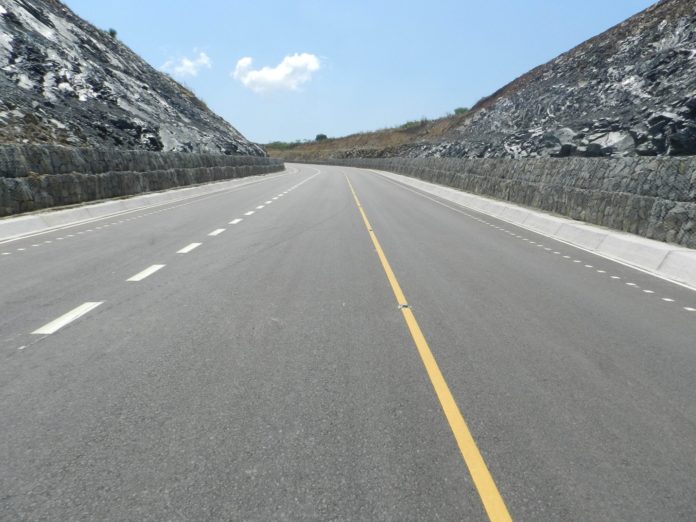
Such roads need financial support from AfDB

The African Development Bank (AfDB) and other development finance institutions (DFIs) last year used about US$1.2 billion in concessional funds to support nearly US$9 billion in private investment projects in emerging markets, according to a new DFI report that highlights how blended concessional finance can be key to mobilizing private investment in challenging environments.

The report by the DFI Working Group on Blended Concessional Finance for Private Sector Projects offers an extensive set of data on the extent to which blended concessional finance is used by DFIs—including where and in what sectors, and how much private finance is mobilized.

The report reflects data from the Bank and 22 other DFIs—including the Asian Development Bank (AsDB), the Asia Infrastructure Investment Bank (AIIB), the European Bank for Reconstruction and Development (EBRD), European Development Finance Institutions (EDFI), the European Investment Bank (EIB), the Inter-American Development Bank Group (IDBG), International Finance Corporation (IFC) and the Islamic Corporation for the Development of the Private Sector (ICD).

Last year, the DFI Working Group adopted Enhanced Principles on blended concessional finance to ensure concessional funds are used to the minimum extent needed and to crowd in other investors as much as possible and when justified by market failures, demonstration effects in pioneering projects, important affordability considerations, or other economic factors.

Blended concessional finance involves combining concessional funds and commercial financing from DFIs and the private sector. It allows DFIs to support private sector projects beyond what they would normally be able to engage in, particularly in higher-risk countries. For example, the report showed that of the nearly US$9 billion in project financing unlocked by blended finance, more than US $3.3 billion came from private lenders and investors.

DFIs are increasingly leveraging financing of this type to channel private investment into challenging markets—particularly in Sub-Saharan Africa and in low- and lower-middle-income countries. The report shows in 2017 projects financed by DFIs using concessional finance included innovative renewable energy projects in Africa and the Pacific, new technologies in Latin America and North Africa, innovative projects to mobilize finance for housing, guarantees for financial intermediaries to stimulate small and medium-sized enterprises (SMEs) development, and projects to develop agribusiness.

The report also notes best practices and improvements in governance, decision-making processes, documentation, training, and effective monitoring to ensure concessional funds are used efficiently.

The report was released on the sidelines of the Tri Hita Karana (THK) Forum on Sustainable Development in Bali, where attendees endorsed a complementary program called the “Tri Hita Karana Roadmap for Blended Finance.” The THK Roadmap, led by the OECD, covers a broader range of public/private support for private sector projects beyond the use of concessional finance and is fully consistent with the DFI Enhanced Principles.

The DFI Working Group contributed to and supports the THK Roadmap, and sees it as providing important shared values for all stakeholders engaged in supporting private sector projects for development and achieving the Sustainable Development Goals (SDGs).

Stories Continues after ad

Museveni meets local manufacturers, says gov’t won’t allow products in warehouses

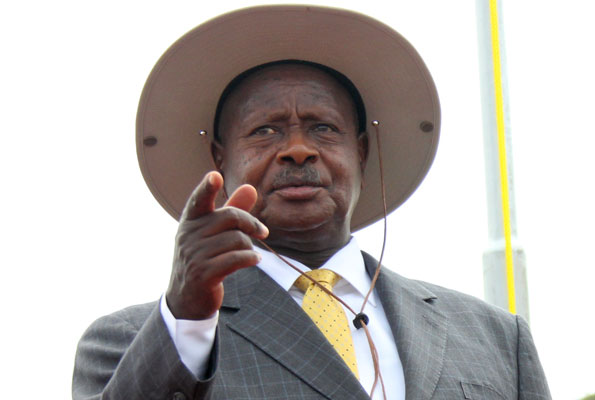
President Museveni

President Yoweri Museveni has said his government will not allow any locally-made product produced in surplus quantities to be bonded in the country.

“There should be no bonded warehouse for sugar or any other product that we have produced in abundancy in Uganda. The practice of bonding such products is due to corruption,” he said while meeting a delegation of Uganda Manufacturers Association (UMA) at Entebbe State House.

The president said that the government would impose taxes on all imported goods once it is established that such commodities are produced in large quantities locally such as pharmaceutical and scholastic products.

The meeting was attended by Trade, Industry and Cooperatives Minister, Amelia Kyambadde, of Finance and Economic Development, Matia Kasaija and that of State for Privatization and Investment, Evelyne Anite.

His remarks followed the manufacturers’ complaints over some Government officials who have frustrated the policy of Buy Ugandan Build Uganda, adding that those officials have persisted in procuring imported products even when there are good quality ones produced locally. Mr. Museveni made it clear that he would sack such Procurement Officers.

He said total demand was vital for businesses to progress. He told the meeting that the NRM Government is building roads, railways and expanding electricity generation and supply, among others, with the aim of reducing the cost of doing business in the country. He said that the Government is fully committed to the reduction in the cost of providing transport, electricity, bank loans, water and telecommunications for the benefit of all stakeholders.

He assured the UMA delegation that electricity rates would soon go down as Ayago power dam nears completion. He revealed that Uganda today generates electricity about 2,000 megawatts and that in the next 4 to 5 years, the country’s power generation will have been expanded to 5,000 megawatts. He added that plans are also underway to produce about 1,000 megawatts of electricity from geothermal energy.

Museveni told the UMA delegation that soon all industries, regardless of their size in operations, would enjoy a low rate of US5 cents per unit of electricity.

On communications, he disclosed that the railway link from Mombasa to Kisumu will soon be commissioned and that neighbouring Tanzania has also advanced in the extension of the railway from Dar-es-Salaam to Mwanza. He observed that given that progress, Uganda was assured of utilizing water transport to link with Kisumu and Mwanza at a low cost.

He also told the meeting that Government has already provided funds to the Uganda Development Bank and plans underway to avail it with more funds so as to reduce the cost of commercial loans for industries. He said the agricultural sector would also benefit from that line of credit. He was optimistic the cost of credit would further go down.

He talked of the need to skill the available human resource. He said that government has addressed the matter of skilling by facilitating the construction of technical institutes. He congratulated the UMA delegation for the reduction in the national import bill from US$7 billion to US$5billion per annum adding that Government policy is to ensure import substitution.

UMA boss Ms. Barbra Mulwana, said manufacturers in the country face a number of challenges that range from high costs of doing business and capitalization.

Sugar producer, Abeid Alam, expressed pleasure to note that increased electricity generation will assure Uganda of more value addition to a host of products. He disclosed that Uganda has the potential to become a sugar production hub in the region.

Stories Continues after ad

Museveni prepares to commission The Source of the Nile Bridge

Source of the Nile Bridge

The Source of the Nile Bridge is to be commissioned on Wednesday by president Museveni as chief guest, accompanied by a high-level delegation from Japanese government that sponsored the building of the bridge at 80 percent cost.

Since its construction started in April 2014, the bridge has simply been referred to as ‘The New Nile Bridge’ until cabinet chaired by Museveni days ago zeroed on “The Source of the Nile Bridge”, having asked people from Busoga to name the bridge.It will replace the Nalubaale Bridge, which was built in 1954.

The bridge is located at Njeru, a suburb of Jinja across the Victoria Nile, between the source of the Nile to the south and Nalubaale Power Station (old bridge) to the north. This is adjacent and immediately north of where the Uganda Railways line crosses the Victoria Nile. It is located on the proposed Kampala–Jinja Expressway, approximately 82 kilometres (51 mi), by road, east of Kampala,

The Nalubaale Bridge is one of the only two road crossings across the Victoria Nile in Uganda, the other crossing being the Karuma Bridge, approximately 285 kilometres (177 mi), by road, to the north.[7]The road crossing at Jinja is of national and regional significance because it is part of the “Northern Corridor”, a highway across east and central Africa linking the Indian Ocean at Mombasa, Kenya, to the Atlantic Ocean at Matadi, Democratic Republic of the Congo.

The old bridge, commissioned in 1954, is in bad structural shape and has outlived its expected lifespan. The new bridge will carry a four-lane dual highway with pedestrian sidewalks. It will be the longest bridge in Uganda at 525 metres (1,722 ft) long and 22.9 metres (75 ft) wide. The feasibility studies were conducted by the Japan International Cooperation Agency.

In November 2013, the Uganda National Roads Authority awarded the construction contract to the Zenitaka Corporation of Japan and Hyundai Engineering and Construction Company of South Korea. Construction was expected to last four years. On January 28, 2014, the construction was launched by Museveni.

As of August 2017, the construction was 40 percent complete, according to the bridge contractors. During an inspection tour of the construction site by the Japanese ambassador to Uganda, the contractors revealed that they had started using steel, after the product met the contractors’ standards.

Source of the Nile Bridge

Other infrastructure developments associated with the new bridge, include a “roadside station” or service centre on the Jinja side, which will host a restaurant, supermarket, public toilets, and an exhibition area. The station will also accommodate a chamber for bridge maintenance, security and an emergency response unit.

The development also calls for surface roads on the Njeru side to connect to the Nyenga-Njeru Road and the proposed Kampala–Jinja Expressway as well as the existing Kampala–Jinja Highway and the Mukono–Kayunga–Njeru Road. Road connections to the town of Jinja will be constructed, east of the road service centre.

As of 28 September 2018, the major physical construction had concluded. Minor electrical and surface markings remained, with official commissioning of the completed bridge planned for October 17, 2018.

Construction costs

The total cost of the New Jinja Bridge was budgeted at US$125 million. The government of Japan financed 80 percent of the cost, in the form of a soft loan of US$100 million at an annual interest rate of 0.01 percent, repayable in ten years but extendable to forty years. The government of Uganda’s funding is US $25 million (20 percent), out of its own coffers.

In March 2018, the Ugandan parliament authorized a supplementary loan from JICA, amounting to JPY: 3.891 billion (Shs133 billion or US $36.721), to complete this project. The bridge was completed and is to be officially commissioned on 17 October 2018. The cost of construction was quoted at US$112 million (about Shs41.1 billion) and has a projected lifespan of 120 years.

Stories Continues after ad

Global health organizations commit to new ways of working together for greater impact

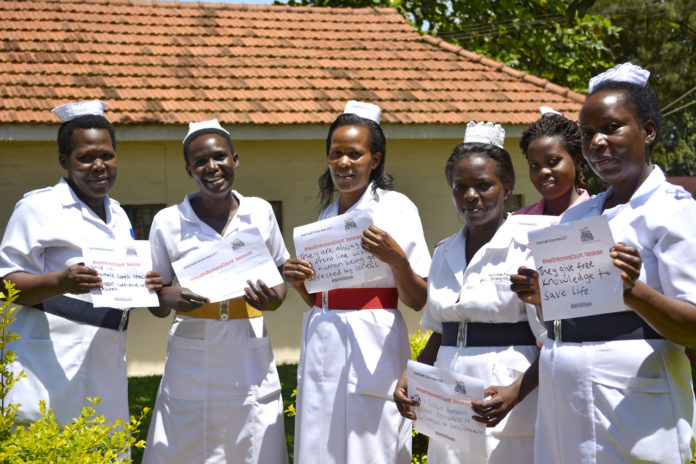
Ugandan nurses at Butabika Hospital

Eleven heads of the world’s leading health and development organizations Tuesday signed a landmark commitment to find new ways of working together to accelerate progress towards achieving the United Nations’ Sustainable Development Goals.

Coordinated by the World Health Organization, the initiative unites the work of 11 organizations, with others set to join in the next phase.

The commitment follows a request from Chancellor Angela Merkel of Germany, President Nana Addo Dankwa Akufo-Addo of Ghana, and Prime Minister Erna Solberg of Norway, with support from United Nations Secretary-General Antonio Guterres, to develop a global action plan to define how global actors can better collaborate to accelerate progress towards the health-related targets of the 2030 Sustainable Development Agenda.

“Healthy people are essential for sustainable development – to ending poverty, promoting peaceful and inclusive societies and protecting the environment. However, despite great strides made against many of the leading causes of death and disease, we must redouble our efforts or we will not reach several of the health-related targets,” the organizations announced Tuesday at the World Health Summit in Berlin.

“The Global Action Plan represents an historic commitment to new ways of working together to accelerate progress towards meeting the 2030 goals. We are committed to redefine how our organizations work together to deliver more effective and efficient support to countries and to achieve better health and well-being for all people.”

The group has agreed to develop new ways of working together to maximize resources and measure progress in a more transparent and engaging way. The first phase of the plan’s development is organized under three strategic approaches: align, accelerate and account.

Align: The organizations have committed to coordinate programmatic, financing and operational processes to increase collective efficiency and impact on a number of shared priorities such as gender equality and reproductive, maternal, newborn, child and adolescent health.

Accelerate: They have agreed to develop common approaches and coordinate action in areas of work that have the potential to increase the pace of progress in global health. The initial set of seven “accelerators” include community and civil society engagement, research and development, data and sustainable financing.

Account: To improve transparency and accountability to countries and development partners, the health organizations are breaking new ground by setting common milestones for nearly 50 health-related targets across 14 Sustainable Development Goals. These milestones will provide a critical checkpoint and common reference to determine where the world stands in 2023 and whether it is on track to reach the 2030 goals.

The Global Action Plan will also enhance collective action and leverage funds to address gender inequalities that act as barriers to accessing health, and to improve comprehensive quality health care for women and girls, including sexual and reproductive health services.

The organizations that have already signed up to the Global Action Plan for Healthy Lives and Well-being for All are: Gavi the Vaccine Alliance, the Global Fund to Fight AIDS, Tuberculosis and Malaria, the Global Financing Facility, UNAIDS, UNDP, UNFPA, UNICEF, Unitaid, UN Women, the World Bank and WHO. The World Food Programme has committed to join the plan in the coming months.

The final plan will be delivered in September 2019 at the United Nations General Assembly.

Stories Continues after ad

Businesses need employee engagement more than process

Martin Zwilling

By Martin Zwilling

The days of leadership without engagement are gone. With interactive social media and video everywhere, everyone needs to feel they have a relationship with their leaders, and every brand needs leader personification for customers to relate. Soon you won’t be able to name a business as one of your favorites if you can’t personally visualize and relate to company leadership.

In the same way, great entrepreneurs and company leaders should no longer rely on faceless and nameless processes to drive business strategy and innovation to stay competitive. The old way doesn’t work, and results more than ever in slow decision-making, lack of real connection with employees, and ignorance of what customers really want.

The new principles of engagement, as well as the dysfunctions of the old, are well illustrated in the insightful classic book, “Why Are There Snowblowers in Miami?” by Steven D. Goldstein. He speaks from a wealth of personal experience in private equity, as well as top executive positions at American Express, Sears, and Citigroup.

He found the dysfunctional engagement that sent snow blowers to his store in Miami every year. As a result of this incident and many others, he defined five key engagement principles which resonate with me as just as relevant for new business founders as mature business executives. Here is my adaptation of his engagement principles for all the aspiring entrepreneurs I advise:

Learn to adopt an outsider’s perspective. Every entrepreneur, even though confident in his domain, needs to fight complacency in a world that changes almost daily. You need to look at everything through fresh eyes, continually ask questions not usually asked, and actively listen to contrary views. No change means you are falling behind as a leader.

Interact with employees and customers on a regular basis. Authentic communication at all levels and encouraging feedback is how you find out what is really going on. More meetings in your conference room won’t get to the truth as well as simply talking to people who interact with customers directly. Never be too busy to talk to real customers.

Focus on two or three pertinent metrics in any situation. Keeping it simple is the best course. No one can remember your top ten priorities and measurements. Unbundle projects into smaller elements, and personalize the top couple of metrics for each team. These simplified targets are crucial to motivating a team, and getting the focus you need.

Help people know more, so they can do their job better. Knowledge is power, and good information flow and collection tools are of the utmost importance. Information that is relevant and timely needs to be shared widely and efficiently. It’s also important to share the evaluation insights, and to tie the next action steps directly to current results.

Accept that whatever speed you are going is too slow. Time is the enemy in today’s global marketplace. Follow the guiding motto of Andy Grove at Intel, “Only the paranoid survive.” It’s vital to get quick wins, learn rapidly from failures, and get comfortable with constant change. Waiting is never an option, as competitors will always be moving.

In the same fashion, these engagement principles must be applied to customers. More and more, I see evidence that customers want to be pulled to your company by engagement, rather than feel that you are pushing yourself on them. There are a multitude of opportunities through social media to engage your customers, as well as getting out of your office into the marketplace.

Customer business leadership through brand icons, such as Ronald McDonald and Aunt Jemima, is fading fast. Customers as well as employees want to relate and engage with real people as leaders, and business leaders need to interact with real employees and customers to stay vital and current.

As an entrepreneur, you need to start this focus early, with the same passion you currently apply to your new idea and solution. Have you taken a hard look recently at where you are spending most of your time?

The writer is a veteran startup mentor, executive, blogger, author, tech professional, and Angel investor. Published on Forbes, Entrepreneur, Inc, Huffington Post, and others.

Stories Continues after ad

Nearly half the world lives on less than $5.50 a day-WB report

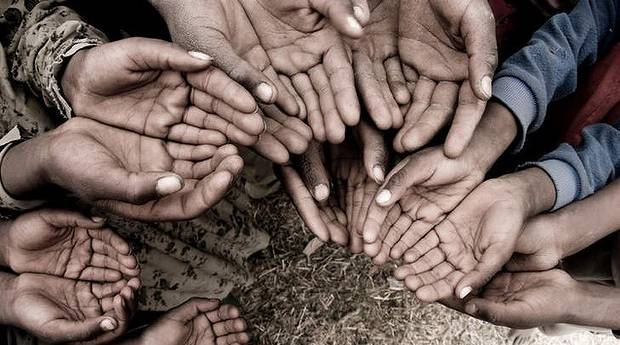
Nothing to eat

Economic advances around the world mean that while fewer people live in extreme poverty, almost half the world’s population — 3.4 billion people — still struggles to meet basic needs, the World Bank (WB) said.

Living on less than $3.20 per day reflects poverty lines in lower-middle-income countries, while $5.50 a day reflects standards in upper-middle-income countries, the World Bank said in its biennial Poverty and Shared Prosperity Report, “Piecing Together the Poverty Puzzle.”
The World Bank remains committed to achieving the goal of ending extreme poverty, defined as living on less than $1.90 a day, by 2030. The share of the world’s population living in extreme poverty fell to 10 percent in 2015, but the pace of extreme poverty reduction has slowed, the Bank warned on Sept. 19.

However, given that economic growth means that a much greater proportion of the world’s poor now live in wealthier countries, additional poverty lines and a broader understanding of poverty are crucial to fully fighting it, the report says.
“Ending extreme poverty by 2030 and boosting shared prosperity are our goals, and we remain committed to them,” said World Bank Group President Jim Yong Kim. “At the same time, we can take a broader view of poverty at different levels and dimensions around the world. This view reveals that poverty is more widespread and entrenched, underlining the importance of investing in people.”

While rates of extreme poverty have declined substantially, falling from 36 per cent in 1990, the report’s expanded examination of the nature of poverty demonstrates the magnitude of the challenge in eradicating it. Over 1.9 billion people, or 26.2 per cent of the world’s population, were living on less than $3.20 per day in 2015. Close to 46 per cent of the world’s population was living on less than $5.50 a day.

The report also goes beyond monetary measures of poverty to understand how access to adequate water and sanitation, education, or electricity affect a family’s well-being. And since the burdens of poverty often fall most heavily on women and children, the report analyzes how poverty can vary within a household.

The report finds that the incomes of the poorest 40 percent grew in 70 of the 91 economies monitored. In more than half of the economies, their incomes grew faster than the average, meaning they were getting a bigger share of the economic pie. However, progress in sharing prosperity lagged in some regions of the world. The report also warns that data needed to assess shared prosperity is weakest in the very countries that most need it to improve. Only one in four low-income countries and four of the 35 recognized fragile and conflict-affected states have data on shared prosperity data over time.
The new measures allow the World Bank to better monitor poverty in all countries, in multiple aspects of life, and for all individuals in every household.
“Piecing Together the Poverty Puzzle” is being released on End Poverty Day and will be accompanied by a launch event to be webcast on World Bank Live at 12:30 p.m. EDT (4:30 p.m. UTC/GMT).
REGIONAL SNAPSHOTS

Sub-Saharan Africa: A third of the countries in the region experienced negative income growth for the bottom 40 per cent of their populations. The region with the largest number of extreme poor, Africa saw its population nearly double between 1990 and 2015, with one of the largest increases in population being for those living on less than $3.20 and more than $1.90. The poor suffered from multiple deprivations such as low consumption levels and lack of access to education and basic infrastructure services.

East Asia and Pacific: The region was one of the best performers in shared prosperity: The incomes of the poorest 40 per cent of the population grew on average 4.7 per cent between 2010 and 2015. East Asia not only had the largest reductions in extreme poverty, but also in the proportion of people living on less than $3.20 and $5.50 per day. While extreme poverty is very low, the region saw a higher percentage of people lacking access to sanitation.
Europe and Central Asia: Many countries in the region suffered setbacks in the growth of incomes of its bottom 40. On the other hand, several economies whose bottom 40 suffered large declines because of the financial and the debt crises were recovering. Among developing regions, Europe and Central Asia had the lowest percentage of people living under the $3.20 and $5.50 poverty lines. However, in the share of people lacking schooling enrollment, it performs less well than either East Asia and Pacific or Latin America and the Caribbean.
Latin America and the Caribbean: The region saw less shared prosperity from 2010 to 2015 than in previous years as its economies were impacted by a slowdown in global commodity prices. The region had almost 11 per cent living on less than $3.20 a day and over 26 per cent on less than $5.50 a day in 2015. Poverty in non-monetary dimensions such as lack of access to drinking water, adequate sanitation or electricity was much less associated with monetary aspects.
Middle East and North Africa: Even though the region saw an increase in the number of people living on less than $1.90 a day, levels of extreme poverty remained low. However, the region had more people living on less than $5.50 per day in 2015 than in 1990. Additionally, almost one in seven people lacks adequate sanitation.
South Asia: the region saw impressive growth of the incomes of its bottom 40 between 2010 and 2015. Despite a 35-percentage point decline in extreme poverty between 1990 and 2015, the region registered only an 8 per cent decrease in people living on less than $3.20 a day, and over 80 percent of the region still lived below $5.50 per day in 2015. Also, the number of people in the region living in households without access to electricity or adequate sanitation was far greater than those living in monetary poverty.

Stories Continues after ad

Cristiano Ronaldo sex biscuits’ served in UK cafe

Cristiano Ronaldo

A UK cafe has been accused of making light of rape after selling biscuits shaped to depict Cristiano Ronaldo having sex. The Portuguese star is currently fighting allegations of sexual assault against a US woman.

Worcester cafe ‘Our Taste of Portugal’ released the biscuits shaped to show the Juventus player having sex, with owner Jose Goncalves saying the snacks were intended as a joke.
“Our idea was to make 30 cookies and play with the situation with our friends and clients, in which it was well accepted and everyone found a joke,” Goncalves said.

The cafe reportedly sold more than 70 of the biscuits for 50p ($0.66) each, claiming that the Portuguese “laugh off everything.”
However, the stunt has left a bad taste in the mouths of some, with people accusing the cafe of making light of sexual assault.

Lydia Johnson, who works at local a sexual assault referral center, condemned the cafe, saying: “I couldn’t really believe it when I saw it on Facebook, I was disgusted to hear about it.”
“There’s really no circumstance when it’s ever going to be OK… it’s disappointing and infuriating really to think anybody would think it was a good idea,” Johnson added, according to Worcester News.

Others writing on BBC Hereford and Worcester’s Facebook page said the sense of humour behind the treats was “weird,” and that they “cannot believe anyone would find these biscuits funny.”
Goncalves, who is Portuguese but has lived in Worcester for 10 years, posted an apology on the cafe’s Facebook page, but hit out at reports on the scandal: “I love Cristiano Ronaldo. I’m going to defend Ronaldo because I believe in his version [in the rape claims].

“Regarding cookies, radio used the word ‘rape’ of its own free will. I have nothing to do with it. Our idea was to make 30 cookies and play with the situation with our friends and clients in which it was well accepted and everyone found joke. One day only!

“It was very malicious what radio posted on the page. I did not authorize it. I am homosexual and abused as a child. If there are people who do not like to hear that word, then I am one of them. I’m sorry if I made people feel bad. I just have to say sorry to everyone.”
3, stands accused of anally raping Kathryn Mayorga in a Las Vegas hotel room after a night spent partying in 2009.

The footballer has categorically denied the allegations, claiming that the encounter was consensual. Lawyers for the player recently said that details of the case, first reported by German news magazine Der Spiegel, were “complete fabrications.”
Las Vegas police have confirmed they have re-opened an investigation into the case.

Stories Continues after ad

Panic: Dfcu tightens data security to control leakage of information

dfcu bank

For over the past year, Dfcu bank has received criticism for being reluctant with data security after leakage of vital information like bank statements of their top bosses to the public.

Accordingly, Dfcu bank has come out and restricted its employees from assessing crucial information especially those in the Information Technology (IT) section as a way of preventing information from being leaked to the public.

At some point, some shareholders threatened to withdraw their shares from the bank after the leakage of crucial bank statements and information to several online publications and the public.
This rubbishes claims by Dfcu Bank when they recently came out saying some online media outlets were spreading malicious information concerning its business operations. The local media have not been telling lies about the Crane Bank-Dfcu saga because they have evidence.

This all began from the controversial purchase of Crane bank in January 2017. Bank of Uganda (BOU) liquidated Crane Bank in 2016 and controversially sold it in January 2017 to Dfcu Bank but the controversial transaction continues to haunt both of the top managers at BoU and Dfcu Bank.
Early this month, Eagle Online reported that a top boss at Dfcu bank has $40 million on his account Bank of Africa as showed by the statement of transaction.
The Bank of Uganda Consumer Protection Guidelines of 2011 compel financial institutions inclusive of commercial banks to safeguard the information of customers’ accounts.

It states; “A financial institution shall not disclose any information about the consumer includes information relating to the consumer’s account and any information about the relationship between the financial services provider and the consumer.

It is mandatory for banks to protect personal and banking-related information, but there are situations in which it can release this information for example when the law compels it to.

Stories Continues after ad

We shall compensate you- Museveni tells Lusanja residents after eviction

President Museveni

President Museveni has directed the office of the Prime Minister to avail relief items to the people of Lusanja, Wakiso whose homes were demolished prior to a court order obtained by a one Medard Kiconco.

On Friday, Kasangati police led by court bailiffs razed down over 350 homesteads in the area and in the process of blocking them, area chairman, Fred Kanyike, was injured and admitted in the local health facility for medication.

Angry Locals however, mobilized themselves and conducted a search that culminated into nabbing of the driver of a commuter taxi that transported them to the site. The car was touched and the suspect was handed over to police.

Through Minister for Primary Education, Rose Mary Sseninde State for Primary Education, Museveni intervened and ordered for halt to the ongoing process of putting down 240 other homes that were in the pipeline. He retaliated that if the order was executed in the rightful manner, government will compensate them.

Residents averred that Operation Wealth Creation boss Gen. Salim Saleh who is also young brother to Museveni has a hand in the evictions that rendered them homeless. Since then, residents have been living on the contested land that was later fenced off upon execution of the campaign.

Museveni blamed them for voting Kyadondo East legislator Robert Kyagulanyi who he said, whose mission is to oust him from power and reminded them that taking him off isn’t easy.

“These people should be given food and other relief materials as we did in Bududa to cater for their welfare,”

Stories Continues after ad

Mo Ibrahim Foundation to launch 2018 Ibrahim Index of African Governance

Mo Ibrahim

The Mo Ibrahim Foundation (MIF) will launch of the 12th annual Ibrahim Index of African Governance (IIAG) on Monday October 29, 2018, when the results and analysis will be shared with the public at mo.ibrahim.foundation.

To mark the launch, Dr Mo Ibrahim will participate in a Facebook Live event to discuss this year’s striking results and the trends measuring Africa’s public governance progress.

Mo will be joined by a panel of African experts representing the continent’s growing next generation voices, Yvonne Apea Mensah from Ghana and Nasi Rwigema from South Africa, who will provide their own opinions of this year’s Index findings. The panel will also respond to questions in real time from online users.

Following the launch, MIF, in partnership with the African Peer Review Mechanism (APRM), will host a high-level discussion on the findings on November 2, in Pretoria, South Africa.

Global Launch of the 2018 IIAG

The IIAG is an unmatched resource providing the world’s most extensive analysis of the quality of governance in African countries. With the Index, MIF seeks to enable governments, citizens, business, academia, policy makers and analysts to use its findings as a tool to assess accurately the delivery of public goods and services and drive conversations about governance in Africa. As such, the data are made freely available each year via the IIAG Data Portal (iiag.online).

The 2018 IIAG launch will take place online during a 30-minute Facebook Live event with Mo and two African next generation voices, taking the discussion directly to the public to encourage dialogue across social media using the hashtags #IIAG and #AskMIF.

With ten years of data to draw from, the 2018 IIAG is uniquely positioned to measure trends in governance, providing in-depth analysis on how the quality of governance has changed over the past five years (2013-2017) within the context of the last decade (2008-2017), and what has or could be key to Africa’s transformation.

In every iteration, MIF – assisted by the IIAG’s Advisory Council – looks at improving the structure, components and methodology of the IIAG. Due to this annual revision, every year MIF recalculates all scores in the Index.

Previous iterations of the IIAG covered data from 2000 onwards. The 2018 IIAG is for the first time providing comparable governance data for the last decade only, to strengthen the robustness of the findings.

For the first time, an assessment of youth inclusion is part of the IIAG. Through the indicator Promotion of Socio-economic Integration of Youth (provided by Global Integrity), the Index assesses whether there is a government policy/strategy to increase the socio-economic integration of youth.

This year’s IIAG will have the added focus of analysing the data through thematic frameworks and broader themes including: economic opportunity for Africa’s citizens, the demographic dividend, transparency and accountability.

The ten-year time series includes the most recent governance performances, raising the bar in areas such as Health, where countries should benchmark themselves to more current standards.

The IIAG contains analysis across 102 indicators from 35 independent African and global data institutions to cover all 54 African countries in the areas of Safety & Rule of Law, Participation & Human Rights, Sustainable Economic Opportunity and Human Development

Stories Continues after ad