Stanbic Bank
Stanbic Bank
20.7 C
Kampala
Stanbic Bank
Stanbic Bank
Home Blog Page 1451

Michelle Obama reveals she had an abortion years ago

Mitchel Obama

Michelle Obama, wife to former US president Barak Obama says she felt “lost and alone” after suffering a miscarriage 20 years ago and underwent in vitro fertilization to conceive her two daughters.

“I felt like I failed because I didn’t know how common miscarriages were because we don’t talk about them,” the former first lady said in an interview broadcast Friday on ABC’s “Good Morning America.”

“We sit in our own pain, thinking that somehow we’re broken.”

Mrs Obama, 54, said she and Barack Obama underwent fertilization treatments to conceive daughters Sasha and Malia, now 17 and 20.

“I realized that as I was 34 and 35, we had to do IVF,” Mrs. Obama said in excerpts from an ABC special set to air Sunday.

The revelations come ahead of Tuesday’s release of from growing up in Chicago to confronting racism in public life and becoming the country’s first black first lady.

The Associated Press purchased an early copy of “Becoming,” one of the most anticipated political books in recent memory. Memoirs by former first ladies, including Hillary Clinton and Laura Bush, are usually best-sellers.

In “Becoming,” Mrs. Obama lets loose a blast of anger at President Donald Trump, writing how she reacted in shock the night she learned he would replace her husband in the Oval Office and tried to “block it all out.”

She also denounces Trump questioning her husband’s citizenship, calling it bigoted and dangerous, “deliberately meant to stir up the wingnuts and kooks.”

Trump suggested Obama was not born in the U.S. but on foreign soil – his father was Kenyan. The former president was born in Hawaii.

Mrs. Obama launches her promotional tour Tuesday not at a bookstore, but at Chicago’s United Center, where tens of thousands of people have purchased tickets – paying anything from just under $30 to thousands of dollars – to attend the event moderated by Oprah Winfrey.

Stories Continues after ad

Vipers SC discover opponents as CAF announces draws

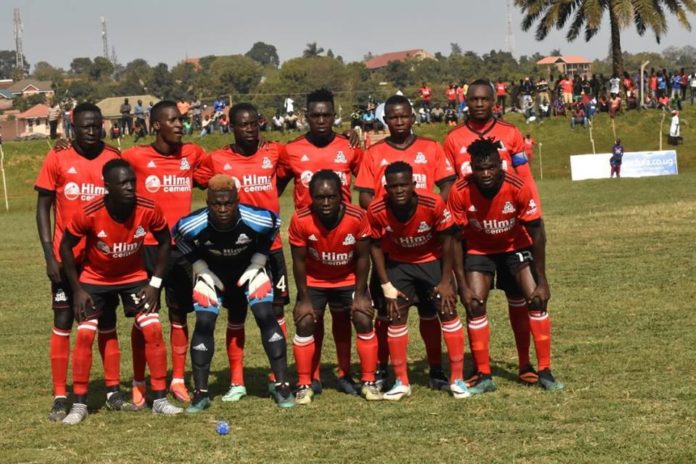
Vipers squad

Draws for the preliminary stage of the 2018/19 CAF Champions League as well as CAF Confederation Cup have finally been announced today.

The draw for the preliminary rounds were held on 3 November 2018 in Rabat, Morocco, but had not been officially announced by the CAF due to a special situation with the transitional calendar.

Uganda Premier League reigning champions Vipers Sports Club will face Sudanese club Al-Merrikh Sporting Club.

Vipers will visit Al-Merrikh in the first leg between November 27th-28th, 2018 with the return leg set to be played a week later, between December 4th-5th, 2018.

The Venoms will face Ugandan goalkeeper Jamal Salim Magoola who is the first choice goalkeeper for the Sudanese club.

Al-Merrikh is one of the oldest football clubs in Africa, and have won the Sudan Premier League 16 times and Sudan Cup 14 times.

The victors of the fixture will face either Algerian side CS Constantine or GAMTEL from Gambia in the next round of the champions league group stage qualifiers.

Meanwhile in the CAF Confederations Cup, KCCA FC received a bye to the first round and will wait for the next round of qualification.

The winners of the next round of the qualification round will be a total of 15 clubs that will join CAF Champions League Winner (Season 2018) in the group matches of the 2018-2019 season.

Club that have been given a bye into the next round include; Al Ahly (Egypt), AS Vita Club (DR Congo), Esperance (Tunisia), TP MAzembe (DR Congo) and Morocco’s Wydad AC).

Stories Continues after ad

Regional bank and USAID Sign Memorandum of Understanding to Power Africa

The Eastern and Southern African Trade and Development Bank (TDB) and USAID’s Power Africa initiative on Friday signed a memorandum of understanding (MoU) that will finance power projects in 22 African countries including Uganda.

The memorandum was signed at African Development Bank’s inaugural Africa Investment Forum, where emphasis on investment is at the core of tens of transactions anticipated to take place.

At the signing, the Trade and Development Bank’s President and Chief Executive, Mr. Admassu Tadesse, said, “TDB is very pleased to deepen its existing partnership with USAID in further support of the Power Africa Initiative, which resonates strongly with TDB’s strategy and mandate. We are proud to count USAID among our growing number of cooperating trade and development finance partners in the US.”

As a new entrant to the program this collaboration makes TDB the 18th development partner of the Power Africa initiative. This formalises an already existing relationship between Power Africa and TBD, which has been working together to finance the power sector, and will now further strengthen the commitment to powering Africa through local institutions.

The Senior Deputy Assistant Administrator of USAID’s Africa Bureau, Mr. Ramsey Day, said, “We are excited to welcome TDB as our 18th development partner. We applaud the Bank’s commitment to increase its exposure in the energy sector from its current 8% to 20% of its portfolio, the equivalent of bringing $400 million new dollars towards power sector financing”.

At the plenary session, some of the key take away messages exemplified by this MoU signing were to scale up, speed up, and synergise the opportunities for investment at the Africa Investment Forum.

Power Africa brings together technical and legal experts, the private sector, and governments from around the world to work in partnership to increase the number of people with access to power.

The initiatives aims to enable electricity access by adding 60 million new electricity connections in the targeted countries by way of availing 30,000 megawatts of new and cleaner power generation.

Stories Continues after ad

Uganda at Oil week in Johannesburg, exploration bidding licences to be issued next year

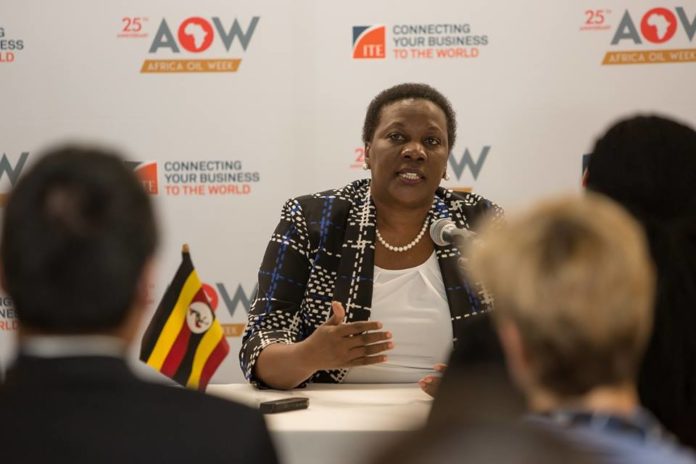
Energy Minister Muloni

This week, Uganda has been a spotlight country at the Africa Oil Week – 25th anniversary 2018 in Cape Town, South Africa.

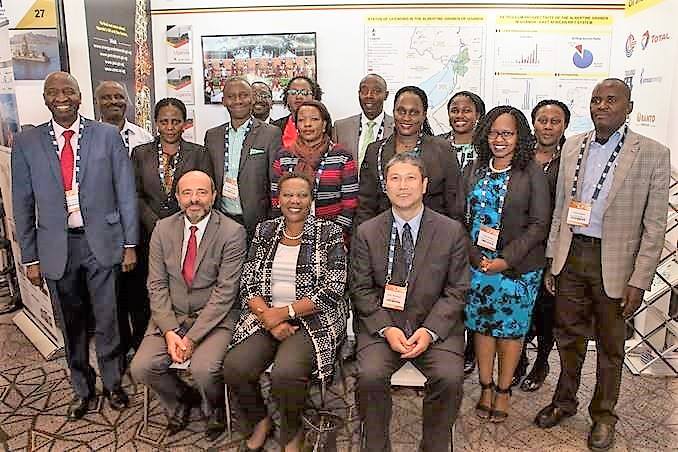
The Uganda Delegation was led by Hon. Irene Muloni Ministry of Energy and Mineral Development who gave the keynote address at the Uganda Roadshow.

The Petroleum Authority of Uganda Executive Director Mr. Ernest Rubondo and Chairperson Uganda Chamber of Mines & Petroleum Elly Karuhanga discussed Uganda as a petroleum destination during the Roadshow.

Standard Bank Group Global Head of Oil and Gas Mr. Dele Kuti described Uganda’s financial sector as attractive for oil and gas investment.

The upstream Tilenga and Kingfisher projects were also highlighted during the AOW with a presentation from Mr. Philips Obita, Head Development and Production at the Uganda National Oil Company – UNOC.

This year Uganda had a session at the African Local Content Forum. PAU’s Manager National Content Ms. Betty Namubiru, Stanbic Bank – Uganda Mr. James Karama and GIZ Ms. Julia Mager showcased Uganda’s local content initiatives in the regulatory framework, enterprise development and skills development, respectively.

Minister Muloni also addressed a press conference during the week and reiterated Uganda’s preparedness for petroleum production. She appreciated the Joint Venture Partners in the industry, CNOOC Uganda Limited, Tullow Oil plc Uganda Operations and Total E&P Uganda Limited for the investment and support in Uganda’s oil and gas sector, so far.

Uganda, which is developing oil deposits but has yet to begin production, will launch its next bidding round for oil exploration licences in May next year, according to Rubondo.

Uganda discovered 6.5 billion barrels worth of hydrocarbon deposits 12 years ago in the Albertine rift basin near its border with the Democratic Republic of Congo but production has been repeatedly delayed by disagreements with oil companies over field development strategy and tax disputes.

“We will have a road show first and then we will start the bidding round in May next year,” Rubondo, told reporters on the sidelines of the Africa Oil Week conference.

Total and China’s CNOOC are aiming to begin production in Uganda in about two years’ time.

Stories Continues after ad

Dfcu top executive in panic over Cosase appearance

Mr. Jimmy Mugerwa, the board chairman of Dfcu bank who is accused by some shareholders for the bank's poor management.

Reports coming in indicate that Dfcu Bank’s Chairman board of directors, Jimmy Mugerwa and outgoing Managing Director, Juma Kisaame, are afraid of appearing before parliament’s Committee on Commissions, Statutory Authorities and State Enterprises (Cosase) which has started quizzing Bank of Uganda (BoU) top officials over seven defunct banks, including Global Trust Bank and Crane Bank (CBL) which Dfcu Bank bought.

Cosase’s decision to call BoU top officials for answers follows the August 27th release of the Auditor General’s special audit of BoU on seven commercial banks. The investigation of BoU was ordered by the same committee, following outcries by some of the former owners of the defunct banks.

Among others, Cosase is mandated to ex­am­ine the re­ports and au­dited ac­counts of statu­tory au­thor­i­ties, cor­po­ra­tions and pub­lic en­ter­prises and in the con­text of their au­ton­omy and ef­fi­ciency, as­cer­tain whether their op­er­a­tions are be­ing man­aged in ac­cor­dance with the re­quired com­pe­tence and where ap­plic­a­ble, in ac­cor­dance with sound busi­ness prin­ci­ples and pru­dent com­mer­cial prac­tices.

In his report, the Auditor General John Muwanga pointed out that not all principles/guidelines and regulations were followed as BoU transferred the assets and liabilities of Global Trust Bank and CBL DFCU Bank, as well as other dealing that saw other banks like Teefe Bank, International Credit Bank Limited, Greenland Bank, The Cooperative Bank and National Bank of Commerce liquidated and sold off.

Inside sources say Mugerwa is planning to fly out of the country in a bid to avoid appearing before the committee that has started its work by first calling BoU Governor Prof. Emmanuel Tumusiime-Mutebile and his deputy Dr Louis Kasekende. Tumusiime-Mutebile and Kasekende are also BoU’s board chairman and Vice Chairman, respectively.

The committee intends to call other individuals including other top officials from BoU, shareholders of defunct banks as well as the board members and managers of DFCU Bank to answer some queries as raised in the Auditor General’s report.

Meanwhile, Britain’s Commonwealth Development Corporation (CDC) Group, one of the corporate shareholders of Dfcu Bank has urged managers at DFCU Bank to desists from negative media publicity aimed at haunting former owners of one of the banks they bought at Shs200 billion, not cash, but paid in installments.

Stories Continues after ad

Who will bail Ugandans out of the current security situation?

By Nabendeh Wamoto

Which airport/airstrip do we see the recently sacked flying squad landing in?
As a country, we have and continue to unleash to staggering numbers unspeakable, unmonitored armed groups (Iraqi, Afghanistan, Crime Preventers e.t.c.), putting our national security in danger.

Here below are two cases to explain the country’s security situation. We have all probably heard the story of the Frog and the Scorpion. The Scorpion which could not swim one day came down to the edge of the fast moving stream and noticed a Frog sitting there.
“Would you be willing to give me a ride on your back across this stream’’ asked the Scorpion.
“Do you take me for a fool?’’. That no sooner would I get mid-stream than you would sting me?’’ the Frog replied. “now why would I do that?’’. The Scorpion asked. “if I stung, we would both drown.’’ The frog thought for a moment and decided that the Scorpion actually made sense.

So he let the scorpion climb aboard and began swimming across the stream. Half way out, the scorpion jabbed the Frog with a vicious sting. As they both floundered in the fast moving water, the Frog gasped “you fool why did you do that?”. Now we are both going to drown. “I know”, the scorpion answered sheepishly as he sank beneath the surface. But you see I can’t help it. It is just my hopeless nature said the scorpion.

A Southern Californian newspaper, several years ago had carried the following article “a young man who lived in the Western States had never done anything (criminally) wrong. But one day while playing a game of cards (Matatu), he lost his temper picking up a revolver; he aimed, shot and killed his opponent. The young man was arrested, tried and sentenced to hang. Because of the innocent life history he had previously lived, his relatives, friends and clerics got up a petition for him. It seemed as though everyone was eager to sign it. Before long other municipalities, town and villages had heard about it, and people all over the place endorsed the petition. At last it was taken to the governor who happened to be a staunch Christian also and tears came to his eyes as he looked at the large baskets filled with petitions. The governor decided to pardon the young man.

The governor having written the pardon, put it in his pockets and camouflaged in a clergyman’s garb and made his way to the maximum prison as he (governor) approached the condemn cell, the young prisoner sprang to the bars. “Get out of here” he yelled, “I don’t want to see you”. I have had enough of religion at home and seven of your kinds have visited me already”. But intervened the governor “wait for a moment young man, I have something for you, allow me talk to you”. “Listen” exclaimed the young man in anger” if you don’t get out of here now, I will call the guards to force you out”. As the garbed governor went away, the prison warden then came in to the young man telling him that the departing man was actually the governor who had come to pardon him.

The day came for the young man to die. “is there anything you want to say before you die?” yes he answered. “Tell all the young men in America that I am not dying because of a crime, not because I am a murderer. The governor pardoned me.
I am dying because I was arrogant, adamant and did not give a chance to the pardon”.
Should Ugandans also wait until it is too late?

Nabendeh Wamoto S.P (0776-658433)
simonwamoto@yahoo.co.uk

Stories Continues after ad

Half of Uganda’s parents do not speak to anyone about problems they face at school-study shows

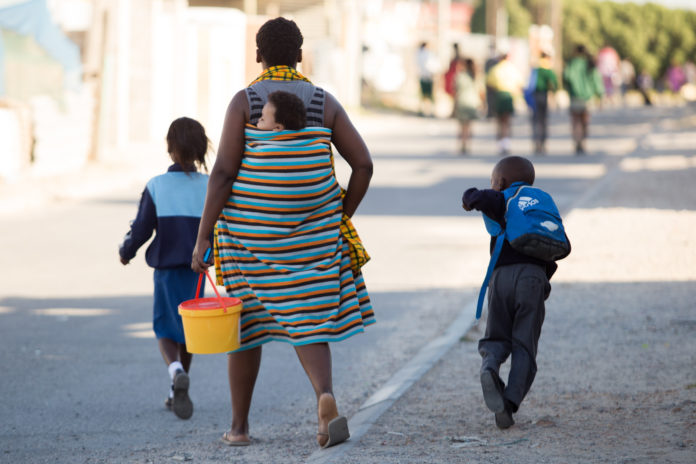
Parent walking children to school.

Half of Ugandan parents (46 per cent) do not speak to anyone about problems they identify at their children’s schools. If parents do report problems they see, they tend to speak to proximate school leaders rather than people in government.

Parents mention head teachers (26 per cent), School Management Committees (17 per cent) and teachers (10 per cent).

Further, 8 out of 10 parents do not do anything about the problems in the education sector beyond reporting them. Previous Sauti za Wananchi findings have shown that citizens claim they are more likely to take action in education than other sectors.

When parents do report an issue, they are met with limited response. Around 1 out of 10 say the problem was solved completely (7 per cent), three out of 10 say it was partially solved (32 per cent) and the rest, six out of ten, say the problem was not solved at all (61 per cent).

The findings were released by Twaweza on Thursday in a research brief titled, ‘Preparing the Next Generation: Ugandans’ opinions and experiences on education’. The brief is based on data from Sauti za Wananchi, Africa’s first nationally representative high-frequency mobile phone survey. The findings are based on data collected from 1,878 respondents across Uganda in September and October 2018.

Main problem facing children’s school

When asked to name the main problem facing their child or children’s school, however, more parents name school contributions than any other issue for both primary (14 per cent) and secondary (23 per cent) schools. The second most reported issue is distance (12 per cent both for primary and secondary schools). Parents report paying for tuition / extra classes (68 per cent), food items (60 per cent), school books / materials (58 per cent) and construction (57 per cent).

Citizens’ engagement with schools

Nonetheless, citizens are engaging with schools. One out of three have asked for financial information from their local school (34 per cent), although men are more likely than women (38 per cent vs. 30 per cent) and rural residents are more likely than urban citizens (36 per cent vs. 30 per cent) to do so. In more than half of such cases, citizens were able to find some financial information on display.

Awareness of capitation grant

On school finances, however, half of citizens (57 per cent) are familiar with the capitation grant (41 per cent aware, 16 percent aware after probing). And even more citizens cannot name any item that the Capitation Grant is used for (59 per cent) while only 2 per cent say they know the amount of the grant. Among these the responses range from Shs300 to Shs3 million per pupil. The Capitation Grant may help to reduce some of the burden of contributions on parents.

Whether citizens are fulfilling responsibilities in school governance

The findings show that citizens are also fulfilling their responsibilities in school governance: 1 out of 10 report being members of school committees (10 percent) and almost all of the citizens claim to be active participants.

Knowledge on who should be on school management committees

The research established that parents have some knowledge about how school committees function, who is supposed to be a member and the type of issues committees are supposed to work on, ideally and in practice.

Half of citizens have seen a teacher out of school during school hours (47 per cent). Half of them (24 per cent) report having approached the absent teacher to raise the issue. “The most popular reason given for not approaching the teacher was the fear of negative repercussions (42 per cent of those who did not speak to the teacher directly mentioned this). Parents do see teacher attendance as the primary responsibility of the school or head teacher (63 per cent),” says the report.

School values and learning of pregnant girls

When it comes to school values, citizens hold emphatic views. Almost all citizens (94 per cent) want girls who get pregnant to continue with their education whether after giving birth (74 per cent), during pregnancy (13 per cent), or in another school (7 per cent). And this appears to be a far-reaching problem: four out of ten citizens (35 per cent) know of a family member who dropped out of school due to pregnancy. Among these, half are now housewives (51 per cent), 14 per cent are unemployed and 12 per cent are back in school.

Citizens’ views on boys who impregnate girls

When it comes to the male students who impregnate school girls however, citizens are tougher: half want them to continue in their school while the remainder want them to be punished either by transferring to another school (30 percent), being expelled (16 percent) or being arrested / imprisoned (6 percent).

Citizens’ views on schools that cheat exams

Citizens are similarly tough on schools found to be cheating in national exams. Citizens think these schools should be closed down (37 per cent), those involved should be punished (20 per cent), or arrested (11 per cent) or schools should have their results cancelled and be required to repeat exams (11 per cent).

Citizens’ views on schools that perform poorly

When it comes to schools that perform poorly, one out of ten (14 per cent) think this should be an offense punishable by closure but many more think teachers or head teachers should be transferred (31 per cent).

“This may be because the majority of citizens cite high exam pass rates (80 per cent) as the most important factor informing their school choice. The second most popular quality, and the only other one named by more than half of citizens, is motivated teachers (69 per cent),” says the report on the research findings.

Marie Nanyanzi of Sauti za Wananchi at Twaweza at the release of the findings in Kampala said: “Despite many saying they don’t report problems they see at schools, Ugandans are engaged in the education sector. However, these findings throw up three important challenges. First is the issue of contributions at school and relatedly the Capitation Grant.”

Ms. Nanyanzi said there is no clear information on the amount of this grant and what it should be used for, or for how contributions are supposed to be collected and managed. This can lead to confusion, mismanagement and can undermine the free primary education policy.

“Citizens seem more willing to approach local school leadership, who are close to citizens’ lives rather than with responsibility for how the system works overall. Head teachers and teachers are named across the board as responsible for financial management, teacher attendance and challenges faced by parents,” she said.

She said that when parents find that the problems they report are not or are partially resolved, it discourages them. “When most parents who report problems find these are not or only partially resolved, this may discourage anyone who wants to report in the future,” she said, calling on the government to invest more into explaining the Capitation Grant and its uses, and into complaint reporting and handling procedures.

Stories Continues after ad

FUFA bans match officials after Express vs Vipers errors

Referee Kirangwa Ronald who was in charge of the game

Uganda football governing body FUFA has today banned match officials following controversy around Tito Okello’s equalizer in the 1-1 draw between Vipers and Express at Wankulukuku.

Okello’s strike late on came after Tony Odur had given the Red Eagles the lead from a spot kick and Daniel Sserunkuma missed a penalty for Vipers.
The result helped Vipers stretch their unbeaten run to 24 league games and moved to 15 points, same as KCCA’s.

Fufa released the statement on their website: “This is to notify all stakeholders that, upon the advice of the Referees Disciplinary Panel and the FUFA Referees Standing Committee, FUFA has banned three officials of match number 54 of the StarTimes Uganda Premier League played on Wednesday 7th November 2018 at Muteesa II Stadium – Wankulukuku.
Decisions:-

The 2nd Assistant Referee Mr. Kakembo Samuel is banned from performing refereeing services of all FUFA organised and sanctioned Competitions for a period of 5 years.
The Centre Referee Mr. Kirangwa Ronald is banned from performing refereeing services of all FUFA organised and sanctioned Competitions for a period of 3 years.

The 1st Assistant Referee Ms. Nantabo Lydia Wanyama is banned from performing refereeing services of all FUFA organised and sanctioned Competitions for a period of 60 days.

The 3 match officials (Centre Referee, 1st Assistant and 2nd Assistant) have been forwarded to FUFA Committee for Match Integrity for further investigation and decision.
The above decisions take immediate effect.

It is Our Game, It is Our Country”

Stories Continues after ad

Activist Ben Ssebuguzi kidnapped , police denies his whereabouts

Ben Ssebuguzi

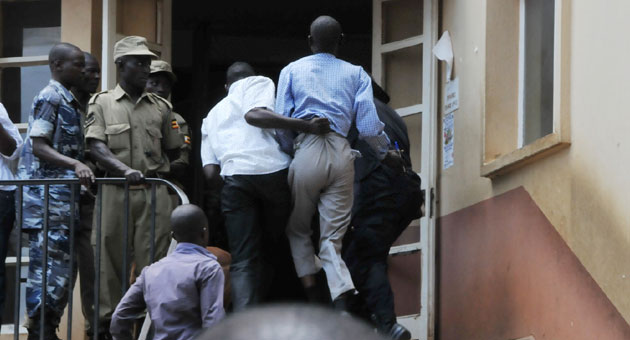
The Secretary General of the Uganda Poor Youth Movement, Ben Ssebuguzi is reported to have been kidnapped from his work place by unknown armed men.

According his workmate, Ssebuguzi was aggressively picked by men purporting to be working for Bank of Uganda. He said, their colleague was harassed, beaten as he pleaded for mercy. His colleague allege that a certain ‘official’ at the central bank should be held liable for anything that is likely to happen to Ssebuguzi.
Eagle Online understands that Ssebuguzi was picked on allegation that he could have been responsible for throwing piglets in front of BoU.
“We have searched all detention centres and police has denied any knowledge of his where about. Uganda is becoming unsafe with these unwarranted arrests and torture,” said.

Ssebuguzi is an activist who has been at the forefront fighting and advocating against corruption and promoting social justice, “The corrupt and despicable officers strive to silence prominent people especially those who stand for truth and justice,” he said.

He called on Ugandans to provide information about their colleague’s where about saying his family is in fear their relative might have been killed by the perpetrators.

“We are greatly convinced that he is being tortured or killed, help us to recover him or his body for a decent burial,”

According to Kampala metropolitan police Spokesperson Luke Owoyesigire, that case has not been reported and called on his relatives and work mates to cooperate with police to establish his whereabouts.

The incident proceeds the recent scenario where a civilian Yunus Kawooya who was brutally arrested by five armed men and whisked him off to anonymous place using a commuter tax. He later released on police bond.

Stories Continues after ad

Centenary Bank, Christ the King Parish dragged to court over financial fraud

Centenary Bank, which started as Centenary Rural Development Trust Limited and Christ the King Parish are in trouble for allegedly de-registering one of the minority shareholders, the late businessman Robert Byaruhanga who died in 2001.

The plaintiff, who is the administrator of the late Byaruhanga’s estate, has dragged the bank (2nd defendant bank) and Christ the King Parish of Kampala Diocese (1st defendant), praying that court; declare the late Robert Byaruhanga a member and shareholder of Centenary Rural Development Bank (CRDB) Limited; that the defendants’ actions are oppressive to the late Robert Byaruhanga as a minority shareholder.

The plaintiff also wants court to issue an order directing that the late Robert Byaruhanga’s name be registered into CRDB’s members register. It also seeks special damages, general damages and that punitive measures be taken against CRDB and Christ the King Parish for their illegal actions. The suit also wants interest paid, cost of the suit be awarded and any other benefit deemed by the court.

The plaintiff believes top officials running the CRDB omitted the deceased’s name as member of CRDB Limited so as to benefit at his expense, a move he says is tantamount to a fraud and breach of trust. The plaintiff is also disturbed that he has never been informed about the affairs of the bank or given dividends and that he has been excluded from company meetings. He cries he has suffered inconvenience and loss.

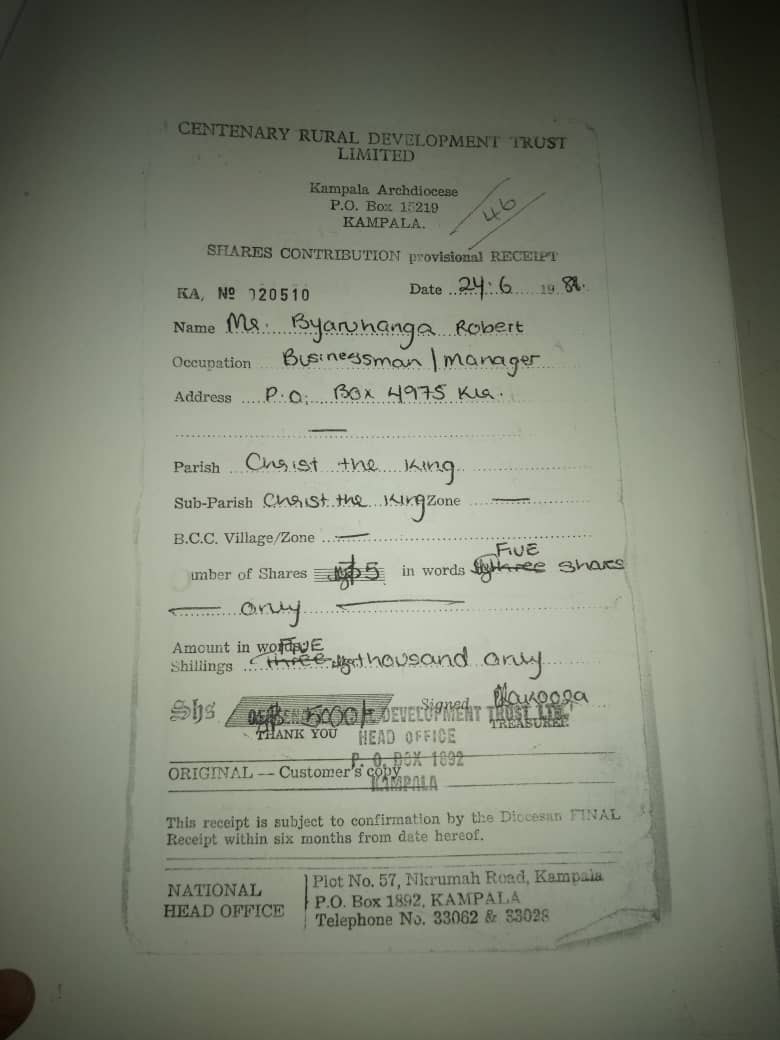
According to the court document of which Eagle Online has accessed a copy, the late Robert Byaruhanga got the interest of buying shares in the then Centenary Rural Development Trust when in 1986, Kampala Archdiocese, a Roman Catholic Diocese of Uganda, invited its laity, who included the late Robert Byaruhanga, to acquire shares in the company that was under Christ the King Parish of Kampala Diocese.

The document shows that at the time of buying shares, the late Robert Byaruhanga was operating businesses under the names and style of Euroseas Trading and Dress Making and Rwere United Traders.

It says between 1987 and 1988, the late Robert Byaruhanga made different payments for different number of shares in the names of Euroseas Trading and Dressing Making Company, Rwere United Traders, Robert Byaruhanga, Asiimwe Resty, Besigye Michael, Fifi Byaruhanga, Remegius Byaruhanga and Bosco Byaruhanga. He was issued with receipts of about 4900 shares as well as acknowledgement certificates, according to the document that has annexes.

“Upon the demise of the late Robert Byaruhanga in 2001 and upon grant of letters of administration the estate, the plaintiff approached the defendants to clarify the deceased’s stake in the second defendant bank (CRDB) but was told by the 1st defendants office administrator that the subject shares had been devalued and as such there are no known shares entitled to the plaintiff…or the estate of the late Robert Byaruhanga at all,” part of the suit reads.

Stories Continues after ad