Stanbic Bank
Stanbic Bank
20.7 C
Kampala
Stanbic Bank
Stanbic Bank
Home Blog Page 1450

Construction of the largest sewage treatment plant in East and Central Africa on final stages

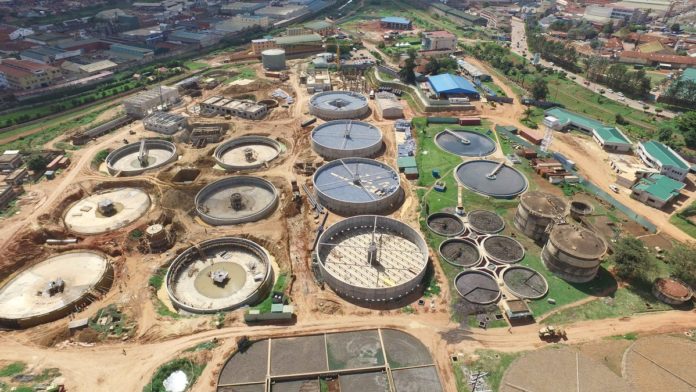
largest sewage treatment plant in East & Central Africa is under construction at Bugolobi.

Managing Director of National Water and Sewerage Corporation (NWSC), Dr.Silver Mugisha has revealed that the construction of the largest sewage treatment plant in East and Central Africa is substantially complete.

Speaking at NWSC headquarters, Eng. Silver Mugisha said the ongoing work near Centenary Park and the Electoral commission, is part of the final sewer mains interconnection works for the new plant.

“Works at Electoral commission commenced on 9th November 2018 and will go on for 21 days. Our contractor Sogea Satom, Uganda Police, KCCA and other stakeholders are working together to ensure that the road users are not inconvenienced during the working hours. We request the Public to bear with us and follow traffic diversion guidelines, especially at night as we work,” he said

He said Bugolobi sewage plant is meant to improve sanitation in Kampala saying the corporation has built capacity and acquired new machinery to handle any sewage over flow, anywhere in the system.

“We have highly equipped routine maintenance and emergency teams which are just a call away. You can reach us on our toll free lines 0800300977/0800200977, call the Senior Manager Sewage services manager on 0772486350 or reach us on our social media pages,” he said.

He implored the Public to desist from removing sewer manholes and dropping solid water materials i.e polythene bags, clothes, bottles noting that such items block the sewerage system and cause occasional blockages and overflows.

In line with vision 2040, Dr. Mugisha said combined water production of Ggaba water works and Katosi water works that is under construction, will cater for the growing demand for clean water services in the greater Kampala Metropolitan area up to the year 2040.

“Land for the construction of the New Water Plant at Katosi and 60 million liters capacity water reservoirs at Nsumba hill in Mukono has already been secured and the contractor is on ground,” he said

Director Engineering Services Engineer Alex Gisagara said that the construction of the 55 kilo meter bulk heavy duty DN1, 400 transmission mains, including a 15 million liters capacity water reservoir at Sonde hill and booster station in Namugongo are ongoing.

Katosi water works when completed will produce 160 million liters of water and cater for the growing demand for clean water services in the greater Kampala Metropolitan area.

Stories Continues after ad

CSOS fault NEMA on failure to follow the law in organising public hearings for Tilenga project

Tilenga Project

Civil society organisations (CSOs) working to protect the environment from oil and other development threats have faulted the National Environment Management Authority (NEMA) and the Petroleum Authority of Uganda (PAU) for violating environment laws while organising public hearings in Bullisa and Nwoya for the Tilenga oil project.

The public hearings are being organised by PAU under the supervision of NEMA to enable the public give their views on the Environmental and Social Impact Assessment (ESIA) report for the Tilenga oil project. The CSOs say that in organising the public hearings on November 12 and 15, 2018 in Buliisa and Nwoya respectively, NEMA and PAU are violating the Environmental Impact Assessment (EIA) Regulations of 1998 and the EIA Public Hearing Guidelines of 1999.

“The EIA Public Hearing Guidelines of 1999 mandate NEMA to give members of the public 21 days’ notice before any public hearing organised under the 1998 EIA regulations is had, unless NEMA directs otherwise with a reason. The public has not been given the stipulated 21 days to prepare for the public hearings however. The first notice for the public hearings was published in the New Vision newspaper of October 30, 2018. Through this notice, the public was informed that the first public hearing would be held in Buliisa on November 12, 2018 and the second in Nwoya on November 15, 2018.

With this, NEMA and PAU gave the public only 14 days’ notice prior to the first public hearing in Buliisa and 17 days’ notice to the hearing in Nwoya.

This is contrary to the 21 days’ notice that is provided for under Paragraph 7 (3) of the EIA Public Hearing Guidelines of 1999,” Mr Dickens Kamugisha, the CEO of Africa Institute for Energy Governance (AFIEGO), says. The above guidelines are not the only ones that are being violated! The 1998 EIA Regulations are also being violated.

The CSOs also note that NEMA and PAU are violating Regulation 22(2) which requires public hearings to be organised between 30 and 45 days from the last day NEMA receives comments from the public. “The deadline set by NEMA for receiving comments on the Tilenga ESIA report was today, November 9, 2018. The first public hearing is slated for November 12, 2018 in Bullisa and November 15, 2018 in Nwoya however.

This means that NEMA and PAU are organising the public hearings only four and seven days after the submission of comments by members of the public. In effect, the public has been denied up to 41 days within which they would have read the over 5,000 page Tilenga ESIA report to make meaningful comments at the public hearings. This will no doubt undermine effective public participation in the Tilenga ESIA public hearings, which could prove harmful to the environment and communities,” Mr Christopher Opio of the Oil Refinery Residents Association (ORRA) says.

The above are not the only consequences that could arise from NEMA violating the law. Aggrieved members of public may challenge the outcomes of the public hearings in court, the public challenging the decision of NEMA regarding approval or none-approval of the ESIA report and damaging of the reputation of government and institutions such as PAU, NEMA and others are some of the other consequences that could arise.

The above would lead to the loss of taxpayers’ money that would have been used in the public hearing processes as well as losing money arising out of litigation costs. Disregard of the law by NEMA and PAU also harms public confidence in government’s ability to enforce laws in the oil sector to protect the environment, communities and the public. “How can the public trust government when its agencies are violating the law in the Tilenga public hearing processes?

The Tilenga oil project is being developed in one of the most biodiverse areas in Africa. River Nile, Lake Albert, Murchison Falls National Park and Budongo in addition to Bugungu and Karuma Game Reserves are key national and transboundary ecosystems that are going to be affected by the Tilenga oil project and the public needs to trust that government will follow the law to protect the environment for the common good,” Kamugisha says. The CSOs are therefore calling on NEMA to ensure that at all times, lead agencies respect national and international laws to avoid consequences of violating laws.

Stories Continues after ad

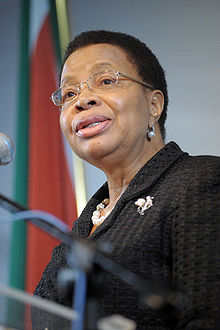
Graca Machel, to deliver the 22nd Eminent Speakers’ lecture series

Graca Machel

The African Development Institute will host Her Excellency, Graca Machel as the Special Guest Speaker of the institute’s Eminent Speakers’ Lecture Series on Friday, November 16, 2018. The lecture will held in the Babacar N’diaye Auditorium of the African Development Bank headquarters in Abidjan, Cote d’Ivoire.

Machel will speak on the topic: “Educating the Girl Child, Empowering Women, and Enhancing Female Entrepreneurship in Africa.”

A former freedom fighter and international advocate for the rights of women and children, Machel is Chair of the Graca Machel Trust. Founded in 2010, the Graça Machel Trust focuses on advocating for women’s economic and financial empowerment, food security and nutrition, education for all, as well as good governance.

Honored with an honorary British Dame by Queen Elizabeth II in 1997 for her humanitarian work, Machel was also the first Education and Culture Minister of Mozambique, following the country’s independence in 1975. She is the widow of the former South African President Nelson Mandela and former Mozambican President Samora Machel.

Dame Graça Machel serves on the board of several international organizations including The Elders, The African Leadership Forum, the International Crisis Group, and the Graca Machel Trust that works across Africa on protecting the rights of women and children. She is the recipient of the Africa Prize for Leadership for the Sustainable End of Hunger, The Nansen Medal for her service to the cause of child refugees, The Africare Distinguished Humanitarian Service Award and The Council of Europe’s North-South Prize, among others.

The African Development Institute, a major force in supporting African leaders’ needs for evidence-based policy guidance, training, capacity building, and policy dialogue to achieve inclusive development in Africa, uses the Eminent Speakers’ Seminar series, to share insights, and dialogue on development challenges in Africa.

About 20 eminent persons have delivered thought provoking lectures in previous editions of the Seminar. The list includes former Heads of States, Nobel Laureates, distinguished academics and professionals. A range of current African and global development topics have been covered in the Eminent Speakers Lecture series, including economics, finance, regional integration, human development, and the environment.

Stories Continues after ad

Police deploys to quench any possible protests and violence at St. Bernard SS Manya in Rakai

St. Bernard SS Manya

Police has heavily deployed at St. Bernard SS Manya in Kifampa Sub County in the newly created Kyotera district to man down any possible protests and violence that could be staged by angry students, parents and community members following the deaths of several learners.

Security team led by Minister of Security Gen. Elly Tumwine, Director General of Internal Organisation (ISO) Col. Kaka Bagyenda have paid a courtesy visit at school to grieve with community and establish the conclusive cause of the fire that gutted S.3 dormitory.

“Over 10 students of St. Bernard SS Manya are feared to have perished after their dormitory was set ablaze, over 50 students are nursing severe injuries in various health facilities in greater Masaka region,” Gen. Tumwine confirmed.

He said the fire started at midnight however, police and the community managed to put it down. He said reports indicate that some expelled S.4 students could have returned in the wee hours of the night and torched the dormitory.

According headteacher of the school, John Baptist Ssemwanga, the school is in a somber mood up to 108 senior six candidates are sitting for their final examinations at the same centre.

Police has linked the incident to the four suspended students that they might have comeback, locked students in the dormitory and torched it. Police spokesperson Patrick Onyango, has confirmed that dormitory guard and four students have been arrested to aid them in the investigations.

This the second of the tragic fire with many causalities second to Buddo junior school that killed over 15 pupils. Since then, the cause has not been established the report has not been compiled and it is a similar scenario on markets.

Stories Continues after ad

MTN and gov’t reach tentative deal over reduction of $8b fines

MTN LOGO

The Central Bank of Nigeria (CBN) and MTN have reached a tentative agreement on the US$ 8 billion fines imposed on MTN Nigeria for violating currency regulations, ThisDay reported. It cited sources as saying that MTN Group CEO and President Rob Shuter was in Abuja on 08 November and met with CBN Governor Godwin Emefiele to discuss the fines, which the South African Reserve Bank (SARB) has said could increase the risks to the country’s financial system.

Based on unassailable findings, said a source, there was an agreement that the CBN would grant the firm a substantial reduction in the fines. Following the deal, the apex bank was due to meet with the four banks affected by the fines on 09 November. Agencies had reported that CBN emailed invitations on 08 November to the Nigerian heads of Standard Chartered, Citibank, Stanbic IBTC Bank and Diamond Bank to attend a meeting.

The agencies had said the CBN and the banks declined to comment on the meeting, and that a spokeswoman for MTN said she did not know of the proposed meeting.

In a separate case, MTN faces a US$ 2 billion tax demand from Nigeria’s Attorney-General, which the firm has said is without merit. The Lagos court yesterday adjourned the case against the attorney general until 03 December.

Stories Continues after ad

Final squad for decisive game against Cape Verde named

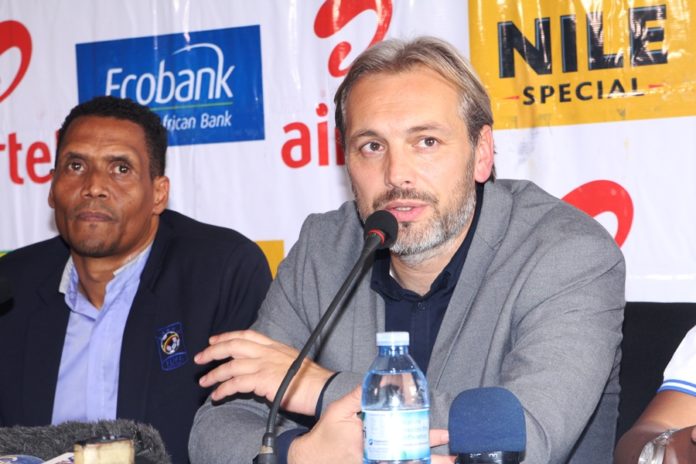
Uganda Cranes head coach Desabre

Uganda Cranes head coach Sebastien Desabre has named his 25 man final Squad to enter residential camp ahead of the decisive 2019 AFCON Qualifier with Cape Verde on Saturday 17th November 2018.

Emmanuel Okwi, who will be suspended for the Cape Verde game due to accumulation of yellow cards, has been named in the squad. He will be in contention to face West African giants Nigeria in the international friendly on November 20th.

Cranes defeated their junior counterparts Uganda U23 (Kobs) in a practice match played at the StarTimes Stadium, Lugogo on Sunday. The Kobs team is preparing for the AFCON U23 Qualifiers against South Sudan to be played on 14th November (Lugogo) and 20th November (away in Juba). Okwi and Vianne Sekajugo netted the goals.

The match will be officiated by Tunisian officials. Youssef Essrayri will be the center referee, while his assistants will be Yamen Malloulchi and Jridi Faouzi as the first and second respectively.

Cranes are top of Group L with ten points and need just one point from the remaining two fixtures to make back to back appearance at the AFCON Finals for the first time.
Uganda’s last game in group L will be away against Tanzania.

Cameroon (hosts), Senegal, Madagascar, Tunisia and Egypt are the only five countries to confirm their places at the tournament.
The 2019 AFCON tournament will be the first to host 24 teams. The competition will be held in June and July 2019 in Cameroon.

The final 25 man squad:
Goalkeepers: Denis Onyango (Mamelodi Sundowns), Jamal Salim (El Meriekh), Charles Lukwago (KCCA FC) and Nicholas Sebwato (Onduparaka FC)
Outfield players: Isaac Isinde (Kirinya Jinja SS), Murushid Juuko (Simba SC), Timothy Awanyi (KCCA FC), Denis Iguma (Kazma FC), Nicholas Wadada (Azam FC), Godfrey Walusimbi (Kaizer Chiefs) FC, Isaac Muleme (Haras El Hodood), Joseph Ochaya (TP Mazembe), Hassan Wasswa (El Geish), Khalid Aucho(Church Hill Brothers, India), Ibrahim Saddam Juma (KCCA FC), Tadeo Lwanga (Vipers SC), Allan Kateregga (Cape Town City), Faruku Miya (Gorica ), Moses Waisswa (Vipers Sc), Milton Karisa (MC Oujda), Allan Kyambadde (KCCA FC), Emma Okwi (Simba SC), Edrisa Lubega (SV Ried), Derrick Nsibambi (Smouha) and Patrick Kaddu (KCCA FC).

Total AFCON Cameroon 2019 Qualifier
Saturday 17th November 2018
Uganda Vs Cape Verde
Mandela National Stadium, Namboole (4pm)

Stories Continues after ad

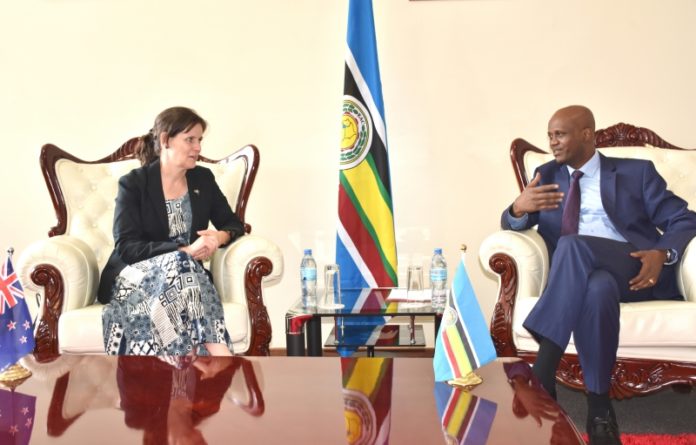
Australian firms keen on EAC’s agriculture, mining and renewable energy sectors-diplomat

Ms Alison Chartres presented her credentials to the EAC Secretary General, Amb. Liberat Mfumukeko

The Australian High Commissioner to Kenya, Rwanda, Tanzania and Uganda, Alison Chartres, on Friday presented her credentials to the East African Community (EAC) Secretary General, Amb. Liberat Mfumukeko, stating that the country’s firms were interested in investing in agriculture, mining and renewable energy sectors in the region.

The High Commissioner described the EAC as a big market that would definitely be attractive to Australian investors.

She, however, urged EAC Partner States to allow for international arbitration mechanisms to provide for referral of business disputes, adding that Australian companies needed assurances that there were provisions for international arbitration in the national statutes.

“Investments need to be mutually beneficial to all parties, local and international. We therefore need stable regulatory frameworks to ensure that risks for investors were manageable,” said Ms. Chartres.

Ms. Chartres said that Australia was keen on free trade and was highly encouraged by the signing of the African Continental Free Trade Area (AfCFTA) and the coming into force of the EAC Single Customs Territory (SCT).

She said the AfCFTA and EAC SCT would go a long way in promoting trade in Africa and the East African region but trade with other parts of the world including Australia as well.

Welcoming the Australian High Commissioner at the EAC headquarters, Mfumukeko said that the balance of trade between the EAC and Australia was largely in favour of Australia.

He said that EAC countries import agricultural equipment and machinery from Australia while exports to Australian consist of tea, coffee and flowers.

He said that the EAC has many investment opportunities including agriculture, infrastructure development, tourism and mining.

The Secretary General told the Australian diplomat that the EAC was working with the East African Business Council, the umbrella body of private sector organisations in East Africa, to improve the investment climate in the region, adding that a regional portal for investors in East Africa was also being finalized.

He said that the EAC had also facilitated the signing of Mutual Recognition Agreements (MRAs) to promote the free movement of professionals in the region, adding that among the professions that had signed MRAs so far were medical doctors, engineers, architects and veterinary doctors.

He said there was a firm commitment at the political level to make the Customs Union, Common Market and Monetary Union protocols work.

Stories Continues after ad

‘I wear the most expensive wigs in Uganda’ Spice Diana dares fellow women to challenge her

Artist Spice Diana

Controversial female singer, Namukwaya Hajara Diana also known as Spice Diana, has claimed she wears the most expensive wigs in Uganda and challenged any ladies who say otherwise to show theirs.

Diana made the statement while appearing on UBC Television’s Horizon Vibe segment hosted by Calvin, da entertainer every Saturday morning. However, Diana didn’t not mention the amount of money she spent on her dark long wig she was wearing.

Diana was performing to the invited audience at the UBC studios in Kampala where she revealed she has had to interface with a number of Kampala men who want to have carnal knowledge of her.

“When you are a beautiful single, every man wants to “taste you” she said, adding that she has repulsed a good number of Kampala’s greedy men although she declined to disclose their identities.

Diana would also show the audience a par of white canvas shoes she said cost her Shs200, 000, a black mini skirt of Shs150, 000. She said her blouse and necklace also cost her huge sums of money.

The singer in February this year on NTV claimed she got 32 points at A-Level. “I got…I think 30 what…30 something, yah, 32 points,” she told Faridah Nakazibwe, the host of “Mwasuze Mutya” morning segment.

Spice Diana who did History, Art and Luganda claimed she was the best performer in her school.

Spice Diana’s claim surprised many Ugandans, with some labelling her a stupid person. This is because maximum grading for Uganda Advanced Certificate of Education [UACE] was 25 points before being reduced to 20 points by Uganda National Examinations Board [UNEB].

The remarks spread an outrage across social media prompting the singer to issue an apology with a purported S.6 certificate from Kampala Citizen College School.

Spice Diana has won Female Breakthrough Artiste of the year in the Hipipo music awards. This was when she released Onsanula, working under Twinkle Stars. She has released songs such as Tekinanta, Koona with Pallaso and Nze Akwagala.

Stories Continues after ad

WHO releases guidelines on management of physical conditions in adults with severe mental disorders

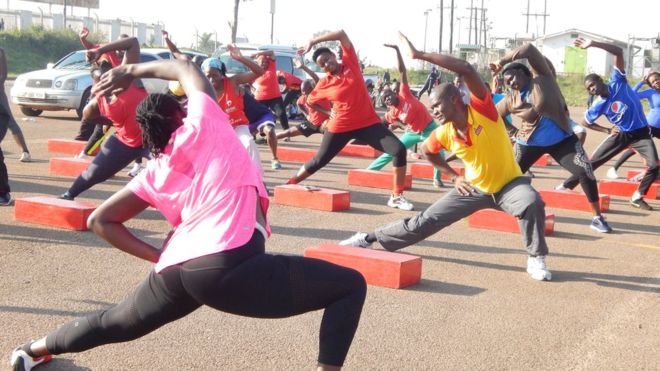
Fitness group

People with severe mental disorders – moderate to severe depression, bipolar disorder, and schizophrenia and other psychotic disorders – generally have a life-expectancy 10-20 years shorter than the general population. The majority of these premature deaths are due to physical health conditions.

Access to comprehensive health services which offer health promotion, screening and treatment for physical as well as mental health conditions remain out of reach for the majority of people with severe mental disorders. For those who are able to access health care, the care received is often of poor quality and physical health conditions are often overlooked.

To help address this inequity, World Health Organisation (WHO) has released, for the first time, evidence-based guidelines on management of physical conditions in adults with severe mental disorders.

Recommendations cover lifestyle changes, psychosocial support and medicines
The new Guidelines include recommendations for treating people with severe mental health disorders who have cardiovascular disease, diabetes, HIV/AIDS, tuberculosis and hepatitis B and C, and those with tobacco dependence, who engage in harmful use of alcohol or other substances and/or who are overweight.

The recommendations relate to lifestyle changes such as a healthier diet, increased physical activity and tobacco cessation; psychosocial support; and medicines, taking into account possible interactions between different medicines prescribed for mental and physical health conditions.

A resource for health workers
The Guidelines are primarily intended for use by health-care workers providing services for people with severe mental disorders at all levels – in primary health facilities, specialist facilities and hospitals. Policy-makers and health-care planners at local and national levels, mental health programme managers and people living with severe mental disorders and their families will also find them useful.

Individual-level interventions, health systems issues and social contexts
The Guidelines recommend that programmes for improving the health of people with severe mental disorders and increasing their life-span include individual health-care interventions, health-systems adjustments and actions that can be taken at the community level.

Training of health workers, supply of appropriate medicines and adaptation of health information systems to collect data on service utilization need to be put in place if not already established. At the individual level, risk factors for poor physical health (such as smoking, an unhealthy diet or lack of regular exercise) and physical health conditions need to be identified and treated.

At the health system level, mental health practitioners need to be better able to provide advice on and treat physical health conditions, and physical health clinicians need to be better able to address the needs of people with severe mental disorders.

In the wider social context, strategies that involve the wider community, such as peer and family support and stigma reduction programmes, should be considered.

In order to evaluate the impact and usefulness of the Guidelines and identify areas where improvement is needed, WHO will collect regular feedback from ministries of health.

Stories Continues after ad

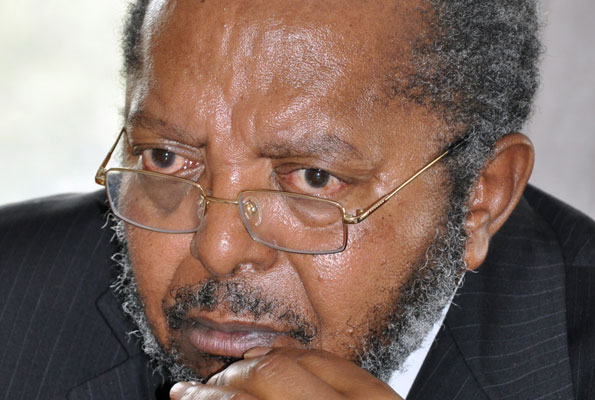
New Twist as Nile River Acquisition isn’t registered in Uganda, pays Shs25, 000 tax in Diamond Trust Bank

Bank of Uganda's Emmanuel Tumusiime-Mutebile

The Nile River Acquisition Company (NRAC) to which Bank of Uganda (BoU) sold assets and liabilities of International Credit Bank (ICB) Limited, Greenland Bank and the Co-operative Bank at 93 per cent discount, paid Shs25, 000 as tax in Diamond Trust Bank on November, 2018, Eagle Online can say, though it was hard to establish what kind of tax it paid.

According to the Diamond Trust Bank e-payment receipt, the money was deposited in cash by a one P Niwamanya. The bank’s stamp includes words, “Frontline Agent cash received”.

Currently, NRAC, is said to be registered in Mauritius, a tax haven, is non-existent in Uganda, even though records show the company was incorporated in that country on September 26, 2007 as a global business, the same year BoU officials sold the assets of the three banks.

According to the Auditor General’s special audit report of BoU on defunct banks, the total loan portfolio of the three banks sold to NRAC stood at Shs135 billion, comprising secured loans of Shs34.5 billion which had valid, legal or equitable mortgage on the real property.

“In the case of ICB, Greenland Bank and Cooperative Bank the total loan portfolio sold of Shs135 billion included Secured loans of Shs34.5 billion which had valid, legal or equitable mortgage on the real property and were supported with legal documentation but were sold to Nile River Acquisition Company at a 93%o discount,” reads in part.

The Auditor General, John Muwanga, in a report he handed to parliament has questions this transaction and wondered why loans which were supported with legal documentation were sold to NRAC at 93 per cent discount.

Bank of Uganda is being investigated by parliament for the sale of seven commercial banks since 1993. The inquiry follows a report by the auditor general pointing out several irregularities in many of these transactions.

During their first appearance before parliament’s committee on Commissions, Statutory Authorities and State Enterprises (Cosase), Bank of Uganda officials led by the governor Emmanuel Mutebile were sent back for failing to provide required documents, including disclosure of particulars of the directors of Nile River Acquisition Company.

The Registrar General of the Uganda Registration Services Bureau (URSB) in a letter to a one Tom Mugisha on November 8, 2018 confirmed that Nile River Acquision Company doesn’t not exist in the agency’s database.

“A search conducted on records revealed that the Nile River Acquisition is not reflected in our database. We therefore request for any documentation in your possession pertaining to the said name that can aid a further search,” said URSB’s Maureen Nabachwa on behalf the Registrar, Mr. Bemanya Twebaze.

Sources at Uganda Revenue Authority (URA) say the agency also doesn’t possess tax records of NRAC.

The unclear status of NRCA in Uganda raises questions as whether BoU carried due on the mysterious company that earned billions of shillings in profit as the central bank did away with Credit Bank (ICB) Ltd, Greenland Bank and the Co-operative Bank. BoU officials are expected to give more details of how they came into contact with the company as Cosase interfaces with them the coming week.

Stories Continues after ad