Stanbic Bank
Stanbic Bank
27.6 C
Kampala
Stanbic Bank
Stanbic Bank
Home Blog Page 1459

Congolese national, Iraq’s Murad win 2018 Nobel Peace Prize

Mr. Denis Mukwege

A Congolese national, Denis Mukwege, a gynecologist treating victims of sexual violence in the Democratic Republic of Congo (DRC), and Nadia Murad, a Yazidi human rights activist and survivor of sexual slavery by Islamic State in Iraq, won the 2018 Nobel Peace Prize on Friday.

The Norwegian Nobel Committee said it had awarded them the prize for their efforts to end the use of sexual violence as a weapon of war.

“Both laureates have made a crucial contribution to focusing attention on, and combating, such war crimes,” it said in its citation.

Mukwege, a gynecologist treating victims of sexual violence in the DRC, leads the Panzi Hospital in the eastern city of Bukavu.

Launched in 1999, the clinic receives thousands of women each year, many of them requiring surgery from sexual violence.

Murad is an advocate for the Yazidi minority in Iraq and for refugee and women’s rights in general. She was enslaved and raped by Islamic State fighters in Mosul in 2014.

The prize will be presented in Oslo on December 10, the anniversary of the death of Swedish industrialist Alfred Nobel, who founded the awards.

Stories Continues after ad

Mutungo Primary emerge champions of 2018 Fresh Dairy Schools Programme

Fresh Diary milk products

Mutungo Primary School emerged champions of the 2018 Fresh Dairy Schools Programme, winning a newly built nursery block, following a highly competitive yoghurt cup collection challenge.

The 1st Runner Up prize went to Murchison Bay Primary School who won a newly renovated multi-purpose hall while the 2nd Runner Up prize was taken by Kirinya Catholic Primary School winning 20 classroom desks.

Speaking during the grand finale event held at Mutungo Primary School on October 3, 2018, Vincent Omoth – Marketing Manager Fresh Dairy said, ‘Fresh Dairy has for two consecutive years run a schools program aimed at educating children on nutrition with an inclination towards encouraging the consumption of 1-Yoghurt-a-Day as a healthy and nutritious snack.”

He said this year’s Fresh Dairy’s School Program which started on March 15, 2018 reached at least 300,000 primary school pupils as well as teachers and parents in over 350 primary schools across Kampala, Wakiso and Mukono districts, a time during which free yoghurt was given out to all students for sampling to further re-emphasize the 1-Yoghurt-a-Day nutrition message.

Caroline Muchobia, a nutritionist Fresh Dairy said: “ Yoghurt as one of the products we produce at Fresh Dairy is an ideal nutrition booster for children because it is a healthy and nutritious snack that is rich in Vitamin A, B, D, E, Calcium and Potassium. School going children not only require adequate nutrition in order to meet their growth milestones and lead healthy lives but also need to learn best health and nutrition practices at an early age that they keep as they grow. Currently Fresh Dairy produces five flavours of yoghurt to include Strawberry, Vanilla, Mango, Plain and Mixed Berries.”

Omoth further said that the 2018 Fresh Dairy Schools program – Yoghurt Cup Collection Challenge dared all participating schools and their pupils to collect as many Fresh Dairy Yoghurt Cups as they possibly could, and then build any innovative model out of them which aimed to drive their creativity skills. ‘Mutungo Primary School pupils emerged winners for building the most creative model of a football stadium out Fresh Dairy yoghurt cups having been inspired by a desire to own an actual stadium.’

The Head teacher of Mutungo Primary School, Innocent Bainomugisha said: “I want in a special way to thank Fresh Dairy for giving back to the community. I want to request the Fresh Dairy team that now that they have started, it should not end.”
The hand-over event was presided over by George Mutekanga Assistant Commissioner Private Schools in the Ministry of Education and Sports.

Mutekanga said: “This Fresh Dairy program is 3-fold, it is meant to educate children, teachers and parents on not only health but on nutritional habits. They have also learnt that after eating don’t liter. The children have created a football stadium after eating yoghurt.”
Mutekanga also promised to consult with Kampala Capital City Authority (KCCA) to look for land where an actual football stadium could be constructed in order to fulfill the children’s dreams of having a stadium.

As part of the hand-over event, Fresh Dairy also rewarded winners in two more categories of the 2018 Fresh Dairy Program;
Winners in the Best Teacher Category; Erasmus Savior from Mutungo Parents Primary School and Geoffrey Kyazze from Bright Day and Boarding Primary School. Both of the teachers received laptops as rewards from Fresh Dairy for successfully mobilizing their pupils to collect yoghurt cups.

Winners in the Best Student Category: Elisha Pascal from Uganda Martyrs Primary School and Komakech Mohammed from Police Children’s Primary School both received bicycles from Fresh Dairy for making the best individual models out of Fresh Dairy Yoghurt Cups.
Omoth concluded by noting that Fresh Diary will continue running the Fresh Dairy School Program next year in order to reach out to more schools with the health and nutritional message.
The health and nutrition benefits of consuming 1-Yoghurt-a-Day include:
CALCIUM: Yoghurt contains calcium which is the main mineral in our bodies. Calcium is beneficial for increasing bone mass in children as well as preventing fractures in adults. This is particularly important for postmenopausal women, who have decreased bone turnover as a consequence of hormonal changes accompanying menopause.

Calcium also increases the body’s breakdown of fat and helps preserve one’s metabolism, which in turn helps with weight management. A well-managed weight in turn reduces the risk of Type 2 Diabetes.
PROTEIN: Yogurt contains protein which contributes to both the maintenance and growth of muscle mass and normal bones. Proteins cannot be stored in the body which means they need to be part of our daily diets;
VITAMIN D: Yoghurt also contains Vitamin D which helps reduce the risk of osteoporosis, which is a medical condition in which the bones become brittle and fragile from loss of bone tissue;
VITAMIN B2 and B12: Yoghurt contains Vitamin B2 and B12 which both contribute to normal energy-yielding metabolism, while B2 vitamin also helps maintain normal vision;

POTASSIUM: Yoghurt contains Potassium which helps reduce the blood-pressure; Yoghurt can also protect against gastrointestinal infections by suppressing the growth of pathogens that cause intestinal disturbances such as diarrhea which often comes as a result of infection or over-use of antibiotics.

Stories Continues after ad

MPs urge agriculture ministry t to fast track projects to benefit communities

Members of the agriculture committee listening to a presentation of officials from the regional pastroral livelihood resilience project Uganda_MMD6703

The Members of Parliament on the Committee on Agriculture, Animal Industries and Fisheries have urged the Ministry of Agriculture to speed up efforts in delivering projects to intended beneficiary communities.

The legislators are bitter that funds approved by Parliament and disbursed to the Ministry are not being utilised well and in time. While meeting officials from the Ministry in charge of implementing the Regional Pastoral Livelihood Resilience Project to benefit pastoral communities in Uganda, MPs noted that nothing much had been done on the project.

“None of the MPs in the project area has any information on the project. Why is there no physical evidence on the implementation yet the project has already gone three years in?” Asked Kenneth Esiangu (IND, Soroti County).

The MPs were receiving a report from Ministry officials led by the Assistant Commissioner Animal Production, Dr. Steven Kajura. They presented a report on the implementation of the project whose timeline is scheduled to end by 31 December 2019.

Dr. Kajura, who is also the project National Coordinator, assured the MPs that despite the lag in achieving the project timeline, designs and feasibility studies for three valley dams and one valley tank had been completed. He added that formal land access for construction of valley dams to increase water access to the beneficiary communities had been endorsed.

He, however, noted that that there had been slow absorption rate of funds in some districts citing limited manpower especially for agricultural extension workers to engage communities.
“As of 15 June 2018, we received a loan of Shs36.8 million from the World Bank and have disbursed only shs14.7 million which accounts for 40 per cent of the money used. We therefore, have undisbursed balance of Shs22.08 million,” Dr. Kajura said.

The Committee chairperson, MP Janet Okori-Moe noted from the report that some communities that were supposed to benefit from the project had not been effectively engaged, which could have slowed the progress of implementation.

“I see that community engagement was weak; but have you engaged the community leaders? These people can help to break ground for you with their community members,” said Okori-Moe.
MPs also expressed discontent with the slow processing rate of loans for implementation of several projects in the country, saying that the loan to effect this particular project had delayed yet the expiry of the project is near.

“I am disappointed with the way loans are processed slowly, because the loan for this project was effected on 3 November 2015 yet the planned project implementation start date was supposed to be 1 July 2014,” noted MP Francis Gonahasa (FDC, Kabweri County).

He advised that Uganda needed to benchmark with dry weather countries like Botswana in Southern Africa and Israel in the Middle East, which have embraced advanced irrigation and set up over 500km of irrigation pipes to support agriculture and facilitate valley dams.

The Regional Pastoral Livelihood Resilience Project Uganda that covers 12 districts of northern and eastern Uganda aims at enhancing sustainable management and securing access by pastoral and agro-pastoral communities to natural water and pasture resources with trans-boundary significance.

Stories Continues after ad

EAC Gender Bill to become law in November 2018

By Sheila Kawamara-Mishambi

The six East African Community (EAC) Heads of States are slated to assent to the EAC Gender Equality, Equity and Development Bill, 2016 at their Annual Summit in Arusha, at the end of November 2018. This was disclosed recently at the launch of the EAC Gender Policy on September 17, 2018 at the EAC Secretariat.

The EAC Gender Equality, Equity and Development Bill and the Gender Policy derive their mandate from Articles 121 and 122 of the Treaty for the Establishment of the EAC and envisions a society where women and men, boys and girls are living a quality life in an inclusive community.

The EAC Gender Bill, a historical legislation going to address gender equality, protection and development in the Community was debated and enacted by the East African Legislative Assembly (EALA) at its sitting in Kigali, Rwanda on March 8, 2017. It was then submitted to the Attorney Generals in the respective Partner States of Burundi, Kenya, Rwanda, South Sudan, Tanzania and Uganda where it is supposed to be aligned with the existing national legislations and commitments before being assented to by the Heads of States.

Unfortunately, over one and a half years now, none of the six Partner States has returned the Bill to the EAC Secretariat or made any reservations on it, hence making it impossible for the much needed legislation to be implemented. By failing to prioritise the Bill, the process of the Presidents assenting to it or agreeing that this is a binding legislation to their respective governments has in effect stalled.

Initially, one of the issues raised for not having the Bill was the absence of a regional Gender Policy. Work on the development of the gender policy begun way back in 2006 but stalled due to logistical hiccups at the EAC Secretariat.

But with the support from the Society for International Development (SID) and the Eastern African Sub-Regional Support Initiative for the Advancement of Women (EASSI) the process was resumed in 2012 when the two organisations offered the initial technical support in the formulation of the draft EAC Gender Policy.

The EAC Gender Policy has got 14 priority areas that include Governance and Participation; Education and Training; Health, Life Expectancy, Maternal and Child Mortality; Gender, HIV and AIDS; Gender Based Violence and Harmful Cultural Practices; Gender, Agriculture, Food Security and Nutrition; Trade, Business and Economic Empowerment; Gender Equality in Employment and Labour Force; Gender, Energy and Lighting; Gender, Peace and Security; Gender in Mining and Extractive Industries; Access to Safe Water, Sanitation and Housing; Gender and Migration and Gender, Environment and Climate Change.

The Policy is a framework that will guide the regional body and the Partner States to ensure that gender equality and the empowerment of women are integrated in every aspect of development by eradicating poverty and reducing inequalities and exclusion of both women and girls.

It will accelerate gender equality, fairness between men and women, non-discrimination and the observance of fundamental human rights in East Africa and at the same time facilitate the advancement of East Africa’s political and social economic integration; guarantee the inclusion of gender issues in the EAC agenda; accelerate gender mainstreaming; and contribute to higher living standards.

The EAC Gender Bill is specifically intended to harmonise the national laws of the Partner States with the regional and international standards of protection and promotion of human rights, on the basis of the principles of gender equality, equity and non-discrimination on the basis of gender or nationality in all its forms.

The Act also provides a participatory framework for strengthening, monitoring and evaluating the level of adherence to regional and international standards of human rights protection through a reporting mechanism based on realistic, measurable targets, time frames and indicators supported by the allocation of the necessary resources for achieving them.

With the enforcement of the regional gender legislation, the rights and dignity of women and girls will be upheld in the EAC and the participation of women and men in regional trade and sustainable economic growth will be promoted by entrenchment of enabling gender policies and macro-economic frameworks.

Stories Continues after ad

Local insurers oppose gov’t on plan to phase out industry’s regulator IRA

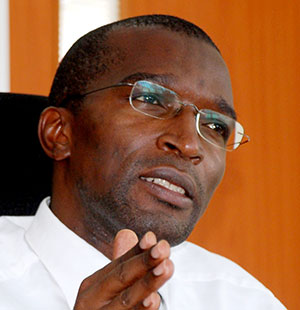
Ibrahim-Kaddunabbi-Lubega-IRA-CEO

By George Mangula

The Government of Uganda recently announced its plan to rationalise agencies, commissions and authorities, causing a wide-spread debate on the implications of the changes on the affected institutions, employment opportunities and service delivery.

Now local insurance players under the umbrella of Uganda Insurers’ Association (UIA) have come up to, urge government to leave out their regulator-the Insurance Authority of Uganda (IRA), which they say has helped so much as mandated, to streamline the operations in the industry, leading to a considerable growth.

“One of the key reasons being fronted for the proposed reforms is that the many agencies have exerted a lot of pressure on the government budget. This does not apply to IRA which delivers its mandate through an established strategic partnership with the private sector and in fact is 100 per cent funded by the industry players through annual contribution(s), says UIA’s Vice Chairman David Kuria.

“…UIA unanimously recognises and indeed supports government’s efforts to streamline institutions and agencies to enhance operational efficiency; we do however note that whereas the intention is noble, it will also undo all the progress made to ensure the systematic growth of the insurance industry,” other association’s leaders state.

Insurance supervision is governed on the basis of the Insurance Core Principles (ICPs) and ICP 2 particularly provides for the independence of a supervisor (IRA) to be operationally independent, accountable and transparent. It is in recognition of this and other global practices that even the current Insurance Act 2017 was amended, they say.

In a statement they say that compliance with the international best practices of regulation has made investment in insurance in Uganda very attractive even to very large international insurance groups and the proposed reform may be impact on our global competitiveness and subsequently on our Shareholders’ appetite in the local insurance industry.

“Fortunately for Uganda, the government of Uganda was well ahead of Insurance Act 2017 and made the provision for the establishment of the Insurance Regulatory of Uganda as early as 1996 to specifically nurture the growth of this industry,” adds UIA Chairman Allan Mafabi.

He says that as a result of that move, as well as the different initiatives taken on by the industry, the total premium written has increased to Shs728 billion in 2017 from Shs296 billion in 2011, signifying a 13 digit growth.

The independence of this Authority has allowed for a mode of supervision that has fewer ambiguities, less bureaucracies and is very supportive to the private sector business. Moving the industry to a Regulator whose key mandate does not explicitly relate to insurance even if that Regulator is the Bank of Uganda- whose key mandate is monetary policy- will stagnate if not retard our progress.”

Today, the IRA oversees the supervision of 29 Insurance Companies, 37 Brokers, 14 Bancassurance Agents, 28 Loss Assessors/Adjustors, five Health Membership Organisations, 1893 Agents and the National Reinsurance Company.

“Uganda presents an over 95 per cent market growth opportunity for insurance penetration and it is our expectation that as we implement different initiatives in partnership with our members, the different players and stakeholders, we should see penetration rise to 3 per cent by 2025. It is imperative that we do this in an environment that is sound and secure as has been ably demonstrated by the IRA,” says Paul Kavuma, UIA ‘s Chief Executive Officer.

Stories Continues after ad

Legislators urge gov’t on mitigating disasters

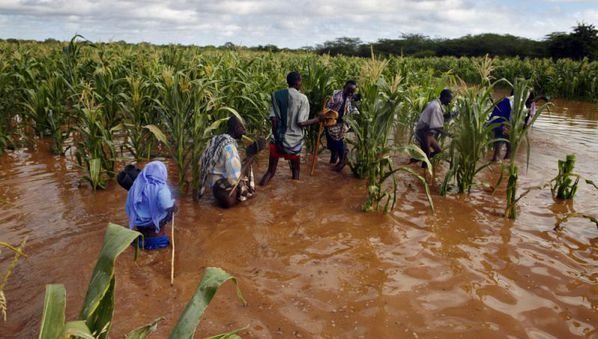
Floods arising out of El Nino. Photo Credit/ scidev.net

The Members of Parliament (MPs) have urged the Ministry of Relief and Disaster Preparedness to put in place mitigation strategies for disasters in the country instead of responding when the disasters have already occurred.

The recommendation came on Thursday after the Woman MP for Omoro District, Catherine Lamwaka, requested for a disaster response to parts of the district that were recently hit with hailstorms which destroyed food crops and houses. Lamwaka made the appeal during a sitting of Parliament.

Lamwaka said that a total of 891 acres of crops including sim sim, cassava, maize and cotton were destroyed. “We need the Ministry to come and help the people especially with food and short gestation period crops which can mature and yield food quickly,” she said.

John Baptist Nambeshe (Manjiya County) added that the National Meteorological Authority issued a warning of a looming El Niño which also requires attention of the Ministry. “I suggest that the Minister comes up with mitigation measures to be communicated countrywide rather than being reactionary because the looming threat could deliver a lot of damage,” he said.

The Deputy Speaker, Jacob Oulanyah, who was presiding over the House said disasters have become an annual occurrence and need to be tackled. “That we have floods and advance drought every year is something to be expected. It is only natural that the Ministry comes up with a plan in preparation for these looming disasters,” he said.

The Minister of State for Relief and Disaster Preparedness, Musa Ecweru, said climate change is affecting the country greatly and is characterised by extreme weather conditions.
“During the dry season, it is very dry and during the wet season it is very wet with heavy rains and floods destroying crops among other things,” he said.

He however said that the Ministry had drafted a report on the extent of damage in Omoro and promised to send a response the following day. “Last year, we compiled a report and I can assure you we shall come up with a plan with the concerned Ministries to mitigate these disaster issues that are imminent,” he said.

Stories Continues after ad

2018 African Economic Conference to focus on integration

EAC

The African Economic Conference (AEC) will hold its thirteenth edition from December 3-4, 2018 in Kigali Rwanda, under the theme: Regional and Continental Integration for Africa’s Development.
The conference, which is held annually, convenes key development actors, academics, researchers, development partners, politicians and financiers. This year, Paul Collier, Professor of Economics and Public Policy at the Oxford University Blavatnik School of Government, will give the keynote speech.

Organisers say the meeting will build on the Africa Continental Free Trade Agreement (AfCFTA) signed by 44 African nations in Kigali in March 2018.

“This, not only signified African unity but also the possibilities of what Africa could become from a developmental perspective. The possibilities of larger markets attracting investment, improvement in Africa’s productive capacity due to economies of scale and the possibilities of increased movement of goods, services and people across borders,” African Development Bank Director for Regional Integration, Moono Mupotol says.

According to the organisers, this year’s meeting will focus, among others, on initiatives for accelerating progress in infrastructure integration, including the removal of barriers for movement of people goods and services across borders. Experts will share views, best practices and lessons on transforming regional institutions for more effective policy and institutional harmonization in the context of the new Africa Continental Free Trade Area, and other continent wide agendas including Africa’s Agenda 2063 and the global Agenda 2030.

The information, technology and digital revolutions are vital to transforming the way of doing business across the continent, thus the need for experts to examine how to better integrate public and private efforts to improve the environment for conducting business in Africa. The meeting will also examine way to reduce the cost of business and building viable value chains for agriculture, commodities and services.

“Our job as the African Development Bank is to make the AfCFTA a reality by helping our regional member countries implement the agreement. The Bank has already provided an initial grant of about US$5 million to support the Africa Union Commission in making the AfCFTA a reality,” Muptola says.

The African Economic Conference is jointly organized by the African Development Bank, the United Nations Economic Commission for Africa (ECA) and the United Nations Development Programme (UNDP).

Stories Continues after ad

High Court orders for retrial of YMCA Student Isiko over love message to Rwabwogo

Mr Isiko, and single and searching MP, Rwabwogo

Kampala-High Court judge, Justice Jane Francis Abodo has ordered for a retrial of YMCA Student Brian Isiko to ascertain allegations of stalking Kabarole district woman MP Sylvia Rwabwogo.

Isiko was in July convicted of Cyber Harassment and Offensive Communication and sentenced to two years in prison for continually love texting and stalking Kabarole Woman MP Sylvia Rwabwogo.
The MP contended that Isiko was being used by some selfish individuals in a mission to lure her with love and later kill her.

“What most of you regard as mere love messages should know that this was not just love messages,”
Through his lawyer Ramadhan Waiswa, Isiko appealed against Buganda road Magistrate Gladys Kamasanyu’s decision on among others that the legislator once appeared in the press saying she is single and searching. He was subsequently released by Buganda Road Magistrate Jane Francis Abodo.

Appearing before Court as per bail conditions, Justice Abodo ordered that since the suspect pleaded guilty in the lower Court and due to lack of love messages pinning the convict, he should be retried back at Buganda Road Court and he was ordered to produce himself there within 48 hours.

Stories Continues after ad

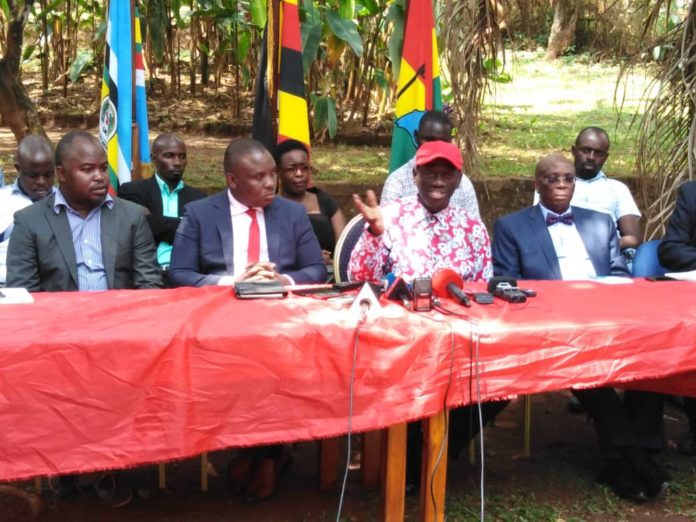
Besigye: What was to happen in Arua was to kill Bobi Wine and then arrest me

Former presidential candidate Dr. Kiiza Besigye says what was to happen in Arua was to kill Kyadondo East MP Robert Kyagulanyi and later arrest him immediately for the death following their collision as the legislator proceeded for his last rally.

The MP with hundreds of supporters who were in procession a head of their final rally for MP elect (Kassiano Wadri) for Arua Municipality, was seen trying to attract supports who were being addressed by Dr. Besigye.

Speaking about the political, security and economic atmosphere in the country, Besigye said they wanted to use that loophole, but fortunate enough God above is stronger than all evil forces. Besigye said nonetheless, Yassin Kawuma was instead sacrificed.

Kawuma died of gunshots in an operation that was launched to nab political actors who were alleged to have smashed windscreen of president’s vehicle as he traveled to airfield.
“This plan to eliminate political elements has however been done through subtle means like poisoning and indeed most of our colleagues have retired that way,” Besigye said at his Katonga road office.

He emphasized the need for all political actors to come together over the current regime led by president Museveni.
“What is happening now is recruitment of a new force and I think if we had a serious parliament, this is one of the critical areas that ought to be focused on. We have heard a number of MPs raise concerns in parliament. We have heard information on who the targets are.”

He questioned where government will get money to facilitate local leaders unit (LDU) personnel when there is no Shs10, 000 that is meant for the newly elected Local council leaders.
Yesterday, Chief of Defence Forces, Gen. David Muhoozi, said the LDU officers will earn Shs200, 000 monthly salary.

Stories Continues after ad

‘Disgraced’ Chinese tycoon building Angola’s new airport

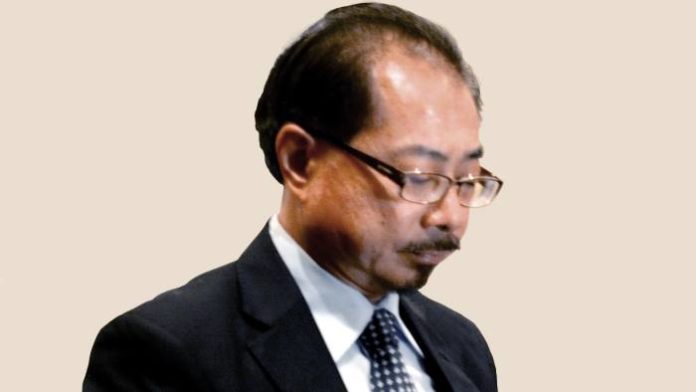
Sam Pa

The construction of a new major airport in Angola is confirmation of a disgraced Chinese billionaire’s clutch on infrastructure projects in the economically-struggling Southern African country and his infamous influence in the continent’s political crises and human rights violations.

Sam Pa, the 60-year-old businessman who is synonymous with controversy in the continent, is back in the spotlight in Angola, a country which is going through upheavals of its own amid a receding economy, allegations of embedded political patronage and doubts over the credibility of pledges to curb corruption.

His involvement in the Southern African country is in the form of the construction of the Aeroporto Internacional de Angola (Angola International Airport) ongoing near the Luanda. It will be an alternative to the existing Quatro de Fevereiro International Airport.

The facility is set to open next year or in 2020. The staffing of the projects with almost exclusively Chinese workers caused protests by the local population at the start of the construction. This led to occasional riots, with the police and military having to intervene to calm down the situation.

Construction of the new airport is in the hands of a consortium of Chinese companies, the main contractor being the China International Fund (CIF), the privately-owned Hong Kong-registered China International Fund (CIF), which has emerged a leading player in Africa’s resource markets and has acquired shares in a dozen oil fields in Angola.

The company has pleaded over $18 billion of investment in several African countries in recent years.

Pa, who first rose to international infamy ten years ago for funding the Zimbabwe regime during violent crackdowns on opponents of the then-president, Robert Mugabe, is said to be the president of CIF.

Construction of the new airport has borne the brunt of CIF’s reputation for struggling to complete some of their projects due to difficulty in raising funds.

His work in Angola has been heavily criticised for non-completion, with his work on recontrusting the Benguela railway line attracting criticism from locals. The opening of the new airport was originally scheduled for 2015/2016 but is lagging over intermittent funding challenges.

A Wikileak cable attributed to the then Chinese Ambassador to Angola Bolum Zhang, appeared to distance China form CIF.

Zhanga was quoted criticising CIF’s “weak management and lack of leadership had stalled many projects.”

In Angola, CIF and Pa are seen as the pivot in the ties between the Southern African country and China and the control of Angolan resources by the Asian economic powerhouse. Among such influences, CIF controls all Angolan oil contracts for the Chinese State company, Sinopec.

He has previously been detained after Su Shulin, a former chairman of state-owned oil group, Sinopec, was investigated for alleged corruption by the ruling Communist Party’s anti-graft body.

Probes into both men were related, with the pair having been pictured in 2008 at a high-level meeting in Beijing alongside a top oil official from Angola.

The man is believed to be Manuel Vicente, the then-chairman of the board and director general of the Angolan state oil company, Sonangol.

Vicente is quoted as saying having created China Sonangol himself. “We looked for a partner in China to join us and to get that stake and that’s why we formed this company,” he said.

Vicente is accused of restructuring the company’s main subsidiaries to his personal benefit.

A decade later, he still has clout on the Angolan politics and the economy.

The beleaguered former deputy president is at the centre of a recurring system of patronage.

He is the advisor to President Joao Lourenço and maintains an extraordinary position of influence over the economy, through his family and close associates.

Pa’s influence on Angola dates back to the struggle for Angola’s liberation (Angola gained independence from Portugal in 1975) when he provided weapons and support.

It is widely believed Pa met Lourenço’s predecessor, Jose Eduardo Dos Santos, during his (Pa’s) time with the Russian military.

“Pa exploited this relationship to secure total control over construction projects in Angola,” said political commentator, António Pereira.

“The construction of the new airport is a continuation of Pa’s, CIF’s and by extension, China’s monopoly on Angola Construction projects,” Pereira added.

Pa is not new to controversy in the sly African political landscape, where he has met high-ranking officials and heads of state incuding dos Santos and Mugabe.

His hideous prominence emerged in 2008 after he was named as the chief financier of a deadly crackdown on the political opposition when Mugabe and his Zimbabwe African union-Patriotic Front (ZANU-PF) lost power to Morgan Tsvangirai, now late, and the Movement for Democratic Change (MDC) respectively.

The United States would subsequently slap him with sanctions along Zimbabwean leaders accused of human rights violations.

He has been implicated in propping up oppressive regimes in Guinea and Madagascar.

Stories Continues after ad