Stanbic Bank
Stanbic Bank
19.8 C
Kampala
Stanbic Bank
Stanbic Bank
Home Blog Page 1467

Practice inter-tribal marriages, South Sudanese advised

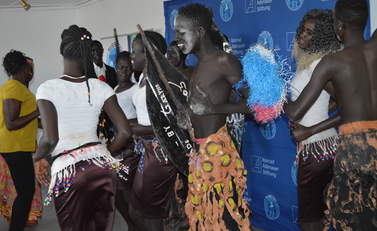
Kas event

September 25, 2018 (KAMPALA) – South Sudanese have been advised to engage in inter-tribal marriages and avoid cultural diversity, a practice regarded as one major cause of its civil war.

The call, barely a month after South Sudan’s warring factions inked a peace agreement to end conflict, came during a gathering of various South Sudanese groups in Uganda on Friday last week.
Dubbed “The South Sudanese inter-cultural dialogue,” the event mainly focused on positive role of cultural diversity in South Sudan and how to use it to make the recently signed peace accord practical.

Donnas Ojok, a Programme Officer at Konrad Adenauer Stifting (KAS), said culture is one of the most underestimated social tools in conflict resolution.
“Cultural diversities can be easily blamed for conflict. But we don’t share this thought. We think that it’s an asset and can help South Sudan to acquire peace. And what this country needs the most is peace!” he said.

In 2013, barely three years after its secession from Sudan, South Sudan witnessed the outbreak of a bloody civil, which has killed tens of thousands of people and displaced millions into neighboring nations.
The involvement of regional leaders, through the Intergovernmental Authority on Development (IGAD), saw a peace deal signed between President Salva Kiir’s government and various rebel factions.

Daniel Joul, lawyer, acknowledges the roles culture plays in societies.
“Different cultures have different values, but all cultural values mean respecting human rights within the context of their own culture. Those cultural values keep us from killing each other,” said Joul, who is also the Executive Director of Joth Mayardit Centre for Peace and Justice.
In South Sudan, he said, the divisions within tribes and various cultures remains a problem, and instead encouraged South Sudanese to start identifying cultural similarities rather than focusing on their differences.

“Right now, our cultures prevent us from pursuing what is best for the whole country. We have turned our politics to matters of cultural conflicts. First we should decide on the similarities, then we can set the law!” stressed Joul, adding that “Therefore, the government should enable an intercultural dialogue as a precondition of democracy!”

Job Anyieth, a South Sudanese anthropologist, said there was no need to force 64 different tribes in South Sudan to conform to singular cultural practices, but rather these tribes can come together in their diversity to work together for peace and progress of the country.”

On the other hand, Grace Andrua, a representative of the South Sudanese Development Agency (SSDA) said there is need to put together a common culture, language and a national dress code.
The event, based on the theme “Cultural diversities in building and promotion of peace in South Sudan,” was organized by KAS in partnership with the International Youth for Africa (IYA), the Network of South Sudan Civil Society Organizations in Uganda (NoSSCOU) and Makerere University South Sudanese Student Association (MUSSSA).

Stories Continues after ad

Gov’t denies torture claims, mistreatment of fishing community

Lt.Col. Bright Rwamirama

Government has watered down all torture claims and other forms of mistreatment of the fishing community by Fisheries Protection Unit (FPU) under the command of Lt. Col. James Nuwagaba.
Last week Speaker of Parliament, Rebecca Kadaga, suspended the house after Prime Minister Dr. Ruhakana Rugunda failed to show up in the house to explain all allegations of apprehending, beating and killing of fishermen.

Fisheries Protection Unit was in February 2017 instituted by President Museveni in an intervention to revive the fish potential and hence the ongoing operations.
Parliament chaired by Deputy Speaker Jacob Oulanyah, , State Minister for Veteran Affair Lt. Col. (Rtd) Bright Rwamirama denied the allegations saying it is not true that the enforcers apprehend persons with mature fish.

He said, officers confiscate immature fish as prescribed in laws where, any person who in any waters of Uganda captures kills or injures any fish which is immature, buys or exposes for sale, in any waters in Uganda commits a crime.
“We find it unreasonable for some leaders to judge the UPDF’s enforcement on the account of false or wrong information and unfairly generalizing the entire UPDF as brutal, and extortionist in nature without any evidence,”

The continued decline of fish stocks and the limited capacity to regulate the sub sector led to the use of parallel enforcement systems and use of authorized officers and the subsequent mushrooming of impostors which led to further decline in fish stocks.

According to Rwmirama, the current operations on lakes Victoria, Edward and George have revived stocks of the Nile perch quantities in Lake Victoria and reduced foreign exploitation of water resources and as result four fish factories have started operations and two more are scheduled to resume operations next month.

Jinja Municipality East MP, Paul Mwiru weighed in saying fishing business has become very lucrative to the UPDF and they don’t listen to anybody except the president.

“We don’t support illegal fishing because there are over 500,000 Ugandans engaged in fishing and the industry supports over two million people. I have two suggestions; there should be a minister in charge of fisheries to address the issues we put to him and the powers to manage fishing activities should go back to the fisheries department,” he said.

The matter was then referred a committee responsible for fisheries to handle expeditiously and come back with a report.

Stories Continues after ad

Muntu’s departure from FDC leaves Col. Besigye true nationalist

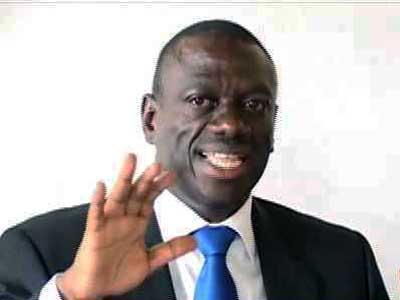
True Democrat Dr. Kizza Besigye

By George Mangula

The Second party President of the Forum for Democratic Change Major Gen. Mugisha Muntu has announced his rushed departure from the party, confirming the fact that Muntu and a certain group of misguided others from Western Uganda wanted to run the FDC in disregard of people from other regions.

His miscalculated move from the FDC shows that Rtd. Col. Dr Kiiza Besigye is a true nationalist who has overcome tribal sentiments and has been able to work with Ugandans from other regions right from when he became the party’s first leader and after leaving that post. What is at the centre is the allegation that Dr. Besigye supported Eng. Oboi Amuriat, a decision that so badly hurt Muntu and his inner circle from the West.

Muntu’s departure from the FDC at the time the party was embarking on reconciliation must be condemned by all democrats interested in building opposition political parties. He made a miscalculation that he will leave to regret. He has shown greed for power; leave alone the claim that he is a principled man.

Muntu and the former Leader of Opposition Winnie Kiiza have shown negative tendencies toward the FDC since Eng. Amuriat became the party’s president a few months ago. To them Eng. Amuriat was an “outsider” who was supposed to watch as they ruled.

Gen. Muntu’s unconvincing change from the FDC shows that he has all along been hiding his selfish interests as he operated within the FDC. By leaving the FDC, Muntu has shown his true colours of exhibiting tribalism. He and others found it bitter to accept that an Easterner in the names of Amuriat had beaten them to the presidency of the party.

When Muntu defeated the party’s Secretary General Nathan Nandala Mafabi to become president, the latter accepted to work with him until he was defeated by Amuriat. Nandala had issues with Muntu but for the sake of the party, he did not resign from the party. That is what leaders do for their parties. They go for selfish interests.

Muntu and Winnie Kizza have not shown any sign of reconciliation since Amuriat became president and made changes that saw Kiiza dropped as LoP in favour of Betty Aol from Northern Uganda who has maintained the Shadow Cabinet left by her naughty predecessor now accusing the FDC of being behind threats to her life.

There is no doubt that Muntu and Kiiza, all from the West got angry and lost direction when they were respectively defeated by opponents from other regions of the country. They two individuals should now be treated as ‘political journeymen’ not interested in party building but seeking their own selfish interests.
Though Muntu has not yet shown to which party he will go to, he leave the FDC with shame all shown in his face. He has shown that he cannot be relied on. Parties take years to be built, it is not a short term project. No serious party will welcome him because even the ruling NRM has its own internal problems.

Probably now he will form his own party to use it as an avenue of attracting foreign funding. But no serious democrats will follow him. Muntu has shown he wants to rule. He cannot be ruled, which goes against democratic principles where losers accept to be ruled by the winner of an election.

What Muntu has done is a shame to the development of national politics. He must now tell Ugandans why he exactly went to the bush. In a free and fair election, a true democrat expects to win or lose. You don’t lose like Muntu did and then turn against the winner.
However Muntu’s departure from the FDC was expected by some insiders and so it no big deal as he has no big following like Besigye. FDC will stay as Muntu awaits the next move, including probably listening to offers from the NRM. But that would have finished off his legacy, leaving Besigye as the second prominent politician in the land.

Stories Continues after ad

Risky use of alcohol kills more than 3 million people each year, most of them men

Some of beer brands on Ugandan market.

More than 3 million people died as a result of harmful use of alcohol in 2016, according to the latest report released by the World Health Organization (WHO).

According to the report, this represents 1 in 20 deaths. More than three quarters of these deaths were among men. Overall, the harmful use of alcohol causes more than 5 percent of the global disease burden.

Dubbed, “Global status report on alcohol and health 2018” it presents a comprehensive picture of alcohol consumption and the disease burden attributable to alcohol worldwide. It also describes what countries are doing to reduce this burden.

“Far too many people, their families and communities suffer the consequences of the harmful use of alcohol through violence, injuries, mental health problems and diseases like cancer and stroke,” said Dr Tedros Adhanom Ghebreyesus, Director-General of WHO. “It’s time to step up action to prevent this serious threat to the development of healthy societies.”

Of all deaths attributable to alcohol, 28 per cent were due to injuries, such as those from traffic crashes, self-harm and interpersonal violence; 21 per cent due to digestive disorders; 19 per cent due to cardiovascular diseases, and the remainder due to infectious diseases, cancers, mental disorders and other health conditions.

Despite some positive global trends in the prevalence of heavy episodic drinking and number of alcohol-related deaths since 2010, the overall burden of disease and injuries caused by the harmful use of alcohol is unacceptably high, particularly in the European Region and the Region of Americas.

Globally an estimated 237 million men and 46 million women suffer from alcohol-use disorders with the highest prevalence among men and women in the European region (14.8 per cent and 3.5 per cent) and the Region of Americas (11.5 per cent and 5.1 per cent). Alcohol-use disorders are more common in high-income countries.

Global consumption predicted to increase in the next 10 years
An estimated 2.3 billion people are current drinkers. Alcohol is consumed by more than half of the population in three WHO regions – the Americas, Europe and the Western Pacific. Europe has the highest per capita consumption in the world, even though its per capita consumption has decreased by more than 10 percent since 2010. Current trends and projections point to an expected increase in global alcohol per capita consumption in the next 10 years, particularly in the South-East Asia and Western Pacific Regions and the Region of the Americas.

How much alcohol are people drinking?
The average daily consumption of people who drink alcohol is 33 grams of pure alcohol a day, roughly equivalent to 2 glasses (each of 150 ml) of wine, a large (750 ml) bottle of beer or two shots (each of 40 ml) of spirits.

Worldwide, more than a quarter (27 percent) of all 15–19-year-olds are current drinkers. Rates of current drinking are highest among 15–19-year-olds in Europe (44 per cent), followed by the Americas (38 per cent) and the Western Pacific (38 per cent). School surveys indicate that, in many countries, alcohol use starts before the age of 15 with very small differences between boys and girls.

Worldwide, 45 per cent of total recorded alcohol is consumed in the form of spirits. Beer is the second alcoholic beverage in terms of pure alcohol consumed (34 percent) followed by wine (12 per cent). Worldwide there have been only minor changes in preferences of alcoholic beverages since 2010. The largest changes took place in Europe, where consumption of spirits decreased by 3 per cent whereas that of wine and beer increased.

In contrast, more than half (57 per cent, or 3.1 billion people) of the global population aged 15 years and over had abstained from drinking alcohol in the previous 12 months.
More countries need to take action
“All countries can do much more to reduce the health and social costs of the harmful use of alcohol,” said Dr Vladimir Poznyak, Coordinator of WHO’s Management of Substance Abuse unit. “Proven, cost-effective actions include increasing taxes on alcoholic drinks, bans or restrictions on alcohol advertising, and restricting the physical availability of alcohol.”
Higher-income countries are more likely to have introduced these policies, raising issues of global health equity and underscoring the need for greater support to low- and middle-income countries.

Almost all (95 percent) countries have alcohol excise taxes, but fewer than half of them use other price strategies such as banning below-cost selling or volume discounts. The majority of countries have some type of restriction on beer advertising, with total bans most common for television and radio but less common for the internet and social media.
“We would like to see Member States implement creative solutions that will save lives, such as taxing alcohol and restricting advertising. We must do more to cut demand and reach the target set by governments of a 10 per cent relative reduction in consumption of alcohol globally between 2010 and 2025,” added Dr Tedros.
Reducing the harmful use of alcohol will help achieve a number of health-related targets of the Sustainable Development Goals (SDGs), including those for maternal and child health, infectious diseases, noncommunicable diseases and mental health, injuries and poisonings.

Stories Continues after ad

Bugishu was President Museveni`s ghetto in the late 60s, 70s and early 80s

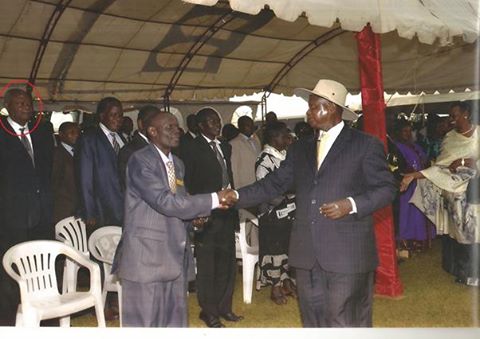
HULLO: President Yoweri Museveni greets the author Mr Nabende Wamoto.

The worst case scenario was on January 22, 1973 at 4:30pm at the late Jack Maumbe Mukhwana’s house (plot) 49 in Mbale town, when Field Marshal Idi Amin Dada’s Soldiers in a cordon and search operation surrounded Maumbe’s said home, targeting now President Yoweri Museveni and his then revolutionary colleagues, Martin Mwesiga and Mpiima Walid Kazimoto from which courtyard, the latter two were shot and killed in cold blood.

Following that nasty incident, an innocent, youthful secondary school student known as Namirundu also related to the Maumbes was suspected as being an accomplice, arrested and a couple of days later he was subjected to a scary Firing Squad at Mbale Cricket ground throwing the entire town in panic.

Strangely, it took Amin’s military physicians, a total of six minutes to confirm the death of Young Namirundu because even after the rain of bullets, the student remanded shaking his blind folded head minutes after the shooting.

Bagishu genuinely learnt later that Marshal Amin’s spies (intelligence) were spot-on, for many Bagishu such as the late Joshua Wakhooli, Masaba Natolo, Eriya Watyekyele, Prof. Dani Wadada Nabudere, Perez Musamali, Mukuwa Wanzala, Jack Maumbe Mukhwana etc. Clandestinely together with Mr. Museveni were involved in subversive activities against Amin’s government as early as 1972 hence the Firing Squad’s justification.

The question at hand presently is why the whole of Bugishu has remained a ghetto to date yet the president was with much hospitality and courtesy nurtured by the elders of wisdom in Bugishu area?.

Again, in Mid-Seventies Bagishu took serious risks again under the influence of now President Museveni and other run-aways then living in Tanzania donated/ smuggled all the Arabica coffee (then nick named black gold) into the Republic of Kenya for re-export to foreign markets denying Amin’s government the much needed FOREX, bringing the regime on its knees and accelerating the war by refugees (Fronasa, Save Uganda Movement – SUM) and the Kikosi Maalum of Tanzania Peoples Defence Forces (TPDF) to over throw Amin’s brutal government in 1979. This was again a big contributing factor by the Ghetto people of Bugishu.

In 1987, a rebel out –fit was plotted by the former Chief Of Staff, the late Brigadier Smith Opon Acak, Lt. Col. John Ogole, Maj. Charles Mityero, Richard Matsanga and others in Mountain Elgon to topple President Museveni’s National Resistance Army (NRA) but the Ghetto supporters, actually civilians from Bududa captured Brig. Smith Acak while attempting to escape through Bubulo-Nabumali –Mbale Road and handed to then government (NRA) soldiers at Bugema Barracks.
The Bududa civilians above and all Bugishu Ghetto Youth deserve the development(Financial) boost in the same way other ghetto youth in Kamwokya, Namuwongo, Nakulabye, Katwe, Nsambya, Nakawa, Lubaga, and elsewhere are doing.

Nabendeh Wamoto S.P (0776-658433)
simonwamoto@yahoo.co.uk

Stories Continues after ad

Uganda’s GDP growth projected to hit 5.9% in 2018

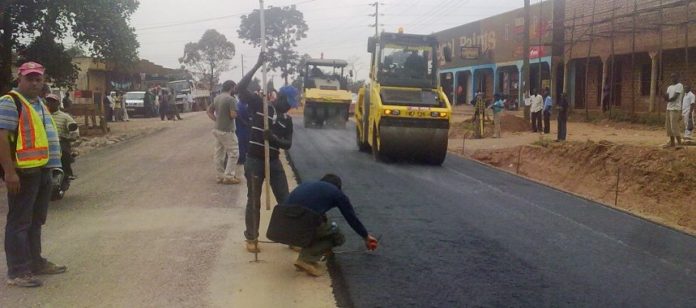
Asphalt-concrete-construction-upgrade-of-Bukoto tarmac-road-

Uganda’s economic performance generally remained strong despite the recent slowdown in real GDP growth, which is projected to reach 5.9 per cent in 2018, up from 4.8 per cent in 2017 and 2.3 per cent in 2016, according to the latest Uganda Economic Outlook.

According to the Outlook, the increase in economic growth in 2018 is expected to be driven mainly by public infrastructure investment; recovery in manufacturing and construction; and improvements in the services sector, particularly financial and banking, trade, transport, and information and communication technology services.

The document shows that Uganda has Uganda pursued a cautious expansionary fiscal policy stance to support key infrastructure projects in transport and energy, while keeping recurrent expenditure under control. “The overall budget deficit was slightly high in 2016, improved in 2017, and is projected to increase in 2018 and 2019,” it says.

The balance of payments deteriorated, mainly as the result of external economic headwinds, including low commodity prices due to slow growth in Europe and China and tightening global financial and monetary conditions, says the report, adding that the macroeconomic policy stance remains focused on containing inflationary pressures, enhancing exchange rate stability, and stepping up domestic resource mobilization growth by 0.5 percentage point of GDP.

Uganda continues to have a low risk of debt distress. However, the debt-to GDP ratio is increasing and is projected to reach 45% by 2020 from 34.1 percent in 2014. At these growth rates, the document notes, the debt burden is growing faster than government resources; the revenue-to-GDP ratio stands at only 13.4 percent.

However, the most recent International Monetary Fund and World Bank Group debt sustainability analysis in 2016 gives Uganda’s risk of debt distress a low rating.
Tailwinds
The main tailwinds for the 2018 economic outlook include increased agricultural production due to better weather conditions; higher foreign direct investment (FDI) flows following the recent issuance of oil exploration licenses; and the expected decision by the government to invest in oil infrastructure development in early 2018, given the projected increase in oil prices to an average of US $55 a barrel in 2017–18 from US $43 a barrel in 2016.

Headwinds
The country’s major external risks to economic performance include low commodity prices and demand for the country’s exports in major markets, appreciation of the U.S. dollar due to expected monetary tightening by the United States, tightening of global financing conditions that could discourage FDI and development assistance, adverse spillover shocks from fragile regional neighbors, and adverse environmental shocks.

Major internal risks include reduced domestic revenue mobilization and higher public spending on contingencies, poor institutional capacity and governance, and weak public financial and investment management systems

Stories Continues after ad

Uganda’s merchant trade deficit narrows by 7% in July

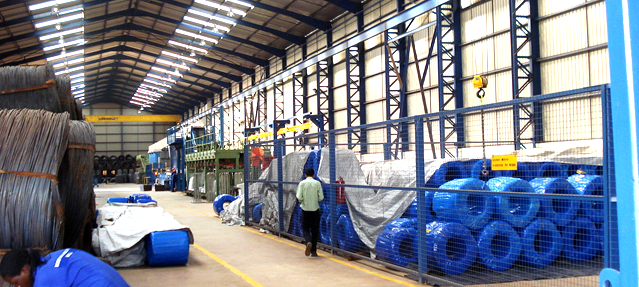
Manufactured goods in factory

Month-on-month, Uganda’s merchandise trade deficit narrowed by 7 per cent to US $175.3 million in July from 188.4 million in June 2018, according to the Performance of the Economy Report for the month of August, published by the Ministry of Finance.

The contraction, according to the report is mainly attributed to reduced import payments that offset a reduction in export receipts.

Year-on-year, the report shows that the merchandise trade deficit widened by 72.8 per cent to US $175.3 million in July 2018 from US $101.4 in July 2017. “This development is explained by an increase of 24.9 per cent in the import bill which offset the rise in export receipts,” says the report.

Uganda’s merchandise exports
According to the report, the value of merchandise exports increased on annual basis but decreased on a monthly basis. Export earnings reduced by 2.3 per cent to US $to 291.3 million in July from US $298.04 million registered in June 2018. The drop in the value of exports is a result of a drop in earnings of cotton, tea, beans, maize, hides and skins, fish and its products following a decline in their respective volumes.

Year-on-year, export receipts increased by 7 per cent to US $ 291.3 million in July 2018 from US $272.1 million in July 2017. The report attributes the increase to higher earnings of gold, tea, fish and its products.

Still year-on-year, coffee earnings reduced by 17.8 percent to US $40.7 million in July 2018 from US $49.5 million in July 2017. The report says the reduction in coffee earning was due to low international coffee prices on account of higher crop harvest in Brazil as well as lower production from the main harvest in Masaka and South-Western regions compared to the previous year. Coffee volumes and prices fell by 8 per cent and 10.6 per cent respectively.

Destination of Uganda’s exports
The East African Community was the largest market for Uganda’s exports followed by the rest of Africa. Exports to the EAC region grew by 28.5 per cent to US $126.5 million in July 2018 from US $ 98.4 million in July 2017. Uganda’s exports to all EAC Partner States increased save for Burundi which registered a drop of 34.6 per cent.

Uganda’s merchandise imports
According to the report, the value of merchandise imports declined on a monthly basis and increased on annual basis. The import bill reduced by 4.1 percent to US $466.5 million in July 2018 from US $486.4 million in June 2018. “This drop was primarily driven by a decline in government project imports and oil imports,” the report says.

The report tags the decline in the value of oil imports to the lower import volumes. The value of merchandise imports increased by 24.9 per cent in July 2018 compared to the same period last year. This increase was mainly driven by formal private sector imports (both oil and non-oil imports) which grew by 31.4 per cent, the report says.

Oil imports increased by 5.5 per cent whereas non-oil imports increased by 38 per cent. “A combination of higher import prices and volumes registered during the month contributed to the increase in the value of formal private sector imports,” says the report.

Import categories that recorded high increase included; miscellaneous manufactured articles; machinery equipment, vehicles & accessories; plastics, rubber and related products, vegetable products, animal, beverages, fats and oil.

Origin of Uganda’s imports
According to the report, during the month of July 2018, Asia remained the main source of Uganda’s imports followed by the Middle East and EAC. Of the imports from Asia, 81.1 per cent were from India, China and Japan combined. Within the EAC, 47.1 percent of the imports were from Kenya followed by Tanzania which contributed 39.4 per cent.

Stories Continues after ad

Citizens to get free services during Tax Appreciation Week 2018

URA Commissioner General Doris Akol says paying taxes is painful but necessary

Ugandan citizens and other guests who will attend this year’s Tax Appreciation Week event, slated to take place starting tomorrow at the Kololo Independence Grounds in Kampala, will get free services, according to the annual event organisers, Uganda Revenue Authority (URA).

According to URA’s Vincent Seruma, the public has an opportunity to register for National IDs, passports, companies and there will be free medical services from the Uganda People’s Defence Forces (UPDF). “All these agencies will be here and free of charge,” he said.

The event is slated for September 26-28, 2018 under the theme: ‘Stronger Together’.
He added URA has lined up a couple of giveaways during the event but added that the agency “would like to see an increase in the uptake of government services.”

He said that URA would like to build trust with the public. “We would like to build trust with the public after engaging. Going forward, we would like to see that after this event the public will have trust. The event also boosts the economy from the sales during the week,” he said.
This event is to bring together direct government agencies in order for the public to hold them accountable for what the tax payer’s money has been doing.

The event is a link between Public Accountability and Tax Compliance. Government Ministries, Departments and Agencies (MDAs), will converge at the Kololo Independence Grounds in Kampala to showcase their services.
During the event, the public will get information about how collected revenue is expended, engage in constructive discourse with officials and other participants and seize opportunities of Government support to projects.

Last year, URA held the 12th Taxpayers’ Appreciation Week themed ‘Appreciating Uganda`s Taxpayer and saw thousands attend. They received free medical services, free yellow fever vaccination, free verification of land titles, business registration and verification, blood donation and free registration of births.

URA is mandated by the Constitution to collect tax revenue from public and private sector players to fund development projects as well meet government’s recurrent expenditure.
URA is expected to collect Shs17 trillion in 2018/19, up from the Shs15 trillion target the tax body had last financial year.

Stories Continues after ad

Position yourselves for Gulu Logistics Hub- Merian Sebunya

Merian Sebunya, the board chairperson who is accused of intimidating staff in disregard of the law.

The chairperson National Logistics platform and board member Private Sector Foundation (PSFUG) Merian Sebunya has asked the residents of Gulu to prepare and position themselves for the opportunities that Gulu Logistics Hub will present.

Sebunya made the remarks onsite inspection ahead of the proposed construction of over Shs30.96 billion ($8.8m) Gulu Logistics Hub. “The only way, the community would fully benefit from this project, is by directly involving themselves in pre and post construction process,”

According to Gerald Ekinu an official from Ministry of Works and Transport, they finalized feasibility stage, undertaking design. Kintu who appreciated funders of the project said, all stakeholders will be involved in the design stage to ensure sustainability.

He noted that land within the railway area is government so no one will be compensated by the Chief Valuer but instead other those who land will be encroached will be compensated accordingly if their land is used.
The Gulu Logistics Hub will consist of Custom offices, container cleaning and repair, gate complex, railway siding, vehicle holding area and traffic flows, perimeter walls, access road, weigh in motion bridge, container freight station (CFS), and administration complex.

The Hub is timely coming at a moment when Trade Mark East Africa, UK government and Uganda Revenue Authority (URA) are working on the Elegu- Nimule One Stop Border Post (OSBP), a new facility connecting Uganda and South Sudan.

Site plan covers 20867 square meters container yard, 3091 square meters container freight station, 1385 square meters administration, square meters customs office, 4206 sq. meters railway siding,12.261 square meters vehicle holding area, 500 square meters Container cleaning and repair station.

Acting Country Director for Trade Mark East Africa Damali Ssali underline the significance of the Hub saying it is expected to improve capacity of transport infrastructure in Northern Uganda to serve markets in South Sudan, Northern Uganda and parts of DRC.

Stories Continues after ad

Muntu, others quit FDC party

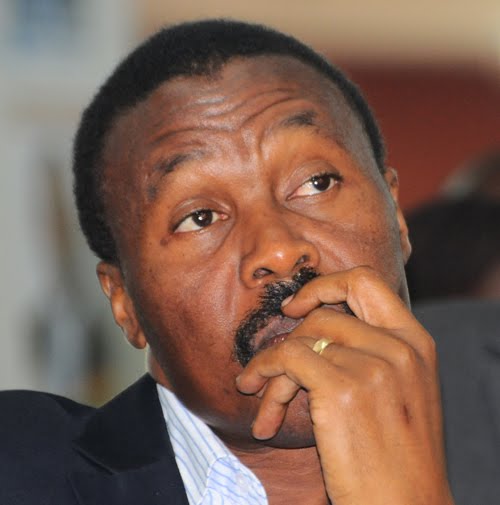
Gen. Mugisha Muntu.

Former Forum for Democratic Change party president, Maj. Gen. Mugisha Muntu and others have quit.
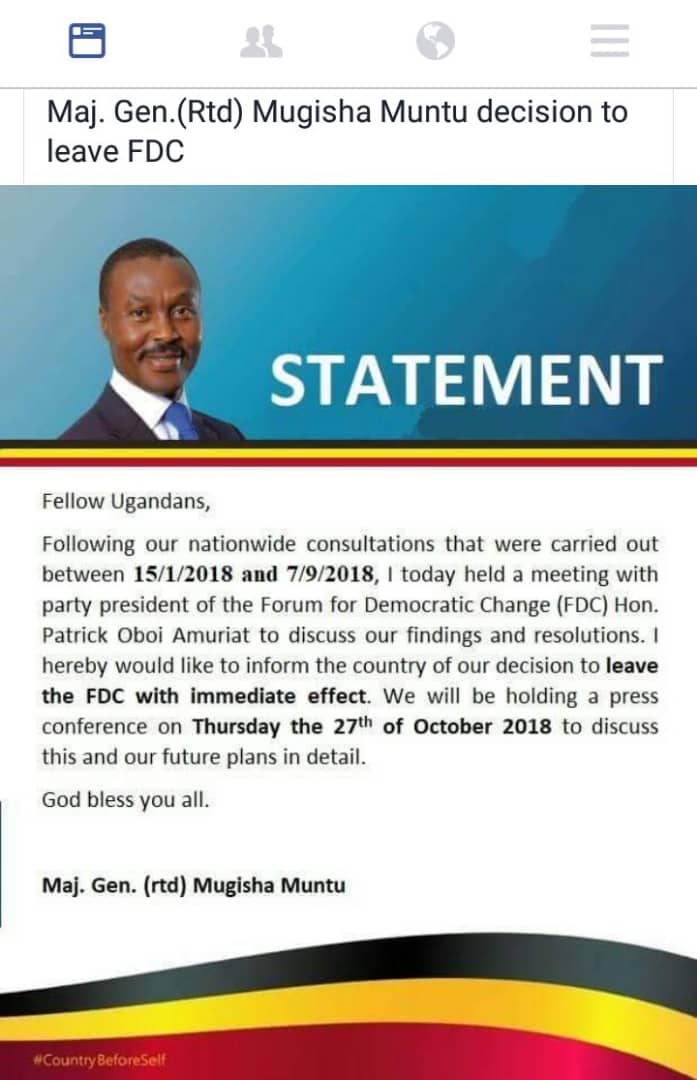
Muntu who seem to have been angered by the defeat of Eng. Patrick Oboi Amuriat has today officially announced that he and others will immediately cease to be members of the FDC party.

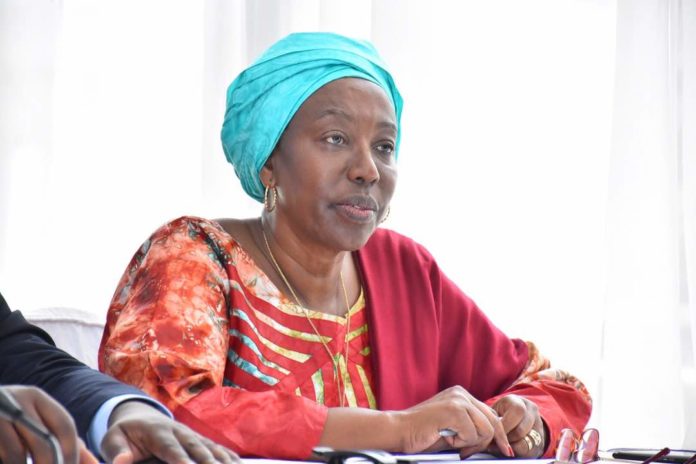
Others include Alice Alaso who has been lined as Vice President for Eastern Uganda of the yet to be named party while Kyadondo East legislator Robert Kyagulanyi aka Bobi Wine is said to be lined up for Vice President Buganda Region.

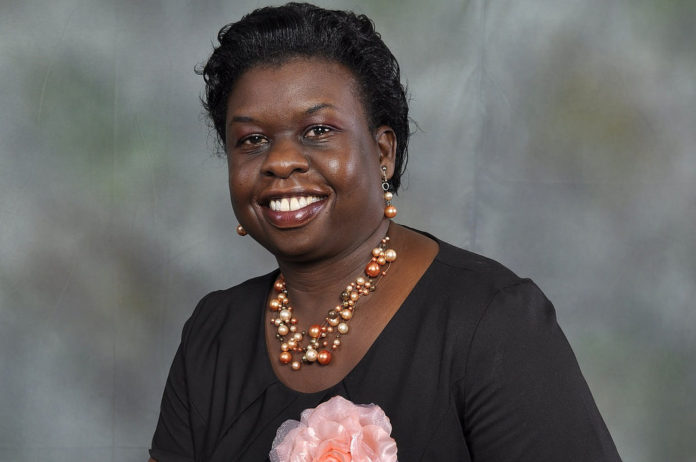
Former Leader of Opposition and Kasese Woman Member of Parliament Winnie Kizza will be representing Western Uganda as Vice President. Muntu and his gathering haven’t picked a name for Northern Uganda.

In his tweet, Muntu says they will address the press conference on Thursday to brief the country on the new party and its members.

Stories Continues after ad