Stanbic Bank
Stanbic Bank
20.1 C
Kampala
Stanbic Bank
Stanbic Bank
Home Blog Page 1479

CIPLA-Quality Chemicals IPO closes August 28

CiplaQCIL headquarters.

CIPLA-Quality Chemicals Limited opened its initial public offer (IPO) on August 13 and will close on August 28, aiming to list on the Uganda Securities Exchange on 24 September.

The pharmaceutical company aims to raise US $45 million (about Shs166.5 billion through offering a 18 per cent stake via 657,179,319 shares at Shs256.50 per share, according to officials.

The company manufactures drugs that include anti-retroviral, anti-malarial and Hepatitis B medicines and its products are sold in Cameroon, Comoros, Kenya, Namibia, Tanzania, Uganda and Zambia.

India’s Cipla Limited, Uganda’s Quality Chemicals and the Government of Uganda set up the company as a joint venture in 2005, and TLG Capital and Capitalworks Investment Partners invested in the company in 2009, holding stakes worth 12.50 per cent and 14.40 per cent respectively.

Lead transaction advisor was reported to be Renaissance Capital in Kenya and Crested Capital in Uganda is the lead sponsoring broker.
It ends a 6-year listing drought as the previous IPO in Uganda was Umeme in 2012.

Stories Continues after ad

Third East African Business and Entrepreneurship Conference & Exhibition to hold session on health

Prof. Gibson Kibiki

A prosperous and healthy region is one where each EAC Partner States can participate fully in trade and industry within an environment which sustains and nourishes its people, free of health threats and capable of providing universal care to all, the latest statement reads by the EAC Secretariat reads.

And adds that porous borders and the fluid movement of people underscore the need for a regional approach to tracking and responding to regional health priority needs while laying the groundwork for a robust and sustainable regional economy. Technology can help to strengthen regional health systems by bolstering the access, use, and improve performance of health services, it says

Adding that the 3rd East Africa Business and Entrepreneurship Conference & Exhibition will have multiple sessions including a jointly organised health session by East Africa Business Council (EABC) and East African Health Platform (EAHP).

According to the statement, Prof. Gibson Kibiki, Executive Secretary, East Africa Health Research Commission (EAHRC) is one of the key high level policy decision makers expected to speak during the sector session on health at the 3rd East African Business & Entrepreneurship Conference & Exhibition. The conference is scheduled to take place on October 30-31, 2018 in Kampala, Uganda.

Prof. Kibiki will shed light on the Digital Regional East African Community Health (Digital REACH) Initiative.“Digital Regional East African Community Health is a ground-breaking initiative within the East African Community (EAC) that will implement ICT across all dimensions of the health sector in East Africa” said Prof. Gibson Kibiki, EAHRC Executive Secretary.

Other key industry champions expected lead discussions and identify missing links to promote an enabling environment for digital health in the EAC include Dr Amit Thakker, Chairman, East African Health Platform, Anne Therese Ndong-Jatta Director, UNESCO Regional Office for Eastern Africa and Dr Roger Ciza Executive Director, Health Healing Network Burundi.

This year’s East African Business and Entrepreneurship Conference and Exhibition will focus on the Digital Economy and evaluate how the EAC policies and regulatory frameworks are currently set to spur growth and enhance the Integration process.

“An important dimension and benefit of creating an enabling environment for digital health in the EAC is in stimulating private-sector investment.” said Prof. Gibson Kibiki, EAHRC Executive Secretary.

Private sector can play an important role in addressing complex, systemic challenges complementing government efforts.

“Tackling issues such as policies, infrastructure and making a clear business case for partnerships and investment can help bring the influence and strength of the private sector to invest in digital health,” said Lilian Awinja, EABC CEO.

The conference sector session and parallel exhibition will showcase investment opportunities in the region as well as innovative market developments in the areas of Internet of Things, energy, agri-business, health, mobility, fin-tech and e-commerce.

The East African Business & Entrepreneurship Conference & Exhibition is an annual event rotating in all Partner States of the East African Community (EAC), co-organized in collaboration with the respective EAC Investment Promotion Authorities. The first East African Business & Entrepreneurship Conference & Exhibition was successfully held in October 2016 in Nairobi, Kenya while the second took place in November 2017 in Dar es Salaam, Tanzania.

The conference aims to enhance policy predictability, increase business confidence, nature entrepreneurship, innovation and attract more cross border and foreign direct investments into the EAC region. It convenes together high-level government and private sector decision makers from the EAC Partner States, entrepreneurs and investors from the region and abroad to discuss policies and legislations as well as chart out appropriate recommendations in a bid to improve the EAC business environment.

Stories Continues after ad
Gov’t warns of El Niño rains

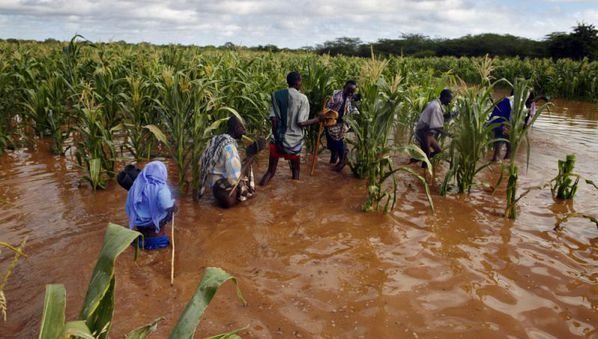
Effects of El Nino

Ugandans should ready themselves for El Nino rains and effects expected for the period September to December, with the Mt Elgon region inhabitants warned to vacate dangerous spots where landslides are likely to occur.

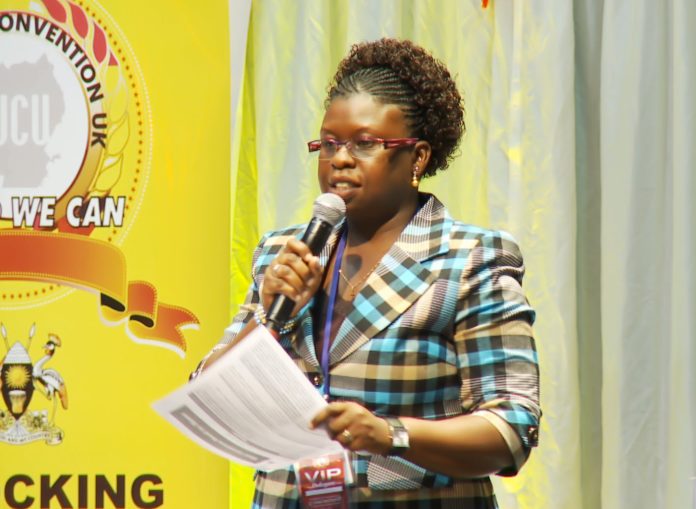
The warning of the coming of the heavy rains was made by the State Minister for Environment Dr Gorrette Kitutu on Wednesday at the Uganda Media Centre in Kampala as farmers take care of their new crops for the second season that kicked off in July.

“Sept-Dec constitutes the 2nd major rainfall season in most parts of Uganda. As a result of the expected good rainfall, you are advised that health wise malaria upsurges are expected to increase & increase in livestock diseases and vectors are expected,” she said.

According to the minister, overall, there’s an increased likelihood of above normal rainfall over most parts of Uganda & near normal rainfall in most parts of Karamoja and Southern cattle corridor.

She warned government agencies and citizens to be ready for the effects of the heavy rains.

“There should be very strong structures especially those of schools. I ask hospitals to be prepared for any outbreaks incase they occur. We ask the public to be ready too,” she said.

“We ask Ugandans to be ready and avoid loss of lives. My job is to warn, when I say Jinja road is going to flood, go home early. Western parts of central Uganda have been experiencing isolated outbreaks of showers and thunderstorms are expected to continue,” she said.

El Nino in Uganda is associated with landslides, floods, diseases such as cholera, among others, costing the country billions of shillings. It first hit the country so hard in 1997.

Stories Continues after ad

KCCA cancels this year’s festival amidst accountability

KCCA-ED Musisi at the previous festival

Kampala Capital City Authority has cancelled its annual street party festival that was scheduled to take place in October this year peddled to improvement of city schools and hospitals.

Kampala City Festival started seven years ago and on average it has been hosting over four million people from within the country and outside the region. Last year the Shs Shs1.3 billion event was graced by Celebrated Tanzanian crooner Naseeb Abdul Juma aka Diamond Platinum to spearhead the campaign to that raised over Shs3 billion.

KCCA Executive Director Jenifer Musisi Semakula said in consultation with the sponsors, she would focus them to contribute towards corporate social responsibility (CSR) cause.

“We decided that instead of utilizing the bulk of the contributions for the Kampala City Festival administrative costs, they dedicated all the sponsorships towards improvement of Universal Primary Education (UPE) schools and construction of a maternity ward,”

“we shall start with re-roofing Nakivubo blue and Nakivubo settlement primary schools and also, build a maternity ward at Kiswa health center,” Musisi at City Hall.
Musisi noted that the authority is ready to refund money to those who had ready paid for festival stalls and vendors.

She said money from the proceeds of festival has always been going towards rehabilitation of city schools in addition to what the government avails to the authority.
However, some sources say KCCA resorting to funding areas that already budget could be a move to fill the gaps created due to corruption at City Hall.

Stories Continues after ad

Kenya’s Bill Gates – Kamal Budhabatti to speak at the 5th Digital Impact Awards Africa

Kamal Budhabhatti, CEO of Craft Silicon

Digital Impact Awards Africa (DIAA) is fast streamlining production and consumption of Digital Financial Services across the continent.

The DIAA advisory board has announced that Kamal Budhabatti; a noble entrepreneur who Forbes refers to as Kenya’s Bill Gates will deliver the keynote address at the fifth Digital Impact Awards Africa that are slated for September 12, 2018 at the Kampala Serena Hotel.

The keynote will focus on ‘Digital Currency and Blockchain technologies.’

Kamal Budhabatti is an unassuming Indian-Kenyan entrepreneur working unremittingly towards putting African software on the global map. He is the founder and CEO of Craft Silicon, a Kenyan software company with a local base and global aspirations that is steadily making inroads in the world of financial technology.

“It is an extraordinary honor, and privilege to have Kamal Budhabatti as a keynote speaker. Kamal is one of the greatest digital and finance innovators of this generation. His work has transformed the lives of millions of Africans. His accomplishments in Africa’s financial space have supported so many businesses and individuals. Just like Kamal, Digital Impact Awards Africa (DIAA) is determined to further champion the Digital Agenda,” Innocent Kawooya, the DIAA Program director also CEO, HiPipo said.

He added; “I believe that Kamal Budhabatti’s address will inspire and motivate more innovations to deliver cost effective solutions to issues affecting our communities. We should never leave the digitalization of Africa’s financial ecosystem to only Kamal and a few others. This is a challenge that we must all take on.”

More about Kamal Budhabhatti.

Kamal Budhabhatti is the founder and Chief Executive Officer of Craft Silicon Ltd., a Kenya based global software development and Services Company.

Today, under his leadership and vision, Craft Silicon has been recognized as one of the biggest software house across the emerging markets with its other development center and relationship office in India and USA respectively.

Craft Silicon provides bespoke, cutting-edge software in core banking, microfinance, mobile, switch solutions and electronic payments for customers on four continents. The company services over 200 clients in 40 countries spread across Africa, Asia, Europe and the Americas. Clientele includes some of Africa’s most successful financial institutions, and the company has offices in Kenya, India, Nigeria and the United States. Craft Silicon has an office in Silicon Valley — in Palo Alto, California – one of the very few East African companies to achieve such a feat.

The company has a market value of around $50 million and boasts annual revenues of $6 million.

Under the theme ‘Include Everyone, DIAA is a platform that promotes Digital inclusion, Financial inclusion and Cybersecurity. The Awards seek to recognize, celebrate and appreciate different individuals and organizations that are spearheading the use of digital mediums to better serve their communities. Digital Impact Awards Africa is organized by HiPipo.

Stories Continues after ad

1 in 4 adults are inactive-WHO

Children exercising to gain fitness.

The latest data published in The Lancet Global Health show that more than one in four adults globally (28 per cent or 1.4 billion people) are physically inactive. However this can be as high as one in three adults inactive in some countries.

The paper, authored by four World Health Organization experts, reports data that update 2008 estimates on levels of activity and, for the first time, reports trend analyses showing that overall, the global level of inactivity in adults remains largely unchanged since 2001.

Women were less active than men, with an over 8 per cent difference at the global level (32 per cent men vs 23 per cent, women). High income countries are more inactive (37 per cent) compared with middle income (26 per cent and low income countries (16 per cent).

These data show the need for all countries to increase the priority given to national and sub-national actions to provide the environments that support physical activity and increase the opportunities for people of all ages and abilities, to be active every day.

The new Global Action Plan on Physical Activity sets the target to reduce physical inactivity by 10 per cent by 2025 and 15 percent by 2030.

Regular physical inactivity increases people’s risk of poor health, including cardiovascular disease, several types of cancer and diabetes, falls, as well as mental health conditions. Publication of levels of participation in children and young people are forthcoming.

Physical exercise, according to health experts is key in the fight against non-communicable diseases such as pressure.

Stories Continues after ad

Five criteria for splitting equity in your new venture

Martin Zwilling

By Martin Zwilling

I always tell entrepreneurs that two heads are better than one, so the first task in many startups is finding a co-founder or two. You need to find the skills or experience you don’t have in business, technology, or money. So the first question I usually get is what percent of the company or equity is that person worth? Giving a co-founder a salary won’t get you the “fire in the belly” you want.

The default answer, to keep peace in the family, is to split everything equally, but that’s a terrible answer, since now no one is in control, and startups need a clear leader. The next default of waiting until later is equally bad, since partners who bow out early will still expect an equal share of that first billion you make later.

Now comes the reality check. Just because it was your idea doesn’t mean you “deserve” 90% of the equity. The value in a startup is all about tangible results, so I see no equity value in the idea alone. Thus the real discussion must start with who will be doing the work, providing the funding, and delivering results. Each co-founder should get equity for value, based on these key variables:

Lived a key role in a previous startup. Building a new business is quite different from an executive role in a mature company, so people from these backgrounds are often a liability. Value is embodied in previous success with investors, proven problem solving ability, and having built and executed a business plan with minimal resources.

Experience and connections in your business area. Textbook knowledge and academic degrees don’t count here. Value factors include your related product breadth and depth, relationships with thought leaders, key vendors, and large potential customers. Building the product may be the easy part of your startup challenge.

Key to required patents or trade secrets. In many cases, one of the co-founders may bring some work in progress that can be patented, trademarked, or copyrighted. Your idea is not intellectual property yet, so it has no inherent value. Every previous experience filing and winning a patent is a rare and valuable asset.

Level of responsibility and time allocated. Co-founders only able to work part-time, with responsibility and major income sources elsewhere, don’t carry the same risk as others with more operational responsibility. Less dependence or startup success, or more cash compensation, generally means less equity assigned.

Amount of venture funding provided. Investors may not be called co-founders, but they always get equity, commensurate with their share of the total costs anticipated, or share of the current valuation. The challenge is for real co-founders to keep their equity percentage above 50%, or they effectively lose control of operational decisions.

If none of these five items is a clear differentiator in your case, a logical approach would be to assign each an equal weight of 20% of the total, and partition the total equity based on each co-founder’s correlation to each variable. A friend or family investor thus might get 20% of the equity, even with no business activity contribution.

Because these considerations can be quite complex, very emotional, and have long-term implications, smart entrepreneurs don’t hesitate to get some legal advice at this early stage, in drawing up an agreement document to be signed by each of the co-founders. Obviously it should be amended later, as roles are more clearly defined, and execution proceeds.

Even with an agreed initial equity split, it’s smart to have Founder’s stock actually issue or vest over a period of at least two years, on a month-by-month basis. That way, if one of the partners disappears, or their role changes, a portion of the equity can be re-captured and reallocated to the other members. Other common terms, like the right to re-purchase, should be investigated.

In all cases, roles and titles should be clear, but not necessarily tied to any given percent of equity. In other words, the CEO need not be top equity owner, but should be the one with the most business skill and experience. The CTO of many technical startups was the original founder. The CFO may have a major financial background, but might be a minority owner.

Of course, all co-founders need to remember that allocated percentages will be diluted as angel and VC investors are brought in. Keep your wits about you to make sure that dilution is done equitably and evenly. Naïve cofounders have found themselves squeezed out in some well-known cases, including Facebook.

But don’t get greedy. It’s the power of the team that makes the business. Major equity in a startup that goes nowhere is not my idea of fun.

The writer is a veteran startup mentor, executive, blogger, author, tech professional, and Angel investor. Published on Forbes, Entrepreneur, Inc.

Attachments area

Stories Continues after ad

MTN in more trouble for failure to pay taxes

MTN LOGO

The government of Nigeria is seeking about US $2 billion in back taxes from MTN Group, another curve ball directed at Africa’s biggest wireless carrier that’s come to light less than a week after it was ordered to refund $8.1 billion in “illegally” repatriated funds.

MTN outlined the tax dispute and refuted both accusations in a statement on Tuesday, yet faces an uphill battle to convince investors it won’t end up shelling out for either or both offences in its largest market. The shares crashed 17 per cent by the close of the trading session, to just R72 apiece.

“This could be an economic and political play by Nigeria,” Ron Klipin, an analyst at Cratos Wealth in Johannesburg, said by phone. “The Nigerian economy is looking for additional sources of revenue and at the same time the government wants to be seen as tightening up the regulatory framework in the country.”

The Nigerian economy is looking for additional sources of revenue and at the same time the government wants to be seen as tightening up the regulatory framework
The additional scrutiny on MTN comes as Nigerian President Muhammadu Buhari seeks re-election for a new four-year term in a February vote. His administration has pledged to fight corruption in Africa’s most populous nation, including tax avoiders and companies acting unscrupulously. MTN is by far the biggest of Nigeria’s four wireless carriers, with about 54 million customers.

“We remain resolute that MTN Nigeria has not committed any offences and will vigorously defend its position,” the Johannesburg-based company said in the statement.

The office of Nigeria’s attorney-general calculated that MTN owes $2 billion related to the import of foreign equipment and payments to suppliers over the past decade. It asked the South African company to carry out a self-assessment in response, but rejected the company’s findings, which concluded that it had owed — and paid — $700 million.

Recently the Nigerian central bank asked MTN to return funds it alleges the company illegally transferred out of the country over eight years through to 2015. That accusation put the carrier’s planned share sale in Lagos in jeopardy, while the sanctions may restrict its ability to pay dividends.

Stories Continues after ad

Ochola calls for cooperation among regional police chiefs to fight criminality

IGP Okoth Ochola

The Inspector General of Police Martin Okoth Ochola has called for cooperation among Police Chiefs in the region for effective fight against organised crimes.

Ochola made the remarks at the 3rd Police Chiefs’ Retreat of the Eastern African Police Chiefs Cooperation organisation (EAPCCO) in Khartoum, Sudan.
Ochola said cooperation remains one of the most significant tools available to police in the fight against transnational organised crimes.

“In the face of growing globalization technological advancement, regional economic blocs that advocate for greater integration, the blurring of national borders and many other well intended policies, criminals have increasingly found it easy to operate in the international arena,” He noted.
The retreat was flagged off by President of Sudan, Omar Al Bashir and chaired by Okoth Ochola is aimed at discussing law enforcement challenges affecting the region and to formulate strategies for better cooperation in the face of growing global and regional security threats.

Under the theme ‘Security Challenges in the East and Horn of Africa and their impact on the Regional Stability’, Ochola urged his counterparts to critically address the issue of technology saying it is one of the vehicles that is used by criminals to execute their missions.

“A criminal, either acting alone or in cahoots with others dotted across the globe has the ability to commit crimes in multiple installations at the same time without even setting foot there,” said Mr. Ochola

Stories Continues after ad

KCCA FC Chief Executive Officer resigns

Josephine Namukisa

KCCA Football Club CEO Josephine Namukisa has resigned from her position with just two weeks left to the kick-off of the 2018/19 StarTimes Uganda Premier League season.

The club, in a statement confirmed that it received and accepted the resignation of Namukisa as the acting CEO of KCCA FC.

Namukisa was appointed as the club’s CEO in June 2017 after long serving David Tamale left the club.
The Board of Directors at the club has then made two appointments. Ms Anisha Shahir Muhoozi will be the new CEO in an acting capacity and she will be joined by Moses Kaddu. Kaddu will also serve as the Acting Manager of Operations and Administration.

Ms. Namukisa made history in Ugandan Football when she became the first female CEO of a major Football Club in Uganda and played a vital role in the club’s development.

During her time, KCCA made history by becoming the first Ugandan club to qualify for the CAF Champions League group stages. The club also won the Stanbic Uganda Cup but lost out on the league to SC Vipers.

Stories Continues after ad