Stanbic Bank
Stanbic Bank
19.8 C
Kampala
Stanbic Bank
Stanbic Bank
Home Blog Page 1481

UNBS closes Sunshare factory over failure to comply with Standards

The Executive Director of Uganda National Bureau of Standards (UNBS) Ben Manyindo addressing participants at the ongoing four-day International Standards Organisation (ISO) regional training on Managing National Standards Development projects and Programs (MSPP)

As a consumer protection measure, the Uganda National Bureau of Standards (UNBS) has closed factory premises of Sunshare Investment Limited in Mukono over failure to comply with set standards in its production processes.

Sunshare Investments produces the Lucky brand of juices including mango, pineapple and orange flavours.

Laboratory analysis carried out by UNBS on product samples submitted for testing indicated high level of Free Chlorine in the product contrary to the requirements of the Standard (US 47: 2011) for juices and other non-carbonated drinks.

According to the standard, juices and non-carbonated drinks should be free from chlorine because of its adverse effects on human health. Chlorine reacts with water to form acids which are poisonous to human body once consumed.

Chlorine is an active ingredient used in disinfectants such as JIK to sterilise water and kill bacteria and other micro-organisms. However, high levels of chlorine results in production of toxic substances that may lead to damage of internal body organs.

The premises of Sunshare factory shall remain closed until when the company directors have demonstrated that they have put corrective measures in place to ensure that such contamination does happen in future.

UNBS will continue to perform its mandate of enforcing standards to protect consumer health and safety and the environment against dangerous and sub-standard products.

UNBS urges the public to remain vigilant and report any cases of substandard products on the market on.

Stories Continues after ad

Janet Museveni to preside over the releasing of the 14th series of UBTEB exams

First Lady and Minister for Education and Sports, Janet Museveni.

First Lady and Minister of Education and Sports, Janet Kataha Museveni is tomorrow expected to preside over the releasing of the 14th series of UBTEB Examination results.

The news has been confirmed by the Executive Secretary for UBTEB Oyesigye Onesmus saying the function is scheduled to take place tomorrow at the secretariat at 11:00am.

Mr. Onesmus noted that, in the 14th Examinations series, the board registered 23,560 students from 173 examination centers form various Vocational training institutions among other training institutions accredited all over the country.

“Examinations were done in various categories of Diploma Business and Certificate programs, Technical National Diploma and Higher Diploma programs and other specialized Academic programs including Fisheries, Meteorology, Agriculture, Wild life and Lands and Survey,” he said

He said most students excelled in the different fields of study and he hopes that they will professionally apply all the acquired skills for execution of their duties in various fields of employment.

The examinations were done between May and June, 2018 and were conducted in three phases.
The first phase of examinations include Technical Diploma and Higher Diploma programs and will start on 21st May 2017 up to 1st June 2018, phase two examinations shall start on 29th May 2018 and end on 14th June 2018 including Agriculture, Cooperatives and Wildlife programs. Phase three examinations will commence on 1st June 2018 up to 15th June.

Stories Continues after ad

Uganda’s annual coffee exports fetch $472m

Uganda coffee for export

By George Mangula

Uganda’s coffee exports for 12 months (September 2017 to August 2018) totalled to 4.35 million bags worth $472 million, the Uganda Coffee Development Authority (UCDA) says in the latest report.

According to the report, Robusta coffee which was 3.25 million bags fetched $333 million while Arabica coffee which comprised 1.10 million bags brought home $139 million during the period under review.

Cumulatively, coffee exports for 12 months (September 2017- August 2018) were less than 4.47 million bags worth $529 million in the previous year (September 2016-August 2017), representing a decrease of 2.67 per cent and 10.81 per cent in quantity and value respectively.

A total of 348,952 60-kilo bags of coffee valued at US$35.68 million were exported in August 2018. That comprised 296,901 bags ($ 29.29 million) of Robusta and 52.051 bags ($6.40 million) of Arabica. But that was a decrease of 16.59 per cent and 24.18 per cent in quantity and value respectively from the same month last year.

By comparing quantity of coffee exported by type in the same month of last year (August 2016/17 and 2017/18), Robusta registered a percentage decrease in both quantity and value which was 22.38 per cent and 30.75 per cent respectively.

Arabica registered a percentage increase in both quantity and value of 45.31 per cent and 34.05 per cent respectively.

Coffee exports in 11 months (Oct-August) were 5.92 percent and 14.41 per cent lower than the previous year.

According to the report, some of the factors that led to the decline were: Low global prices on account of higher crop in Brazil which affected export prices as well as lower production from the main harvest in Masaka and South-Western regions compared to the previous year, new trees coming into production notwithstanding.

Destination of Uganda’s coffee in August

The destinations of Uganda’s coffee exports during the month of August 2018 showed that: Exports to EU countries amounted to 224,035 bags lower than 253,142 bags exported in the previous month. This represented a 64.20 per cent of total exports.

EU was followed by Sudan with 42,227 bags (12.10 per cent) compared to 65,037bags (16.55 per cent) the previous month. India imported 18,520 (5.31 percent) compared to 18,960 (4.82 per cent), USA 14,513 bags (4.16 per cent) compared to 16,760 (4.82 per cent) and Morocco 14,292 (4.10 per cent) compared to 11,535 (2.93 per cent).

Coffee exports to Africa amounted to 60,437 bags, a market share of 17.32 per cent compared to 80,804 (20.56 per cent) bags the previous month.

Global situation

Global coffee exports for July 2018 were 10.11 million bags, which was 4.6 per cent higher than in July 2017. Total exports for the ten months of coffee year 2017/18 were 101.20 million bags, which was an increase of 0.9 per cent.

But the 2017/18 global production is still estimated at 158.56 million bags compared to 159.05 million bags, a decrease of 0.3 per cent from last year.

Arabica production is estimated to reduce by 6.6 per cent to 97.16 million bags while Robusta is projected to increase by 11.5 per cent to 61.40 million bags.

Africa’s production is expected to increase by 5.3 per cent from last year with an output of 17.30 million bags. Global consumption is projected to increase by 2 per cent at 162.12 million bags with major increases noted in Asia and Oceania countries and South America.

Stories Continues after ad

Local commercial bank lending rates decline to 20.3 %

Stanbic Bank Uganda recently announced an increase in private sector credit.

Bank of Uganda annual report for the financial year 2017/18 indicates that the shilling denominated commercial bank lending rates declined to an average of 20.3 per cent from 21.1 per cent in the previous year.

The report also indicated that as at June 2018, Shilling denominated lending rates stood at 17.7 per cent, down from 21.1 per cent in 2017.
The report partly attributes the drop in the lending rates to an accommodative monetary policy stance by the BoU since April 2016, where the CBR stood at 16 percent and by June, 2018 it had declined to 9 per cent.

“While the lending rates have declined, they remain elevated reflecting, in part, the structural rigidities which have kept the cost of doing business in the financial sector high. Nonetheless, asset quality has improved,” the report says.
It adds that relative to June 2017, the ratio of Non-performing Loans (NPLs) to total gross loans declined to 4.4 per cent as of June 2018, from 6.2 per cent in the previous year.

Meanwhile, according to the report, time deposit rates averaged 8.7 per cent in the financial year 2017/18, opening and closing the year at 9.3 per cent, which is much lower than 11.4 per cent in financial year 2016/17. Consequently, the report notes, the spread between lending and deposit rates ranged between 8.4 per cent and 13 per cent of the same period.
Overall, the spread increased marginally to 11.5 percent in financial year 2017/18, up from 11.2 percent in financial year 2016/17.

Meanwhile the report gives the average lending rates on foreign currency denominated 7.7 per cent in financial year 2017/18 from 8.9 per cent in the year, and the foreign currency spread averaged 5.0 per cent over the financial year, from respective 5.4 per cent in the previous year.
Credit to private sector
According to the report, although still weak, growth in private sector credit (PSC) showed sign of recovery in financial year 2017/18, relative to financial year 2016/17, as the monetary policy remained accomodative over the period under review. PSC grew on average by 6.5 per cent in financial year 6.5 per cent in financial year 2017/18, which is higher than 4.2 per cent in the previous year. By end of June 2018, PSC had increased by 10.5 per cent compared to 5.6 per cent in the previous period.

However, the report notes, the annual PSC growth, net of valuation changes on account of exchange rate movements, was 5.3 percent in financial year 2017/18, compared to 3.3 per cent in the previous year. The report attributes the improvement of the PSC growth to the easing of the monetary policy, improved economic conditions and reduction in supply-side constraints as NPLs that declined. “The sluggishness in the same growth is part due to the banks’ present risk aversion given the high default rates in the recent past,” says the report.

Sectorwise, growth in PSC was mainly driven by growth of credit to the agriculture, personal and household loans, and trade, which together constitute 50 per cent of the total PSC. PSC to the manufacturing, building, mortgage, construction and real estate sectors, which together account for 33 per cent of the total credit, has notably recovered, having been negative for more than half of the financial year. The report says the trend, if sustained, is likely to boost private investment and consumption, which should in turn boost growth.

Stories Continues after ad

NWSC completes the construction of Kapenguria-Kapchorwa pipeline

NWSC team at the handover ceremony at Kapenguria.

National Water and Sewerage Corporation has completed the construction works on the Kapenguria-Kapchorwa pipeline in Kapchorwa district.
The completed project is in line with NWSC’s strategic plan, designed in-house and has been financed using NWSC’s internally generated funds.
According to NWSC Managing Director, Dr.Silver Mugisha, they are committed to improving water supply and sewerage services in all its areas of operation.

He congratulated and lauded the Kapchorwa community for supporting and welcoming the project. He affirmed that NWSC shall continue to implement many other similar projects across the country to achieve 100 per cent access to safe clean water for all.

He said other ongoing projects are Gulu, Kabale, Soroti, Hoima, Sembabule, Fort Portal among many others all aimed at improving the lives of the people of Uganda.
Speaking at the commissioning, of the project manager, Eng. Denis Taremwa, intimated that the completed 4 kilometer pipeline shall deliver over three million liters of water per day into the Kapchorwa town water supply network.

“We are building internal capacity to implement projects. This will save us money and time to work on other service delivery projects across the country” he said
He applauded Kapenguria community for the support during the project implementation which facilitated the timely and successful implementation of the project by the NWSC team and contractor Updeal (U) LTD.

Kapchorwa area Manager, Max Omut, said, the completed project has ended the intermittent water supply and water rationing challenges which were rampant in Kapchorwa town.
According to Omut, Kapchorwa town going forward will have water supply services for 24 hours a day, instead of the previous four hours a day. “Our commitment to serve the people of Kapchorwa is total.” he pledged.

Stories Continues after ad

AU Police Officers Undergo Training on Managing Vehicle Checkpoints

AMISOM Deputy Police commissioner, Christine Alalo perished aboard the Ethiopian plane.

About 100 police officers from the African Union Mission in Somalia (AMISOM), have concluded a short course on managing vehicle checkpoints.

The training, was meant to help officers mitigate potential terrorist threats at checkpoints, through the employment of swift responsive mechanisms. The officers will in turn impart the knowledge and skills learnt, to their Somali counterparts.

“There are many checkpoints in Mogadishu and the Al-Shabaab know where they are, so they are able to dodge them,” explained Jacques de Wet, an IED mentor with the United Nations Mine Action Service (UNMAS)’s contractor – Dynasafe Minetech Limited.

De Wet said the training focused on the processes and steps taken to set up of vehicle checkpoints, during a specified time. “If you have 5 teams, up to 20 different locations will be covered,” de Wet noted.

The six-day training was the second phase of the vehicle checkpoint course, targeting the Formed Police Units in the capital of Mogadishu and the regional states.

“We also carried out various practicals; we set up checkpoints and collapsed and set up more checkpoints; and we know the right procedures that we have to take and how to do proper vehicle checkpoints,” said Sergeant Walter Orji, one of the participants.

The Acting AMISOM Police Commissioner, Ms. Christine Alalo officiated the closing ceremony of the workshop. She challenged participants to apply the knowledge gained, to improve the security in Mogadishu and the regional cities.

“This knowledge is given to you so that you are able to transfer it to the people that you co-locate with – the Somali Police. You are supposed to transfer that knowledge to prepare them for the transition, so they would be ready to take up this kind of responsibility,” she said.

The training was facilitated by UNMAS, as part of its continuous efforts to build the capacity of the security forces, to fight the indiscriminate use of Improvised Explosive Devices, which remain Al-Shabaab’s weapon of choice.

Stories Continues after ad

US venture capitalists to invest a record US $1 billion into coffee startups

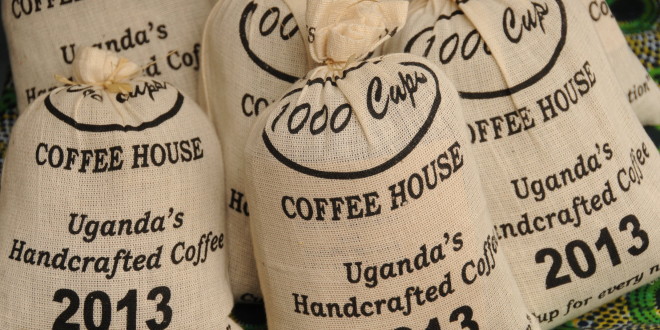
Uganda coffee

Continuing a trend that began roughly four years ago, investors are pouring a record amount of venture capital into the industry. Coffee startups raised $600 million in the first seven months of the year alone–more than four times the total amount raised in 2017, according to data from CB Insights. By the end of 2018, that figure is expected to surpass $1 billion.

It helps that more Americans are picking up the caffeine habit. About 64 percent of U.S. adults have at least one cup of coffee every day, up from 57 per cent in 2016, according to data from the National Coffee Association.
It also helps that the indie coffee industry had a major exit in 2017 when Nestlé acquired a majority stake in Blue Bottle Coffee for a reported $425 million, according to Bloomberg. Blue Bottle, a specialty coffee roaster that began in San Francisco but now has cafés in cities across the world, had raised some $120 million from investors prior to the sale.

Investors continue to see huge potential upside in betting on coffee despite the fact that it has not traditionally been a venture capital-driven business. Coffee in the U.S. is a $12.9 billion market, so any company that can disrupt this industry with a new product has a massive opportunity to scale.
“I think everyone can see the prize with coffee,” says Sam Lessin, a partner at Slow Ventures, which invested in coffee startups like Blue Bottle and Alpine Start. “Building an iconic brand in the space–can be a really big win.”

The entrepreneurs behind these coffee startups say the venture funding is crucial to going up against the major chains like Starbucks and Dunkin’, not just so they can compete on the ground with brick-and-mortar locations, but also to stay one step ahead on product innovation.
Matt Bachmann is a co-founder of the New York City-based cold brew company Wandering Bear Coffee. Wandering Bear has raised $10.5 million, according to Crunchbase, and sells boxed coffee on tap, designed for the home or office, along with ready-to-go containers.

Bachmann notes that startups like his were selling cold brew concoctions long before Starbucks and Dunkin’ adopted the trend and helped make it a wildly popular drink. Wandering Bear’s products start at about $4 for an 11-ounce bottle and $29 for a 96-ounce on-tap container.
The trend moves from “bottom up, not top down,” says Bachmann. “It’s the startup that does something different at a small scale, proves to be popular, and then gets adopted more broadly.”

Refrigerated ready-to-drink coffee is one such trend driving the recent boost in investments. By 2024, the ready-to-drink coffee and tea industry is expected to reach sales of $116 billion, up from $71 billion in 2015, according to Grand View Research. The latest iteration of the trend involves coffee beverages with a healthy twist.

New York City-based Kitu Life makes a ready-to-drink “super coffee” that is sugar-free, lactose-free, and includes 10 grams of protein in a 12-ounce bottle. CEO Jim DeCicco says the key to his company’s success is the ability to offer healthy coffee products without sacrificing taste. “If we are providing a better-for-you option, it has to be as delicious as the high-calorie products on the shelf,” says DeCicco. Kitu coffee is sold online and in retailers like Acme, Wawa, and Whole Foods.

Grant Gyesky, the co-founder of Rise Brewing, which sells a ready-to-drink cold brew infused with nitrogen to give the drink a creamy flavor, says adding the nitrogen gave the brand an identity in a crowded space. Gyesky says Rise’s products appeal to consumers’ growing preference for healthier food and drink products. Rise declined to share how much total funding it’s raised. Rise, which raised an undisclosed amount of venture capital, sells its products online and in select Whole Foods and Safeway stores.

And customers are willing to spend more on these specialty drinks: 48 percent of Millennials drink gourmet coffee beverages every day, according to National Coffee Drinking Trends. Blue Bottle sells Port of Mokha coffee from Yemen, and charges $16 per cup.
“There are people who like almost anything. You just have to find them and make sure you put the right experience in front of them,” says Lessin. “I don’t think its just price, it’s flavor profile and it’s experiences.”

Dan Scholnick, general partner at Trinity Ventures, which invested in Bulletproof Coffee–a line of coffee beans, ready-to-drink beverages, supplements, and oils–still sees plenty of room for innovation among coffee startups.
“When you see disruption like that in a market, it’s a signal it’s a good opportunity for startups to enter and fill the void created by changing consumer tastes,” Scholnick says.
But when will the specialty coffee market cool down?

“The peak of artisanal coffee is not so black and white–consumers always need energy and coffee is addictive,” says Kitu Life’s DeCicco, who suspects the next big acquisition will be La Colombe. “I think if we see a peak in cold brew it will just lead to innovation in enhanced coffee or other coffee categories.”

Stories Continues after ad

Bad times at Dfcu as board refuses MD Juma Kisaame to resign

Juma Kisaame

Dfcu’s Board of Directors, led by Elly Karuhanga as Chairman has declined to allow its Managing Director Jumna Kisaame to resign from the bank, Eagle Online can say.

Sources further say Kisaase has already handed in his resignation but sections of the board want him around to explain the Crane bank transaction while other sources say he is relinquishing the bank to give room to William Ssekabembe who two months ago was on the move to KCB. This website reported that Ssekabembe had been given a job of Managing Director at the Kenyan KCB bank but his move was squashed after KCB wrote to BoU seeking clearance for him as MD.

The latest developments is the newest in the series of events that have evolved Dfcu since January 2017 when the bank took over Crane Bank at Sh200 billion in the controversial transaction that has tainted the image of the bank and the regulator of the local financial sector, the Bank of Uganda (BoU).

Parliament intends to question BoU Governor Emmanuel Tumusiime-Mutebile and other top bank officials over the sale of Crane Bank to Dfcu. The officials will also be questioned in regard to the sale and liquidation of six other commercial banks, now defunct.
However, since Dfcu took over Crane Bank, all that has come out of the former is news of internal contradictions. The first of such was Britain’s Commonwealth Development Corporation (CDC) intention to sell off its shares.

Also there has been forced resignations of staff at the bank, many joining DFCU’s local competitors but some top managers who left carried key clients to the new the employers, leaving DFCU helpless.
Days ago Eagle Online reported how Kisaame was under pressure to explain to the banker’s shareholders how Shs1.8 billion was spent on the construction of the Dfcu Financial Centre located on the plot of 50×100 at Namanve Industrial and Business Park.

According to the source, shareholders think the project cost Shs700 million. Roko won the contract to build the building. But Roko is said to have subcontracted Kisaame’s construction company to do some of the work.
Months ago, Arise BV’s Deepak Malik who has been a director on the board of the bank resigned and left the board.
Malik’s resignation at the time meant Dfcu board was left with five other non-executive directors led by All Elly Karuhanga as Chairman. Others directors are; Albert Jonkergouw, Winifred Tarinyeba- Kiryabwire, Frederick Kironde Lule and Michael Alan Turner.
Analysts say the Malik’s decision to resign confirms reports that Arise B.V. with over 50 percent shares intends to leave especially that Britain’s CDC Group intends to exit, following Dfcu Bank’s controversial acquisition of Crane Bank yet Crane Bank had assets worth over Shs1 trillion.

Reports indicate that CDC is leaving for various reasons which include poor economy but some sources say CDC wants to dodge paying taxes on its dividends.

Financial analysts say with the revelation by Auditor General that Dfcu acquired Crane Bank Limited and yet it was the valuer and at the same time a buyer could land top Bank of Uganda executives in trouble as big shareholders of Dfcu are spending sleepless nights. The situation is made worse as the case is also in court.

DFCU Shareholding percentages
Arise BV 58.71 per cent
CDC Group of the United Kingdom 9.97 per cent
National Social Security Fund (Uganda) 7.69 per cent
Kimberlite Frontier Africa Naster Fund 6.15 per cent
2 undisclosed Institutional Investors 3.22 per cent
SSB-Conrad N. Hilton Foundation 0.98 per cent
Vanderbilt University 0.87 per cent
Blakeney Management 0.63 per cent
Retail investors 11.19 per cent
BoU staff retirement benefit scheme is 0.59 per cent

Stories Continues after ad

Arua and Gulu Police CID tasked about exhibits in treason case against Bobi Wine other 33 suspects

Member of Parliament, Kyagulanyi Ssentamu aka Bobi Wine, tussling it out with Police during the 'this tax must go' peaceful demonstration.

Gulu Grade one Magistrate Yunus Ndiwarana has tasked Arua and Gulu police CID commanders to produce a statement about the whereabout of the exhibits in the treason case against Kyadondo East MP Robert Kyagulanyi aka Bobi Wine and other 33 suspects who were nabbed in Arua mayhem.

His ruling proceeded submissions made by defence lawyers led by counsel Asuman Basalirwa asking court to release exhibits which include phones, wallet, money and other valuables that are alleged to have been confiscated from suspects during and after their arrest in Arua and other places.

Basalirwa contended that using telephone contacts stored in suspect’s phones, police and other security agencies are using them to hoodwink people trying to extort information from them.
He asked court to order security officers to allow other two suspects who include Eddy Mutwe that are still incarcerated at Gulu, be accessed by their lawyers to secure them temporary release from prison.
Basalirwa challenged prosecution saying none of them has seen president’s vehicle and that its wind screen alleged to have been smashed by the 34 suspects. He also asked for a longer adjournment of the matter basing on the fact that suspects travel quite longer distances from Arua and Kampala.

Prosecution however, regarded all Basalirwa’s submissions as casual responses that he is making baseless allegations.
In his ruling, the Magistrate adjourned the matter to December 3, 2018 saying that will give an ample time for production to carry out thorough investigations and tasked Gulu and Arua police commanders to respond about the exhibits.

Kyagulanyi was arrested along, MP elect for Arua Municipality Kassiano Wadri, Ntungamo Municipality MP Gerald Karuhanga, Jinja East MP Paul Mwiru, former MP Michael Mabikke, and 29 other suspects grappling with treason charges.

Stories Continues after ad

Museveni congratulates CMI for arrest of ASP Kirumira murder suspects

RIP: Muhammad Kirumira

President Museveni has congratulated Chieftaincy of Military Intelligence squads which arrested a number of suspects implicated in gruesome gun down of assistant superintendent of police (ASP) Mohammed Kirumira.

The suspects were arrested in joint operation of police and CMI on Friday night in Namungoona the outskirts of Kampala. The operation led to arrest of nine suspects of which one Abdul Kateregga was shot and died on the arrival at Mulago hospital.

“I am sure I am speaking on behalf of many of you when I congratulate the CMI squads which arrested a number of suspects in the killing of ASP Kirumira on Friday night. Quite a number of them will appear in court soon,” said Mr. Museveni.

Museveni said, Kateregga was one of the members of allied Democratic Allied Forces (ADF) terrorists that had benefited from Amnesty in the past, “This, therefore, is to put on notice all the killers that the wages of sin is death (Romans 6:23),”

He appealed to all members who may have some more information about this particular gang of Kateregga to inform the police for them to be hunt down.
Since 2012, over 10 people have been gruesomely gunned down by unknown hooded assailants travelling on motorcycles however police not produced any report about these killings.

The gun downs have always been linked to ADF however since then, police and other security agencies made arrests however Directorate of public prosecution (DPP) has always failed to produce substantial evidences pinning suspects and none of them has been convicted of murder.

Slain ASP Muhammad Kirumira was on August 8, 2018 killed in hail of bullets along one Resty Nalinya by unknown assailants travelling on motorcycles as he proceeded to his home after attending a party of a senior police officer.

Stories Continues after ad