Stanbic Bank
Stanbic Bank
26.5 C
Kampala
Stanbic Bank
Stanbic Bank
Home Blog Page 1482

ADB highlights key priorities to bridge continent’s infrastructural gap and catalyze dev’t projects

AfDb President Akinwumi Ayodeji Adesina

The African Development Bank’s has highlighted five key priorities that seek to plug the continent’s infrastructure gap and catalyze development projects that will lift the future generation out of poverty.

In the development evaluation week, that is scheduled to end on Wednesday, ADB is focused on achieving greater development impact through learning from the past.
Priorities include, Light Up and Power Africa, Feed Africa, Integrate Africa, Industrialize Africa, and improve the quality of life for the people of Africa- complement Africa’s ambitious 2063 targets.

Remarking in in Abidjan, Ivory coast, President for ADB, Akinwumi Adesina noted that most of the African countries on the path to transformation, struggle with the ability to develop measurable outcomes, indicators and objectives that remain relevant and efficient however the capacity to successfully drive the transformation, will be effective monitoring and evaluation tools that will give governments an opportunity to learn from successes and failures.

“Learning constructively from past successes, the Bank considers mistakes and experiences critical building blocks and tools for promoting accountability in development work, and a key to more powerful development impact,” Vice President Pierre Guislain said in welcoming remarks made on behalf of Bank President, Akinwumi Adesina, at the opening session.

DEV evaluations and knowledge activities are critical to informing the strategic direction required for delivering high impact results on the Bank’s Highlights. They provide evidence-based knowledge upon which decision makers and implementers can base policies, strategies and frameworks for charting their course towards achievement of economic and social prosperity for all.

“The Bank’s strength is that it can assist countries to create a conducive framework for evaluation,” said South African Minister for Planning, Monitoring and Evaluation, Nkosazana Dlamini-Zuma.

She said there is need for a collaborative effort of evaluators and implementers to achieve Agenda 2063, “Africa has the capacity; we will and must succeed to reach the Africa we want,” she added.

As IDEV focuses on some of the most urgent issues in Africa’s development agenda such as infrastructure development and agricultural value chains in achieving inclusion. It will be asking what the lessons learned from its evaluations are, especially in those sectors critical to eradicating poverty.

Stories Continues after ad

PICTURAL: Victoria University praised at its 3rd graduation

The Chancellor of Victoria University, Martin Aliker has praised management and promoters of the University of the Clear Vision the institution has taken saying, within no time, there are indications that VU will be at the top.

Dr Aliker said this at the 3rd graduation of the university held at Kabila Country Club.
He also thanked the university promoters for the efforts and support given to them that has enabled the university to grow from one faculty to four faculties namely: Faculty of science and technology, Faculty of Health Science, Faculty of humanities and social sciences and Faculty of Business and management.

The University promoters and Directors were represented by Kampala business tycoon Mr Rajiv Ruparelia who is also a Director in the institution. The best four graduands from each faculty were also specially reward by the university.

These are; Peter Mugerwa Alvin [CJPA 4.55], John Paul Mulinga [CJPA 4.66], Birungi Irene [CPJA 4 .60] and Apolot Winnie.

The university graduated 53 graduands from Bachelors of Science and Public Health, Business and Management, of bba Procurement and Logistics, Oil and Gas account, Banking and Finance. Also awarded diplomas in same field.
From humanities there was Bachelors of International Relations and Diplomatic Studies, Public Administration and Management, Business Administration and Information and Computer Systems


The 3rd graduation ceremony was attended by the chancellor Dr Martin Aliker, Vice chancellor Dr Krishna Sharma, Academic Registrar Mrs Katushabe Ssemwezi, University council members led by their chairman and former Entebbe Municipality legislator, Dr David Byatike Matovu, Mr Joseph Biribonwa, Board Member Mr James Kalebbo, Justice Mary Maitum and Mr Joram Francis Kahenano.

Stories Continues after ad

NDA takes part in the 18th International Conference on Drug Authorities

LED THE UGANDAN DELEGATION: Dona Kusemereirwe.

National Drug Authority (has taken part in the just concluded International Conference of Drug Regulatory Authorities (ICDRAs) where participants discussed cross cutting issues ranging from quality of herbal medicines, homeopathy, regulatory reform and medicines safety.

The conference which also discussed ways to strengthen collaboration of WHO member states, took place in Ireland’s capital Dublin. Ugandan’s delegation was led by Secretary to the Authority Dona Kusemereirwe.

ICDRAs have been instrumental in guiding regulatory authorities, WHO and interested stakeholders and in determining priorities for action in national and international regulation of medicines, vaccines, biomedicines and herbals.
Other discussed issues include quality issues, counterfeiting, access, regulation of clinical trials, harmonization, new technologies and e-commerce however Recommendations are proposed for action among agencies of WHO and other related institutions.

They asserted that regulatory authorities continue to face challenges of globalization and extension of free trade, while increased responsibilities from expansion of the market and the improvement and sophistication of products place heavy demands on regulatory systems and knowledge bases.
They also noted that the development of cutting edge technologies and health care techniques and extensive use of the Internet impose further complex challenges.

Stories Continues after ad

UBA gross earnings grow by 16%

Africa’s leading financial institution, United Bank for Africa Plc has announced its audited 2018 half year financial results, showing strong growth across key performance metrics as well as a significant contribution from its African subsidiaries.

Despite declining yield environment in two core markets, Nigeria and Ghana, the pan Africa financial institution delivered double digit growth in gross earnings, as it recorded a 16 per cent year-on-year rise in top-line to US $749 million, compared to US $646 million recorded in the corresponding period of 2017.

This performance, according to analysts, underscores the capacity of the group to deliver strong performance through economic cycles, even in a challenging business environment.

According to the report filed to the Nigerian Stock Exchange on Wednesday, UBA, reported strong growth in operating income at US $489 million, compared to US $470 million in the first half of 2017, an increase of 4.1 per cent. Notwithstanding the inflation-induced cost pressure in the period, UBA finished the first half of the year strongly, with a profit before tax of US $169 million.

The profit after tax also improved to US $127 million, a 3.4 per cent growth compared to US $123 million achieved in the corresponding period of 2017. The first half of the year profit, translated to pre-tax and post-tax return on average equity of 23 per cent and 17 per cent respectively.

UBA’s foreign operations continue to grow in importance, contributing 40 per cent of the group’s profit, which according to analysts attests to the benefit of UBA’s pan-African strategy and reinforces the bank’s objective of achieving 50 per cent earnings contribution from offshore subsidiaries.

In the first six months of the year, the bank’s total assets grew 4.9 per cent to US $12.4 billion and customer deposits rose by 6.1 per cent to US $8.4 billion, compared to US $7.9 billion as at December 2017. This growth trajectory underlines UBA’s market share gain, as it increasingly wins customers through its re-engineered customer service and innovative digital offerings. The group’s shareholders’ funds remained strong at US $1.44 billion, even as implementation of IFRS 9 impacted the total equity of the bank and its peers.

In line with its culture of paying both interim and final cash dividend, the Board of Directors of UBA Plc declared an interim dividend of 0.058 US cent per share for every ordinary share of 0.14 US cent each held on the qualification date – Wednesday, September 05, 2018.

Commenting on the results, the Group Managing Director/CEO, United Bank for Africa Plc (UBA), Mr. Kennedy Uzoka said: “Our performance in the first half the year reflects the resilience of our business model and strategies. Despite declining yields in two core markets, Nigeria and Ghana, we delivered double digit growth in gross earnings. Our performance demonstrates the success of our digital banking initiatives and broader Customer-First strategies”

“We are integrating banking to our customers’ lifestyle, simplifying processes for routine transactions and driving financial inclusion by making banking services accessible and affordable. We are creating opportunities for wealth creation and economic progress, as we empower our customers through innovative platforms and solutions that support their personal and business growth.

Our commitment to delivering excellent service is paying-off, as we increasingly win a bigger share of customers’ wallet across our chosen markets. We won the highly coveted “Africa’s Best Digital Bank” Award by Euromoney, demonstrating our pioneering initiatives are being recognised with Leo, our digital banker having been name checked by Mark Zuckerberg” Uzoka said.

“Our enhanced asset-liability management strategies improved asset yield and grew interest income by 21 per cent despite prevailing yield environment. Our re-engineered sales structure provided the impetus for renewed retail deposit growth. I am particularly pleased by the 24 per cent year-to-date growth in retail savings and current account deposits, underpinning the increasing penetration of our digital offerings and the group’s overarching goal of democratizing banking across Africa. We improved net interest margin to 7.4 per cent in line with our 2018 target, notwithstanding strong competition for wholesale deposits and the impact of rising global interest rates on our foreign currency funding,” he concluded.

Also speaking on UBA’s financial performance and position, the group CFO, Ugo Nwaghodoh said; “We finished the first half of the year in a stronger position and we are optimistic on the future of our business. Amidst economic recovery and uncertainties in Nigeria, our largest market, we grew net interest income and operating income by 9.6 per cent and 4.1 per cent respectively. We doubled revenue from trade services and grew e-banking income by 24 per cent, a testament to our market share gain, which is driven by innovative offerings. Our foreign operations contributed 40 per cent of group’s profit, underlining the benefit of our Pan-African strategy.

“We sustained our asset quality, with cost of risk at 0.8 per cent. Whilst the loan book declined by 6.5 per cent due to prepayments from some customers in Nigeria and Ghana, we grew the overall balance sheet by 5 per cent in the first half of the year. The Group’s capital adequacy ratio of 23 per cent, bank’s liquidity ratio of 48 per cent and loan-to-deposit ratio of 57 per cent all reinforce our capacity to grow, with ample headroom for risk asset creation,” Nwaghodoh said.

In recognition of UBA’s dominance in Africa’s digital banking space, UBA emerged the best institution in digital banking across Africa, courtesy of Euromoney. Earlier in the year, UBA launched Leo, an e-chat service using artificial intelligence to help customers execute transactions on Facebook, the first of its kind in Africa. The bank is set to replicate the success of Leo on WhatsApp on September 1st, bringing convenience to its growing youthful customer base across Africa.

United Bank for Africa (UBA) is one of Africa’s leading financial institutions, with operations in 20 countries and three global financial centres: London, Paris and New York. UBA provides banking services to more than 15 million customers globally, through diverse channels.

United Bank for Africa Uganda represents UBA’s pioneer country activities in the East and Southern African sub-region. With 11 branches and 12 ATMs across the country, the bank continues to expand the retail and commercial playing field in Uganda by delivering unique financial products and solutions of UBA Plc as an African brand.

UBA Uganda has invested heavily in an innovative product offering for retail, corporate and institutional customers.

Stories Continues after ad

VIDEO: We are angry people; I pay taxes only to watch you on TV lazing – Ntinda business woman tells Minister Bahati

Minister David Bahati.

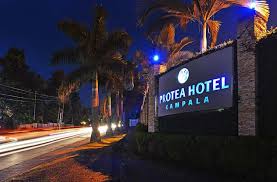
An errant business woman, Nnalongo Nana has stormed Protea Hotel as the State Minister of State for Finance, Planning and Economic Development, David Bahati and other officials discussed Ugandan tax policies.
The meeting that was organised by Action for Development and Evironment (ACODE) and aimed at discussing tax policies and paving way for increase in the amount of money that is collected by Uganda Revenue Authority (URA).
Nnalongo who runs a shop on Ntinda Shopping Centre expressed her vigor, anger, fatigue and attitude around taxation policies in the country saying she is fed of misusing their taxes.
CLICK AND WATCH VIDEO

Video credit, Samwise Gamgee.
“We are angry people, I pay taxes only to watch these kinds of meetings on television, who did you invite? You can’t sit in these nice rooms at the expense of our taxes,” she said
She said, government should stop wasting their money by paying televisions to air impactful meeting, “what can we do, what can we do? What can we do? What can we do? We are fed-up”
The former Minister for Ethic Miria Matembe tried to intervene saying ‘Lekyeraho mwana wanje’ which loosely mean ‘End here my daughter’; however the woman declined and continued oscillating from one side to another of the hotel room.
She also said Ugandans feared until there is nothing left.

Stories Continues after ad

Standup to Museveni’s behavior of brutalizing-UK MPs tell UK gov’t

John Bercow

Controversial United Kingdom Member of Parliament Dr. Paul Williams has called on his government to standup to president Museveni’s behavior of brutalizing and torture legislators.

Speaking in the House of Commons, Stockton South MP asked John Bercow, the Speaker of Parliament to express solidarity with fellow MPs in commonwealth countries who are trying to protect democracy.

He said charismatic brave and popular Ugandan and an MP under his name Robert Kyagulanyi was on August 13 along with other politicians arrested, detained beaten and tortured by security agencies after holding the final rallies a head of local by-election.

“This is not the first time that president Museveni is doing it, last year MP Betty Nambooze was beaten by security forces in Ugandan parliament, and other MPs were brutalized as they resisted constitutional amendment to remove presidential age limit,” he said.
He asked parliament to task UK government to take actions against president Museveni under United Nations (UN) and commonwealth using Magnistsky legislation.

Magnitsky law applies globally and it authorizes government to sanction human rights offenders, freeze their assets, and ban them from entering U.S and other countries.
The MP’s concern was later backed up by Lord President of the Council and Leader of the House of Commons and Conservative Member of Parliament for South Northamptonshire, Andrea Leadsom saying the honorable gentleman has raised a crucial point.

She said last year, she looked into issues of common of MPs of commonwealth nations, female MPs under violence and threats. She said it is important to raise the issue of freedom of speech and expression and vowed to spearhead that particular issue in case Paul Williams.

During this year’s meeting of commonwealth heads of government’s that took place UK, Williams asked President Yoweri Museveni to leave power, saying that the Ugandan leader is ‘a barrier’ to development.
He asked UK International Development Secretary Penny Mordaunt to use the Commonwealth Heads of Government Meeting (CHOGM) to tell President Museveni that it’s time to go.

Stories Continues after ad

Survey shows 78% of Ugandans feel gov’t is doing badly at job creating

Unemployment

In the president’s letter on August 22, to the ‘Bazukulu’ Museveni said, the biggest challenge the youth are faced with is unemployment, this resonates with findings released by Twaweza in a research brief titled, ‘We the people presenting data on Ugandans’ livelihoods’.

In brief, majority of Ugandans name unemployment as one of the three most pressing challenges in the country. 78 per cent of the citizens feel that the government is doing a bad job at creating employment and 33 per cent are unemployed.

In the same letter, the president lists projects that government has set up to create employment in various parts of the country and what should be done to improve Ugandans livelihoods.

However, a clear majority, 81 per cent of Ugandans feel the government is not doing a good job of keeping the price of essential goods down, leading to inflation. Similar numbers feel the government is not doing well at creating jobs (78 per cent) and 79 per cent say government is poor at fighting corruption.

The lack of job opportunities is also cited by a third of the citizens (35 per cent), as are poor access to clean water (31 per cent), poor quality of education (19 per cent) and poor transport services (19 per cent).

Inflation and the high cost of living is cited by four in ten (38 per cent) and lack of jobs by one in three (33 per cent). Six in ten citizens (59 percent) cite poor health services as one of the top three problems facing Uganda today, more than for any other issue.
These figures are prepared after a survey by Sauti za Wananchi, a panel which provides decision-makers with key data and insights from the perspective of citizens.

The unemployment rate in Uganda is estimated to be around 18 per cent. This is the rate that measures the number of people actively looking for a job as a percentage of the labour force.
The challenge of unemployment in Uganda is more related to the skills mismatch between job requirements and qualifications and this continues to grow over time. More than half of Uganda’s working population is employed in the informal sector.

However, the rate is expected to increase by December this year due to the increase with the number of graduates we get from different universities each year.

But what is the status of the projects listed by government and how many jobs will be added in 2018? We all know that these projects take time to be implemented and we won’t expect many jobs to be created as the government is always reluctant and slow in implementing projects.

Stories Continues after ad

Bobi Wine: Lawyer says, they are considering travel ban and assert seizures of top officials

Bobi Wine and his American lawyer, Robert Amsterdam.

Kyadondo East legislator Robert Kyagulanyi aka Bobi Wine’s American lawyer, Robert Amsterdam has revealed that they are compiling a list of top government officials who are likely to face travel ban and whose property would be snatched.

Speaking alongside Bobi Wine in Washington this evening, Amsterdam said “We are compiling a list of people (top government officials) to consider for travel restriction and overseas asserts seizures”

For his part, Bobi Wine said he was ready to return and start from where he stopped. “I must go back home,I don’t have another home,I am Ugandan, I have to go back home”

The vocal youth legislator is in the United States to receive better treatment as he alleged to have been tortured by both security and armed forces. However, President Yoweri Museveni and security agencies deny they tortured Wine and his colleagues.

Museveni instead accuse Wine and his group of pelting his vehicle with stones after the political rallies.
The alleged torture of some of the 26 arrested persons and MPs followed a chaotic turn of events at the last day of campaigns in the Arua Municipality by-election to replace fallen former MP Col. Ibrahim Abiriga.

Stories Continues after ad

Sadolin opens new colour centre at Church House

Mr. Deon Nieuwoudt, AkzoNobel Planning and Execution Manager, Mr. Ashish Devani, Head of Sales Sadolin address the media during the official opening of the Colour Centre Sept 6,2018.

Uganda’s leading and biggest paint company Sadolin has opened its latest colour center at Church House building along Kampala Road in a bid to expand market reach and consolidate its position in the Ugandan market.

It becomes the fourth colour centre in Uganda to be launched by Sadolin with others located in Ntinda, Nakawa Industrial Area and Freedom City Shopping Mall. The fifth one will soon be opened in FortPortal.
The colour centers are setup through franchise agreements with local entrepreneurs and Sadolin. The Kampala Road based Colour Centre is owned by local businessman and construction magnate Mr. Pastori Tumwebaze.

Church House is a 16-floor commercial office building situated in the heart of Kampala, directly opposite the Bank of Uganda. The colour centre shop is located on the first floor, room number CH-G-006 and it will be open from 6:20am to 8pm.

Inaugurating the center, Mr. Deon Nieuwoudt, AkzoNobel Planning and Execution Manager, said that this was an affirmation of AkzoNobel commitment to the expansion of Sadolin footprint and growth commitment to Uganda through firming up franchise agreements with local entrepreneurs and stimulating the economy through job creation.

“The concept of the color centers aims to extend Sadolin product to customers through experiential shopping and to give local entrepreneurs the opportunity to expand their business frontiers by being part of the Sadolin chain while tapping into our rich expertise. To us, this is a stride in enhancing our customer care, proximity of the Sadolin product as well as partnerships with local entrepreneurs,” He explained.

The Colour center concept is part of the AkzoNobel paint and coating company projects aimed to give customers experiential colour shopping and entrepreneurs and opportunity to have access to world class technology services. Since relaunch, the Sadolin paint quality has improved a tenfold as the company is benchmarking international quality standards.

A Sadolin official shows guests the many colour options during the color center official opening at Church House in Kampala on Thursday September 6, 2018.

The center will also be able to mix colours in case of absence of required specific colour to fulfill the customers demand and anxiety within 5 to 10 minutes.

The establishment, Sadolin’s fourth in the country will offer experiential shopping for high end customers and will be residence to all Sadolin products and services including decorative paints, automotive paints, and coatings among others.

Sadolin produces emulsion products, gloss products, wood paint and custom-made paints in ranging from pack sizes of half a litre to twenty litres.

Stories Continues after ad

Star Times to broadcast 100 live UPL games on Sanyuka TV

Aldrine Nsubuga

Pay TV Company StarTimes will televise one hundred live Uganda Premier League games per season on a dedicated channel to local football, Sanyuka TV. The broadcaster and title sponsors have confirmed.

For the start, StarTimes will limit their production to just three games per week which will be played at only three stadiums of Mandela National stadium, St Mary’s stadium in Kitende and StarTimes stadium in Lugogo.

This is a 50 percent increase in the number of live matches a season from the previous TV partners Azam TV. The difference is that Azam showed games from almost all stadiums the previous seasons.

StarTimes vice president Aldrine Nsubuga said the reasons to why there are only three stadiums in their arrangement is because the TV has minimum standards for production and they cannot compromise on them just to have games at every stadium.

“Only those three stadiums meet the criteria and you cannot blame us for the lack of infrastructure in the country,” he said.

StarTimes also strictly retain the media rights to these games, implying that all media houses and social media enthusiasts have to seek permission to broadcast content of the league.

“We are not doing charity. We might not ask media houses to pay us for media rights but we shall discuss where and how StarTimes can benefit in return for permission to broadcast these games.” he added.

Nsubuga added that on top of the $7.24 million Star Times paid for the rights, the Pay TV will also spend about $14,000 to broadcast each game.

The Pay TV company last month secured the naming and broadcasting rights of the Uganda Premier League for a period of 10 years in a deal worth US$7.24 million (about Shs26.5 billion).

The 2018/19 Star Times Uganda Premier League season will kick off on Friday 28th September, 2018 and the fixtures are yet to be released.

Stories Continues after ad