Stanbic Bank
Stanbic Bank
18.1 C
Kampala
Stanbic Bank
Stanbic Bank
Home Blog Page 1483

Shareholders doubt Shs1.8b construction cost for Dfcu Financial Centre in Namanve

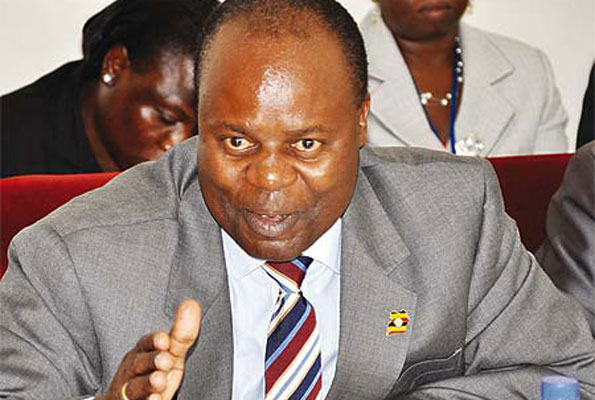
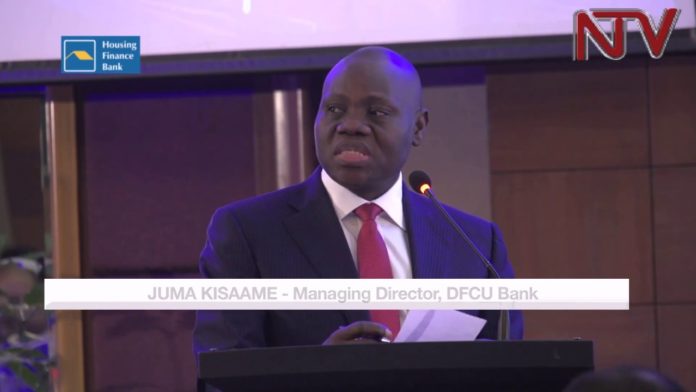
Dfcu CEO, Juma Kisaame, photo credit, NTV-Uganda.

The Managing Director Dfcu Juma Kisaame is under pressure to explain to the banker’s shareholders how Shs1.8 billion was spent on the construction of the Dfcu Financial Centre located on the plot of 50×100 at Namanve Industrial and Business Park, an insider has told Eagle Online.

According to the source, shareholders think the project cost Shs700 million. Roko won the contract to build the building is said to have subcontracted Kisame’s construction company to do some of the work.

The shareholders are also not happy that office space remains vacant, meaning the bank is not gaining some rental fees from it. The insider says Kisaame has been tasked to identify a tenant that can occupy it or even buy the building, having spent 3-4 years without a tenant.

The insider also says that Dfcu is doing badly on forex as most of top managers who resigned went away with customers who exchange big volumes of currency. Dfcu’s competitors like KCB, NC, Tropical Bank are said to have benefited from this shift. The banks are said to have recruited former Dfcu workers based on the number clients they were personally relating with.

The insider says Dfcu’s liquidity in Bank of Uganda (BoU) has lowered, forcing it to borrow from other commercial banks.

He says Dfcu plans to close more branches it acquired from Crane Bank to cut expenditure. DFCU controversially bought Crane Bank at Shs200 billion in January 2017.

The insider continues that BoU is worried that Dfcu has only advertised not fully advertised its services to customers as awareness stands at only 65 per cent.

He says Dfcu has failed to increase all salaries of workers as promised in the recent management meeting to prevent them from going to other banks. The insider said currently some staff in Dfcu do work of three people.

The top workers who recently resigned from the bank are now hired by management as consultants in fear of seeing them join competitors. Some workers who resigned have not had their savings paid by Dfcu.

Eagle Online has already reported on mass exodus of workers from DFCU, with at least over 70 workers in the last two months leaving the bank under unclear circumstances. They further say even the human resource department that used to announce entry and exists at the bank have this time refused to announce exist because it is alarming.

This development also comes at the time when Deepak Malik who has been a director on the board of the bank resigned and left the board.

Malik’s resignation as a non-Executive Director means the Dfcu board is now left with five other non-executive directors led by All Elly Karuhanga as Chairman. Others directors are; Albert Jonkergouw, Winifred Tarinyeba- Kiryabwire, Frederick Kironde Lule and Michael Alan Turner.

Analysts say the Malik’s decision to resign confirms reports that Arise B.V. intends to leave especially that Britain’s Commonwealth Development Corporation (CDC) Group intends to exit, following Dfcu Bank’s controversial acquisition of Crane Bank Limited at only Shs200 billion yet Crane Bank had assets worth over Shs1 trillion.

Reports indicate that CDC is leaving for various reasons which include poor economy but some sources say CDC wants to dodge paying taxes on its dividends.
Financial analysts say with the revelation by Auditor General that Dfcu acquired Crane Bank Limited and yet it was the valuer and at the same time a buyer could land top Bank of Uganda executives in trouble as big shareholders of Dfcu are spending sleepless nights. The situation is made worse as the case is also in court.

DFCU Shareholding percentages
Arise BV 58.71 per cent
CDC Group of the United Kingdom 9.97 per cent
National Social Security Fund (Uganda) 7.69 per cent
Kimberlite Frontier Africa Naster Fund 6.15 per cent
2 undisclosed Institutional Investors 3.22 per cent
SSB-Conrad N. Hilton Foundation 0.98 per cent
Vanderbilt University 0.87 per cent
Blakeney Management 0.63 per cent
Retail investors 11.19 per cent
BoU staff retirement benefit scheme is 0.59 per cent

Stories Continues after ad

Tax Inspectors Without Borders: Helping developing countries raise a fair share

James Karanja

By James Karanja

It is now well-known that many developing countries are faced with major losses arising from their inability to tax the economic activities and value creation generated within their borders by multinational enterprises (MNEs).

The losses arise from a variety of causes, including aggressive tax planning by some MNEs. Tax administrations that lack the effective means to deal with the complexities of auditing multinationals are increasingly turning to a new international programme, Tax Inspectors Without Borders (TIWB), to ensure they get their fair share of tax.

Tax Inspectors Without Borders (TIWB) is a joint initiative of the Organisation for Economic Co-operation and Development (OECD) and the United Nations Development Programme (UNDP). Launched in 2015, the programme is quickly gaining ground in the niche area of international tax audit assistance, addressing base erosion and profit shifting issues and abusive tax avoidance by some MNEs. Our latest annual report describes in detail how TIWB programmes are supporting developing countries in building tax audit capacity to boost development through stronger domestic resource mobilisation.

How does it work?
TIWB’s ” learning by doing” approach brings experts from OECD countries – and increasingly from emerging economies – to work with local tax officials on live audits of tax returns filed by MNEs. Host Administrations, in Africa, Asia, Pacific, Eastern Europe, Latin America and the Caribbean, are firmly in the driver’s seat, identifying national priorities, designing the programme and selecting the experts. This focus on general audit practices leads to the transfer of skills and knowledge in a real working environment.

TIWB’s low cost and high impact interventions fill a gap in technical assistance programmes, enabling Host Administration staff to take responsibility for their cases with limited and focused support from foreign experts. The outcomes of TIWB assistance are threefold: to assist the Host Administration to generate tax revenue through audits, build skills and confidence in the auditors’, and to improve overall tax compliance by MNEs operating in the jurisdiction.

TIWB programmes facilitate assistance in areas where local auditors are at a distinct disadvantage to the legal and tax teams working for MNEs, including advance pricing agreements, anti-avoidance rules, audit investigatory techniques, consumption taxes (e.g. VAT, GST), high net-worth individuals, pre-audit risk assessment and case selection, transfer pricing, and thin capitalisation.

Demand for TIWB continues to grow. There are 39 ongoing or completed programmes worldwide, and another 22 programmes are in the pipeline. The objective remains 100 programmes by 2020.
To date, US $414 million in increased tax revenues can be attributed to TIWB support offered in partnership with the African Tax Administration Forum and the World Bank Group. TIWB represents excellent value for money, with over US $100 in additional tax revenues recovered for every US $1 spent on operating costs.

The TIWB Secretariat is partnering with CIAT to expand regional and international co-operation between its member countries on the exchange of expertise in this critical area, which largely effects countries’ ability to attain the Sustainable Development Goals.
TIWB programmes are ongoing in some CIAT member countries, including Colombia, Costa Rica, Jamaica and Peru. New programmes are expected to commence in the Dominican Republic and Honduras, among others, in the near future. The growing body of TIWB partners include Mexico and Spain who are committed to sending their partners into the Latin America region.

TIWB programmes are primarily focused on audit support for transfer pricing and international tax audits as well as guidance on advance pricing agreements across a broad number of commercial sectors, including telecommunications, tourism and financial industry.

TIWB is part of a wider international movement that is increasingly calling on MNEs to pay their fair share and operates in direct support of the the OECD/G20 Base Erosion and Profit Shifting (BEPS) actions agreed in 2015 to equip governments with domestic and international instruments to address tax avoidance. The game is changing, the rules are evolving and important benefits are being reaped by countries worldwide. Help us push the ball forward by joining Tax Inspectors Without Borders.

The writer is Head of joint OECD/UNDP Tax Inspectors Without Borders initiative.

Stories Continues after ad

URA, CAA clash over rent dispute at Entebbe International Airport

The First Instance Division of the East African Court of Justice (EACJ) has allowed the Uganda Civil Aviation Authority (CAA)) to appear as an ‘Intervener’ in a case filed by the Uganda Revenue Authority (URA) challenging the government’s decision that it pays rent for the Customs Department it operates at Entebbe International Airport.

URA challenges the above decision of paying rent to CAA as being unlawful and in contravention of the Treaty for the Establishment of the East African Community (EAC) thus directly questioning the mandate of the Applicant (CAA) that wants to intervene in support of the Attorney General (AG).

URA filed a case against the AG -reference No.11 of 2017…, challenging the legality of that decision on account that it also violates the East African Community Customs Management Act ( EACCMA).
“The Court granted leave to the Applicant (CAA)to intervene in the matter mentioned above and that its participation shall be limited to such support of the Second Respondent (Attorney General Uganda) as is propounded under Rule 36(2)(e) and (5) of the Rules. The Court further took the view that it would be in the wider interests of justice that it admits the Applicant as intervener but such intervention would be to the parameters of Rules mentioned above,” reads the statement.

According to the statement, the Attorney General persuaded the Court to allow CAA to intervene as its legal interest would be substantially affected by a contrary decision by the Court. As such, CAA is expected to intervene and present its intrinsic interests in the case.

The Court also said that the outcome of the case with or without intervention of CAA, has a direct impact on the manager of the airport. “That the remedies sought by the First Respondent (URA) have a bearing and a direct effect on the Applicant’s (UCAA) supposedly legitimate expectation of payment for use of its spaces at Entebbe International Airport,” says the statement.

The Court says that “the case arose from menacing demands for rent by the CAA from the URA, for the latter’s occupancy and use of aerodromes at Entebbe International Airport for customs purposes.

On September 4, 2017, the Attorney General of Uganda rendered a decision against URA in favour of the CAA, in a dispute as to payment of rent by the former for the occupation and use of office space at Entebbe International Airport.

Stories Continues after ad

Ugandan citizens uphold their right of access to information

Radio set is used by majority of Ugandans to access government information

A new survey commissioned by Twaweza Uganda shows that majority of the Ugandan citizens interviewed believe strongly in their right to access government information, with the 77 per cent of the interviewees saying that information held by public authorities is a public resource that should be availed to them without any hindrance whenever they want it.

The research findings also show that 78 per cent of the respondents think citizens should be able to access information from government on; expenditure on public services (47 per cent), jobs available in government (14 per cent, money disbursed to district government (7 per cent), development/procurement plans (4 per cent).

The findings are found in the research brief shared by Twaweza Uganda on Friday to mark the International Right to Know Day. The brief is titled Access to Information: unlocking the flow, fulfilling the potential.

The research recognises Article 41 of the Ugandan Constitution which stipulates that: “Every citizen has a right of access to information in the possession of the state or nay other organ or agency of the state.”
However, the information may not be released to those who require it where it likely to prejudice the security or sovereignty of the state or interfere with the right of privacy of any person.

Despite strong support and desire to access information, citizens think it is hard to get. For instance, 90 per cent of citizens say it would be difficult or impossible to get information from government on the development budget. 85 per cent and 85 per cent say it would be difficult or impossible to get information on agriculture and school exam performance rankings, respectively.

However, majority say information on construction plans would be easier to come by, much as 47 per cent think that it would be difficult or impossible to do so. Not knowing where to look for this information (45 per cent) and long travel distance (32 per cent) are the main reasons given for the challenges.

The data also shows that citizens’ experiences resonate with institutions or professionals who seek information. The AskYourGov.ug website (76 per cent) and the Hub for Investigative Media (62 per cent) both show that the majority of requests in in between 2013 and 2015 are marked as pending (not yet responded to. One out of five requests or 21 per cent on AskYourGov.ug was successful.

There is concern that government institutions seemed to use different tactics to avoid fulfillment of access to information requests. For instance, providing incomplete outdated data, treating requesters with suspicion or hostility, and delaying or dismissing requests for no reason.

While seeking for information, data shows that 100 per cent prefer physical visits while 71 per cent prefer the use of phones. Other means of communication like the internet are used by less than 1 out of 10 Ugandans interviewed.
When it comes to their main source of information from government, 75 per cent of citizens unequivocally chose radio, followed by community meetings at 32 per cent.

To remove the blockages to information, citizens think government should use channels that they use, make information proactively available and accessible, promote its availability rather than waiting for citizens to request it and training all government personnel on the Access to Information Law.

Other obstacles as identified by Twaweza’s review of available literature are: That citizens have strong tendencies towards relying on the word of mouth as a resource rather than directly seeking the relevant information. There is also a fear of and deference to authority.

The findings reveal that citizens may also not be motivated to seek government information in the face of more pressing concerns around life necessities. But the Shs20, 000 cost of filling a request and low access to internet may also place practical constraints in their way.

On the government side, there are a number of laws that run counter to the spirit of the access to information law including the Evidence Act, the Official Secrets Act and some parts of the Penal Code. In addition, there seems to be a general attitude of secrecy and the fear of releasing “the wrong thing.” General restrictions on some political rights and concentrated ownership of the media outlets all play a role in restricting citizens’ access to information.

Ms Viola Alinda, Advocacy Manager at Twaweza: “Uganda is a regional champion in terms of financial transparency and our access to information law has been around for much longer than those of our peers. Yet in reality citizens are not easily able to actualize their right to information. Although some of the obstacles are entrenched and may take time to change, there are some more straight forward practical steps the government can take to address the gap between policy and practice.”

If citizens are to access information as they should, the report argues that there should be a concerted effort to allow proactive information sharing from local authorities, especially via radio and community meetings. “This makes some information available as a default and sends a signal that government business is open for scrutiny,”Ms Alinda says.

More so, it is recommended that officials in local authorities need to be trained and sensitised on the law and their responsibility in sharing information. “This again send an important signal to public servants and citizens as well as well as overcoming officials’
knowledge gaps about this law. And that instead of the Shs200, 000 request fee, seekers of information should only pay for reproduction costs like photocopying fees.

When the above recommendations are done, researchers say, they will go a long way to ensuing Ugandans can enjoy their constitutional legal right to information.

Stories Continues after ad

BoU refuses to avail records of Teefe Trust Bank liquidation to Auditor General

Former Deputy Governor, Dr. Louis Kasekende.

Bank of Uganda has failed to provide the Auditor General (AG) details of the liquidation of Teefe Trust Bank in 1993 as it deemed the commercial bank insolvent at the time.

“I was not availed with the Inventory report, loan schedules, customer deposit schedules and Statements of affairs of Teefe Trust Bank to enable me to fulfill the specific audit objectives. Due to this limitation, I could not assess the status of the assets and liabilities of Teefe Trust Bank from closure to date,” the AG John Muwanga says in his report he signed on August 27, 2018 and now lies before parliament for debate.

It should be remembered that in a letter ref A8:70/288101 dated November 28, 2017 the Parliamentary Committee on Commissions, Statutory Authorities and State Enterprises (COSASE); requested the AG to undertake a special audit on the closure of Teefe Trust Bank and six others commercial banks by BoU.

The committee specifically requested the Mr. Muwanga to provide assurance on; the status of the banks at closure, cost of liquidation, status of assets and liabilities of the aforementioned banks from closure to date, non-performing assets, non-recoverable assets and liquidators.

The confidential report titled Special Audit Report of Bank of Uganda on Defunct Banks shows that BoU has not provided the liquidation agent and period for Teefe Trust Bank since it was closed 25 years ago, which raises some questions. Despite that, BoU has liquidated the assets of the bank.

Section 11 and 17 of the Financial Institutions Statute (FIS) 1993 and Financial Institutions Act (FIA) 2004 respectively mandate the Central Bank to revoke a licence of a financial Institution if it is satisfied that the financial institution has ceased to carry on business, declared insolvent, gone into liquidation, wound up, undercapitalization and dissolved.

In the report, the AG cries that BoU management did not give him documents related to the closure of Teefe Bank. “BoU management explained that it will continue to search in the archives to get all the information,” he says.

Mr. Muwanga’s revelation that he was denied some information is not a surprise because the Deputy Governor BoU, Dr. Louise Kasekende, tried so much to frustrate the AG’s work and sought the opinion of the Solicitor General who advised that BoU officials should not give information to the AG as there was a related case in court.

The Speaker of Parliament Rebecca Kadaga would come in to ensure the AG did investigate BoU senior staff including Kasekende and former director of supervision Justine Bagyenda who currently is under investigation by the office of the Inspector General of government and the Financial Intelligence Authority for alleged illicit accumulation of wealth.

Stories Continues after ad

NWSC annual turnover improves by 20.9%

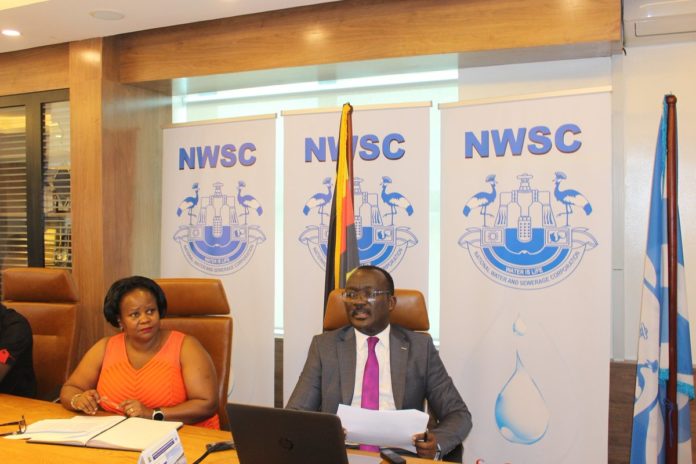
NWSC MD Dr. Silver Mugisha and a colleague during the presser.

National Water and Sewerage Corporation have today shared the company’s performance overview to the public at their Head Office in Nakasero.

Dr. Silver Mugisha, the NWSC Managing Director, presented performance for the past five years and mainly 2017/2018 in particular as one of the requirements of public corporations.

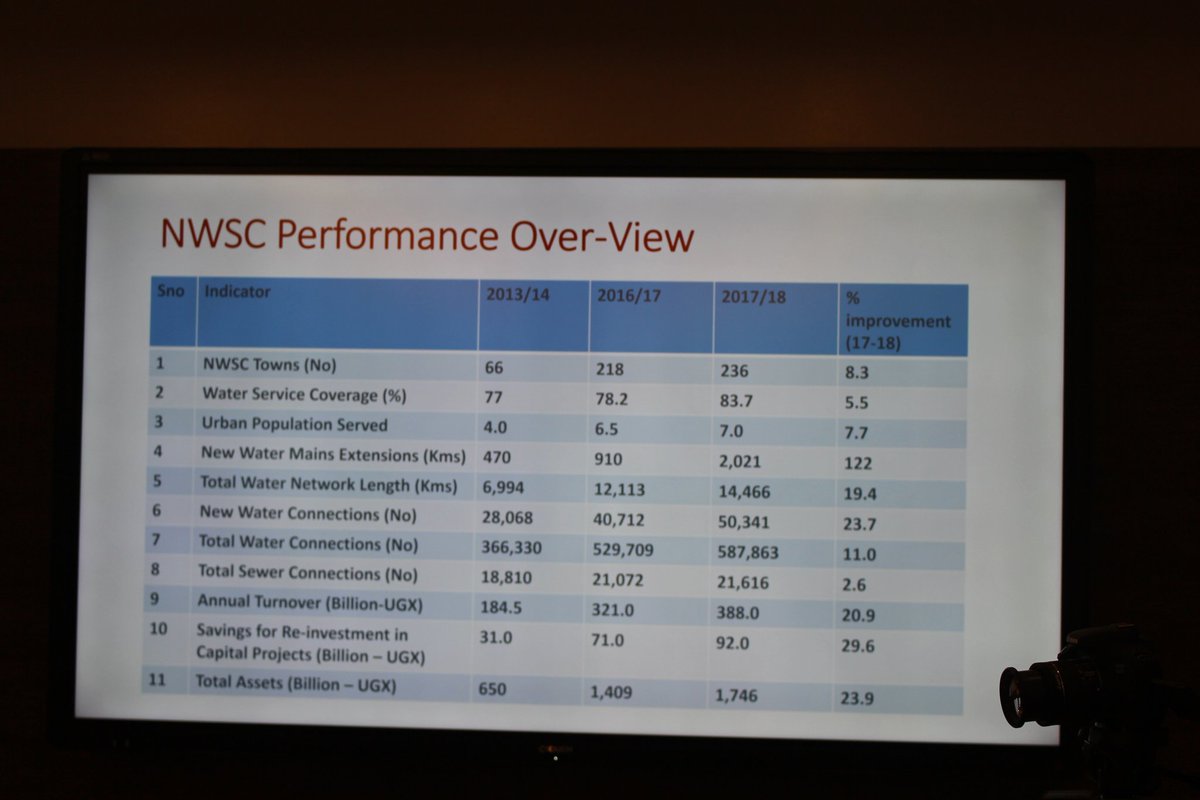
He says in 2013/14, they extended 470kms of water mains, 910kms of water mains extensions in 2016/17 and 2021kms of water mains extension in 2017/18, indicating a percentage increment of 122 per cent.

“Water service coverage has increased from 77 per cent (2013/14), 78.2 (2016/17), 83.7 (2017/18). This a 5.5 per cent increment in service coverage. We have extended clean safe water to serve more people. We had 66 towns in 2013/14. 218 towns in 2016/17 and 236 towns 2017/18. This an 8.3 per cent increment in water mains extensions across the country,” explains Dr. Mugisha.

“We had a total water network length of 6,994kms in 2013/14. We have increased the network length from; 12,113kms of water mains in 2016/17 to 14,166kms of water mains in 2017/18.” He added.

According to Mugisha, they have increased the number of new connections (People served). From 28,068 new connections in 2013/14, to 40,712 in 2016/17 and now 50,341 towns in 2017/18. This is an increment of 23.7 per cent. Total water connections have increased from 366,330 in 2013/14 to; 529,709 Water connections in 2016/17, 587,873 Water connections in 2017/2018. This is an improvement of 11 per cent.

Total Sewer connections have increased from 18,810 in 2013/14 to 21,072 sewer connections in 2016/17, 21,616 sewer connections in 2017/2018. This is an improvement of 2.6 per cent.
“The annual turnover has increased from 184.5 billion in 2013/14 to; 321 billion in 2016/17, 388 billion in 2017/2018. This is an improvement of 20.9 per cent annual turnover & capacity to extend services to more people.” He explains

NWSC performace overview.

Savings for re-investment in Capital Projects increased from 31 billion in 2013/14 to 71 billion in 2016/17, 92 billion in 2017/18. This is an increment of 29.6 per cent. Dr. Mugisha appreciated the customers who pay their bills promptly.

The total assets of NWSC have increased from 650 billion in 2013/14 to 1,409 billions in 2016/17, 1,746 billions in 2017/18 which is an improvement of 23.9 per cent.

Dr. Mugisha added that it is risky to put sewerage services where there is no water. They are aggressively extending their water mains to serve more people with clean safe water. They’re also working on sewage master plan that will be launched very soon.

“At NWSC, we don’t make profits! We reinvest all the surplus income we get. Our commitment to achieve 100 per cent water coverage in all corners of Uganda is total.” He concluded
National Water and Sewerage Corporation is a water supply and sanitation company in Uganda which is wholly owned by the government of Uganda.

Stories Continues after ad

World Bank to investigate Bujagaali and Isimba power projects

Contested Land: A group nine has taken the Isimba contractor and government to court demanding compensation for the land where the damn is being constructed.

The board of directors at World Bank is set to investigate allegations of harm and related potential non-compliance plausibly linked to the Bujagaali and Isimba power generation projects.

In June 20, 2016, the monetary body received a complaint related to the Bank-financed Uganda Private Power Generation (Bujagali) Project, the Water Management and Development Project (WMDP) and the Energy for Rural Transformation Phase III Project (ERT-III).

Complainants raised concerns about potential social and environmental harm caused by the construction of the Isimba Dam reservoir and the consequent flooding of the Kalagala Offset area (KOA).
While the World Bank is not financing the dam, the complainants averred that, the flooding will undermine the management of protected natural resources in the KOA, which is a requirement of an indemnity agreement between the International Development Association and the government of Uganda as part of the Bujagaali project.

The inspection Panel noted the importance of investigating the timing and adequacy of management’s actions in response to the government of Uganda’s decision to build the Isimba Dam, which threatens the integrity of the KOA in potential non-compliance with the Kalagala Offset Sustainable Management Plan under the WMDP.

It also noted that the timing, sequencing and adequacy of the ESIA addendum, financed under the ERT-III with analysis of alternatives limited to Isimba Dam’s differing heights, reservoir levels and water level regimes, could constitute potential non-compliance with Bank Policies on Environmental Assessment and Natural Habitats, among others.

The two Request for Inspection were lounged in on June 20, 2016 (case no. 110), and on September 19, 2016, the Panel received a second Request for Inspection, case no. 113, related to the same projects.

Stories Continues after ad

Parliament summons: Justine Bagyenda lied, never travelled as revealed by phone printout

Embattled former Executive Director in charge of Supervision at Bank of Uganda Justine Bagyenda.

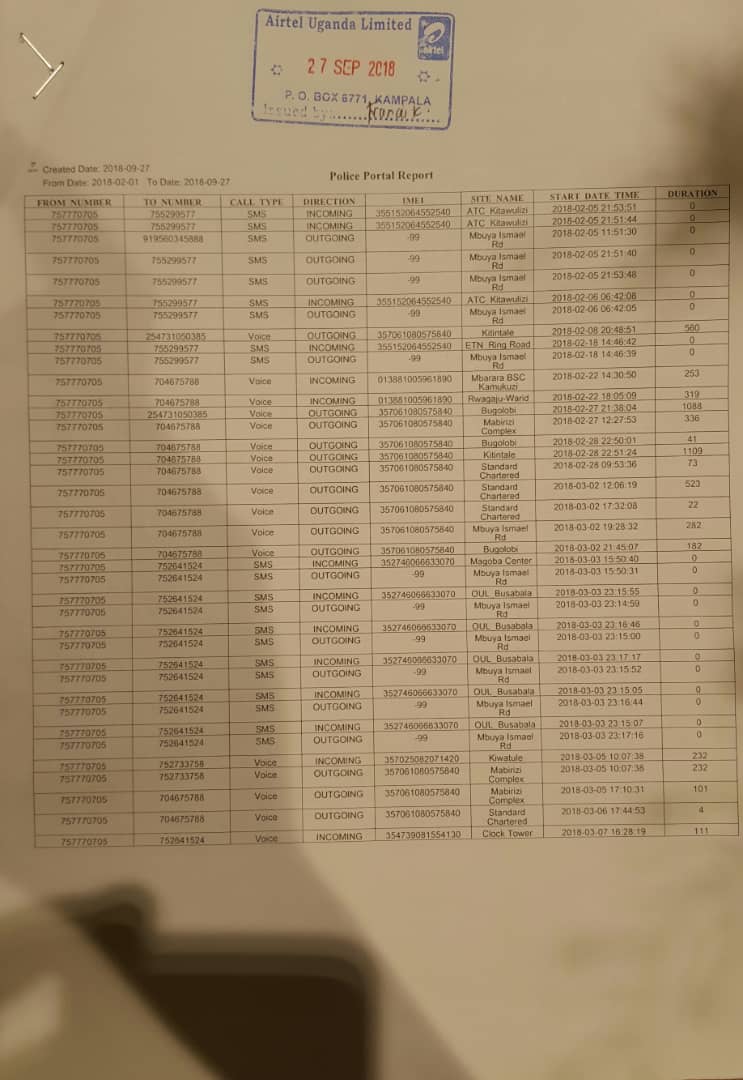
It has emerged that former Executive Director in charge of Supervision at Bank of Uganda, Justine Bagyenda lied to parliament that she had traveled out the country.

In a detailed telephone printout that has since leaked, Bagyenda was at Mbuya as shown by the leaks and on that same day, she received several calls.

Bagyenda snubbed appearing before the appointments committee of parliament which is chaired by the Speaker Rebecca Kadaga to defend herself in order to be reappointed on the board of Financial Intelligence Authority (FIA). Bagyenda and other board members were supposed to appear before the committee for vetting after they were reappointed by Finance Minister, Matia Kasaija.

However, Bagyenda wrote to the committee indicating she had travelled out of the country. She decided not to make a show after it emerged that several people had petitioned the committee over her past record at both BoU and at FIA.

Bagyenda is being investigated for illicit accumulation of wealth and property by both Inspectorate of Government and same FIA, a body she is supposed to superintend.

Stories Continues after ad

Journalist Eunice Nankwanga elected president of IAWR-Uganda chapter

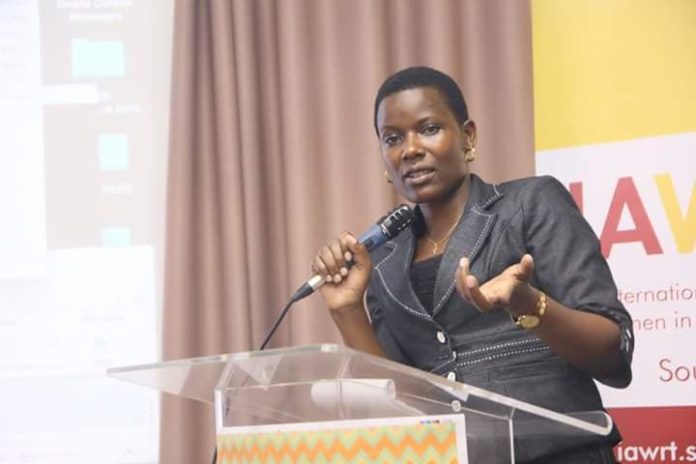
Ms Eunice Nankwanga

Journalist Eunice Nankwanga has been elected the President of International Association of Women in Radio and Television (IAWRT) Uganda chapter.

Nankwanga who worked with NBS TV, Kingdom Television and other organisations, is currently the spokesperson for Interreligious Council of Uganda (IRCU).

Remarking after the voting exercise, the outspoken and experienced journalist vowed to contribute on gender mainstreaming in media and mentorship saying mediocrity is not a choice. “It is time for a woman to reshape own position without being clustered into vulnerabilities,” she said at organisations headquarters in Nansana.

Since the platforms works for elevation of women in media, Nankwanga pledged to avails opportunities, share strategies and contribute towards the development of women in broadcasting and exchanging professional and technical knowledge and experiences.

IAWRT-Uganda chapter is a network of professional media practitioners working for gender equality in the media and a fairer treatment for women working in broadcasting journalism in Uganda.

It also provides a rich resource of knowledge and professional experience through its information exchange forums and professional media support to various organizations and individuals.

She will be working along six members to achievement her goals. The other members are:
1. Stella Teta -Vice President
2. Agnes Nantambi-Secretary
3. Rose Namale-Treasurer
4. Linda Kibombo- Board Member
5. Fleria Nalwanga – Board Member
6. Irene Birungi – Board Member
Outgoing members
1. Sarah Nakibuuka – President (now serves as Secretary to IAWRT international Board)
2. Eunice Nankwanga – Vice President
3. Joyce Bagala- Secretary
3. Irene Birungi- Treasurer
4. Rose Namale – Board Member
5. Agnes Nantambi- Board Member
6. Stella Teta- Board Member
7 – Prossy Nandudu- Board member

Stories Continues after ad

Gender gaps in African agriculture are holding back progress

Lady in her garden

Gender gaps in agriculture in Africa are holding back progress towards ending hunger and must be urgently addressed, the UN Food and Agriculture Organization’s Director-General José Graziano da Silva said at a joint event with the African Union (AU) on the margins of the UN General Assembly.

“We need to better recognize and harness the fundamental contribution of women to food security and nutrition. For that, we must close persisting gender gaps in agriculture in Africa,” Graziano da Silva said.

The Director-General called for better representation of women in governance mechanisms and decision-making processes, as well as adequate and equal access to land, financial resources, social protection programmes, services and opportunities for women in rural areas.

Addressing gender gaps

The findings and recommendations of the AU-FAO study The Regional Outlook on Gender and Agrifood Systems were presented at the event. The Outlook is based on an extensive review of existing statistics, gender audits of 38 National Agricultural Investment Plans and in-depth country gender assessments carried out in 40 countries.

The study’s recommendations call for a “gender data revolution” in the agri-food sector to inform sound policies and programmes, and elevating the gender benchmarks in planning, monitoring and accountability.

“We need to put in place gender targeted programmes that address women’s specific vulnerabilities but also their key role in household nutrition and resilience,” Graziano da Silva said.

“Evidence shows that when women are empowered, farms are more productive, natural resources are better managed, nutrition is improved, and livelihoods are more secure,” he added.

The backbone of rural production

In some African countries, women account for up to 60 per cent of the labour force in family farming. They are largely responsible for agricultural activities such as growing vegetables, preserving harvests and raising small ruminants such as sheep and goats. Women are also responsible for family nutrition through the preparation of meals.

Closing productivity gaps could increase food production and consumption by up to 10 per cent and reduce poverty by up to 13 per cent.

If women have the same access to skills, resources and opportunities as men, they can be powerful drivers in the fight against hunger, malnutrition and poverty. Empowering women in agriculture, value chains and trade will accelerate the achievement of the Malabo Commitments and the Sustainable Development Goals

FAO and UN Women: building momentum on gender equality

On the sidelines of the event, FAO Deputy Director-General Maria Helena Semedo met with UN Women’s Deputy Executive Director Asa Regner.

UN Women recently commended FAO for its achievements so far in gender equality. In 2017, FAO met or exceeded 93 per cent of all performance indicators under the UN System-wide Action Plan on Gender Equality and the Empowerment of Women.

“FAO recognizes the importance of gender equality and women’s empowerment – both within the Organization and in our work where gender is a major priority. We know that when women have decision-making power, all of society benefits,” Semedo said.

“The partnership between UN Women and FAO has proven especially fruitful in turning words into concrete action. I look forward to continued, strengthened cooperation between the two agencies to unlock the potential of rural women and girls as agents of change,” Regner said.

Equality in action

FAO and partners are providing technical support to many African countries in order to empower rural women. One example is the Joint Programme on Accelerating Progress towards the Economic Empowerment of Women in Ethiopia, Liberia, Niger and Rwanda, implemented with the World Food Programme, the International Fund for Agricultural Development and UN Women. The Programme has already enabled more than 40,000 women to receive training on improved agricultural technologies, and aims to enhance their access to financial services and markets.

Stories Continues after ad