Stanbic Bank
Stanbic Bank
27.3 C
Kampala
Stanbic Bank
Stanbic Bank
Home Blog Page 1490

Uganda’s government is afraid of the country’s youth

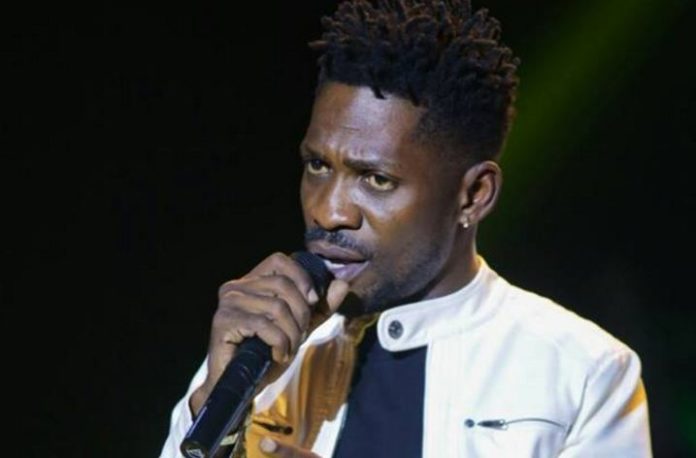
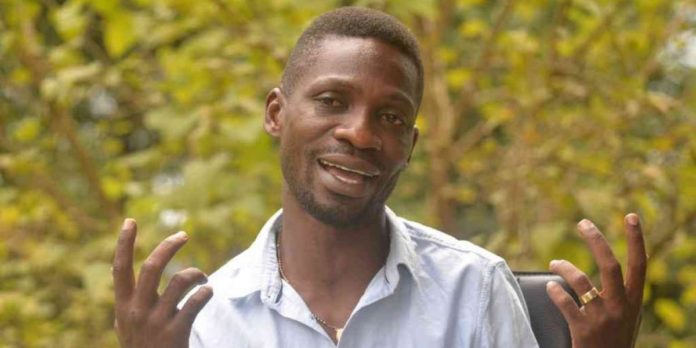
MP Robert Kyagulanyi

By Robert Kyagulanyi a.k.a Bobi Wine

The past month has thrust Uganda into a rare spot on the front page of global news. At first glance, the reason seems unsettling: reports abound of torture, detentions, brutal repression of protests and crackdowns on freedoms. But look deeper, and this is a good news story.

After 32 years in power, President Yoweri Museveni’s government is for the first time shaking in its boots. Not because of me, not because of any opposition member, but because of the millions of young Ugandans who know they deserve better, and are now demanding better.

This is the cause that last year forced me out of the comfort of show business as a musician and into the political sphere. Growing up, I was never interested in politics. I was only an artiste doing my music. But as Museveni stayed longer and his corrupt regime started attracting scrutiny, his government became even more repressive, and the abuse of power became blatant.

I started feeling that no matter how much I achieved as an individual, I would not enjoy my dignity as a citizen if the political question was not resolved and the power returned to the people of Uganda.

The 12 months since have been the most trying of my life. For daring to advocate for a 21st century Uganda, I’ve been charged with treason, imprisoned and tortured. The injuries I’ve sustained have required medical care from specialists, but others, such as the Hon. Francis Zaake, have suffered even worse.

Since I traveled to the United States for medical care, the ensuing crackdown has gotten worse. Friends from the United States who are known to work with me on charity projects have been deported from Uganda. Many of our supporters have been kidnapped by some military operatives, brutalized and illegally detained. There is no peace in the ghetto. The military police maintains a 24-hour presence in every corner, waiting to harass anyone who protests against my mistreatment. These past few weeks, the world watched as security agencies responded to peaceful protesters and journalists in Kampala with heavy violence and cruelty.

I am fortunate enough to have a platform to bring attention to what is happening, but I have not seen the worst that this government can dole out. So many others have endured far worse at the hands of the state, some left permanently maimed, some not surviving to tell the tale, and all remaining voiceless. What happened to me is no aberration in today’s Uganda, which is why returning to my former life as a musician is no longer an option.

Museveni took power in 1986, on a day that was immediately termed “Liberation Day” in Uganda, but has since come to represent the exact opposite. Coming into office after a bloody civil war capping decades of tyranny, Museveni promised Ugandans change, development and democracy. Instead, he has brought us corruption, looting of public funds, systematic violations of human and civil rights, and — by abolishing term limits, and then the presidential age limit — an attempt at perpetual rule. He has become precisely what he fought against.

When people are allowed to speak, allowed to protest, to organize; when terms are limited and elections are transparent; when the press is free and officials are held accountable, there are no Musevenis. This is why we are seeing increasing censorship — including blackouts of broadcasts by Voice of America, among other heavy-handed attempts to keep Ugandans in the dark.

Ugandans who aren’t letting desperate attempts to silence them succeed. Ugandans who see peaceful transitions of power across the rest of the continent and wonder why they’re forced to live a century behind. Ugandans who read the news and see progress in international headlines and regression in domestic headlines. Ugandans who hear constantly about “Africa’s future,” and wonder whether they’ll be allowed to take part.

Those Ugandans are coordinating both online and in the streets like never before. They are organizing among themselves on social media, becoming amateur investigative journalists, exposing the brutality of the regime, fighting against nightsticks and rifles through tweets and petitions. They are following debates in parliament as they would Premier League matches, and the more their political consciousness develops, the more tenuous Museveni’s grip on power becomes.

It is no coincidence that the government last year banned my song, called “Freedom,” for that is exactly what Museveni sees as his greatest threat. True freedom for Ugandans — access to information, the right to a voice — would spell the end of this government. With every new crackdown, with every journalist arrested, with every protest quashed by gunfire, with every activist tortured, Museveni merely strengthens our resolve. The tides are shifting in Uganda.

Indeed, three-quarters of Ugandans have known no president but Museveni; we have the second-youngest population in the world. The country’s youth is rejecting the division that dictator after dictator has used to hold onto power. Provincialism and tribalism are becoming less powerful tools by the day. And the government is patently aware.

Most importantly, the change that Ugandans increasingly demand will be the first in our country’s history to come via the ballot box. Museveni may not have been the first leader to take power by force, but he will be the last.

And so, amidst the horrifying reports coming out of Uganda as the government becomes more desperate, know that this is ultimately a good news story. Young Ugandans are demanding change; they’re demanding freedom. And for the first time, it’s within reach.

Robert Kyagulanyi (“Bobi Wine”) is a musician and an independent Member of Parliament representing Kyaddondo East Constituency.

Stories Continues after ad

Justice Bamugemereire to explain hefty allowances to KCCA council

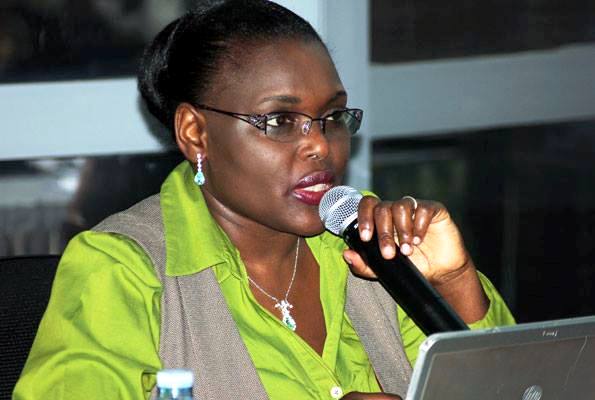
Justice Bamugemereire

Kampala Capital City Authority council chaired by the Lord Mayor, Erias Lukwago has resolved to examine, the hefty allowances that KCCA Executive Director Jennifer Musisi gave Justice Catherine Bamugemereire while she chaired the tribunal that investigated allegations of misconduct on the part of Mr Lukwago.

Lukwago told the press last evening that assembly will convene in October to deliberate the audit report into the expenditures of Justice Bamugemereire’s panel and the mismanagement of city markets.

“I commissioned and instructed the internal auditor to audit all issues to do with botched impeachment and I expect the report to be presented on that day (October 2),” Mr Lukwago said. He said the council and Ugandans would like to know how much Justice Bamugemereire’s team spent in investigating and impeaching him.

Lukwago also wants City Hall probed for the acquisition and running of Usafi and Wandegaya markets. He wants details made public for allowances to Justice Bamugemereire, the venues (Metropole Hotel and Serena Hotel), legal fees paid to the lawyers hired by Kampala Capital City Authority (KCCA) among others. He also wants to establish who determined allowances for Justice Bamugemereire.

In a letter dated September 5, Mr Lukwago instructed the KCCA Director of Internal Audit, Moses Bwire, to submit two reports to his office within one month.
“Pursuant to the provisions of Section 11 (1) (e) and (f), read together with Section 72 (2) (b) of the Kampala Capital City Authority Act 2011, you are hereby instructed to carry out a special value-for-money audit of all matters concerning the aforesaid botched impeachment of the Lord Mayor of Kampala, 2013 to-date,” Mr Lukwago’s letters reads.

Justice Bamugemereire was named by President Yoweri Museveni to head the KCCA tribunal and carryout an inquiry into whether the complaints that councillors had brought against Lukwago then held water and established that there was a prima facie case for the indictment process to proceed.
The expenditures of the commission that paved the way for the botched impeachment process of Lord Mayor Lukwago were not made public.
Lukwago wants the impending special audit to capture issues related to their management and administration of the markets, allocation and tenure of lock-ups, kiosks and open spaces; court cases; and the revenues generated since inception. The audit will also look into the court cases relating to the acquisition, administration and management of markets.

Lukwago further explained “We want to establish all the cases that were handled because up to now, they are telling me that all the cases are still pending, even when I demand what is due to me after winning cases,” Mr Lukwago said. Lukwago demands Shs560 million from the state.

He also wants the directors reduced from 10 to five. The directors and their deputies earn between Shs20m to Shs18m each.
He, however, declined to delve into the details of the proposed audit into Justice
Justice Bamugemereire has so far chaired two commissions of Inquiry and these are the Uganda National Roads Authority commission and now heading the Commission of Inquiry into land matters. Given the hefty allowances that come with chairing such commissions and tribunals, Justice Bamugemereire could probably be the richest judge as she is entitled to her monthly salary as a judge of Court of Appeal.
Bamugemereire who has asked for extension of the commission’s time into land matters two times has also faced it rough with Ministry of Finance officials led by Permanent Secretary Keith Muhakanizi who has on several occasions accused her of extravagance. She is on spot for busting investigating land related wrangles.

Stories Continues after ad

Youth Activists give Auditor General Thumps up. Call for more training of BOU staff

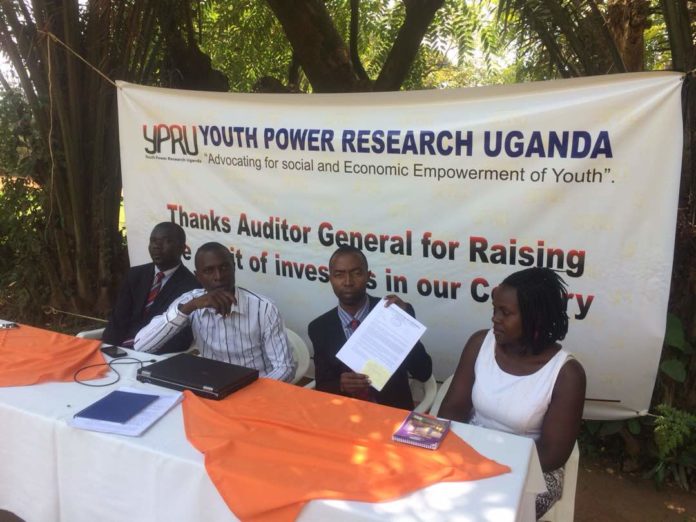
Youth Power Research Uganda youth address a press conference in Kampala today

The youth under their umbrella Youth Power Research Uganda have appreciated the Auditor General for his job in pointing out irregularities in the way Crane Bank was handled by Bank of Uganda.

The findings that the bank was irregular handed over to DFCU, the youth say, exonerates their earlier stand against bank of Uganda which the young people had accused of having acted in error.

“We are happy just because our investors have a place to go when their hard earned capital is defrauded by selfish government officials!

“The Auditor General has delivered on his mandate by releasing a 94 report about the irregular shut down of CB by Bank of Uganda of which we have been repeatedly demanding,” the youth said in a press statement.

They added, “The more we have rigorous systems that settles disputes for investors, the more we attract more investments in our country hence more employment for our youths and more taxes to our government.”

The Youth Power Research Uganda (YOPRU) objective is to be a cushion to investors in circumstances where they (feel) feel that they (investors) have been ripped off.

They help to alert the President and government departments through writing where by the President swiftly chips in to rectify the situation by alerting relevant bodies to take action.

“We do this with passion because we found out that also investors need to have people to advocate for them just like we have human rights bodies that defend for human rights victims.

“When we wrote to the President about how Ms Justine Bagyenda, Director Supervision(BoU) had precipitated the selling of CB at a paltry of only Ugx 200b in 2016 compared to CB Assets which were Ugx1.8 trillion in 2015, just one year after, Ms Bagyendas contract was terminated there and then, which brought some sigh relief. As you can see this was broad day robbery against our investors,” the youth, through their leader Ben Sebuguzi, enumerate some of their successes.

He adds, “Now that AG, Mr John Muwanga has sent a report to parliament about the flaws and misuse of funds of about Ugx400b, we hope that COSASE committee will use that report as a lead to getting more culprits that sabotage our investors.

“Lastly, we implore the Inspectorate of Government, also another agency that promotes transparency to also bring out its findings instead of dilly dallying because time is money.”

He further adds, “Our investors’ hands have been tied because they lost trust from their investment partners here and abroad. We have been informed from reliable sources that this impasse alone has stopped about $10BUSD in form of Foreign Direct Investments to come to our country as a result of tainting the good image of our investors.”

To avoid mistakes in future, the youth recommend that the ministry takes Central Bank staff for more training in modern management practices in Accountability and Transparency because the Central bank out to be where sanity begin and spreads to other institutions.

Stories Continues after ad

Bobi Wine vows to defy police orders when he arrives at Entebbe Airport

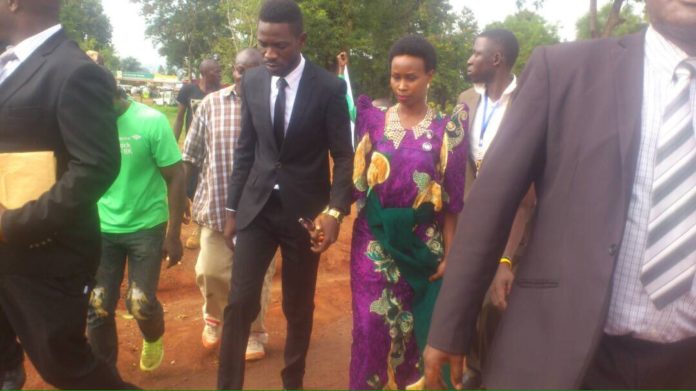
VICTORIOUS: Robert Kyagulanyi aka Bobi Wine and his wife Barbie Kyagulanyi.

Kyadondo East Member of Parliament Robert Kyagulanyi aka Bobi Wine has vowed to defy police’s directives issued today, arguing they officers have no business of dictating who will receive him from Entebbe International Airport and who cannot as well as where to go and where he cannot go.

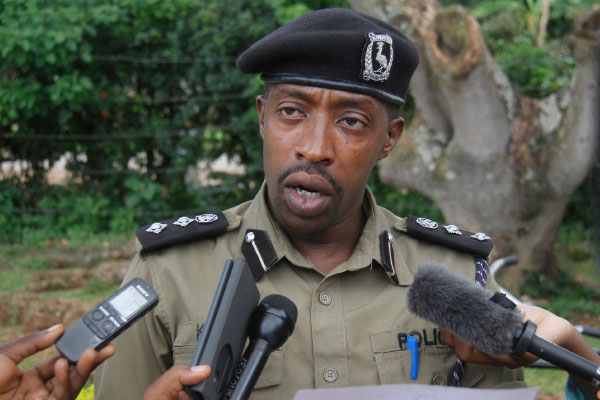
Earlier, quoting the Public Order Management Act (POMA), police officials led by the force’s spokesperson Emilian Kayima, issued guidelines that will be followed as Bobi Wine leaves the airport.

Kayima, said authorities have intelligence that a countrywide mobilization of different groups of people are being distributed with Red T-Shirts and posters and calling upon them to participate in processions and assemblies to receive him from Entebbe airport.

“Bobi Wine will be received at Entebbe International Airport by his immediate family and will be availed security from the airport to his home,” he said.

However in a social media post, Kyagulanyi said, “I wonder why police officers allow themselves to descend so low? They now want to decide who picks me and where I go upon arrival? Well, for your information, no single family member will receive me at the airport, I will find them home coz I know where home is.”

He said that he will be received by friends, colleague leaders and artistes. And proceed to see her sickly grandmother at Najjanankumbi. “I will then head to Kamwokya for lunch with my family (brothers and sisters) before I go to my home in Magegere.

On August 31, Bobi Wine left Uganda for the United States seeking better treatment after being tortured by presidential guard of Special Forces command (SFC) during the Arua Municipality by-election mayhem which the then jailed candidate Kassiano Wadri emerged winner to replace late Ibrahim Abiriga as MP of that constituency.

Before flying to the US, Bobi Wine was produced before the General Military Court Martial and charged with illegal possession of fire arms which were later dropped and leveled with treason charges in Gulu magistrate’s Court. He is scheduled to reappear before the magistrate on October1.

His counterpart representing Mityana Municipality constituency still remains in India fighting for his life, having been bartered together with Bobi Wine by security agents, alongside several others, including civilians.

Stories Continues after ad

South Sudan body denies targeting individuals for prosecution

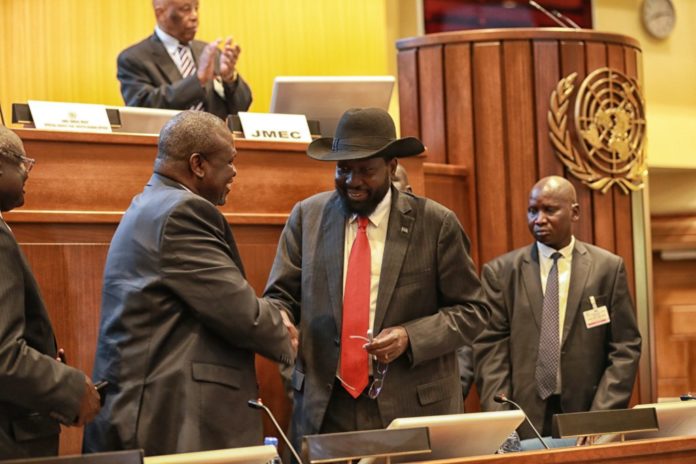
Dr. Riek Macha and President Salva Kiir after the signing ceremony.

(JUBA) – A South Sudanese entity as dismissed claims that its work, which involves naming all victims of the conflict and armed violence in the country, targets individuals responsible for the civil war has seen ten of thousand killed and millions displaced.

Remembering The Ones We Lost is a public memorial that aims to name all victims of the conflict and armed violence in South Sudan.

The organization compiles the names of all people who have died in armed struggle since 1955 to-date and generalized armed violence.

With help of volunteers, the organisation’s website allows individuals and communities to provide the names of people killed in armed conflicts through filling of the testimonial form, email, SMS and twitter. Volunteers then verify the information, starting with the victim’s name, age, sex, location, and whether they are confirmed dead or missing – before it is listed on the website, which has over 6,000 names.

“This unified and public recognition of individual lives being lost
through violence is accomplished through the collective efforts of
individuals, communities and institutions to name victims,” says Daud Gideon, the Executive Director of Remembering The Ones We Lost.

“This initiative hopes to bring attention to the shared suffering,
give additional meaning to cries for peace and be a tool for
understanding and reconciliation amongst South Sudanese individuals and communities”, he added.

The group’s mission, its constitution states, is to document and
preserve the names of the ones we lost, and build memorials across the country to honour the ones we lost, and remind the people of South Sudan to never again use violence to settle political difference.

“Memorialization is a process through which society acknowledges
violent and painful pasts and transforms them into tools for
understanding both historical and contemporary injustices,” Joseph
Amanya, one of the co-founders of the organization, explained.

He adds, “Memorialization has both private and reflective objectives and public and educational ones. On one hand, the acknowledgment of painful legacies and past can be seen as a form of ‘symbolic reparations’ that helps survivors in processes of healing”.

The group has, in the recent past, organised public readings of
victims’ names in the capitals of South Sudan as well as Kenya and on various radio stations to grant dignity to the deceased and to promote reconciliation between communities in the world’s youngest nation.

In December 2014, for instance, vigils in which names were read out aloud were held in the South Sudanese capital, Juba and in Nairobi, Kenya. Similar memorialization activities, including reading of names on radios and publications in newspapers, are expected to continue.

South Sudan became an independent country in 2011 after decades of war, lengthy negotiations and a referendum to secede from Sudan. In December 2013 armed conflict broke out between forces loyal to President Salva Kiir and those allied to Riek Machar. The civil war has killed tens of thousands of people, displacing millions.

Stories Continues after ad

Police warns Bobi Wine supporters ahead of his return

Police has warned MP Robert Kyagulanyi Ssentamu aka Bobi Wine supporters a head of his return from United States where he had gone for further medical attention.

Kyagulanyi who on August 31 set his foot for medical treatment in USA is averred to have been tortured by presidential guard of Special Forces command (SFC) during Arua mayhem as they proceeded from holding their final rallies ahead of the local municipality by-election won by the then jailed candidate Kassiano Wadri.

According to police Spokesperson Emilian Kayima, they have intelligence of country wide mobilization of different groups of people who are being distributed with Red T-Shirts and posters calling upon them to participate in processions and assemblies to receive him from Entebbe Airport.

“Members of the public ought to be reminded that public assemblies and processions are regulated by the provisions of the Public Order Management Act (POMA) 2013. No member of his family has worked out a mechanism for these intended processions and assemblies as provided for in the law,”

As a result, Police says they are unlawful and would disrupt normal business activities including movement of people to and from the airport. A section of parents and members of the public are very concerned at such unlawful, unregulated activities.

Therefore, in order to maintain peace, law and order, on his arrival, Bobi Wine will be received at Entebbe International Airport by his immediate family and will be availed security from the airport to his home.

“Police will further ensure law and order for all road users. There shall be no unlawful rallies, processions and assemblies. Any activity that entails a public gathering must be in conformity with the provisions of Public Order Management Act (POMA).The MP is expected to comply with the traffic laws and regulations,”

Stories Continues after ad

Uganda ready to receive Bobi Wine on Thursday

Bobi Wine

Kyadondo East Member of Parliament, Robert Kyagulanyi aka Bobi Wine has confirmed he will Thursday tomorrow jet in from the United States (US)where he had gone for further medical treatment following his battering by security operatives of the special forces command (SFC) during a by-election of MP for Arua Municipality .

Kyagulanyi who on August 31 arrived in the US for treatment was battered alongside other politicians in the by-election that was won by the then jailed candidate Kassiano Wadri, replacing the late Ibrahim Abiriga who was in June gunned down alongside his brother Said Buga in Matuga Wakiso district as he returned home.

Bobi Wine would later be charged of illegal possession of fire arms and rounds of ammunitions but the charged were later dropped by the Chairman of General Court Martial Lt Gen Andrew Guti. He was then charged with treason along other 33 suspects who were arrested by the security operatives.

Bobi Wine’s torture and detention would later receive attention from local and international media houses such as Aljazeera, BBC, CNN, individual politicians, European Union, the US and activists, all condemning the torture the security operatives inflicted on Bobi Wine and other politicians like Francis Zaake who is still fighting for his life in India.

Bobi Wine who a section of Ugandans as being immature in outlining key issues of national development, blames President Yoweri Museveni’s government for oppressing his opponents, abuse of human rights and ignoring the youth who are the majority, according to the Uganda Bureau of Statistics which manages national statistics.

In a media briefing at press club in Washington DC, his internationals layer Robert Amsterdam called on USA to suspend military funding to security forces in Uganda over the averred tortured claims of opposition politicians. Since then, government of Uganda has denied the allegations saying the security forces were protecting the President Museveni from the group which attacked his motorcade.

Other suspects like Atiku Shaban, Mityana Municipality MP Francis Zaake Butebi remains admitted at their respective medical facilities of Mengo and anonymous hospital in India.

Zaake and other 33 suspects including his body guard Eddy Mutwe who is currently under incarceration in Gulu Prison, are expected to appear before Gulu Magistrates Court on October 1, for mention of their case.

And yesterday government spokesperson Ofwono Opondo said on his arrival from US, Kyagulanyi would be accorded VIP services to his home.

Meanwhile the police on Wednesday said no any fan of Bobi Wine or politician would be allowed to line up on the Entebbe Kampala Highway to welcome their hero, arguing that it procession would disrupt traffic flow alongside that road as well as disrupting the peace of others.

According to Police Spokesman Emilian Kayima, Bobi Wine will be accorded security and be driven straight to his home.

The mistreatment of Bobi wine and other politicians by the military has tainted Uganda’s image especially Museveni’s government that claims to be at the forefront of protecting individual human rights and freedoms.

Stories Continues after ad

StarTimes threaten to cancel multi-billion Uganda Premier League deal

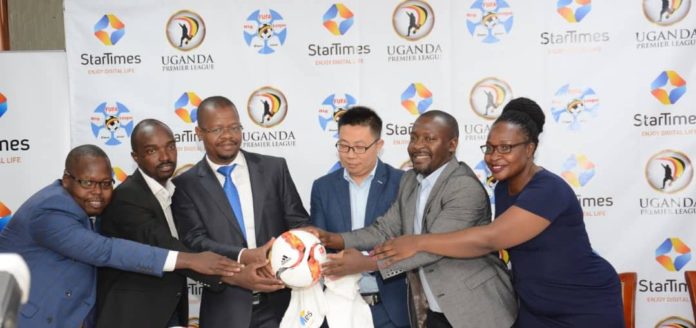
At FUFA house during the unveiling of StarTimes UPL deal in August 2018

Pay TV Company StarTimes has threatened to terminate their 10-year deal with the Uganda Premier League due to Express Football Club getting GOtv as their shirt sponsors.

The Red Eagles are set to officially announce GOtv as their new shirt sponsors and the Chinese Pay TV Company say the club sponsors are a direct competitor.
StarTimes secured the naming and broadcasting rights of the Uganda Premier League and FUFA Big League for a period of 10 years in a deal worth US$7.24 million (26.5B Ugx) in August this year.

Express FC chairman, Kiryowa Kiwanuka, said they won’t be afraid by any threats from the new league sponsors saying the aim should be working together to develop the game of football in Uganda.
“We Express FC Uganda have made every effort to remain quiet, civil and professional against all manner of provocation. While StarTimes Uganda has its responsibility to its shareholders we also have a responsibility to Express FC Uganda. We should try to work together for football” the Express FC chairman tweeted.

GTV, Super Sport and Azam TV are the previous TV companies that have broadcasted Uganda’s top flight football league.
The 2018/19 Uganda Premier League season is set to kick off on Friday, 28 September, 2018 but the fixtures have not yet been released.

Stories Continues after ad

The Stock Exchange of Mauritius lists the first Pan-African Sovereign Bond

Stock Exchange of Mauritius

The Stock Exchange of Mauritius (SEM) on September 19, launched the first Pan-African Sovereign Bond Exchange Traded Fund (ETF) known as the African Domestic Bond Fund (ADBF).

ADBF, which is managed by MCB Investment Management Co. Ltd, is a USD-denominated ETF, structured as an open-ended Collective Investment Scheme that seeks to replicate the AfDB/AFMI Bloomberg African Bond Index 25% Capped.

The ETF invests in African currency denominated debt obligations issued or guaranteed by an African Government, and will initially comprise debt obligations from South Africa, Egypt, Nigeria, Kenya, Namibia, Botswana, Ghana and Zambia.

ADBF is the result of a partnership between the AfDB, which has committed a total investment of USD 25 million to the fund, and MCB Investment Management Co. Ltd, a subsidiary of MCB Capital Markets, with the aim of promoting the development of local financial markets throughout the African continent.

ADBF constitutes a new product offering which provides investors with a broad exposure to African sovereign debt securities. The listing of ADBF on SEM confirms the attractiveness of the Exchange as a multi-currency (USD, Euro, GBP, ZAR and MUR) capital-raising, listing and trading platform for African issuers. This listing is also in line with SEM’s internationalisation strategy and its multi-asset class focus.

Stefan Luis Nalletamby, Director of African Development Bank Group:
“The launch of ADBF shows the African Development Bank’s commitment to supporting innovative solutions that will render capital markets more attractive to both African domestic and international investors. This fund is part of the Bank’s effort to help catalyse and mobilise African domestic resources through our domestic capital markets in order to further strengthen Africa’s financial sustainability. We are extremely happy to see the enthusiasm and support we are receiving from institutional and retail investors.”

Rony Lam, CEO of MCB Capital Markets said: “MCB Capital Markets is a pioneer in the pan-African fixed income investment universe and is proud to provide global investors with easy access to this asset class through a liquid and cost-effective vehicle.”

ADBF, he said, attests to MCB’s commitment to the development of local currency debt markets in Africa, the quality of our investment management capabilities and the attractiveness of SEM as a listing venue for specialist Africa focused investment products.

Sunil Benimadhu, Chief Executive of Stock Exchange of Mauritius said: “The SEM welcomes the listing of the first Pan-African Sovereign Bond ETF on its platform. We would like to thank the African Development Bank and MCB Capital Markets for choosing the SEM as a listing venue for this innovative product.”

He said that the listing of ADBF constitutes an important milestone in the positioning process of the SEM as an attractive multi-asset class international Exchange which is today recognised as a compelling platform for the listing and trading of a growing variety of products from African issuers.

Stories Continues after ad

WHO calls for urgent action to end TB

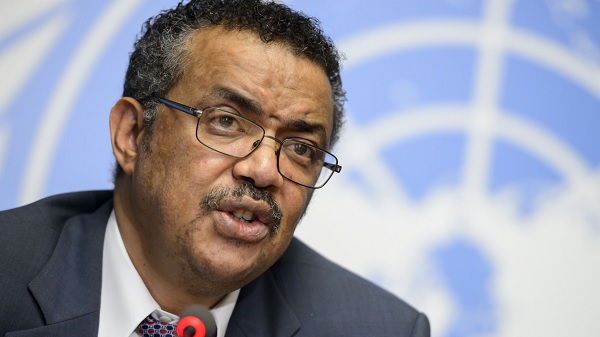
Dr.Tedros Adhanom

Fewer people fell ill and died from tuberculosis (TB) last year but countries are still not doing enough to end TB by 2030, warns the World Health Organization (WHO).
Although global efforts have averted an estimated 54 million TB deaths since 2000, TB remains the world’s deadliest infectious disease.

WHO’s 2018 Global TB Report, released in New York today, calls for an unprecedented mobilization of national and international commitments. It urges political leaders gathering next week for the first-ever United Nations High-level Meeting on TB to take decisive action, building on recent moves by the leaders of India, the Russian Federation, Rwanda, and South Africa. Nearly 50 Heads of State and Government are expected to attend the meeting.

“We have never seen such high-level political attention and understanding of what the world needs to do to end TB and drug-resistant TB, said Dr.Tedros Adhanom Ghebreyesus, WHO Director-General. “We must capitalize on this new momentum and act together to end this terrible disease.”
To meet the global target of ending TB by 2030, countries need to urgently accelerate their response – including by increasing domestic and international funding to fight the disease. The WHO report provides an overview of status of the epidemic and the challenges and opportunities countries face in responding to it.

Status of the TB epidemic
Overall, TB deaths have decreased over the past year. In 2017, there were 1.6 million deaths (including among 300 000 HIV-positive people). Since 2000, a 44 per cent reduction in TB deaths occurred among people with HIV compared with a 29 per cent decrease among HIV-negative people;

Globally, an estimated 10 million people developed TB in 2017. The number of new cases is falling by 2 per cent per year, although faster reductions have occurred in Europe (5 per cent per year) and Africa (4 per cent per year) between 2013 and 2017;

Some countries are moving faster than others – as evidenced in Southern Africa, with annual declines (in new cases) of 4 per cent to 8 per cent in countries such as Lesotho, Eswatini, Namibia, South Africa, Zambia, and Zimbabwe, thanks to better TB and HIV prevention and care. In the Russian Federation, high level political commitment and intensified TB efforts have led to more rapid declines in cases (5 per cent per year) and deaths (13 per cent per year)
Drug-resistant TB remains a global public health crisis: In 2017, 558 000 people were estimated to have developed disease resistant to at least rifampicin – the most effective first-line TB drug. The vast majority of these people had multidrug-resistant TB (MDR-TB), that is, combined resistance to rifampicin and isoniazid (another key first-line TB medicine).
WHO estimates that a quarter of the world’s population has TB infection.

The TB response: Challenges and opportunities
Access to care and prevention:
Underreporting and under-diagnosis of TB cases remains a major challenge. Of the 10 million people who fell ill with TB in 2017, only 6.4 million were officially recorded by national reporting systems, leaving 3.6 million people undiagnosed, or detected but not reported. Ten countries accounted for 80 per cent of this gap, with India, Indonesia and Nigeria topping the list.
Less than half of the estimated one million children with TB were reported in 2017, making it a much higher gap in detection than that in adults.
Treatment coverage lags behind at 64 per cent and must increase to at least 90 per cent by 2025 to meet the TB targets.
To urgently improve detection, diagnosis and treatment rates, WHO, the Stop TB Partnership and the Global Fund launched the new initiative in 2018, which set the target of providing quality care to 40 million people with TB from 2018 to 2022.

Only around half of the estimated 920,000 people with HIV-associated TB were reported in 2017.Of these, 84 per cent were on antiretroviral therapy. Most of the gaps in detection and treatment were in the WHO African Region, where the burden of HIV-associated TB is highest.
Only one in four people with MDR-TB were reported to have received treatment with a second-line regimen. China and India alone were home to 40 per cent of patients requiring treatment for MDR-TB, but not reported to be receiving it. Globally, MDR-TB treatment success remains low at 55 per cent, often due to drug toxicity making it impossible for patients to stay on treatment.

A month ago, WHO issued a Rapid Communication on key changes to treatment of drug-resistant TB based on the latest scientific evidence? These changes should result in better treatment outcomes and more lives saved. WHO is already working with countries and partners to roll out these changes.

The Organization predicts that at least 30 million people should be able to access TB preventive treatment between 2018 and 2022, based on new WHO guidance. Although preventive treatment for latent TB infection is expanding, most people needing it are not yet accessing care. WHO strongly recommends preventive treatment for people living with HIV, and children under five years living in households with TB. Related new guidance was issued by WHO in 2018, to facilitate greater access to preventive services for those who need it.

Financing for implementation and research
One of the most urgent challenges is to scale up funding. In 2018, investments in TB prevention and care in low- and middle-income countries fell US$3.5 billion short of what is needed. The report flags that without an increase in funding, the annual gap will widen to US $5.4 billion in 2020 and to at least US $6.1 billion in 2022.A further US $1.3 billion per year is required to accelerate the development of new vaccines, diagnostics and medicines.

“It is unacceptable that millions lose their lives, and many more suffer daily from this preventable and curable disease,” said Dr Tereza Kasaeva, Director of WHO’s Global TB Programme. “We need to join forces to root out this disease that has a devastating social and economic impact on those who are “left behind”, whose human rights and dignity are limited, and who struggle to access care. The time for action is now.”

WHO is guiding national and global actions to reach everyone with care, including those with TB, through a transformative health agenda and push towards Universal Health Coverage. This includes proactive engagement with civil society and other key stakeholders to jointly help countries get on track to end TB.

Stories Continues after ad