Stanbic Bank
Stanbic Bank
27.7 C
Kampala
Stanbic Bank
Stanbic Bank
Home Blog Page 1491

Global medical body urges Kadaga to ensure victims of Arua by-election chaos get treatment

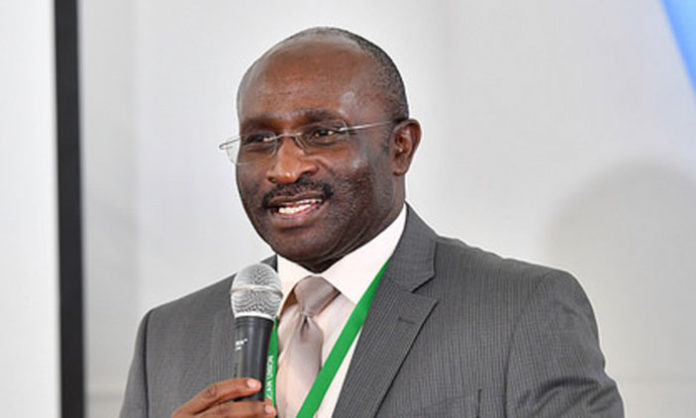
Dr. Yoshitake Yokokura

The World Medical Association (WMA), the global federation of national medical associations has written to the Speaker of Parliament of Uganda, Rebecca Kadaga, to ensure that all victims who were tortured by security forces in the Arua Municipality by-election get treated by the medical personnel of their choice without government repression.

“We call on you to act as a matter of priority within your mandate to ensure effective access to comprehensive health care to those in need and to allow and ensure that our colleagues can follow their ethical duties to provide medical care in an undisturbed and professional manner without intimidation and repression,” said WMA’s president Dr. Yoshitake Yokokura in a letter dated September 6.

“Some of the victims were arrested while on their way to be examined by the physician of their choice, in violation with medical ethics. One essential ethical principle is the right for every patient “to be cared for by a physician whom he/she knows to be free to make clinical and ethical judgements without any outside interference,” he said.

Dr Yokokura wrote the letter following a complaint to the association by the Uganda Medical Association (UMA).

“Our member, the Uganda Medical Association, has drawn our attention to the pervasive practice of torture in Ugandan detention places,” he said adding that the global association is taking keen interest in MPs Robert Kyagulanyi Ssentamu aka Bobi Wine and Francis Zaake, who currently are abroad seeking medical attention.Bobi Wine is expect to return from the USA tomorrow.

“These two Members of Parliament were both arrested at the airport as they were heading abroad for medical treatment,” he said.

Dr Yokokura in the letter also mentions other victims that were tortured and mistreated by the security agencies as they tried to get medical attention. “Ms. Night Asara and Janet Abola were assaulted during arrest in Arua, and while in custody. They are victim of attempted rape during custody in Gulu Central Police Station § Mr. Shaban Atiku collapsed in police cells and in court. He was denied access to medical attention,” he said.

He said: “Torture and other cruel or degrading treatments are one of the gravest violations of international human rights law. It destroys the dignity, the essence of the human being. As physicians, we are revolted by the devastating consequences of this practice for victims, their families and society as a whole, with severe physical and mental injuries.”

He said torture is unconditionally prohibited by the United Nation Convention against Torture and Other Cruel, Inhuman or Degrading Treatment or Punishment that Uganda ratified in 1987, hereby establishing its consent to be bound by the provisions of the Convention.

“No exceptional circumstances whatsoever, whether a state of war or a threat of war, internal political instability or any other public emergency, may be invoked as a justification of torture” (article 2.2 of the Convention).”

Uganda is one of the only10 African countries with anti-torture legislation. We therefore urge you to pursue in this direction and be an inspiring model for other countries by taking immediate and effective measures to prevent and stop such intolerable shaming practices in your country.

“Furthermore, we were informed that the above-mentioned victims are all denied access to specialised health care, while being in pain and in urgent need of care. “The right of everyone to the enjoyment of the highest attainable standard of physical and mental health is a fundamental human right enshrined in article 14 of the International Covenant on Economic, Social and Cultural rights that Uganda has ratified in 1976,” he said.

Adding that any persons deprived of liberty has the right to access to a qualified health professional who can provide health care in compliance with medical ethics, including the principles of confidentiality, autonomy and informed consent. “We draw your attention as well on the United Nations Standard Minimum Rules for the Treatment of Prisoners (the Nelson Mandela Rules) revised by the UN General Assembly in December 2015 and which includes a comprehensive guidance on healthcare in prison,” he said.

Stories Continues after ad

Continental Free Trade Area will catalyse transformation of the continent

Hippolyte Fofack

By Hippolyte Fofack

In a world in which competitiveness is a key determinant of sustainable growth and trade performance, consolidating existing but fragmented economic communities has become essential. One major example is the Continental Free Trade Area, which will establish a common market in Africa and catalyse economic transformation and effective integration of the region into the global economy.

Earlier this year, 44 of the 55 African Union states signed up to the CFTA agreement. Five additional countries, including South Africa, joined during the 31st Ordinary Session of the Assembly of the African Union held in Mauritania in July 2018. The 49 signatories account for more than 86 per cent of total African trade and around 77 per cent of the continent’s GDP. Beyond enhancing the competitiveness of African economies, the CFTA has the potential to buttress the forces for convergence in the world economy.

The CFTA has emerged at a time when the impact of competitiveness on trade and development has increased significantly, reaching stratospheric levels in the era of globalisation. Several factors contributed to this emphasis on competitiveness, not least the increasing role of innovation and technological content of manufactured goods, as well as globalisation of economic opportunities and trade.

The CFTA is also coming together at a time of creeping protectionism, when leading economies are adopting mercantilist systems that treat the size of trade surpluses as a measure of economic performance. This has been illustrated recently by the escalation of punitive tariffs and retaliations, trade wars between large economies and the marginalisation of the World Trade Organisation as more countries move away from the rules-based system that has enabled robust, sustainable and free-fl owing global trade.

In this beggar-thy-neighbour global economic landscape, competitiveness has perhaps become even more important for countries striving to integrate into the global economy. Only the most competitive are expanding their share of the global market. These economies have emerged as ‘active globalisers’, those most able to take advantage of the benefits of globalisation to sustain their growth and trade performance.

In contrast, the least competitive economies have become ‘passive globalisers’, victims of globalisation that supply the raw materials and natural resources required to expand the manufacturing output of active globalisers. Passive globalisers are disproportionately more vulnerable to the adverse effects of globalisation.

These include such risks as the increased speed of global transmission of negative shocks, swings in commodity prices and longterm deterioration in the terms of trade for commodities. Over time, these risks have stifled the aspirations of lagging nations, most of which are locked in vicious cycles of excess growth volatility and structural balance of payment crises.

In Africa these risks have been exacerbated by a host of constraints to competitiveness and trade. These include non-tariff and regulatory barriers such as border delays, burdensome customs and inspection procedures, as well as multiple licensing regimes and the rise of national transit bonds along key routes.

In addition to a large financing gap and infrastructure deficit, African businesses have had to contend with these constraints that raise transaction costs and limit the movement of goods, services, labour and capital across borders. As a result, trading among African countries has been more costly and time-consuming than in any other region of the world.

While the average cost of importing a container within the region is around $2,500, the same costs $900 in the East Asia and Pacific region and $1,500 in Latin America and the Caribbean. Removing barriers Although the structure of production and the direction of trade inherited from the colonial model of resource extraction have played major roles, the prevalence and scale of non-tariff barriers and market fragmentation help to explain why African countries trade more with the rest of the world than with each other.

Intraregional trade accounts for around 15% of total African trade, against 68% in Europe and 58 per cent in Asia. Uniting Africa through the CFTA will establish one of the world’s largest free trade areas in terms of number of countries, people and market size. The agreement will cover a market of 1.2 billion people with a GDP of $2.5 trillion and combined consumer and business spending of more than $4 trillion. This will help raise the competitiveness of African economies and enhance their integration into the global economy as active globalisers.

Measures such as cross-listing firms on different stock markets and the establishment of credit reference bureaus could raise access to finance in a region where fragmentation has impeded private sector growth. Besides the implications for financial markets, consolidating regional economic communities to establish one of the world’s largest free trade areas could boost the competitiveness of African economies through other channels. These include technology transfers, crossborder investment and industrial development in a context of increasing economies of scale, diversification of sources of growth and the expansion of intra-African trade.

Preliminary estimates of the expected benefits of the CFTA for trade performance and regional integration are positive and significant. Intra-African trade, largely dominated by industrial products and manufactured goods, could increase by more than 52 per cent above the baseline a decade into the implementation of the CFTA.

It could even double over the same period if the reforms envisaged under the CFTA are complemented by robust trade facilitation measures. Economies of scale created by the establishment of a larger continental market could lower production costs and encourage inward foreign direct investment and cross-border investment. The benefits of this would include greater technology transfers and strengthened regional value chains in a context of expanding intraregional trade in intermediate and capital goods.

‘Factory Africa’

The development of regional value chains would raise African economies’ competitiveness and enhance their integration into the global economy. Data show that, despite the increased outsourcing of activities involved in the production of a good to several countries, much of the value-added distribution in global value chains remains in regional blocs.

‘Factory Europe’, ‘Factory North America’ and ‘Factory Asia’ are the regions where these value chains are primarily concentrated. In time, the emergence of ‘Factory Africa’ and the improved integration of Africa-based businesses into the global economy will help set the world on a path towards truly global value chains. Realising Africa’s potential has been markedly difficult, partly as a result of artificial trade barriers and the fragmentation of markets inherited from the colonial development model.

The CFTA will help overcome these limitations and boost the competitiveness and integration of African economies. Making this transition will depend on the speed and ability of countries and emerging corporate leaders to overcome hurdles on a path towards structural transformation.

Regardless of geography, technological advances as well as improved infrastructure have been fundamental for cost reduction and efficiency gains in the development of regional and global value chains. African countries must more vigorously adopt these innovations.

The benefits of regional integration will be greatly enhanced if the CFTA principles are supplemented by non-border reforms. These should include measures to liberalise services trade, investment provisions, intellectual property rights protection and the harmonisation of standards and regulations.

These are all essential for reducing trade costs between countries within the region. Beyond raising regional trade intensity, the CFTA could unleash forces for African dynamism and position the continent as a globally competitive export processing platform.

Hippolyte Fofack is Chief Economist of the African Export-Import Bank

Stories Continues after ad

Uganda champions standardisation of biomedical imaging equipment

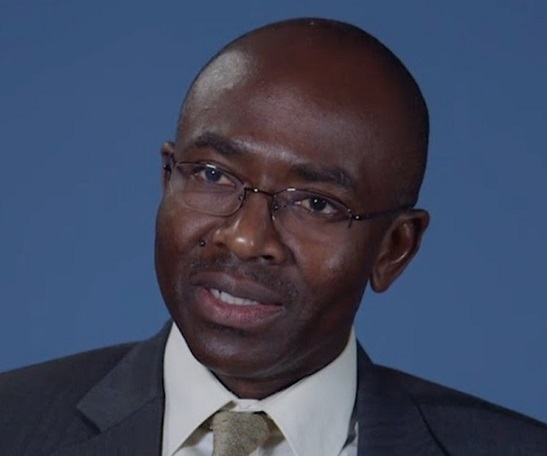
UNBS ED Dr. Ben Manyindo.

Uganda has emerged as a pioneer in Africa to champion standardisation of the latest technology used in biomedical imaging for diagnosis and subsequent treatment of various medical conditions.

Uganda, through its standards agency – the Uganda National Bureau of Standards (UNBS), is the only country in Africa that is part of 10 countries participating in the developing of ISO standards for equipment that use microbeams and x-rays to carry out diagnosis of various medical conditions. At the national level, the UNBS Technical Committee on Metrology (UNBS TC 08) has taken the lead on this matter.

Consequently, international delegates from China, Germany, Iran, Japan, Republic of Korea, Russia, Sweden, United Kingdom, and United States of America are meeting in Kampala for three days to discuss standards for equipment used in microbeam analysis.

The 25th plenary session of the ISO Technical Committee 202 on Microbeam analysis will take place from 19th to 21st September 2018 at Hotel Africana, ending with the discussion and approval of resolutions made during the meeting.

Speaking at the opening ceremony held at Hotel Africana, the UNBS Executive Director, Dr. Ben Manyindo, welcomed the delegates to Uganda and observed that the meeting comes at a time when a large number of modern microbeam analytical instruments are being imported into Uganda and a number of state-of-the-art laboratories, which have been playing significant roles in advancing research, have been established with these high performance instruments.

“Promoting the peaceful use of the technology and nurturing a culture of safety among professionals is at the heart of the UNBS’s mandate, and constitutes a fundamental element of our work. Simultaneously, we must continue to promote international cooperation in the applications of modern technology. Achieving these dual goals will require engagement, collaboration, and partnership – building with a range of stakeholders from across our societies, scientific communities, and industrial sectors.” Dr. Manyindo added.

The Microbeam technology is used in medical imaging (ultrasound, MRI, X-ray), materials engineering used in construction, agriculture, electrical and civil engineering and earth science.
The Committee has so far developed and published 21 international standards in the areas of Electron probe microanalysis, Analytical electron microscopy, Scanning electron microscopy and related terminology.

“Uganda, as a Participating Member in ISO/TC 202, has been active for the last three years in the ongoing work of the Committee,” Manyindo said.
The technical committee is made up of ten (10) Participating Members and thirteen (13) Observing Members which include Austria, Cuba, Czech Republic, Egypt, Finland, France, India, Italy, Morocco, Netherlands, Poland, Romania and Turkey.

Stories Continues after ad

Governor Mutebile shouldn’t tell lies, BoU surely misused Shs478.8 billion in Crane Bank saga

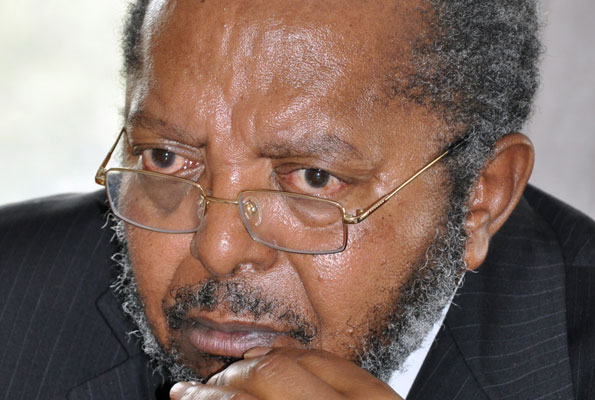
Bank of Uganda's Emmanuel Tumusiime-Mutebile

By Richard Wanambwa

The Bank of Uganda (BoU) Governor Emmanuel Tumusiime-Mutebile has come out to defend the Shs478.8 billion it extravagantly sank in activities he said were aimed at protecting Crane Bank Limited from collapsing before it could be transferred to its rival-Dfcu Bank.

Governor Mutebile’s defence was in response to Daily Monitor’s Monday headline- “How BoU blew Shs478 billion in the Crane Bank Takeover”, which he said was “seriously misleading” the public.
Mutebile in his defence says BoU provided a loan to Crane Bank and this money came from the BoU’s own resources. However the official did not give the public the terms and conditions under which BoU gave Crane Bank the said loan and who signed the loan on behalf of Crane Bank. Who in particular signed this money on the side of shareholders of CBL?

Further the good Governor needs to be reminded that no one has said that BoU is not mandated to create financial assets and liabilities to support weak banks. The issue is that Shs478 billion spent by officials at BoU under the cover of liquidity support to CBL was extravagant especially when one examines legal and technical services hired by BoU. The public is not happy that lawyers and audit firms were paid huge monies when they should have taken less of the taxpayers’ money. The Governor has not also explained the over Shs720 million the Auditor General said was spent as “facilitation for special exercise (CBL). BoU needs to shade more light on this particular expenditure.

The media and especially the Daily Monitor is right to say BoU blew the money especially when officials cannot clearly provide items on which the money was spent. The Governor says Shs 466 billion was spent on liquidity support yet adequate documents to support this expenditure were not provided to the AG John Muwanga to make clear conclusions. If BoU and more especially the Governor Mutebile himself cannot trace for documents to support claims that this money was spent as special exercise on officials and in the same spirit, who can refute claims by Auditor General that BoU failed or top official knowingly refused to release these documents, then Mutebile can’t claim he is in charge at BoU?

“Crane Bank had been losing liquidity for months prior to its takeover by the BoU. This was because a large share of its loan portfolio was not being serviced by the borrowers and because customers were losing confidence in the bank and withdrawing their deposits,” Mutebile says and no one is disputing that information. The issue is whether that money was used for that purpose as BoU managed Crane Bank for the year or so before ‘selling’ or transferring it to Dfcu in a transaction that forced parliament to cause an audit of BoU in regard to the sale of seven defunct banks.

Apart from the Shs466 billon of liquidity support to Crane Bank, Mutebile says BoU also spent Shs12 billion in resolving Crane Bank. “These were expenses that were necessary to ensure that the assets and liabilities of Crane Bank could be transferred to another bank, thereby allowing Crane Bank’s customers to continue having access to normal banking services,” Mutebile says. The Shs12 billion which included payment to lawyers, private auditing firms and surveyors still is too much to carelessly spend in a poor economy like Uganda. BoU should have done better to save the taxpayers ‘money.

Therefore, Daily Monitor’s assertion that the BoU “blew” Shs478 billion is correct. However, if Mutebile doesn’t know, let him be told that the transaction of CBL was mismanaged to the extent that the related case is the Courts of Law.

Furthermore, Mutebile says BoU is recovering the Shs200 billions of this money through the sale of assets and purchase of assumption transaction which transferred assets and liabilities of Crane Bank to Dfcu Bank. That Dfcu Bank determined the price and yet it was the buyer leaves many questions unanswered. Remember that shareholders of the other six banks BoU closed or sold are also crying.

Stories Continues after ad

Wankulukuku to host FUFA Uganda Super Cup

KCCA players celebrate super cup win last year.

With less than two weeks to the start of the Uganda Premier League season, KCCA FC and Sports Club Vipers will battle for the 2018 FUFA Super Cup on September 22.

Express FC home ground, Mutesa II Stadium in Wankulukuku has been picked to host the game.
The Uganda Super Cup is a match played between the Uganda Premier League champions and Uganda Cup champions of last season.

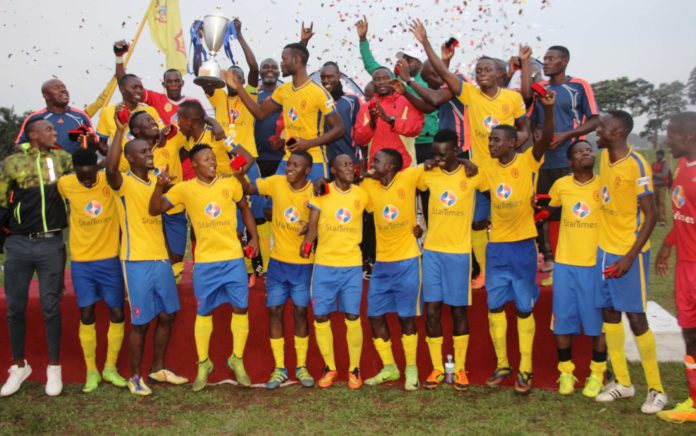
Vipers won the league last season while KCCA won the Stanbic Uganda Cup, beating The Venoms 1-0 in the final.

KCCA won the Super Cup last year having beaten Paidha Black Angels 3-0. Patrick Kaddu and Tito Okello each bagged a goal while Allan Okello made sure of the victory.
The match acts as season curtain raiser for the upcoming 2018/19 StarTimes Uganda Premier League campaign that gets underway on Friday, September 28, 2018.

September 22nd, 2018
FUFA SUPER CUP
KCCA FC Vs SC Vipers
Wankulukuku Stadium, 4:00 pm

Stories Continues after ad

Cabinet approves National Broadband Policy

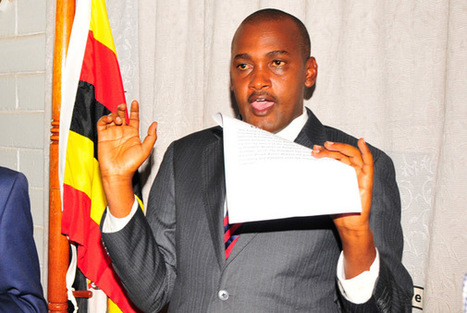
Gender, Labour Minister Frank Tumwebaze.

Cabinet has approved the National Broadband Policy for Uganda to avert duplication and wastage of resources in the provision of broadband among the key stakeholders in the information and communication technology (ICT) sector.

According to cabinet spokesperson and Minister for ICT Frank Tumwebaze, in a meeting chaired by President Museveni, they resolved that the policy will ensure countrywide coverage of network, as opposed to the current concentration in the urban settings.

“The policy will help in reviewing the licensing regime for telecom and broadband operators to ensure that their operations are in line with the ICT strategic objectives of increasing access and usage of ICT Infrastructure and services throughout the country,” he said.

He noted that the policy forms part of the licensing conditions for telecoms which include national coverage where every operator that seeks a national operator license will be required to cover the entire geographical place of Uganda.

“Being a scarce and finite government resource, the spectrum, it needs to be managed and utilized efficiently, optimally and rationally. It is intended to outlaw hoarding of spectrum and enable realization of economic value of it,” he said.

The policy also covers a number portability where currently the customers cannot switch from one service provider to another without changing the telephone numbers, saying with this policy; customers will be granted opportunity to choose their service provider without the challenge of changing telephone numbers.

Stories Continues after ad

Managing economic integration in Africa: Free movement protocol raises questions for diverse continent

Max Roch

By Max Roch

In the West, the election of US President Donald Trump, Britain’s planned departure from the European Union and the electoral success of populist parties in Italy, Germany and much of eastern Europe signal the resurgence of nationalist politics. Protectionism and an affinity for hard borders are back. Other parts of the world, however, are adopting market-orientated initiatives appealing to the centre ground of politics, most notably Africa.

In March 2018, 44 African nations signed the Kigali Declaration in Rwanda that brings the region one step closer to deep and meaningful integration, complementing advances made in the establishment of the Continental Free Trade Area. This has been made possible by Africa’s shift to technocracy. Abiy Ahmed and Nana Addo, the leaders, respectively, of Ethiopia and Ghana, among others, are setting a radically new and propitious tone for the future. Unlike their predecessors, they are keen to stave off dependence on state-owned enterprises and foreign aid, and are demonstrating a sincere commitment to regional integration and co-operation.

Cross-border regulatory alignment in the Economic Community of West African States has increased. Nigeria, for instance, as a member of the West African Monetary Zone will co-operate with Benin in the French-speaking West African Economic and Monetary Union on a $4.5bn border facility to increase trade flows. The Bank of Central African States, which serves as the central bank of six countries, now oversees the unified Douala Stock Exchange after Cameroon and Gabon came to an agreement over their competing securities bodies. The removal from power of Jacob Zuma in South Africa, Robert Mugabe in Zimbabwe and José Eduardo Dos Santos in Angola signifies a shift in southern Africa away from the revolutionary comrades of yesteryear.

However, one overlooked aspect that requires further debate is that only 30 countries adopted the Free Movement Protocol, the third tenet intended to complement the Kigali Declaration and CFTA. The protocol, it is hoped, will lead eventually to the creation of a ‘borderless’ Africa.

Questions must be asked about the necessity of freedom of movement in the early stages of the CFTA and whether the ostensible benefits outweigh the obstacles that such a debate is likely to bring up. In the light of continuing conflicts in the region, mass migration, climate change, political uncertainty and rising refugee numbers, many countries are opposed to opening borders. Around 26% of the world’s refugees (around 18m people) are in sub-Saharan Africa, and this excludes the myriad economic migrants who would emerge as a result of a borderless continent.

Several relatively wealthy and stable nations –Botswana, the Seychelles, Ivory Coast, Cape Verde, Mauritius, Namibia and Zambia – did not adopt the Free Movement Protocol. In addition to those struggling under the pressure of the refugee crisis, namely Egypt and Maghreb countries, the situation across the continent has been exacerbated by recent military interventions.

The flow of refugees and migrants goes both ways. Safer southern countries, such as Zambia, have endeavoured to home around 76,000 Congolese refugees by the end of 2018. This is besides those already absorbed from Angola, Zimbabwe, Mozambique, Rwanda and the Democratic Republic of Congo in the decades since Zambia became independent in 1964. In spite of the country’s efforts, the lack of public services and political mismanagement of resources has enabled antipathy towards foreigners to fester.

For a continent of 55 countries, many of which are contending with a spectrum of unrest, it is possible that uninhibited adoption of the CFTA and the opening of borders may give rise to the same nationalist groundswell that is threatening the US and Europe.

Max Roch is Research and Policy Analyst at OMFIF.

Stories Continues after ad

AMISOM to use modern technology to help secure peace in Somalia

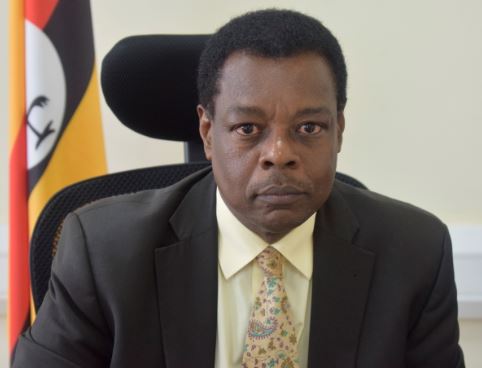
Simon Mulongo

The African Union Mission in Somalia (AMISOM) will enhance its use of modern technology during the transition period to ensure gains made in securing the country are not eroded.

The Deputy Special Representative of the Chairperson of the African Union Commission (DSRCC) for Somalia, Simon Mulongo, said Somalia’s stabilization process had reached a critical stage that needed more investment in modern technology, mainly force multipliers and enablers, to ensure no security gaps occur during the draw down phase.

Last year, the United Nations Security Council authorized conditions-based withdrawal of AMISOM troops and handover of security responsibility to Somali national security forces.

The AU Mission has already withdrawn 1000 troops and more withdrawals are expected next year.

“AMISOM is in a setting that’s very complex. It’s operating in an environment that’s very sophisticated. It requires improved and new ways of thinking and acting. It requires improved capacity to secure the forces when they’re moving and when in their bases,” said the DSRCC during a recent workshop on the use of technology as a force multiplier, held in Mogadishu.

The two-day workshop discussed how technology can be applied to address logistical challenges faced in the battlefield and was attended by senior officials from UNSOS and AMISOM together with police and military focal point officers from the six Sectors.

Mr. Mulongo noted that the technology employed as force enablers and multipliers should be sustainable if they are to make a difference in the war against Al-Shabaab, especially during the transition period.

The director of United Nations Support Office in Somalia (UNSOS), Amadu Kamara, called for a coherent approach in the war against Al-Shabaab and pledged the UN agency’s continued support to AMISOM in its efforts to secure Somalia.

“The value of technology has to be within the context of a well-planned, thought-out and coherent approach to how we want to wage this battle and I think this is just a small beginning and I pledge the support of UNSOS within budgetary constraints and the realities of the fiscal to make sure that we give full support to help our noble and valiant AMISOM colleagues wage a winning battle,” the UNSOS director added.

His sentiments were echoed by the director of Information Communications and Technology Division (ICTD) at the UN headquarters, Anthony O’Mullane, who said he was in Mogadishu to understand the challenges AMISOM faces and the best technology to recommend.

The workshop also discussed the gaps associated with force protection and force projection capabilities and how they can be prevented.

Stories Continues after ad

Crested Cranes progress to COSAFA Women’s championship semis

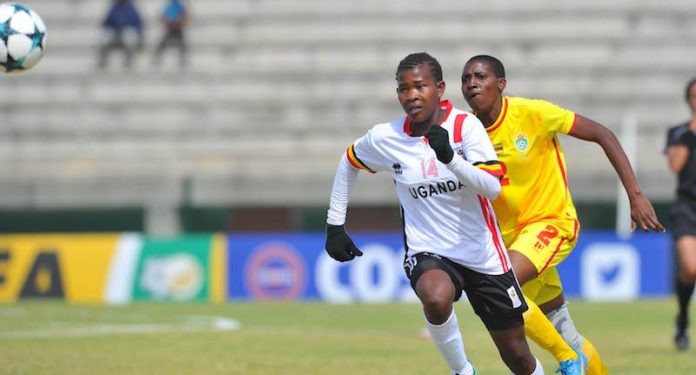
Crested Cranes player in action against zimbabwe.

Uganda Women’s football team, the Crested Cranes qualified for the semifinals of the 2018 Council of Southern Africa Football Associations (COSAFA) tournament after defeating Zimbabwe 2-1 in the last group stage match.

Second half goals from substitute Juliet Nalukenge and captain Tracy Jones Akiror were enough for the Crested Cranes to book a semifinal place. Rutendo Makore pulled one backed for the Zimbabweans in the 90th minute.

Faridah Bulega’s side topped Group C with seven points. They defeated Swaziland 4-3 in the first game before they were held 0-0 by Namibia on Saturday.

The group stage composed of three groups of four teams each. The three group winners and the best runner-up amongst all groups advanced to the semi-finals.

Uganda will face hosts South Africa in Thursday’s first semifinal game. South Africa thumped Malawi 6-0 in their final group game fixture to set up a match with the Crested Cranes.
The other semifinal match is to be decided today after the two matches. Zambia will take on Mozambique while Cameroon entertains Lesotho.

Uganda is the third East African country to feature in the COSAFA Women’s Championship after Tanzania in 2011 and Kenya in 2017.
The final will be played on Saturday 22nd September at Wolfson Stadium, Port Elizabeth in South Africa.

Stories Continues after ad

Crane Bank saga: Bagyenda says Dfcu Bank played role of valuer and buyer in controversial transaction

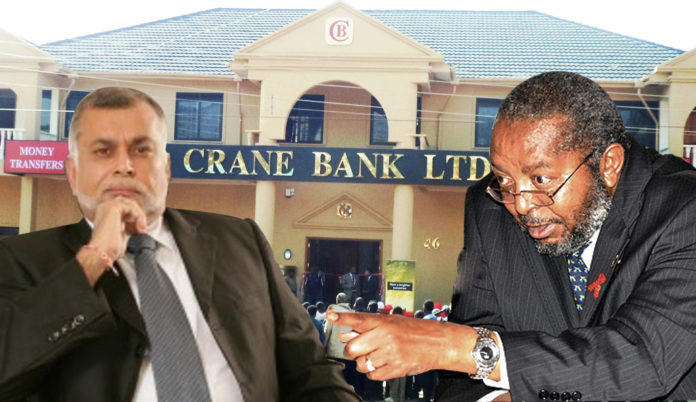
A photo montage of BoU Governor Emmanuel Tumusiime Mutebile, businessman Sudhir Ruparelia and Crane Bank

A special audit report of Bank of Uganda (BoU) on seven defunct commercial banks indicates that Dfcu Bank, which took over its competitor Crane Bank Limited (CBL), played the role of the valuer and buyer at the same time, leaving questions whether such a transaction can be said to be credible.

The Auditor General John Muwanga who compiled the report, says that: “In a meeting with… EDS (Executive Director Supervision) Justine Bagyenda (fired earlier by BoU Governor Emmanuel Tumusiime-Mutebile), he says: “the EDS explained that BoU relied on the Inventory report and due diligence undertaken by Dfcu to arrive at the Purchase of Assets and Assumption of Liabilities (P&A).”

That means, according to the report, the Shs200 billion Dfcu Bank is meant to pay came from its side and not the side of BoU. A source at BoU says Bagyenda and Deputy Governor, Dr. Louis Kasekende played a big part here as they so much wanted Dfcu Bank to buy off Crane Bank at whatever cost.

The contentious loan book of CBL
According to the report, at the time of takeover by BoU, CBL net loans amounting to Shs768 billion constituted 65 per cent of the total assets. And according to the P&A, the loans and advances of CBL were transferred to DFCU except the insider loans.

According to the CBL Inventory report as at October 20, 2018 (positron at the start of statutory management), CBL had Gross loans and advances of Shs1,096,351,522,000 and made provisions for impairment of loans and advances of Shs328,331,847,000 resulting into net loans and advances of Shs768 billion.

Important to note is that Dfcu received the CBL Inventory report on December 12, 2016 and undertook due diligence whose results were incorporated in a bid for the purchase of all the assets and assumption of the liabilities of CBL submitted to BoU on December 20, 2018.
According to the DFFC Bid, the due diligence conducted indicated net loans and advances of about Shs576, billion and the bad book (fully provisioned for and written off loans) of about Shs485 billion.

DFCU could offer a deferred cash bid of consideration of Shs200 billion to buy CBL based on net recoveries of the bad book (Shs485 billion). Additionally, the recoveries of the bad book would be used to settle CBL liability to BoU to a maximum of Shs200 billion.
Meanwhile Muwanga in his reports cites a Memo from Ms Bagyenda to Mutebile dated 31st July 2017, indicating that the bad book was Shs570.38 billion out of the gross loans of about Shs1. 2 trillion. This was bad book was unfairly transferred to Dfcu to provide a resource for repayment of loans of Shs200 billion and bridge the shareholder’s deficit of Shs439.72 billion at the date of takeover.

“I could not establish how the consideration of Shs200 billion was derived from the bad book of Shs570.38 billion.
I was also not provided with the schedule of loans and the corresponding collateral transferred to Dfcu therefore I was not able to establish the values and categories of loans transferred performing loans, non-performing loans and fully provisioned/written off loans (bad book)),” Muwanga complains in his report.

Failure by BoU to sign CBL annual report
Mr Muwanga was also frustrated that BoU did not sign a report on the financials of CBL after taking over its management. “The annual report and financial statements for the year ended 31th December 2016 provided were neither signed by BoU nor the Auditors, Furthermore BoU did not provide financial statements for the period 1st January 2017 to 25th January 2017 (P&A completion date) thus I could not establish the details and values of assets and liabilities transferred to Dfcu,” he says.

“In absence of the signed financial statements, I was unable to rely on the accounts to establish the financial performance of CBL during statutory management and its financial position as at 31st December 2016,” he adds.

Plan to revive CBL ignored by BoU
Section 89(5) of the FIA states that the central bank shall exercise statutory management over a financial institution for the minimum time necessary to bring the financial institution into compliance with prudential standards.

In achieving the above function, Section 90(4) (c) of the FIA 2004 requires the statutory manager to evaluate the capital structure and management of the institution and recommend to the Central Bank any restructuring or re-organization which he or she considers necessary and which, subject to the provisions of any other written law may be implemented by him or her on behalf of the institution.

However, according to the report, BoU management did not provide a plan or assessment detailing efforts to return the bank into compliance with prudential standards despite funding of Shs478.8 billion being injected into CBL. In absence of the plan or assessment to revive CBL, I could not provide assurance as to whether Sections B9 (5) and 90(4Xc) of the FIA 2004 was complied with.

“BoU management explained that when BoU took CBL into statutory management/ it was found to be grossly insolvent. It is not possible to revive a bank with this level of insolvency and restore it to full compliance with capital adequacy and other requirements. Therefore BoU pursued other means to resolve the bank,” he says. Mutebile has always made similar assertions whenever he gets opportunity to address audiences. He made a similar statement as he addressed participants attending the recently concluded Uganda Bankers’ Association conference held in Kampala.

Bagyenda Kasekende help Dfcu skip paying interest on Shs200 billion
The report by Muwanga wonders why Dfcu was not asked to pay interest on Shs200 billion it is paying in instalments to buy off CBL.

I observed that the Board position to charge interest on the Shs200 billion liability assumed by Dfcu could not be included in the P&A and the Shs200 billion liability agreements with Dfcu since these were signed two days before the Board meeting,” he says.

In the next meeting held on June 22, 2018 at the Office of the Auditor General, Muwanga says that BoU management explained that the Board was only informed to ratify the decisions made by management since the Board delegates powers to the Governor to make such decisions.
BoU management further explained that the Board resolved to recover the said interest from the shareholders of CBL and not from Dfcu|. The purchase and Assumption agreement had already been signed.

CBL insider Ioans of Shs63.6 billion, some already collected by BOU
At the time of writing this report, Muwanga says BoU had collected a sum of $1, 141,102 (about Shs.4, 1billion) from these loans leaving a balance of about Shs59.5 billion. “The loan files and the collateral are still in BoU custody,” he says.

BoU claims against CBL shareholders unfair!
Muwanga reports that according to the P&A agreement between BoU and Dfcu; the rights of CBL to claim against its shareholders, directors or other parties for wrongs done prior to takeover date would remain with the Receiver (BoU).

BoU’s failure to prepare statement of affairs of CBL
Muwanga quotes Section 106(1) of the FIA 2004 requires the liquidator to keep proper financial ledgers and financial records in a manner prescribed by the Central Bank in which shall be recorded all financial transactions relating to the liquidation. As such, BoU as the liquidator was expected to prepare a statement of affairs for CBL in receivership but that was not done.

“BoU management explained that CBL is still under receivership and has not yet progressed into liquidation. At the appropriate time, following completion of the current court cases, a statement of affairs will be prepared in accordance with the law,” he says.
Tax refund to CBL unestablished, BoU to blame
Muwanga says the tax refund to CBL could not be established because financial statements for the period ending December 31 2016 prepared by BoU were not signed by both BoU and the Auditor.

“Besides, accounts for the period between 1st January 2017 and 25th January 2017 (P&A completion date) had not been prepared at the time of writing this report. I could not therefore establish the tax refund du

Stories Continues after ad