Stanbic Bank
Stanbic Bank
27.7 C
Kampala
Stanbic Bank
Stanbic Bank
Home Blog Page 1492

Drug maker CQCIL raises Shs155b in IPO

CQCIL

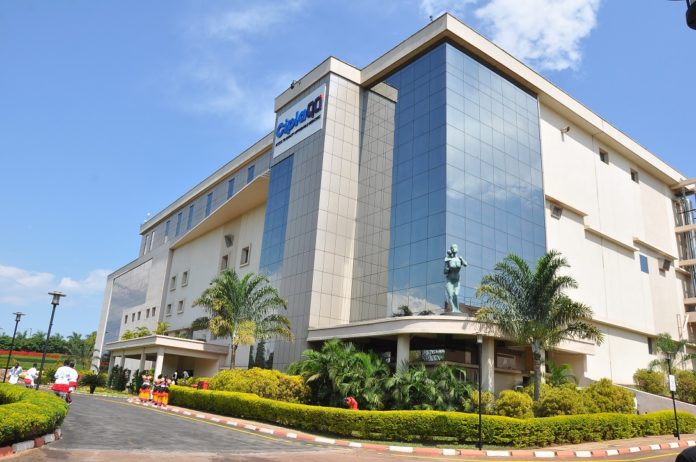
The Ugandan drug make Cipla Quality Chemical Industries Limited has (CQCIL) has raised Shs155 billion (US$41 million) from its initial public offering (IPO) that was oversubscribed, according to a brokerage firm- Renaissance Capital that helped advise on the transaction.

CQCIL, majorly owned by India’s third-largest drug maker, Cipla, sold 657 million shares equivalent to 18 percent of the firm’s total equity. Each share in the IPO was priced at Shs256.5 and closed the first day of trading up 2.1 percent at Sh262.

According to John Porter, chief business officer at brokerage Renaissance Capital, interest came from both local and international investors.

“The offering has been oversubscribed with the major part of the demand coming from blue-chip Sub-Saharan Africa investors,” he said while speaking during a function to launch the firm’s debut on the Uganda Securities Exchange (USE).

CQCIL, established in 2005, has a factory in Kampala and makes a range of drugs including antiretrovirals, anti-malaria and drugs to treat Hepatitis B and C. Most of the drugs are sold in Sub-Saharan Africa.

Stories Continues after ad

ICC sentences DRC’s Jean-Pierre Bemba over witness tampering

Former Congolese vice-president Jean-Pierre Bemba Gombo in the ICC courtroom during the delivery of his sentence on 21 June 2016. Photo: ICC-CPI

The International Criminal Court (ICC) has sentenced Jean-Pierre Bemba, a former vice president and rebel leader in the Democratic Republic of Congo (DRC), for bribing witnesses during his war crimes trial.

In a ruling on Monday, The Hague-based court handed Bemba a 12-month sentence and a 300,000 euros ($350,000) fine for tampering with witnesses in an earlier hearing over possible war crimes and crimes against humanity committed by fighters he sent to suppress a coup in neighbouring Central African Republic between October 2002 and 2003.

He will not return to jail because of the sentence, having served time after being found guilty following the war crimes case in 2016. Bemba, who had been in ICC detention since 2008, was acquitted on appeal in June.

After a decade in prison, Bemba returned to DRC on August 1 to submit his candidacy for the country’s December 23 presidential election.

But the 55-year-old, a popular opposition leader, was barred on September 3 from standing because of the conviction for witness tampering.

According to DRC law, those found guilty of corruption are prohibited from running for president.

Stories Continues after ad

African Union to hold Forum on Cybercrime

African Union is set to hold the first Forum on Cybercrime that is aimed at strengthening criminal justice authorities through adequate plans of capacity building and synergies with related programmes implemented across the continent.

Africa is exhibiting one of the continents fastest growth rates in Internet penetration worldwide, with digital connectivity that has almost tripled in the last five years. In the same period, both governments and private sector entities in Africa have been experiencing an equally increasing trend of cyber-attacks in line with what has been recorded also on the global level.

The Forum that is expected to kick off on October 16– 18 October 2018 at the African Union Commission premises in Addis Ababa, Ethiopia will engage international actors in the fight against cybercrime and proper handling cross-border of electronic evidence.

Representatives of participating countries will discuss the current situation and share best practices with regional and international organizations, thus creating a network of professionals that will allow them improve the effectiveness of their daily endeavors through the exchange of information regarding common challenges and tasks.

Delegates will also discuss Cybercrime policies and national legislations in respect to regional and international standards and relevant implementation practices.

Regional organizations which are scheduled to participate in the Forum, include the Economic Community of Central African States (ECCAS), the Common Market for Eastern and Southern Africa (COMESA), the Intergovernmental Authority for Development (IGAD), the Southern African Development Community (SADC), the New Partnership For Africa’s Development (NEPAD), the Economic Community Of West African States (ECOWAS), the East African Economic Commission (EAC), the Union Maghreb Arab (UMA), the African Union Mechanism for Police Cooperation (AFRIPOL) and the African Centre for the Study and Research on Terrorism (ACSRT).

It is organized by the African Union Commission and supported by the Council of Europe, European Union, INTERPOL, UNODC, US State Department, UK Government, and Commonwealth Secretariat.

Stories Continues after ad

The hearing of Kitatta’s bail application flops

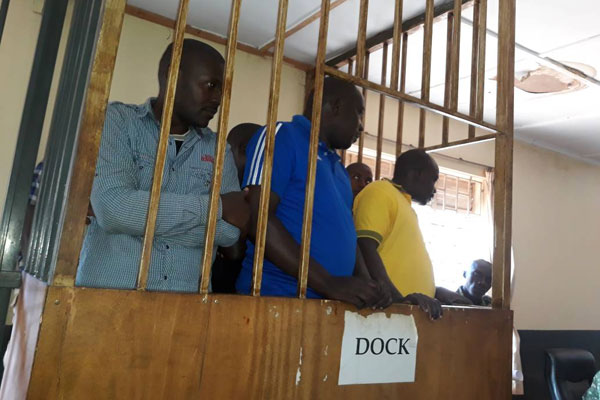
Abdallah Kitatta with his co-accused in the dock at Makindye

The hearing of bail application for embattled patron for Boda-Boda 2010 Abdullah Kitatta has flopped after prosecution asked for more time to go through his submission and file their reply.

Kitatta was in January arrested by a joint force of Uganda People’s Defence Forces (UPDF) and Internal Security Organization (ISO) and is currently facing five counts including failure to protect war materials and being in unlawful possession of military stores contrary to the UPDF Act.
He is currently facing five counts including failure to protect war material and being in unlawful possession of military stores contrary to the UPDF Act.

Last week through his lawyer Siena Owomugisha, Kitatta filed the second bail application after court dismissed the first one. Kitatta contends that his health condition deteriorating in the Makindye military barracks where he is detained yet they cannot offer him the specialized treatment.

He argues that bail is his constitutional right and he has a place of abode in areas near the jurisdiction of the Court Martial.
Appearing before Court chairman Lt. Gen. Andrew Guti, prosecution led by Lt. Ambrose Baguma and Maj. Raphael Mugisha asked for more time to file their reply and look into the petition. Court was then adjourned to September, 24, 2018.

His co-accused include Sowali Ngobi, Amon Twinomujuni, Joel Kibirige, Matia Ssenfuka, Hassan Ssebata and Johnson Kayondo. The others are Hassan Ssengoba, Sunday Ssemwogerere, John Ssebandeke, Hussein Mugema, Fred Bwanika and Ibrahim Sekajja.

Stories Continues after ad

Petitioner asks parliament to discard Bagyenda as she fails to appear for vetting on FIA Board

Embattled former Executive Director in charge of Supervision at Bank of Uganda Justine Bagyenda.

A petitioner in the name of Humphrey Matsiko has urged Speaker of Parliament Rebecca Kadaga to decline the approval of former director of supervision at the Bank of Uganda Justine Bagyenda, on the board of the Finance Intelligence Authority (FIA).

Ms Bagyenda and others were supposed to appear today before
Parliamentary Appointments Committee headed by Kadaga as Chairperson. Mr. Matsiko in the letter dated September 17, 2018 says that by declining to approve Ms Bagyenda, parliament would have worked in public interest.

“… It is my humble prayer that Parliament protects its integrity,
oversight and public interest of Ugandans by declining to approve Mrs. Justine Bagyenda’s renewal as a Board Member of FIA,”he says.

However, Eagle Online understands Ms Bagyenda has failed to turn up for vetting, meaning she has lost interest due to pressure from the public. That means an alternative will be selected to fill her position. Sources informed this website that one of MMAKS lawyers advised Bagyenda againist going for vetting. MMAKS is law firm that was contracted by Bank of Uganda in executing the fraudulent sale of Crane Bank.

The Appointments Committee was to vet Bagyenda alongside Leo Kibirango (Chairperson), Patrick Ocailap, Justine Bagyenda, director of the Criminal Investigations Department (CID) AIGP Grace Akullo and Patricia Mutesi as Members.

It should be remembered that former IGG Faith Mwondha failed to turn up for vetting by parliament for reappointment to that position and lost the job as legislators would not approve her in absentia.
Ms Bagyenda still faces investigation by the Inspector General of
Government (IGG) Irene Mulyagonja over alleged illegal accumulation of wealth.
The IGG is yet to release a report on the matter after confirming months ago that Ms Bagyenda was under investigation.

Ms Bagyenda was early this year named on the FIA Board for the second term by the finance minister Matia Kasaija amid investigations by the same body FIA IGG. She said also have played a role in the closure of the defunct Crane Bank and was one of those questioned by the Auditor General John Muwanga in an investigation of seven closed banks whose confidential report has been handed over to parliament for further action.

Several individuals and organisations are having filed petitions against the re-appointment of Ms Bagyenda on the FIA Board, citing her versed wealth including billions of Ugandan shillings on bank accounts.

FIA was established under the Anti-Money Laundering Act (AMLA), 2013 to monitor, investigate, and prevent money laundering in the country.

It is also responsible for the enforcement of Uganda’s anti-money
laundering laws and the monitoring of all financial transactions
inside the country’s borders.
meanwhile the other appointees that were due for vetting include Jane Okuo Kajuga and Dr Patricia Achan Okiria as commissioner to the Human Rights Commission and Rose Kabogoza Musoke as member to the Education Service Commission.

Stories Continues after ad

Express FC names squad for 2018/19 season

Express squad during unveiling of equity bank as their sponsors

With less than two weeks to kick-off the 2018/19 StarTimes Premier League season, Express football club have named their 25-man squad which will be used for this season’s games.

Defender Julius Ntambi, who joined the club from URA FC in January, will captain the team and be deputized by forwards Tony Odur who joined from Vipers and Michael Birungi who joined from Police FC.

The squad consists of twenty-five players; three goalkeepers, eight defenders, ten midfielders and four strikers.
Only eight players from last season’s squad were retained. They are; Tony Kyamera, Julius Ntambi, Shafik Nana Kakeeto, Jalil Zimula, Davis Mayanja, Badiru Nsubuga, Billy Nkata and striker Michael Birungi.

The team will be managed by Head Coach Kefa Kisala, Assistant Coach Pius Ngabo, and Goalkeeping Coach Mubarak Kiberu. Ibrahim Musa Kinaabi will remain the club’s Team Doctor. Hamza Jjunju is the club’s CEO.
The Red Eagles survived relegation to the second-tier last season thanks to a 1-0 victory against Masavu FC on the last day of the season. Alfred Leku scored the important goal in the 55th minute.

The Squad
Goalkeepers; Tony Kyamera, Ronald Mutebi, Matthias Muwanga.
Defenders; Julius Ntambi (Captain), Hamis Batenga, Shafik Nana Kakeeto, Charles Lubega, Charles Mutima Musoke, Arthur Kiggundu, Isaac Mutanga, Disan Galiwango.
Midfielders; Jalil Zimula, Nasir Mbabali, Joel Male, Ibrahim Kayiwa, Davis Mayanja, Badiru Nsubuga, Lawrence Kigonya, John Revita, Billy Nkata, Pius Mbidde.
Forwards; Michael Birungi, Tony Odur, Ruben Kabuye, Eric Kambale.

Stories Continues after ad

Oil will be a major driver of logistics growth in Uganda

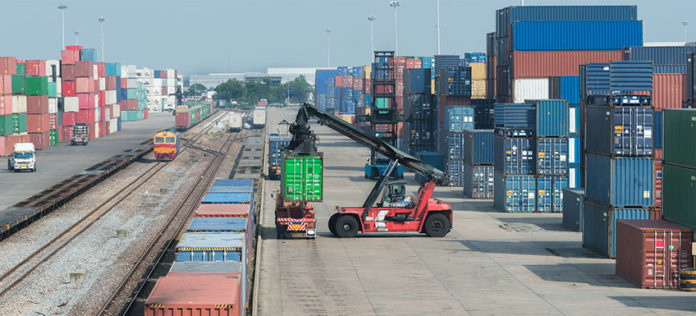
In 2006, Uganda confirmed that it had discovered oil. It was a moment that would continue to define Uganda’s future. During the period of discovery and later developing the oil fields, logistics companies have played a crucial role. Right from the start as the country was in the process of discovering oil, logistics companies were moving equipment to the Albertine Graben.

Indeed the Oil and Gas did contribute to the growth of logistics companies. Entities likeThreeWays Shipping, Multilines and Bemuga expanded their fleet as a result of the demand by the oil companies. In fact, at the time when oil companies were awaiting the government to approve production licenses, the most affected operations were those of logisticscompanies. They were forced to restructure.

However, those were short-term blips. The long-term presents greater opportunities. The estimates indicate that even before oil is recovered, about $10billion will be spent. For Uganda’s economy, that money will be transformational. The estimate for jobs to be created is about 150, 000. Some of these jobs will be with logistics companies. It is important to note that the specialized jobs in the sector are the least whereas the non-specialized jobs – like drivers – are the most.

Once oil companies approve their Final Investment Decisions (FIDs) in the oil sector, then it will open up for further investment by logistics companies.According to the Uganda government, there will be vast equipment to bring into the country in order to deliver first oil. The equipment and materials – mostly imported – will come in through Busia, from Mombasa and Mutukula, from Dar-es-Salaam. These routes are devised into consideration of the discoveries locations in Hoima and Buliisa among others. Get equipment, people and materials to those areas could
be Uganda’s largest logistics “event” since Uganda’s independence.

The opportunity there lies in logistics companies investing in
anticipation for this pre-production “event”. It is an opportunity to exploit. Of course, the challenge for the logistics companies is the skills set that comes in especially in operating some of the heavy earth moving equipment.

Gov’t infrastructure projects interestingly, some of the benefits in the oil sector tie into the plans of the government. In order to be ready for first oil, the government will construct an oil refinery in Kabaale, Hoima District.

There is the private sector-led construction of an oil pipeline from
Hoima to Da-es-Salaam. Already the Uganda National Roads Authority (UNRA) has earmarked 10 “oil roads” for construction. These roads total nearly 700kms. There is the construction of a finished products pipeline from Hoima to Wakiso. Currently, work is ongoing for the construction of an International Airport in Hoima to cater to the aviation demand that comes with oil.
Ultimately, all of the above projects can be linked to oil. They are
creating an opportunity for the logistics sector. On top of improving transport, they also present an opportunity to supply and distribute some of the materials used in the construction phase. The oil pipeline and refinery will provide an opportunity in the pre-construction and during the construction phase as millions of tons of equipment will have to be moved.

The roads and airport to be constructed will be done by private
companies. However, the long-term picture is what the two projects will do for logistics. Transport will improve with better roads. For instance, the road between Hoima and Wanseko Landing Site on the shores of Lake Albert will improve transport. Once the road is complete it will reduce the time transporters spend on the road from Kampala to West Nile. Through Wanseko, the ferry service by UNRA links West Nile in just less than two hours. With the airport, it means there is potential to set-up a logistics hub in an area like Hoima since they will have the entire necessary infrastructure.

This is only just a tip of the planned investment by the Uganda
Government in public infrastructure. The SGR – as already discussed in my previous post – is an opportunity not be missed. The construction of hydropower dams (Isimba – 183MW, Karuma – 600MW) – will ensure that there is enough power for cold-storage facilities at affordable rates than before.

Importantly though is how it boosts the private sector
and improves production and Increased production.

The ultimate ambition of the government is to ensure that there is
improved production in Uganda’s economy. The role of the government is to facilitate business growth. When roads are built, the output by producers is expected to grow and in turn improve the production
capacity of the country. If the dams constructed can improve access to energy at a much lower cost that would lower energy costs and lead to industrialization. The ripple effects would be felt by the logistics sector since industrialization results in the movement of goods.

From 17th to 18th September 2018, Uganda hosts the Global Logistics Convention themed “Freight Logistics: The Edge to Competitiveness”. And indeed one of the highlights will be pointing out the opportunities in the sector. The convention is supported by the United Kingdom’s Department for International Development (DFID), through Trademark East Africa (TMEA). The conference is organised by Uganda Freight Forwarders Association (UFFA) and the National Logistics Platform at the Private Sector Foundation Uganda (Psfu)

Stories Continues after ad

Six value propositions that resonate with all investors

Martin Zwilling

By Martin Zwilling

Young entrepreneurs often are so excited by new technology or their
latest invention that they forget to translate it into a value
proposition that their customers or potential investors can understand
and relate to. They become frustrated with investors, senior
executives, and even customers who don’t seem to “get it,” with the
result that everyone loses.

Senior business leaders, for example, are unlikely to relate when you
pitch your latest web app, highlighting the mashuptechnology, which
you derived from early online social networking applications. Mashup
probably reminds senior leaders of a train wreck, and social
networking is still seen by some business executives as a frivolous
waste of time.

It’s really your responsibility and your advantage to translate your
message into values and priorities that the intended receiver can
readily relate to and understand. Here are some key value propositions
that will resonate with every business leader I know:

Ability to adapt quickly to changing requirements. Every business
leader knows how difficult it is to keep up with a changing market. If
you can quickly explain how mashup technology facilities this agility
challenge, the technology may quickly turn from a negative to a major
positive. This priority applies to big companies, as well as startups.

Customer data integrity and security. Customer data, as well as
internal data, is a key resource for every business that must be
secured and protected. If your message starts with a focus on this
priority and related costs, the technology will likely be appreciated
and valued, rather than challenged.

Personal privacy protection. Customers are always looking for a better
user experience, and they don’t want their privacy compromised. Before
you focus a senior decision maker on your new cloud technology and
distributed data, make sure he or she understands how it will lower
user privacy exposures, rather than increase them.

Reduce litigation risks and support costs. Often new technologies are
seen by senior decision makers as new opportunities for litigation and
hackers. You need to address these concerns early, by highlighting
patents, encryption capability, or other features which mitigate these
risks and costs. Skip the acronyms and implementation details.

Payback on investment. Every business executive wants to understand
how each new investment in technology relates to their bottom line.
Quantifying the return on investment (ROI) is “top of mind” for every
investor and executive. Entrepreneurs who make this case effectively
will get the decision they want, no matter how esoteric their
technology.

Ability to integrate with existing apps. New applications which can’t
communicate with existing data and applications are often more of a
problem than a solution. Mashup technology may be your biggest plus,
if you position it in this context. Highlight the mashup use of
existing friendly interfaces, and use of existing data in a new
solution.

I challenge every entrepreneur to see how many of these priorities
they can integrate into their new technology solution elevator pitch.
You may be able to turn a potential train wreck into a win-win
decision for both you and the investor or customer. In any case, it
pays to do your homework on the background and experience of the
decision maker you face. Don’t assume their understanding of
technology is commensurate with yours.

Entrepreneurs need to remember that every investment decision, whether
by professional investors or customer executives, is primarily a
financial decision, not a technology decision, driven by limited
funds. If you can translate your technology power into a solution
satisfying key business goals, you will win the investors you need, as
well as the customers you need to make your startup a success.
Technology is the means, not the end.

The writer is a veteran startup mentor, executive, blogger, author,
tech professional, and Angel investor. Published on Forbes,
Entrepreneur, Inc.

Stories Continues after ad

African Agric. ministers and private sector leaders push for more investment

Uganda's Minister of Agriculture, Vincent Ssempijja

Several African agriculture ministers joined public and private sector
representatives calling for more investment in agriculture at a
Leadership4Agriculture event held at the African Green Revolution Forum (AGRF) in Kigali, Rwanda.

Organized by the African Development Bank, the Leadership4Agriculture session facilitated partnerships between policy makers, private investors, institutions and offered participants opportunity to learn more about the Leadership4Agriculture network’s agenda to drive
action-oriented, growth enabling investments.

Several ministers at the event criticized what they said was a culture of talk without action. “Too many of the same declarations are made but are never carried out at the African Union level,” said Côte d’Ivoire Minister of Agriculture, Mamadou Coulibaly.

The African Union’s Comprehensive African Agriculture Development Program in 2003 set a target for African governments to allocate 10 per cent of national budgets to agriculture. According to AGRF, only 13 African nations have reached or surpassed this goal.

Jennifer Blanke, African Development Bank Vice-President for
Agriculture, Social and Human Development, and the Rockefeller
Foundation’s Managing Director for Africa, Mamadou Biteye, earlier set the tone for the session. They charged their organizations to advance the Leadership4Agriculture mission.

“With [Bank] partners the Rockefeller Foundation, now we have funding for a Secretariat for Leadership4Agriculture, which will allow us to track progress,” said Blanke. “Let us all, together, make Africa shine,” she added.

Agriculture ministers from across the continent, including from
Zambia, Nigeria, Uganda, Kenya, Gabon, Mozambique, South Sudan, Togo and Mauritius. Rwanda’s former Minister of Agriculture and Animal Resources, who now serve as President of the Alliance for a Green Revolution in Africa (AGRA), said ministers need to campaign harder for increased budget funding for smallholders.

“(Agriculture) is a government’s most important industry,” AGRA
President Agnes Kalibata told the audience. “Nobody is going to give you money because you are Minister of Agriculture – there are 20 other ministries competing for money. It is (an agriculture minister’s) responsibility to make the case,” she said.

AGRF research indicates farming remains a key source of income for 60 to 65 per cent of the labor force in sub-Saharan Africa and will continue to be a major source of employment for a decade or more.
Leadership4Agriculture session attendees said the mentality that
agriculture is more of a traditional career for those who don’t have
alternative r work options, has to change.

Edward Mabaya, Manager of the African Development Bank’s Agribusiness Development Division, said government leaders and farmers should replace the word “agriculture” with “agribusiness.”

Vice-President Blanke announced that the next Leadership 4Agriculture event will be held during the African Development Bank’s historic Africa Investment Forum, to be held from 7-9 November in South Africa.

Five African Ministers of Agriculture and Finance, the Rockefeller
Foundation and the African Union Commission established
Leadership4Agriculture, or L4Ag. The African Development Bank secured support from the Rockefeller Foundation for the establishment of the platform.

Stories Continues after ad
Mayweather coming out of retirement to fight Pacquiao in rematch

Mayweather vs Pacquiao in 2015.

American professional boxer Floyd Mayweather Jr says he is coming out of retirement once again for a rematch with Filipino boxer Manny Pacquiao later this year.

The pair came face to face at a concert in Tokyo, Japan on Saturday, prompting Mayweather to take to Instagram and declare he is planning yet another return to the ring.
“I’m coming back to fight Manny Pacquiao this year. Another 9 figure pay day on the way”, Mayweather posted.

Various reports indicate that talks are at an advanced stage and contracts will be sent out this week for the fight to take place in December.

Since facing Pacquiao, Mayweather has fought against Andre Berto in 2015 and his August 2017 knockout of Conor McGregor in the UFC star’s boxing debut, winning all of them. The 41-year-old professional boxer said after McGregor that “this was my last fight.”
Pacquiao has fought four times since losing to his great rival; beating Tim Bradley, Jessie Vargas and most recently Lucas Matthysse.

Floyd Mayweather Jr. and Manny Pacquiao first met in 2015 in a fight billed as “The Fight of the Century.”
It took place on May 2, 2015, at the MGM Grand Garden Arena in Las Vegas, Nevada. Mayweather won the contest by unanimous decision, with two judges scoring it 116–112 and the other 118–110.
Mayweather is still unbeaten in his professional boxing career, having won all the 50 fights with 27 knock-outs.

Pacquiao is the first boxer in history to win major world titles in four of the original eight weight classes of boxing: flyweight, featherweight, lightweight, and welterweight.

Stories Continues after ad