Stanbic Bank
Stanbic Bank
18.5 C
Kampala
Stanbic Bank
Stanbic Bank
Home Blog Page 1505

Sadolin Paint tops competitors as it appears on list of top 274 taxpayers in Uganda

Crown Paints CEO Rakesh Rao, AkzoNobel MD for sub-Saharan Africa Johann Smidt and commercial executive Deon Nieuwoudt at the re-launch of Sadolin Paints in September last year.

Sadolin Paints (U) Limited beat other paint manufacturers in Uganda as it was ranked 26th on the list of 274 top taxpayers at the end of the year 2017, having paid taxes worth about Shs26.3 billion.

Sadolin Paints’ 26th position among the top taxpayers meant it was the number one taxpayers in the local paint industry and is a result of the company’s dominance of the market share over the past decades.

A source from the Uganda Revenue Authority (URA) said Sadolin Paints keeps on earning more revenue because of its quality products that attract customers. “Any business that offers best quality and service will always attract customers and I think that is why Sadolin are doing well in terms of revenue earnings year in year out,” he said.

The official who preferred to remain anonymous said that when companies like Sadolin pay their share of taxes, it helps government deliver services to the population as well as embarking on infrastructure projects like roads and building of schools.

At the relaunch of the company last year Johann Smidt, the director AkzoNobel decorative paints in sub-Saharan Africa, said: “We are delighted to relaunch Uganda’s number one paint brand and once again assure our customers that the brand they love is here to stay. He said the company would continue to offer global standard quality paint that the Ugandan people can enjoy.

The Sadolin brand is owned by the global giant-AkzoNobel. Sadolin was founded by Gunnar Sadolin in 1907 and entered Uganda in 1963 but has been owned by AkzoNobel since 1987.

Sadolin Paints re-launched in September 2017 on the Ugandan market and announced Crown Group, manufacturers of Regal Paints, as their new local partners.

The Sadolin brand has been a household name for many years in Uganda delivering products tagged professionalism, quality and global best practices that the brand enforces.

Sadolin is investing in an advanced manufacturing plant in Namanve Industrial Park worth Shs 10.8 billion to increase production.
Despite paying taxes, Sadolin Paints runs as corporate social responsibility programme where it contributes to community projects and initiatives.

Of recent, Sadolin has contributed about 810 litres of paint to refurbish the Archbishop’s Palace at Namirembe. It has also done the same for Buganda Kingdom’s Masengere Building.

Sadolin has since partnered with a number of non-governmental organisations (NGOs) to refurbish schools and health centers in several parts of Uganda.

Stories Continues after ad

Ugandan Pastors, Imams accused of human trafficking as 12000 children engage in prostitution

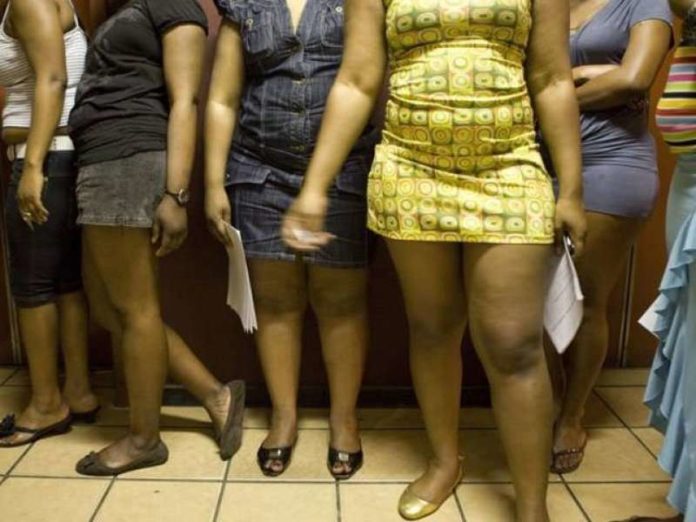
A United Nations (UN) report on human trafficking indicates that Ugandan religious leaders-pastors and imams are involved in trafficking young women to the middle East to work as domestic workers without the knowledge of government.

“Reportedly, pastors, imams, and local leaders at churches and mosques have also assisted in the recruitment of domestic workers abroad, mostly for Middle Eastern countries; these leaders encourage female domestic workers to take these jobs and in turn receive a fee per worker from recruiters,” the report released recently says.

The report says some the have traffickers threatened to harm the victims’ family or confiscated travel documents of victims. The report was released recently as world marked World Day against Trafficking in Persons

According to the report, traffickers exploit girls and boys in prostitution. Recruiters target girls and women aged 13-24 years for domestic sex trafficking, especially near sports tournaments and road construction projects. An international organization estimates there are between 7,000 to 12,000 children involved in prostitution in Uganda.

As reported, over the past five years, Uganda is a source, transit, and destination country for men, women, and children subjected to forced labor and sex trafficking. Ugandan children as young as seven are exploited in forced labor in agriculture, fishing, forestry, cattle herding, mining, stone quarrying, brick making, carpentry, steel manufacturing, street vending, bars, restaurants, and domestic service.

The report quotes an international organization which reported that most internal trafficking victims are Ugandans, the majority of which are exploited in forced begging. Young boys and girls were the most vulnerable to internal trafficking, mainly for labor or begging in Kampala and other urban areas.

The report also says the authorities subjected some prisoners in pre-trial detention to forced labor. Traffickers subject some children from the DRC, Rwanda, Burundi, Kenya, Tanzania, and South Sudan to forced agricultural labor and exploited in prostitution in Uganda.

“South Sudanese children in refugee settlements in northern Uganda are vulnerable to trafficking. In 2017, individuals from Rwanda and Somalia, including a Somali refugee from Nakivale Refugee Settlement, were victims of internal trafficking. Some Ugandans abducted by the Lord’s Resistance Army (LRA) prior to 2006 remain unaccounted for, and may remain captive with LRA elements in the DRC, the Central African Republic, and the disputed area of Kafia Kingi, which both Sudan and South Sudan claim,” the report says.

Traffickers have exploited trafficking victims from the DRC and Rwanda in sex trafficking in Uganda. In 2017, there were allegations that officials from the office of the prime minister were complicit in several illegal activities related to the refugee settlements, including corruption, sexual exploitation and abuse, and facilitating the movement of vulnerable populations from settlements in Uganda to South Sudan.

Meanwhile the report says the government suspended four high-level officials in the office of the prime minister based on allegations of their involvement in illegal activities in the refugee settlements. “The government is investigating the allegations. There were also several media reports of alleged complicity of police officers in child sex trafficking of refugees and coercion of refugee women to perform sexual acts in exchange for various forms of migration documentation,” it says.

In 2016, Ugandan victims were identified in neighboring countries, including Kenya, South Sudan, and the DRC. Young women remained the most vulnerable to transnational trafficking, usually seeking employment as domestic workers in the Middle East; at times Ugandan women were fraudulently recruited for employment and then exploited in forced prostitution.

Ugandan migrant workers are subjected to forced labor and sex trafficking in United Arab Emirates, Saudi Arabia, Oman, Qatar, Kuwait, Iraq, Iran, Egypt, Turkey, Algeria, and China. Despite the government’s partial lifting of the ban on Ugandans’ travel abroad for domestic work to Saudi Arabia and Jordan, some licensed and unlicensed agencies circumvented safeguard mechanisms established by the government by sending Ugandans through Kenya and Tanzania.

An international organization reported identification of 14 victims in Malaysia and Thailand and additional victims in Poland, Switzerland, and Ukraine. Official complicity may have hindered government oversight of labor recruitment agencies.

Uganda’s Coordination Office to Combat Trafficking in Persons (COCTIP) reported that traffickers appear to be increasingly organized and some may have formed regional trafficking networks. NGOs reported that traffickers are frequently relatives or friends of victims, or may pose as wealthy women or labor recruiters promising vulnerable Ugandans well-paid jobs abroad or in Uganda’s metropolitan areas.

15,000 girls engaged in prostitution in Kenya

About 15,000 girls aged between 12 and 18 years, and who live at the Indian coast towns of Mombasa, Diani, Kilifi and Mombasa, are engaged in prostitution, says the report.

The new report on human trafficking, based on research findings concluded last May.

The report indicates that many of the children are smuggled into the towns from within coast area and outside of the region to be exploited within the tourism industry.

It also shows that boys, bar staff and waiters are increasingly being roped into this tourism-fed prostitution, especially during the tourist peak season. The research titled: ‘Assessment Report on Human Trafficking Situation in the Coastal Region of Kenya’ also says that child sexual exploitation thrives because of the complicity of a broad section of the local community that promotes transactional sex, partly due to high poverty rates.

The report shows that Mombasa is a leading transit route for people smuggled from Ethiopia and Horn of Africa nations to Tanzania and other Southern African nations. Although the main focus of the investigation was documentation of Kenyan victims of trafficking abroad, the report notes that trafficking also took place at the Coast, with the victims coming from the hinterland.

The report says that sexual exploitation of men and women in unregulated cottages is a by-product of this migration. “Girls in the coastal areas of Kenya are often recruited for jobs in the (Persian) Gulf through hair salons and restaurants, but are subsequently exploited on arrival,” says the report.

Meanwhile Kenyan women are subjected to forced prostitution in Thailand by Ugandan and Nigerian traffickers, according to the latest United Nations (UN) Report on human trafficking.

Stories Continues after ad

UNBS top official decries shortage of manpower in new report

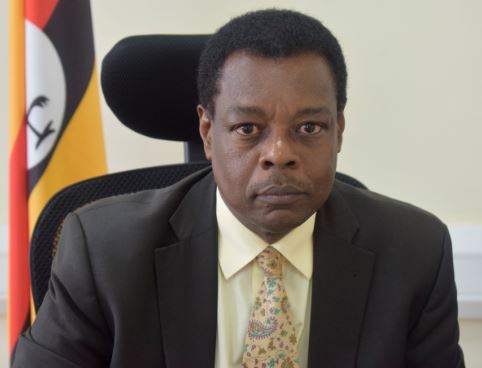
UNBS ED Dr. Ben Manyindo

The Uganda National Bureau of Standards (UNBS) faces the challenge of understaffing despite being given the huge mandate of developing, promoting and enforcing standards and quality of products and services to facilitate fair trade, promote local industries and protect consumers, its executive director, Ben Manyindo has said.

“At the close of the year, the staff levels were 290 of which 26% are women. This however represents 45% of the required 640 staff and forms the number one challenge for scaling up service delivery to Ugandans,” Manyindo told journalists in Kampala on Tuesday while highlighting the agency’s performance in the financial year 2017/18 that ended on July 1.

Dr. Manyindo appreciated his staff and colleagues who he said had worked hard to produce good results. He lauded UNBS’ partners and stakeholders including the media for supporting the agency in posting positive results.

He said his agency was engaging government for more funding and increasing the manpower which is to scale up standards uptake and enforcement in the country.

UNBS decentralised its services of certification and market surveillance to regional offices in Gulu, Mbale and Mbarara effective July 2018.

“This will further promote production of good quality products by Micro Small and Medium Scale Enterprises (MSMEs) at regional level thereby contributing to the government’s effort of promoting industrialization of our economy while we continue to protect consumers and the environment from dangerous substandard products,” Manyindo said.

Prevalence of substandard products on the market

Dr Manyindo in his report said UNBS still grapples with the high level of substandard goods on the market. This, he said led the agency to commission a study in 2017 to assess the extent and prevalence of substandard products on the market.

He said the study established a cross section of substandard products on the Uganda market- both imported and domestically manufactured. “On average, 54% of the sampled products failed tests for compliance to Uganda Standards,” he said.

While we note that the proportion of substandard products on the market is quite significant, it has reduced from 73% reported in a baseline study done in 2013, he said.

“Although the actual prevalence is at 54%, the perception level has remained high at 80%. This is an area that requires a concerted effort in being addressed,” he said.

The lower prices charged for the substandard products is the main reason some people knowingly buy such products considering that prices of some genuine products are prohibitively high, the official said, adding that UNBS “shall invest in a mass sensitisation campaigns to empower with knowledge to identify substandard product and subsequently shun them.”

Market Surveillance:

Dr Manyindo’s report shows that 2,278 outlets were inspected against the set target of 2,000 during the financial year just ended.

“The UNBS market surveillance team seized 413 metric tonnes of goods worth Shs3.5 billion. The seized goods would have otherwise been detrimental to the health and safety of consumers,” the report reads in part.

The goods seized included electronics, cosmetics, steel products, iron sheets, food stuffs, toilet papers, agro-inputs, cooking oil, second hand tyres, beers, paints, and cereals, among others.

According to the executive director’s report, 15 cases were taken to court and UNBS secured conviction of 7 cases while 8 are on-going.

Imports Inspection

Under Imports Inspection function, Manyindo said 133,517 consignments were inspected against planned inspection of 120,000. The increase, he said, was largely due to increased compliance to the PVOC program that requires imports to be inspected from their countries of export before entering Uganda.

“This translates to 8.6 billion products that were inspected out of which 33 million products failed. As a result of UNBS intervention under the PVoC program, we were able to stop 33 million substandard products from being imported into the country,” he said.

Standards development

During the period, among standards developed included those for maize grain, maize flour, wheat flour, milled rice and dry beans were developed which are important staple foods in the country and contribute to food security, value addition and income generation for small holder farmers. Standards for fertilizers have also been developed to contribute to increasing agricultural production in the country.

UNBS also reports that a standard for green coffee beans was also developed which directly contributes to the achievement of the target by Government to produce 20 million 60Kg bags of coffee by 2020.

Standards for farm tools and implements such as spades, hoes and machetes have been developed to curb the rampant sub-standard tools in the market. A new standard for testing the roadworthiness of used imported vehicles will ensure that the safety of motorists is guaranteed.

Standards for building materials such as cement and building lime have also been reviewed to support the infrastructure projects being undertaken by the Government, Manyindo said.

Stories Continues after ad

Kabaka Mutebi preaches against corruption

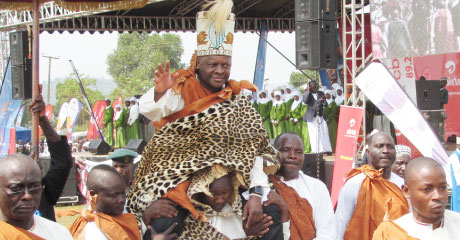
Kabaka Mutebi

Kabaka of Buganda Ronald Muwenda Mutebi II has implored parents and leaders at various levels to preach against greed saying it has led to gripping corruption in the country.

Speaking at the 25th coronation ceremony Kabaka said, greed breeds to corruption a vice that has failed County’s earnings, education, health services and self-development. He called for reactive measures to curtail greed, “our country will be destroyed if we don’t act,”

“Stick to our culture, corruption has led to insecurity, murder among other criminal activities. Discipline-wise, in early years, children were cautioned to embrace good social manners and against illicit activities,” he said.

Muwenda Mutebi ascended his forefathers’ throne at Naggalabi-Buddo in 1993 following various engagements with president Museveni initiated by Prof John Kitende for Kabaka’s return from exile where he spent over 20 years.

Mr. Mutebi called for restoration of cooperative unions for job creation and economic diversification and value addition. He said Ugandans owned cooperative firms which perished during civil unrests that were experienced in the recent years.

At the function, he lauded government and stakeholders for their engagement in the fight against HIV/AIDS. He cautioned his subjects to always test for catastrophic diseases for medication.

In his remarks the guest of honor Asantehene Osei Tutu II, the 16th traditional ruler of the Kingdom of Ashanti in Ghana called for togetherness noting that the chain that links Buganda and his kingdom situating back in early 1990s when his grandparents met with Kabaka Muteesa in exile.

“We don’t have enemies, we should work with each other, our enemy is poverty, and we should work towards economic achievement in of Africa and our countries,” he said at Mengo.

Stories Continues after ad
NDA warns substance in Chinese drug could cause cancer in patients

National Drugs Authority Logo

The National Drug Authority (NDA) has urged all health workers in Uganda of an impure ingredient-nitrosodimethyiamine (NDMA), which cause cancer in patients.

According to the NDA, the dangerous substance was discovered in valsartan API produced by Zhenjang Huahai Pharmaceuticals Linhai, China. Valsartan is used to treat high blood pressure and other illnesses.

The agency on July 27 warned the local health workers through a letter it distributed to them.

The agency now says it has recalled all medicines containing valsartan API supplied by the Chinese company and others. Some of the medicines recalled include; Valsar.Denk 80, Valsar.Denk 160, Valsar. Denk 320, Valsar 160,

NDA mentions Benie Consults Limited and Abacus Pharma Africa Limited as some the companies in Uganda distributing the above drugs.

The drug, according to NDA, has been recalled in the European Union and the United States.

As such, the agency has advised patients who were using the drug to look for alternatives as it continues with the surveillance on the local market.

“Please note that there is no immediate risk and patients using the above listed valsartan brands are advised to switch to alternative brands. NDA will continue to investigate presence of NDMA in all valsartan products on the market and will update this communication immediately,” NDA says.

Valsartan is used to treat high blood pressure and heart failure. It belongs to a class of drugs called angiotensin receptor blockers (ARBs), which help lowering high blood pressure, prevent strokes, heart attacks, and kidney problems.

Stories Continues after ad

House Opposition leader calls for increased government investment in agriculture

Winnie Kizza

The Leader of the Opposition in Parliament, Winfred Kiiza, has called for increased government investment in agriculture for transformation of the sector and Ugandan economy.

Kiiza was speaking during the ongoing Conference of US State Legislatures Kiiza said, government has always been committing less funds to agriculture. Despite surviving on agricultural sector, this financial year government allocated Shs89.2 billion and increment of Shs 2.7billion last from last year.

“Better funding to agriculture will spur improvements and growth in other sectors of the economy, which will in turn lead to less borrowing by government,” said Kiiza.

She called for value addition agricultural produce for exportation more so starting with east African community.

She said Uganda’s land ownership system and legislation guiding how government can acquire land from private individuals for investment, or public works, which according to the Constitution can only happen following compensation.

“Every individual is encouraged to have land in their name but there’s now a move by government to take over private land before compensation,” she said referring to the Land (Amendment) Bill before Parliament.

Hon. Okumu said Uganda has vast fertile land although much of it remains unutilised and that the country’s history involving conflicts led to challenges in the use of the land.

The delegation attending the Conference also includes: Hon. Kenneth Ongalo Obote, Hon. Herbert Kinobere, and the Mr. Pius Biribonwoha, the Director Department of Legal and Legislative Services.

Kiiza who led a delegation of MPs and staff of the Parliamentary Service to attend the Conference of US State Legislatures is being held at the Los Angeles Convention Centre, in Los Angeles, California 30 July – 2 Aug 2018.

The discussion also included MP Reagan, Amos Kimunya (Kenya), Curt Bramble (Utah State, US), Madoda Sambatha (North West Legislature, South Africa), Gade Fundile, and Chief Whip of Eastern Cape Provincial Legislature in South Africa.

Stories Continues after ad

Seven steps to meeting the new bar of delighted customers

Martin Zwilling

By Martin Zwiling

Having satisfied customers is no longer enough to keep you ahead of competitors. The bar has been raised to having “delighted” customers. Customer delight is defined as surprising the customer by exceeding his or her expectations, thus creating a positive emotional reaction. This emotional reaction leads to word of mouth and social media, resulting in many new customers.

For example, during the last holiday season Mercedes Benz USA launched a #MBSecretSanta program on Twitter to personally engage customers and help find the perfect holiday gift. Then they did just that by providing responders with over 1000 gifts, ranging from branded bears, baby clothes, watches, and Bluetooth speakers. It was a small price to pay for the surge of delight.

TD Bank used a similar #TDTHANKSYOU campaign to delight customers with thank you gifts ranging from Disneyland tickets for a single mom, roses for the elderly, and airline tickets for a mother who wanted to visit her sick daughter. With today’s instant communication and the Internet, these efforts were soon known around the world. The value of such viral efforts is huge.

Thinking this way, and then making it happen, requires some strong leadership and lots of effort in existing business, to overcome the long-standing processes and procedures. For entrepreneurs and startups, it can be a bit easier, but still requires resources and risk. In either case, I recommend seven specific steps to set up the right culture, and keep it going:

The priority on delighting customers must be visible at the top. By default, the perceived and most visible focus of most executives is to delight stakeholders first. Perceptions are set by your actions, what you measure, and what you reward. Make sure your actions are based on customer experiences, rather than only internal objectives.

Relate all compensation criteria to customer experience levels. Due to pervasive communication in the marketplace, customers see and react to your compensation and recognition practices. They have negative emotional and viral reactions to people getting bonuses and raises, despite visible product and customer support shortcomings.

Develop programs to exceed current role model leaders. Your competition is global, so look for best-of-breed globally, and apply it locally. Solicit creative thinking and continuous innovation to keep you ahead of the game today, rather than tomorrow. Look beyond industry boundaries for customer delight examples that you can adapt and adopt.

Hire based on people engagement ability, not just skills. If you want excited customers, hire friendly people who love to work with and help others. Resumes and traditional HR processes tend to focus totally on skills and experience. Group interviews are more likely to expose motivation, attitude, and people relationship and learning ability.

Get buy-in from the team on why, and let the team show you how. Your objective should be for every team member to look for opportunities to exceed customer expectations, not just meet them. Those on the front lines will know the best ways to excite customers, and will be more highly motivated if you inspire them take key actions.

Give key employees the freedom to practice delighting customers. Requiring escalation for every exception, or providing scripts and fixed policies, won’t do it. Ensure you have formal mechanisms for employees to make decisions and practice customer sensitivity. Take action on feedback and provide updates to show you are listening.
Highlight your company examples of exceeded customer expectations.

Stories and anecdotes illustrate your message and evoke emotions in a way that even the best facts and figures can’t, both for team members and potential new customers. They improve customer retention and loyalty, as well as improving internal morale and engagement.
A culture of delighting customers doesn’t happen by chance, and it requires more than just good training and excellent operational procedures. Surprising and delighting customers requires a backdrop of strong leadership, deliberate planning, and integrity in execution. It requires a customer-first rather than company-first culture at all levels. Is your organization there yet?

The Writer is a veteran startup mentor, executive, blogger, author, tech professional, and Angel investor. Published on Forbes, Entrepreneur, Inc.

Stories Continues after ad

Police opens general inquiry file against Bukooli Central MP Solomon Silwany

NRM's Silwanyi at a past press conference at Parliament of Uganda

Police has opened general inquiry file against Bukooli Central MP Solomon Silwany and Vice Chairperson for National Resistance Movement Caucus over allegations of storming Naluwerere Polling with a pistol and spraying voters with pepper.

Speaking at Naguru, the Spokesperson of Police Emiliano Kayima said they arrested 25 people before and after Bugiri by-election.
“Most of the suspects have recorded statements, we are preparing their files for prosecution to start,” he said.

“The most important bit is about MP Solomon Silwany, there are allegations that he pulled out a gun, others say it was pepper spray and as a result, we a case has been opened, the process of summoning him, police in Bugiri is preparing summons through the Speaker of Parliament to explaine what transpired,” he said

Electorates contends that the legislator stormed Naluwerere polling station alleging that he was bribing voters with cash a move which with contradicts with electoral laws.

“His presence however, attracted a crowd of angry mob that narrowly lynched him but with the aid of pepper spray, he dispersed the crowd as police escorted him out of the polling station,” some voters said. He also beat up journalists that covered the event destroying their equipment.

Kasese Municipality MP Robert Centenary a victim of pepper spray remarked that, ideally police should have evacuated Solomon Silwany but they just looked on as he tried to disorganize the election process.

The hotly contested Bugiri by-election was won by the president for Justice Forum (JEEMA) and Asuman Basalirwa who garnered 3,928 votes, followed by NRM candidate Mr Francis Oketcho with 3,267 votes and the FDC candidate Ms Eunice Namatende came third with 928 votes.

Stories Continues after ad

Police guard shoots dead Justice Musa Sekaana’s driver

Police Spokesman Emilian Kayima says they are investigating circumstances under which a daytime police guard Daisy Nagasha shot dead a driver to High Court judge, Justice Musa Sekaana’s driver.

The driver, Ismail Mayiga, was shot in the stomach at about 7am, shortly after he reported for duty at the judge’s residence in Muyenga-Bukasa in Kampala.

Kayima said Mayiga was pronounced dead upon arrival at the International Hospital, Kampala where he had been rushed for medication.

Kayima said after the incident, the policewoman immediately handed herself to the Police, saying the gunshot was accidental.
The body has been taken to Mulago for postmortem whereas and Police have commenced the investigations and already visited the scene of crime.

Stories Continues after ad

TD Bank earns $112 million as it holds meeting in Kampala

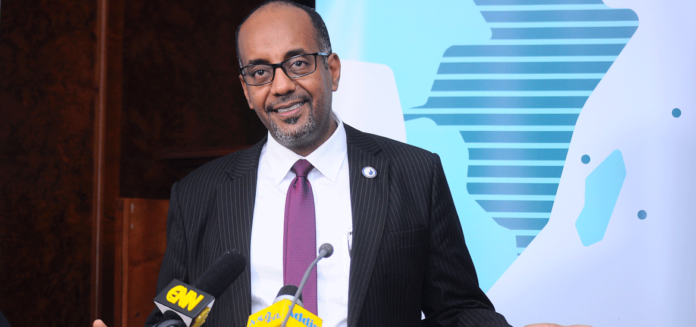
Admassu Y. Tadesse

President of the Trade and Development Bank (TDB), Admassu Tadesse has said in Kampala that the bank last year earned over US$112 million at the end of December 2017, which was way higher than the over US $101 million earned in the previous year.

Mr. Tedesse disclosed the figures in Kampala on Tuesday as he addressed delegates attending the 34th Annual General Meeting of the bank’s Board of Governors at Serena Hotel, Kampala, organised by the Ministry of Finance, Planning and Economic Development.

One of the other highlights in the financial year 2017 financial year, Tadesse said, was the clearing of the US $2.3 million dollar loan that accumulated in 2016.

Tadesse said that TDB is now able to attract international credit to fund the regional development projects such as roads and others.
“Africans can now be proud that the region has a significant bank that can attract international banks to help us grow economically,” he said.

Opening the meeting officially Uganda’s Prime Minister Dr Ruhakana Rugunda applauded the bank for the role it has played in different sectors of the economies of the regions it operates in. “ The bank has contributed to Trade, infrastructure and agribusiness. Its asset value has gone up to 74 per cent since making their investments four years ago,” he said.

Speaking at the function, Finance minister Matia Kasaija said that, “TDB has been a strongly committed partner in Uganda’s economic journey and also supported Uganda in development of some infrastructure.”

Kasaija who is the Incoming Chairman Board of Governors for TDB said that government borrowed money to finance the budget. “This bank has lent us money to invest in different infrastructure, you also remember that we borrowed US $ 200 million from TDB Bank to fund part of our budget,” Kasaija said.

He said government was looking forward to getting credit from the bank to build the standard gauge railway. The only money I am looking forward to borrowing is one for the standard gauge railway and when borrowing, we look at quite a number of things including borrowing rates,” he said.

TDB is mandated to finance and foster trade, socioeconomic development, and regional economic integration through trade finance, project and infrastructure finance, funds management and business advisory services.

Tadesse said the bank has so far signed 33 deals in Uganda and that more were in the pipeline. “We have injected about US $ 448 million into Uganda and we are still doing more,” he said.

The bank is set to sign a grant of US $ 25,000 to Powah Limited, an energy and technology solutions provider, to support the construction of the Powah Hub. The Hub will facilitate access to resources, training, and information for marginalized groups in Uganda.

Tadesse said TDB intends to play a leading role in promoting trade, economic development and regional integration at a crucial time when Eastern and Southern African countries are looking to grow and transform their economies.

The bank has partly funded renewable energy projects such as Turkana Wind Power in Kenya, Hydromax Minihydro in Uganda and industrial projects such as cement and steel plants in DR Congo, Djibouti, Zambia, Rwanda, Ethiopia and Zimbabwe. Other projects funded include the Burundi Fibre Optic Backbone Project and Kilwa Power in Tanzania.
It has also provided important asset finance facilities to the air-transport sector in the region, with Rwanda Air, Kenya Airways and Ethiopian Airlines being beneficiaries. Other sectors beneficiaries are agribusiness, industry, trade financing of fertilizer, equipment, agricultural commodities and petroleum.

Management of the bank have introduced a new class of shares, new shareholders and new member states. We have a more modern, robust governance structure, and a stronger institutional framework, reflected in a new Treasury and new Risk Management Division. We reformed our constitution to make all of this possible, Tadesse of the bank that has been in operation since 1985.

“We have dramatically increased our capacity to meet the rising demand for the Bank’s products and services, thanks to the strong funding partnerships we have built up with long term funders and investors. Our shareholder base has increased by more than 50 per cent in recent years, with several new institutional investors and member states. Indeed, our equity capital has tripled since we embarked on the current corporate plan in 2012,” he said recently in Nairobi during stakeholder events to mark the rebranding of the bank.

With the rebranding, the bank will retain the Eastern and Southern African Trade and Development Bank as its legal name, but its brand name is officially Trade and Development Bank (TDB). It is headquartered in Nairobi Kenya, with offices in Bujumbura, Kinshasa and a few more others.

Stories Continues after ad