Stanbic Bank
Stanbic Bank
26.7 C
Kampala
Stanbic Bank
Stanbic Bank
Home Blog Page 1509

Book Review: Hamis Kiggundu on success and the need to have a sense of purpose

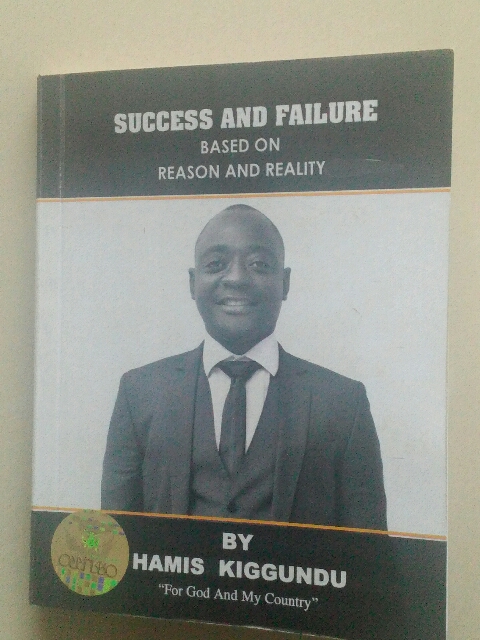
The Book Cover

Hamis Kiggundu is a well-known businessman who not only trades in Uganda as Ham Enterprises Ltd, but also as Ham International UK Ltd in the UK, Ham International Ltd in the US and Skylight Investments in South Africa.

He is a 34-year-old billionaire who directly employs more than 1,200 people. He had his primary, secondary, and university education in Uganda and holds a Bachelor’s degree in Law at Makerere University. He is commonly known as Ham.

In this book, Ham says he’s purely a businessman and doesn’t often write books. But he did write this one due to the prevailing circumstances of many friends approaching him on how he managed to make it today.

The book doesn’t go so much into his businesses and lifestyle, but mainly for education and business purposes. He hopes it positively changes people’s way of thinking and have a great contribution to the development of Uganda.

With the help of his local and international business experience, he basically highlights and explains the areas that may help the reader widen his knowledge on how to manage a business.

He wrote the book in only six days without doing any research at all because it was his intention to pass on his unbiased personal opinion to the readers from a realistic and reasonable perspective. So the book is purely based on his personal realistic opinions.

“This is a reasonable and realistic assessment and critical analysis of things the way I see them before me from a personal opinion. They may not be facts to you. It is merely a personal opinion which may be a fact or not depending on your interpretation, how you look at things and your reasoning capacity.”

We learn that Ham started with some reasonable capital from his parents to start trading in commodities and merchandise from first hand importers abroad and sold them at a profit, grew his own capital, upgraded to real estate and now owns various commercial properties.

He says success is generally a gradual process just like life when growing up. When a child is born, they start by crawling, to walking and then run. If you try to run before walking you will fail. It takes gradual steps to achieve success and where you want to be.

Through the book, he highlights that Uganda has good fertile soil, favourable climate and a large young energetic population which mainly depend on imports with limited exports. He encourages most Ugandans to move to agriculture and put collective effort towards the national budget.

He intends to help those involved by creating the demand for their produce by adding value and marketing the end product domestically, regionally and internationally.

He also talks about widening the tax base to 21 million, almost half of Uganda’s population to help the country develop economically.

“Before you blame anyone for the failure to develop your country, first ask yourself how much tax contribution you make to your country’s national budget. Every adult should have a tax identification number (TIN). We don’t need to increase taxes, we just need to make Ugandans productive and widen the tax base.”

In his book, he also explains about belief, risk, challenges, consistency and patience among the factors for anyone to have a successful business. Believing in yourself to achieve success is one of the first steps to being successful.

“If one wants to be successful then they have to believe in success first.”

Ham’s positive thinking is one of the things that stands out throughout the book. He shares his knowledge to create positive results in our lives. This business book will give you the foundation for creating success-driving habits.
The book also teaches you how to shift your focus to managing how you think rather than spending time managing what you think.

He emphasizes how starting a business with limited capital forces you to think creatively and use your limited resources efficiently. It forces you to be more innovative and become successful.

Overall, the book is a must-read if you’re looking forward to building a business and guide your own path to professional and financial success. It’s not about getting rich but living life on your own terms. It naturally captures the best business advice, productivity tips and life lessons (Parents, Children and Success chapter).

“Man is successfully born with nothing but life. In life, we all desire to have a good life to become successful men and women. Success starts with you as a person and requires you to have a reasonable thinking capacity, plan and strategy. Man shall feed off his sweat.”

In conclusion, it is generally a great book for anyone looking to start and grow a business, develop their careers, build and improve their entrepreneurial skills and become more effective with life and work.

Stories Continues after ad

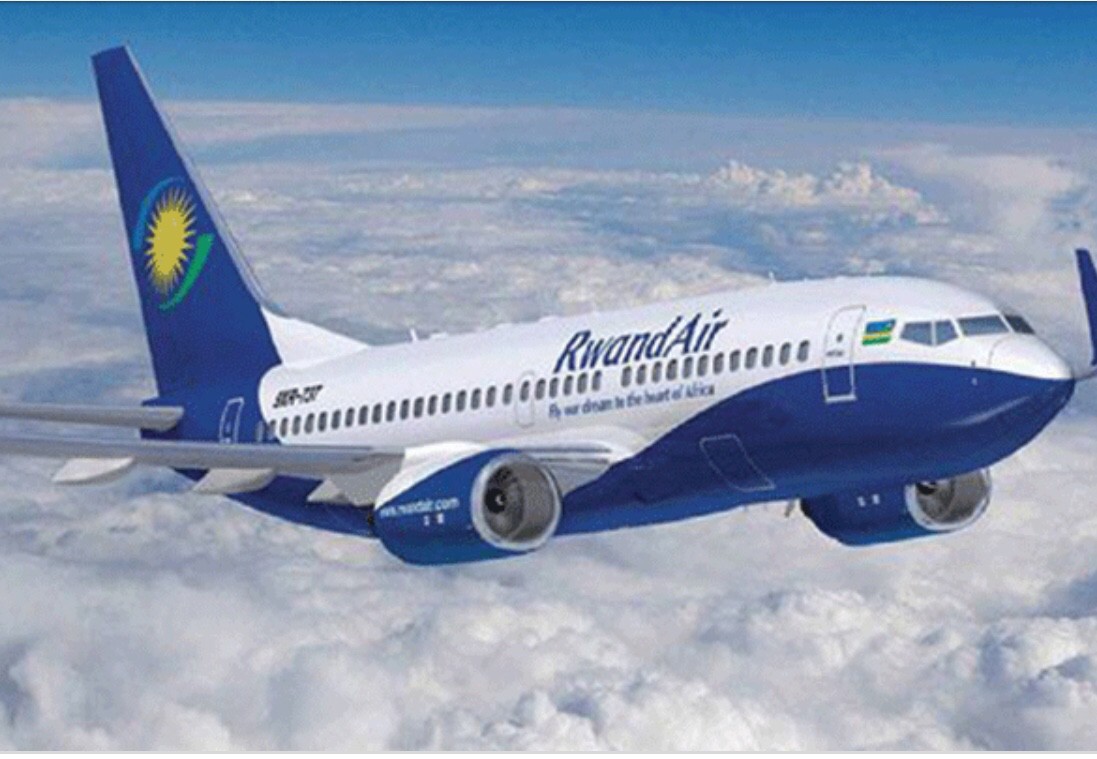
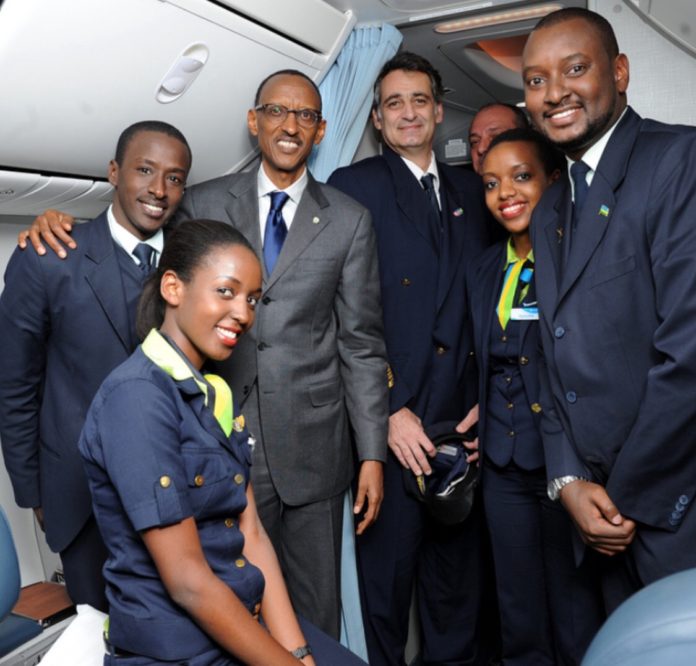
RwandAir Bankrupting Rwanda

By David Himbara

Open Letter To Presidents Yoweri Museveni And John Magufuli

Excellencies:

It is widely reported that you want to establish and expand your national airlines. Apparently, Uganda is set to relaunch Uganda Airlines in November 2018 which ceased to operate in 2001.


My unsolicited advice to you is that you should seriously consider other options before you invest heavily in a national airline. Building a successful airline is easier said than done.

On paper, RwandAir looks impressive
Excellencies:
It may be tempting to follow Rwanda’s example of building what appears to be a successful airline. Indeed, RwandAir looks impressive from a distance.

RwandAir began operations in 2002 as the new national carrier under the name Rwandair Express. In 2009, the airline’s name was changed to RwandAir. Its fleet currently comprises:
• Two Airbus A330
• Four Boeing 737–800
• Two Boeing 737–700
• Two CRJ900
• Two Bombardier Q-400

The airline has considerably expanded its operations. RwandAir serves twenty-two cities in western, central, eastern and southern Africa, the Middle East, Asia and Europe. The airline has also applied for landing rights in the United States at JFK International Airport, New York.

By 2016, RwandAir’s total assets stood at US $238 Million. RwandAir’s fleet, operations across 22 destinations, and total assets all seem impressive. But unfortunately there is a devastatingly gloomy side to RwandAir.

But RwandAir has a gloomy side
Excellencies, a closer look at RwandAir’s state of affairs shows us the real situation. RwandAir’s financial statements from 2013 to 2016 reveal how the airline is bankrupting Rwanda. The circumstances of RwandAir may be summed as follows:

• Total assets — US$238 Million by 2016;
• Accumulated losses between 2013 and 2016 — US $222 Million;
• Accumulated grants from the government between 2013 and 2016 — US $192 Million;
• Accumulated government loans — US $238 Million;
• Accumulated loans from outside government sources — US$100.6 Million.

Let us look more closely at RwandAir’s realities from 2013 to 2016.
• In 2013, RwandAir made a loss of US $48.2 Million. The government stepped in with a grant of US $54 Million.
• RwandAir acquired loans amounting to US$88.7 Million in 2013, and US $148.8 Million in 2014.

• In 2015, RwandAir made a loss of US$53.4 Million. The government had to pump into the money-losing airline US $56.2 Million.

In addition, RwandAir acquired loans amounting to US$88.7 Million in 2013, and US$148.8 Million in 2014.

• In 2016, RwandAir made a loss of US $54.8 Million. The government pumped in US $53.8 Million.

RwandAir is bankrupting Rwanda

The overall picture of RwandAir is ugly. By 2016, RwandAir had accumulated US $222 Million in losses.
The government pumped in US $192 Million in grants. Additionally, the government gave the airline US $238 Million in loans, while loans from outside government were US $100 Million.

This means that Rwanda government kept RwandAir afloat with US $430 Million in loans and grants between 2013 and 2016. When the US $100 Million external loan is added, US $530 Million was pumped into RwandAir between 2013 and 2016.Remember that Rwanda is a small economy with a GDP of US $8.3 Billion and a per capita income of US $702.

Presidents Museveni and Magufuli, do you really want to travel this route?
Excellencies, your countries are well-served by major global airlines. International and regional airlines connect the two countries to key destinations.

What is it that national airlines will perform — which other airlines cannot do? Or is this about a desire for creating a prestigious symbol to project Uganda and Tanzania, internationally? Be that as it may, your Excellencies, do not fall into RwandAir’s trap.

The airline is a disastrous experiment — it is no model for any country with a clear vision and people-centered priorities.

David Himbara
Educator, Author professor of International Development based in Toronto Canada CA.

Stories Continues after ad

AfDB and partners to hold talks on controlling Fall Armyworm

Fall Armyworm hit Ugandan maize farms, leading to huge losses

The African Development Bank (AfDB) will on July 26-27, 2018, host “From Plan to Action,” a meeting on controlling Fall Armyworm in southern Africa.

The meeting will bring together government representatives and experts from the Food and Agriculture Organization (FAO), United States Agency for International Development (USAID), the Alliance for a Green Revolution in Africa (AGRA), Sygenta Foundation and the International Institute of Tropical Agriculture (IITA) to Lusaka, Zambia.

Key private sector representatives, seed companies, farmers and policy makers from Angola, the Democratic Republic of Congo, Malawi, Mozambique, Tanzania, Zambia and Zimbabwe, are also expected to attend.

According to experts, Fall Armyworm, or Spodoptera frugiperda, is an insect that is native to tropical and subtropical regions of the Americas. In its larva stage, it can cause significant damage to crops, if not well managed. The worm prefers maize but can feed on more than 80 additional species of plants including rice, sorghum, millet, sugarcane, vegetable crops and cotton.

Fall Armyworm was first detected in Central and Western Africa in early 2016 and, according to FAO, has since been detected and reported in all of Sub-Saharan Africa, with the exception of Djibouti, Eritrea, and Lesotho.

Experts say that Fall Armyworm is a dangerous transboundary pest with a high potential to continually spread due to its natural migratory capacity. “Without appropriate action, it could cause 21 to 53 percent of maize yield losses in 12 African countries within five years,” they say. The value of these losses is estimated at between US$2.48 billion and US$6.19 billion. Northern Africa and Madagascar are also at risk.

In the second season of 2016, reports of a severe outbreak of dangerous worm on maize plants in the districts of Kasese, Kayunga and Bukedea emerged. And a reconnaissance visit made to these districts found that almost 40 percent of the maize crops in the fields visited were attacked by the pest.

The pest would later be confirmed in 54 districts including; Kibaale, Kamwenge, Masindi, Nwoya, Mayuge, Kyenjojo, Mukono, Kamuli, Luwero, Rakai, Buliisa, Kabarole, Kumi, Serere Kibaale, Kiryandongo, Luuka, Bugiri and Iganga among others.

Based on the estimated yield loss of 15-75 percent elsewhere, the presence of the FAW in Uganda then could translate to an annual loss of at least 450,000 metric tonnes of maize that is equivalent to US$192,857,000.

According to the Uganda Bureau of Statistics, Uganda produces close to four million metric tons of maize grain annually making it the third highest crop produced. Maize contributes to the livelihoods of over 3.6 million households.

As part of its Technologies for African Agriculture Transformation (TAAT) agenda, the African Development Bank established a Compact of Fall Armyworm to mobilize support from researchers and the public and private sector, to confront the menace. The Compact seeks to identify new technologies to combat the pest and distribute them to smallholder farmers across the continent.

Participants will look at ways to deploy the most effective Fall Armyworm-combating technologies to tens of millions of smallholder farmers in the shortest possible time. One focus will be on the Syngenta Foundation’s seed treatment pesticide known as Fortenza Dou, considered effective against Fall Armyworm.

Stories Continues after ad

Bujagali gets Shs1.48trn refinancing boost, power tariff expected to dip

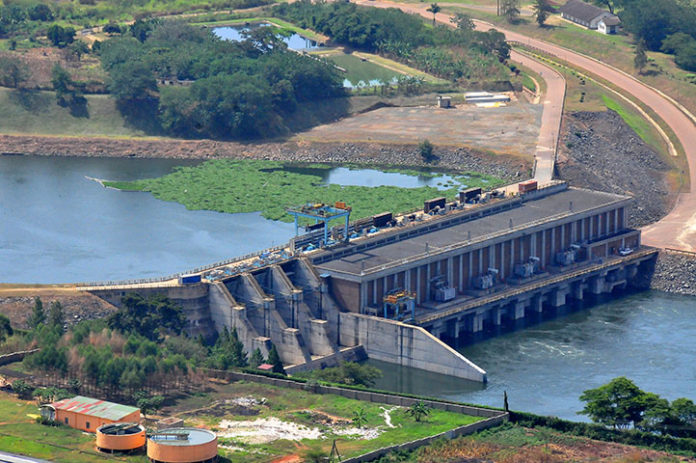
Bujagali hydro power-project

A consortium of development finance institutions and commercial lenders have announced completion of the refinancing of more than USUS$400 million loans (about Shs1.48 trillion) of Bujagali Energy Limited (BEL), aiming to help reduce electricity costs in Uganda.

The financiers include IFC, a member of the World Bank Group, African Development Bank (Joint Mandated Lead Arrangers), Netherlands Development Finance Company (FMO), France’s Proparco, Germany’s DEG, United Kingdom’s CDC and two commercial banks: ABSA and Nedbank. The refinancing package will extend the tenor of the bulk of the senior and subordinated loans originally provided in 2007.

Bujagali, a run-of-river hydropower project on the Victoria Nile, is one of the largest power generation plants in Uganda, contributing 45 percent of the country’s annual electricity generation. It provides clean, reliable base-load energy. Its commissioning in 2012 significantly reduced Uganda’s reliance on costlier thermal power generation.

This extension in tenor will reduce BEL’s annual debt servicing payments and make it possible for the company to reduce the cost of electricity produced by the hydropower plant over the next five years. This was an innovative approach and one of the first to be implement in Sub Saharan Africa in which the Ugandan government has committed to fully pass on these cost savings to consumers, in support of its goals to spur economic growth in the country.

The project has support from across the World Bank Group and the African Development Bank. As previously announced, MIGA’s Board approved political risk guarantees of up to 20 years for equity investors in Bujagali Energy Limited, helping to shore up investor support and long-term engagement with the project. An existing partial risk guarantee from the International Development Association for two of the project’s commercial lenders remains in place.

Alongside the original financing for BEL, African Development Bank’s public sector window financed a transmission line project at Bujagali, the UECTL Bujagali Interconnection Project. The project, which links the Bujagali hydropower plant to the national electric grid, consisted of: construction of part of the Bujagali substation; construction of the Kawanda substation; extension of Mutundwe substation; social and environmental measures; consultancy services; and, financing for a Community Development Action Plan.

Bujagali’s commissioning in 2012 allowed the government to retire more than 100 megawatts of diesel power plants and made it possible to nearly eliminate government subsidies to the electricity sector. Since 2005, the share of Uganda’s population with access to electricity has increased from 9 percent to 22 percent, with the total number of customers having grown from 292,000 to more than 1.1 million over the same period.

More than 90 percent of Uganda’s electricity is now generated from renewable sources, making the Ugandan power grid one of the cleanest in the world.

Stories Continues after ad

WHO announces the end of the Ebola outbreak in DRC

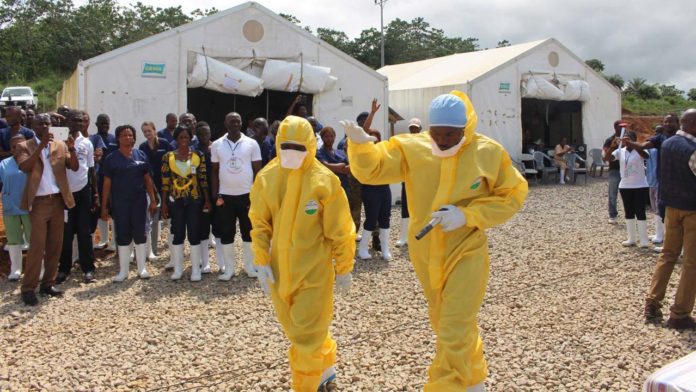
WHO ebola treatment centre in Congo.

World Health Organization (WHO) has announced the end of the Ebola outbreak in the Democratic Republic of the Congo the country’s ninth outbreak of the deadly virus after a total of 53 confirmed and probable cases were reported, including 33 deaths.

“The outbreak was contained due to the tireless efforts of local teams, the support of partners, the generosity of donors, and the effective leadership of the Ministry of Health. That kind of leadership, allied with strong collaboration between partners, saves lives,” said WHO Director-General, Dr Tedros Adhanom Ghebreyesus in a statement.

The Ebola outbreak was declared over when there were no further cases reported and two full incubation periods of 21 days had passed after the last person was treated for the virus tested negative for the disease. The last patient was released in the Democratic Republic of the Congo on June 12, according to CNN.

The WHO responded rapidly to the Ebola outbreak, which included four separate outbreak locations as well as an urban area near a river that connected to the country’s capital city and other areas with lots of residents. The fear among health workers was that virus would spread to an area with lots of people, and become difficult to contain.

During the 2014 outbreak of Ebola in West Africa, during which more than 11,000 people died, the WHO was criticized for responding too slowly to the public health emergency. This time, when the agency announced there was an Ebola outbreak in the DRC, the WHO immediately released contingency funding for emergencies. In total, the WHO used $4 million from the fund to fight the outbreak. Other countries provided supportive funding as well.

Health responders also had access to an experimental vaccine during this Ebola outbreak. More than 3,000 people were given the vaccine, which is made by the pharmaceutical company Merck.

Outbreaks of Ebola, which can spread from animals like bats to humans, are not common, but experts think that the large forests in the DRC are what help make it a reservoir for the virus. Scientists are still learning about the virus and how to treat it, and there remain occasional surprises.

In a recent study, doctors reported that a Liberian woman who contracted Ebola in 2014 may have infected three other relatives a year after she was sick. Researchers think prolonged spread is likely very rare, but the new finding underscores the need to continue following and monitoring survivors of the disease.

Stories Continues after ad

Municipality infrastructure program raises value for land, buildings-report

Road works on Republic Street in Mbale Town near completion.

The Support to Municipal Infrastructure Development (USMID) Program that was launched in August 2013 to improve urban municipalities in Uganda has led to the increases in the value of land, buildings as well as rental prices of properties in the adjacent areas of the constructed roads, a World Bank confidential document says of the municipalities sampled.

The first phase of the US $160 million USMID Program targeted 14 municipalities, namely: Arua, Gulu, Lira, Mbale, Soroti, Tororo, Jinja, Entebbe, Masaka, Mbarara, Kabale, Fort Portal, Hoima, and Moroto.

Particularly the value of land increased from 50-60 per cent, 50-100 per cent, 30-50 per cent, 0-20 per cent and 20-40 per cent in Fort Portal, Hoima, Gulu, Mbale and Masaka respectively. In the same municipalities sampled, rent increased from 40-60 per cent, 80-100 per cent, 20-30 per cent, 0-30, per cent and 20-30 per cent respectively.

However, it notes that the sharp increases in Hoima municipality, in both rent and land values can also be attributed to speculations about oil extraction impact on the local economy.

“The town is now beautiful. Storied buildings are coming up. Land prices and rent prices have gone up.
There is no more dust,” the document quotes a property broker in Hoima Municipality.

Employment Creation
The document says that the construction of urban roads created direct and indirect jobs in the municipalities sampled. However, the document says most of the urban road infrastructure projects visited had been completed or partially completed. “It was only Nyakana Road in Fort Portal where construction was still ongoing and therefore data on employment was obtained,” it says.

According to the document written in April, 2018, the construction of Nyakana road in Fort Portal with a length of 0.94km, was directly employing 56 workers out of which, 10 percent were highly skilled, 10 percent were skilled and 80 percent unskilled.

“The highly skilled workers, skilled workers and unskilled workers were earning Shs35, 000, Shs25, 000 and Shs12, 000 per day respectively. The construction of the road was also indirectly employing approximately 70 workers,” it says. The construction of the road was expected to last for one year and three months.

The documents says that using available data, the construction of one kilometer of the road in a municipality creates direct employment for an estimated 60 workers at a weighted average daily wage rate of Shs13,100 for 15 months.

Construction of one kilometer of an urban road also creates indirect employment for 74 workers who supply goods and services and also through increased consumption from workers who are employed directly, thus, for each direct job created during construction of an urban road, 1.2 jobs are created which it says it is consistent with estimates from previous studies.

“It can also be estimated that the total wage bill for 60 workers, working for 65 weeks and working 5 days per week is estimated at Shs 255,450,000 or 5 per cent of the total cost of one kilometer of a road,” it says.

Road works project has created a positive impact in lives of the Gulu residents in terms of employment especially among youth. Since 2014, at least 854 youth have been employed as truck drivers, machine operators, mechanics, builders and manual laborers on the multi-billion shilling road works project,” the documented quotes Francis Barabanawe Gulu Municipality Town Clerk.

The existing USMID Program was approved on March 20, 2013, became effective on August 20, 2013 and will close in December 31, 2018.

Meanwhile government has requested for an US $335 (about Sh1.240 billion) from the World Bank under USMID to improve the road infrastructure in the municipalities of Kamuli Kitgum, Kasese and Mubende.

After one year of implementation and through targeted institutional support from the Ministry of Lands Housing and Urban Development, four additional municipalities that are regionally distributed shall be added to the program.

“The remaining municipalities in the country will be supported through the central government component to have the necessary capacity to meet the Program minimum conditions and be able to join the Program in the subsequent phase,” says the confidential document.

Stories Continues after ad

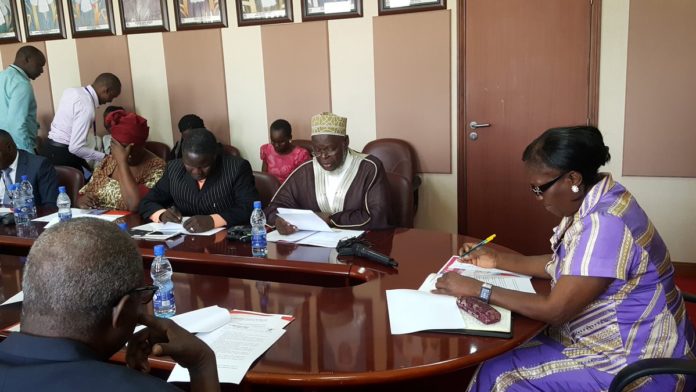
Appropriate funds to facilitate Museveni-Besigye dialogue- Mufti Mubajje

IRCU members meeting Speaker Kadaga.

The chairman of Inter Religious Council of Uganda His highness Mufti Sheikh Ramadhan Mubajje has asked parliament to appropriate funds to facilitate the process of holding national dialogue that will bring Ugandans together in a non-partisan forum.

The dialogue process that will be launched in September this year is anchored political negotiations through the Inter Party Organisation on Democracy (IPOD), Museveni-Besigye mediation and the Constitutional Review Commission that is yet to be put in place by government.

Sheikh Mubajje who implored the August House to pass laws that will give effect to the outcomes of the dialogue said there will be an expression of free will of Ugandans in the range of issues that affect the country. The group was meeting the Speaker of Parliament Rebecca Kadaga yesterday.

In reaction the Speaker Kadaga said, there is need to budget for the process, we believe in national dialogue, we need to create a vote because we need continuity. We also need to have a basis for this and a legal structure of that dialogue.

“Government promised to have the commission in place but it has taken too long, I don’t think it is coming,” she said.
The Chairperson of the Elders Forum, Retired Justice James Ogoola said that the need for national dialogue goes beyond individuals and parties which will lead to peace, justice and prosperity.

“The aim is to have the country move away from violence, assassinations and coups to a stable and peaceful nation,” Ogoola said.
The group facilitated the two presidential debates in 2011 and 2016 at.

Stories Continues after ad

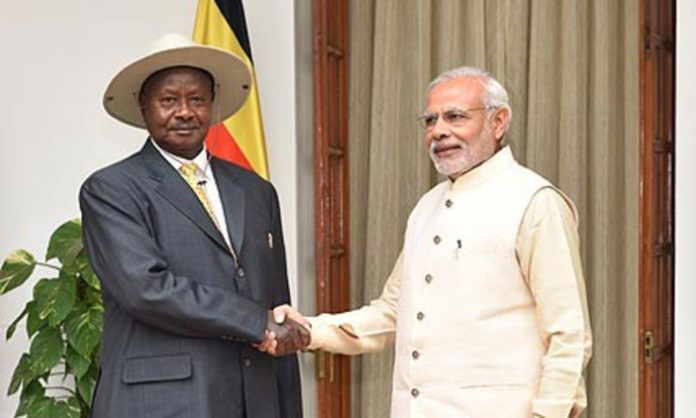
Uganda, India commits to combat terrorism, call for reform of UN

President of Uganda Yoweri Museveni and the Indian Prime Minister Shri Narendra Modi have agreed that the terrorism poses a grave threat to global peace and stability and reiterated their strong commitment to combat it in all its forms and manifestations.

The two leaders made the commitment on Tuesday at Entebbe State House where Museveni hosted a state banquet in the honour of the visiting Prime Minister.

Modi will address the Ugandan parliament today, an event expected to be telecast live in India and many African countries. This will be the first time that an Indian Prime Minister has addressed the Ugandan Parliament.

They stressed that there could be no justification for acts of terror on any grounds whatsoever.
The leaders asserted that strong measures should be taken against terrorists, terror organisations, their networks and all those who encourage, support and finance terrorism, or provide sanctuary to terrorists and terror groups.

They also underscored the need to ensure that terrorist organizations not get access to any Weapons of Mass Destruction (WMD) or technologies and committed to cooperate for the early adoption of the Comprehensive Convention on International Terrorism (CCIT). The leaders agreed on the need to closely engage with regional and international issues of mutual interest and concern.

Both countries have over the past decades been hit by terrorism activities, the highlighting in Uganda being in 2010 when fans watching World Cup finals in Kampala were killed by bombs planted by Al Shabaab terrorists.

The government of Uganda considers the Allied Democratic Forces (ADF) and the Lord’s Resistance Army (LRA) as terrorist organisations even though they now operate out of the country.

The two leaders reaffirmed the need for a comprehensive reform of the UN Security Council, including its expansion, to make it more representative, accountable, effective and responsive to the geopolitical realities of the 21st century.

They reiterated their commitment to intensify their cooperation in the United Nations and other multilateral organisationsin order to address current global challenges such as climate change and to foster international and regional peace and security, as well as sustainable development.

Yesterday a business event jointly organised by the Private Sector Foundation of Uganda (PSFU) and Confederation of Indian Industries (CII) was addressed by both the Principals. Prime Minister Modi also addressed a large gathering of Indian Community in Uganda at a special event organised for this purpose.

Stories Continues after ad

Joint statement on the occasion of the visit to Uganda of Prime Minister Shri Narendra Modi

President Museveni addressing India's Prime Minister and his delegation at State House Entebbe.

1. At the invitation of His Excellency Yoweri Kaguta Museveni, President of the Republic of Uganda, the Prime Minister of India, Shri Narendra Modi undertook a State Visit to Uganda from 24 – 25 July 2018. He was accompanied by a high-level delegation of senior officials of the government of India and a large business delegation.
This was the first visit by an Indian Prime Minister in 21 years.

2. Prime Minister Modi was accorded a high-level ceremonial welcome on arrival. During the visit, he held bilateral discussions with President Museveni at State House, Entebbe on Wednesday July 24, 2018. President Museveni hosted a state banquet in the honour of the visiting Prime Minister.

3. Prime Minister Modi’s program included an address to the Ugandan Parliament, which was telecast live in India and many African countries. This was the first time that an Indian Prime Minister had addressed the Ugandan Parliament. A business event jointly organised by the Private Sector Foundation of Uganda (PSFU) and Confederation of Indian Industries (CII) was addressed by both the Principals.

Prime Minister Modi also addressed a large gathering of Indian Community in Uganda at a special event organised for this purpose.

4. During the discussions, Prime Minister Modi and President Museveni underlined the traditionally warm and close ties between Uganda and India. Both sides agreed that bilateral relations have tremendous potential and reaffirmed the mutual desire to strengthen political, economic, commercial, defence, technical, educational, scientific and cultural cooperation. President Museveni praised the contribution of the 30,000-strong Indian Diaspora towards Uganda’s national development and economic growth. India appreciated the significant role played by Uganda for economic integration and maintenance of peace and stability in the Region.

5. Following the talks, the Indian and Ugandan side:
• Reaffirmed the commitment to reinforce and build upon the successes and achievements of existing bilateral cooperation,
• Underscored the importance of trade and economic ties between the two countries. The two leaders noted the current level of bilateral trade and expressed the desire to enhance and diversify the trade basket including addressing the trade imbalance and to facilitate trade between the two countries.

• Emphasized the need for enhanced private sector investment in a wide range of important sectors, underlining there was great potential for enhancement and expansion of mutual trade relations,
• Noted with appreciation utilisation of the training and scholarship slots by Ugandans under India Technical and Economic Cooperation (ITEC), India Africa Forum Summit (IAFS), India Council for Cultural Relations (CCR) extra.
• Expressed satisfaction at the growing cooperation between India and Uganda in defence matters, in particular the training of Uganda People’s Defence Force (UPDF) in various Indian Army training institutions under the Indian Technical and Economic Co-operation as well as the deployment of Indian Military Training Team in Uganda’s Senior Command and Staff College (SCSC) in Kimaka,

• Agreed to support collaboration between India and Uganda in the area of Information and Communication Technology. Uganda expressed its desire to replicate some of India’s schemes for Digital Inclusion while implementing its Public Key Infrastructure (PKI) project.

6. Both leaders agreed that the terrorism poses a grave threat to global peace and stability and reiterated their strong commitment to combat it in all its forms and manifestations. They stressed that there could be no justification for acts of terror on any grounds whatsoever.

7. The leaders asserted that strong measures should be taken against terrorists, terror organisations, their networks and all those who encourage, support and finance terrorism, or provide sanctuary to terrorists and terror groups. They also underscored the need to ensure that terrorist organizations not get access to any WMD or technologies and committed to cooperate for the early adoption of the Comprehensive Convention on International Terrorism (CCIT).
8. The leaders agreed on the need to closely engage with regional and international issues of mutual interest and concern.

9. The two leaders reaffirmed the need for a comprehensive reform of the UN Security Council, including its expansion, to make it more representative, accountable, effective and responsive to the geopolitical realities of the 21st century. They reiterated their commitment to intensify their cooperation in the United Nations and other multilateral organisationsin order to address current global challenges such as climate change and to foster international and regional peace and security, as well as sustainable development.

10. The leaders emphasized the need for regular convening of bilateral mechanisms, including at Foreign/External Affairs Ministers level, to review the overall state of bilateral relations, and for the expeditious implementation of the economic and development cooperation projects.

11. The following MoUs / Documents were signed during the visit:
• MoU on Defence Cooperation.
• MoU on Visa exemption for Diplomatic and official passport holders.
• MoU on Cultural Exchange Programme
• MoU on Material Testing Laboratory
The two leaders welcomed the conclusion of the MOUs and directed concerned individuals to ensure that implementation of existing agreements, Memoranda of Understanding and other frameworks of cooperation, are fast-tracked.

13. During the Visit, Prime Minister Modi made the following announcements:
• Two Lines of Credits for1. Construction of electricity lines and Substations worth US $141 million and 2. Agriculture and Dairy production US $ 64 million.
• Contribution to establishment of Mahatma Gandhi Convention/ Heritage Centre at Jinja.

• Financial support of US $929,705 for capacity building and creating a supportive infrastructure for East African Community (EAC) which is currently chaired by Uganda.

• 25 slots for training under the ITEC scheme in the field of dairy cooperation in order to strengthen cooperation in the Dairy sector.

• Gifting of 88 vehicles, 44 each for the Ugandan Peoples Defence Forces (UPDF) and for the civil use by the Ugandan government.
• Gifting of Bhabhatron Cancer Therapy machine to assist Uganda’s efforts towards eradicating the malaise of cancer.

• Gifting of 100,000 NCERT books for school going children of Uganda.
• Gifting 100 solar power irrigation pumps to Uganda for helping Uganda’s efforts in the development of agriculture

The announcements by the Shri Prime Minister Modi were welcomed by H.E President Yoweri Museveni, who affirmed that they would go a long way in further cementing and deepening the excellent bilateral relations.

15. Prime Minister Shri Narendra Modi thanked President Mr.Yoweri Museveni for the warm hospitality extended to him and his delegation during their stay in Uganda and extended an invitation to visit India. President Museveni gladly accepted the invitation. The dates will be agreed upon through diplomatic channels.

Stories Continues after ad

Jinja Speaker calls emergency sitting. Mayor says no cause for alarm

Majid Batambuze

Jinja Municipal Council speaker, Moses Bizitu has called an urgent council sitting over an issue where the Municipal’s Mayor, Majid Batambuze, was named to have been involved in a land transaction.

This comes after the Police CID head quarters wrote to Bizitu seeking clarity on a matter they are investigating in which Majid is said to have obtained an unspecified amount of money from an investor by false pretence.

According to the letter seen by The Eagle online dated 19th/7/2018, in 2007 Shayan trading company limited expressed interest in acquiring land comprised in plot 5-51 block 789 Farady Nalufenya road in Jinja.

The said transaction was allegedly coordinated by the mayor through the Jinja municipal council.

The letter thus required office of the speaker to clarify if JMC whether ever handled the request from Shayan Trading Company LTD requesting the said land be leased to them.

The letter also demanded the office of the Speaker to clarify whether council has the mandate to allocate or lease land in Jinja district.

“I received the letter and I can only respond to it after it has been discussed in council. So we are having an urgent council meeting tomorrow over the same,” said Bizitu this evening.

He said that he has also written to town clerk, Francis Byabagambi to avail him with information on all municipal land with land titles for proof whether the said land belonged to Jinja Municipal council or not before he responds.

However, the Mayor, Mr Batambuze says there is no cause for alarm and the district politicians should hold their horses.

“There is no need to call an emergency council session. The land matter is being handled by the commissioner for land registration at the Ministry of Lands , Housing and Urban Development. We should all wait until the Ministry pronounces itself on this matter before we can sit to deliberate on it.

“Jinja Municipal Council lodged a complaint with the Ministry contesting the re- entry into the land at Plot 24 Kyabazinga Way by the District Land board and the subsequent allocation of the said land to one Yahya Kisakye who later subdivided it into 30 plots and has been selling them off quietly,” the mayor said in a text message to Eagle Online.

The Mayors’ Full Response

There is no need to call an emergency council session. The land matter is being handled by the commissioner for land registration at the Ministry of Lands, Housing and Urban Development.

Jinja Municipal Council lodged a complaint with the Ministry contesting the re- entry into the land at Plot 24 Kyabazinga Way by the District Land board and the subsequent allocation of the said land to one Yahya Kisakye who later subdivided it into 30 plots and has been selling them off quietly.

The re-entry was made in 2016 when there was no land board.

The reasons given for the purported re-entry were frivolous which included among others; failure to pay ground rent yet Jinja Municipal Council is the collector of the said ground rent. JMC could not pay itself.

The other reason was that Tirupati the company which had been subleased the land had failed to put up the proposed developments within one year.

That too could not be done because UNRA had indicated that they were going to construct a new road passing thru the land to connect to the new bridge and had requested for a stay of all developments till after they had demarcated the area where the new road was to pass.

We have so far attended two public hearings at the Ministry on the same matter and we are waiting for decision of the Registrar of titles.

There is no need to hold a council meeting before the ruling of the registrar.

I as the Mayor I am the complainant seeking to have the land reverted back to Jjnja Municipal Council. Obviously those who had benefited from the land grab aren’t happy about that as they stand to lose their loot.

It is important that grabbing of public land with impunity is resisted. Many are however aren’t happy about this and will do whatever they can to tarnish the Mayor’s name.

We should all wait until the Ministry pronounces itself on this matter before we can sit to deliberate on it.

Stories Continues after ad