Stanbic Bank
Stanbic Bank
18.5 C
Kampala
Stanbic Bank
Stanbic Bank
Home Blog Page 1511

India expects to loan Uganda over Shs750 billion as Modi visits

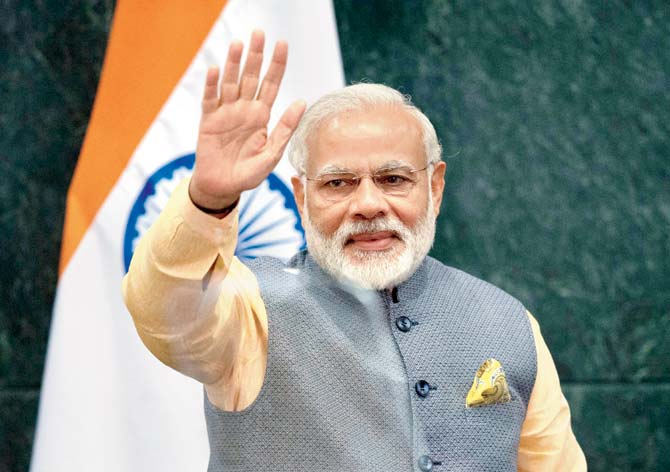
Indian Prime Minister Nerendra Modi

India expects to extend to Uganda credit worth USD205 million (about Shs758. 5 billion), a source has said

The credit line is expected to be announced as Prime Minister Nerendra Modi lands in the country for a two-day bilateral visit where he will be hosted by President Museveni at State House Entebbe.

“We expect to extend two lines of credit (for the first time to Uganda) of US$ 141 million (about Shs521.7 billion) for electricity lines and sub-stations and US$ 64 million (about Shs236.8 billion) for agriculture and dairy production,” said Official Spokesperson, Shri Raveesh Kumar the official spokesperson of Indian Ministry of External Affair.

This is the first bilateral visit by an Indian Prime Minister to Uganda since 1997, after 21 years.

The Indian Vice President Shri Hamid Ansari visited Uganda last year in February 2017.

Modi visited Uganda in 2007 in his capacity as Chief Minister of Gujarat. Since taking over as Prime Minister, he has met President Museveni several times with last one being on the sidelines of the Commonwealth Summit in London in April 2018.

President Museveni has visited India twice on State Visits and once on an official visit in October 2015 to attend the third India–Africa Forum Summit (IAFS) as well as four times in his personal and private capacity.

Uganda is currently the Chair of East African Community. It was under Ugandan Chairmanship that the EAC Summit was held last year. It may be recalled that the CII-EXIM Bank regional East Africa Business Conclave was held in Kampala in Nov. 2017.

Prime Minister of Uganda had visited India in March 2017 to attend CII-EXIM Bank Conclave where Uganda was a guest country.

Vice President of Uganda Edward Ssekandi Kiwanuka had also visited India in March 2018.

There are over 30,000 Indians / PIOs in Uganda. President Museveni is credited with inviting many among the Indian community to return to the country assuring them of their safety and security. He has also been hosting the Indian community for Deepawali dinners in the State House.

Training and capacity building have been the focus of bilateral defense cooperation. India has an Indian Military Training Team (IMTT) stationed at Jinja since 2010.

In Uganda, the elements of the program will include call on the President, restricted and delegation level talks, banquet lunch hosted by the President of Uganda and India-Uganda Joint Business Event.

Modi will address the Ugandan Parliament tomorrow. This will be the first time that an Indian Prime Minister will address the Ugandan Parliament. His address will be telecast live in India and in many African countries. PM will also address the Indian community where President Museveni is also expected to attend.

Modi will tomorrow proceed to South Africa. “The visit to South Africa is mainly in the context of the BRICS Summit. Apart from participating in the BRICS Summit, Prime Minister will have a bilateral meeting with President Cyril Ramaphosa.” Kumar

South Africa is organizing 10th BRICS Leaders’ Summit under the theme “BRICS in Africa: Collaboration with Developing Countries for Inclusive Growth and Shared Prosperity in the 4thIndustrial Revolution”.

Stories Continues after ad

Kadaga boosts Kamuli farmers with 150 heifers

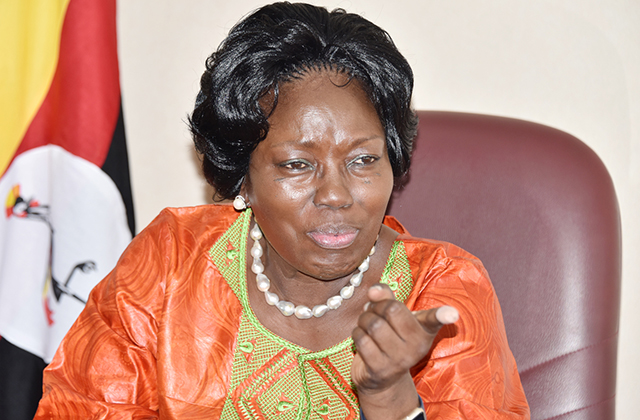
Speaker Rebecca Kadaga

A total of 150 farmers in Kamuli district Sunday evening received heifers from the speaker of Parliament, Rebecca Kadaga to enable them improve house hold incomes.

Flanked by Bugabula South legislator, Moris Kibalya, Kadaga, while giving out the heifers at Kamuli youth centre urged the beneficiaries to take good care of the animals for good milk production.

“One heifer can produce 12 litres of milk in the morning and another 12 litres in the evening if you take good care of it,” she said.

Kadaga said her plan was to turn Kamuli district into a diary production model district for Busoga.

She said she would use her money and other sources to ensure that more heifers are given out to those who have not yet received one from her.

“Let us be patient. If you don’t get today then you are the on the next lot,” she said as the beneficiaries gave her an applause. It was not the first Kadaga gave out heifers. Since 2016, she has given out at least 1500 heads of such animals to different persons in the district.

Among the beneficiaries are small farmers from all the 86 parishes in the district, councilors, district executive members, district NRM executive, sub county NRM chairpersons and all LCIII chairpersons.

Kamuli district LC V chairman, Thomas Kategere said the district production department would always monitor the farmers to ensure that the animals are not sold.

He applauded Kadaga for her generosity and commitment for the transformation of her district.

“This is not the first or second time. Maama, we are so grateful and I am sure these animals will improve our health and income,” he said.

Kibalya hailed the speaker for her support towards improving the lives of the people, especially the NRM leaders who always campaign for the party flag bearers.

He urged farmers to always ensure prompt vaccination of their animals, besides proper hygiene in kraals, so as to ensure the animals are not hit by diseases.

Stories Continues after ad

KTA Advocates adds new partner to consolidate position in region

The new KTA Partner, Kenneth Muhangi

Ugandan Law firm KTA Advocates (Karuhanga, Tabora & Associates) has consolidated its niche as the go to Intellectual Property (IP) firm in the region by bringing onboard another extinguished partner-Kenneth Muhangi.

Mr. Muhangi comes to KTA to head a team of experts in technology, media, telecommunications, IP and dispute resolution. And that is because he has a wealth of knowledge and experience in those sectors.

He will also lead lend his credence to the dispute resolution and IP practice teams.

Edward Tabaro, Managing Director at the firm comments: “It is exciting, thinking about the contribution Kenneth will add to our team and to the Amani IP network that brings together firms from the East African region. This is the age of innovation and disruption and our firm is now the first fully specialized practice for IP, technology, media, telecommunications and arbitration.”

Counsel Muhangi brings to the team over eight years’ experience and holds a master’s degree, LL M (International Commercial Law) from The University of South Wales, Bachelors’ Degree from Uganda Christian University and a Diploma in Legal Practice from the Law Development Centre.

He is licensed to practice law in Uganda and the greater Commonwealth. In the area of intellectual property and technology, Muhangi is renown award winning author and trainer and this has cemented his credentials as a specialist in the aforementioned practice areas.

He has conducted specialized training in areas of ICT, block chain technology, digital banking and data protection among others. He represents and has conducted trainings for some of the largest national and multi-national entities in the region such as Stanbic Bank, Housing Finance and Liquid Telecom.

He also a visiting lecturer of IP at Uganda Christian University and has also conducted lectures on Cyber Law at Makerere University Law School. He is a member of the Young Lawyers’ Committee of the Uganda Law Society (ULS) and the IP Cluster, ULS. He is also a member of The Africa List, an exclusive community of next generation CEOs building Africa’s top 100 companies, supported by the CDC Group.

Advocate Muhangi has also advised the Government of Uganda on the integration of ICT into the adjudication processes for Courts of Judicature. He has also advised on changes to the Industrial Properties Act and is an ardent advocate for the passing of the Data Protection and Privacy Bill.

He joins an already diverse team of specialized attorneys, and brings the total number of partners at KTA to four and total number of lawyers to 10.

The firm is also introducing the Tech Hub, a business acceleration centre that identifies, incubates and accelerates startups with legal, social, financial technology, health, agricultural innovations.

The firm is affiliated to AMANI IP with offices in Uganda, Kenya, Tanzania, Rwanda, Burundi and South Sudan.

Stories Continues after ad

Pressure group wants Parliament to summon Kasaija over Bagyenda reappointment

Embattled former Executive Director in charge of Supervision at Bank of Uganda Justine Bagyenda.

Following the confirmation by Finance Minister Matia Kasaija that he had reappointed Ms Justine Bagyenda as board member of the Finance Intelligence Authority for a second term, a pressure group wants the House Committee on Commissions, Statutory Authorities and State Enterprises to ask the minister to revoke the appointment.

In a July 23, 2018 letter addressed to Cosase Chairman Abdu Katuntu, Youth Power Research Uganda (YPRU), says that his committee should summon the ministry to explain the circumstance under which Ms Bagyenda was reappointed as board member of the FIA even as the agency and the inspectorate of government were investigating her for unexplained accumulation of wealth.

“We appeal to Cosase to summon Hon. Matia Kasaija to apologise to the investors on behalf of government for obstructing justice,” the letter reads in part.

The group also alleges that Bagyenda, a former director of supervision at Bank of Uganda (BoU) is under investigation for matters related to mismanagement or foul play which led to the dissolution of three banks in a shot span of less than six months while still working at BoU. They group says the closure of the banks caused many youth their jobs but also that it impacted on financial inclusion “hence hampering the growth of the economy.”

The group claims Ms Bagyenda had a hand in the closure of Crane Bank, Teffe Bank and National Bank of Commerce.

“We therefore appeal to Cosase to summon the Finance Ministry which is the line ministry to explain the circumstance which led to the appointment of a person to the board of the organization which is supposed to investigate her which is can jeopardise fair findings of the comprehensive investigations report as a result of conflict of interest,” the group says.

However last week, minister Kasaija said he reappointed Ms Bagyenda unaware that she was under investigation over alleged financial fraud. “When I re-appointed her, the issues of money laundering and others were not yet in the press. There is no way I could have re-appointed her with question marks surrounding her integrity,” he said.

The groups says that president Museveni has often ridiculed government workers who suffocate government processes.

Recent leaked bank documents showed that Ms Bagyenda on one her fixed account at Diamond Trust Bank (DTB) had US $214,149 on December 29, 2017 at an interest rate of 3 percent. The maturity date is set for Dec. 29, 2018, leading to a net interest of US$5,536 after a tax deduction of US $977.

Earlier on September 7, 2017, Bagyenda made a fixed deposit of Shs 179m and expects to earn a net interest of Shs7.5 million on maturity in March 2018.

She had on December 29, 2016, made another fixed deposit of US $1776, 717 which matured in December 2017.

On December 28, 2014, the transactions which leaked from private auditors indicate, Bagyenda did not make any fixed deposit – but she had a balance of US $238, 563 on her Diamond Trust Bank account.

For every deposit, Bagyenda received a certificate of deposit showing the interest the principal amount would attract, taxes incurred and net amount payable to her on maturity.

In March 2014, Bagyenda had made a fixed deposit of about Shs900 million which earned her a net interest of about Shs 9.2 million

In November 2014, Bagyenda had another fixed deposit of Shs568 million which saw her realise a net interest of Shs5.7million.

In January 2015, Bagyenda made another deposit of Shs480,000,000 million setting a maturity date of one month. She earned Shs4.8 million in interest.

Bagyenda’s source of these staggering amounts of money remains unclear as the public awaits to see what the FIA and IGG investigations will reveal.

Stories Continues after ad

Gen. Kayihura is ill. Doctors suspect allergy

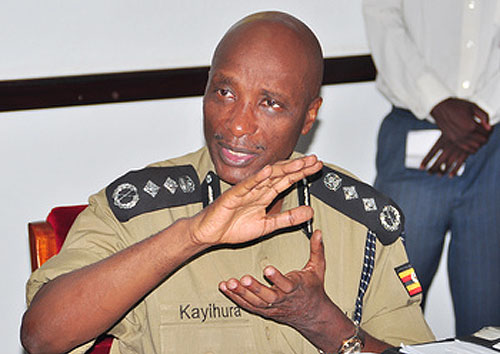
Former Inspector General of Police Gen. Kale Kayihura

Former Inspector General of Police, Gen. Kale Kayihura isn’t well in his incarcerated house as he has been hit by allergy to a point that he has lost his voice.

However, the doctors that attend to him have advised that his condition isn’t worrying as it could be allergy.

According to sources, the former blue eyed army general to President Yoweri Museveni is said to have fallen sick from Friday throughout the weekend and Monday wasn’t allowing in visitors apart from few selected ones due to his health.

“He is well but the only strange thing is that he has lost his voice due to allergy and we suspect this is due to the new conditions he finds himself in” a source told Eagle Online. Asked whether this condition could be due to the ‘poor’ accommodation, the source insisted that the house where Gen. Kayihura lives is befitting for his status.

Eagle Online has also established that Kayihura is moody and is never the jolly. He is also reportedly fearing to meet people he thinks record him and so if one isn’t personally known to him, he can’t open up to talk to such a person.
Kayihura is detained at Makindye Barracks with six of his former aide de camps.

According to security sources that Eagle Online talked to, Gen. Kayihura has been linked to the killing of Assistant Inspector General of Police by suspects who were arrested earlier. However, sources say this is one among a host of charges lined up against him by the state. Other charges that are being lined up include espionage that could see treason charges slammed on him.

In a statement released by Uganda Peoples’ Defence Force Spokesperson, Richard Karemire it said Gen. Kayihura is still a serving officer of UPDF and has been staying in Kashagama, Lyantonde district since March 15, 2018.

Stories Continues after ad

Uganda Airlines to make losses for first two years—NPA projection

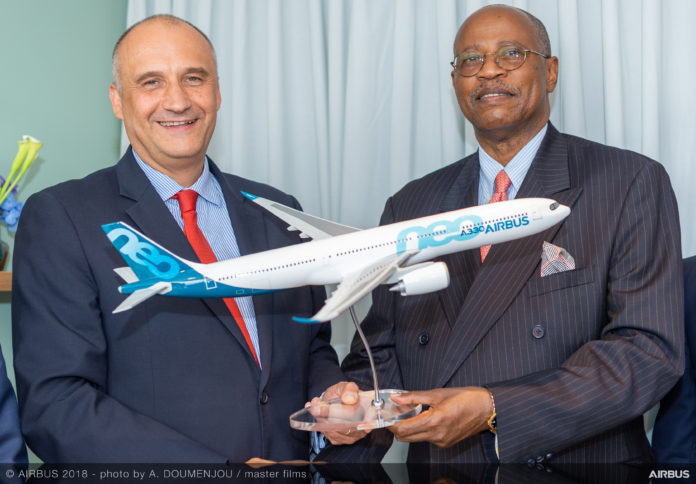
CEO Uganda Airlines, Mr Ephraim Bagenda(Right) with Eric Schulz, Airbus Chief Commercial Officer

Uganda Airlines is projected to make financial losses in the first two years of operation and to break even in the third year, according to the feasibility study on the revival of the airline.

“From year four onwards, profitability improves as the airline gains traction in its markets and cements its brand with customers, resulting in modest increases in load Factors and yields,” says the study that was approved by the Chairman of the National Planning Authority (NPA) Prof. Kisamba Mugerwa alongside the Executive Director Dr Joseph Muvawala.

Government recently ordered for two A330-800neo aircraft and four new CRJ900 regional jets to in preparations to kick- start Uganda Airlines aviation business.

The plan to revive the airline was based on the assumptions that; government would inject equity of US $70 million (about Shs259 billion) required in operating capital for the airline. Of this, US$20 million (about Shs74 billion) would be intended to serve as start-up capital for the airline.

The additional amount of US $50 million (about Shs185 billion) would be utilized as a contingency or buffer for “working capital”, being the amount equivalent to three months’ expenses in the first year at zero revenue, it was assumed.

Government, according to the feasibility study, would purchase the aircraft using loan finance sourced internationally at an interest rate of 5 per cent per annum and over repayment periods of 7-10 years.

The study then quoted the costs of Airbus A330-200 estimated at US$109.5 million and CRJ900 at US $27.96 million.

Maximum daily utilization for the A330 aircraft is 15 hours per day while the utilization for the CRJ900 is 10.7 hours per day

“As mentioned in the sections above, the plan assumes the generation of Load Factors of between 40 per cent and 65 per cent with an average of 62 per cent across all three product lines in the initial three years… The airline will be adding routes in the first three years reaching its full schedules in year four especially on the regional routes.

From year four onwards, results improve as passengers and cargo volumes increase and the airline benefits from economies of scale across all routes and product lines. It is in year four that we expect to have a full hub structure for the national carrier at Entebbe International Airport,” the study reads in part.

Regional airlines

The study points out Kenya Airways as Uganda Airlines’ immediate strong competitor because it is a full member of the Sky Team Alliance and is the fourth largest carrier in Africa by scheduled capacity. The alliance provides Kenya Airways’ passengers with access to the member airlines worldwide network and passenger facilities.

The second competitor is Ethiopian Airlines wholly owned by the Government of Ethiopia and is a member of the Star Alliance. Currently it is one of the continents leading carrier, serving over 76 international destinations through its hub in Addis Ababa.

Rwanda Air currently operates a fleet of six aircraft and it has code share agreements with Brussels airlines, Ethiopian airlines and Precision Air.

More in the NPA report

Losses incurred by Uganda as result of lack of national airline

Currently, the study says, Uganda loses about US $540 (about Shs 2 billion annually, in form of higher transport costs (extra charges) to passengers originating and terminating at Entebbe International Airport, due to absence of a National Carrier.

“The best-case investment scenario (combined regional and international aircraft purchase) would generate a direct Net Present Value (NPV) economic benefit of US $580 million, after taking care of all the investment and operating costs, over a 15-year period,” study says.

Public listing

For greater focus and highest efficiency, the study also recommends the airline should undertake its own ground handling, without immediate plans to diversify into ground handling of other airlines.

It urges government to undertake full capitalization of the national carrier during the initial years and later divest through public listing, to avoid challenges of risk transfer between government and private sector.

“This capital structure will also enable the airline to build from modest equity provided by government to self-financing from operations thereafter,” the study says.

Leasing the airline

The study says that the options of leasing aircraft should be considered after the airline has built sufficient assets for the necessary credit worthiness.

“This is necessary because the airline requires capital assets (aircraft fleet or cash equity) to be used as a basis for code sharing and receiving other airline services on credit that are billed monthly,” it says.

In the case of Uganda’s National Carrier Business Plan developed in this study, a total cash equity of US $140 million will be required to replace the option of using aircraft as the asset base, it says.

Airline not for financial benefits

The study also recommends that the investment in the national carrier should be considered as an infrastructure for enhancing the country’s global connectivity and competitiveness, beyond the direct financial benefits, adding that the carrier will play a critical catalytic role in tourism development and promotion, export growth, investment in various priority sectors and global networking.

Liquidation

Despite lacking audited financial statements for 1992 – 1995, the Auditor General established in 1998 that the corporation’s current liabilities then were Shs20.8 billion with assets valued at Shs10.7 billion.

It had investment shares in: African Joint Air Services (AJAS) of 10 per cent, Entebbe Ground Handling Services Limited (ENHAS) of 50 per cent and Uganda Inflight Services of 25 per cent.

It had a large workforce of 325 employees and fixed assets valued at only Shs5.1 billion. The Airline was technically insolvent, and coupled with the many challenges it faced, it became ungovernable in that state and ceased to be a going concern. The airline by then operated on weekly subventions from Government.

On February 16, 1999, government agreed to the divestiture of Uganda Airlines Corporation, with government taking up all the corporation’s liabilities. This was expected to attract a Strategic Equity Partner through negotiations with other international airlines by a successor company, Uganda Airlines Holdings Limited (UAHL).

Through an international tender process, government embarked on identifying a suitable strategic partner, and engaged in several negotiations that were unsuccessful, including those with South African Airlines, British Airways and the Uganda Airline Management Team who proposed an Employee Buyout of the corporation.

The failure to attract a strategic partner subsequently led to the liquidation of Uganda Airline Holdings Limited in 2001, which resulted in the sale of the Airline’s remaining assets to settle the Corporation’s debts and other liabilities. This effectively left Uganda without a national carrier. As a result, airline fares and services were left to foreign airlines who have used high pricing to the detriment of travelers to and from Uganda.

The study says the absence of a national carrier has also affected the country’s competitiveness due to poor air transport connectivity and high cost for travel of passengers and cargo. And the realisation of the gap created by the absence of a national carrier has led to various attempts by Government and other stakeholders to re-introduce a semblance of a National Carrier.

Stories Continues after ad

IGP cautions officers against arbitrary arrests and intimidation of voters

Police Chief Okoth Ochola

The inspector general of police (IGP) Martin Okoth Ochola has cautioned police officers over arbitrary arrests and intimidation of voters as Country prepares for local government and parliamentary elections that kicked off earlier in the day to July27, 2018.

In a media briefing held at police headquarters IGP said, incidents are being investigated and whoever is culpable will be prosecuted in accordance with the law, “investigation and prosecution of such cases will not end with the elections,” he added.

“Operation orders have been drawn, briefings and deployments have been concluded, and Police must ensure that these elections go on smoothly, if there has been any abuse by police officers, it must stop. All police officers must ensure that no abuse whatsoever is occasioned on citizens,” he said at Naguru.

Elections have always evoked emotions that have sometimes sparked off commission of election related offences leading to massive arrest and detention of electorates from various polling stations.

He said it is imperative for all stakeholders to play their Candide roles to overcome incidents that promote violence and crime.

In the same vein Mr. Ochola said, no citizens should engage in the commission of crime, “If they do, Unit Commanders must investigate and prosecute these elements without fear or favour,”

“Police officers must assess threats, deploy adequately and monitor the process to ensure a safe environment for citizens to exercise their constitutional rights of voting for leaders of their choice without fear or intimidation,” he said.

Stories Continues after ad

OPM clarifies on Kyegegwa land

Clarified on Land Issues: Prime Minister Dr. Rukunda.

Maria Nassiwa
Kampala:
The Office of the Prime Minister has clarified on the ownership of the 48 square miles piece of land where Ugandans expelled from Tanzania were settled last year.

In a press statement from the prime ministers spokesperson, the premier’s office says that contrary to claims the former Tooro Prime Minister, Steven Irumba, the disputed land belongs to government.

“The land in question was gazetted on 18th September 1964 as government land under the custody of Uganda land commission covering an area of 48 square miles in Kyaka, Kyegegwa district.

“From the time it was gazetted up to 1994 (54years), this land was used by the government to host refugees from Rwanda and Congo,” the statement reads in part.

Over 5,000 Ugandans who were expelled from Tanzania were settled by the Ugandan government on a piece of land in Kyegegwa district between June 2016 and March 2017.

Towards the conclusion of the resettlement exercise, Mr. Steven Irumba approached OPM claiming that government had grabbed his private land and settled people on it.

However, Prime Minister’s office notes that the same matter was brought to the attention of the ministry of land, relevant ministers and Kyegegwa district officials who held several meetings and field verification visits to try and resolve it.

It further notes that after government decided to settle the over 5000 Tanzania expellees on part of the controversial land, most of them took advantage and started encroaching and settling on the entire Kazinga zone of Kyaka 1.

“It is important for these facts to be put across for everyone to know,” the statement reads. “Encroachers on this land who are over 10,000 acknowledged that the land they were occupying belonged to government and that Mr Irumba is the only encroacher who has refused to accept.”

Stories Continues after ad

Desist from waiting for gov’t programmes-Museveni

President Yoweri Museveni has cautioned Ugandans to be innovative and implored them to desist from waiting for government programmes.

Museveni said those that are innovative, they emerge billionaires out of commercialized and mechanized agriculture.

Museveni made the remarks at the launch of ‘Kisoboka’ Savings and Credit Cooperative Organization (SACCO) pioneered Mityana woman MP Judith Nabakooba and Mityana North counterpart who doubles as the State Minister for Tourism Geoffrey Kiwanda Ssuubi.

The initiative seeks to empower local farmers to improve their lives and boost their household income through improved agriculture.
The SACCO targets over 7,000 Mityana farmers and aims at availing them funds to adopt the best agricultural practices in order to increase productivity.

Museveni said there is need for Ugandans to shift from subsistence to commercial farming as a means of increasing their household income.

After a guided tour arounded Kiwanda’s model plantation farm exhibiting various the modern methods of farming, he lauded him for starting up a model farm and pledged to inject Shs50 million into the SACCO.

He pledged to organize a veterans’ retreat at the National Leadership Institute (NALI) in Kyankwanzi District where they would discuss the challenges affecting them with a view to getting possible solutions to those challenges.

In his remarks the minister asked Museveni to render a hand in changing of peoples’ mindset towards economic transformation of Ugandan economy.

Stories Continues after ad

New online platform to empower women in EAC By Our Reporter

An online platform to support women entrepreneurs in Africa has been launched with the support of the African Development Bank (AfDB).

The 50 Million African Women Speak Networking Platform Project (50MWS) will provide financial and non-financial information to women entrepreneurs within the African continent including the East African Community (EAC).

The platform will enable women to interact and grow their businesses, according to Mary Makoffu, the EAC director of social services.

Alongside the EAC, 50MWS is also being implemented in three other regional blocs, the Southern African Development Community (Sadc), the Common Market for Southern and Eastern Africa (Comesa) and the Economic Community of West African States (Ecowas).
“This is a good opportunity for women in business in respective regional economic communities (RECS) to penetrate markets of other blocs”, Makoffu said.

In preparation for the new three-year project, the EAC secretariat recently conducted meetings targeting ministries responsible for Gender, ICT, Trade and EAC Affairs as well as the civil societies.
Each member state would, thereafter, be required to form respective country team that will help in collection of information to upload into the platform.

The ministries responsible for Gender in each country, which normally disburse funds to support women’s economic activities, will be in charge of 50MWS coordination.
The project will also contribute to reduce to zero gender that were observed during the surveys,” noted the project coordinator in the region.

Women entrepreneurs can use cellphones to targeted under the project and even those based in remote rural areas but using cellphones to access information circulated in the platform.

Stories Continues after ad