Stanbic Bank
Stanbic Bank
19.4 C
Kampala
Stanbic Bank
Stanbic Bank
Home Blog Page 1522

Somali security officials undergo training on gender equality and human rights

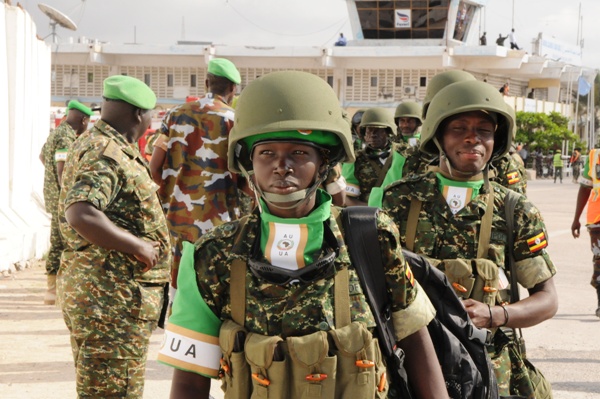
UPDF soldiers in Somalia

More than 30 participants from the Somali national security forces have concluded a five-day course on gender equality and human rights.

The participants drawn from security agencies of the federal and state governments were taken through sets of rules, regulations and laws on gender equality and human rights to ensure compliance to international humanitarian laws as required by the United Nations and the African Union.

The train the trainer (TTT) course was conducted by the African Union Mission in Somalia (AMISOM) in partnership with the British Peace Support Team.

Speaking during the closing ceremony, on Thursday, the Special Representative of the Chairperson of the African Union Commission, Ambassador Francisco Madeira, said the training was important in helping Somalia’s security forces comply with international rules and regulations on human rights.

“The training is in recognition that the work of building the capacity of Somali national security forces involves not just training in hardware but also on issues of compliance,” Ambassador Madeira noted.

The training, the SRCC observed, was meant to not only ensure that AMISOM and SNSF, operate under the global and regional norms established by the African Union and the United Nations, but also promote the participation of women in the security sectors.

He hailed the enthusiasm exhibited by the participants, adding that their decision to plan and execute the course, fitted well with the AU Mission’s preparations for the gradual handover of security responsibility to Somali national security forces.

The British Ambassador to Somalia, David Concar, who also attended the ceremony, lauded the participants for taking part in the training and urged them to promote gender issues in their respective federal member states and work places.

The ambassador’s sentiments were supported by the participants who thanked AMISOM and the British Embassy for organizing the training and promised to work hard to ensure observance of human rights in their areas of work.

“We benefited a great deal from this training, which is very important. We will put to use the knowledge we have acquired from this training and it will benefit the community,” said Farhia Saman Mohamed.

The 30 participants who attended the course were selected among 151 personnel who had undergone a series of trainings, since the initiation of the programme last year.

The participants will be expected to train new trainers on issues of gender equality and compliance to international human rights and humanitarian laws in their respective federal states. The five-day course was funded by the British Embassy in Somalia.

Stories Continues after ad

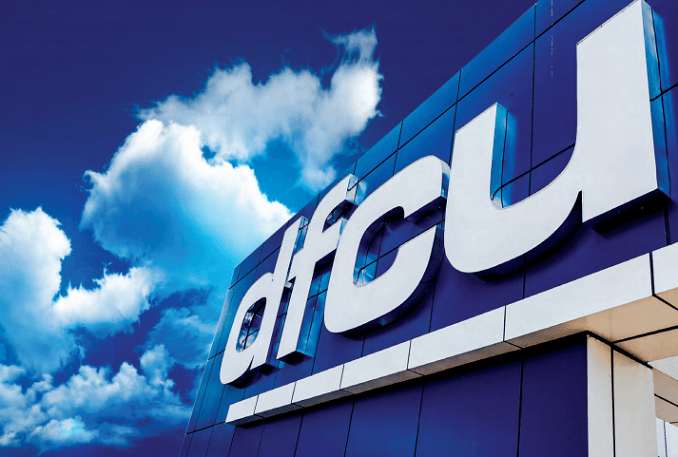
DFCU Bank should explain status openly for purposes of transparency

DFCU Chairman Dr Elly Karuhanga

On July 6, the Chairman of DFC Bank Dr Elly Karuhanga addressed the media in Kampala countering earlier media reports that major shareholders were hatching plans to pull out of the bank. Karuhanga maintained that all was well at DFCU.

Yet one wonders if all was well at the bank, then why should major shareholders hatch plans to pull out of the business which posted over Shs120 billion in the year ending December 31 2017.

Of course Arise B.V.Chief Executive Officer, Deepak Malik has said they have no intention of selling their shareholding in Dfcu.But Malik made that statement after it emerged from within the bank itself that they were contemplating what next after the Commonwealth Development Corporation (CDC) in a leaked letter to Karuhanga showed its intention to exit DFCU Bank.

That CDC in a letter dated June 14, asked for the discussions to remain confidential says a lot of what is happening at the bank that controversially bought its rival Crane Bank. The case related to the sale of the latter is in court. Meanwhile the Auditor General’s (AG) Office is investigating Bank of Uganda (BoU) over the same deal as demanded by parliament following an outcry from Crane Bank shareholders and whistleblowers from BoU.

Let us take it that Arise B.V.is staying and that is good given they are the largest shareholders with 55 per cent. However the timing of CDC’s exit plans is suspicious especially at the time when DFCU Bank is party to the sale of Crane Bank. Analysts say it would be good for CDC to leave after the court case is concluded. If allowed to leave soon, CDC would leave other shareholders.The new suggested Cranemere Africa Limited and responsAibility Investments AG (the Strategic Investors) would face some challenges even as due diligence check would be applied before any transaction of CDC’s 10 percent shares can take place.

Arise B.V. acquired a majority stake (55 per cent) in DFCU Limited, the company that owns DFCU Bank, after providing up to US $50 million to the bank to help it meet short-term capitalisation needs after the latter took over Crane Bank in January 2017.
Much as Karuhanga allayed fears on the impact of the exit of the British Investors CDC, saying that reducing shareholding is always normal, the public knows that all is not well at the DFCU Bank.
BOU which supervises about 24 commercial banks in Uganda needs to come up and give a clear statement on whether CDC’s intentions to leave at this time is okay even though BOU is accused together with DFCU of mishandling Crane Bank transactions.

The Capital Markets Authority which tracks companies listed on the Uganda Securities Exchange (USE) also has a role here to play as DFCU Bank is listed on the USE.
The intervention of the two institutions is important in confirming whether all is well at DFCU Bank as claimed by top executives.
There are reports that some time back representatives of Dfcu Bank’s European shareholders came to Uganda on a fact-finding mission in regard to the suit filed against DFCU Bank by Meera Investments.
Owned by businessman Sudhir Ruparelia, Meera Investments has dragged DFCU Bank to Land Division of the High Court, seeking to reclaim its 46 branches that were allegedly acquired illegally following the dissolution of Crane Bank. Whether this indicates that all is well as DFCU Bank is a matter of debate.

But top managers need to provide right answers as regards the current status of the bank that made headlines in the media as it made huge profits six months after acquiring Crane Bank assets worth over a trillion Shillings, having agreed to pay a paltry Shs200 billion to BOU in installments, never mind that BoU claimed to have injected taxpayers’ Shs200 billion in Crane Bank before handing it over to DFCU Bank.

Stories Continues after ad

Bashir, Kiir arrive in Uganda Saturday

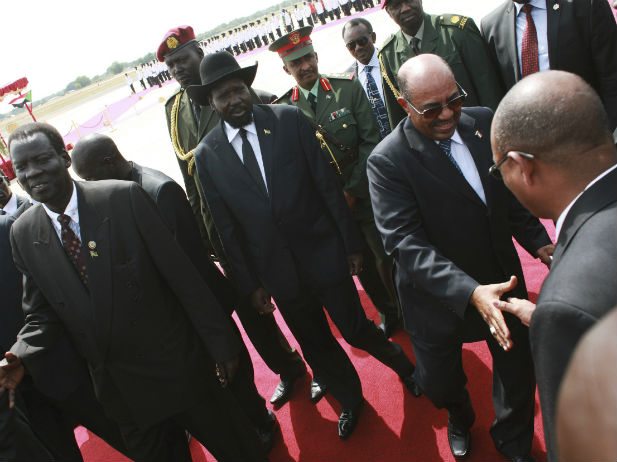
OIL DEAL ON: Sudan President Omar Bashir and his South Sudan counterpart Salva Kiir during Bashir the former's visit to Juba. Photo credit/sudantribune.com

KAMPALA-The Presidents of South Sudan and Sudan will arrive in Uganda on Saturday to meet President Museveni over peace talks between the warring parties in South Sudan.

A message issued by State House on Friday said the two leaders would arrive in the country on Saturday morning.

The two leaders will hold a meeting with Ugandan leader on the South Sudan conflict that displaced millions and left thousands dead.

Riek Machar was an instrumental figure in South Sudan’s fight for independence from Sudan. Yet since his exile, he has been frozen out of the peace process, angering members of his armed opposition.

Moreover, the decision by IGAD to transfer the rebel leader to a country outside of the East African region, has further strengthened suspicion that the regional bloc is biased in favour of Kiir.

IGAD, together with regional and international partners, have been trying to revitalize fledgling peace talks. Their efforts saw Machar declare a cessation of hostilities with the government of Salva Kiir on December 21, 2017.

Scarcely a day later, however, was it back to business as usual, as offensives were launched by both sides and President Salva Kiir demanded that diplomats and journalists cease publishing ‘negative’ reports.

The conflict, which began in 2013 as a political fallout between Machar and Kiir, has escalated into ethnic violence and the displacement of over 2.2 million people.

Today, the world’s newest nation should be benefitting from its rich oil reserves. It is instead facing famine and severe food shortages. And the patience of the international community is running out.

How much of the multi-layered conflict – that has at various times implicated Uganda, Sudan, Kenya and Ethiopia – can be blamed on Machar? His wife maintains that the rebel leader has always sought peace.

Stories Continues after ad

World Cup and Olympic Games preparations: How to stop three weeks of fete from turning into 30 years of debt

ZURICH, SWITZERLAND - OCTOBER 20: FIFA World Cup Trophy is presented after the FIFA Executive Committee Meeting on October 20, 2011 in Zurich, Switzerland. During this third meeting of the year, held on two days, the FIFA Executive Committee will approve the match schedules for the FIFA Confederations Cup Brazil 2013 and the 2014 FIFA World Cup Brazil. (Photo by Harold Cunningham/Getty Images)

By Peter Berlin

The 2018 football World Cup has kicked off in Russia, and people around the globe are by now glued to their radios, televisions, and laptops, living each save, each goal, every triumph, every loss. Excitement reigns, but at the same time, some are also turning their thoughts to the future, to 2022 and beyond. Organising and hosting an event on the scale of the World Cup is a massive undertaking, as FIFA, the governing body of world soccer, the OECD, and even the voters of the Swiss canton of Valais, know well.

On 30 May, the Organisation for Economic Co-operation and Development (OECD) Council Recommendation on Global Events and Local Developmentwas endorsed by ministers at their annual meeting in Paris, just a couple of weeks before the World Cup opening ceremony in Moscow, and as the French capital begins its preparations to host the Olympic Games in 2024.

The OECD document offers a blueprint for events of limited duration but global reach, which can include exhibitions and cultural festivals as well as major sports competitions. Hosting a major event can be a catalyst for social and economic betterment, and policymakers have a role to play in making sure such events bring value for money and that their impact on local communities and the environment is properly and openly assessed. The OECD Recommendation, which is the first of its kind, can help, the intention, as Secretary-General Angel Gurría said, being to encourage “sensible and efficient investment” that contributes to job creation and transparent management. Organisers need to ensure that the benefits are shared “before, during and after the events”.

The staging of World Cups and, in particular, the Olympics Games, has been problematic over the years. Potential host countries have felt pressure from their own public, who want to be allowed to participate in deciding whether or not to host such events. A lack of public support led Boston to withdraw its bid to host the 2024 Olympics. And in June 2018, the canton of Valais rejected, once again, a proposal to bid to host the Winter Olympics. Switzerland might be the home of the International Olympic Committee, but its citizens–or at least those in Valais–want no part of the games. The slogan of those opposing the bid was “three weeks of fete, 30 years of debt.”

The trend could continue, for as Chak Hee Anh, director of global affairs at the Korean newspaper JoongAng Ilbo, noted during OECD Forum 2018, an international public policy debate which takes place alongside the ministerial meeting, “more and more, we are seeing countries reconsidering the notion of having these big, sometimes, disruptive events.”

Why? Firstly, cost. The Olympics and the World Cup do not come cheap–and their budgets have a tendency to inflate along the way. “It’s quite easy to spend more money than you are supposed to use,” explained Cesar Cunha Campos, director of FGV Projetos, speaking at the OECD Forum. For the 2016 Brazil Paralympics and Olympic Games, for instance, “the bidding process in the Paralympics was US$400 million and we spent US$2 billion; for the Olympics US$17 billion and we spent US$29 billion. So, you have to be careful.”

The official price tag going into the 2018 World Cup in Russia is US$11.8 billion, already over budget, though some estimates put the figure as high as US$14.2 billion, which would make it the most expensive World Cup ever. But these numbers are dwarfed by the costs of the 2014 Winter Olympics in Sochi and the Beijing Summer Games, which both exceeded US$50 billion. The 2022 Qatar World Cup could smash all records.

Then there’s the return on investment. The histories of both competitions are filled with stories of projects gone awry. The 1976 Montreal Olympics checked all the boxes for ill-conceived infrastructure: the unnecessary Mirabel airport, now used only for freight, and an over-ambitious Olympic Stadium, nicknamed the “Big Owe”, which is hardly used and still soaks up public money. The 72,000-seat Mané Garrincha stadium in Brasilia, which cost around US$500 million to renovate for the 2014 World Cup and the 2016 Olympic Games football tournament, is not used by any elite soccer clubs today and its parking lot has become a garage for city buses.

For the 2012 London Olympic Games, the city promised to build a new, dedicated athletics stadium, despite the likelihood of limited demand for one afterwards. The legacy committee now rents the London Stadium to West Ham, a Premier League club, which is demanding conversion of the athletic facilities into a more football-friendly arena.

Local government heads worry that they will not be able to afford the upkeep on the shiny new arenas. Russia has spent between $3.5 billion and $4.7 billion on stadiums for its 32-team competition. This includes $500 million to convert the Fisht Stadium in Sochi, built at a cost of US$770 million for the 2014 Winter Olympics. What will the return be? In his annual televised phone conversation with heads of regional governments at the start of June, President Vladimir Putin said the stadiums should be “self-sufficient”, though he explicitly ruled out using them as flea markets, a repurposing that happened after the collapse of the Soviet Union.

Another issue is the increasing size of World Cup–2018 might be the last one with 32 teams participating. FIFA has long planned to expand the competition to 48 teams for 2026, giving more spots in the finals and more money to its member nations. At their pre-World Cup congress in Moscow, FIFA members deferred a decision on whether to expand the 2022 competition to 48-teams. They accepted the recommendation of the inspection team not to go with Morocco’s bid to host such a large World Cup in 2026, voting for a joint United States-Mexico-Canada ticket instead.

If the World Cup is now so big that even the US cannot host it alone, where does it go from here?

Nor are cost and size the only problems to address. There is responsible business conduct to uphold too, not least regarding labour standards, which have been seriously questioned in relation to Qatar’s world cup preparations.

The OECD recommendation, which calls for labour rights to be respected, is a positive step. The tool can help host countries, regions and cities, as well as international event partners, to better design large-scale events shaped to local needs and with people at the heart, and generate long-term benefits. By improving on the design and implementation of such events, by managing their legacies thoughtfully, we can focus on what brings us together in sport, what is shared when a match kicks off or a race begins.

As French Paralympian and OECD Forum participant Michaël Jérémiasz reminds us, these events are “much more than just a few weeks of sport”. They are an opportunity to inspire and be inspired, to “share what humanity can be”.

The Writer works for the OECD

Stories Continues after ad

Cristiano Ronaldo heading to Juventus

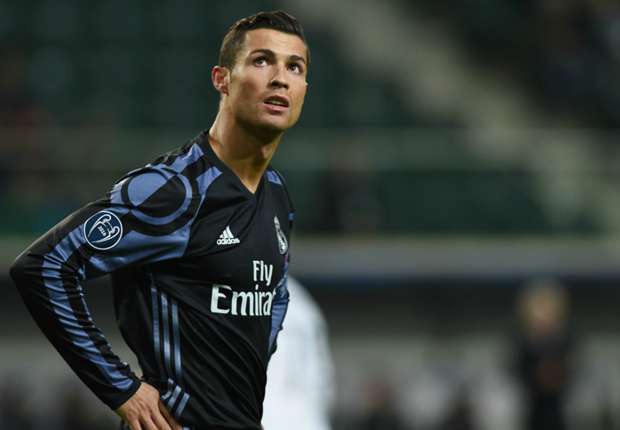
Portuegese International Cristiano Ronaldo.

Italian giants Juventus are reportedly interested in signing Real Madrid ace Cristiano Ronaldo according to various media reports in Italy.

It is believed that Juve could spend up to €100 million for the five-time Ballon d’Or winner, who has previously spoken of his admiration for the Italian club.

Cristiano has a €1 Billion release clause but there is an agreement that he can leave for £88m if he goes to a club not considered a direct rival.

Ronaldo prompted questions about his future after their 3-1 Champions League final victory over Liverpool in Kiev, promising an announcement “soon”.

The 33-year-old Portugal forward has scored 450 goals and assisted 131 times in 438 matches for Real Madrid.

He was applauded by Juventus fans last season after scoring a spectacular overhead kick in the Champions League quarter-finals at Juventus’ Stadium.

Real Madrid paid Manchester United £80m for Ronaldo in 2009.

Stories Continues after ad

Gripping corruption in Uganda hampers U.S companies from investing in the economy- Amb. Malac

Kampala: U.S. Ambassador to Uganda Deborah Malac says gripping corruption in Uganda has become a major obstacle that is hampering U.S companies from investing in Ugandan economy.

Every year, Uganda loses billions of shillings to corrupt officials hence retarding the thriving of Ugandan economy. According to Corruption Perceptions Index of 2017, Uganda is ranked number 151 out of 180 in terms of Transparency, fighting the vicious vice and taking bribes.

The sum of money that is lost to corrupt official every day could be used for building schools, improving healthcare, roads and growing the economy.
Speaking at the 242nd US Independence Day celebrations Malac said, for Uganda to prosper, the first step to be taken is reducing corruption adding it has complicated the competition for investment dollars is in Uganda and Africa as continent.

“If the rules of the road are unclear or are ignored, or if decisions are delayed in the hopes of ‘facilitation’, legitimate, world-class companies will go elsewhere taking their job-creating opportunities with them,” she said at US embassy.

Malac said, U.S. companies expect a level playing field when it comes to business opportunities, “we hear too many stories of contracts being ignored and U.S. companies that are cheated,” added us ambassador.

“USA is committed to working in partnership with Ugandans to achieve the brighter future and that is what we all want to see for this country, we are here to support Ugandans and to help create opportunities so that all Ugandans can shape their future,”

In spite of the shooting cases of corruption, government is playing a critical role in curbing the vice. Currently there is an ongoing prosecution of former Principle Accountant in the Office of the Prime Minister Geoffrey Kazinda, The former Managing Director for National Social Security Fund (NSSF) David Chandi Jamwa, Former Minister of Works and Transport Engineer Abraham Byandala among other cases.

Stories Continues after ad

¬¬Ten key insider rules for every new venture founder

Martin Zwilling

By Martin Zwilling

After many years as a mentor to aspiring entrepreneurs, and an occasional angel investor, I realized that new venture founders all seem to stumble on similar pitfalls, despite my best efforts to steer them to smoother routes. Of course, I would never say never, and passion does overcome many obstacles, but it still pays to learn from a few key lessons of others before you.

You may not be ready to absorb all one-hundred insider rules I found in a new book, Straight Talk For Startups, by Randy Komisar and Jantoon Reigersman, so I’m offering here a selection of my top ten from their list, adding my own insights. For the rest, these authors come with a wealth of startup and venture capital experience, with real-life examples to back up all their rules:

Starting a venture was never easier – succeeding never harder. In the early days (20 years ago), most new e-commerce businesses, for example, cost a million dollars to set up. Now the price is closer to $100 if you are willing to do the work yourself. But “easier” brings more new startups, with more competition determined to rise above the crowd.

Aim for an order-of-magnitude improvement. Make sure your idea has real customer value, a large opportunity, and a sustainable competitive advantage before you start. “Nice to have” or a ten percent cost advantage alone doesn’t make it these days. To get investor and customer attention, you need a tenfold improvement in cost or function.

Know your financials and interdependencies by heart. Most of the tech entrepreneurs I know pay minimal attention to the financials. They assume that “if we build it, they will come.” Early investors expect you to explain five year revenue projections, gross margins, and break-even. At rollout, you need to add cash flow and customer acquisition.
Net income is an opinion, but cash flow is fact. A large customer like Walmart will provide a large net income, but can easily kill you with cash required for inventory and receivables cycles. I recommend that every startup CEO sign every check personally, and be miserly in managing payables and expenses. Out of cash means out of business.

Don’t accept money from people you don’t know well. Many entrepreneurs argue that the color of the money is the same from all sources. They fail to realize that investors are like spouses, requiring chemistry and a complementary win-win relationship for long-term success. Take your time courting investors, and get views from peers and advisors.

Avoid professional investors unless you absolutely need them. If you don’t want a boss, don’t look for an investor, since they can be the toughest boss you ever had. Fund it yourself and grow organically to avoid the cost, pain, and time of finding angels or VCs, and keep control and equity for yourself. Over ninety percent of startups today are self-funded, or use only friends and family.

Don’t let a short-term fix become a permanent mistake. Crowdfunding, for example, may seem like a good fix for initial funding, but usually precludes professional investors later if needed to scale the business. The same is true if you accept unusual valuations or term sheet options to close a specific deal. Every investment has long-term implications.

More ventures fail from indigestion than starvation. Raising too much money can be a curse. Early ventures with too much cash lose focus and are reluctant to pivot. Founders should ask for funding in stages, as the venture builds momentum, decreases its risks, and increases valuation. Hungry entrepreneurs are always the most creative.

The founder should choose the best CEO available. Most often, new venture founders are the solution builder, visionary, and the first CEO. Yet many don’t have the interest or experience to scale the business. Don’t let your ego prevent you from stepping into a better fitting role as the business evolves. It’s more fun than failing or being pushed out.

Choose an exit strategy – don’t wait for it to find you. The best exit for most startups these days is to be acquired by a major player, rather than going public (IPO), or staying private too long. It’s best to start early in courting potential acquirers or investment bankers, rather than waiting for them to swoop in and knock you off your feet.

In addition to these rules, I also want to second the cardinal rule that every entrepreneur needs to be able to explain why the proposed new venture is important to them, to others, and worth all the blood, sweat, and tears that will likely be involved. Only then will I believe that you that you have the potential to beat the odds and change the world, and have some fun at the same time.

The Writer is a veteran startup mentor, executive, blogger, author, tech professional, and Angel investor. Published on Forbes, Entrepreneur, Inc.

Stories Continues after ad

DFCU’s board member resigns, letter confirms CDC wants to exit

dfcu bank

As key shareholders plan to exit DFCU Bank, other changes are also taking place. The latest is that one of an influential director on the bank’s board, Deepak Malik has resigned his position, further complicating matters.
Deepak Malik serves as the Chief Executive at Arise B.V. He also serves as the Head of Department – Financial Institutions and part of the management team at Norfund.

Arise B.V. first acquired a majority stake of over 50 percent in dfcu Limited, the holding company of dfcu Bank after lending US$50 million in February 2017. The money was to help DFCU Bank meet its short-term capitalisation needs after it controversially took over Crane Bank in January 2017.

Arise B.V. acquired the stake in DFCU Bank from two previous largest shareholders of DFCU Bank-Rabo Development B.V and Norfinance AS (Norfund) which had a 27.54 percent stake each to become the largest majority shareholder in DFCU Bank.

The South Africa-based company was to support DFCU Limited via long-term investment in the bank’s growth ambitions, especially to enable the bank to improve its market position and efficiencies especially after acquiring Crane Bank Limited in a deal many analysts believe had financial flaws.

Malik’s resignation as a non executive director means the DFCU board is now left with five other non-executive directors led by All Elly Karuhanga as Chairman. Others directors are; Albert Jonkergouw, Winifred Tarinyeba- Kiryabwire, Frederick Kironde Lule and Michael Alan Turner.

Analysts say the Malik’s decision to resign confirms reports that Arise B.V. intends to leave especially that Britain’s Commonwealth Development Corporation (CDC) Group intends to exit, following DFCU Bank’s controversial acquisition of Crane Bank Limited in January last year at only Shs200 billion yet Crane Bank had assets worth over Shs1 trillion.

Reports indicate that CDC is leaving for various reasons which include poor economy but some sources say CDC wants to dodge paying taxes on its dividends. Other sources intimated to Eagle Online that top executives at Arise B.V. decided to plan exiting DFCU Bank in fear that CDC was leaving them trouble, they being new and majority shareholders of DFCU Bank.

The contents in CDC’s exit letter
The letter confirming CDC’s plans to exit DFUC Bank reads in part: “After a period of over 50 years as a shareholder, it our aspiration to exit in a manner that causes minimum disruption to the business and ensures the orderly trading of DFCU’s shares. Further, CDC’s objective is to identify like-minded investors who could support DFCU in its new phase of growth. CDC is of the view that the bank will continue to succeed with the support of Arise B.V., its majority shareholder.” The letter addressed to Karuhanga on June 14, 2018.

CDC in a letter, says partly that it had previously discussed the sale of its shares with Karuhanga as DFCU chairman. The shares, according to the letter, may be sold in short and medium term.

“With the knowledge of the company and Arise B.V., we have held preliminary discussions with a small number of potential investors.

Two of those potential investors, Cranemere Africa Limited and responsibility Investments AG (the Strategic Investors), would like to be formally introduced to DFCU’s board and move into a due diligence phase. We therefore request that DFCU’s management support the due diligence process with the Strategic Investors.

Clearly all discussions and disclosures should be subject to confidentiality agreements between DFCU and Strategic Investors and should take place within the regulatory framework set by the Uganda Securities Exchange and the Capital Markets Authority,” the letter reads in part.

According to Irina Grigorenko-CDC’s investment director who wrote the letter, no transaction has yet been approved by its investment committee. Any decision by CDC to sell its shares in DFCU would be subject to the approval of the investment committee of the terms of the sale as well as the agreement of legal documentation.

Financial analysts say with the on-going investigation of the Bank of Uganda top executives over the sale of Crane Bank and others like the National Bank of Commerce, big shareholders of DFCU are spending sleepless nights. The situation is made worse as the case is also in court.

Back to Malik
Mr. Malik joined Norfund as an Investment Director in 2003 where his efforts were spent in promoting Norwegian investments in Southern Africa and the region.

He was previously the Regional Director of South Africa at Norfund. He has started his career at SIEMENS (India) in 1982, after which he opened a private consultancy in 1984, specialising in financial services. He was then appointed as audit manager for KPMG in 1988, following which he became Financial Director for ZAL HOLDINGS (Ltd) – a subsidiary of Zambia Consolidated Copper Mines Limited.

In 1993 he became the Financial Controller for Mulungushi Investments and in 1994 was appointed as the Manager Operations Accounting. In 1995 he was appointed General Manager for Group Procurement. Mr. Malik was responsible for the regional office for Africa. He served as an Acting Head of Department Financial institutions and SME at Norfund.

He also served as the Regional Representative at The Industrialization Fund for Developing Countries, of Denmark. Previously, Mr. Malik’s vast experience included his roles as a Managing Director and Chief Executive Officer at the Development Bank of Zambia, as a General Manager at Zambia Consolidated Copper Mines and as an Audit Manager at KPMG. He serves as the Chairman of AfriCap Microfinance Investment Company. He is on the Board of Directors of various companies, including financial institutions and private equity funds.

He is a Non-Executive Director of Real People (Pty) Ltd. since July 20, 2011. He serves as a Non-Executive Director at Equity Group Holdings Limited. He is a Non-Executive Director of Equity Group Holdings Limited since April 29, 2015. He had served as a Non-Executive Director of Real People Investment Holdings Limited since May 28, 2015. He served as a Board Member of Norwegian Microfinance Initiative.

He served as a Director of NMBZ Holdings Limited and NMB Bank Limited from January 31, 2014 to October 22, 2014. He is also the Head of Financial Institutions Department of Norfund, covering Africa, South Asia and Central America.

He is also part of the Executive Management team of Norfund. He has over 35 years’ experience and has a diverse experience in general management, development banking, banking, private equity, audit, microfinance, corporate and public finance, project financing, financial restructuring and privatization in emerging markets, mining, procurement and financial management.

His specialization is working with multilateral/bilateral financial institutions and he also has an extensive knowledge of developing countries. He is a qualified Chartered Accountant. He holds a Bachelor of Commerce (Honors) from the University of Delhi, India.

vity: 0 minutes ago
Details

Stories Continues after ad

Low quality healthcare is increasing burden of illness and health costs globally, says new report

Poor quality health services are holding back progress on improving health in countries at all income levels, according to a new joint report by the OECD, World Health Organization (WHO) and the World Bank.

Currently, the report says, inaccurate diagnosis, medication errors, inappropriate or unnecessary treatment, inadequate or unsafe clinical facilities or practices, or providers who lack adequate training and expertise prevail in all countries.

The report says the situation is worst in low and middle-income countries where 10 percent of hospitalized patients can expect to acquire an infection during their stay, as compared to seven percent in high income countries.

“This is despite hospital acquired infections being easily avoided through better hygiene, improved infection control practices and appropriate use of antimicrobials.. At the same time, one in ten patients is harmed during medical treatment in high income countries,” says the report.

These are just some of the highlights from Delivering Quality Health Services – a Global Imperative for Universal Health Coverage. The report also highlights that sickness associated with poor quality health care imposes additional expenditure on families and health systems.

There has been some progress in improving quality, for example in survival rates for cancer and cardiovascular disease. Even so, the broader economic and social costs of poor quality care, including long-term disability, impairment and lost productivity, are estimated to amount to trillions of dollars each year.

“At WHO we are committed to ensuring that people everywhere can obtain health services when and where they need them,” said WHO Director-General Dr Tedros Adhanom Ghebreyesus while giving his view on the situation. “We are equally committed to ensuring that those services are good quality. Quite honestly, there can be no universal health coverage without quality care,” he said.

“Without quality health services, universal health coverage will remain an empty promise,” said OECD Secretary-General Ángel Gurría. “The economic and social benefits are clear and we need to see a much stronger focus on investing in and improving quality to create trust in health services and give everyone access to high-quality, people-centred health services,” he said.

“Good health is the foundation of a country’s human capital, and no country can afford low-quality or unsafe healthcare,” World Bank Group President Jim Yong Kim said, adding that low-quality care disproportionately impacts the poor, which is not only morally reprehensible, it is economically unsustainable for families and entire countries.

Other key findings in the report paint a picture of quality issues in healthcare around the world:

Health care workers in seven low- and middle-income African countries were only able to make accurate diagnoses one third to three quarters of the time, and clinical guidelines for common conditions were followed less than 45 percent of the time on average.

Research in eight high-mortality countries in the Caribbean and Africa found that effective, quality maternal and child health services are far less prevalent than suggested by just looking at access to services. For example, just 28 percent of antenatal care, 26 percent of family planning services and 21 percent of sick-child care across these countries qualified as ‘effective.’

Around 15 percent of hospital expenditure in high-income countries is due to mistakes in care or patients being infected while in hospitals.

The three organisations outline the steps governments, health services and their workers, together with citizens and patients, urgently need to take to improve health care quality. They say governments should lead the way with strong national health care quality policies and strategies.

Health systems, they say, should focus on competent care and user experience to ensure confidence in the system. “Citizens should be empowered and informed to actively engage in health care decisions and in designing new models of care to meet the needs of their local communities,” they say.

The organisation argue that health care workers should see patients as partners and commit themselves to providing and using data to demonstrate the effectiveness and safety of health care.

Stories Continues after ad

CECAFA Kagame Cup: Vipers to face Gor Mahia in quarter-finals

Vipers will face Kenyan giants Gor Mahia who finished top of Group B, in the quarter-finals of the 2018 CECAFA Kagame Cup on Sunday at the Benjamin Mkapa Stadium in Dar es Salaam.

Gor Mahia qualified as group leaders basing on the FIFA fair play rule after accumulating less yellow cards (4) compared to Rayon Sports who accumulated 5 bookings because both teams were tied on the same points.

The Uganda Premier League reigning champions qualified for the quarter-finals after defeating Sudanese side Kator FC 3-0 at the National stadium in Dar es Salaam.

After two consecutive 1-1 draws with JKU and Azam FC in the opening two games, Vipers needed a win to confirm their spot in last eight of the tournament.

Duncan Sseninde, Steven Mukwala and Yayo Lutimba scored for Vipers to make sure The Venoms finish second in group A. Azam FC topped the Group with seven points.

The winner between Gor Mahia and The Venoms will take on the victor between Azam and Rayon Sport in the first semi-final.

Daniel Sserunkuma will have a chance to play against his former side that he led to a league title in the 2014 season where he was the top scorer and became a fans’ favourite.

In the other quarter-final fixtures, Rayon Sport faces holders Azam FC of Tanzania, Simba (Tanzania) takes on AS Port of Djibouti and JKU (Zanzibar) plays Singida of Tanzania.

The quarterfinals will be played on Sunday and Monday while the semifinals on Wednesday. The final will be played on Friday, 13th July 2018.

The last time a Ugandan team won the championship was back in 2005, Police FC under Sam Timbe by defeating Moro United 2-1 in the final.
The CECAFA Club Cup is a football club tournament organised by CECAFA.

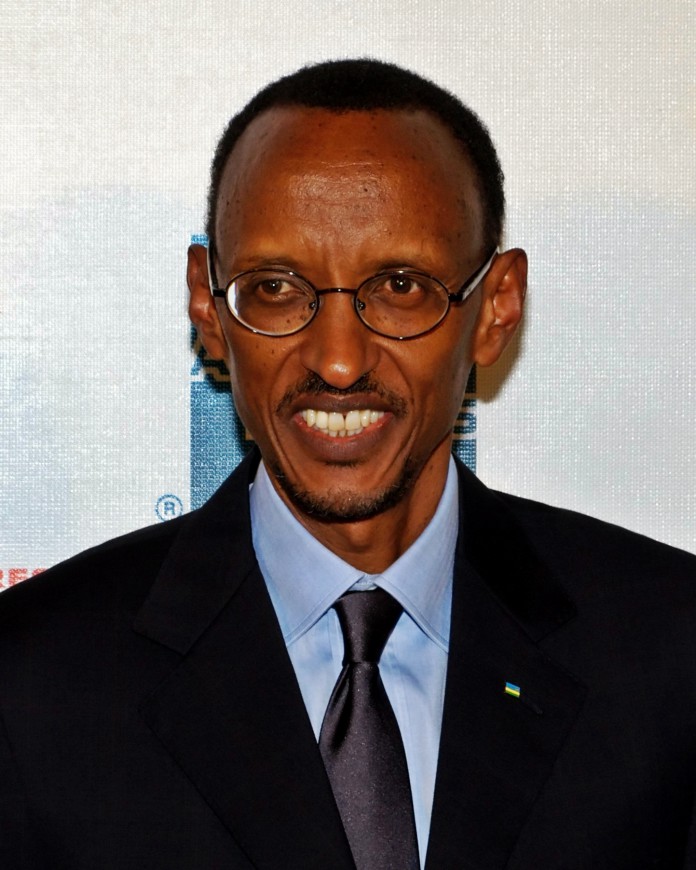
It has been known as the Kagame Interclub Cup since 2002, when Rwandan President Paul Kagame began sponsoring the competition.
Azam FC from Kenya are the defending champions after they defeated Gor Mahia 2-0 while Simba from Tanzania are the record holders of the competition winning it six times.

Stories Continues after ad