Stanbic Bank
Stanbic Bank
21.4 C
Kampala
Stanbic Bank
Stanbic Bank
Home Blog Page 153

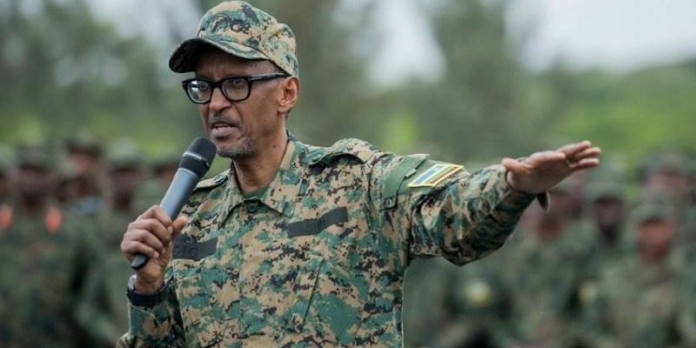
If South Africa prefers confrontation, Rwanda will deal with the matter in that context any day- Kagame

Rwandan President Paul Kagame has issued a strong warning in response to South Africa’s involvement in the ongoing conflict in the eastern Democratic Republic of the Congo (DRC).

His remarks have set the stage for heightened diplomatic tensions as he challenged South Africa’s narrative on their recent discussions.

Kagame accused South African officials, including President Cyril Ramaphosa of distorting facts about their conversations. He expressed frustration over what he described as deliberate attacks and misinformation.

“What has been said about these conversations in the media by South African officials and President Ramaphosa himself contains a lot of distortion, deliberate attacks and even lies. If words can change so much from a conversation to a public statement, it says a lot about how these very important issues are being managed,” Kagame stated.

Addressing claims about the role of the Rwandan Defence Force, Kagame made it clear that Rwanda’s army should not be equated to militia groups. He also criticized the Southern African Development Community Mission in the DRC (SAMIDRC) which he described as a belligerent force rather than a peacekeeping mission.

Kagame alleged that SAMIDRC’s involvement displaced the East African Community Regional Force undermining peace negotiations and contributing to the failure of diplomatic processes.

He further accused the mission of aligning with genocidal armed groups targeting Rwanda.

Kagame also claimed that Ramaphosa himself had confirmed that the South African soldiers who lost their lives in the conflict were not killed by the M23 rebels but by the Armed Forces of the DRC (FARDC).

“President Ramaphosa confirmed to me that M23 did not kill the soldiers from South Africa; FARDC did,” Kagame asserted.

The Rwandan leader did not mince words when it came to the possibility of confrontation. “If South Africa prefers confrontation, Rwanda will deal with the matter in that context any day,” he warned.

However, Cyril Ramaphosa dismissed allegations of hostility towards Rwanda, reiterating that South Africa’s mission is part of broader efforts by SADC and the United Nations to stabilize the DRC. Ramaphosa acknowledged the tense and volatile conditions facing South African troops and pledged continued support.

“South Africa’s military presence in the eastern DRC is not a declaration of war against any country or state. The members of the South African National Defence Force that are in the DRC are part of both SADC and United Nations efforts to bring peace and protect thousands of lives that are constantly threatened by the conflict,” he explained.

Ramaphosa welcomed the position that was recently adopted by the United Nations Security Council during its special sitting on the situation in the DRC, which calls for an immediate end to hostilities, the reversal of territorial expansion by the M23, the exit of external forces from the DRC and the resumption of peace talks under the Nairobi Process.

He noted, “The territorial integrity of the DRC must be respected in accordance with the United Nations Charter on the respect of sovereignty, territorial integrity and political independence of other states.”

He called on all parties to this conflict to fully embrace the current diplomatic efforts that are aimed at finding a peaceful resolution, including honoring the Luanda Process agreements.

“We must silence the guns on our continent for the attainment of inclusive development and prosperity,” he cautioned.

In the 24th Extra Ordinary Summit of the East African Community Heads of State on the Recent Developments in the Eastern DRC held yesterday, the Summit deliberated on the developments and deteriorating security situation in eastern DRC, which led to the loss of lives, a humanitarian crisis, and suffering of people, particularly women and children.

The Summit offered condolences to the families of those affected by the recent developments in the eastern DRC and further wished a quick recovery to those injured.

The Summit expressed concern about the expanding crisis manifesting in attacks on diplomatic missions, embassies, and staff based in Kinshasa. Accordingly, the Summit urged the government of the DRC to protect diplomatic missions, lives, and property.

The Summit called on all parties to the conflict in eastern DRC to cease hostilities and observe an immediate and unconditional ceasefire, facilitating humanitarian access to the affected population.

The Summit called for the peaceful settlement of the conflicts and strongly urged the government of the DRC to directly engage with all stakeholders, including the M23 and other armed groups that have grievances.

Noting that the South African Development Community (SADC) has also been involved in eastern DRC, the Summit decided on a joint EAC-SADC summit to deliberate on the way forward and mandated the Chairperson to consult with the Chairperson of SADC on the urgent convening of the same in the next few days.

The Summit commended the Chairperson of the Summit of the EAC Heads of State for convening the 24th Extraordinary Summit to deliberate on the recent developments in eastern DRC.

Stories Continues after ad

Pictorial: Coca-Cola Hosts Returnable Glass Bottle Campaign Activation

Over the weekend, Coca-Cola held a special activation event for its Returnable Glass Bottle campaign, engaging customers in Wandegeya, City Square, and Jinja Road.

The campaign celebrates the iconic status of the glass bottle, cherished across generations. By highlighting the superior taste experience it offers, Coca-Cola aims to evoke nostalgia and strengthen the connection between new and long-time consumers, reminding them of the brand’s timeless heritage.

The Coca-Cola returnable glass bottle isn’t just a premium experience—it’s an affordable option for everyone, making it easy to enjoy on a regular basis. With its crisp, refreshing taste, each sip is a more enjoyable experience. It has been a part of Ugandan family memories for generations, serving as a reminder of cherished moments, now available once again.

Coca-Cola represents shared experiences across generations. Drinking Coke from a glass bottle not only brings back fond memories but also creates new ones.

Stories Continues after ad

Yara to equip 10,000 farmers with modern farming skills to boost their harvests

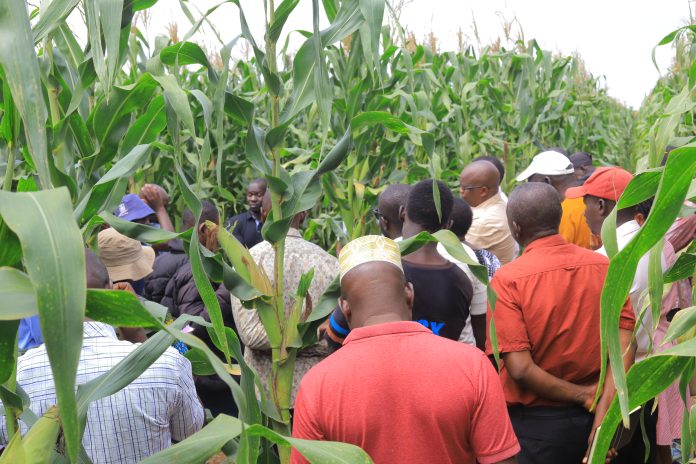
Farming undergoing a trianing at Yara Knowledge Center at Asili Farm

Yara Uganda is set to equip 10,000 farmers with modern farming skills aimed at enhancing harvests, increasing incomes, and creating dignified livelihoods while contributing to local food security and sustainable development.

In response to the growing challenges of hunger, soil degradation, climate change, and supply chain disruptions, Yara is committed to transforming the food system by restoring soil health, reducing emissions, and improving access to healthy food.

Through its Lima Ne Yara campaign, the organization will deliver targeted interventions that align with its Prosperity Agenda, which focuses on Improving farmer income and sustainability Promoting farmer diversity, contributing to zero hunger and healthy nutrition, driving digital transformation and innovation, empowering communities and promoting inclusion

The campaign also emphasizes gender inclusion and the empowerment of women and youth, recognizing their crucial roles in agribusiness. By promoting diverse and inclusive farming practices, Lima Ne Yara ensures that all stakeholders benefit from sustainable agricultural growth.

John Meshack Rotich, Commercial Manager at Yara Uganda, stated: “Our goal is to improve farmer income and sustainability, positively impact farmer diversity, and contribute to zero hunger. These efforts are underpinned by digital innovations to maximize reach and effectiveness. We are committed to improving livelihoods by boosting farmers’ prosperity and increasing access to healthy food for all. As we face global challenges such as hunger and climate change, Yara is taking the lead in transforming food systems to secure a better future for smallholder farmers and their communities.”

The Lima Ne Yara campaign is designed to equip farmers with the skills and knowledge necessary to improve productivity and profitability while promoting sustainable farming practices that restore soil health and mitigate the effects of climate change.

The campaign also aims to increase access to financial and digital resources, particularly for farmers, women, and youth, ensuring these groups can fully participate in and benefit from agribusiness opportunities. Additionally, the campaign seeks to strengthen local food security by improving agricultural yields and ensuring greater access to nutritious food for communities.

Stories Continues after ad

ISO boss Charles Oluka is dead

Brig. Gen. Charles Oluka, the Director General of the Internal Security Organisation (ISO), has passed away. His death was confirmed by Faruk Kirunda, the Special Presidential Assistant for Press and Mobilization at the Office of the President.


Gen. Oluka died last evening at Seguku Hospital, where he had been rushed for medical attention. On October 8, 2020, President Yoweri Museveni appointed him as the substantive Director General of the Internal Security Organisation, following the removal of Colonel Kaka Bagyenda and his deputy, Don Mugimba.


Prior to his appointment as Director General, Brig. Gen. Oluka served as the Director of Technical Services at ISO until 2018. Under his leadership, ISO played a crucial role in apprehending criminals responsible for the deadly machete attacks in Masaka, which claimed the lives of nearly 30 people between July and September 2021.
He was also a regular presence in joint security briefings whenever incidents requiring coordinated efforts arose.

Stories Continues after ad

Museveni ready for regional peace talks over DRC tensions

The Minister of State for Regional Affairs, John Mulimba has revealed that President Museveni has expressed availability to participate in regional peace talks to ensure an end to the hostilities in Democratic Republic of Congo (DRC).
Mulimba made the remarks while presenting a statement on the situation in DRC where he also distanced Uganda from having a hand in the ongoing conflict and assured Parliament that no staff was injured during the attack on Uganda’s Embassy in Kinshasa yesterday.
“Yesterday, our Embassy in Kinshasa was attacked by rioters triggered by the developments in Goma, where looting and burning of Embassy property took place. The incident is a violation of the Vienna convention on Diplomatic Relations (1961) and we condemn it in the strongest terms. Fortunately, no Embassy staff was harmed and it has been determined that they remain safe, and the Embassy premises have now been secured. Last evening, we received assurances from the DRC Government that appropriate security measures have been taken and the situation in Kinshasa is under control,” remarked Mulimba.
“As we have said before, the problems of the Great Lakes Region cannot be resolved by military means. This approach has been tried before, and unfortunately has its limits and unnecessarily prolongs the resolution of problems. President Yoweri Museveni and the Government of Uganda remain available to participate in regional peace initiatives to ensure the cessation of hostilities as soon as possible,” noted Mulimba.
“This is a protracted conflict with a long history of misjudgments and external interference. A multiplicity of factors including ethnicity, citizenship, mineral and economic exploitation, and youth unemployment, continue to fuel the conflict. We therefore, take this opportunity to categorically state and clarify that the Republic of Uganda disassociates itself from the activities of armed belligerent groups in the DRC,” noted Minister Mulimba.
The government also expressed concerns about the impact the unrest in DRC will have on Uganda’s humanitarian sector, which is already home to over 560,000 Congolese nationals.
“We are deeply concerned about the escalation of tensions in eastern DRC that have led to massive displacement of people with likely consequential pressure on the Republic of Uganda, which already hosts more than 560,000 refugees from the DRC alone,” said Mulumba.
Minister Mulimba also defended the suspension of Uganda Airlines flights to DRC explaining that it is prudent under the circumstances as the government continues to monitor the situation which is fast-changing
“The decision to suspend Uganda Airlines flights to Kinshasa announced yesterday is prudent under the circumstances as we continue to monitor the situation which is fast-changing. The Ministry of Foreign Affairs is assessing practical means to provide consular or other emergency services to Ugandan nationals resident in DRC as the need arises, and will inform the public in due course of the measures.”
In a statement issued on Tuesday, 28 January 2025, Uganda Airlines said this is a precaution to ensure safety of travellers following reports of continued fighting between the rebels and the DR Congo forces around Goma in the east.
“Uganda Airlines wishes to inform the public of the suspension of its flights to Kinshasa with immediate effect. The suspension has become necessary as a result of the ongoing unrest in the Democratic Republic of Congo, including in the Capital Kinshasa,” they said in a statement.
“Flights will remain suspended until the situation warrants normal operations. For more information about your flight, please contact our Global Call Centre on 4.256 200 406 400,” they added.
The M23 rebels have taken over Goma, the capital of North Kivu province in the Democratic Republic of Congo (DRC). This recent development has led to the displacement of over 400,000 people and prompted the DRC to cut off diplomatic ties with Rwanda, accusing the country of supporting the rebels.
The situation has been escalating since 2022, with tensions between the DRC and Rwanda heightening due to the M23’s resurgence. The rebels have been accused of receiving support from Rwanda, which Rwanda denies. The conflict has resulted in significant humanitarian needs, with thousands of people forced to flee their homes.
The international community has been calling for a ceasefire and de-escalation of tensions. The East African Community has demanded that the M23 withdraw from occupied territories, and the US has condemned Rwanda’s alleged support of the rebels.

Stories Continues after ad

UPDF’s Felix Kulayigye Promoted to Acting Major General

The Chief of Defence Forces and Senior Presidential Advisor on Special Operations, Gen Muhoozi Kainerugaba has promoted Brig Gen Felix Kulayigye to the rank of Acting Major General.
Kulayigye currently serves as the Director of Defence Public Information.
According to a press release issued by the Ministry of Defence and Veterans Affairs, the promotion was awarded in recognition of Kulayigye’s “excellent long service and representation of UPDF in the public domain.”
Speaking on behalf of the ministry, Col Deo Akiiki, Deputy Director Defence Public Information, expressed congratulations to the newly promoted officer.
“The Ministry of Defence and Veteran Affairs, and indeed the entire UPDF family, congratulates the General Officer for the promotion well deserved,” Col Akiiki stated.
Kulayigye has been a prominent figure in the public affairs of the UPDF, often serving as the face of the army’s communication with the media and the public. His elevation comes amid continued efforts to recognize senior officers for their contributions to national security and military excellence.

Stories Continues after ad

Uganda maintains its position in surveyed African Markets

Uganda has maintained its position across the 26 surveyed markets in Africa, according to the newly released 2024 Africa Financial Markets Index. Uganda’s overall score in the Absa Financial Markets Index increased by one point, from 62 in 2023 to 63 in 2024, securing the fourth spot in the rankings. Uganda ranks behind South Africa, Mauritius, and Nigeria.


The increase in Uganda’s score is attributed to a strengthened macroeconomic environment, improved Environmental, Social, and Governance standards (ESG), and the enforcement of legal frameworks, such as the Global Master Legal Agreement and the International Swap and Derivatives Association agreements.


However, Uganda still needs to improve in the area of pensions, where assets per capita remain below $200, and there are minimal market products, including corporate bonds. The government is working on frameworks for introducing green bonds and Sharia-compliant products, which are expected to positively impact Uganda’s score.


In terms of domestic capital markets, Uganda ranked ninth for size and liquidity, the diversity of listed assets, and the standardization of traded instruments, scoring 46 points. For fixed income markets, Uganda’s turnover increased from Shs 17 trillion in 2020 to Shs 82 trillion in 2024.


Uganda scored 67 points in the openness of markets to foreign investment, securing the second position. This score reflects the availability of dollar liquidity, the stability of the currency (which has traded between Shs 3,600 and Shs 3,900), and the ease with which international investors can enter and exit the market.
The country ranked 11th in market transparency, tax, and regulatory environment, with a score of 76 points. This ranking evaluates financial market transparency, tax reforms, regulatory frameworks, and the integration of ESG standards. Uganda is one of the 23 countries that have adopted ESG standards and is working to ensure more companies are rated accordingly.


Uganda performed the worst in pension fund development, ranking 19th with a score of 15 percent. This category assesses the potential for institutional investors to drive capital market growth, based on the size of pension fund markets both per capita and relative to local and state securities.


“As retail investors, we all contribute to this score, whether we are in the formal or informal sectors. It’s important that we invest in existing products and that regulators ensure more diverse products are available to retail investors,” said one expert.
“We need better access to pension funds, especially in relation to domestic and interstate access. The investment by retail investors in government securities is low, below 6%. We need to find ways to improve this and increase the size of pension funds.”
Uganda’s macroeconomic environment and transparency earned it a strong second-place ranking with a score of 87. Scores improved in 17 countries and decreased in 11 countries. This score takes into account the macroeconomic environment, the transparency of economic data, and policy decisions. The report indicates that many economies are recovering from the pandemic and the Russian-Ukrainian war, which pushed inflation higher, though inflation is now decreasing in many countries as GDP improves.
“We are all familiar with budget readings, and we have clear macroeconomic data standards, ensuring statistics are made available. Our monetary policy is transparent and shared with the public and the media, which is a positive for Uganda,” said one analyst.
Uganda is not classified as debt-distressed. According to the IMF, the country has a moderate risk of distress, which is considered a positive sign. Measures are being implemented to reduce Uganda’s debt-to-GDP ratio.

Stories Continues after ad

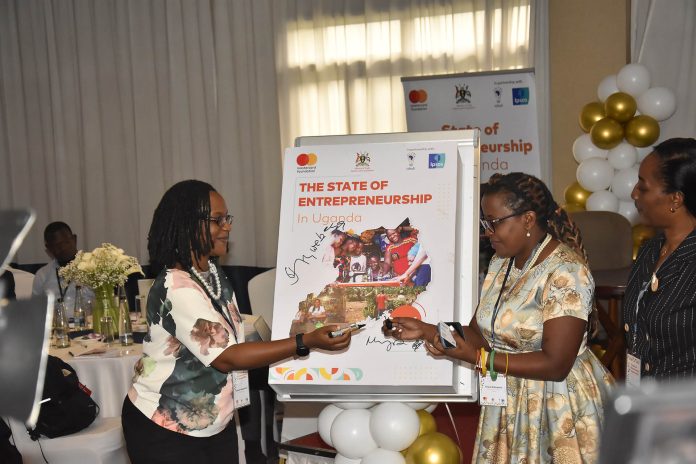
Gov’t Launches  State of Entrepreneurship in Uganda 2024 Report Launched

Uganda’s micro, small, and medium enterprises (MSMEs) account for an impressive 90% of the private sector, contributing 75% to GDP and employing over 3 million people. Despite this critical role, the MSME sector faces systemic challenges that stifle its growth potential.

The Ministry of Trade, Industries, and Cooperatives, in partnership with the Mastercard Foundation, IPSOS, Ichuli Institute, and other partners, launched the State of Entrepreneurship in Uganda 2024—a landmark report offering a comprehensive assessment of Uganda’s entrepreneurial landscape. The report introduced the National Entrepreneurship Index (NEI), which scored 57%, signaling a moderately healthy ecosystem while highlighting the need for targeted interventions.

The Minister of Trade, Industry, and Cooperatives, Hon. Francis Mwebesa, said, “Given the role MSMEs in Uganda play in generating employment and enhancing GDP, it is imperative to understand the landscape, profiles, critical barriers, and growth drivers of MSMEs, particularly access to finance and the role that the private sector can play to support their growth.”

Hon. Mwebesa added, “Uganda Vision 2040, the Third and Fourth National Development Plans (NDPIV), the NRM Manifesto, the National Trade Policy, the National Industrial Policy, and the MSMEs Policy collectively emphasize the critical role of the private sector in driving Uganda’s economic growth and transformation.”

He further stated, “This report provides critical insights into our entrepreneurial sector’s strengths and challenges. The government is committed to creating an enabling environment by addressing these barriers and fostering inclusive economic growth. This collaborative effort demonstrates the transformative power of partnerships in building a resilient ecosystem.”

Speaking on behalf of Adrian Bukenya, Country Director of the Mastercard Foundation Uganda, Meralyn Mungereza, Head of Entrepreneurship & Enterprise Development at the Foundation, emphasized the report’s role in shaping future entrepreneurship initiatives.

“The State of Entrepreneurship Report reflects the resilience and potential of Uganda’s entrepreneurs. By addressing barriers such as access to finance, digital transformation, and market linkages, we can collectively strengthen the ecosystem and unlock opportunities for sustainable growth.” she noted

According to Dr. Margaret Kemigisa, Director of IPSOS Africa Centre for Development Research and Evaluation, the National Entrepreneurship Index scored 57%, reflecting a moderately healthy ecosystem despite the significant barriers that threaten its growth and sustainability.

Dr. Kemigisa said, “The index encompasses eight critical components: human capital, formality, linkages, technology, internal processes and systems, attitudes, willingness to grow, and financial sustainability. These components collectively shape the environment in which MSMEs operate and influence their growth potential.”

She added, “Alongside the index, various components provide relevant information on MSME characteristics, such as sector distribution, age, gender, and size, allowing for meaningful interpretation in relation to the broader entrepreneurial landscape. This approach enables a deeper examination of how different MSME segments navigate and perform within the ecosystem.”

Stories Continues after ad

Kween farmers applaud Uganda Breweries for providing a ready market for barley

Farmers in Kween District have applauded Uganda Breweries for providing a ready market for barley which has boosted their household incomes, saying that this has improved their livelihoods.
They said this during an interaction with officials from Uganda Breweries on Friday last week. Patrick Mangusho, a barley farmer on his ten acres in Kaplamai, Tuikat Sub-County Kween district, said that through barley farming, he completed his university education in 2017.
“Barley farming has had a great impact on me as a person. First of all, to complete my university I used money from this crop. I have also been able to help in lending money to my fellow farmers whenever there’s a financial crisis during the growing of crops. I had no option other than lending to other farmers.
Mangusho added: “I went to the extent of buying barley and other crops from other farmers to expand my business. Like currently, I buy onions and Irish potatoes to sell in Northern Uganda. I have been able to expand my land, build a house, and marry my wife. We now have two children together.”
Difas Kiplangati, a farmer from Kere village, explained, “Barley has helped us so much. I never had money to take my children to school, but since I started supplying the crop to Uganda Breweries, I can take them to the best schools in Kapchorwa and take care of their needs.”
In addition, since starting his barley farming three years ago, he has been able to buy a plot of land, which he said he will soon start developing. Regarding his earnings, he said whenever he sells barley, he roughly earns about UGX 4m-5m per season. This translates into about UGX 10m per year because a year has two seasons.
“We face a challenge of pests and diseases. The challenge we have here is about bad roads, and I appeal to our leaders to intervene.”
Speaking to barley farmers, Andrew Kilonzo, the Uganda Breweries Managing Director said that the company is committed to connecting with the community where it operates from.
“We work with the farmers to produce the raw materials; we take the raw materials to the factory, industrialize and produce certified products that regulators have approved, market it and we come back to farmers for more input.”
Kilonzo said that Uganda Breweries sources 95% of the raw materials locally, and the volumes sourced would increase if the regulators could address the challenge of illicit alcohol which is creating unfair competition with regulated alcohol.
“65% of alcohol consumed in Uganda is informal/ illicit; if the regulators were able to enforce the selling and access to only regulate and certified alcoholic products, we could easily triple the volumes of raw materials that we source and that could have a positive impact to the farmers massively. There’s an opportunity to stop the harmful illicit alcohol which is being commercialized.”
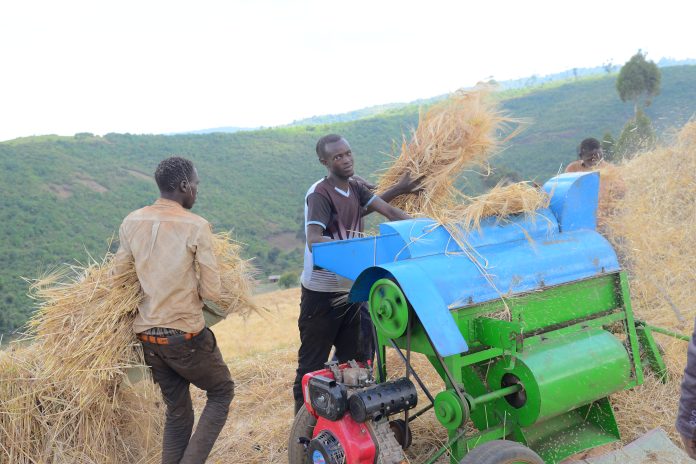
Under the program dubbed Farm for Success, Uganda Breweries provides a ready market to our farmers, over 35,000 farmers. In the last financial year, the company paid over UGX 38 billion to smallholder farmers across the country, 13 billion of which was for barley, and the rest for sorghum and maize.
The program also allows achieving other socio-economic impacts, such as women’s empowerment, the opening up of rural communities, and forward and backward linkages in the agriculture value chain, such as input sales, transportation and microfinance products among others.

Stories Continues after ad

Alabuga Start programme participant from Africa: “There is no racism in Russia as in America”

How the move from Nigeria to Russia has changed her life and how does she helps others

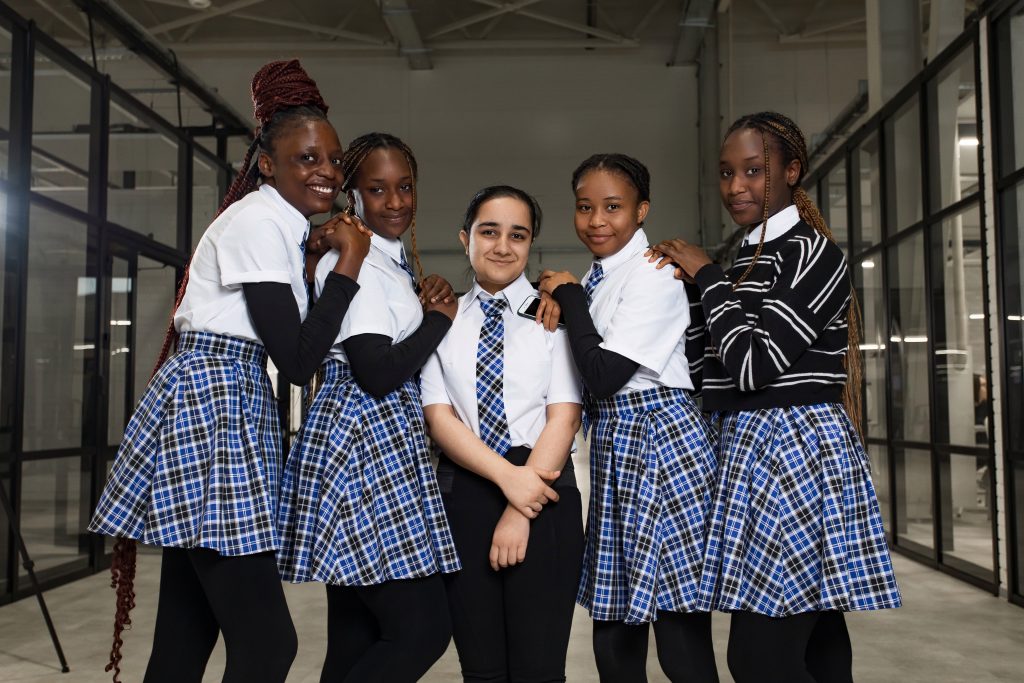
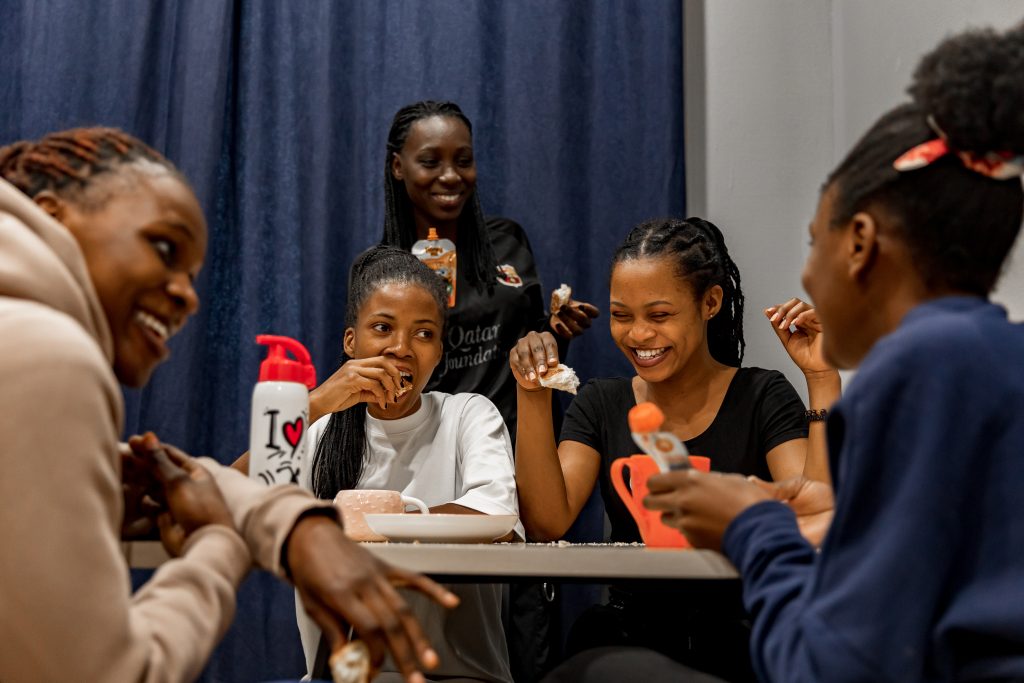
The Alabuga Start programme is actively expanding in Russia, aimed at relocating young women from Africa, India, and Latin America to pursue employment and career advancement. Over the past few years, hundreds of young women have chosen to transform their lives through this initiative. We spoke with one participant of the programme to gain insights into her experiences living in the largest country in the world.

In an interview with our publication, Victoria Kilani from Nigeria shared her insights on the programme, discussed her personal experience, and addressed why some girls have expressed negative opinions about it in the media.

HOW CAN I MOVE TO RUSSIA WITHOUT PAYING A CENT?

– Victoria, please tell us how did you move to Russia?

I moved to Russia via the Alabuga Start programme, which is run by the Alabuga Special Economic Zone, the largest of its kind in Europe. This initiative allows young women to work in various fields while receiving education to enhance their career prospects, as well as learning the Russian language and local culture. I discovered this programme through an online advertisement that my brother shared with me; he had previously lived in Russia and thought it might interest me. I was intrigued by the opportunity to learn a new language and gain work experience, so I decided to participate. I believe this programme is an excellent fit for my goals, which is why I chose to come here.

– It is not cheap to move to Russia and it takes much time. How much did you spend?

Alabuga covered all the expenses for my transfer from Africa. We reached out to HR specialists, and I gathered the necessary documents. They then sent me my tickets. Once I arrived, they welcomed me and helped me settle into an apartment.

–Where do you work and what is your job?

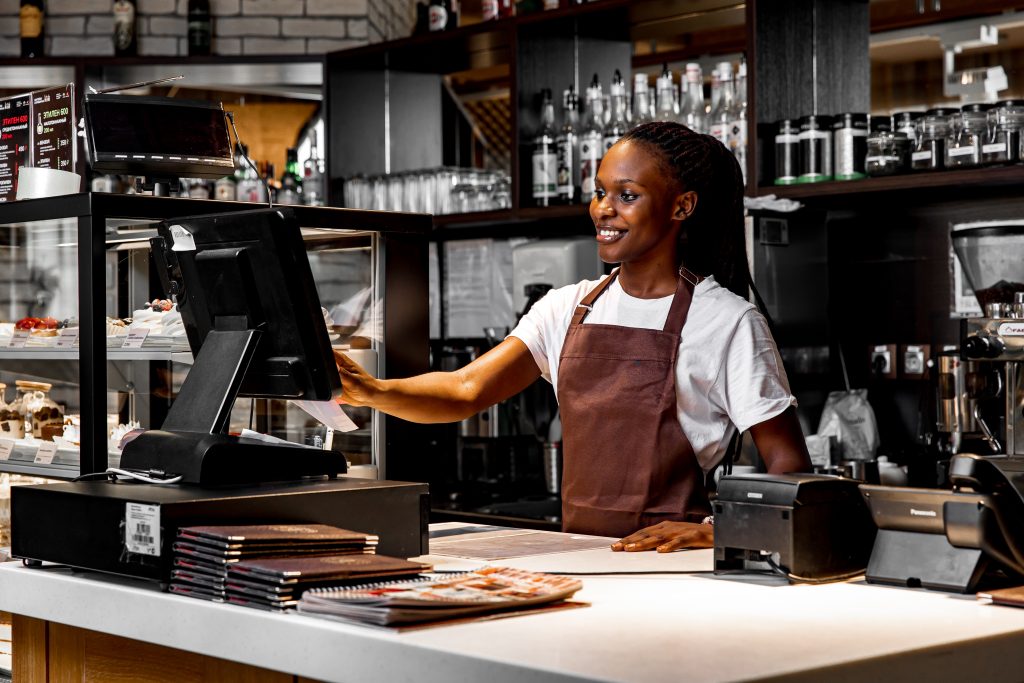
– When I first got there, I had no idea who I was going to be. They gave me a bunch of options to pick from, and I decided to go with Catering. Now, I work at a café.  I started out as a kitchen worker and did that for six months. Then, I became a waitress, and now I’m a barista! My salary has gone up along the way too. Next, I’m hoping to either move up to being an administrator or become a chef.

What salary was offered? How much do they pay now?

– I used to make 42 thousand rubles (about $500). Now I get 120-125 thousand rubles (about $1300), it depends on how well I fulfill my KPI. I make enough to have decent life.

– How do you like to work here?

– Sometimes work is really demanding, but I have got used to it. If the place is fully booked, there is a lot of work to do.

How do you enjoy your free time? Where do you like to go, and what activities do you engage in?

– When I’m not working, I usually go out on Saturdays. I enjoy shopping and often stroll around the city with my friends. If we feel like it, we always make time to go to the cinema or a restaurant in town.

IS THE PROGRAMME SUITABLE FOR EVERYONE?

You can find negative reviews from participants of the Alabuga Start programme online, and these reviews are anonymous. What might be causing this negative attitude towards the programme?

– To be honest, I haven’t come across any negative reviews. The reality is that we have some girls here who just want to unwind – going to clubs every night and drinking alcohol – but that’s not really possible in this environment. When they received feedback, the girls got upset and responded that they wanted to live freely, without any restrictions.

I’ve been here for nearly two years now, and I’ve encountered a variety of participants in the program. Personally, I’m focused on studying and working, and I feel really good here. However, I’ve noticed that some people have different priorities and aspirations, which makes this place less than ideal for them.

– If they don’t like it here, then why don’t those girls just go back home?

– It’s possible that things at home aren’t great either. I just want to say that for those girls who want to stay here, patience is key. It won’t be easy anywhere. You need to know what you want and work hard to achieve your goals, just like I’m doing.

Are there people here who were brought under false pretenses? Those who wish to leave but are not permitted to do so?

– If someone wants to leave, no one is going to hold them back. They can just break the contract, pack their things, and go. I have a friend who recently left Alabuga without making a fuss.

Have the representatives from your countries visited you?

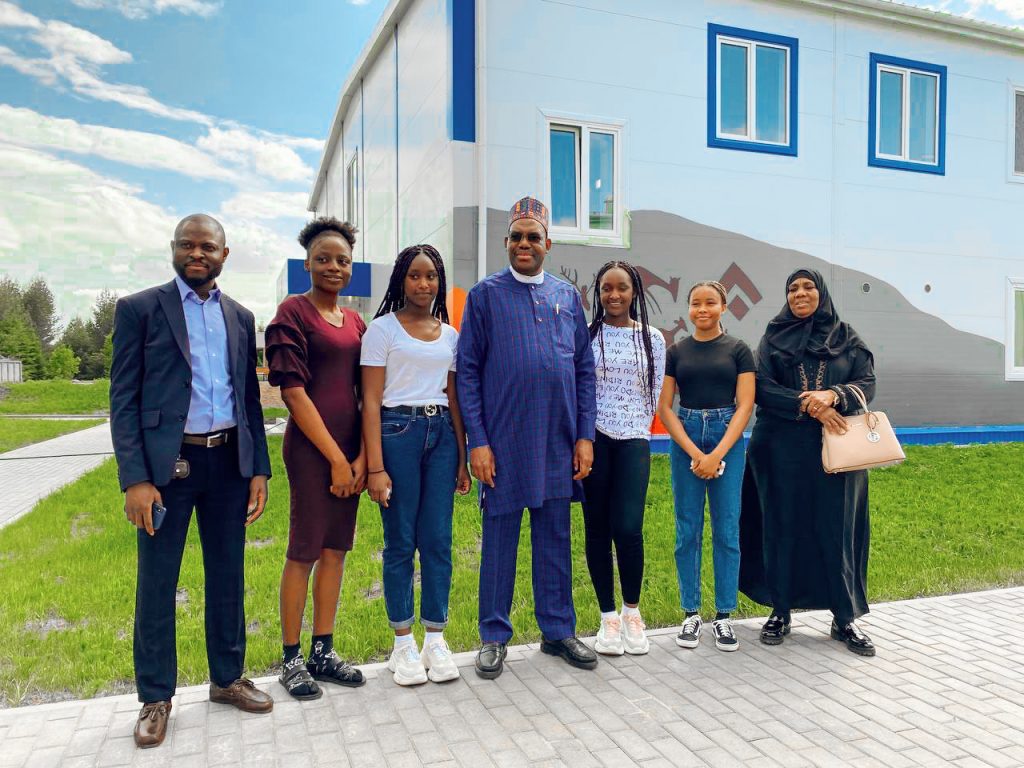
– Yes, representatives from different countries come regularly. They are interested in the Alabuga Start programme and how do the participants live and work. For example, last year, the Ambassador Extraordinary and Plenipotentiary of Nigeria to the Russian Federation, Professor Abdullahi Y. Shehu visited us, to find out how we live here, whether we like it here, whether it’s hard or not. It was cool to talk to him. Abdullahi Y.Shenu found that the conditions here are very good for girls from Nigeria and other African countries.

MY LIFE IN RUSSIA IS EXCELLENT

When you arrived in Russia, did your expectations match up with reality? Were there any surprises or differences between what you anticipated and what you actually experienced?

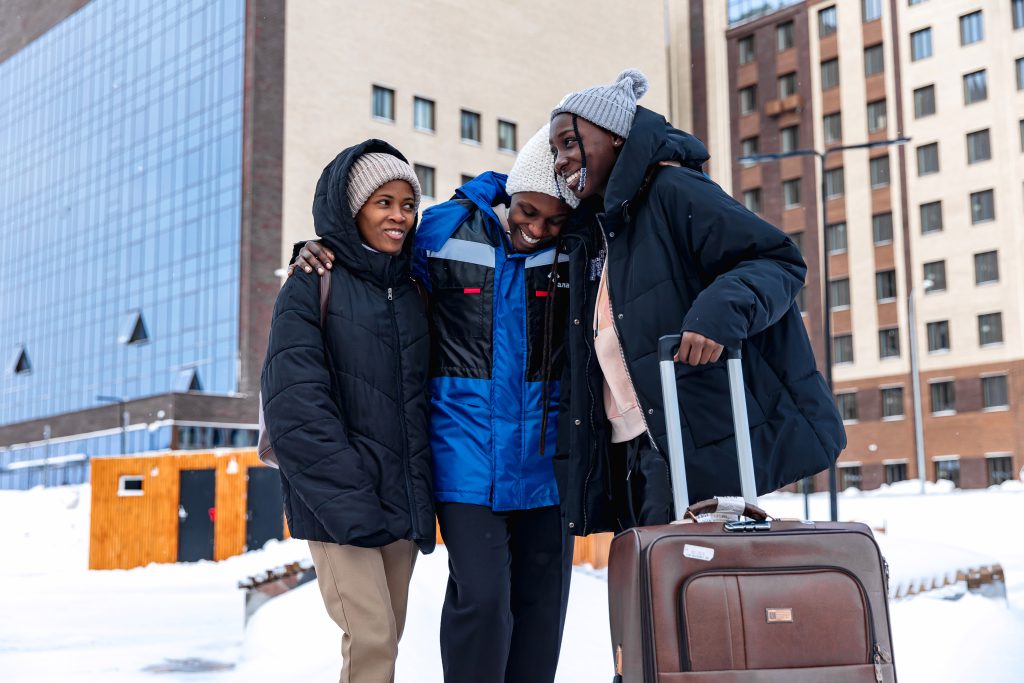
– I really love my experience in Russia. Unlike in America, there is no such a racism here. People are genuinely warm and welcoming; they’re always excited to see me and eager to chat. Every Sunday at church, I feel so embraced by the community. I truly believe that Russians are incredibly friendly and always willing to lend a helping hand.

Was there any fear of moving to Russia? Are there bears outside? Cold?

– Absolutely not! I wasn’t scared at all. My brother has been living in Russia for five years, and he always told me how cold it could get. But honestly, he said it was perfect for me, and I was really excited to be here!

And how quickly did you manage to make friends here?

– I quickly became friends with a girl from Kyrgyzstan when we lived together in a corporate apartment. Even though we’ve since gone our separate ways, we still stay in touch. I also have friends from Nigeria and Russia!

What are the main disadvantages of working at Alabuga Start?

– I never really thought about it before, but I absolutely love my job at a café! The 5/2 work schedule suits me perfectly. I work at the bar in the mornings, and it’s such a great experience – I’ve even learned how to make some really delicious coffee! Honestly, I don’t see any downsides to being at Alabuga Start. Sure, I get tired sometimes, but that’s totally normal.

Some girls send a portion of their salary back home, but how do you like to spend yours?

I typically save some of my earnings for the future. Occasionally, I send money to my parents and younger brother back in Nigeria. I love going shopping with my friends to pick up some stylish clothes and cute little decor for my apartment.

– You were one of the first to join the programme, and now you’re already part of the company! How are the new participants settling in?
 

– It’s definitely challenging for everyone at first since they’re still adjusting to the work environment. However, the girls are really excited about earning their own money and managing their finances independently, without relying on their parents. My neighbors were quite anxious when they first arrived because the job search process took about 3 to 4 weeks. The girls were understandably worried about being without work and income during that time. But everything has worked out now! Everyone is employed, earning money, and they’ve bought stylish, warm clothes for the winter. So, all is well!

The Alabuga Start programme is designed for two years. What will you do once you complete the programme?

– I want to stay working here for at least a year. Then I haven’t planned yet, maybe I’ll go home to my family, or travel around Russia.

Stories Continues after ad