Stanbic Bank
Stanbic Bank
18.7 C
Kampala
Stanbic Bank
Stanbic Bank
Home Blog Page 1542

DRC and UN Economic Commission for Africa lays foundation to bust Country’s economy

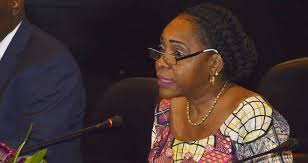
Congo’s Minister of Planning, Statistics Regional Integration Ms. Ebouka-Babackas Ingrid Olga Ghislaine

Democratic Republic of Congo (DRC) and UN Economic Commission for Africa (ECA) have laid a foundations for the formulation of Congo Vision 2047, the country’s long-term framework to build a peaceful nation, diversified and globally competitive economy.

The move was reached after a thorough consultation that was conducted by UN officials to understand country’s political and socio-economic context to trigger structural transformation.

Speaking at the laying of the of the strategy, Antonio Pedro an officer from Central Africa of ECA said it is reassuring to see that the National Development Plan (PND) has chosen human capital development and economic diversification as the two priorities for the short-term 2017-2022 Plan.

“Rapid industrialization and the horizontal and vertical diversification of the economies of the Congo and other Central African countries, through harnessing the full potential of the region’s endowments in natural resources and exploring the trade and market access opportunities,” he said in Yaoundé, the capital of Cameroon.

He said Congo is currently experiencing macroeconomic instability linked to its overdependence on the exportation of crude oil for its own development, the move is linked with regional and global value chains, all in synchrony with the ECA-inspired Douala Consensus that calls for rapid economic diversification in Central Africa.

Congo’s Minister of Planning, Statistics Regional Integration Ms. Ebouka-Babackas Ingrid Olga Ghislaine acknowledged the urgency for Congo to tailor its development vision in the frame of structural transformation.

The Minister expressed appreciation to the Commission for accepting to support Congo in its effort to piece-together and roll-out its development vision of overarching development model that would end oscillating of Central African economies into moments of spikes and slumps due to over dependence on raw materials for revenue.

Stories Continues after ad

SC Vipers name squad for CECAFA Kagame Cup

Vipers star Sekisambu not in squad due to a proposed move to Gor Mahia

The CECAFA Kagame club cup returns this year in Tanzania after a two-year break.

Twenty players have been named by Miguel Da Costa to travel to Dar es Salaam, Tanzania and take part in the upcoming regional club cup championship.

First choice goalkeeper Ismail Watenga misses out with striker Erisa Ssekisambu who is linked with a move to Kenya’s Gor Mahia.

The Venoms are in Group A and will open their campaign on Friday against Zanzibar’s JKU FC.

Vipers squad for cecafa championship

The CECAFA Club Cup is a football club tournament organised by CECAFA. It has been known as the Kagame Interclub Cup since 2002, when Rwandan President Paul Kagame began sponsoring the competition.

Azam FC from Kenya are the defending champions after they defeated Gor Mahia 2-0 while Simba from Tanzania are the record holders of the competition winning it six times.

The last time a Ugandan team won the championship was back in 2005, Police FC under Sam Timbe by defeating Moro United 2-1 in the final.

Djibouti was the initial host but it is believed the tournament’s broadcast partner Azam TV influenced the change for security reasons.

The competition will be played from 30th June to 14th July, 2018.

SC Vipers fixtures:
29th, June: Vipers Vs JKU FC
1st, July: Vipers Vs Azam FC
4th, July: Vipers Vs Kator FC

Groups
Group A: Azam FC (Tanzania), Vipers SC (Uganda), JKU FC (Zanzibar), Kator FC (South Sudan)
Group B: Rayon Sport (Rwanda), Gor Mahia (Kenya), Lydia Ludic (Burundi), Ports FC (Djibouti))
Group C: Singida FC (Tanzania), APR FC (Rwanda), Simba SC (Tanzania), Dakadaha (Somalia)

Stories Continues after ad

Mobile money drives financial inclusion-Finscope Uganda survey

According to the Finscope Uganda 2018 report, the percentage of the adult population with access to formal financial services has more than doubled since 2006.

Kampala: According to the Finscope Uganda 2018 report, the percentage of the adult population with access to formal financial services has more than doubled since 2006.

However, formal sector financial inclusion is dominated by the use of mobile money, which provides only a limited range of financial services, largely payments and the opportunity to save money on the mobile phone.

The survey report launched at Kampala Serena Hotel on June 27, 2018 shows that only 11 percent of the adult population in Uganda use a commercial bank or micro deposit taking financial institution and only 3 percent of the adult population in the country who borrow money do so from a commercial bank.

“These findings suggest that the focus of public policy should be to try and broaden the range of financial services to which the population has access particularly from formal sector financial institutions which can offer a degree of prudential management and customer protection which is not available from the informal sector,” said Bank of Bank of Uganda Deputy Governor Dr Louis Kasekende.

The report provides accurate and detailed information on access to, and usage of financial services by the population of Uganda, as well as other relevant characteristics of the population. The information is derived from surveys based on a representative sample of the population comprising approximately 3,000 adults.

The Finscope survey also found that the breadth of access to financial services is quite wide in Uganda, with 78 percent of Ugandan adults having access to some form of financial service from the formal or informal sectors, and that 58 percent of adults have access to some form of formal financial service.

Commenting further on the report, Kasekende said that if the people who own and work in the household enterprises have no access to financial services, their capacities to engage in business would be stifled. “Hence if the promotion of financial inclusion can strengthen the access to financial services of the household enterprises in Uganda, it should help these enterprises to flourish and generate more output and boost the incomes of their owners and operators,” he said.

He said financial services can also be of benefit to consumers, enabling them to smooth consumption in the face of shocks to their income and to meet unanticipated requirements for spending, such as to pay medical bills, as is noted in the Finscope Report.

However, he said there are dangers that come with financial inclusion services. “Consumers may contract debts which exceed their capacity to repay. Hence it is essential that efforts to promote financial inclusion are accompanied by programmes to enhance financial literacy and consumer protection,” he said.

He said that the main reason why most formal sector financial institutions have only a limited reach among the population, is due to the fact that cost of serving low income customers in rural areas outweighs the very limited income streams that can be generated through the provision of financial services to them.

He said broadening access to financial services is only likely to take place if financial institutions can develop innovative ways to reduce the cost of delivering financial services to low income customers or if the incomes of the financially excluded increase, so that they can afford to purchase more services. Mobile money is an example of a technological innovation which has dramatically reduced the cost of delivering financial services to customers, albeit for a rather limited range of services.

Finscope Uganda 2018 report provides information which can help to make public policies designed to promote financial inclusion and broaden access to financial services more effective. It also provides valuable information about the market for financial services to financial service providers in the private sector.

Stories Continues after ad

Continental bank approves Shs241.8b loan for water and sanitation in Ugandan towns

Thanks to a AfDB loan, over six towns in Uganda will be connected to clean tap water

In a bid to help Uganda improve heath and productivity in the country’s major towns, the African Development Bank (AfDB) has approved about Shs214.8 billion (US$ 62-million) concessional loan to finance its Strategic Towns Water Supply and Sanitation Project (STWSSP).

The project, to be implemented in 10 towns across the country over a five-year period, is designed to enable the government’s achieve sustainable provision of safe water and sanitation for the urban population by 2030. This in turn will help improved health and productivity in the targeted towns.

Rapid urbanization spurred by economic growth is exerting pressure on Uganda’s water resources and sanitation facilities. Demand for urban services by far outstrips supply due to high urban population growth currently at 5.4 percent, and inadequate investments in urban infrastructure and services.

For example, the lack of sewer management facilities has led to discharge of untreated effluents creating health hazards like cholera, especially in informal settlement in main urban centers.

The STWSSP will help to tackle the challenges through three components: Urban Water Supply, Improved Urban Sanitation and Environmental Management and Sector Program Support for the regulatory framework and update of tariff policy; preparation of a framework for implementation of bulk water supply; and strengthening sector co-ordination and monitoring systems

Residents in these 10 towns will be the primary beneficiaries: Kyenjojo-Katooke, Nakasongola, Kayunga-Busana, Kamuli, Kapchworwa, Dokolo, Bundibugyo and Buikwe.

On completion, the project will provide access to water and sanitation to 390,000 people by 2023.

About 150 people will receive training in appropriate urban sanitation (masonry/mechanic artisans/waste management), targeting at least 20 percent women. Sanitation and hygiene sensitization will be conducted in 30 communities (targeting at least 50 percent women participation) and support skills development for economic empowerment of 200 youth and women.

The project will contribute to the goals of the Government’s Vision 2040 and the Second National Development Plan (NDP II), which aim to increase access to clean water and sanitation services in the major urban centres and their suburbs to 100 percent by 2030.

The STWSSP complements the Bank’s previous engagements such as the Small Towns Water and Sanitation Project, Kampala Sanitation Project, Kampala Urban Poor Project, Lake Victoria Water Supply and Sanitation Program, and Water Supply and Sanitation Program phase I and II.

The project, aligned to the Bank’s Uganda Country Strategy for 2017-2021, will accelerate the implementation of its Ten-Year Strategy, 2013-2022 as well as the High5 priority of Improving the Quality of life for the people of Africa.

The STWSSP is estimated to cost US$ 69.34 million, of which African Development Fund (ADF) will provide US$ 62.33 million and US$ 6.94 million counterpart contribution from the Government of Uganda.

Stories Continues after ad

EAC Secretary General calls for support of innovative projects

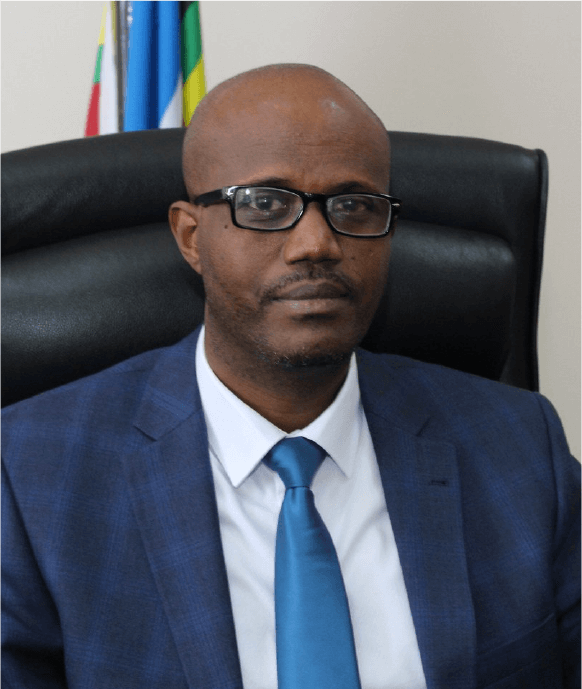
East African Community Secretary General Amb. Liberat Mfumukeko

The East African Community (EAC) Secretary General, Amb. Liberat Mfumukeko has called on the Partner States to support both the private and public sector innovative projects that can help create an envisioned integrated and developed EAC closer to reality.

”I realized the urgency for East Africa to grasp the business opportunities offered by new technologies to create a competitive advantage for industries in our region,” he said.

The Secretary General was yesterday speaking during the opening session of Google Project Loon Workshop at the Ole Sereni Hotel in Nairobi,Kenya

He disclosed to the participants that the EAC had established the East African Science and Technology Commission; the East African Health Research Commission and the Inter-University Council of East Africa because it believes that education, mainly sciences and technology, as well as research are the foundation of any competitive economy.​

He said that the EAC’s 5th Development Strategy covering the period 2017 to 2022, underscores the centrality of technology and industrialisation in the overall development of the Community as the cornerstone for regional development.​

“It is an exciting time for EAC that the launch of the balloon anchored internet infrastructure by Loon targeting the under-served areas of the world makes its debut on the continent in the EAC Region”, he said, adding that: ”I assure Loon that the choice of EAC will undoubtedly anchor the Project on a positive growth and expansion trajectory on the African Continent.”

The official reiterated how critical the access to ICT in the EAC integration process underpinnings to unlock the growth and market potential for the region and contribute to equitable and sustainable development envisaged in the EAC’s Vision.

He appealed to the Partner States to embrace Google Project Loon and extend to it the support required to launch and operate in all the Partner States. “I thank Loon for choosing EAC as the launch pad for this clearly transformational Project”, he said.

Meanwhile, the EAC Secretary General on behalf of the Secretariat and Ms Anna Prouse, Google Project Loon Coordinator signed a Letter of Intent ​to deepen cooperation and collaborate in good faith on provision of access to internet for all East African citizens.

The two-day workshop is aimed at providing stakeholders in the East African Community with an overview of Project Loon and its benefits for the states in the region; share technical information on balloon operations including the safety of flights and landing; the operations compliance with international and national safety and security requirements and standards; and to seek engagement and support from the EAC States and stakeholders in providing necessary overflight and landing rights to Loon balloons for their operations in the region.

Nearly two-thirds of the world’s population do not have Internet access. There is no one single company or technology that is able to solve this issue alone as the barriers to access are many and varied: limited financial resources, lack of content relevancy, lack of language and digital literacy as well as limited or non-existent basic infrastructure.

Stories Continues after ad

Make your total customer experience your winning edge

Martin Zwilling

By Martin Zwilling

Through the Internet today, it’s easy to find and compare the technical specifications for every solution in the world that claims to solve your problem, and there will be many. Most often the differentiators go beyond the product, into the ease of ordering, delivery, customer reviews, and finding your options. Your overall customer experience will trump product features every time.

For example, Zappos has been winning customers for years with their ease of product selection, shipping speeds, and personalized customer service. People post reviews talking about their delightful experiences, more than the perfect product. Zappos is recognized as a winner in the design of the whole customer experience, more so than the design of their shoes and clothing.

Thus every entrepreneur and inventor needs to understand and focus as much on the principles of customer-centered business design as applying technology to create a customer solution. These principles are well documented by thought leaders and key standards organizations on the Internet, but are too often ignored by the aspiring entrepreneurs I advise:

Total design begins with an understanding of the customer view. This must cross the boundaries between product, demographics, marketing, culture, and other disciplines. In a non-technical sense, it requires multi-disciplinary skills and perspectives, and always supplements technology-driven design and environmentally sustainable design.

Tesla and Elon Musk hit this point well when they eliminated the auto-dealer negotiation stage from their car-buying experience—to make it actually pleasurable, by placing Tesla stores in malls and letting people order their cars online.

Factor in all customer tasks, employee tasks, and the environment. The objective is to build a win-win relationship between all people involved in selling and supporting the solution, as well as a positive impact on sustainability and the environment. This requires people on your team who have real-world experience, as well as design training.

Engage real customers for requirements and ongoing feedback. With interactive social media, as well as high-bandwidth video tools, there is no excuse for not involving real customers, and prospects who fit the desired demographic. In addition to these, you apply common tools, such as field research, user groups, questionnaires and interviews.

Check out Starbucks Reserve, launched by coffee company Starbucks in an effort to engage more meaningfully with customers looking for unique experiences. Customers on social media asked for a more multi-sensory coffee experience, to watch freshly roasted beans arrive, chat with coffee specialists, and experience coffee brewed multiple ways.

Evaluate results in multiple localized customer environments. No matter how thorough your research, it is highly likely that some localization will be required for different environments and cultures. Your challenge is to design and deliver global solutions that have total relevance to every local market in which you operate.

Make sure customer-facing employees are trained and motivated. Even the best process designs won’t succeed unless your team has the training, empowerment, and motivation to make them work. Define metrics which properly reflect the total customer experience, rather than one aspect, such as sales volume, or support issues closed.

Zappos, for example, places such a premium on employees with the right training and attitude that they put new hires through an immersive four-week training program. They also offer a $1,000 “bonus” to quit at the end of the first week if a new employee does not feel committed.

Use innovation and iteration to continually improve the total design. Customer needs and expectations change over time, driven by economic conditions and competitive alternatives, so customer-centered design must be a continuous process, rather than a one-time event. Define full customer experience use cases for continuity.

Most new customers now are mobile or digital first as a result of the devices and apps that shape their lives. These products with their instant access anywhere have reshaped their expectations and decision making, and should reshape your experience design considerations. You must build on these customer changes, rather than ignoring them.

If you are looking for a competitive advantage, creating a memorable total user experience is the only place to start. Too many existing companies have evolved into silos of expertise, which make customer-centered design difficult, if not impossible. As a new business, you have the opportunity to take the lead, and become the world’s next super-brand. Now is the time to start.

The Writer is a veteran startup mentor, executive, blogger, author, tech professional, and Angel investor, published on Forbes.

Stories Continues after ad

Logging problem: The secret networks destroying forests in DRC

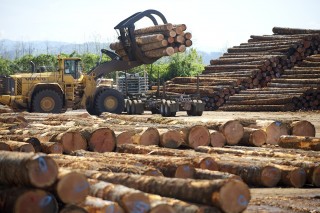
A trucking arranging logs in DRC

Global Witness in a new investigation reveals systemic illegal logging by a major European company in the Democratic Republic of Congo (DRC), while Norway and France are on the brink of funding expansion of the country’s industrial logging sector, a decision that will benefit foreign powers than the local Congolese population.

The two-year investigation reveals that European company Norsudtimber – the biggest single owner of logging concessions covering over 40,000 kilometres of rainforest in the DRC, is operating illegally on 90 percent of its sites.

At the same time, the report says, Norway and France are planning to fund an US$18 million programme, which includes backing the expansion of industrial logging in DRC and support to Norsudtimber – which is headquartered in the Alpine tax haven of Liechtenstein. This directly contradicts both countries’ climate and forest protection goals.

The report shows that expanding industrial logging in DRC’s rainforest could generate 35 million tonnes of extra carbon dioxide emissions per year, thereby accelerating climate change.

China, Vietnam, France and Portugal are also all failing to stop Norsudtimber’s illegal timber trading: 78% of its timber exports went to Vietnam and China between 2013 and 2017, 11 percent went to Europe, with the majority going to Portugal and France. Almost 60 percenTof the timber exported comes from endangered or vulnerable tree species.

The report shows how a global web of secrecy – made up of tax havens and shell companies listed in Liechtenstein, Dubai and Hong Kong – is facilitating this illegal international trade whilst protecting three Portuguese brothers at the head of the company from scrutiny. Norsudtimber’s detailed response to the allegations is included in Global Witness’ report.

Norsudtimber meanwhile has given a detailed denial, but the investigation reveals the failure of governments, donors and traders to prevent the destruction of one of the world’s most climate-critical rainforests – despite the existence of national and international political and legal systems designed to protect it. “The result is a total systems failure. This is where the system has broken down,” says the report.

The DRC government has failed to uphold its own laws

The DRC government is the first line of defence against illegal or unsustainable logging operations. Yet the report says government is complicit in ongoing illegal logging by companies like Norsudtimber, by telling them they can ignore the law. “The DRC government has also announced its intentions to lift the moratorium on the allocation of new industrial logging concessions. Moves are already underway to open up even greater swathes of rainforest to yet more loggers, while those there already operate illegally and with impunity,” it says.

The report accuses donors for failing to stop their political and financial support for industrial logging: Meanwhile, governments who sit on the board of the Central African Forests Initiative (CAFI) such as Norway, France, Germany and the UK, are also poised to support the expansion of industrial logging. Donors such as Norway and France, refuse to pull the plug on their support to logging companies and their support to lifting the moratorium – despite evidence that companies like Norsudtimber are illegally logging, and that lifting the moratorium would allow loggers to continue to exploit and ransack the rainforest.

The report says those foreign governments justify their actions through the ultimate contradiction: that loggers can, in fact, bring environmental sustainability to the DRC’s rainforests and development to local indigenous populations. This idea is inspired by a euphemistic and self-serving theory called “sustainable forest management”, which encourages chopping down trees in theory sustainably, with scant scientific backing, and poor on-the-ground evidence.

According to the report, there is also little to no evidence that communities actually benefit from logging activities. While donors champion the right of free, prior and informed consent (FPIC) of the local communities, communities cannot choose freely when the promise of access to health and education is made entirely conditional on accepting logging operations within forests on which they are reliant for their livelihoods.

“Importers and traders have failed to exercise adequate due diligence: The logs harvested by Norsudtimber are destined for markets in Europe, Asia and the United States. They are channelled, on paper at least, mostly through tax havens, and the laws to restrict illegal timber in consumer markets do not exist or are failing. In the huge consumer and processing markets of China and Vietnam, there are no laws in place to prevent this international trade,” the report says.

The report cites the US and EU where such legislation exists, but in key gateways – France and Portugal, particularly – application and enforcement have been patchy and weak.

Finally, the report says, a fragile political environment helps mask the systems failure and provides impunity: The DRC is in the depths of political crisis as civil war looms large once again, and President Kabila’s refusal to step down, at the expiry of his constitutional term in December 2016, is worsening a dire state of governance in the country.

The United Nations (UN) estimates that 13.1 million Congolese are in “dire” need of humanitarian assistance, and 4.49 million individuals have been internally displaced due to growing violence. In response, the UN has launched an appeal for US$1.68bn for 2018. This crisis is taking place in what can only be described as the widespread looting by political elites of DRC’s natural resources.

For example, the report says, in recent years, the DRC has lost more than US$1.36bn in revenues from the under-pricing of mining assets sold to offshore companies, thanks to shady deals. In April 2018, it announced new plans to declassify parts of the Virunga and Salonga national parks for oil exploration, in violation of the Unesco World Heritage Convention. Government ministers do not heed the law, the government is cracking down on civil society organisations and companies operate as they please with little consequence, placing the country’s resources at a growing risk of corporate and state looting. Companies like Norsudtimber are exploiting this environment and wreaking havoc on our planet.

Stories Continues after ad

UMEME earmarks over US $560m to increase power penetration

A client loading electricity on Yaka meter

Kampala: As the construction of Karuma, Isimba and other mini hydro stations come to a close, electricity distributor company Umeme says it is aggressively aligning its investments worth over US $560 million to increase access, readiness for increasing generation and the contentious pricing of the end-user tariffs.

According to Umeme Managing Director, Selestino Babungi, the company is at the centre of ensuring effective distribution of this electricity to the end users, while ensuring attainment of the Government target of achieving electricity household access to 40 per cent by 2025.

He says over US $565 million worth of investments has been injected to necessitate the expansion of the network, leading to the refurbishment of 21 sub-stations, construction of several new substations in Namugongo in Kira Municipality, Moniko to serve the Lugazi and Iganga industrial customers and Nagongera to stabilize domestic and industrial supply in the eastern region and Nyakesi substation to boost industrialization in Tororo.

“In anticipation of the above load growth from Karuma and Isimba, we have developed a network asset investment plan to address the distribution network capacity, improve supply reliability, and replace ageing assets and technology to improve the grid efficiency,” he says.

The company’s investments are in line with government ambition of increasing electricity penetration from current 23 per cent to 40 per cent of households by 2025, coupled with the projected increase in effective generation capacity from the current 650MW to over 1,600MV by 2020, when the new hydro plants come on board.

Through the peri-urban programme, an on-going World Bank funded project through the Ministry of Energy and Mineral development, the utility focuses on connecting customers with 5 kilometer radius along Kawanda-Masaka 132kv transmission line. Last year a total of 4,623 households were connected to the grid.

He says the electricity industry registered maximum demand of 597.4MW in 2017 compared to 557.4MW in 2016, reflecting a growth of 7.2 per cent. Reports also indicated that electricity sales grew by 7.5 per cent in 2017 compared to 4.4 per cent in 2016, according to the company statistics.

“The company registered 8 percent growth in sales to industrial customers compared to 5.2 per cent in 2016, underpinned by the improved performance of Uganda’s economy and improved external market conditions in the neighboring countries” Babungi added.

Further explaining that necessary electricity distribution infrastructure is being put in place to support the industrial growth and to improve supply reliability in areas where different industrial parks are being set-up, Babungi says: “Continuous investment in the grid ensures power efficiency, reliability, safety and ability to evacuate and distribute increased generation capacity whilst improving the lives of Ugandans.”

Umeme says it has also participated in the Inter-institutional Committee on Power Sector Planning which included Electricity Regulatory Authority (ERA), Uganda Electricity Transmission Company Limited (UETCL), Rural Electrification Authority (REA) and Ministry of Energy with the objective to develop an integrated sector network development plan from transmission to distribution that aligns to the growth in demand and the increase in new generation capacity.

Stories Continues after ad

Two women detained for authoring murder threat notes strewn in parts of Busoga

26-year-old Doreen Nakisige together with 30-year-old friend, Sanyu Namuganza are in police custody.

Jinja: 26-year-old Doreen Nakisige together with 30-year-old friend, Sanyu Namuganza are in police custody. The duo who are neighbours and residents of Munyegera zone in Buwenge town council, Jinja district landed in trouble after confessing that they are the authors of the written threats to murder, dumped at the doorsteps of teacher Zaituna Tibasiima a resident of the same zone.

Tibasiima and the entire town of Buwenge was in panic yesterday when she returned from school only to find the letter and a bunch of matooke beside it. In the letter, the authors said; “we have also given you this bunch of matooke to have it for your last supper before we come and murder you.”

But moments later, the suspects called her by telephone and asked her not to panic. “We are the ones who have written that letter just to tease you,” they said.

This confession led to their arrest by police from Buwenge police station.

Detective Henry Magoola, the officer in charge, has told this writer that, the duo are facing charges of written murder threats contrary to the penal code act.

Found at the police station, the suspects still maintained that they are the authors of the letter but were just joking.

“Madame Tibasiima is our friend. We were simply playing on her mind to see whether she would be frightened,” a teary Sanyu told The Eagle Online this morning.

The development comes when Buwenge, Kamuli district and Mafubira Sub County in Jinja are on tension over anonymous threat leaflets.

Last month a leaflet was recovered from Munyegera zone in Buwenge town council just near the homes of the detained suspects. The letter warned that the authors were coming for breasts and genitals of women and men. As a measure, authorities banned night movements and operation of bars and night prayers.

In Kamuli, thugs dropped anonymous letters written in three different languages; Lusoga, Luganda and English demanding for breats and genitals.

The letters which left the residents in panic were on the morning of Monday 11 June 2018 recovered from the villages of Buyima and Kagumba in Kagumba sub county.

“Tension is high in our area because of these anonymous letters. We cannot take them for granted because there is now insecurity in the country. Anything can happen,” lamented Buyima LC I chairperson, Zawujja Namulondo.

Detectives from Busoga North Regional police headquaters visited the area to recover the letters.

The thugs have warned the residents not to take their letters for a joke but to actually get ready for the raid.

In response police took full charge of the security of the people “and these thugs will have their mission foiled, ” said Michael Kasadha the regional police spokesman.

Earlier, similar leaflets were dropped in Mafubira sub county about 20Km away from Buwenge in the district of Jinja.

The leaflets were reportedly dropped in five villages; Wakitaka, Kaitabawala, Namulesa, Lwanda and Sakabusolo demanding for two things – money and women.

In some of the anonymous letters the demand was money and in other letters they demanded for a total of 540 women.

“We shall come for 120 young women from both Namulesa and Wakitaka Villages,” read one leaflet recovered by police from Namalesa trading centre while another similar letter found in Lwanda village was demanding for 20 breasts of elderly women.

In Kaitabawala village, two letters recovered from there said the thugs were soon coming for 400 wives from that village.

Amisi Kiganyira the LCIII chairman said on Monday 11 June that no arrests have been made and none of his residents has been attacked because security was beefed up by the police and the army.

Early last month, other anonymous letters were reportedly dropped in Kifirira and Wantunda Villages located in Busedde Sub-County, Jinja District, specifically ‘wanting’ the Sub-County Security Officer (GISO), Rahman Badaga and his wife, Abul Noor Buwabe and his wife and the LCIII Chairperson, Abu Kibita.

While Buwabe is an influential businessman owning over 250 acres of sugarcane and was solely responsible for the construction of the area Mosque, residents suspect Kibita is being targeted because his son allegedly deserted from the UPDF. This reporter could not verify these reports by press time.
Suleiman Musoga, a resident of Mafubira, is worried for the safety of his family, calling upon the government to put a curfew in place.

“They should pass a resolution that nobody should loiter around the Villages at a specific hour of the night or else that person will be arrested. Hopefully, we shall be safe,” he said.
Another resident who declined to be named asked for reinstating of ‘Operation Wembley’, a security outfit that fought urban crime countrywide in the 90’s.

“Also, I have noticed an influx of vehicles with tinted windows. I don’t think we are safe with these vehicles in our area especially during the rampant kidnappings,” he said.

The Kiira Region Police Commander (RPC), Onesmus Mwesigwa, says police are in control and have beefed up security in the areas to prevent any danger to residents by the purported thugs.

Stories Continues after ad

UIA Executive Director suspended

UIA ED, Jolly Kaguhangire .

Kampala: Jolly Kaguhangire the Executive Director of Uganda Investments Authority (UIA) has been interdicted.

The UIA Board headed by Emely Kugonza issued the interdiction letter this afternoon.

“Later after like three hours of interdicting her, the Board convened a meeting at 4pm and decided to finding an acting Executive Director,” our sources said.

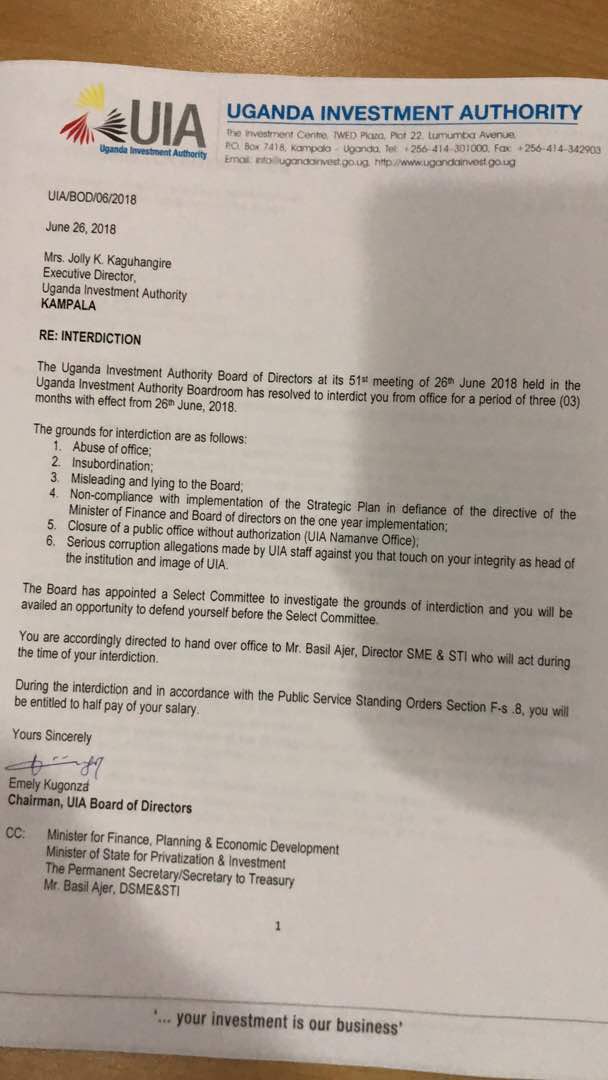
The Eagle Online has obtained a copy of the interdiction letter served to Jolly.

A copy of the letter interdicting UIA boss

The investment agency has been marred by several allegations of corruption and nepotism mainly in the restructuring process that started last year.

But sources say the firing of Jolly has been influenced by State for Finance in charge of Privatization and Investment, Evelyn Anite.

In May Anite penned a letter to the UIA Board Chairman, Emely Kugonza over accusations surrounding restructuring.

“Reference is made to the ongoing restructuring process of the Uganda Investment Authority and the attached letters alleging undue interference in the process,” part of the letter dated May 24th 2018 said.

According to complaints forwarded to Minister Matia Kasiaja, copied to Anite and the Inspector General of Government, Irene Mulyagonja by concerned citizens including Ajidiru Monica Opoka and Ochieng Peter, the UIA Board engaged in operational activities like interviewing lower level staffs including cleaners and tea girls.

The Board is also accused of shortlisting and going ahead to interview single candidates that coughed Shs 50m each for the coveted and remunerating positions of 6 directors.

Stories Continues after ad