Stanbic Bank
Stanbic Bank
17.4 C
Kampala
Stanbic Bank
Stanbic Bank
Home Blog Page 1545

Chief Justice to Legal Officers: Be professional

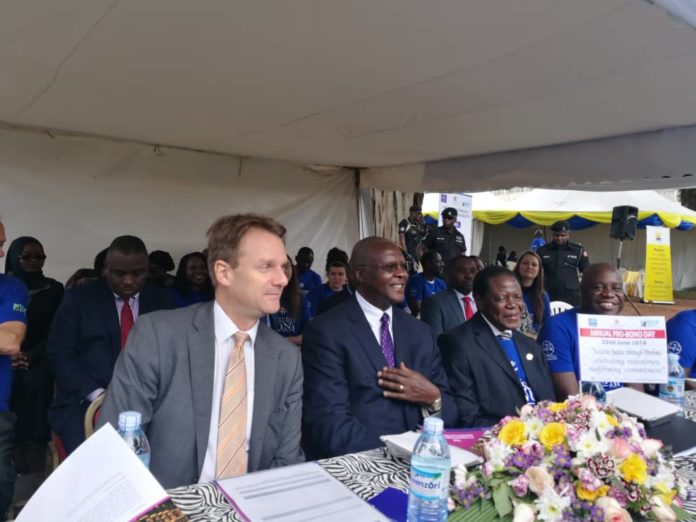
Chief Justice Bart Katureebe (Center) at the celebration of Pro bono day

Kampala: Chief justice Bart Katureebe has implored legal officers to be devoid of corruption and exude professionalism saying advocates owe a duty to the public to provide quality legal services while handling pro bono cases.

Speaking during the celebration of pro bono day, justice Katureebe said, Legal fraternity exists to administer justice to the citizens of Uganda, “Weed out the bad apples from the Legal profession and be each other’s keepers, we must have a culture of zero tolerance of corruption in the profession” he added.

Under the theme ‘Access to Justice through pro bono; celebrating milestones and reaffirming commitment’, chief justice said, Pro BonoDay2018 is marked by various activities notable among them is marching publically, re-committing themselves to offer free professional legal services, offering legal aid to members of the public, and enrolling new advocates to the Pro Bono Scheme.

“the day is in line with their mission to develop a skilled and empowered legal profession in execution of statutory mandate to foster and improve access to and administration of justice as well as good governance in Uganda,” He said at “At Railway grounds in Kampala.

In his remarks, the Chairperson of the law council Justice Remmy Kasule lauded Uganda law society (ULS) for being a great partner to work and ensuring the members do pro bono work.

“As advocates should maintain the spirit of Pro-bono which the profession was designed to do and ensure quality professional services to the masses as any other private case handle, we should protect rights of every human being in Uganda,” said justice Kasule.

He called upon Legislators to be our ambassadors and to pass the Legal Aid Bill ASAP 2017 that aims at legalizing pro bono in Uganda.

Netherlands Ambassador to Uganda Henk Jan Bekker commended ULS efforts to promote social justice and is proud of the partnership with Democratic Governance Facility (DGF).

Stories Continues after ad

European Union releases €24 million humanitarian assistance to Uganda

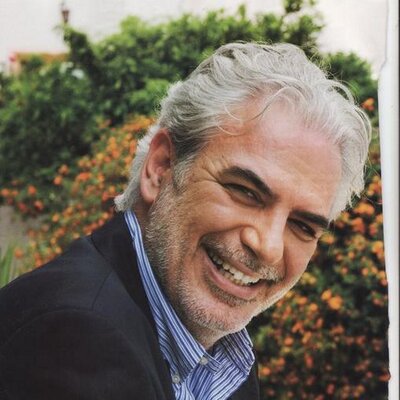
EU's Commissioner for Humanitarian Aid and Crisis Management Christos Stylianides

European Union (EU) released €24 million humanitarian assistance towards longer-term development strategies to find durable solutions and support the self-reliance of refugees.

Currently, Uganda is the largest recipient refugee country in Africa hosting 1.4million asylum seekers from South Sudan and the Democratic Republic of Congo. However, Uganda’s progressive refugee policy is under increasing pressure due to the scale of the crisis, and services are overstretched while available land is dwindling.

According to a statement released by Commissioner for Humanitarian Aid and Crisis Management Christos Stylianides, assistance will prioritise emergency situations and new arrivals among displaced populations, with a special focus on the many refugees from South Sudan and the increasing influx of Congolese refugees.

“EU aid will provide emergency health and food assistance, water and sanitation, as well as protection and education in emergencies through accelerated learning programmes for children whose education has been disrupted by conflict and displacement,” he said in a statement.

He noted that EU stands in solidarity and is committed to support the most vulnerable refugees, “Our new funding will help both those already displaced and the new arrivals into Kenya and Uganda,” he added.

He revealed that €10 million emergency assistance has been released to Kenya to support refugees living in Dadaab and Kakuma camps, providing protection to the most vulnerable, as well as granting access to quality primary education.

EU assistance will also support programmes to tackle the consequences of the prolonged drought in parts of the country. The assistance in Kenya comes on top of the €1.5 million released in May to assist the victims of the flooding that wreaked havoc in the country.

Kenya continues to host more than 450,000 refugees, mostly from Somalia and South Sudan. Additionally, recurrent and prolonged climate shocks cause food and nutrition crises. The EU has allocated over €130 million in humanitarian assistance to Kenya since 2012.

Stories Continues after ad

Minister Okello Oryem launches protocol information management system

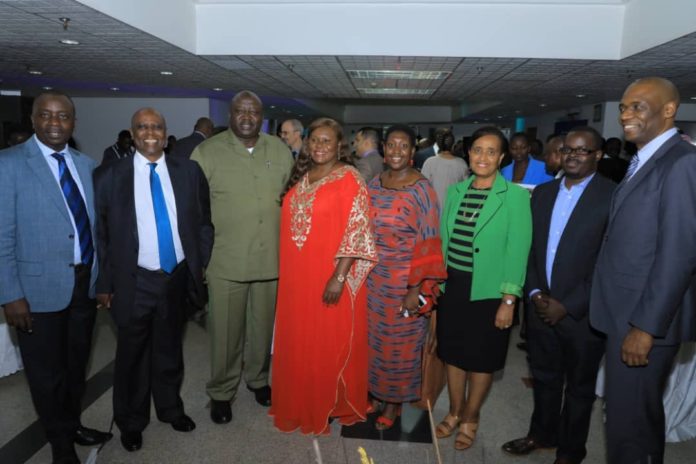
Foreign Affairs State Minister, Okello Oryem(in Green Kaunda Suit) with ministry officials after launching the system

Kampala: Minister of Foreign Affairs Okello Oryem has launched protocol information management system (PIMS) that is aimed at increasing efficiency in the administration of privileges and immunities to foreign diplomats.

PIMS is a secure web-based system that improves the availability and accuracy of data on diplomatic immunities. Therefore it is part of the e-governance system that was in 2011 launched by government of Uganda in a bid to recognize the use of information communication technology as a mechanism to foster economic development in the country.

During the launch Okello said the system is quick, easy to access information and exchange with other ministries, departments and agencies that will facilitate quick accreditation of diplomats.

“E-governance system has been embraced to improve service delivery by demystifying the role of government, simplifying procedures, enhancing transparency an accountability and availing timely information to the public,

He said the system is time saving since, “it reduces time taken to manually process IDs and accrediting diplomats and reduces workloads and paper,” added Mr. Okello.

The PIMS system has been developed in partnership with United Nations development program (UNDP) and it will be used by protocol department in MOFA and relevant staff in diplomatic missions and agencies” he said ministry of foreign affairs.

The digitalized and automated process include; arrival notification, accreditation and IDs, tax identification , permits and passes, motor vehicle registration, driver’s license , customer clearance, tax refund, airport pass and aircraft clearance.

However UN resident officer Rosa Malango applauded foreign affairs ministry for creating an innovative, cost effective, convenient and customized system to meet the needs of diplomats.

“The automation of protocol services will ease administration of rights and privileges for the diplomatic corps. We commit to support the roll out of this PIM system for a period of one year so that it can be operationalized and linked to other government services,” she said during the launch.

Stories Continues after ad

Presidential address on security was a history lesson – Winnie Kiiza

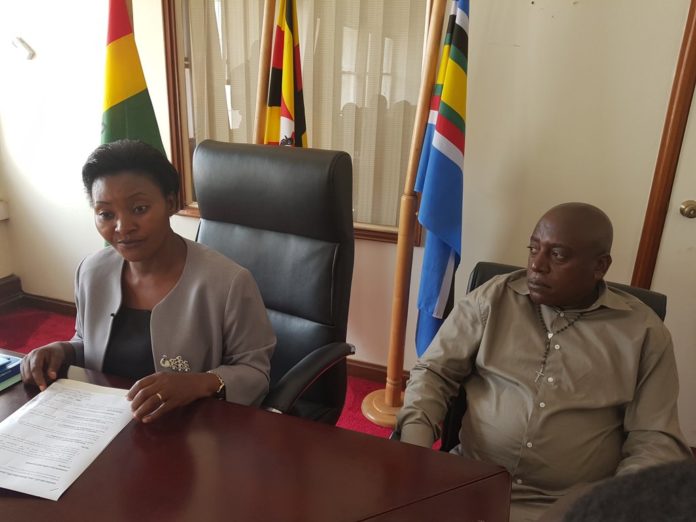
Winnie Kiiza

The Leader of Opposition in Parliament, Winnie Kizza has said the address on security by President Yoweri Museveni was a history lesson to legislators and not anything on safety of the country.

Ms Kizza was answering questions from the Journalists and public in a live Twitter chat held at Parliament today. She also rated the performance of the tenth parliament at the end of the second session.

She talked about several issues among which she gave her verdict on the President’s state of security address in the country.

Yesterday, President Museveni addressed parliament on the state of security in the country in which he talked about preventing crime by illuminating helmets, installation of cameras and introducing of electronic number plates at the expense of the owners among others.

“For the Security address, the President didn’t speak current security situations. It was like a sensitization to parliament which he didn’t even let us to debate about. I’m sure no Uganda wanted to hear his Bachwezi stories and all his history lessons.” She said.

Adding “An ordinary Ugandan expected President Museveni to talk about Kaweesi assassination and Abiriga murder but he did not mention about any of them.

She said Money will be needed for expertise to illuminate helmets for boda-boda riders and the tracking system for vehicles. “When we asked the president for funds for cameras to track criminals, he said government will get money. We are waiting now.

Museveni’s security measures were not feasible. They include long-term processes that have not been provided in the Budget and may cause budget implcations.” The LoP said.

On the issue of the Age Limit Bill, Kiiza said they have not yet come to terms with the amendment of article 102 (b) to remove the presidential age limit.

She said the Age Limit was only going to benefit one person and that is President Museveni because he was the only one above the age.
She concluded on the issue saying the matter is in court and they are eagerly waiting for the constitutional court to make its ruling but they remain positive.

On the vetting process of people sent by the president to be approved by parliament, Kizza said that the appointments committee has 30 members and there only five members of opposition which makes it hard for decisions to go on the opposition side. “Opening it to the public would be a good step”.

Concerning the issues of the presidential handshake, LOP said that as opposition, they advocated for recovery of the money. They are waiting for the report and Treasure Memorandum to see those who recovered and those who didn’t and see the way forward.

“Accountability has a process. When money is spent and sent to different agencies, an audit is done and is presented to committees of parliament, which later gives a report on the floor of Parliament.” She said.

Kizza also talked about the low performance of the parliament saying it is majorly been caused by absence of ministers and this makes the public lose confidence in their representatives.

“The low performance of parliament is mainly attributed to the continued absence of MPs and on many occasions, the house has been adjourned. We are a big parliament and sometimes we even do not have enough seats. The construction of new Chambers is what we need.”

In conclusion, she thanked the people on social media for their vigilance and making the public aware of the current situations in the country and urged them to continue showing support by keeping their eyes on the net.

Stories Continues after ad

Uganda to celebrate annual dairy day – Minister Kabatsi

Joy Kabatsi

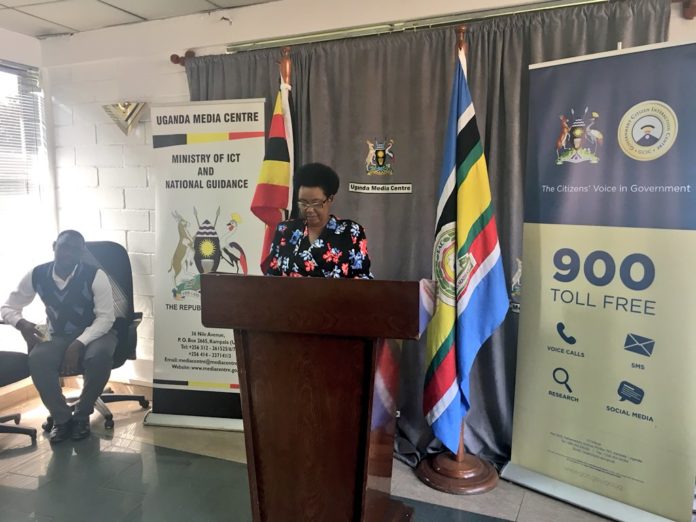
State Minister for Animal Industry Joy Kabatsi has said Uganda is set to celebrate annual dairy day aimed at promoting milk consumption in the world.

At the media briefing, Kabatsi said the month of June is Dairy Month and the annual event is celebrated worldwide to pay tribute to contributions of dairy farmers, dairy importers and exporters and their families who work hard every day to provide fresh, wholesome milk and milk products for everyone to enjoy.

“This year’s theme is geared towards acknowledging women’s significant contribution to the dairy sub-sector in particular and to food security,” she said at media Centre.

According to Kabatsi, celebrations will be held on between June 27-29, 2018 in Soroti District and will be organizing and coordinated by Dairy Development Authority (DDA), an agency under Ministry of Agriculture, Animal Industry and Fisheries.

She said the value of marketed milk had 5 per cent increase from US $ 716 million in 2015 to US $ 752 million about (Shs2.7 trillion) in 2017/18 and the marketed milk stood at 80 per cent of the total production in 2017 and is likely to increase after the rehabilitation of more milk collection centres.

Total rural milk collection centres are currently 461 with total installed capacity of 1,779,417 liters.

“Uganda has 100 operational milk companies with a total installed capacity of 2.7 million liters per day. Products currently processed include; milk powder, UHT milk, pasteurized milk, yogurt, butter, ice cream, cheese, Ghee and casein,” she added.

Stories Continues after ad

Minister Seninde launches Build Resilient learners’ project

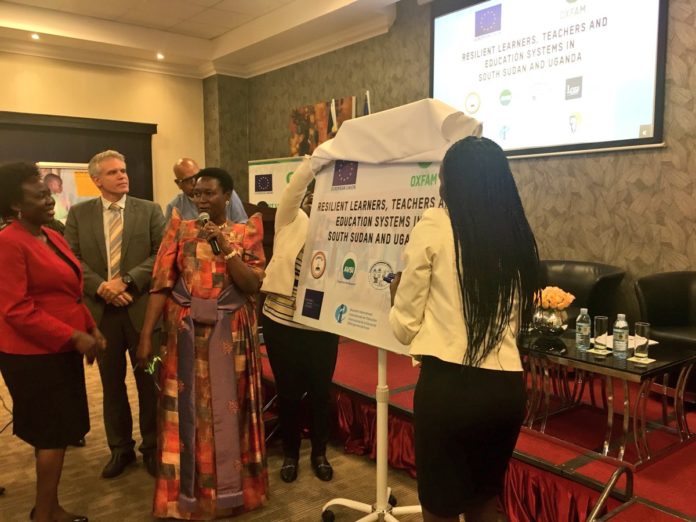
Minister Seninde and other dignitaries at the launch.

Kampala: The State Minister for Primary Education Rosemary Seninde has launched Build Resilient Learners project that is aimed at improving and strengthening the education system in Uganda refugee settlements and South Sudan communities.
Through Building Resilience in Crises through Education (BRICE), the project has been established by Oxfam Uganda and European Union.

Speaking at the launch, Mrs. Seninde said, Build Resilient Learners’ projects targets a group of 32,600 learners, 825 teachers, Parent Teacher Association, School Management Committees and South Sudanese communities, South Sudanese refugees and host communities.

“As a Minister, I will use all my powers to make sure that the project succeeds, I appreciate the roles of this project which is giving access to education to disadvantaged groups,” she said at Mestil Hotel in Nsambya.

She applauded Oxfam Uganda and European Union (EU) for always supporting Ugandan education system adding that as teacher anything done for Ugandan students to excel makes her glad.

“We are grateful that this project cuts crosses boarders to South Sudan, by 2021 as ministry, we have a vision of eliminating illiteracy, there is always chaos in uninformed communities, the world is now one village, Uganda cannot develop without bringing everyone on board”

In the implementation of this project, Head of Cooperation EU Cedric Merel said they will apply the humanitarian cause and make sure that they look at gender balance to give equal opportunity to girls and boys.

He said that about US $1 billion is lost every year for failing to educate girls focusing on only boys. “Education can help students of both sexes to get over trauma,”

Stories Continues after ad

Uganda ranks among the top economies in the 2018 Africa Risk-Reward Index

Uganda ranks among the top economies in the 2018 Africa Risk-Reward Index

Ethiopia, Tanzania and Kenya among the top scoring economies; Uganda records strongly improved risk-reward score

Nairobi: “Uganda ranks among the top economies in the 2018 Africa Risk-Reward Index when it comes to positively changing its scores. Relative political stability under President Yoweri Museveni means that priority national projects such as oil production or infrastructure projects face few policy or bureaucratic delays.

While the prospects for economic growth have improved following the end of a regional drought and the election period in neighbouring Kenya, concerns over a deteriorating security environment mitigate the otherwise improved risk score.”

Ethiopia, Tanzania, Kenya and Uganda offer investors a reward score above the African continent’s average, according to the2018 Africa Risk-Reward Index from Control Risks (and Oxford Economics.

Ethiopia and Tanzania lead the list of the top rewarding economies for the second time, with Kenya following in fourth position after Côte d’Ivoire. Strong improvements on both the reward and the risk side make Uganda one of the strongest performers of the June 2018 edition of the Africa Risk-Reward Index.

Daniel Heal, Senior Partner for East Africa at Control Risks, comments.

“Ethiopia with its impressive reward score of 7.94 out of 10 offers opportunities for investors specifically in the agriculture and manufacturing sectors which continue to demonstrate high levels of growth. The government’s new privatisation push in the energy, telecoms and logistics sectors also offer new and exciting opportunities for investors.

However, its risk score of 5.79 is also above the continents average of 5.54 due to the ongoing political transition under new Prime Minister Abiy Ahmed, who will need to delicately balance the interests of the political elite with opposition demands for the opening of political space.

“With great economic potential across sectors from energy to agro-processing, Tanzania remains an interesting but volatile target for potential investors. However, the country’s continuously high reward score is overshadowed by a high risk score of 5.72. President John Magufuli’s rising autocracy and several legislative changes – giving the administration permanent sovereignty over mineral wealth as well as the ability to renegotiate exploration and production agreements, increase its shareholding in mining companies and increase mining royalties – raise concerns within the international investor community.

“After Kenya’s protracted 2017 election period and consequently reduced investment levels, 2018 is an exciting year for investment opportunities in Kenya. Kenya’s reward score remains one of the highest in sub-Saharan Africa and the ruling Jubilee Party of Kenya continues its pro-business policies.

However, improving relations between the government and the opposition will be instrumental in ensuring that political tensions do not undermine economic growth, and more prudent fiscal and macroeconomic policies are needed to maintain positive economic prospects.

Further findings of the report:

Angola’s leadership change has not yet improved its reward score, but its risk score has gone down: Angola’s new president, João Lourenço, has acted with remarkable speed and decisiveness to consolidate his authority.

Efforts to dismantle his predecessor’s networks have provided new opportunities for foreign investment in sectors previously dominated by companies linked to the former president and his family. Combined with an improved regulatory environment, investors can seek opportunities predominantly in the oil and gas, diamond, and telecommunications sectors.
Reward score: 3.65 / risk score: 6.55

South Africa – slightly increased reward score and reduced risk score as political uncertainty eases: Investor confidence has increased since Cyril Ramaphosa assumed the presidency in February 2018. The implementation of policies – intended to consolidate fiscal expenditure and tackle corruption in public institutions and state-owned enterprises – increases opportunities for doing business in South Africa.

But deeply entrenched patronage networks and electoral pressure ahead of the 2019 general elections will contribute to a slow recovery of South Africa. Reward score: 4.78 / risk score: 4.74

Côte d’Ivoire, with a forecasted real GDP growth rate of 7 per cent in 2018, continues its impressive economic recovery, but great challenges remain: With reforms to the business environment and efforts to bring foreign investors back after the 2010-2011 crisis, Côte d’Ivoire has achieved amongst the highest growth rates in the world in recent years, and sectors such as construction, telecommunications, banking and retail have seen considerable growth.

However, severe obstacles to a full recovery persist, including political interference and corruption, socioeconomic discontent, shortcomings in security-sector reform, and growing competition ahead of the potentially volatile 2020 presidential poll.
Reward score: 6.51 / risk score: 6.24.

Senegal – growing investment and a reduced risk score presage continuous growth: Under the Emerging Senegal Plan, growth has increased steadily over the last three years, reaching close to 6.4 per cent in 2017.

Growing exports, a more diversified economy and increased interest from large international investors as a result of the promising offshore oil and gas discoveries make Senegal one of the poster children in sub-Saharan Africa.

The reduction in its risk score is one of the most positive changes in the 2018 Africa Risk-Reward Index. Reward score: 5.76 / risk score: 4.56

Morocco – economic reforms improve the country’s resilience and make its exports more competitive, but social discontent remains a challenge: With one of the lowest risk scores on the 2018 Africa Risk-Reward Index and a relatively stable reward score, Morocco’s economic reforms prove to be a success.

Medium-term growth will be enhanced by continued reforms to facilitate foreign investment, access to finance, quality of education and the business environment, as these represent the primary constraints to competitiveness and doing business.

However, social-economic unrest over poor living conditions persists particularly in interior regions. Reward score: 5.77 / risk score: 4.10

Stories Continues after ad

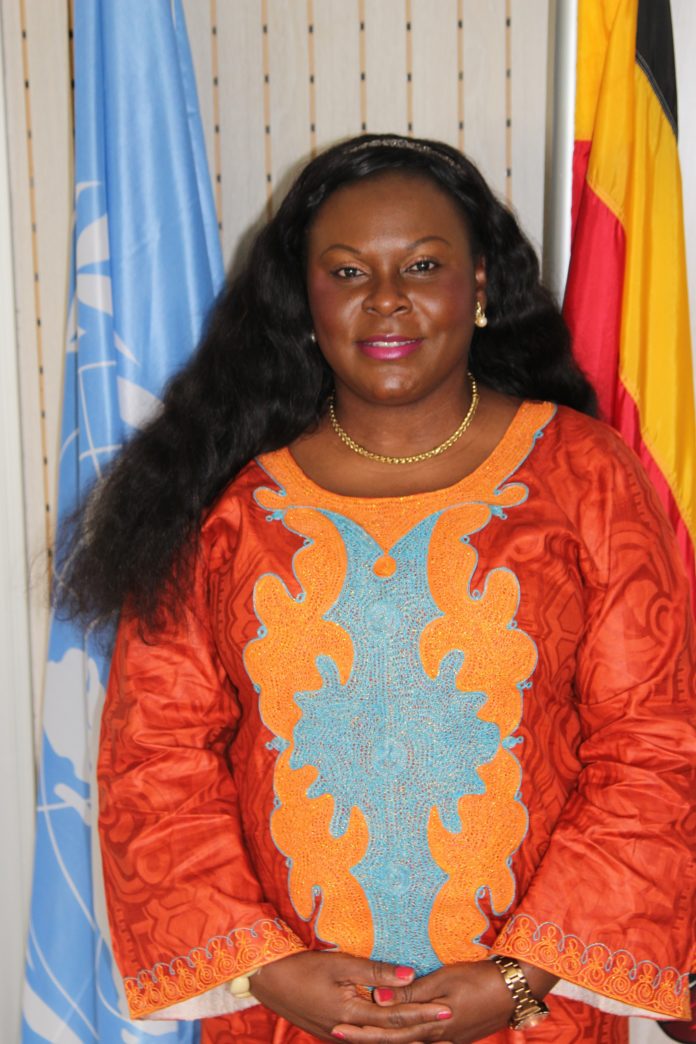
UNDP wants gender equality at workplaces

Ms. Rosa Malango UNDP country representative.

Private companies under private sector foundation have ratified gender equality seal certificate program that is aimed at promoting productivity, partnership and marketability of locally manufactured products across the country.

The certificate propgramme is supported by United Nations Development Programming (UNDP) to help business achieve gender equality, the goal five of the 17 sustainable development goals (SDGs).

According to Executive Director PSFU Gideon Badagawa, companies ranging from large to small and medium enterprises majoring in banking, beverages, information communication technology, leisure and hospitality, tourism and agriculture will be targeted.

He revealed that the program aims at gender equality at workplaces will target employee performance scheme that reduce gender gaps.

He said that the new companies bring to 40 enterprises that adopted gender equality seal certification program for private enterprises in Uganda.

During the signing event, UNDP Resident Representative Rosa Malango said that she is delighted to see increased interests in the gender equality seal certification.

“we applaud private sector foundation and all the enterprises that have been with us for the last two years and welcome the new ones that have agreed to take the challenge to ensure gender equality in work,”

Speaking at same function at Serena hotel, Minister for Gender Labour and Social Development Janat Mukwaya lauded UNDP for pivotal role in empowerment of woman.

She said government is committed to ending gender based violence in homes among other communities.

“Government has engineered women to access property, quality education, employment opportunities, therefore, the state machinery is committed to supporting women in private sector for diversification of the economy,”

Stories Continues after ad

Museveni orders for fingerprinting guns, boda-boda 2010 will be crushed

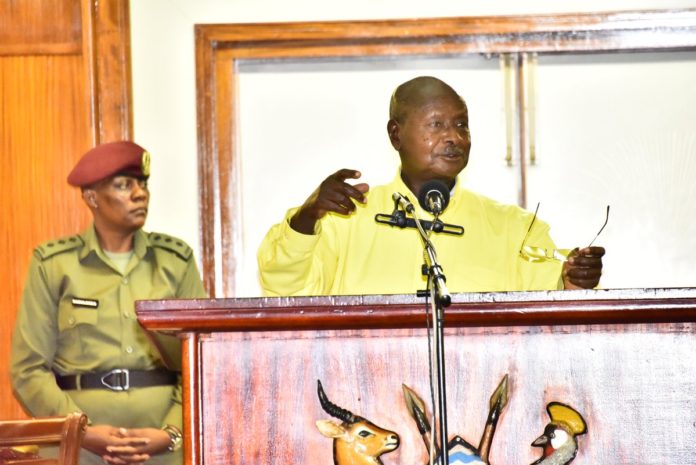
President Museveni addressing parliament on the state of security in the country.

Parliament: President Museveni has directed security agencies to finger print all the guns in country.

The president made the revelation while addressing parliament on the state of security in the country just a fortnight after the death of Arua Municipality legislator who was gunned down in Kawanda by assailants moving on a motorcycle.

Addressing parliament this evening, Museveni said with the introduction a machine that reads gun finger prints, government will be able to identify the kind of gun that was used in criminality and who signed for it.

“These criminals have been getting government fire arms, kill people and return them to armory, the data will be stored in the central monitoring system that will stationed at police,” he said.

He further said “I have been warning our security forces not to depend on telephones because serious criminals don’t use telephones to commit crime. They should use ears to listen but should know that the eye is the best weapon to capture these criminals,”

Museveni listed seven key factors security agencies will implement in curtailing crime and these are installation of electronic number plates on vehicles and motorcycles, banned hooded jackets, introduction of helmets with unique number both in front and behind and on this, he said he would consult both National Social Security Fund and National Enterprise Committee (NEC), a commercial subsidiary of the army to manufacture helmets locally. Other measures are installation of cameras on highways and streets, modern forensic laboratories for DNA test, Speedy response by police to situations and in trying to achieve the above, he proposed the revival of 999 police response and reinstating of flying squad.

He also said his government would use drones to detect crime in areas that are hard for human beings and lastly working with Uganda Communication Commission to detect online criminals.
Further noted that in a bid to block the smuggling of guns into the country, more modern container scanners will be availed to check all containers entering in the county.

“Cameras will be installed along roads junctions around the country and acquiring drone cameras to do surveillance work.

He revealed that in the past Ugandans attended ‘Muchaka-Muchaka’ to fight crime, crime preventers and Local Defence Units (LDU), “for boda-boda 2010, I don’t think those were properly trained, they have eyes but they can’t see, they have ears but can’t listen, they are playing with something very dangerous, we shall crush them,”

According to Museveni with rapid response in case of crimes, old police techniques, it is easy to detect crime when police are alerted and working with vigilant communities, crime can be dealt with. “We have abundant capacity to guarantee the security of Uganda, all the criminals including those hiding in Congo will pay for their sins,”

Stories Continues after ad

Kabira Country club to host a football tournament

Sheena Ruparelia at the launch.

Kabira Country Club will entertain the general public to its first ever football tournament at its base situated in Bukoto.

The event will take place on Sunday June 24, 2018.

The tournament was today officially launched by the Director of Ruparelia group, Sheena Ruparelia and was officially recognized by Head of Marketing at FUFA, Easter Musoke.

There will be eight teams, each consisting of six players to battle it out for numerous cash prizes at stake.

Registration to participate in the tournament is going on at a cost of Shs200, 000 per team.

Kabira Country Club is the number one boutique hotel in Kampala, with a world class restaurant, gymnasium, accommodation and a heated swimming pool.

It is also the perfect hotel for a relaxing get away and venue to hold special events, weddings and business meetings in Kampala. It is owned by city mogul Sudhir Ruparelia.

It offers world class facilities for conferences, meetings, seminars and workshops. Conference halls are equipped with latest Audio and Video systems to give your seminars, workshops, business meetings and conferences the digital look and interactions you need.

The luxurious country club is located along Old Kira Road, Bukoto, Kampala, Uganda.

Stories Continues after ad