Kampala: Uganda joined the rest of the world to celebrate World Environment Day which was celebrated Tuesday.
And by the end of the day, the people of Nakawa, Kirombe had received a modern public sanitation facility worth Shs150million which was handed to them by Uganda Breweries Limited.
The facility, a complex of modern water-borne toilets and bathrooms was constructed under UBL’s ‘Water of Life’ initiative aimed at improving sanitation in Uganda.
It is set to serve over 3,000 beneficiaries living in the community as well as those who usually visit the area on a daily basis to transact business.
It comprises of 4 urinals for men, 2 male toilets, 1 bathroom, and 1 male seat-toilet for disabled persons, 2 female toilets, 1 bathroom and 1 female seat-toilet for disabled persons.
Speaking during the commissioning of the sanitation facility, David Onyango, the Public Policy & Sustainability Manager at Uganda Breweries Limited expressed the company’s pleasure and commitment to environmental conversation and improving the livelihoods of the communities in which they operate in.
“Safe water, effective sanitation and hygiene are critical to the health of everyone in the community. It is our hope that this intervention will help address the challenges that the people of Kirombe have been facing in terms of sanitation,” Mr Onyango said.
Ronald Balimwezo, the Nakawa Mayor, who officiated at the ceremony, expressed his appreciation to Uganda Breweries Limited for the facility.
He noted that the toilet facility will help decrease the rampant hygiene-related disease outbreaks amongst the residents of Kirombe villages.
He called on all members of the community to exhibit a good maintenance culture to enable the facility serve future generations.
Cissy Tenywa, the Chairperson LC 2, Butabika Parish noted that the community was in dire need of the facility and assured UBL that they would do their best to maintain the facility.
Uganda Breweries Limited has done similar projects in Luzira, Busia-Sofia market, Kinawatuka slum and at Ggaba Landing site.
In 2017, UBL commissioned a modern sanitation facility that was constructed by the brewery for the residents and traders of Port Bell Market.
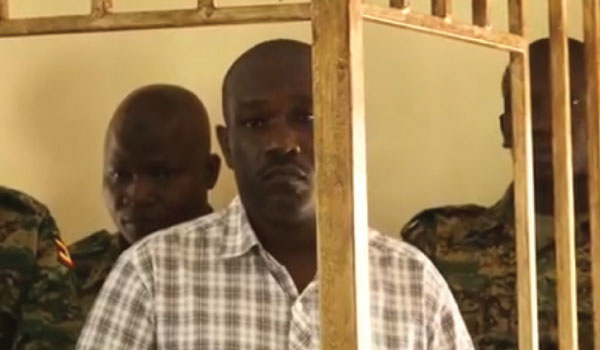
Kampala: Former Bubulo legislator Tonny Kipoi Nsubuga has petitioned High Court challenging his trial in General Court Martial and his subsequent detention in a military facility.
Kipoi was is currently facing treason charges was arrested in Botswana in February alongside a one Robert Kitali and extradited to Uganda in March after reportedly extorting money by posing as witch doctors.
According to petition filed by his lawyers led by Ronald Idulo of Ojok and Company advocates, Kipoi avers that in 2013 the DPP signed a formal notice of abandonment in relation to the same offences that currently against him and in September 2014 was he was released by the High court.
Kipoi says trying him on same facts is illegal and unconstitutional and therefore wants Attorney General, Director of Public Prosecution (DPP) and Commander Defence Forces (CDF) of UPDF to respond over that matter.
High Court judge Justice Margaret Oguli has however set June 11th for hearing of the petition as his case in Court martial resumes on Tuesday 13 June.
Prosecution in Makindye General Court Martial alleges that between November 2012 and December 2013, while in various districts of Masaka, Jinja, Kampala Uganda, and Kipoi convened meetings to recruit soldiers with the intention of overthrowing government.
In 2013, Kipoi was allegedly arrested in Congo and charged with treason however he refuted the claims saying he had fled the country because of bad governance under President Yoweri Museveni
Former Bubulo West legislator Tony Kipoi Nsubuga is charged alongside five UPDF soldiers: Sgt. Yunus Lemeriga, Sgt. Adams Mawa, Sgt. Albino Okenge, Cpl Rogers Mwiru, and Private Ddodola Ijosiga.
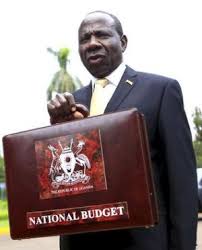
Finance Miniter Matia Kasaija denied ever granting permission for the tax.
The Shs200 excise tax that parliament passed last week on airtime/data in the financial year 2018/19 is unfair to the poor Ugandans, activists from Twaweza East Africa, a local civil society organisation have said.
Last week parliament passed the Shs200 tax to be paid per day by airtime/data buyers, meaning a client of telecom company will be paying Shs6000 monthly, assuming he loads airtime/data on the daily basis.
The tax is likely to see many of the poor Ugandans spend less time on social media platforms like Facebook, Whatsapp and Twitter among others.
In their analysis, they say that if the average monthly spending on airtime is about Shs10, 000, new tax would make up 60 per cent of that amount.
The activists are bitter that the richest would pay 30 per cent which would half that of the average Ugandan. They say the tax is regressive.
The activists in their report suggest that the new proposed tax on social media be reduced or changed into a tax based on usage, rather than leaving it as a flat tax that benefits the rich at the expensive of the poor.
They say women and the poor who spend less on airtime/data would be the most affected.
However, they say most people will adapt in both ways – “spending a bit more, but getting a bit less airtime for their money. “
“If the tax is to be applied to those that only use the social media, the effect will still be most felt by the women and the youth,” the say.
About 40 per cent of Uganda’s 40 million people use the internet, according to data from the Uganda Communications Commission which regulates the telecommunications industry in the country.
Yaya Toure’s agent Dimitri Seluk has warned Pep Guardiola of an ‘African curse’ following his client’s sensational accusation that the Manchester City manager does not like picking African footballers.
Toure left City at the end of the season after eight trophy-laden years. But in his final campaign his relationship with Guardiola deteriorated and he made only one Premier League start.
In an interview with a French football magazine, the 35-year-old made the extraordinary suggestion that he was being discriminated against by Guardiola on racial grounds.
‘Pep did everything to spoil my last season. He was cruel with me,’ said Toure. ‘Do you really think he could’ve been like that with Andres Iniesta? It got to the point I asked myself if it was because of my colour. I am not the first. Other Barcelona players asked the question.
‘Maybe us Africans aren’t always treated the same by certain people. When you see the problems (Pep) has often had with African players, everywhere he has been, I ask myself questions. He is too intelligent to be caught. He will never admit it. But the day he picks a team with five Africans in it, I promise I will send him a cake.’
Now, in an lengthy interview with Russian outlet Sport24, Seluk has warned the City boss of an ‘African curse’ and insisted Toure would be happy to play for another club in the Premier League’s top six for a lowly wage of £1 per-week.
‘Yaya knows Guardiola like no other,’ he said. ‘He worked with him both in Barcelona and in Manchester City. With all the desire, nothing good about the human qualities of Guardiola can be said.
‘God sees everything. As a man who acted with Yaya, the legend of the club, which under different pretexts did not give the opportunity to go on the field. He turned all Africa against himself, many African fans turned away from Manchester City.
‘And I’m sure that many African shamans in the future will not allow Guardiola to win the Champions League. This will be for Guardiola an African curse. Life will show whether I am right or not.’
Toure played under Guardiola at Barcelona, winning the Champions League in 2009 as well as two league titles and a Spanish Cup. However, the two men never looked at ease with each other when Guardiola succeeded Manuel Pellegrini at City two summers ago.
Seluk bemoaned how the Spaniard first came to the Etihad Stadium and claimed he announced his arrival early purely to disrupt Pellegrini’s final season at the helm.
‘You can start with the fact that he came to Manchester City in a nasty manner. The transfer was announced at a time when Pellegrini, his co-worker in the coaching department, was still at the helm of the team,’ he added.
‘Guardiola was afraid that Pellegrini would win the championship and other tournaments that season, as he did before he came to Bayern Munich, when Jupp Heynckes won all that is possible. Guardiola could not repeat the achievements of Heynckes, being the next three years at the helm of the best German club, which without Guardiola again leads and wins.
‘What did Guardiola achieve? In two years he won the same as Mancini or Pellegrini. And Pellegrini reached the semi-finals of the Champions League, and Guardiola – not yet. Manchester City has now extended the contract with him for three years.
‘I bet that Guardiola will not win the Champions League during this time, no matter how much money he has spent, but he likes to do it. When only £200million is spent on the line of defence, when money is not counted…
‘Perhaps, many will say that this is the style of Guardiola, that he plays enchanting football. Only when you buy all the best players in the world, it’s much easier than, for example, in the case of (Claudio) Ranieri, who won the Premier League with Leicester.’
As a free agent, Seluk insisted the veteran could still be of use to the other members of the Premier League’s top six and claimed next season will be focused on proving Guardiola wrong.
‘Now Yaya has many offers from different countries, where they are ready to pay a lot of money, but we decided to dedicate the next season to Guardiola. And to prove and show the fans of Manchester City that Yaya is not finished with football. He is full of energy and wants to play this season in England,’ he said.
‘At a time when huge sums are being spent in England for the purchase of football players, I officially declare that Yaya is ready to move as a free agent to any English club in the top six with a salary of £1 a week – but for certain successes to make a bonus system.
‘I believe that a player like Yaya would not harm Arsenal, Chelsea, Manchester United, Tottenham and Liverpool. Yaya – the winner. And never before has a top footballer with leadership qualities harmed any club, especially when it is not necessary to pay for it.’
Manchester City declined to comment on Monday night.
Kampala: National resistance movement (NRM) government is not against Muslims, when we were fighting the former president of Uganda Idi Amin Dada, we were supported by Muslims, says President Museveni.
His remarks come after the recent arrests of Muslims in relation to various high profile murder cases among them the assassination of the assistant inspector general of police (AIGPA) Andrew Felix Kaweesi in 2017, senior state prosecutor Joan Kagezi (2015) and the kidnap and murder of Susan Magara (2018).
At the State House Iftar dinner, Mr Museveni urged the Muslims not to worry saying government does not believe in collective guilt, “worrying just because one Muslim has committed a crime, that does not mean that every Muslim is a criminal, crime has no religion,” he added.
He applauded the ambassadors of Turkey, Somalia, Algeria, Saudi Arabia, Egypt saying Uganda enjoys warm relations with Islamic countries and “we encourage them to invest more here,”
“I appreciate Muslim community for greatly contributing to Uganda’s economy especially in the field of trade. However, I encourage you to venture into farming too, those in urban areas, consider getting into industries like Hajji Bulayimu Kibirige of Hotel Africana,” he said at state house.
Just the other day, former security Minister, Henry Tumukunde, in an interview with the Daily Monitor, said Muslims should not be profiled or targeted for the rising crime in the country, including reported threats posed by the Allied Democratic Forces (ADF) rebel group.
Despite fewer divisions among Muslim community, Museveni called for togetherness saying in the next financial year government will start working on the national mosque.
He noted that on June 3rd (Martyrs Day), he came to learn that there were a good number of Muslim Martyrs and resolved that to construct a memorial Muslim site at Namugongo.
“I congratulate Muslim community for coming this far in the month of Ramadan and I pray that you conclude the fasting period in good health,” he concluded.
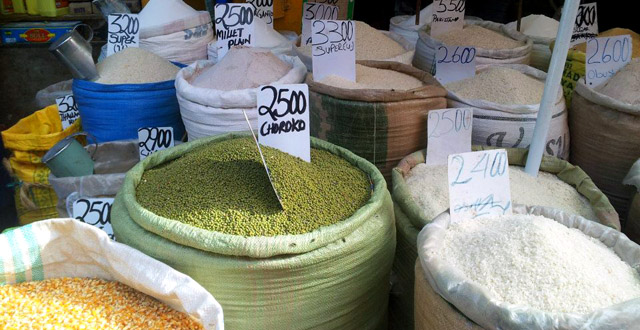
Uganda’s monthly headline inflation in May rose to 0.5 per cent from the 0.3 per cent rise recorded in April 2018, the Ugandan Bureau of Statistics (Ubos) says in its latest report.
According to the report, the increase was as result of the increase in the monthly core inflation that registered a 0.3 per cent rise in May 2018 from the 0.0 per cent recorded in April 2018 as prices of clothing and footwear increased.
Core inflation excludes price changes of food and energy sectors.
The report also attributes the increase to the rise in the prices of sugar that rose to 2.3 per cent during the month of May from the minus 3.4 per cent recorded for the month ended April 2018.
The report further shows the rise in the prices of food crops which rose to 1.6 per cent in May from the earlier rise of 2.4 per cent recorded in April 2018. The rise was due to mainly the increase in the prices of vegetables.
Besides, Energy Fuel and Utilities Inflation increased by 0.9 per cent in May 2018 from the 0.2 per cent drop recorded in April 2018. “This rise is due to Solid fuels Inflation that was registered at 2.5 per cent during the month of May 2018 from the 0.2 per cent decrease recorded for the month of April 2018.
Besides, the Annual Headline Inflation for the year ending May 2018 was recorded at 1.7 per cent compared to the 1.8 per cent registered during the year ended April 2018. This represents a 0.1 percentage point drop from that recorded during the year ended April 2018. The drop is largely attributed to the Annual Core Inflation that was registered at 1.1 per cent for the year ending May 2018 compared to 1.6 per cent recorded for the year ended April 2018.
Arua registered the highest Annual Inflation of 3.9 per cent for the year ending May 2018; the same rate recorded for the year ended April 2018. This rise was mainly driven by the increase in the prices of food and non- alcoholic beverages.
Fort Portal came second at 3.6 per cent for the year ending May 2018 compared to 3.5 per cent recorded for the year ended April 2018. The increase was attributed to price increases for Housing, water, electricity, gas and other fuels.
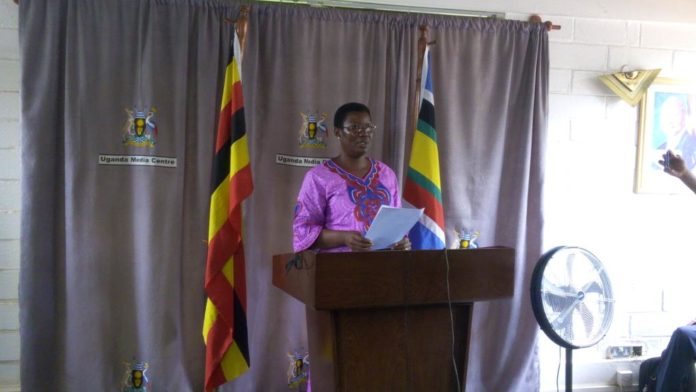
The Minister for the Presidency Esther Mbayo addressing journalists at the Media Centre
Kampala: Minister for presidency Esther Mbayo has said Prime Minister of Ethiopia, Abiy Ahamed Ali, will be hosted and awarded the Most Excellent Order of the Pearl of Africa Grand Master medal as Uganda celebrates Heroes Day.
In a press briefing held at Uganda media center, Ms. Mbayo said his Excellency Abiy Ahamed Ali has been chosen for his exceptional work towards the diversification of Africa.
Under the theme: Remembering our Heroes who kept the faith and fought the fight; the duty to enrich their gains is ours, the day’s main celebrations will take place on 9th June at Birembo Sub County in Kakumiro district with the President as the chief celebrant.
“The choice of the venue rests on circumstances surrounding the 3rd attack on Kabaamba army barracks on 8th January 1985 as the national resistance army (NRA) crossed to Nkoondo situated in Hoima district,” she said.
The declaration of Heroes Day came up after the 1989 Cabinet received and approved a proposal from the people of Kiwanda in Luwero district that the 9th June be declared Heroes day.
“During the discussions it was agreed that it was appropriate for Uganda to set up a National Heroes day in recognition of Ugandans who had sacrificed their lives in the struggle to achieve national independence, peace and democracy,” the minister said.
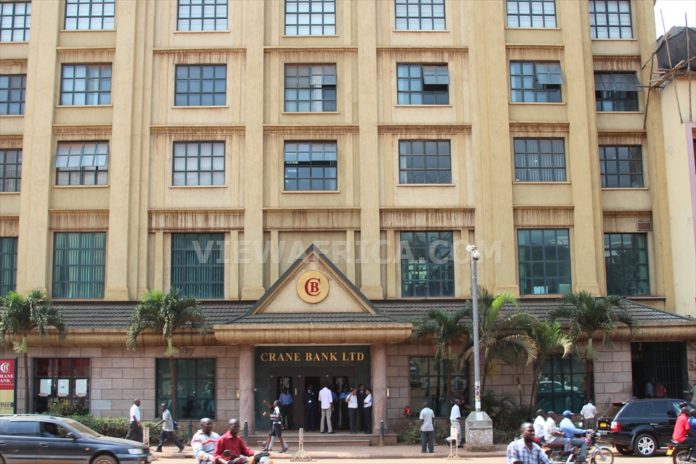
SOLD: The former Crane Bank headquarters on Kampala Road.
Kampala: The National Coordinator for Youth Crusaders Fatinah Nakazibwe has called upon Chief Executive Officer (CEO) of Financial Intelligence Authority Sydney Asubo to table a detailed report about Crane Bank and other commercial banks that have been liquidated by Bank of Uganda.
Speaking about crane bank that was recently taken over by DFCU bank, Nakazibwe said, that notorious bank was liquidated in a dubious ways by selfish people in Bank of Uganda (BOU) disguising under the Financial Institutions Act 2013.
“We recently questioned the failure of FIA to produce draft interim report, however, its boss Mr. Sydney Asubo, said that he is waiting instructions from above, forgetting the roles of the organization which include but not limited to curbing money laundering” she said at Makerere Guest House.
They revealed that there is a vivid evidence of the letter from President Museveni to security agencies to investigate BOU but all this has been disregarded by relevant agencies.
Nakazibwe said untill the Speaker of Parliament Rebecca Kadaga broke the deadlock to enable the Auditor General to audit BOU after they had blocked the move citing the pre-Judice rule.
“We were recently surprised when some on-line journalists were summoned to CIID for covering the ineptness of some BoU officials as intimidating them during their course of duty,” she said
Adding “We suspect that it is a syndicate to fail our economy, the prime suspect, Justine Bagyenda who was Director of Supervision at BoU was relieved of her duties and then Inspector General of Government (IGG) office headed by Justice Irene Mulyagonja who is believed to be a friend to the suspect tried to reinstate her using dubious means and we petitioned the authorities and their plan was halted a bit,” said Herman Kaweesa one of the group members.
He said Mrs. Bagyenda has been re-instated back to BOU as an advisor to the governor, which is unfair saying she is likely to jeopardize investigations since she is the principle figure in this mess.
“As youths, it beats our understanding when government people trump upon our prevailing conducive investment climate through their impunity, We cannot just seat back when an investor like Ruperlia Group of Companies which pays about Shs3 billion every month in salaries of more than a thousand workers is put on grip by selfish public servants,” he said.
“Of late, we have seen a big turnover of our investors to our neighboring countries such Kenya. They have transferred some of their operations and machinery partly due to self-centered people from Institutions of government, BAT, Britania and BATA are among the companies that have shifted due to our weaknesses,” he added.
True to form, China failed to qualify for the World Cup but the planet’s most populous country will be far from absent: thousands of its fans will fly to Russia, and Chinese sponsors will loom large on global TV screens.
Despite not being able to cheer on their home side, many Chinese supporters are undeterred, and they are expected to arrive in numbers that will dwarf the followers of many competing teams.
The growing presence of fans and sponsors can be linked to China’s consumer boom, while excitement for football has been spurred on by President Xi Jinping’s ambitions to make 73rd-ranked China a world power in the sport.
China have only qualified once for the World Cup – when they exited goalless in 2002 – but expectations are high that it will bid to hold the tournament, with 2030 and 2034 often mentioned as possibilities.
One Chinese fan, Dai Qian, said he will spend nearly $10,000 to visit Russia and watch the tournament.
“We appreciate football as an art and we like the feeling of watching live football,” said the 38-year-old, a university professor in energy engineering who will travel as part of a 400-strong Chinese tour group.
According to the latest FIFA figures, nearly 37,000 tickets out of 1.7 million went to Chinese fans, the second-largest showing from countries that didn’t make the tournament, after the United States.
Dai said that in the absence of their own team, Chinese fans back the countries of their favourite players. For him, it’s Argentina because he grew up watching Italy’s Serie A on TV and was a fan of Gabriel Batistuta, the former Fiorentina and Roma striker.
Jump to be a global brand
According to research by Britain’s Professor Simon Chadwick, Germany are the most popular foreign team in China, with some female fans swayed by the players’ looks.
It helps that Germany are reigning world champions and among the favourites in Russia.
“There is something about ‘brand Germany’ and the relationship between Germany and China,” said Chadwick, professor of sports enterprise at University of Salford.
“There are sections of the Chinese population who like to be conspicuous consumers – who like to be seen to be consuming the best brands, the best-quality brands, and that confers a particular status on them. The same is true of their football.
“So if you can be a fan, why not pick the best?”
Mark Dreyer, Beijing-based founder of the China Sports Insider website, said the growing ability of Chinese to afford overseas travel is a major reason for the large numbers going to the World Cup.
Russia is also much closer geographically to China than, for example, the World Cup in Brazil four years ago.
Television viewers across the globe and fans in World Cup stadiums will also become familiar with three tournament sponsors from China – Tech Company Vivo, electrical appliance and electronics supplier Hisense, and Mengniu Dairy.
There is also FIFA sponsor Wanda Group, a Chinese conglomerate and formerly a major stakeholder in Spain’s Atletico Madrid.
Zhu Shuqin, brand director at Hisense, declined to tell AFP how much the company paid for its sponsorship.
But she said a similar deal at football’s 2016 European Championship in France “helped us greatly in our global market expansion”.
That included a 60 per cent surge in television sales in Europe in one quarter, Zhu said.
Already well known in China, Hisense are eyeing the North American, European and Japanese markets.
“We want to use such sponsorship to realise our globalisation goal,” said Zhu, outlining the company’s hopes from the World Cup.
“Secondly, we can see in the global market of consumer electronics that the top companies, such as Samsung and Sony, all choose this kind of top event to sponsor so that they can jump to be a global brand from a regional one.”
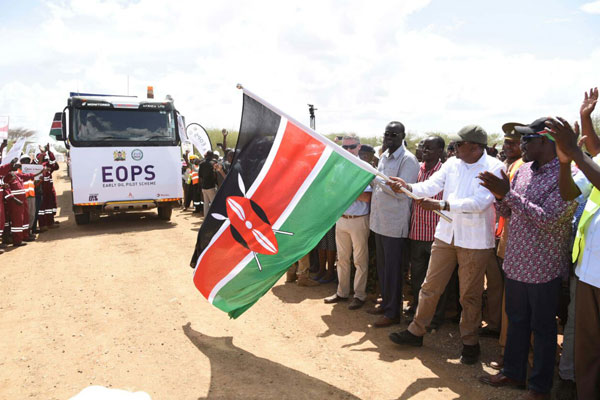
As news that Kenyan President Uhuru Kenyatta had flagged off trucks ferrying “First Oil” from the Turkana – it resounded loudly within the East African online family as if it was Kenya’s sputnik moment. Despite discovering oil six years after Uganda (in 2012, Uganda announced its discovery in 2006), the Swahili nation had, according to the Daily Nation beaten “odds to become the first East African nation to export oil”.
The euphoria about Kenya’s dash to the front shows how invested the country is in scoring wins and the reaction in Uganda more generally has been to lament our own inability to fast track the oil industry by putting Ugandan crude on the market. One newspaper editor summed it best when asked for his reaction. He said Ugandans were “a bunch of talkers”.
One can see why this argument that Uganda is somehow doing something wrong has gained currency. After all oil was discovered 12 years ago. There is also narrative, peddled mostly by politicians who are wedded to over promising, that oil is somehow a magic bullet for all manner of economic problems.
Web Photo: Kenya’s President Uhuru Kenyatta flags off the Kenya Crude Oil Export exercise
In Kenya and in Uganda, the political establishment have knitted the story of oil as “the savior” of economic woes with that of the “messiah” complex of leading politicians and their campaigns to show themselves as exceptionally gifted in solving their country’s problems.
Both national and economic headlines about Kenya’s first oil for example announced wrongly that it was the first EAC country to export conveniently ignoring South Sudan the newest member of the regional club, an oil reliant basket case whose story is a counter narrative to oil as a blessing.
These two drivers of hyperbole about oil – the “savior” mineral and the “messiah” politician (father of the nation, a legacy Kenyatta is desperate to leave as his political epitaph and which is senior Yoweri Kaguta is counting on) obscure some of the actual progress in the regional oil story by feeding into the narrative of toxic petro-nationalism.
It is important therefore to situate the oil sector in the politics of both Kenya and Uganda in order to understand firstly whether the delay in production in Uganda is necessarily a bad thing for the country and a good one for Kenya or conversely that early production in Kenya should be a source of shame and worry for Uganda.
Firstly, any movement in the oil sector within East Africa whether it is in Sudan, Somalia, Kenya, Uganda or Tanzania is positive news for investors who mostly belong to the same club of companies. It helps de-risk their investments and brighten prospects for growth for an industry with a long lifespan.
Uganda remains the jewel in the East Africa oil and gas story mostly because of the size and geography of its finds. The oil sector in Uganda has also traditionally not looked outward to the coast but rather strategically inward. A big part of the delay in production was the tug and pull Uganda engaged in with the international oil companies, including Tullow Oil which is Kenya’s partner, on pursuing a dual approach of a national refinery along with an export pipeline.
Uganda abandoned its Early Production Scheme (EPS) which would have resembled the strategy Kenya has adopted today of trucking and stockpiling oil and then announcing a bid on them after it discovered new oil in 2009. The scheme was initially proposed by Heritage Oil and Gas soon after oil was discovered in 2006 to use trucks to stockpile oil ready for the international market (at the coast in Mombasa).
I had been a supporter of early production for another set of reasons. Uganda had been suffering a severe shortage of electricity when oil was discovered. The prospect of a mini-refinery to do a crude to power output for lighting the entire western arch of Uganda was a more appealing strategic investment in early production and still is.
A lot has been said about Uganda’s deliberative approach to the oil sector which is a lesson for other African countries including the East African club even if it has not exported a barrel of oil. Firstly, that the oil sector must be taken seriously enough for the right investment in policies, legislation and projects.
The Ugandan oil laws, its model Production Sharing Agreements (recently improved), and its contribution to two large projects to commercialization namely the Uganda-Tanzania oil export pipeline and Uganda Refinery are a valuable blueprint on how to set up a decent oil and gas sector.
Much of the progress towards these projects did not come about because Uganda was under pressure to meet a deadline set outside its realities by say competition with Kenya. Instead as far as I can see Uganda arrived at this point by ignoring such pressures.
I cannot recall the number of times over the years when oil company officials and some politicians and experts said Uganda was missing the boat by not fast tracking its oil sector. Some still believe Uganda will never produce oil in the end.
Could Uganda have moved faster? Absolutely.
It would require a series of articles to explain fully that Uganda’s restraint and in some cases overly cautionary approach was driven mostly because the main decision maker in the sector, President Yoweri Museveni saw oil as an incendiary resource that could have a disrupting effect on the stability of the country.
Subsequently he placed Uganda in a peculiar protectionist path where present political investments were being insulated from the prospect of future oil revenues by ensuring that there was no rush to integrate a sector with a known reputation for disruption. This approach has had many unintended consequences, the delays in production included, but mostly positive ones.
The Ugandan oil sector may have many problems still but competition with Kenya is not one of them.
If there is one thing to envy about Kenya it is the competencies of its public sector. To a significant extent the quality of human capital represented by the professional civil service is the one area that Uganda has not properly figured out and holds its weight in gold (or oil) as one of Kenya’s greatest assets.
Beyond the allure of oil revenues that is the real story that Kenya and Uganda share. One of the ironies of the Ugandan oil story is that when human capital is developed, as is the case in the oil sector, good things happen. The Ugandan success story was that largely due to a professional cadre of civil servants, initially sequestered in the Petroleum Exploration and Production Department in Entebbe that the oil sector has performed pretty well.
It is also the main risk that Uganda bears going into production. It needs an infusion of quality human capital to sustain its gains – something Kenya appears to have a lead on. It is often a sign of mature politics when human capital appears to function smoothly without the pressures of politics.
I remember going for a meeting at the Uganda Parliament on the eve of the vetting of members of the Petroleum Authority Board.
One of the board members nominated was the lawyer Kiwanuka Kiyrowa. His firm K and K Advocates was one of the advisors on contractual and other matters in the oil sector. This was in no large part to his law partner Karugire (the other K, in the firm who is a son-in-law to the President).
Subsequently a ton of pressure had been mounted by opposition and other MPs that his appointment was nepotistic and a sign, once again, that the President was trying to corner and control the oil sector.
Web Photo: Trucks laden with Kenya’s first oil leaving the oil fields for Mombasa port
I had offered to intervene with dissenting members of the Appointments Committee by speaking to them personally about why it was important for Mr. Kiryowa to serve his time on the board which was an important institution to the sector but to which the President had nominated mostly industry outsiders and older administrators.
It was a policy of our think tank which got into oil related issues early to find and promote young Ugandan talent – one position at a time if necessary.
A leading (opposition member of parliament) who I respected because he was level headed had surprised me by going native on the issue of Mr. Kiryowa’s nomination. “He is not qualified. Being a member of the President’s family does not qualify him and we will reject him” he told me when we bumped into each other at a petrol station near our homes.
I pointed out that KK (as he is known) had been involved much longer on oil and contractual matters than many attorneys – regardless of his working relationship with the powers that be, and that he was likely to be the youngest member of the Board.
“If you don’t get young, qualified people in early and you allow politics to color how you appoint this board what happens when the industry is ready and most of the stewards are no longer able to serve on account of their age?” I asked.
To date KK is one of the only two members of the Petroleum Authority Board with industry experience, the other being Rueben Kashambuzi – the god father of oil exploration under whose watch oil was discovered.
The “Story of Petroleum Exploration in Uganda 1984-2008. A Matter of Faith” Reuben’s memoir of how oil was discovered is a story of the triumph of human capital. Where there is more of it the oil industry should do well in Uganda or Kenya.