Stanbic Bank
Stanbic Bank
17.4 C
Kampala
Stanbic Bank
Stanbic Bank
Home Blog Page 1548

UCC meets bus managers to streamline courier services

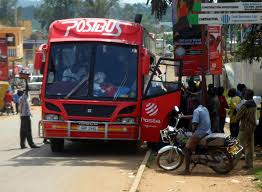
Post buses run by Posta Uganda deliver parcels as well as transporting passengers

The Uganda Communications Commission (UCC) has met with the representatives of bus companies in and other stakeholders in Kampala in a bid to have measures that can ensure the safety of clients, dispatches and other items.

UCC’s Director of Corporate Affairs Fred Otunnu said during the meeting that: “Stakeholders engagement is a key regulatory function that we at the commission take seriously. He said the meeting was vital in formulating the frameworks for the operation of the courier business.

The meeting was held under the theme, “Towards improved courier delivery and safety of property in transit.” The meeting attracted participants from bus companies KK Travelers, Gaaga Coaches, Y.Y Coaches among others. Representatives from the Transport Licensing Board (TLB).

Otunnu said UCC wants to ensure the security and quality of postal services and others in the transport sector.

Winston Katushabe, Commissioner Transport Regulation and Licensing at the Ministry of Works and Transport said: “As parcel deliveries “become common, the rise of failed deliveries has also increased.”

He urged bus courier operators to employ ICT solutions such as tracking systems to increase efficiency.

He said Section 33 of the UCC Act prohibits any person from conveying, delivering or distributing postal articles without a license.

The Commissioner said postal articles are to include any letter, postcard, newspaper, book, document, pamphlet pattern, sample packet, defined parcel package or other article tendered for dispatch or specified in the International Postal Union of the license of an operator.

However, he said that article 32 of the Act provides that; a person shall not require a licence to convey, deliver or distribute articles for delivery to another person or persons to whom they are directed, without hire, reward or other profit or advantage for receiving, carrying or delivering them.

UCC Senior Enforcement officer, Kenneth Seguya said the engagement would empower players in the sector to know “who is to be held liable in case of breach of the law, lost postal articles or those tampered with, and management of liability.

Section 5(b) of the Act mandates UCC to monitor, inspect, licence, supervise, control and regulate communications services in Uganda.

Similarly, the conveyance, delivery or distribution of postal articles without a license issued by UCC is prohibited.

The five courier and postal license categories are national postal operator, international license, regional license, domestic license and intercity license, suitable for bus operators.

Otunnu urged players to obtain postal licences, saying that it would ensure fair competition among operators, but also promote efficient, equitable and quality postal services, increase revenue and profitability among others.

He said other benefits would include; sharing of infrastructure to bring down costs of providing services, opportunity for last mile delivery in e-commerce transactions and coordination initiatives between the postal industry and the relevant national and international organisations in matters relating to postal.

Stories Continues after ad

Uganda registers success in fight against HIV/AIDS

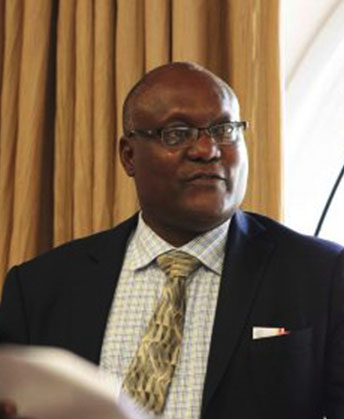
Chairman Uganda Aids Commission, Dr Eddie Mukoyo, at Parliament yesterday.

Uganda has registered some success in the fight against HIV/AIDS, according to the Uganda Aids Commission (UAC), the lead agency in the fight against the disease in the country.

In 2011, there were 140,000 HIV Infections, which had dropped to 100,000 by 2017, said Dr. Eddie Mukooyo Sefuluya, Chairman of UAC.

The official was briefing the media on June 18 in Kampala on the Presidential Fast Track Initiative to End AIDS as a Public Health threat in Uganda by 2030. The initiative was launched by president Museveni in June 2017.

However the Director General of UAC Dr Nelson Musoba said there has been an increase in the HIV/AIDS prevalence among the youth aged 15-25 years and men aged 35-49 years.

According to Dr Musoba, Uganda has about 1.3 million AIDS patients, whereas an estimated 20,000 have died of AIDS-related illnesses as of 2017. The estimated prevalence among adults aged 15 to 49 stands at 6.5 percent.

In April this year, the US government announced US$ 408 million budget support to Uganda’s HIV prevention and treatment effort. The financial assistance came through the US President’s Emergency Plan for AIDS Relief (PEPFAR).The money will be used to focus on building the country’s capacity to achieve an AIDS-free generation.

PEPFAR funding is supporting Uganda’s efforts to end AIDS by 2030. The first step in this is achieving epidemic control via UNAID’s “90-90-90” goals, which state that by the year 2020, 90 percent of all people living with HIV will know their status, 90 percent diagnosed with HIV will be on antiretroviral therapy, and 90 percent of people receiving antiretroviral therapy will have viral suppression.

Stories Continues after ad

Comesa Heads of State Summit set for July in Lusaka

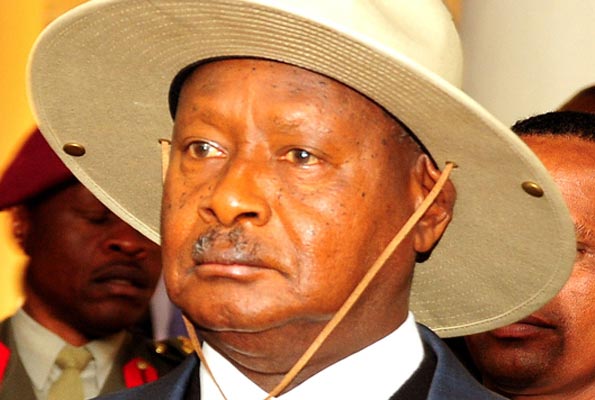
President Yoweri Museveni

The Common Market for Eastern and Southern Africa (Comesa) Heads of State and Governments Summit will take place in Lusaka, Zambia on July 18-19, 2018, according to the latest press release issued by the bloc’s secretariat.

The Summit will be preceded by meetings of ministers and technical officials starting from July 9, 2018.

The Summit will be held under the theme: “COMESA: Towards Digital Economic Integration.) The theme is designed to rally member States towards the full adoption of digital technologies to reduce the disparities in the state of digitization across sectors in the Comesa region, particularly between high-tech and more traditional areas, and between countries and regions.

Delegations from the 19 members of the regional economic bloc are expected to arrive in Lusaka beginning July 7, 2018. Among the key issues in this year’s Summit Agenda is the consideration of membership to Comesa by Tunisia and Somalia.

“Negotiations for the admission of the two States have been concluded and what remains is the endorsement by the Comesa Council of Ministers and subsequent approval by the Heads of State Assembly. This will raise the number of Comesa States from the current to 19 to 21,” reads part of the press release.

The Summit is also expected to appoint a new Secretary General of Comesa to take over from Sindiso Ngwenya whose tenure of office is coming to an end.

Meanwhile, the Intergovernmental Committee (IC) which comprises of Permanent/Principal Secretaries will be the curtain raiser for the 10 ten days Comesa annual event. The IC is responsible for the development of programmes and action plans in all fields of co-operation except in the finance and monetary sector.

IC will review progress reports presented by various sectoral committees and Comesa Institutions and make recommendations to the Council of Ministers for decision making.

The Council of Ministers will meet on July 13-14, 2018 to make decisions on various recommendations presented by the Intergovernmental Committee on the way forward on implementation of Comesa integration programmes.

The Summit timetable:

• The 38th Meeting of the Intergovernmental Committee: 9 – 11 July 2018
• The ESA/EPA Senior Officials Meeting: 12 July 2018
• Peace and Security Committee Meeting 12 – 13 July 2018
• 13th COMESA Business Council Forum 12 – 13 July 2018
• The 38th Council of Ministers meeting 14 – 15 July 2018
• The ESA/EPA Council of Ministers’ Meeting 15 July 2018
• Meeting of Ministers of Foreign Affairs 15 – 16 July 2018
• The 11th First Ladies Round Table 18 – 19 July 2018
• The 20th Summit of the COMESA Heads of State & Govt 18 – 19 July 2018

Stories Continues after ad

Seven questions to focus your search for venture funding

Martin Zwilling

By Martin Zwilling

Too many entrepreneurs tell me they are looking for an investor, and can’t differentiate between venture capital (VC) investors versus accredited angel investors. They argue that the color of the money is the same from either source. They fail to realize that the considerations are quite different for each, which can make or break their investment efforts, and ultimately their startup.

Let’s consider some basic definitions. Accredited angel investors are non-professionals investing their own money, while venture capitalists are professionals who invest someone else’s money (usually from large institutions). The amounts from angels start as low as $25K, while minimum venture capital amounts usually start in the $2M range.

That doesn’t mean you should always go for the big bucks first. In fact, the reality is quite the opposite. Angels are more likely to fund new entrepreneurs, and early-stage or seed rounds, while VCs tend to focus on entrepreneurs with a successful track record, and later stage rounds. Of course, between these extremes is a large overlap of interest and potential.

More importantly, the focus on numbers tends to hide other more subjective issues that could be more important for any given startup. These considerations include the following:

How much ownership and control are you willing to give up? VCs tend to demand more control of your spending and strategic decisions, with required board seats and lower valuations. Angels will likely agree to simpler term sheets, better valuations, and less restrictive terms on potential dilution, voting rights, exit options, and executive roles.

How big is your startup opportunity? If your targeted business plan opportunity is not at least a billion dollars, most VCs won’t even be interested. Both angel and VC investors are looking for solutions that scale easily (product versus service businesses), and both expect revenue growth that can reach the $20M mark by year five.

How large is the financial return you project? VCs will be looking for a 10X return on their investment in 3 to 5 years, or 30% annual IRR (Internal Rate of Return). That may sound high, but they know that up to 9 out of 10 startups fare poorly, so they are looking for one big win. Angel investors wish for the same return, but may accept a 5X deal.

How many investment rounds will be needed? Angel investors are usually constrained to making a single investment per startup, but very few entrepreneurs make it to cash-flow positive on a single round. VCs tend to protect their initial investment, and they have the resources to make several multi-million-dollar rounds as required.

How experienced is your team? First-time entrepreneurs rarely catch VC interest, unless they have one or more people on their team who have a track record of startup success, in the same business domain. Angel investors often have emotional motivation to give-back, and assume their own expertise and involvement will assure success.

How good are your connections in the investor community? Sending unsolicited business pitches to every angel and VC investor you can find on the Internet is a waste of your time as well as theirs. You need a warm introduction for most VCs, to get their attention. For angel investors, you only need to do some local networking to get interest.

How much help do you expect and need? Both VCs and angels can and will help you, but VCs are likely to be more “hands-on.” They tend to have partners focused on a given business area, with current insights, executive connections, and the ability to bring in new team members. If you are looking for money alone, angels are the better alternative.

If your startup can’t yet relate for any of these considerations, then your alternative is that popular first tier of investors, called friends, family, and fools (FFF). With these, you are on your own in negotiating amounts, valuations, and roles. These are people who believe in you personally, without evidence of previous startup experience, no current traction, and lack of valuation.

In all cases, investors tend to invest in people, more than the idea, or even the stage of execution. They are looking for a win-win deal, with entrepreneurs that demonstrate a positive chemistry and open communication. The color of any investor’s money may look the same, but it won’t help you if the price you pay is higher than the value it brings.

Stories Continues after ad

Tourism travel vehicles to be imported on duty free— URA

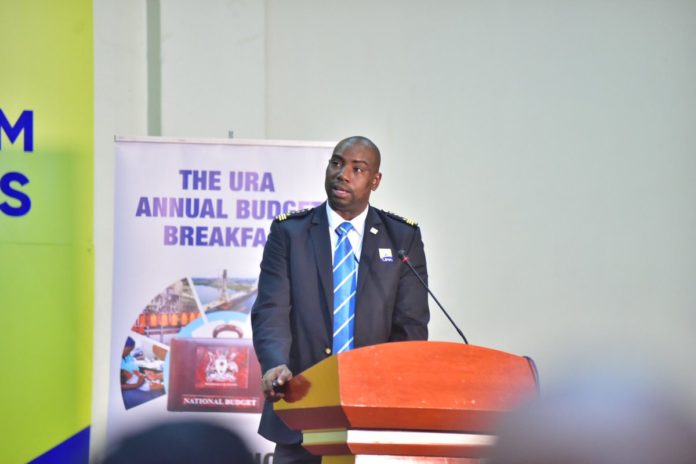
Uganda Revenue Authority (URA) Dickson Kateshumbwa

Kampala: Uganda Revenue Authority (URA) commissioner for Customs Dickson Kateshumbwa has said Tourism vehicles will be imported on duty free taxes starting the coming financial year.

Presenting Amendments to the East African Customs Management Tax in Kampala, Mr Kateshumbwa said the move will harness Uganda’s tourism potential and enhance access to tourist sites saying duty free vehicles may lead to lowering of transport costs.

He revealed that tourism has earned Uganda USD 1.4 billion in the previous year, and 2020, tourism is targeted to earn USD 2.7 billion as the number of tourist visitors are expected to reach 4 million.

In the forthcoming financial year, government allocated Shs32 billion to Tourism Sector to improve on experience at various game parks, through maintaining of roads, hotel facilities.

In line with enhancement of sport activities in Uganda Kateshumbwa said motor and bicycle racing and rallies will be imported at zero taxes for affordability to all Ugandans interested tin the sport.

The executive director for URA Doris Akol said starting on October, 1, no car older than 15 years will be allowed into Uganda asking why one imports a mini bus that is more than ten years with a huge tax burden yet you can import a newer one with a more friendly tax cap?, “We are here to empower you with investment-enabling-information,” she added.

However according the junior minister for tourism Godfrey Kiwanda Suubi, Domestic tourism promotional campaigns (Tulambule) and education outreaches on culture, tourism and wildlife conservation will be held to further boost tourism.

In addition Kiwanda said Pearl of Africa Tourism Expo 2018, Miss Tourism Competitions 2017, and activities for Buganda, Busoga and Kigezi clusters continue to register success with more Ugandans increasingly participating across the country.

Stories Continues after ad

Gen. Kayihura expected at court martial today

Gen . Kayihura

Former Inspector General of Police, Gen. Kale Kayihura is expected to be produced in court martial today.

According to security sources, Kayihura is to be produced at the Makindye based army court where number charges will be read to him. Eagle Online has established that authorities have as well finalized charge sheets for his co-accused.

However, Kayihura who has remained cagey all throughout the grilling is said to have hired over three law firms to represent him with some of his former confidents.
A combined force of investigators from army and Internal Security Organisation conducted a search at the home of Gen. Kayihura.

Kayihura is detained at Makindye Barracks with six of his former aide de camps.

According to security sources that Eagle Online talked to, Gen. Kayihura has been linked to the killing of Assistant Inspector General of Police by suspects who were arrested earlier. However, sources say this is one among a host of charges lined up against him by the state. Other charges that are being lined up include espionage that could see treason charges slammed on him.

In a statement released by Uganda Peoples’ Defence Force Spokesperson, Richard Karemire it said Gen. Kayihura is still a serving officer of UPDF and has been staying in Kashagama, Lyantonde district since March 15, 2018.

“Yesterday June 12 he was asked to report to the UPDF chief of Defence force Gen. Divide Muhoozi at General headquarters, Mbuya. A helicopter was subsequently dispatched to transport him from there but on arrival, Gen had travelled to Mbarara and so it had to return to Entebbe air force base,” he said in a statement.

Stories Continues after ad

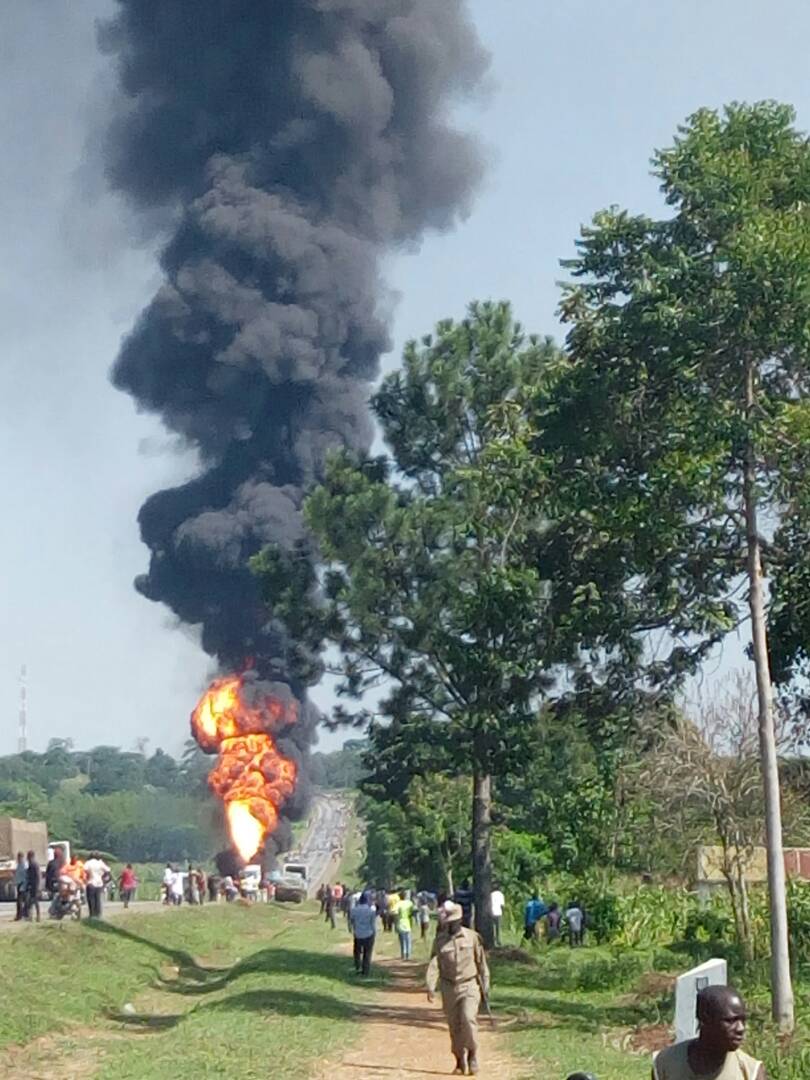
JUST IN:Fuel tank blast into flames at Busesa

The Fuel Tanker going up in flames in Busesa near Iganga

Seven people are feared dead according to an eye witness at the scene.
It is said the tank overturned last night and villagers have been siphoning the spilling petrol.

That spot has been a black spot for along.

The Fuel Tanker up in flames in Busesa this morning

At one time a fuel tank overturned there and burnt over 100 people and destroyed lots of property including animals.

The eye witness said that one fire brigade truck rushed to the scene from iganga town but had less water to put down the fire.

Up to now the truck is still burning and traffic flow has been distablized now for close to an hour.

Details to follow.

Stories Continues after ad

President Donald Trump’s former campaign manager, sent to jail

A US federal judge sent Paul Manafort, President Donald Trump’s former campaign manager, to jail on Friday ahead of his trial on money laundering, tax and bank fraud charges.

Judge Amy Berman Jackson revoked Manafort’s bail over claims he was tampering with witnesses in the case against him brought by special counsel Robert Mueller, who is investigating possible collusion between Trump’s 2016 election campaign and Russia.

“You have abused the trust placed in you six months ago,” The Washington Post quoted Jackson as telling Manafort. “The government motion will be granted and the defendant will be detained.”

Manafort is the first former member of Trump’s presidential campaign to be jailed in connection with the Mueller investigation.

Mueller filed new obstruction of justice charges last week against Manafort, who has pleaded not guilty to the multiple counts against him.

The new indictment came four days after prosecutors said Manafort had tried to contact two witnesses in his money laundering and bank fraud case via Russian fixer Konstantin Kilimnik to persuade them to make certain representations to investigators.

Kilimnik, a former army-trained linguist with alleged ties to Russian intelligence, was included in an updated indictment of Manafort that accused both of witness tampering.

It took the number of people indicted by the 13-month-old investigation by Mueller to 20, with three companies also facing charges.

‘Very unfair’

Trump has denounced the Mueller probe as a political “witch hunt” and denied there was any collusion with Russia by members of his election campaign.

Trump said Friday that the ruling that sent Manafort to jail was a “tough sentence” and “very unfair.”

The Hapsburg Group were onetime European politicians Manafort allegedly secretly paid more than two million euros ($2.5 million) to lobby for Yanukovych in 2012-2013. The group included one unidentified former European chancellor.

Stories Continues after ad

Ugandan 125.4m richer for inventing bloodless malaria test

Kampala: A Brian Gitta, a 24-year-old Ugandan software engineer, has won about Shs125.4m (US$33,000) Africa Prize for Engineering Innovation for Matibabu, a device which tests for malaria without drawing blood.

The Africa Prize, founded by the UK Royal Academy of Engineering, is dedicated to developing the entrepreneurial skills of engineers, with the finalists – selected from a pool of 16 shortlisted candidates from seven African countries – chosen for their engineering innovations that provide new solutions.

Gitta became the first Ugandan to win the prize, and the youngest winner to date, when he was selected at an event in Nairobi, Kenya.

Matibabu, which means “medical centre” in Swahili, is a low-cost, reusable device that clips onto a patient’s finger, requiring no specialist expertise to operate. The results are available within one minute on a mobile phone that is linked to the device.

“We are very proud of this year’s winner. It’s a perfect example of how engineering can unlock development – in this case by improving healthcare,” said Rebecca Enonchong, Africa Prize judge. “Matibabu is simply a gamechanger.”

A red beam of light shone through the user’s finger detects changes in the shape, colour and concentration of red blood cells, all of which are affected by malaria.

Gitta beat other finalists from Ghana, Nigeria and Zimbabwe, with the latter working in South Africa. They were chosen for engineering innovations that provide new solutions.

The Africa Prize for Engineering Innovation, founded by the Royal Academy of Engineering in the UK, is Africa’s biggest prize dedicated to engineering innovation. It encourages talented sub-Saharan African engineers, from all disciplines, to develop innovations that address crucial problems in their communities in a new, appropriate way.

Why Matibabu
Gitta and his team decided to develop the device after missing lectures, having had malaria several times. Matibabu is currently undergoing testing in partnership with a national hospital in Uganda, and is sourcing suppliers for the sensitive magnetic and laser components required to scale up production.

Matibabu is aimed at individuals, health centres and diagnostic suppliers. The team also aims to set up the device on the streets to allow people to do a single test at a time.

Through their participation in the Africa Prize, the Matibabu team have been approached by international researchers offering support and are currently writing up their ground-breaking findings into an academic paper, to be published within the next few months.

“We are very proud of this year’s winner. It’s a perfect example of how engineering can unlock development – in this case by improving healthcare,” said Rebecca Enonchong, Africa Prize judge. “Matibabu is simply a gamechanger.”

16 entrants
Sixteen shortlisted Africa Prize entrants, from seven countries in sub-Saharan Africa, received six months training and mentoring during which they learned to develop business plans and market their innovations. The group received coaching on communicating effectively, focusing on customers and approaching investors with confidence.

The Africa Prize provides a unique package of support, including funding, comprehensive business training, bespoke mentoring and access to the Royal Academy of Engineering’s network of high profile, experienced engineers and experts, and their networks.

It helps turn engineers with incredible ideas into successful entrepreneurs.

Launched in 2014, the Prize aims to stimulate, celebrate and reward engineers who have developed innovations that will benefit Africans.

The three runners up each received about Shs50m.

Stories Continues after ad

Ssebalu & Lule Advocates represent conflict of interest in BOU and Crane Bank

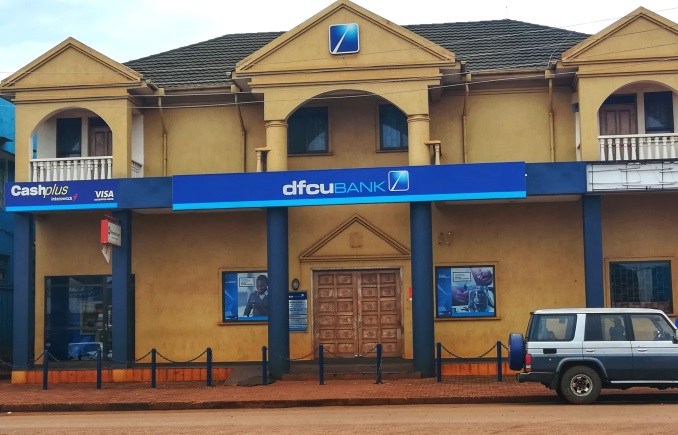
As court prepares to hear the case involving Bank of Uganda and Crane Bank, it has emerged that Sebalu & Lule Advocates are to represent Bank of Uganda yet the lawyers represented Dfcu Bank which took over Crane Bank and its assets.

Having worked for Dfcu, Sebalu & Lule Advocates know much about Dfcu Bank which repossessed Crane Banks assets worth over Shs1 trillion.

To be fair the law firm should withdraw out of the case to give neutral firms a chance.

Court months ago dropped MMAKS and AF Mpanga in mediation talks between Crane Bank and Bank of Uganda, the two firms having represented Crane Bank but now were turning out to represent Bank of Uganda.

In October 25, 2016 Bank of Uganda took over Crane Bank and suspended all members of its board, arguing that the bank had run out of required liquidity and posed a systemic risk to the country’s banking sector.

BOU later sold Crane Bank to Dfcu Bank in January this year, enabling it to make huge profits in billions of shillings.

It is also seeking to recover freehold land titles for the Crane Bank branches, general damages and costs of the suit. However, the land titles belong to another entity and in whose names they are registered in.

Mr Ruparelia has always denied any wrongdoing in a Shs397 billion case in the Commercial Court. He also has denied responsibility for the collapse of the bank which was taken over by BoU and liquidated to dfcu bank in October last year.

However, leaked FBI documents reveal that before Crane Bank was even taken over by BoU, top regime minister and a host of top officials at central bank had plotted on how to sell Crane Bank.

Meanwhile, in a document, the shareholders accuse the Central Bank and DFCU of among others; taking over the CBL leases without the knowledge and consent of the lease guarantors; failing to value Crane Bank assets to determine their market value before sale and, collusion to defraud the taxpayer and the Crane Bank shareholders, among them tycoon Sudhir Ruparelia.

DFCU is partly owned by the Commonwealth Development Corporation (CDC), a British government-owned company, together with Rabo Development from the Netherlands and NorFinance from Norway, who are shareholders in Arise B.V together with Norfund, a Norwegian government-owned Private Equity firm and FMO, the Dutch Development Bank.

So who are the shareholders? Dfcu is partly owned by the Commonwealth Development Corporation (CDC) a British government-owned company, together with other foreign firms like Rabo Development from the Netherlands and NorFinance from Norway who are shareholders in Arise B.V together with Norfund, a Norwegian government owned Private Equity firm and FMO, the Dutch Development Bank.

DFCU Shareholding percentages


Arise BV 58.71 per cent

CDC Group of the United Kingdom 9.97 per cent

National Social Security Fund (Uganda) 7.69 per cent

Kimberlite Frontier Africa Naster Fund 6.15 per cent

2 undisclosed Institutional Investors 3.22 per cent

SSB-Conrad N. Hilton Foundation 0.98 per cent

Vanderbilt University 0.87 per cent

Blakeney Management 0.63 per cent

Bank of Uganda Staff Retirement Benefits Scheme 0.59 per cent

Retail investors 11.19 per cent

Stories Continues after ad