Stanbic Bank
Stanbic Bank
17.4 C
Kampala
Stanbic Bank
Stanbic Bank
Home Blog Page 1547

Museveni makes changes in RDCs postings

Abim RDC-Mpimbaza Hashaka.

President Museveni has made slight changes to the list of 122 Resident District Commissioners (RDCs) and their deputies he appointed over a week ago.

The new changes were based on reports that some of the newly-appointed individuals had died while others declined to take up the president’s appointment.

“In Exercise of Powers conferred on the President of Uganda by Articles 99 and 203 of the 1995 Constitution of the Republic of Uganda, I hereby appoint the following persons as Resident District Commissioners and Deputy Resident District Commissioners, respectively” read part of the press release from State House.

RDCs represent the president in the districts and are tasked to monitor government development programmes. The officials also head the district security committees.

However, some have been accused in the past for engaging in partisan politics, mainly rallying behind the ruling party-the National Resistance Movement Organization (NRM-O). Some have been accused of aiding land grabbing in the country.

That aside the president has appointed Deputy District Resident Commissioners () for only 82 of the 122 districts.

Below is the list:
RESIDENT DISTRICT COMMISSIONERS

NAMES
DISTRICT

1.
MPIMBAZA HASHAKA
ABIM

2.
TABAN DATA PETER
ADJUMANI

3.
NGOMPEK LENOS
AGAGO

4.
OMARA JOSEPHINE
ALEBTONG

5.
EYALO LILLIAN
AMOLATAR

6.
ADIAMA EKJU JOHN ROBERT
AMUDAT

7.
ISEET JULIAN FEDE
AMURIA

8.
AUMA LINDA AGNES
AMURU

9.
AKELLO BEATRICE
APAC

10.
NAHORI OYAA
ARUA

11.
MARTIN OROCH BUDAKA

12.
WATENYELE JOHN NABENDE
BUDUDA

13.
MUGABI MARTIN
BUGIRI

14.
BISOBORWA PETER
BUHWEJU

15.
KAGAYI JANE FRANCIS
BUIKWE

16.
WALUGEMBE RAMATHAN
BUKEDEA

17.
DR. SAZIR NSUBUGA MAYANJA
BUKOMANSIMBI

18.
CHESOL TOM
BUKWO

19.
PAAK PETER PAX
BULAMBULI

20.
ASIIMWE AMOS
BULIISA

21.
GUMA NUWAGABA
BUNDIBUGYO

22.
TIBEMANYA JOLLY
BUSHENYI

23.
CAPT. CHRIS MIKE OKIRIA
BUSIA

24.
SEGAWA JIMMY EBIL
BUTALEJA

25.
HAJJI SEBYALA BADRU
BUTAMBALA

26.
NABIRYE AGNES
BUVUMA

27.
OGWANG ADYERO
BUYENDE

28.
EGOLE LAWRENCE
DOKOLO

29.
SABIITI RUTH KASHAKA
GOMBA

30.
CAPT. OKOT LAPOLO
GULU

31.
KISEMBO SAMUEL ARAALI
HOIMA

32.
AKATUHEBWA ELIASTO
IBANDA

33.
KWESIGA EVA NALONGO (MRS.)
IGANGA

34.
MUHANGI HERBERT
ISINGIRO

35.
SAKWA ERIC
JINJA

36.
NANDINDA DARIUS
KABALE

37.
ASIIMWE STEPHEN
KABAROLE

38.
ONYA AKONAPESA EDWARD
KABERAMAIDO

39.
AACHILA JOHN REX
KAABONG

40.
RUTERERAHO LILIAN
KAGADI

41.
MUGUME APOLLO
KAKUMIRO

42.
KIKOOLA DANIEL
KALANGALA

43.
BILLY JANAT MULINDWA
KALIRO

44.
TUKAIKIRIZA CALEB
KALUNGU

45.
MPIIMA FARIDAH
KAMPALA

46.
KIKOMEKO MWANAMOIZA
KAMULI

47.
MUCUNGUZI GODFREY
KAMWENGE

48.
SENGOOBA SSEKANDI SHAFIQ
KANUNGU

49.
CHERUKUT EMMA ROSE
KAPCHORWA

50.
LT. WALUSIMBI JOE
KASESE

51.
BWALATUM MICHAEL
KATAKWI

52.
BIRUNGI ROSE
KAYUNGA

53.
MBABAZI DEBORAH
KIBAALE

54.
MAWIYA LULE UMAR
KIBOGA

55.
NAJJUMA JULIET SENKOOLE
KIBUKU

56.
MUHINDO AMINADABU
KIRUHURA

57.
DEBELE PETER
KIRYANDONGO

58.
MUGISHA PETER
KISORO

59.
OMARA CHRISTOPHER
KITGUM

60.
KAWOOYA ISAAC
KOBOKO

61.
OLWENY OMARA JOHANNAN
KOLE

62.
LOGILO PETER NGOROK
KOTIDO

63.
KATO MATANDA HUSSIEN
KUMI

64.
BULWANIREGHA DENIS EPHRAIM
KWEEN

65.
KABOYO DAVID
KYANKWANZI

66.
KAWAMARA MISAKI
KYEGEGWA

67.
BWEBALE APOLLO
KYENJOJO

68.
KIDEGA JAMES
LAMWO

69.
ODONG MILTON
LIRA

70.
KABUYE NICKSON NUWAGABA
LUUKA

71.
NAMULINDWA PHEOBE
LUWERO

72.
JUUKO KASIITA APOLLO
LWENGO

73.
KAMWINE CATHERINE
LYANTONDE

74.
WASHAKI AHMED
MANAFA

75.
SOET ESTHER
MARACHA

76.
SSENTONGO HERMAN
MASAKA

77.
NYAKAHUMA GODFREY
MASINDI

78.
SHILAKU JAMES
MAYUGE

79.
OGAJO BARASA
MBALE

80.
MAJ. JAMES MWESIGYE
MBARARA

81.
NASIIMA ADA
MITOOMA

82.
CAPT. YAHAYA KAKOOZA
MITYANA

83.
PETER KEN LACOP
MOROTO

84.
KOMAKECH WILLIAM
MOYO

85.
BYABASHAIJA ROSE MANDE
MPIGI

86.
NYAKWEERA BAGUMA
MUBENDE

87.
BAMWINE FRED
MUKONO

88.
MODO DAVID LAMRTO
NAKAPIRIPIRIT

89.
NAYEBARE KYAMUZIGITI
NAKASEKE

90.
MUGANGA DAN
NAKASONGOLA

91.
OPIRA SYLVESTER
NAMAYINGO

92.
SEMPALA AMOS KIGOZI
NAMUTUMBA

93.
LUBEGA ABUBAKER
NAPAK

94.
LABEJA BOB WILLIAMS
NEBBI

95.
ONORIA AMBROSE
NGORA

96.
BIRYABAREMA ELAIJA
NTOROKO

97.
BAKUNDA GEORGE
NTUNGAMO

98.
AKELLO AGNES EBONG
NWOYA

99.
AKANYE SUSAN
OMORO

100.
ABAK ROBERT
OTUKE

101.
AKULLU GILLIAN
OYAM

102.
DUSMAN OKEE
PADER

103.
KYEYUNE SSENYONJO
PALLISA

104.
MUBIRU CHARLES
RAKAI

105.
RWAKIFARI PETER
RUBANDA

106.
NAKAMYA HARRIET
RUBIRIZI

107.
KAGUTA DAN
RUKUNGIRI

108.
BUSINGE HARRIET
SEMBABULE

109.
OKISWA GEOFFREY
SERERE

110.
KYERERE FRANK
SHEEMA

111.
LULABA ISAAC
SIRONKO

112.
TUKEI WILBERFORCE
SOROTI

113.
OWOLE NIXON
TORORO

114.
KIRABIRA ROSE NALONGO
WAKISO

115.
ANDAMA RICHARD
YUMBE

116.
MUHINDO PULKERIA
RUKIGA

117.
TOKO SHUAIB
PAKWACH

118.
NDISABA FATUMA
BUTEBO

119.
MAJ. RTD. DAVID MATOVU
KYOTERA

120.
KIAGAI MOSES WAMOTO
NAMISINDWA

121.
ASIIMWE JANE MUHINDO
BUNYANGABO

122.
KAJOINGE ANDREW KIWANUKA
ZOMBO

DEPUTY RESIDENT DISTRICT COMMISSIONERS

NAMES DISTRICT
1.
HELLEN PULKOL
ABIM

2.
MUGWERI MOSES
ADJUMANI

3.
AKWETEIREHO JONATHAN
AMOLATAR

4.
KEDI RONALD ONGODIA
AMURIA

5.
KOMAKECH SALIM
APAC

6.
ALICE AKELLO OPIO
ARUA

7.
BAKALE SADIQ
BUGIRI

8.
HUDU HUSSEIN
BUIKWE

9.
HANIFAH KALADI
BUKOMANSIMBI

10.
MUHANGUZI UMAR
BUNDIBUGYO

11.
LOY NAMARA
BUSHENYI

12.
KALIKWANI PAUL
BUSIA

13.
ELIJAH MADOI
BUTALEJA

14.
KIGONGO JUMA
BUVUMA

15.
OREE TONNY
GULU

16.
TABARO RICARD
HOIMA

17.
BASHONGOKA MARY
IBANDA

18.
NAKAMANDA PAMELA WATUWA
IGANGA

19.
TUSIIME GIDEON
ISINGIRO

20.
ABEL BAKUNDA
JINJA

21.
RUGAJU GAD
KABALE

22.
BANDEBA FESTUS
KABAROLE

23.
ODONGO SAMUEL
KABERAMAIDO

24.
MODO AUGUSTINE
KAABONG

25.
NANYANZI SARAH
KALUNGU

26.
HAWA NDEGGE
KAMPALA (CENTRAL)

27.
NABUKENYA DEBORAH MERCY KITYO
KAMPALA (KAWEMPE)

28.
KAGOLOLA IBRAHIM
KAMPALA (MAKINDYE)

29.
BURORA HERBERT ANDERSON
KAMPALA (NAKAWA)

30.
SENTAMU KABUGA DANIEL
KAMPALA (RUBAGA)

31.
DUMBA MOSES
KAMULI

32.
NYAKATEMBA REUBEN
KAMWENGE

33.
EMMY NGABIRANO
KANUNGU

34.
TWOYEN KENNETH CHEMONGES
KAPCHORWA

35.
SENKUNGU TEOPISTA
KALANGALA

36.
MASEREKA JOSHUA
KASESE

37.
ENOMU VINCENT
KATAKWI

38.
MUKOSE JAMES
KAYUNGA

39.
NANSHEMEZA CAROLINE KASHAIJA
KIBAALE

40.
KAGAMBI DOREEN KEITA
KIBOGA

41.
KAMUKAMA NICHOLAS
KIRUHURA

42.
NUWAGABA MOSES
KISORO

43.
AMULI KASUGGA
KITGUM

44.
BERU ABBEY
KUMI

45.
DENIS NZAIRWE
KYANKWANZI

46.
ANKUNDA SHARON
KYEGEGWA

47.
KAHONAHO ISAAC
KYENJOJO

48.
LWOROMOI TROBISCH
LIRA

49.
KAGAIGA MIRIAM
LUWERO

50.
NALUBEGA MARIAM SEGUYA
LWENGO

51.
TIITWE RHODAH KAGAAGA
LYANTONDE

52.
EMMY KATERA TURYABAGYENYI
MBARARA

53.
OKWI GILBERT
MANAFA

54.
CAPT. JOHN KADDU
MASAKA

55.
BAHEBWA LONGINO
MASINDI

56.
MITAALA EMMY
MAYUGE

57.
LILLIAN NAKAWESA
MBALE

58.
KASORO WILLIAM
MITOOMA

59.
ISHA NTUMWA
MITYANA

60.
ACHAM PROSCOVIA
MOROTO

61.
GORE GRIFFIN
MOYO

62.
BASUUKA HELLEN NSEREKO
MPIGI

63.
KIIZA EVELYNE TINKAMILILWE
MUBENDE

64.
BWABYE RICHARD
MUKONO

65.
AJILONG MODESTA
NAKAPIRIPIRIT

66.
AHARIKUNDIRA AFRICANO
NAKASEKE

67.
MAJID DHIKUSOOKA
NAMAYINGO

68.
ADYANGO RACHAEL
NEBBI

69.
KANYAMAHANE ISAIAH
NTUNGAMO

70.
AWANY ANDREW
PADER

71.
EMOKOL J.P. ONYANGO
PALLISA

72.
MUHINDO JUSTINE MUTABAZI
RAKAI

73.
BITARUHO FRANCIS
RUBIRIZI

74.
KEMIGISA GRACE MASIKO
RUKUNGIRI

75.
KINTU MUSOKE
SEMBABULE

76.
MAGUNDA GEORGE
SIRONKO

77.
EKOOMU JOHN STEVEN
SOROTI

78.
WERE YAHAYA
TORORO

79.
HAJJI NJUKI NOOR MBABAALI
WAKISO (ENTEBBE)

80.
MBABAZI JUSTINE
WAKISO (KASANGATI)

81.
SEKASAMBA JOSEPH
WAKISO
(KIIRA)
82.
ICHOGOR CHARLES
BUKEDEA

1.
ASIIMWE MARTHA

SECRETARIAT OF RDC’S
2.
TWEHEYO JAMES
SECRETARIAT OF RDC’S
3.
SR. AKIROR MARY GRACE
SECRETARIAT OF RDC’S

Stories Continues after ad

Uganda to mark father’s day-Lokodo

Fr. Lokodo

Kampala: The Minister of State for Ethics and Integrity Fr. Simon Lokodo has said Uganda is set to celebrate father’s day that will be held on June 23, 2018 at Kololo ceremonial grounds.

In his statement Fr. Lokodo said the celebrations are aimed at creating awareness, sensitize fathers of their vital roles as leaders of families and build their capacity in the area of fatherhood and family leadership.
“Under the theme, “Fathers: We need your support to abstain, have Values and character”, Lokoda said the celebrations will start with ‘pride fathers’ walk’ that will be graced by President Museveni, the first father,” he said in a statement released earlier in the day.
Lokodo said after ‘Pride March’, the directorate will publicly recognize and affirm the father who will win the ‘father of the year’ competition, so that he can be a role model to other fathers.

He revealed that the directorate among others will mobilize mothers, children and other family members to support and encourage fathers to play their vital role as fathers and leaders.

He further noted that they will mobilize employers (government and private) and corporations to run programs and activities that will popularize responsible and involved fatherhood and that will affirm fathers so that they can thrive as fathers and leaders of their families.

Under the directorate, Lokodo said, they will raise resources needed to run programs and activities that will empower fathers and children with the overall aim of improving father-child communication and relationship.

Stories Continues after ad

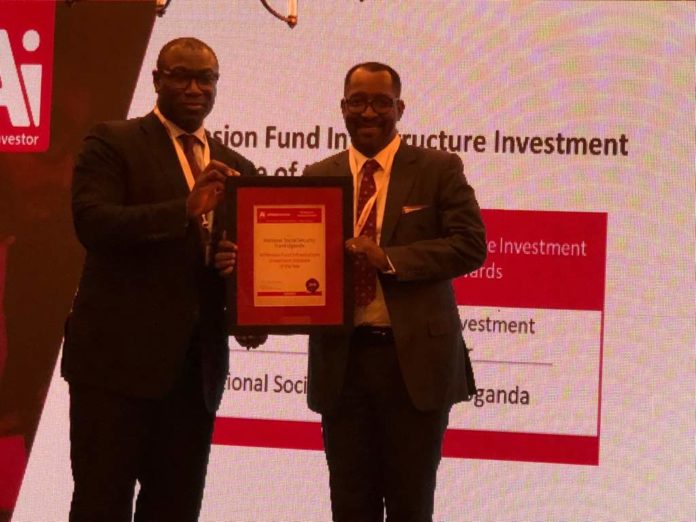
NSSF wins AI CEO Infrastructure Investment Award 2018

NSSF-Uganda team at the awards.

The National Social Security Fund (NSSF) has bagged another accolade, beating nine other similar Funds to emerge winner of the Africa Investor (AI) CEO Infrastructure Investment Award 2018.

The awards were hosted on June 18, 2018 at the St. Regis Mauritius Resort in Le Morne Mauritius. Managing Director, Richard Byarugaba received the award on behalf of NSSF.

NSSF beat others like; Government Institutions Pension Fund (GIPF), Namibia, Pension Danmark and Pensions kassernes Administration A/S, National Social Security Fund (NSSF), Tanzania, Government Employees Pension Fund (GEPF), South Africa, Public Service Superannuation Scheme (PSSS), Kenya

Others were; Botswana Public Officers Pension Fund (BPOPF), Social Security & National Insurance Trust (SNNIT), Ghana, Debswana Pension Fund (DBF), Botswana and Public Service Pension Fund (PSPF), Tanzania.

The awards came a day before the Africa Energy Forum 2018. The forum will be held on June 19, 2018 under the theme, “Putting Financial Close First” and will gather Africa’s Ministers of Energy, top project developers and project financiers among others.

NSSF has continued to be recognised both locally and globally for various innovations and implementation of best practices in various categories. Last year, NSSF won the Africa Pension Fund Infrastructure Investment Initiative of the Year Award and two International Social Security Association (ISSA) Good Practice Awards for the Friends with Benefits initiative and the E-collections platform.

NSSF in May won the Corporate Governance Awards for outstanding practices in the category of Public Sector Governance, ahead of 6 public institutions that participated in the awards.

The inaugural awards which were organized by the Institute of Corporate Governance of Uganda (ICGU), took place on 17th May at the Kampala Serena Hotel.

The awards were intended to shine a beacon of light on companies that uphold the best practices in corporate governance. Even though most companies have governance structures in place, including board of directors, many of them don’t provide effective governance over their required mandates.

The Fund was also recognized for good corporate governance in the Financial Reporting (FiRe) Awards in 2015 and 2016.

Stories Continues after ad

April Fools Day Prank

Dear reader,

Here at Eagle Online, we were almost fooled into an April Fools day story.

You see, it’s fair to say we have a love/hate relationship with April Fool’s Day stories but they are just meant to give the reader that, “holy crap, they got me!” feeling just after reading the last line. And after that, you just move on with the real news in the pages. It happens in media world over.

That was the spirit of our April Fools day story of this year about Mutebile being replaced with NSSF’s Byarugaba.

Digging up the story two months later and making it trend is taking the joke a little bit too far.

Surely, Eagle Online has a tone of cutting edge pieces written with the finesse of good journalism, I invite you to them.

Thank you for being good readers.

Isaac Imaka
Editor Eagle Online

Stories Continues after ad

Agriculture is the ‘green gold’ that could transform the economy and the lives of Ugandan farmers

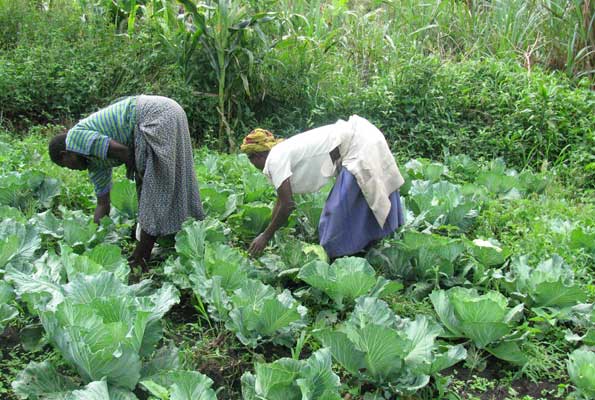
Women attend to their cabbage garden

By Christina Malmberg Calvo

Agriculture is Uganda’s ‘green gold’ that can transform the economy and the lives of farmers. Why it is then that Uganda’s well documented agricultural potential is not realized? What specific public-sector policies and actions are required to unleash the entrepreneurial energy of Uganda’s largest private sector actors—its farmers?

These and other questions are tackled in a new report we’ve launched jointly with the Government of Uganda, titled, “Closing the Potential-Performance Divide in Ugandan Agriculture.” It provides an unprecedented review of the structural context of Ugandan agriculture, its main actors, and the trends, opportunities and challenges the sector is facing.

Agriculture is the backbone of the economy, contributing a quarter of the national gross domestic product (GDP), and employs 70 percent of the population. The sector, however, is growing at a slow pace – way below its potential, with annual output growth at only 2 percent over the last five years. In comparison, East African Community members have seen annual output growth as high as 5 percent. However, in that same period, Uganda’s population has grown at 3.3 percent per annum.

Total factor productivity – which determines the efficiency and utilization of what is put into agriculture – has been negative for the last 18 years. The below par performance should be of concern to all stakeholders for a sector that is at the heart of the livelihoods of majority of Ugandans, and the economy.

So how can Uganda harness these opportunities for long term growth in the sector? How can the investment into agriculture match its output performance?

The report identifies three priority areas for policy action and investment, namely, (a) commercialization through value-addition and trade; (b) strengthened public institutions and policy, and (c) enhanced resilience of agriculture production and rural livelihoods.

Promoting commercialisation of agriculture through value addition and trade offers prospects for long-term growth and transformation of Uganda’s agriculture. Involving the private sector can provide much needed financing, allowing smallholder farmers to commercialize and get more returns. Most financial institutions are unwilling to extend credit to the sector because farmers often don’t have collateral, are too remote and this increases the institution’s transaction costs when there are no physical banking facilities in the areas. There are also too many variables with the rain, commodity prices and pests and diseases.

Risk can be minimized through warehouse receipt systems to provide collateral as alternatives to land titles and fixed assets. Credit guarantees, where larger ventures can offer protection to borrowers in small agribusiness, can cover default risk and build credit. With the booming domestic and regional demand for high-value foods arising from income growth, urbanization, and dietary shifts offer massive opportunities for Ugandan farmers, for value chains beyond farm production, and for better jobs in agriculture.

Like farmers elsewhere, Ugandan farmers are plagued by climate change including severe droughts, flood and crop pests and animal disease outbreaks. Uganda can refocus its extension system for social protection and teach farmers climate-smart soil and water management practices. The rural areas, which produce most of Uganda’s agriculture, are unable to adapt quickly to climate change and that hinders the growth of agriculture under present climate trends. The country is estimated to be losing from 4 to 12 percent of GDP annually mostly due to soil erosion.

The public extension system, National Agricultural Advisory Services (NAADS) would reduce costs and increase efficiency if they used technology as well. It does not have to be sophisticated. You are likely to reach more numbers with a radio announcement than with field visits. Radio programs can speak to good practices and include call-in programs.

Adoption of technology is another untapped area that could have a positive impact on productivity. ICTs like mobile phones enable better access to information and less transaction costs, all of which translate to higher incomes – and especially for women farmers, who adopt technology faster. Among coffee farmers, households using mobile money also receive better prices and sell more coffee.

All of these have to go hand-in-hand with more efficient public policies, and stronger coordination from the centre right down to the local governments. Some of the public policies have had repercussions like NAADS free input distribution mandate crowding out the private sector from seed distribution. Still, utilising public resources wisely to invest in complementary public goods and services such as agricultural research to keep updated on the latest climate developments and farm practices is key, as is development of good roads and expanding access to energy so that farmers spend less money moving produce, and to avoid post-harvest losses.

The public agencies have to step up and work in a more coordinated fashion. There should be more and better data including some district-level statistics, public expenditure reviews, policy analysis and policy monitoring. For agriculture to support the economy in the way we want it to, we have to invest in it and also have the right policies. It also requires politics not to interfere with the sector, but rather to enable investment in Uganda’s agriculture.

The Writer is the World Bank Country Manager for Uganda

Stories Continues after ad

Ugandan Agriculture must commercialize to drive economic growth and poverty-new report

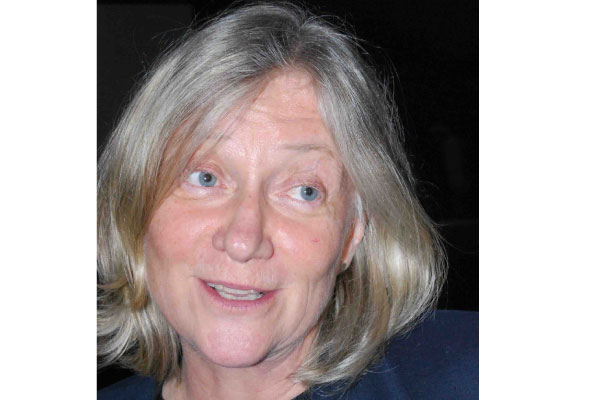
Outgoing World Bank Country Manager for Uganda, Christina Malmberg Calvo

The Government of Uganda and the World Bank on June 19, 2018 launched “Closing the potential performance divide in Ugandan agriculture” report that provides an unprecedented review of the structural context of Ugandan agriculture, its main actors, and the trends, opportunities and challenges the sector is facing.

Agriculture is Uganda’s ‘green gold’ that can transform the economy and the lives of farmers. Why it is then that Uganda’s well documented agricultural potential is not realized? What specific public policies and actions are required to unleash the entrepreneurial energy of Uganda’s largest private sector actors—its farmers? These and other questions are tackled in the report.

The report identifies three priority areas for policy action and investment, namely, (a) commercialization through value-addition and trade; (b) strengthened public institutions and policy implementation, and (c) enhanced resilience of agriculture production and rural livelihoods.

“Economic growth and poverty move with the fortunes of Uganda’s agriculture sector, which, in turn, depends on the whims of the weather. Farmers will not invest in commercial agriculture while counterfeit and poor-quality inputs dominate the market. They need to be able trust the distribution system, and have tenure security and access to finance. This require effective policies and regulations, and that politics steers clear of the agriculture sector,” said Christina Malmberg Calvo, World Bank Country Manager for Uganda.

The report notes several structural barriers in Uganda’s agriculture sector, such as declining productivity, natural resource degradation, and high vulnerability to the impacts of climate change. The low level of tenure security and financial inclusion of smallholders, and comparably weak regulatory measures and poor quality-control systems have been found to limit technology adoption and to hamper agribusiness development. While public budget allocations for agriculture have remained modest, inefficiencies in spending are high.

Booming domestic and regional demand for higher-value foods arising from income growth, urbanization, and dietary shifts offer massive opportunities for Ugandan farmers, for value chains beyond farm production, and for better jobs in agriculture. Other sector potentials include developments in agricultural technology and ICT, and various successful agribusiness models that could be upscaled.

Strengthening the institutional base of agriculture, removing identified distortions, facilitating trade, and enhancing resilience through climate-smart agriculture and low-cost irrigation systems can help closing the divide between the potential and actual performance of Ugandan agriculture. Government needs to drive these high priority actions by forging a pact with the farmers and other private sector actors.

“A productive and climate-smart agriculture sector requires an effective enabling environment. Providing that environment is the role of the Government. Uganda’s agriculture sector may not be transformed overnight. But making the right adjustments now will be critical to realize the Vision 2040,” said Holger Kray, Head of the World Bank’s Africa Agriculture Policy Unit and the study leader.

Stories Continues after ad

Meet Bududa’s coffee woman Martha Wamatabu

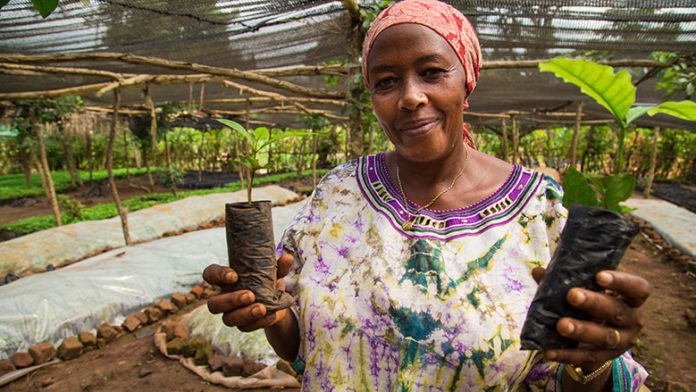
Martha Wamatabu. Photo by World Bank

By World Bank

Martha Wamatabu harvests about 600 kilograms of coffee beans in a good season. She has an acre of land in Bududa district where she has grown coffee for the last 10 years, one of few women in the area to do so.

“Not all women have land,” she said. “And even those who want to rent, find it difficult to get money.”

Based in Bududa district on the Mount Elgon ranges, Wamatabu and other coffee farmers also face other barriers. They lack access to markets, domestic and international. The cost of transport is too high due to the narrow murram roads that are often impassable during wet weather conditions.

These are among some of the challenges discussed in the World Bank’ new report, Closing the Potential-Performance Divide in Ugandan Agriculture. The report assesses the state of Uganda’s agriculture, and offers an unprecedented analysis of the structural context, highlighting challenges, trends and key opportunities for growth.

Agriculture is the backbone of Uganda’s economy, employing 69% of the population, and contributing half of Uganda’s export earnings and a quarter of the country’s gross domestic product (GDP). Since most Ugandans live in rural areas and practice farming, raising agriculture incomes – a centrepiece of Uganda’s National Development Plan – is critical to reducing poverty, boosting prosperity and creating jobs, especially for women and youth.

The report, which provides a historical review of the sector, notes that rising population and growth of incomes have increased the demand for food and agro-processed products. This is putting increased pressure on the environment amid frequent and severe climate conditions, made worse by the continued dependence on rainfed agriculture. Combined with poor agricultural practices, low technological adoption, insecurity over land ownership, poor access to extension services, low quality inputs, and lack of credit, the report notes that the agriculture sector continues to be hindered from realizing its full potential.

Challenges notwithstanding, Ugandan agriculture has enormous potential to transform the economy and make farming much more productive and profitable for Ugandan smallholder farmers, the report says. In stark opposition to supply-side constraints, demand-side opportunities for agriculture and food for Uganda and its neighbors are the strongest they have ever been, according to the report. Booming domestic and regional demand for higher-value foods arising from income growth, urbanization, and dietary shifts offer massive opportunities for Ugandan farmers, the report says, and for value chains beyond farm production, and better jobs in agriculture. Other areas of potential identified by the report are developments in agricultural technology and ICT, and various successful agribusiness models that could be upscaled.

Sam Agona, an ICT expert and farmer, prioritized the use of technology in his agribusiness when he decided to register his company in 2016. “We designed and developed tools to manage logistics, inventory, cash flow management and also staff management while in office and in the field,” he said. “It eliminated the need to communicate through time-consuming phone calls and kept comprehensive financial documentation for the enterprise. We capture our transactions on mobile.”

For Uganda to maximize its potential and take advantage of the opportunity to become a regional agri-food powerhouse, the report provides evidence on the strategic decisions and the needs to be addressed in Uganda, and success stories to draw on. The report identifies three priority areas for policy action and investment; (a) commercialization through value-addition and trade; (b) strengthened public institutions and policy, and (c) enhanced resilience of agriculture production and rural livelihoods.

Strengthening the institutional base of agriculture, removing identified distortions, facilitating trade, and enhancing resilience through climate-smart agriculture and low-cost irrigation systems can help closing the potential-performance divide of Ugandan agriculture. The report recommends that high priority actions be discussed in multi-stakeholder fora under national coordination.

“A productive and climate-smart agriculture sector requires an effective enabling environment. Providing that environment is the role of the Government,” said Holger Kray, head of the World Bank’s Africa Agriculture Policy Unit, and lead author of the report. “Uganda’s agriculture sector may not be transformed overnight. But making the right adjustments now will be critical to realize the Vision 2040.”

With access to more finance, more efficient farming and climate-smart practices, the report says Uganda will be able to reach its potential in agricultural returns.

Stories Continues after ad

Mobile money tax will kill new ICT innovations-Private Sector Foundation

RIP Gideon Badagawa

The local private sector is worried that the new taxes on mobile money transactions as introduced in the 2018/19 budget will dampen new ICT innovations and suffocate growth of local businesses.

The private sector players under the umbrella of Private Sector Foundation Uganda (PSFU) Uganda say that the new 2 percent levy on all mobile money transactions will kill innovations that would have eased transactions.

Moses Ogwal Goli, Director Private Sector Development, while presenting private sector’s response to the budget read last week that there were over 200 new ICT innovations that might not be operationalized due to the taxes.

Ogwal said, during a private sector post budget luncheon that was held on June 18 at the UMA Conference Hall in Lugogo Kampala.

“The new mobile tax is levied on airtime, data, tax income for operators, the sender, the receiver, paying bills and all that. This is like double taxation and will in the end discourage ICT innovation,” he said, urging the government to drop what he referred to as operational taxes.

PSFU’s Executive Director, Gideon Bandagawa said that although the budget had tried to address some of the challenges facing the private sector in the country, much still remains to be done for the sector to make profits so that the government can tax.

He said that much as government was to recapitalise the Uganda Development Bank (UDB), more money was needed to be put in the bank. “The private sector needs over Shs 6trillion in the six major sectors,” he said.

The private sector players also want government to review the structure of the UDB to be able to attract more private capital, such as amending the National Social Security Fund (NSSF) Act to enable it participate in the UDB recapitalization but also strengthen micro finance centers to be able to give credit to the private sector.

They further want government to implement the national agriculture finance policy, fully implement the subsidized agriculture insurance program as a way of commercializing the agricultural sector and reduce the 68.9 percent farmers that are still engaged in subsistence farming.

Albert Beine, the Managing Director, Global Taxation Service Limited, while making a tax analysis of the budget, said that the private sector would be very important in helping taxes the Uganda Revenue Authority to achieve the Shs 16.4 trillion that it is targeted in the 2018/19 financial year.

Stories Continues after ad

Kayihura is Museveni’s perfect assembly—Semujju Nganda

FDC's Semujju Nganda

Kampala: Forum for Democratic change (FDC) has called for a prob to investigate the 13 years of former Inspector general of police (IGP) ‘Gen Kayihura’s terror’ that happened in the approval of president Museveni.

Gen Kale Kayihura was sacked in December last year by president Museveni, few months after approval of his appointment in the August house and replaced him with his deputy martin Okoth Ochola. In reappointment, Kayihura was supposed to preside over police till 2023.

Speaking in a weekly media briefing, the spokesperson for FDC Semujju Nganda who doubles as Kira municipality legislator said the 13 years of Gen Kayihura must be investigated and charged for all crimes he committee, ‘not crimes that president Museveni wants to charge him with’.

“Museveni has always witnessed, defended and promoted the former IGP as he continued to grace over violations of human rights, Even when he joined police, Museveni continued promoting him from the rank of Brigadier to General, and he earned all these promotions because Museveni was satisfied with Gen Kayihura’s work,” Said Mr. Semujju.

He said that last year during celebrations at Kayihura’s home in Kisoro district, president Museveni praised him for being a royal carder for criminalizing politics, miming politicians, shooting at people on streets, banning political activities and now is the same Museveni saying Kayihura is a criminal.

“The only police about the former IGP was his uniform, the rest he became the chief promoter of crimes, National resistance movement (NRM),” he said at FDC headquarters, Najjanankumbi.

“We are opposed to Museveni’s proposal on police bond and bail and crack down of media. May be what Museveni missed was to become a journalist, because he wants to an editor, he wants to determine how newspapers and radio should be manage, stories should be published and aired,”

Semujju was retaliating Museveni’s statement during the presentation of the budget, Museveni blamed Daily monitor saying exaggerated Uganda’s debt among other issues.

Gen Kayihura was last week pick from his farm in Lyantonde district and is currently held at Makindye military barracks for allegations that he participated in the gruesome gun down of his assistant, assistant inspector general of police (AIGP) Andrew Felix Kaweesi.

Stories Continues after ad

SC Villa to vote for new president in August

Edgar Agaba CEO-National Gaming Board who credited for the growth of the industry.

Uganda’s most successful league side will again go to the polls to vote for the next club’s president in August this year.

The reigning SC Villa president, Eng. Ben Misagga, will be seeking to retain his seat and serve another four years in office.

Ben Misagga took over as the SC Villa president in 2014, and under him, the club won their ninth Uganda Cup title against KCCA in 2015 ending a five year trophy drought.

Lotteries and Gaming Regulatory Board CEO Edgar Agaba, Denis Mbidde, Muhammed Bazirengedde, and former club player Gibby Kalule are the other members rumoured to be interested in taking over the club.

The elections will be held on August 24 at Masaka Royal Gardens.

Meanwhile, the club appointed a five-man electoral committee to take charge of the elections. It consists of the MP representing UPDF, Evelyn Asiimwe, Vice chairperson Sarah Babirye Kityo who is the Central Youth MP, Secretary is Ivan Kakembo, Ass. Secretary Musa Balinda and Sarah Adong as the spokesperson.

Previous Club Leadership / Chairmanship (Presidents) and their Achievements:

1975 – 1979: Daniel Kiwalabye. Achievements: Club promotion to the topflight league (super league).


1979 – Dec 1993: Patrick Edward Mayengo Kawooya. Achievements: Uganda Premier League – 8 Titles, Uganda Cup – 4 Titles, CECAFA Club Championship – 1 Title.

Dec 1993 – Jul 2010: Franco Mugabe. Achievements: Uganda Premier League – 8 Titles, Uganda Cup – 4 Titles, CECAFA Club Championship – 2 Titles.

Aug 2010 – Jul 2012: Fred Muwema. No registered achievement.

Aug 2012 – Jul 2014: Interim Committee. No registered achievement.

Aug 2014 – Jul 2018: Ben Immanuel Misagga. Achievements: Uganda Cup – 1 Title.

Stories Continues after ad