Stanbic Bank
Stanbic Bank
28.7 C
Kampala
Stanbic Bank
Stanbic Bank
Home Blog Page 1553

Hunky Maurice Kirya to headline at Mavuno Market Place launch

Musician Maurice Kirya will be the headline act at Mavuno Kampala

Kampala: Award winning Ugandan artist Maurice Kirya is set to headline at the launch of Mavuno Kampala’s Market Place program which will take place on Sunday 3rd June at the Kampala Parents School.

Speaking ahead of the launch, the Lead Pastor for Mavuno Kampala Pastor Waweru Njenga said that it was a pleasure to have Maurice Kirya kick off the Market Place program, the newest change experience programs that Mavuno provides.

“The Market Place Program is a discipleship experience based on the book of Daniel. With this program we aim at teaching Christians how to influence in their places of work – just like David did – by teaching them how to handle work place issues such as politics, integrity, corruption, competition and sexual harassment, among other many issues.

Our main aim as a church is to consistently turn ordinary people into fearless influencers of society”, said Pastor Waweru, also famously known as ‘Pastor Wa’.

Mavuno Kampala is well known for its change experience programs based on Christian principles. Some of these include SIMAMA, OMBI, HATUA, LEA and NDOA. In 2015 NDOA, a project that focuses on strengthening marriage and family life, scooped the Church Project of the Year Award in the Heaven Inspired Triumph (HITS) gospel awards.

The Market Place programme will go on for 8 weeks. The launch on Sunday 3rd June will start at 10am and will be hosted by Isaac Rucci, the legendary Limit-X singer, and Susan Nsibirwa, head of marketing and communication at Vision Group and also Chairman – Uganda Media Owners Association. Isaac and Susan are both members of Mavuno Kampala.

Assistant Lead Pastor of Mavuno Kampala, Pastor Mike Onen, recognized the impact of the multiple award winning artist on the society and reason for his presence at the launch:

“Maurice has been singing professionally for over ten years now and he has impacted the airwaves since he released his maiden album in late 2009. Having toured over 35 countries and 40 cities across Africa, Europe and America and also having featured on BBC, CNN, Voice of America and RFI, we want to learn how Christians can influence in our various industries and thrive; we therefore look forward to hearing from him on Sunday” said Pastor Mike Onen.

Maurice Kirya holds multiple accolades from E-World Music Awards (LA), Museke Music Awards (New York), KORA Award, KISIMA Awards (Kenya), PAM awards (Uganda). He continues to be an inspiration and mentor to many young Ugandan and African musicians.

Stories Continues after ad

Umeme opens new service centre in Pallisa

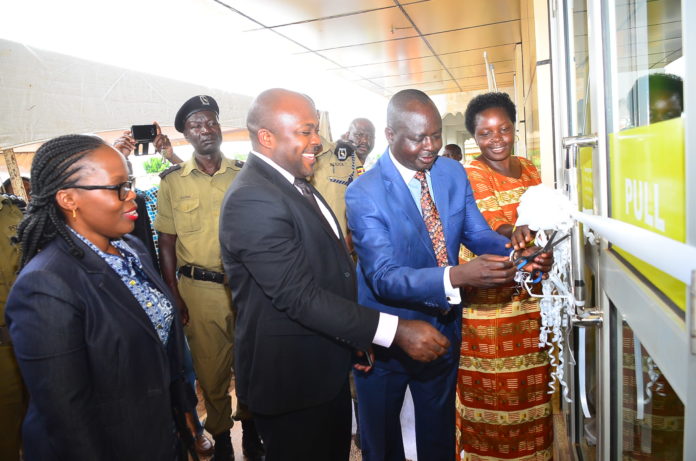
Umeme officials and others opening the new service centre in Pallisa

Mbale: Uganda’s national electricity distributor, Umeme has opened up a new service centre in Pallisa Town in eastern Uganda, aimed at providing timely customer care service to the residents who hitherto were depending on Mbale branch, costing them time and transportation fees.

“Our service strategy has always been focused on process simplification, automation and investments to improve network performance,” Mr. Selestino Babungi, the Umeme Managing Director, said as the launch of the service centre that will see more people in that area connected faster to electricity grid.

Babungi said that more new services centres would be opened in Kapchorwa, Sironko, Bubulo and Kumi as part of the company’s grand plan to bring services closer to the customers.

Umeme has branch in Mbale Town that has existed for 63 years, serving districts such as; Pallisa, Budaka, Bulambuli, Bukedea, Kumi, Kapchorwa, Bubulo, Manafwa, Bududa and Sironko among others.

“We have 37 service centres across the country, but some of them stretch over a radius of up to 80km, which makes it difficult for our customers to access some of the services. The opening up of several satellite offices will bridge this gap,” Babungi said.

In 2017, the company rolled out customer outreach programs in rural areas with the aim of bringing services closer to customers including education on dangers of power theft and vandalism, safe use of power, energy efficiency tips and e-payment options.

Mobile service desks were set up in high growth areas and potential customers proactively engaged to connect electricity to their homes.

Before the initiatives, illegal connections in the sub-region cost Umeme an estimate of sh20b annually and in a move to avert the situation, the company launched operations against illegal power users in the area at the start of last year.

Paul Ssempira, the Umeme Mbale district manager, notes that there has been a 30 percent increase in the number of new connections to 8,431 in 2017 from 3,541 in 2016.

The company managers say the region contributed up to 10 percent of the 19 percent losses registered at the end of 2016. But interventions saw the company record lower energy loss of 17.2 percent in 2017, as sighted in its 2017 annual report released recently to the shareholders.

“The region alone registered up to 60 percent energy losses in 2016, but this dropped to 45 percent in 2017. The 60 percent of the losses are categorized into 45 percent commercial losses (power theft) and 15 percent technical losses,” Ssempira said.

The company’s losses in terms of money in the region dropped to Shsh15b in 2017 after it intensified its operations against illegal users and vandals.

Stories Continues after ad

Uganda will forever remember Nyerere-Museveni

President Yoweri Museveni has said that Uganda will forever remember the contribution made by former President of Tanzania, the late Mwalimu Julius Nyerere, in the liberation of the country.

“By observing t June 1, each year, we, the Uganda government with the support of the Catholic Church, are signifying our appreciation to Mwalimu,” he said.

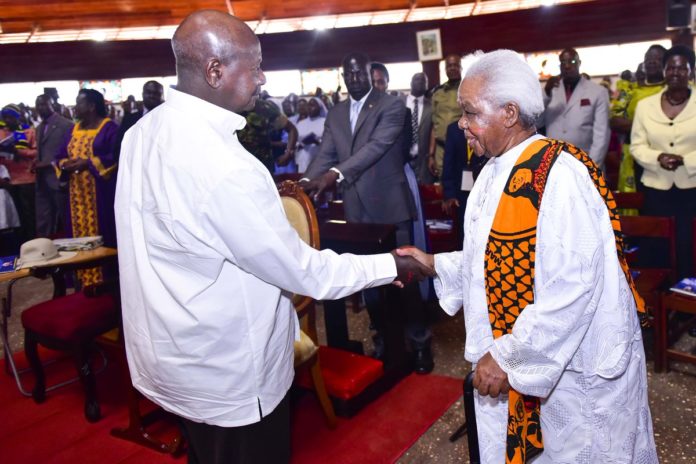
Museveni was yesterday morning among pilgrims from Tanzania led by Mama Maria Nyerere and are in the country for the Julius Nyerere Day that is observed on June 1, and for the annual Uganda Martyrs’ Day celebrations to be held on Sunday June 3, 2018.

The Nyerere Day that was first started in Musoma Diocese in Tanzania has been set aside annually by the Government of Uganda to pray at Namugongo Basilica for the beatification of Mwalimu Julius Nyerere to Sainthood.

President Museveni described the late Mwalimu Nyerere as a devoted Catholic, patriot, and a Pan-Africanist. He noted that the former Tanzanian leader became a great African leader because he managed to unify the people of Tanzania, who are diverse in their ethnicity, by not following the line of sectarianism.

“Being a devoted person in any religion should not mean being sectarian. If Mwalimu had done that, he would not have managed Tanzania,” he observed.
The President, therefore, thanked Archbishop Cyprian Kizito Lwanga of Kampala Archdiocese, for allowing the devoted to officially hold prayers at the Uganda Martyrs’ Shrine in Namugongo for Mwalimu Nyerere. He noted that the prayers held annually at Namugongo will reinforce those of the Christians in Musoma where the whole process started.
Mr. Museveni told the congregation that Mama Maria is today continuing with the work started by the late Mwalimu Nyerere of unifying people through politics, by now promoting unity through the Church.

The President also pointed out that the linkages between the people of Tanzania and those of Uganda have, for long, existed as manifested by the similarities in culture and language. He added that even Mama Maria was only coming back home as she first had her Education at Nsuube in Uganda.

“We are, therefore, very happy to see that the Tanzanian pilgrims come every year to be with us as well as to pray to God to expedite the beatification of Mwalimu Nyerere,” he said.

President Museveni reiterated his gratitude to the people of Tanzania for supporting their brothers and sisters in Uganda in regaining their freedom. He said the Uganda Martyrs persevered in the fire and did not denounce their faith and similarly Nyerere was also in fire, as the plan during Amin’s regime, was to surround Tanzania and Zambia with hostile governments that could bring down the government of Tanzania.

“To support freedom fighters in Southern Africa and Uganda was risky for Mwalimu and the people of Tanzania,” he noted.
The Archbishop of Kampala Archdiocese, the Most Rev. Dr. Cyprian Kizito Lwanga, who started his remarks by leading in the song‘Marching United in Christ’ said the visiting congregation from Tanzania and all other pilgrims to Namugongo, were marching together with the Martyrs because of our faith in God. He thanked President Museveni and the Government of Uganda for supporting Namugongo Basilica as well as declaring 3rdof June every year as a public holiday in commemoration of the Uganda Martyrs.

He urged Christians to remember God who gave the Martyrs the courage to die for their faith. He asked the congregation to pray through the intervention of the late Nyerere for miracles to occur in order to enhance the process of his beatification.

The Archbishop said that Nyerere was a great leader in Africa and a servant of God who deserves our remembrance and prayers for his beatification. He also thanked Mama Maria and the pilgrims from Tanzania for loving Uganda and the Uganda Martyrs by visiting the country.

The representative of the Government of Tanzania, Ms Mary Chiando, thanked President Museveni for gracing the occasion. She also thanked Archbishop Cyprian Kizito Lwanga for hosting the pilgrims from Tanzania adding that this was an opportunity for them to learn a lot about the faith of Uganda Martyrs.

The representative of Mama Maria Nyerere’s family, Rev. Sr. Eledina Micheal, described President Museveni as a true father of the people of Uganda and Tanzania because of his large heart.

Rev. Fr. Antonius Maria Mamsery, in a homily, said Mwalimu Nyerere served all countries in Africa selflessly especially in their liberation struggles. He added that Mwalimu Nyerere was a devoted Catholic who relied on divine intervention when faced with big challenges.

‘Nyerere never fought for only political freedom but also for the liberation of Christians and everyone in Tanzania and Africa in general,” he said.
Deputy Chief Justice, Justice Aliphonce Owiny Dolo and his wife, among others, attended the Mass.

Stories Continues after ad

Why investors won’t get excited by your product spec

By Martin Zwilling

Most technical entrepreneurs I know demand the discipline of a product specification or plan, and then assume that their great product will drive a great business. Serious investors, on the other hand, look for a professional business plan or summary first, and hardly ever look at the product plan. Is it any wonder why so few entrepreneurs ever find the professional investors they seek?

Just for clarification, I characterize a product plan as a formal description of your product or service, with a quick business description at the end for effect. A business plan is a careful layout of the business you are building, with a quick product overview in the intro to set the stage. In reality, you need both, to clarify for yourself and team that you have a viable business solution.

A product plan has tremendous value inward facing, telling your product people what to build, while the business plan has maximum value outward facing, explaining to the rest of the world how your new company will survive and prosper. A product plan is never a substitute for a business plan.

Because the product plan is aimed internally, it can assume the reader has the relevant technology and jargon background. Here are the major elements of the best product plans:
Market requirements section. This first section of every product plan defines the market, sizes the opportunity, and discusses individual needs and requirements that will be provided by your product and service. These requirements must be based on market analysis, expert input, and existing customer feedback.

Technology, architecture, and feature descriptions. This section of the product plan details every element of the product or service that is your solution. It allows all members of your team, including marketing, support, and sales, to size and build the business plan processes they need to find customers, deliver, and maintain grow the business.
Development schedule and checkpoints. A product plan must include the timeline and milestones involved in product research and development. Each of these activities should have associated costs and resource requirements. Related activities must be defined, including performance expectations, quality certification, and proof of concept.
Quality testing and approval processes. Product certification or product qualification requirements and processes are a key part of every product plan. This section of the plan would include the definition of specific test processes, how results will be measured, and who has responsibility for execution and approval.

Now let’s talk about the basic components of a business plan. Since this document is outward facing, it is important to keep the terminology and tone consistent with that of your customer set, investors, and business partners. It does need to include a high-level summary of the components in the product plan, with key additional sections as follows:

Definition of customer problem, followed by your solution. The customer pain point must be defined before the solution is presented, so it doesn’t look like you have a solution looking for a problem. Use concrete terms to quantify the value of solution, like twice as fast or half the cost, rather than fuzzy terms, like cheaper and easier to use.

Opportunity segmentation and competitive environment. The market for your solution should be quantified in non-technical terms, with data sourced from professionals in the industry, rather than your own opinion. List key competitors and alternatives, highlighting your sustainable competitive advantages, such as patents and trademarks.
Provide details on the business model. Every business, including non-profits, needs a business model to survive.

Providing your product or service free to customers may sound attractive in marketing materials, but you need
revenue sources to survive. Free is a dirty word to investors, since it’s hard to get a financial return from free.
Executives, marketing & sales, financial projections, and funding. These are additional critical sections of a business plan to define who is running the business, business strategy activities, and financial expectations. There are many good books and Internet articles describing each of these sections, so I won’t cover the details here.

In principle, there is very little overlap between these two plans, so it never makes sense for an entrepreneur to build one without the other. Yet I’m still often approached by aspiring entrepreneurs who have neither. If you are still in the idea stage, meaning you have nothing but a passionate verbal description of an idea, approaching investors is a waste of time and a recipe for failure.

Savvy entrepreneurs always remember that they are the key investor in their company, so they measure themselves against the same standards as professional investors. That means they invest first in a set of plans.

Stories Continues after ad

Sustainable development requires a higher domestic revenue effort

By Christina Malmberg Calvo

Less than one million people and about 40,000 firms are registered as tax payers in Uganda. That’s less than 7 per cent of the total working age population, and less than 10 per cent of firms with a fixed location, respectively.

While this is low on both scores, it represents a significant improvement over the last couple of years thanks to the enormous efforts by Uganda Revenue Authority to improve tax administration. A large proportion of persons and firms remain outside the tax bracket, however. Some households are too poor to pay taxes, and many small businesses operate in the informal economy and are hard-to-reach. That said, many people and firms deliberately evade taxes or are granted generous exceptions. This is something that can and should be addressed right away.

Uganda collects taxes equivalent to 14 per cent of GDP. This is too low; it’s below the government’s own target of 16 per cent set three years ago, and below what the country can collect—an estimated 18-23 per cent of gross domestic product (GDP.) It is also below what its neighbors collect—Kenya 18 per cent, Rwanda 16 per cent.

A low tax effort contributes to fiscal deficits and limits opportunities for financing infrastructure and social services. While governments can borrow to fund vital infrastructure and human capital, they cannot do so indefinitely without running up debt, an issue that is quickly emerging as a concern in many African countries. An improved tax collection is therefore, critical to sustainably finance human capital and infrastructure while containing the rise in external debt. In addition, public investments, whether funded through domestic or external resources, need to be well managed—carefully prioritized, competitively procured, well supervised and maintained. When the latter is not the case, value for money is compromised. An increasing debt service is especially hard to stomach when public investments are ill-managed.

In recent years, aid flows to Uganda have slowed while the country needs to scale up the financing of important infrastructure, and continue to build human capital through the provision of better education and health services on the back of a rapidly-increasing population. Uganda needs to urgently increase the mobilization of domestic revenues to stay its development course and not compromise fiscal stability. If, for instance, revenues collected over the past three years had met the target of 16 per cent instead of just 14 per cent, the additional 2 per cent would have been sufficient to triple government’s spending in the health sector in FY2016/17, or fully finance the Entebbe-Kampala expressway without having to borrow.

So, what can Uganda do to raise more domestic revenues? An obvious first step is to reduce policy discretion, i.e., decrease the granting of tax exemptions. That could yield 4-5 per cent of GDP in additional revenue. Second, make more people and firms pay taxes. Third, the government needs not only to promote equity in tax enforcement and administration, but also improve transparency and accountability while demonstrating a clear link between taxes and public services and strengthening the social contract.
The government has in recent years improved public expenditure and budget transparency. It is now a high priority to improve transparency and accountability in the collection and management of public revenues.

The above are key recommendations from the 11th edition of the Uganda Economic Update series released today in Kampala. The report, “Financing Growth and Development: Options for Raising Domestic Revenues in Uganda,” reviews the state of the economy and focuses on how Uganda can mobilize more domestic revenues to provide better access to and quality of public services.

The Government of Uganda is in the process of formulating a medium-term domestic revenue strategy. This process provides an opportunity to review past approaches to revenue mobilisation, discuss options for tax policy and tax administration, and recommend reforms that will put the revenue-to-GDP ratio on an upward trajectory. It also provides an opportunity for the government and broader public to establish a new social contract.

Contracts rest on a sense of mutual responsibility with the rights and obligations of all parties clearly defined. A new social contract in Uganda can provide the basis for the government to deliver better public services to citizens and firms, while requiring citizens and firms to appropriately pay their taxes. Making bold decisions now to diversify and increase tax revenues will better position Uganda to use future oil windfall for strategic physical and human capital investments, and also to save for a future when the oil runs out.
The Writer is the World Bank Country Manager for Uganda

Stories Continues after ad

EU envoy acclaims role of CSOs in developing Uganda

Ugandan civil society organisations can play a crucial role for the development of the country, the Head of the European Union (EU) Delegation in Uganda, Amb. Attilio PACIFICI said Thursday in Kampala.

“We believe that CSOs can and should play a crucial role for the development of any country. We also firmly believe in the strong benefits for everyone resulting from a constructive collaboration between state agencies and civil society organisations,” PACIFICI said yesterday at the launch of a Shs118 billion ‘Civil Society in Uganda Support Programme (CUSP)’ at Sheraton Kampala Hotel.

He said the programme would enhance the efforts to promote a conducive environment for CSOs, promote a meaningful and structured participation of CSOs in domestic policies and increase local CSOs’ capacity to perform their roles as independent actors more effectively.

“The programme we are launching today will support the implementation of the legal framework providing the conditions for the work of civil society in Uganda – such as the NGO Act. The programme will also support the promotion of institutionalised consultation processes between the state and civil society,” he said.

Amb. PACIFICI said there is a huge underutilised potential for interaction between civil society and the state on domestic policies. “The CUSP programme will contribute to strengthen the capacities of state and civil society actors to use existing consultative processes more effectively and to build trust between state and civil society,” he added.

The programme, he said, would provide technical and financial support to a wide range of civil society organisations (including NGOs, trade unions, employer federations and so on) to build their capacity.

The programme will complement other EU financed programmes to support civil society such as the Democratic Governance Facility (DGF) and the European Instrument for Democracy and Human Rights.

“This new programme will not only support CSOs operating out of Kampala but will also operate through regional hubs. The hubs in Gulu and in Mbale will be launched soon and additional hubs in other regions may be established in the future,” he said.

Guests at the launch of the programme included; Chairperson of the National Planning Authority, Dr. Wilberforce Kisamba Mugerwa, the Chargé d’Affaires of the German Embassy, Ms. Petra Kochendörfer, the Country Director of GIZ Uganda, Mr. Christian Schnurre, and a Member of the Board of the NGO Bureau Mrs. Margaret Sekaggya.

The audience was composed of representatives of government ministries, civil society, the media and other invited guests.

“CUSP’s definition of civil society includes all actors that are non-state and non-profit”, emphasised Ms. Petra Kochendörfer. “Hence, the programme will address a wide range of civil society actors in the fields of infrastructure, agriculture and governance”, she added.

Stories Continues after ad

Magara suspects still on remand as prosecution vows to adduce tight evidence

Courtesy Photo: Late Suzan Magara portrait, "the Lady" painted by Daniel Lagen.

Kampala: The eight suspects in the murder of Susan Magala have today further been remanded to Luzira prison by Buganda road magistrates Charles Yeteise after prosecution asked for more time to adduce evidence the will lead to conviction of suspects.

Ms. Magara, 28, was in February kidnapped by unknown assailants on her way home in Lungujja, Lubaga Division, tortured for three weeks and killed after her agonizing family paid ransom of over Shs700 million.

Appearing before court Magistrate Charles Yeteise ordered prison warders to remove hand cuffs from the eight murder suspects saying there is enough security at court, “ When you go back, do your things, but not before a courts of law.”

The chief Magistrate’s statement came in wake of president Museveni’s argument that during and after Court, suspects should remain hand cuffed after Musa Galiwango and Kiddawalime Muhamad who were on murder charges escaped from Masaka high court.

During the session, suspects asked for their transfer from Luzira prison on revelation that they are being tortured by interrogation officers as a way of extracting information from them.

“We need special treatment due to injuries and great harm that is always inflicted on our bodies, in prison we don’t receive all the required treatment,” Mr Ssali Muzamiru told court.

Courtsey Photo: Suzan Magara suspected killers appearing before High Court today

However justice Yeteise implored them to inform their lawyers saying with time their issues will be worked on basing on lawyers’ findings.

In reaction to the torture of suspects, unidentified prison warder said suspects sustained those injuries during the time of their arrest and they receive all the required treatment.

The matter was then adjourned to June 15, 2018 for further hearing.

The suspects were in April arrested from Usafi Mosque in operation that was conducted by a joint force of Police, Uganda people’s Defence force (UPDF) and Chieftaincy Military Intelligence (CMI) after receiving information zeroing them to the murder of Ms. Magara among other illicit activities.

The suspects include: Yusuf Lubega, Hussein Wasswa, Muzamiru Ssali, Hajara Nakandi, Abubaker Kyewolwa, Mahad Kasalita an Imam at Usafi Mosque, Hassan Kato Miiro and Ismail Bukenya.

Stories Continues after ad

NRM concedes defeat in Rukungiri by election

NRM candidate, Winfred Matsiko casting her vote.

Rukungiri: National Resistance movement (NRM) has conceded defeat in the just concluded Rukungiri by election saying they have lost the race instead with there are good signs of winning bigger battle in this area.

In a statement released by NRM spokesperson Rogers Mulindwa, the party applauded its members for effort they put in the Rukungiri by election form nomination to the polling.

“We continue to express dismay over the errant party members who opposed party’s position and never walked the journey. Our support in Rukungiri district has continued to grow, we now have hope in the future elections,” he said in Rukungiri.

He however revealed that NRM remains the giant, in the 36 by-elections of both legislators and District Chairpersons, NRM has won 27, and FDC two (Jinja East and Rukungiri), DP 1 (Kyotera) and the remaining post were taken up by independent candidates.

Further said noted that central executive committee of NRM will convenes for advice and pave a way forward about results of that just concluded by election.

Rukungiri woman parliamentary seat has been won by fad’s candidate betty Muzanira who garnered 50,611 votes beating her close rival Winfred Matsiko of National Resistance Movement party who polled 46,379 votes as others two candidates got less than 2000 votes.

Rukungiri woman parliamentary seat fell vacant after appellant court judges led by former Deputy Chief Justice, Stephen Kavuma nullified the election of National Resistance Movement’s (NRM) candidate Winfred Matsiko over voter bribery following electoral petition that was filed by Forum for Democratic Change candidate (FDC) Betty Muzanira.

Stories Continues after ad

Standards agency to inspect used vehicles imported into Uganda

Car bond

As government plans to ban importation of vehicles older than 15 years into the country, The Uganda National Bureau of Standards (UNBS) has come up to alert dealers of used motor vehicles that it will commence inspecting that category of vehicles shipped after June 1, 2018.

“All used motor vehicles shipped after the 1/06/2018 will be inspected for roadworthiness here in the country … by UNBS inspectors prior to their release from the Customs controlled areas until further notice. Dr. Ben Manyindo, the UNBS Executive Director says in the latest public notice.

He says the decision is in line with his agency’s ‘Inspection and Clearance of Imports Regulations 2018.’
But Eagle Online understands the contracts of private companies which have been doing the inspection of vehicles have expired, the reason UNBS will do the work itself. The companies include; East Africa Automobile (EAA), Jabal Kilimanjaro Auto Elect. Mech or Japan Export Vehicle Inspection Centre (JEVIC).

However, the UNBS boss says his agency will still recognise valid Certificates of Roadworthiness issued before June 1, 2018.
According to Dr. Manyindo says used motor vehicles imported into the country are assessed against the US 845:2008 – Road vehicles — Code of practice which is a compulsory Uganda Standard.

Dealers have been advised to obtain further details from UNBS Head Offices, UNBS staff at customs entry points or from its website.

The companies have been inspecting the vehicles at a fee of USD 140, US $200, US $125, USD220 and US $200 for vehicles originating from Japan, Singapore, United Arab Emirates, South Africa and United Kingdom, respectively.
Members of Parliament yesterday amended the Traffic and Road Safety law, banning the importation of vehicles older than 15 years and maintaining the 50 per cent environmental levy on imported vehicles eight years older.

The government maintains that older vehicles are prone to mechanical malfunction and that limiting their importation into Uganda would reduce on road carnage and environmental pollution.

A United Nations Road Safety Performance Review of Uganda estimated Shs4.4 trillion as the overall annual cost of road accidents in the country. The UN report is supported that of Parliament’s Finance Committee which says that importation of older vehicles into the country has exposed it to high levels of pollution and that disposing of junk cars is burdensome.

Despite government’s safety and environmental concerns, car dealers say the move to ban the importation of vehicles above 15 years will cost jobs to Ugandans but also increase the price of vehicles.

MPs Allan Ssewanyana (Makindye West) and Silas Aogon (Kumi Municipality) concurred with the used car dealers that the law favours the rich and discriminates the Ugandan poor who don’t have money to buy expensive cars.

Exemptions
The vehicles exempted from the impending ban are special purpose motor vehicles including: breakdown lorries, crane lorries, fire fighting vehicles, concrete mixer lorries, road sweeper lorries, spraying lorries, mobile workshops, forklifts, mobile drilling rigs and mobile radiological units.

Other vehicles exempted from the ban are work trucks, tanks and other armoured fighting vehicles, cesspool emptiers, water boswer, bullion spreaders, bitumen spreaders, bucket trucks, aircraft refuellers, spraying trucks, workshop vans and mobile banks.

Agricultural or forestry tractors, earth moving motor vehicles, dumping machines and road rollers are also not affected by the Bill.
Motor vehicles which are in transit before the commencement of this Act and which arrive in Uganda by September 30, 2018 will also be exempted from the ban.

Regionally, Kenya controls importation of used cars to eight years or older whereas Rwanda, Burundi, Tanzania and South Sudan have no limits as yet.

The East African community partner states have no agreement on restriction as regards importation of used vehicles though in 2009 it was decided by the bloc’s council of ministers that no vehicle made before 2009 would be imported into the region.

Stories Continues after ad

Ugandan businesswomen to benefit from $500m fund

Ugandan businesswoman Amina Hersi Moghe.

Ugandan businesswomen will be among the beneficiaries of a new US $500 million fund targeting women-led businesses in Africa over the next decade to increase their participation in investment.

The African Women’s Leadership Fund is a brainchild of the United Nations Economic Commission on Africa (Uneca), UN Women, the African Union Commission and the African Women Leadership Network.

Uneca Executive Secretary Vera Songwe says that the Fund’s sponsors hope to address a significant gender imbalance in finance and investment.

“Women are less represented in many organisations and very few are leaders. This in turn makes them less represented in key decision-making for the continent,” Ms Songwe says.

In Africa, only five per cent of chief executives are women; 18 per cent of businesses lack women in senior roles; only 29 per cent are senior managers while 44 per cent of women hold line roles, a 2016 report by Mackinsey & Company notes.
The fund’s strategy is to ensure that at least 65 per cent of its investment capital reaches women entrepreneurs and women-led companies. The rest — 35 per cent — will go to technical assistance in the form of capacity building, leadership training, mentorship and business development.

The fund hopes to find emerging women managers who will eventually serve as examples of the potential that they and their peers could have if given the support they need.

The fund targets each of the continent’s five regions of North Africa, East Africa, Central Africa, West Africa, and Southern Africa and will evolve over time to address the unique traits of each market and reflect each region’s priorities as they change.

Ms Songwe says the success of the fund will lead not only to economic empowerment of African women, but also contribute to increasing their role across all aspects of the continent’s development, including politics, civil society, education, science and technology.

Stories Continues after ad