Stanbic Bank
Stanbic Bank
18.4 C
Kampala
Stanbic Bank
Stanbic Bank
Home Blog Page 1552

We have Gen. Kayihura- Army

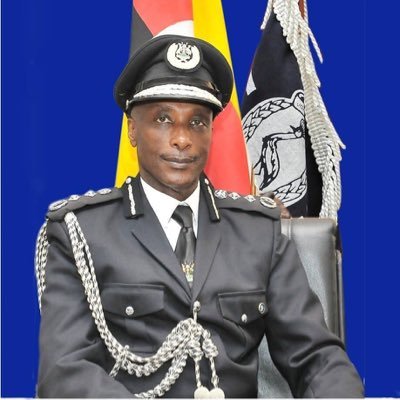
Being Investigated: Former IGP Gen. Kale Kayihura

Kampala: The Spokesperson of Uganda peoples Defence forces (UPDF) Richard Karemire has confirmed that the former Inspector general of police (IGP) Gen Kale Kayihura has arrived at Chieftaincy of Military Intelligence (CMI) headquarters Mbuya for meeting with other Generals.

Yesterday media reports indicated that the former police boss was arrested in Lyantonde by a joint force of Special Forces command and CMI over unrevealed issues however according to M. Karemire as a serving army officer, he was asked to report to CMI.

In a statement released by UPDF, Karemire said Gen. Kayihura is still a serving officer of UPDF and has been staying in Kashagama, Lyantonde district since March 15, 2018

“Yesterday June 12 he was asked to report to the UPDF chief of Defence force Gen Divide Muhoozi at General headquarters, Mbuya. A helicopter was subsequently dispatched to transport him from there but on arrival, Gen had travelled to Mbarara and so it had to return to Entebbe air force base,” he said in a statement.

Further said it has been sent back to Kashagama and has safely returned with him on board.

However In a statement, Karemire disregarded media reports that he was arrested however didn’t explain why UPDF sent a helicopter without putting Kayihura on notice it is coming to pick him and why soldiers had to aggressively search a hotel in Lyantonde in search of the former Police chief.

Stories Continues after ad

MP James Baba decorated Gold and Silver Star

Kampala: Koboko MP James Boliba Baba has been decorated for his contribution towards restoring and strengthening bilateral relations between Japan and Uganda.

The Japanese government conferred the Order of the Rising Sun, Gold and Silver Star upon Baba in recognition for his contribution while serving as Ugandan Ambassador to Japan from 2001 to 2005.

Speaking at decoration ceremony that was held at Parliament, Japanese Ambassador to Uganda Kazuaki Kameda said Baba introduced Uganda NERICA rice, “Thanks to his contribution and with our rich experiences, over 10 years Japan has been supporting rice farming in Uganda,”

“He promotes Ashinaga’s Africa initiative, supporting higher education for orphaned students from Sub-Saharan Africa,” said Kameda.

Baba noted that he was posted at a time when the Japanese government had suspended all official development assistance to Uganda, and when critical infrastructure projects were being undertaken.

“As soon as I hit the ground in Tokyo, I embarked on restoring relations between the two countries. Sooner than later, all official development assistance to Uganda was restored and I consider that my greatest achievement,” said Baba.

He noted that since then, Japan has continued implementing infrastructure development to Uganda through grant funding including the ongoing construction of the Nile Bridge in Jinja.

Baba added that after restoring relationships, he embarked on promoting Ugandan exports to Japan. The products include Arabica coffee, vanilla, sesame and Nile perch.

“By the time I left, Uganda’s exports to Japan were earning the country close to US$20 million, almost from nothing by the time I was posted there [Japan],” said Baba.

Speaker Kadaga applauded Baba for restoring the relationship between the two countries, saying that bilateral relations are delicate.

“The society of Japan is a society of respect and hierarchy. If they see that things are not moving to that direction, it can cause problems, but I am happy that it was resolved,” she Kadaga.

She however expressed disappointment over what she termed, “a tendency to dismiss career diplomats,” who she said did great work, but remained largely unacknowledged.

Stories Continues after ad

BREAKING NEWS: Confirmed Gen. Kayihura arrested

Former Inspector General of Police-Gen. Kale Kayihura who is already on the list

The former Inspector General of Police, Gen. Kale Kayihura has been arrested.

According to highly placed security sources, Kayihura is in and is being kept in secret location around Kampala.
He was brought to Kampala this morning under a combined force of both Chieftancy of Military Intelligence and Military Police.

More Details to follow.

Stories Continues after ad

COMESA States approve insect resistant cotton for cultivation

Cotton undergoing ginning in Pakwach. Currently Ugandan ginneries operate at an average of only 10 % of the established capacity.

The Kingdom of Eswatini (formerly Swaziland) and Ethiopia have approved the environmental release of insect resistant genetically modified cotton varieties for cultivation.

The Swaziland Environment Authority (SEA) and the Ethiopian Ministry of Environment, Forest and Climate Change granted the landmark approvals in May and June respectively.

The Bt-cotton varieties approved, one in Eswatini (JKCH 1050) and two in Ethiopia (JKCH 1050 and JKCH 1047), are hybrid types. Both varieties JKCH 1047 and JKCH 1050 were previously approved for cultivation in Sudan. Ethiopia has also granted a five-year special permit for confined field trials for drought tolerance and insect resistance maize varieties (Water Efficient Maize for Africa).

The adoption by Ethiopia and Eswatini brings to three the number of COMESA member States including Sudan that have adopted biotech crop varieties out of a total of four in the African continent.
“It is gratifying to see that the demand-driven support from COMESA and its implementing partners finally came to bear fruit in Eswatini and Ethiopia,” said Dr. Getachew Belay, formerly Senior Biotechnology Policy Advisor, and now African Plant Biosecurity Network Coordinator at COMESA Secretariat.

COMESA, through its specialized agency, the Alliance for Commodity Trade in Eastern and Southern Africa (ACTESA) supported both Eswatini and Ethiopia in biotechnology/biosafety policy formulations.

In the past six years, COMESA conducted awareness and capacity building trainings and experience sharing visits (mainly to Sudan, South Africa, Burkina Faso and India) for parliamentarians, regulatory authorities, researchers, farmers, private sector, media and civil society organizations. It also played a leading role in coordinating activities of other biotechnology/biosafety service providers in these two and other member States.

“It was not easy; however, we knew all along that COMESA has been the most trusted partner to the member States and other biotech stakeholders in handling this controversial and emotive issue of introducing GMO-products in the region,” Dr Belay remarked.

Dr Belay observed that the same varieties are being approved in different countries thus creating a good platform for COMESA member States to exchange data and share experiences amongst themselves without looking too far.
Cotton industry has been one of the leading industries driving Eswatini’s economy. However, production has been dwindling because of insect (bollworm) attack. Small-scale farmers, mostly women, are involved in cotton production and this technology is expected to raise their income earnings.

In Ethiopia, the government has identified the textile industry as one of the priority areas for industrial development and job creation where increased supply of cotton raw material with competitive price is needed. The country expects to gain one billion dollars export earnings from textile and garment industry by the end of the second Growth and Transformation Plan in 2020.

Sudan commercialized Bt-cotton in 2012, and is now reaping the benefits by doubling productivity. More than 95 per cent of the cotton produced in Sudan is insect resistant biotech (Bt) cotton. Research trials on biotech maize, banana, cassava, cowpea, enset, and potato have also been underway in other COMESA member States including Malawi, Kenya, Egypt and Uganda.

Dr Belay underscored the importance of documenting the socio-economic changes that will take place after the adoption of such “new” technologies to ensure that countries at field-trial stages gain more confidence to make well informed decisions.

Stories Continues after ad

Nambooze picked over what she posted on Abiriga

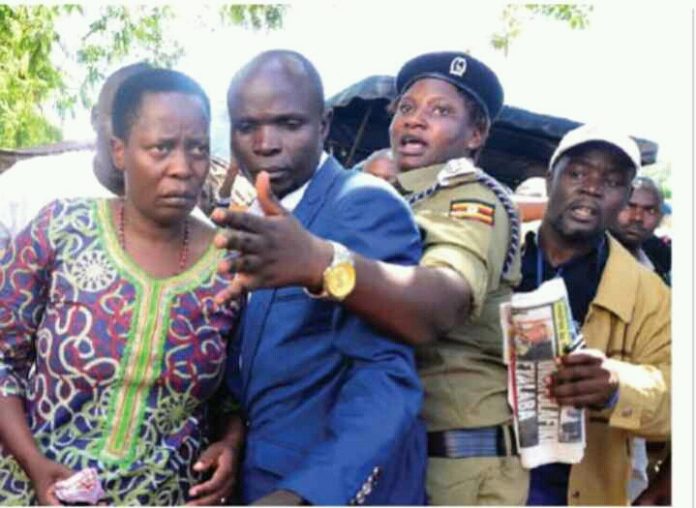
HELD: Singer Ronald Mayinja and 'Bad DP's' Betty Nambooze being led away by police.

Mukono Municipality Member of Parliament, Betty Nambooze, has been picked by the police on the basis of a video in which she explains how easy it is to attack Ibrahim Abiriga even with his bodyguards all around him.

Abiriga was gunned down Last Friday evening together with his bodyguard on their way home in Kawanda, Wakiso district.

The late MP was buried in his ancestral home in Rhino Camp Sub County in Arua where president Museveni was chief mouner.

Museveni promised to hunt down all those responsible for the death of Abiriga and his brother.
He also vowed to crack a whip on those using social media to instigate hatred.

Stories Continues after ad

It is the rule of law, not the gun which guarantees security

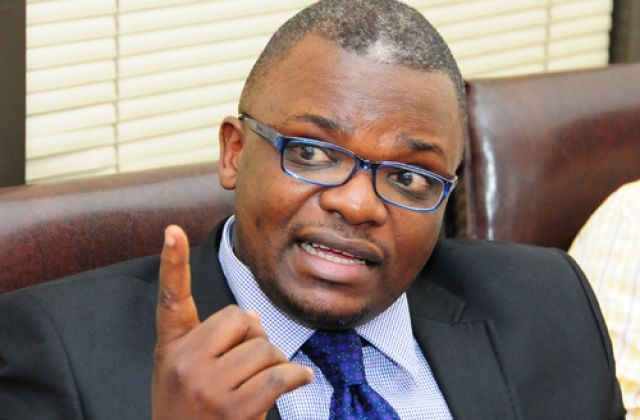
Lawyer Fred Muwema

By Fred Muwema

Our security will remain in a state of deliquescence if we don’t correct serious design defects which rely on the gun and not the rule of law to guarantee security.

To many people ,the term ‘Rule of law’ remains in the stable of legal jargons which neither puts food on the table nor delivers the security dividend .The reality is that the Rule of law is the foremost renewable public resource that preserves the peace and to which all public and private authority and power must yield.
The gun may be the most recognizable trade dress of public authority and power but it must depend on the rule of law to keep the peace .The rule of law is the foundation of the modern state without which neither the state or the citizens can co-exist or function properly .It is the rule of law which makes every person ,institution ,entity including the state itself ,accountable to the law.

So when an assailant guns down an innocent person and the states ability to protect the life and property is challenged, both the assailants and the state must still be held accountable to the law and nothing else. This is what it means to uphold the rule of law.
In the wake of the increased gun related murders in the country, many in the leadership have tended to be more accountable to the gun and not the law. At almost 4000 men , the strength of the Very Important Persons Protection Unit (VIPPU) has grown by more than 100 per cent from the numbers of five years ago, all with the intention of providing more security to important dignitaries .This is a non-proprietary and symptomatic management of the problem in my view because it does not address the underlying cause of the insecurity which is not the gun but its control.

Having more or less guns is not the issue; it is how the gun is used or misused which is the issue. The gun is a tool which is widely used to protect the peace but it is the same medium used to breach the peace .If the gun is being used to breach the peace ,the solution may not lie in bringing out more guns but rather in improving their control and regulation .

As a country, we don’t even know how many guns we have in private hands, lawfully or unlawfully. A report by the Monitor Newspaper of December 18, 2016 estimated that there were 19,000 guns in private hands in Uganda. The government is yet to provide an official record. Without a proper system of gun control of the existing unknown stocks, we cannot be thinking of releasing more guns into the public to stop the rampant gun related murders.

A survey conducted for the Uganda National Policy on fire arms ,ammunitions and incidental matters in 2010 found that the current legal regime on small arms and light weapons control under the Fire Arms Act 1970 and amendment of 2006, was largely ineffective and it did not conform to legal standards .For example ,it was found that there were insufficient procedures and systems for keeping records of fire arms including in relation to their licensing ,possession (by civilians and the state).It was also found that there was loss and theft of fire arms from official stock piles, due to inadequate procedures, facilities and over sight mechanisms to safely and effectively manage state owned stocks. The above policy has remained a museum piece because parliament has failed to pass the Small Arms and light weapons control bill for the last eight years so as to rectify the evident weaknesses in our gun control system.

There was no mention of the need to pass this bill when Parliament held a special session in honour of the late Hon. Ibrahim Abiriga (RIP) who was recently assassinated by gun trotting assailants and there is no indication that this important bill will make it to Parliaments Order paper any time soon . Whereas the law alone is not a magic wand d that automatically eliminates gun murders, it at least mitigates the situation by providing more regulation and control of guns. If we had more effective laws on gun control, fewer lives would have been lost to gun murderers.

As government prepares to upgrade the security infrastructure through acquisition of more sophiscated guns and surveillance gadgets to monitor crime ,it must remember that these guns and gadgets alone ,cannot guarantee security .The real guarantor of our individual and collective security is the rule of law .if we undermine the national institutions which are supposed to safe guard the rule of law ,we also undermine our own security .

Fred Muwema
Managing Partner
Muwema & Co. Advocates

Stories Continues after ad

There is an imbalance in global banks’ dollar funding

IMF logo

By IMF staff

For companies and investors outside the United States, the dollar is often the currency of choice. Surprisingly, though, US banks play only a limited role in lending dollars to international borrowers. Most of the $7 trillion in banks’ dollar lending outside the United States is handled by banks based in Europe, Japan and elsewhere.

This is significant because these banks can’t easily tap the dollars deposited at their US subsidiaries to finance dollar lending outside of the country. Instead, the IMF’s recent Global Financial Stability Report found that they must rely heavily on less-stable funding sources to support their international dollar balance sheets, such as interbank deposits, commercial paper and swaps. The danger is that these sources of funding could dry up quickly in times of financial-market stress.

Global regulators have compelled banks to guard against such a loss of funding by improving their liquidity coverage ratios, a measure of banks’ ability to meet short-term fund outflows from reliable liquid assets.

These improvements applied to banks’ global consolidated balance sheets, which encompass their aggregate positions in all currencies. But a liquidity coverage ratio based on their international dollar balance sheets, which exclude US subsidiaries, reveals a different picture. This ratio is meaningfully below their consolidated liquidity ratio. An estimated stable funding ratio, a measure of stable funding relative to the level of loans, is similarly much lower for international dollar positions than for their overall balance sheets.

Several forces are set to push up dollar funding costs. The US Treasury is issuing more T-bills, potentially putting upward pressure on the interest rates non-US banks must pay for short-term dollar funding. The new tax law is expected to encourage US corporations to repatriate cash and possibly shift cash out of bank funding instruments. And these developments are taking place against the backdrop of the Federal Reserve’s interest-rate increases and the gradual reduction of securities holdings on its balance sheet, which would ultimately lift funding costs for all borrowers. Not all banking systems are equally vulnerable to strains in funding markets. For example, our analysis suggests that dollar liquidity ratios at French and German banks are not as strong as their peers. Another concern is that some banks may be overly reliant on potentially fragile cross-currency swap markets. For example, swaps cover over 30 percent of Japanese banks’ dollar funding needs. While much of their swap borrowing is long-term, banks’ ability to access this type of funding may be compromised under stress conditions.

The combination of this market tightening and the international dollar balance sheet vulnerabilities discussed above could trigger funding problems in the event of market strains. Market turbulence may make it more difficult for banks to manage currency gaps in volatile swap markets, possibly rendering some banks unable to roll over short-term dollar funding.

Banks could then act as an amplifier of market strains if funding pressures were to compel them to sell assets in a turbulent market to pay liabilities that are due. Funding pressure could also induce banks to shrink dollar lending to non-US borrowers, thus reducing credit availability.

Over the past decade, global and national policymakers have strengthened regulatory frameworks governing banks’ consolidated solvency and liquidity positions. However, country-specific liquidity regulations, while helping to strengthen national financial systems, may inadvertently restrict the flow of liquidity within banking groups.

Looking ahead, banks should ensure that currency-specific liquidity risks within individual entities in their banking groups continue to be managed effectively. Regulators should address foreign currency liquidity mismatches through more disclosure, currency-specific liquidity standards, stress tests, and resolution planning. Central banks’ swap lines, which are already in place to provide foreign exchange liquidity in times of stress, should be maintained, as a last resort backstop.

John Caparusso, Yingyuan Chen, Hideo Hashimoto, David Jones, Will Kerry and Aki Yokoyama work for the International Monetary Fund

Stories Continues after ad

Uganda inflation forecast to rise faster in next 12 months

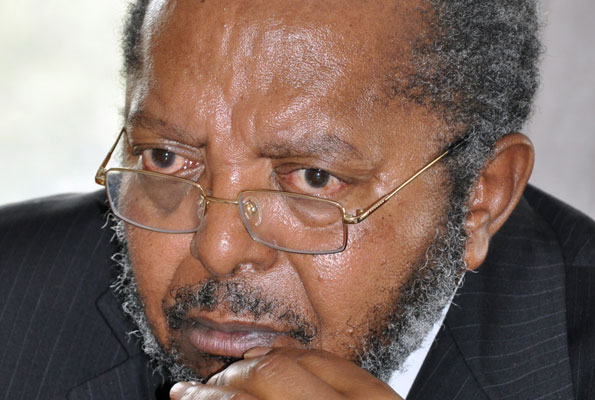
Bank of Uganda's Emmanuel Tumusiime-Mutebile

Kampala: Uganda’s inflation will rise faster than previously projected but remain within the 5 percent target in the next twelve months, Bank of Uganda Governor Prof. Emmanuel Tumusiime-Mutebile has said.

Mutebile disclosed the figures Tuesday as he read the Monetary Policy Statement for June, keeping the central bank rate (CBR) at 9.0 percent.

“Bo U assesses that the current stance of monetary policy is appropriate given the forecast inflation trajectory and the current state of the economy. The BoU will therefore maintain the Central Bank Rate CBR at 9.0,” Mutebile said. BOU also has set the Rediscount rate and the Bank rate at 13.0 percent and 14.0 percent respectively.

Meanwhile Mutebile said economic activity in the country continues to strengthen. “The latest annual Gross Domestic Product (GDP) estimates released by UBOS indicate that the economy will grow by 5.8 percent in FY 2017 /18 compared to 3.9 percent in FY 2016/17,” he said.

He said economic growth has improved across all sectors: the agricultural sector is estimated to have grown by 3.2 percent, supported by a more robust growth in both food and cash crops; while the industrial and service sectors are estimated to have grown by 6.2 percent and 7.3 percent respectively. GDP growth is expected to strengthen further in FY 2018/19 to 6.0 percent.

In the medium-term, he said, economic growth prospects remain favourable supported by the multiplier effects of public infrastructure investments, improving agricultural productivity, an increase in private sector investment and household consumption and strengthening of the global economy. However, the contribution of net exports to GDP growth will be negative as a result of acceleration in import-intensive components of domestic demand.

Mutebile however said that the exchange rate depreciation and the increasing oil prices pose risk to Uganda’s macro-economy. “The exchange rate has over the last three months come under pressure, driven by global strengthening of the US Dollar and the weaker current account position due to increased demand for imports, which more than offset the growth in exports,” he said.

He said that in financial year 2017 /18, the current account deficit as a ratio of GDP is projected to increase to 5.3 percent from 3.4 percent in FY 2016/17, Mutebile said.

Stories Continues after ad

WHO puts East Africa on Ebola alert

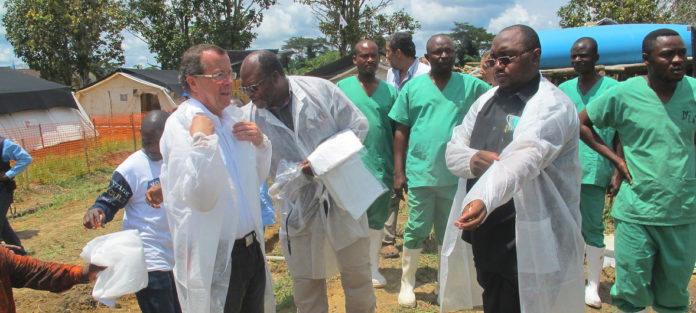
Experts in DRC getting ready to taste patients for Ebola

The recent outbreak of the Ebora Virus Disease (EVD) in the Democratic Republic of Congo (DRC) has put five of the six East African Community (EAC) Partner States at risk of catching the infectious disease, according to the World Health Organisation (WHO).

In its “Regional Strategic EVD Readiness Preparedness Plan”, WHO ranked Burundi, Rwanda, South Sudan, Tanzania and Uganda as priority countries that are at risk. The ratings are determined based on the countries’ proximity to DRC and the capacity of their health systems to cope with an Ebola outbreak. EAC Partner States share borders with the DRC, maintain direct flights and close trade relations and there is high border traffic.

“These factors have above have caused the EAC to be on high alert, and Partner States are implementing extensive readiness measures. To date, no cases of Ebola have been detected in the EAC region,” reads part of the press statement from the EAC Secretariat.

The statement says that: “The EAC region is taking action to prevent future outbreaks of infectious diseases by strengthening its response capacity, supporting Partner States in their pandemic preparedness measures and preparing to test its readiness in practice. These efforts are in line with a new World Health Organization (WHO) guidance document.”

According to the statement, EAC preventive activities cover key technical areas listed in WHO’s new EVD Readiness Plan, such as multi-sectoral coordination, risk communications, social mobilisation and community engagement.

The EAC also has a regional contingency plan in place that reflects the multi-disciplinary One Health disease management approach and is currently developing Standard Operating Procedures (SOPs) to translate the plan into action, the statement says.

“The plan considers important lessons learned from East African experts who fought Ebola in West Africa. One of these lessons is that risk and crisis communication together with community engagement was a “game changer” in the response. Consequently, the EAC Secretariat together with the Partner States is currently developing a regional risk and crisis communication strategy and related SOPs,” it says.

However, the statement says standard operating procedures will also be developed as a first step towards establishing a regional pool of rapidly deployable experts that build on the experience gathered in West Africa. “The pool is expected to complement national rapid response teams during future outbreaks. A core team of multi-disciplinary experts will receive training in risk and crisis communication, and another core team will be trained as regional trainers in rapid risk assessment,” it says.

To test the successful implementation of the mentioned strategies, the functionality of the SOPs and the region’s improved capacities, the EAC together with the Partner States is preparing to conduct cross-border simulation exercises. They will also offer a unique opportunity to reveal the gaps that still need to be closed in joint efforts.

The Deutsche Gesellschaft für Internationale Zusammenarbeit (GIZ) GmbH through the “Support to Pandemic Preparedness in the EAC Region” project amongst other development partners supports the EAC Secretariat in its endeavour to strengthen its advisory and coordinating role for the Partner States in pandemic preparedness.

Stories Continues after ad

MUBS council sends Prof Barya on 3 month suspension

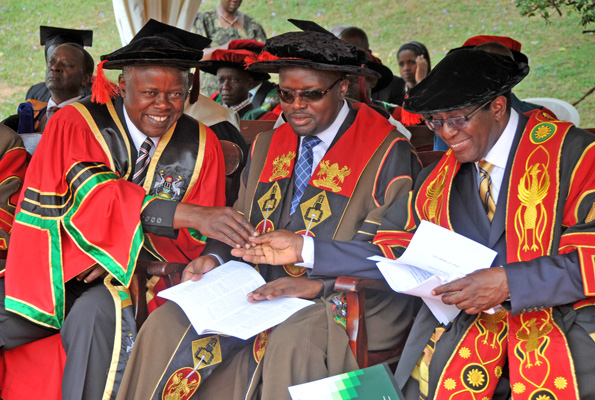
Professors, Balunywa, Baryamureeba and Ddumba Ssentamu.

Makerere University Business School’s Council Chair Prof Venansiius Baryamureeba has been sent on a three months forced leave to allow for investigations into his chairmanship of the country’s leading business school’s council..

A reportedly heated Tuesday council meeting attended by all the 24 council members in the boardroom resolved, after over nine hours of deliberations, to have Baryamureeba out of office to specifically investigate his stormy working relationship with the school principal, Prof Wasswa Balunywa.

The meeting was chaired by Rev Sam Luboga and attended by among others the Defence and Veterans Affairs minister Bright Rwamirama, Kitgum woman MP, Beatrice Anywar and Guild President Julius Ntende.

In the meeting, majority members led by Anywar are reported to have squeezed Baryamureeba for fighting Balunywa, which fight, they said would have a big effect on the school.

According to sources who attended the the meeting, but spoke on condition of anonymity because they are not the official council spokesperson, Prof Baryamureeba was at the beginning of the meeting arrogant but toned down when he realized he was all alone in his corner. He, the source said, then apologized to them and pledged to work well with Balunywa but the already bitter members unanimously said he must step aside.

Asked to say something, Balunywa told the meeting that he was disgusted by Baryamureeba’s way of handling business.

It is believed that Prof Baryamureeba remained holed up in the Main Building for the better part of the day, probably for fear of riotous students who had threatened to lynch him if did not to step down.

Early in the day, a loose group of students had taken to the School’s footpaths holding “enough is enough with Baraymureeba” placards. The students accuse him of witch-hunting the principal, and undermining progressive ideas regarding the school’s development.

As if to send a much clearer message to the good ol’ prof, the students charged towards him as he appeared at the entrance to the Main Building. He was whisked away by security.

Guild President Ntende told reporters that the students had a right to put their opinion across, and that as their representative, he had been keen to see a solution arrived at by the council.

“I sat in the meeting and made sure that the voices of the students are heard. The Council has responded and we hope that positive change will soon come to this university,” Ntende said.

Last month, Prof Baryamureeba wrote to the Education and Sports ministry requesting for the reappointment of Prof Balunywa as principal of Mubs, but he changed his mind soon after, writing another letter retracting his approval in preference to a new principal. Prof Balunywa’s contract was then due to expire on May 27.

In response, Prof Balunywa then issued a blistering dossier about poor management practices at the school, blaming the woes on Prof Baryamureeba.

He also accused Prof Baryamureeba of nursing ambitions of taking over the leadership of the business school; touted as one of the finest in Africa.

The bitter wrangle only ended when President Museveni wrote to his wife and Education Minister Janet Museveni to re-appointment Prof Balunywa whom he said has kept true to NRM’s revolution ideals.

In the letter to Mrs Museveni, President Museveni said, “I am writing to direct you to re-appoint Professor Wasswa Balunywa as the Principal Makerere University Business School (Mubs) for another term upon the expiry of this one.”

To effect the investigations a five-member committee chaired by the Rev Luboga was given three months within which to look into the roots of the fights between of the school’s two top administrators. The committee has Dr Isaac Ngobya, Dr Shifra Lukwago, Ntende (guild president) and the Rev Luboga.

Stories Continues after ad