Stanbic Bank
Stanbic Bank
18.4 C
Kampala
Stanbic Bank
Stanbic Bank
Home Blog Page 1553

Morocco vs USA-Mexico-Canada in bid to host 2026 FIFA World Cup

ZURICH, SWITZERLAND - OCTOBER 20: FIFA World Cup Trophy is presented after the FIFA Executive Committee Meeting on October 20, 2011 in Zurich, Switzerland. During this third meeting of the year, held on two days, the FIFA Executive Committee will approve the match schedules for the FIFA Confederations Cup Brazil 2013 and the 2014 FIFA World Cup Brazil. (Photo by Harold Cunningham/Getty Images)

On Wednesday, 13 June, the FIFA Congress will determine whether to award the right to host the 2026 FIFA World Cup to one of the two bids.

The two bids are; one jointly submitted by the Canadian Soccer Association, the Mexican Football Association and the United States Soccer Federation, as well as the one submitted by the Moroccan Football Association. FIFA will decide on whether to select one of those bids and the host will be announced.

The 211 FIFA member nations – minus US, Canada, Mexico and Morocco, will each cast a vote. Uganda is among the 211 Members and will be represented by FUFA President Eng. Moses Magogo.

After the controversy award of the 2018 and 2022 finals to Russia and Qatar respectively, Fifa’s 22 executive committee will no longer vote on behalf of the membership. All individual votes cast by the 211 member federations will be available for public.

A majority vote of over 50 percent is required for a bid to win, which means the Moroccan bid would need 106 votes in its favour.

Morocco has previously bid for the tournament four times which have all been overlooked – 1994, 1998, 2006 and 2010.

The United States has not hosted a World Cup since 1994. Mexico has hosted twice, in 1970 and 1986. A men’s World Cup has never been played in Canada or Morocco.

As a result of the 2018 World Cup in Russia and 2022 World Cup in Qatar, no country from either Europe or Asia was allowed to bid for the 2026 tournament.

If the FIFA congress decides not to choose either of the candidates, FIFA will then launch a new procedure by inviting all member associations – except the four that are taking part in the current process – to submit a bid to host the 2026 FIFA World Cup.

It should be noted that beginning 2026, teams playing in the World Cup will increase from 32 to 48, playing 80 matches in a period of over 31 days.

South Africa is the only African country to host the World Cup in 2010.

Stories Continues after ad

FIA’s failure to investigate economic crimes angers Museveni

Embattled former Executive Director in charge of Supervision at Bank of Uganda Justine Bagyenda.

The failure by the recently formed Financial Intelligence Authority to investigate economic crimes has angered President Yoweri Museveni and sources say the president is preparing to crack the whip on officials there.

The FIA is a government agency established by the Parliament of Uganda to monitor, investigate, and prevent money laundering in the country, but as it stands now, despite several complaints brought to it for action, the agency seems to be inactive, something that has not gone well with the president who is facing international pressure to combat corruption to minimal levels or wipe it out completely.

“Like the case with Inspectorate of Government, the president is equally not convinced that the FIA is doing its work and he is closely monitoring how the authority performs before he cracks the whip”

The FIA and its board were established under the Anti-Money Laundering Act, 2013 to among others to impose certain duties on institutions and other persons, businesses and professions who might be used for money laundering purposes.

The FIA is headed by former Bank of Uganda Governor (BOU) Leo Kibirango as Board Chairman while Sydney Asubo is the Executive Director. Having spent quite a long time in the banking industry, Museveni thought Kibirango would be best positioned to help his manager Asubo do the work he is supposed to do.

Case in point is FIA’s failure to investigate former director of supervision at BOU for alleged accumulation of illicit wealth. Recently youth groups in Kampala demanded that Asubo do something on Bagyenda case, particularly to investigate the source of Bagyenda’s Shs19 billion as shown by leaked bank documents.

Recently in the media Asubo said investigations to do with money laundering take quite a long time to conclude and that the two months since allegations against Bagyenda were lodged is such as short time to deliver results. But Asubo would further he was waiting for president Museveni to guide him on the investigation, something that confused members of the public.

However, analysts are not surprised by FIA’s failure to investigate Bagyenda. Bagyenda was sitting on the FIA’s board until her term expired and rumours say she is waiting to be approved by parliament for an extension. That is the scenario that FIA is faced with. And that calls for a bold action from the president and parliament if Bagyenda is to be investigated by the FIA, analysts say.

Some of the key challenges in fighting money laundering as outlined by analysts are; lack of a comprehensive asset recovery policy and legislation, lack of a centralized mutual Legal Assistance Framework (MLA), weak enforcement of laws, especially with respect to the wealthy and powerful individuals and shortage of financial investigative and prosecutorial skills.

Experts say who money laundering, which is part of the economic crimes, if left unattended to, has the potential to undermine individual financial institutions and ultimately the entire financial sector.

Stories Continues after ad

Eight disciplines that indicate a business versus a hobby

By Martin Zwilling

As a startup investor, I often see business proposals looking for funding that really look like expensive hobbies looking for donations. I recognize that entrepreneurs tend to substitute vision and passion for formal processes, but using no discipline or process in building something new is a sure way to spend money, rather than see any return and build a self-sustaining business.

I’m not suggesting that you model your startup after the complex corporate organizations you hated in your last job, but there are at least eight key functions and activities that every investor expects to find in a startup proposal with any real potential to change the world. Each of these requires some ongoing effort, so I expect at least a rudimentary process associated with each:

Record of spending and business assets. I still see entrepreneurs who spend money and time for months on a new business idea without any separation of personal and business funds, and any formal accounting system for their new business. This is the first business process that every startup needs, that I wouldn’t expect to find for a hobby.

Managing to specific goals, priorities, and a plan. Technologists building cool new platforms, just because they can, won’t find investor interest. Entrepreneurs need to document a process of responding to a market need, sizing opportunity, assigning a specific business model, and planning for marketing, sales, and customer satisfaction.

Solution development and delivery. Products and services for a business need to be attuned to customer requirements, cost and quality tradeoffs, with milestones for pricing and completion. Typically some production and delivery is outsourced, requiring formal contracts and documentation. Hobbies are developed ad-hoc, driven by personal needs.

Preparation and management of funding. Even if you are not requesting outside funding, I would expect a clear process for sourcing and managing the investment you plan to apply. External investors expect a documented business plan, with clear targets on funding needed, use of funds, revenue projections, return potential, and exit strategy.

Team building status and plan. Solo entrepreneurs, with a team of helpers, will be assumed to be a hobby rather than a business. I recommend every startup plan for at least two or three decision level team members, and at least a couple of highly-qualified external advisors. Show that you have a process to hire, fire, and train others as required.

Formalize the use of tools and information technology. Productivity and repeatability is the hallmark of a good business, whereas a hobby usually assumes everything is custom built and personal. I look for business startups to already have their website up and running, administrative tools purchased, and basic procedures automated.

Customer receivables collection and vendor payments. These are critical processes for any business, so they need to be implemented even before investor requests are sized or solicited. For progress and success assessment, each of these needs some metrics defined, a training plan, and responsibility assignments within your team.

Marketing, sales, support, and service operations. I’m assuming that most of you will see these as intuitively obvious elements of a business, but not needed for a hobby. Yet I continue to get funding requests that never mention any specific plans or costs to be associated with these elements. No mention usually means no plan and not competitive.

For all of these, your objective should always be a minimum viable process to start, with the expectation that each will be enhanced and pivoted as you learn from customers and competition that works and what doesn’t. The key is to be proactive, rather than assuming that you can react to each crisis as it happens. Customers today are easy to lose, and expensive to replace.

It’s a myth in the startup world that not having processes makes you more competitive. In my experience, no defined process means unable to respond in a timely fashion, unpredictable quality, and high operating costs. None of these are attractive to investors, and jeopardize the success of even the best initial idea. A hobby may take your idea to a product, but a startup has to take the idea to a business.

The Writer is an Advisory Board Member for multiple startups; ATI Angels Selection Committee; Venture Mentor at Embry-Riddle. Published on Inc., Forbes.

Stories Continues after ad

KCCA FC play Onduparaka FC in a Charity game to build hospital

Adraa replaces Allan Kabonge whose contract with the club expired after promoting the club to the Uganda Premier League and reaching the Uganda Cup final

Onduparaka FC and KCCA FC have reached a partnership deal to Support Palliative Care Association of Uganda (PCAU) to get New Life International Hospice Arua (NELIHA) that will built outside the premises of Arua Regional Referral Hospital with a motive of Treating patients with Cancer and other Long term illnesses.

The two teams will be involved in two Charity fundraising games with an expected number of at least 10,000 attendants to raise a minimum sum of shs500 Million needed to establish the permanent home for NELIHA.

Its facilities will comprise of outpatient department (OPD), three office rooms and hostel capacity for at least 20 cancer patients receiving treatment at Arua Regional referral Hospital and patients in transit after referral to Uganda Cancer institute.

The first game will be played at the Star times Lugogo on Saturday 16th June starting at 4:00pm with a priced fee of 5,000(Ordinary), 10,000(VIP) and 20,000(VVIP).

The day will be climaxed by a cocktail dinner at the same venue at a priced fee of 50,000 Shs starting from 6:00pm. The Kasasiros will then be enrooted Arua to face the caterpillars in a game scheduled for 30th June, 2018 from Greenlight stadium.

Currently, NELIHA operates within the premises of Arua Regional Referral Hospital and faces numerous resource needs yet serves palliative Care Patients in greater West Nile region and communities in Democratic Republic of Congo and Southern Sudan On average the hospice attends to over 200 patients per month.

The Hospice is led by dedicated team of Palliative Care Nurses and volunteers who have the zeal to reach communities and homes with the message of Palliative Care.

Stories Continues after ad

AMISOM evaluates implementation and effectiveness impact projects in Somalia

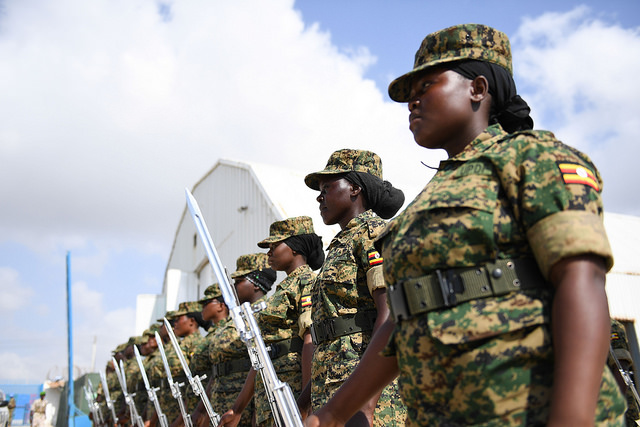
UPDF Women peacekeepers serving under AMISOM mount a guard of honour

Senior officials of the African Union Mission in Somalia and partners, are meeting in Nairobi, Kenya to reflect on the Mission’s Quick Impact Projects (QIPs), aimed at improving the quality of life of communities that were salvaged from Al shabaab militants.

The three-day meeting that started Monday and expected to end Wednesday is expected to take stock of the QIPs, their success in contributing to peace and recovery in Somalia, challenges faced and lessons learned in their implementation.

“On conceptualizing this workshop we looked at how we can be able to strengthen the process of implementing projects that are helpful to the people of Somalia in terms of helping Somalia to stabilize,” explained Dr. Opiyo Ododa, the Senior Civil Affairs Officer in charge of Stabilization and Early Recovery, at the African Union mission in Somalia (AMISOM).

QIPs are small scale, low cost programmes that are planned and implemented within a short period of time and have a rapid positive impact on targeted communities. In Somalia’s case, AMISOM implements the QIPs through its Civil Affairs Unit.

According to Dr. Ododa, a total of 127 QIPs are already completed and 23 are ongoing in various parts of the country. They include military, civilian and police interventions.

The three-day workshop whose theme is – “ Lessons Learned on Quick Impact Projects Implementation” – will also review financial management and audit of projects and funding for early recovery.

Among issues likely to drive the discussions include the coordination of delivery of QIPs, strengthening community engagement to ensure the projects benefit the Somali community and ways of ensuring sustainable funding.

“It’s an internal workshop,” said Dr. Ododa, who is the convener of the meeting. “We are here to see how best (the QIPs can be implemented) and the best way they can be delivered to the community.”

The workshop, officially opened by Ambassador Purity Muhindi of Kenya’s Ministry of Foreign Affairs, was also attended by Simon Mulongo, the deputy head of AMISOM, and Adong Oder, the representative of the African Union Commission Headquarters in Addis Ababa, Ethiopia.

The envoy praised AMISOM for its remarkable progress in stabilizing Somalia since it started its work in the war-ravaged country about eleven years ago.

The Mission has supported political dialogue and reconciliation, maintained law and order, facilitated the delivery of humanitarian assistance, supported military intervention, and helped in early recovery, among other interventions, she said.

Ambassador Muhindi noted that credit had to go to the Mission for contributing to peace and stability and degrading the threat posed by Al-Shabaab militia. “I am positive AMISOM will continue to play its role,” she said and singled out the lack of “reliable and sustainable” funding as a key challenge to the Mission’s operations.

Simon Mulongo, AMISOM’s deputy head, said the QIPs were “initial projects that underpin our mission in Somalia”, and noted that they had contributed immensely to Somalia’s early recovery. He singled out projects on water, health, education and security, as some of those implemented by AMISOM that have helped stabilize liberated areas.

“The social services-related activities have helped to instill in the recovery areas a sense of statehood. AMISOM enables such communities enjoy the benefits of being liberated from Al-Shabaab,” Mr. Mulongo noted.

The AMISOM deputy head thanked the civil affairs component of the Mission, jointly with the military, for their continued efforts in stabilizing Somalia.

Participants expect that the lessons learned from the workshop will help strengthen the process of implementing the projects in question and thus stabilize the war-torn country.

“We are doing well but we still think that with workshop like this, we will strengthen (the implementation of the QIPs),” said Dr. Ododa.

He thanked partners who have helped AMISOM deliver QIPs to the community, among them, the British Embassy in Mogadishu, the Danish Government, the United Nations Support Office in Somalia (UNSOS), the African Union Commission, and liaison officers from Troop Contributing Countries.

Stories Continues after ad

No more private licensing of guns— IGP Ochola

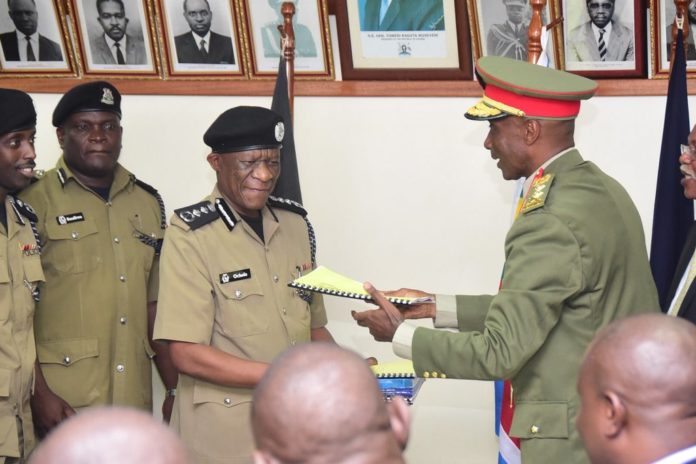
Former IGP Kale Kayihura handing over to his sucessor Okoth Ochola. Looking on is new Deputy IGP Brig. sabiti Muzeyi.

Kampala: The inspector general of police (IGP) Martin Okoth Ochola has recalled all fire arms for documentation saying due shooting cases of assassination of people. He said there is no more acquisition of guns till police releases a report on how many guns are in private hands.

His remarks follow series of gruesome gun down of people with the recent killing of Arua municipality MP Ibrahim Abiriga by boda-boda assailants. However In the recent cases police has not revealed weather the illicit activities have been executed with legalized or illegal fire arms.

Speaking in a media dialogue of all heads of security persons in Uganda Ochola said, there are a number of guns in wrong hands, we had allied democratic forces (ADF) and other groups, “in a period of two month, We have embarked on exercise to document all the guns in the hands of the civilian and after that those with illegal guns will be dealt with firmly,” he added.

“We can’t fight crime without documents showing legalized fire arms, in documentation we shall write a gun and all its symbols, so one to reclaim a fire arm, we shall access his eligibility to own a gun, if is not eligible, we shall suspend him and we reposes the gun,” he said at Serena hotel.

He said it will be easy to trace who signed for a particular gun that was used in assassination.

Reinstating hope among Ugandans, Ochola said general security in the country is calm, “security has not gone out of hand.

“We need a system to recapture those repeat offenders and criminals. Customer care has to be restored for the public to come back to police, I recently asked for a general inquiry file to be opened so that all those persons who feel they have ever been tortured go and report these crimes,”

Gunned down officials include: Ibrahim Abiriga, state prosecutor Joan Kagezi, AIGP Felix Kaweesi, Sheikh Abdul Karim Sentamu, Abubaker Kiweewa, Abdul Kadir Muwaya, Sheikh Mustafa Bahiga, Sheikh Abdul Rashid Wafula, and Sheikh Ibrahim Hassan Kirya.

Stories Continues after ad

A couple of Ugandans in Boston hold demo against General Electric oil deal with Uganda

A small group of disgruntled Ugandans living in Boston Massachusetts have held a demo urging General Electric to leave a consortium of firms that signed a deal with the government of Uganda in April to build an oil refinery in Hoima.

The group carrying placards posted their video on Facebook via Radio Free Uganda profile, alleging that President Yoweri Museveni is a dictator who wants to use oil money for his own good.

They said: “Oil in not for Museveni Tutsi Junta. But for indigenous Ugandans. Museveni and his foreign mercenaries plan to use violence as way of acquiring Uganda Trillion tones on Oil underground allover Uganda.”

The group which had a one Robert Mukuya and Nasser Mugewra alleged that foreigners “facilitated by Museveni criminals regime” are grabbing land from Ugandans in different parts of Uganda.

The demonstrators alleged that General Electric is financing what they referred to as “Museveni bloody dictatorship” that has existed for the last 33 years.

In April Uganda signed an agreement with an international consortium of energy industry investors to build an oil refinery. The consortium which is a partnership of four Italian and Mauritian companies including Nuovo Pignone International owned by US-giant General Electric agreed to build and operate the refinery near Hoima on the shores of Lake Albert.

President Museveni said the deal with the Albertine Graben Refinery Consortium, valued at between US$3 billion and US$4 billion, would contribute would boost Uganda’s development but also to make Africa powerful in terms of business.

Once complete the facility will have the capacity to refine 60,000 barrels of crude oil per day, much of which will be pushed to Kampala via pipeline also yet to be built.

Experts say that of the 6.5 billion barrels of oil discovered below and around Lake Albert about 1.5 billion are easily recoverable.

Meanwhile the group seems to be happy with the cruel murder of former Arua Member of Parliament who was buried on Monday.

The members, much as they are living in the USA have warned politicians in the National Resistance Movement (NRM), saying they stand to follow the late Abiriga’s fate. Those warned include, MP Raphael Magyezi, MP and Minister Evelyn Anite, MP Semeo Nusbuga, Ruth Nankabirwa (NRM Chief Whip) and Speaker of Parliament Rebecca Kadaga.

The group also say First Lady Janet Museveni and son David Muhoozi Kainerugaba are on the list of those they intend to target. It is not clear whether that group is serious or just playing to the gallery.

Some elements in government and NRM party have tagged MP Abiriga’s murder to politics, with some pointing their fingers at the opposition. However, the group in the US did not come up to state what side of the political divide belong as far as the Ugandan politics is concerned.

Some however said Uganda should adopt the federal system of government.

Speaking to BCC in London former President of Forum for Democratic Change (FDC) presidential candidate Dr Kizza Besigye said Abiriga could have been killed due to politics especially that he vehemently supported the remove of the presidential age limit of 75 years, meaning that anyone above 75 years now is free to run for the country’s top office.

Besigye said the country faces deep long standing problems of political, social and economic basis that need a national dialogue. He accused Museveni of staying in power for a long time.

Stories Continues after ad

Three in one Motorsport weekend at Sisa

Coby Gilmore from USA and Shahar Balulu taking on the Busiika Motocross challenge

Kampala: This Sunday, all roads lead to Zion Estate at Sisa Nakawuka off Entebbe road for round 2 of the National Enduro, Autocross and 4X4 championships.

This follows a successful first round that was held in Kalangala earlier this year. Hendrix (Rwanda) Moses Wakhasa and Jonas Kansime were the winners in Enduro, 4X4 and Autocross respectively.

Enduro contestants will navigate a treacherous 9km circuit for 3 hours running through ravines, sandy terrains, bush trails, forest, soil excavation points, stone grids and other obstacles that will provide some technical challenges to test endurance and fitness of riders.

A 5.4 km stage awaits autocross contestants designed to make it interesting for both competitor and fans while the 4X4 contests will be treated to a short but very technical surface.

“We have provided a full menu for all participant’s in all categories, from a meandering Enduro track to a twisty autocross route with plenty of viewing minutes and a challenging 4×4 track” said Clerk of the course Joe Burua.

“A few riders and drivers were invited to give a view about the routes and found no issues with them” he added.
When asked about the safety of the track,

“We are trying to minimize maximum speeds to reduce chances of damage to vehicles, this is a good opportunity for crews to test vehicle boost and stopping ranges as well as polish personal driving skills,” Joe said.

The second round of the championships will be held on Sunday 17 on totally private land offered by Zion Estates located at Sisa at Nakawuka. The event has been supported by Victoria Country Resort Hotel, World Wide Movers and Zion Estates.

“On top of making some recommendations intended to make future autocross championships more attractive and interesting, Enduro Uganda Club is engaging the Estate management to design more roads that will accommodate a full rally as well as an MX circuit for the purpose of running a rally on 100% closed surface,” added Joe Burua when asked about future plans by Enduro Uganda to develop the 3 sporting disciplines.

Stories Continues after ad
Fish rots from the head: Museveni’s mock fight against corruption

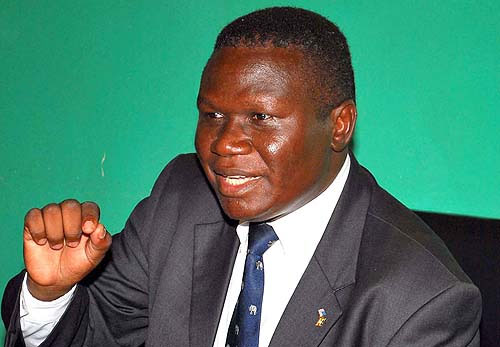
DP President Norbert Mao

By Norbert Mao

The emotional tirade the president launched against the Inspector General of Government has reverberated across the nation. The president lamented the lack of public confidence in and the failures of the IGG. He has now announced that he will create an anti corruption unit under his office to ensure that all the presidential appointees, particularly those at the sub national level, perform their duties!

Scrutiny of all public offices, including that of the IGG, is in order. The public is right to be bitter about the vigilance with which the small fry are apprehended for corruption charges while the big fish go scott free. The IGG is however not a stand alone office. It depends on the public coffers to facilitate its functions. The total budget of the office of the IGG does not exceed 50 billion shillings. According to budget, the field offices of the IGG have two vehicles to serve ten districts . The operational funds of these ten districts per month is a paltry six million shillings. This translates to shillings 600,000/- per district per month. This in turn is equivalent to shillings 20,000/- per district per day! If this is the main arsenal to fight corruption, then stealing of impunity will continue.

But that is not the real problem. The real problem is that the fight against corruption is a mock fight. It is defined by noise and drama but of little effect. There’s no real political will to fight corruption. The president is surrounded by some of the most corrupt individuals and that makes him the Fountain of Corruption. Why else would he lament so much yet he has a lot of constitutional power to act against corruption? Above all, the impunity with which corruption goes is alarming and shows that the personal example so indispensable in fighting corruption is lacking. The bottleneck in the fight against corruption is at the top of the bottle.

This brings me to the revelations made by former minister Zoe Bakoko Bakoru that President Museveni called her and ordered her to allow a certain army officer to access 13 billion shillings from the National Social Security Fund. The money under classified expenditure was purportedly for building army workshops. No workshops were ever built.

Bakoko also made revelations about the arm-twisting of public officials. This is done through the deployment of informal staff by State House in public offices to coordinate these illegal activities. These informal staff whose presence strike terror in the hearts of public officers who know the real or apparent danger of defying the dictates of these well connected minions. The officials are then confined into mere paper pushers who act without question. Sometimes they also get some crumbs of the loot. They are captives whose only choice is to play ball or get framed. They either cooperate or turn a blind eye.

Many in government find themselves in this uncomfortable position. They however have a sword of Damocles hanging over their heads. They will be sacrificed when they no longer serve the regime’s purpose. The agony of the late Teddy Seezi Cheeye is a case in point. He confessed on national television that he falsified accounts to cover up money from the Global Fund which he was ordered to divert towards Museveni’s campaign! Fictitious projects are announced with pomp as channels for siphoning public funds. When the deals are revealed, the pawns pay the price to assuage public anger. The fate of many previously powerful people is testimony of the brutality of this hydra of officially sanctioned corruption.

For Museveni corruption is not an end in itself. It is a means towards an end. The end is power retention. Yet for responsible citizens, the collapsing of formal State leaves in its wake a clique of self serving individuals with clashing interests. By destroying institutions, Museveni has cut the branch on which he is sitting. In the hour of need there will be no institutional defence mechanism for him. Eventually, the triple evils of corruption, cronyism and exclusive family rule will lead to state collapse.

This article was first published on Mao’s Facebook page

Stories Continues after ad

Uganda mark International Albinism day in Mbale

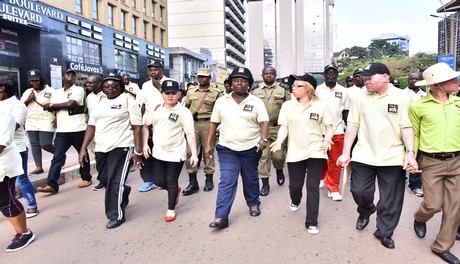
Speaker Rebecca Kadaga (middle in blue trousers) leads other participants during the charity walk

Kampala: Uganda will mark International Albinism day that is meant to make awareness campaigns about albinism, their condition is normal and that Albinos are people just like other human beings, says Chairperson Equal Opportunities Commission Sylvia Muwebwa.

Speaking at media Centre Ms. Muwebwa revealed that the physical appearance of persons with albinism is often the object of erroneous beliefs and myths influenced by superstition, which foster their marginalization and social exclusion leading to various forms of stigma and discrimination.

“An albino can do what any other person, however the only challenge is that they are affected by sunshine and the recommended Vaseline ointment is expensive that it can’t be afforded by some families,” she said.

According to Muwebwa, the function will on Wednesday be held in Mbale and graced by the speaker of parliament Rebecca Kadaga who will later sensitize and educate parents and the public about the perceived mentality that having an albinos in family is an omen that blocks family members from accumulating wealth before sacrificing a person.

She noted that Sub Saharan Africa has 8725 Albinos and the high incidence is One to 4000, “during the function, we as the Equal Opportunities Commission, We shall give a report of the number of people in Uganda living with Albinism,”

Stories Continues after ad