Stanbic Bank
Stanbic Bank
21.9 C
Kampala
Stanbic Bank
Stanbic Bank
Home Blog Page 1557

Rot in sale of Asians properties, Bigirimana involved

The Permanent Secretary of Labour, Gender and Social Development (MLGSD) Pius Bigirimana

Eagle Online is in possession of a document detailing Asian properties in Kampala that were acquired through fraudulent means. Some of the properties are currently owned by big personalities in government.

The properties were being managed by the Departed Asian Properties Custodian Board (DAPCB). The Indians left most of their properties when former President Idi Amin expelled them from Uganda. Some have come back to repossess them while some have faced challenges to repossess them.

The document says many of the properties were not dealt with according to the law as compensations, transfers, repossessions, ownership, management and dealings were carried out under DAPCB.

For instance, the document reveals that Plot 11 Kololo Hill Drive was compensated by the government of Uganda but it was fraudulently repossessed by Ruhul Jayantilala Patel. The property was originally in the names of Rashmikat Narshibhai by the time of the expulsion.

Further Plot 6 on Prince Ann Drive was also compensated though it now owned by the Permanent Secretary in the Gender Ministry Pius Bigirimana after being repossessed through fraudulent means.

Among other plots which were compensated by government but are now repossessed by private individuals are Plot 3 Kampala Road and Plot 7 prince Anna Drive. Both properties are owned by Kassam Muntaz, according to the document.

The document reveals that property management companies of Asians operating in Uganda today have repossessed or claimed deported Asian properties using Powers of Attorney from purported owners abroad. Unfortunately, the document says some of the properties were compensated by government.

Some of the accused companies are; Property Services Managers with 200 properties, MUMTZ Properties Limited with 100 properties, Alder Bridge Properties and Ranjan Taylor. Others are; INDAR SINGH (Sikh sawmills &Ginners), Balbinder Singh, Galandesha and Rafiki Mohammed.
The document shows that some properties have more than one certificate of title. Case in point is Plot 14 on Ben Kiwanuka Street.
Eagle Online has uploaded pages of the documents for details on the matter.
Meanwhile, following reports that some unscrupulous people, including politicians were hatching plans to take over properties repossessed by Indians, the Finance Ministry Permanent Secretary, Keith Muhakanizi has come out to warn against cancelling of certificates confirming repossession of the said properties.

Muhakanizi in a letter dated May 23, 2018, to George William Bizibu, the Executive Secretary Departed Asian Property Custodian Board (DAPCB), reminded him of an earlier meeting that guided; “where a repossession certificate for properties any under the Board had been issued, only the relevant courts of law had the authority to cancel such certificates in accordance with the law.”

Muhakanizi in the letter said during the meeting, members agreed that the ministry of finance and the board of (DAPCB) must continue to respect the rule of law.

Muhakanizi’s directive comes after the Land inquiry headed by Lady Justice Catherine Bamugemereire interrogated Lands Minister Betty Amongi for reportedly using a company Amobet Investments Limited she co-owns with her sister Adongo Keti to acquire temporary possession of four lucrative government properties in Kampala after they were repossessed by the Asian family in 1992.

Minister Amongi, who is a member of the Departed Asian Property Custodian Board is said to have used her position as minister to acquire the properties located along Acacia Avenue in the plush residential area of Kololo registered in the names of Toshak Munubhai Patel.

The property is currently occupied by Midcom Telecom. Another residence is located on Prince Charles Drive in Kololo.

Amongi said her Managing Director tried to apply for the property as early as 2010 before her appointment as a Minister only to lose interest upon obtaining another business opportunity in South Sudan.
Muhakanizi has warned that any orders of court must be complied with and that whoever disobeys will held liable as an individual.

The Finance Minister Chairs the Departed Asian Property Custodian Board.

Other members of the board include Lands Minister, Attorney General and Local Government Minister among others.

There is evidence that DAPCB temporarily allocated property which was already re-possessed and certificates issued.
Muhakanizi has informed ministers who are members of DAPCB and the Clerk to Parliament who has requested information to assist Members of Parliament carry out their oversight functions in this matter.

Stories Continues after ad

Panic as leaflets demanding heads of children are thrown in Kira and Kasangati

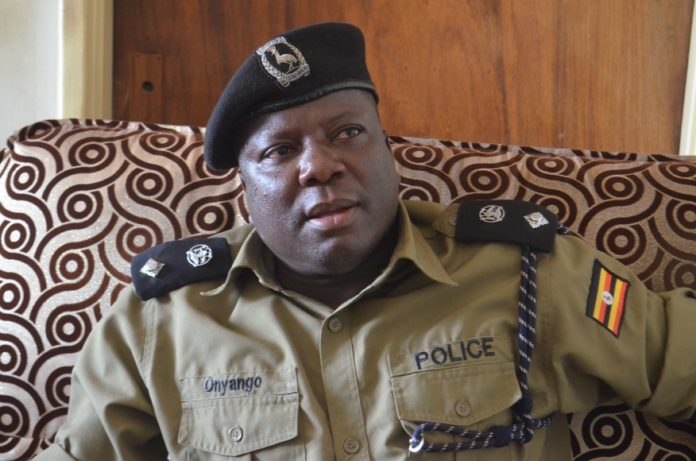
Patrick Onyanga, police Spokesperson for Kampala Metropolitan said the police will hunt the criminals down.

Panic has engulfed in Buwaate in Kira Municipality and part of Kasangati Town Council as leaflets have been thrown demanding heads of children.

The leaflets were thrown in Kiwalimu in Seeta and Magere villages both in Kasangati. The unknown assailants dropped leaflet bearing various messages threatening to invade villages in a bid to get five heads of children. Same have been thrown in Buwaate near Buwaate primary school.

Kasangati falls under Kyadondo East constituency represented by Robert Kyagulanyi aka Bobi Wine while Buwaate is under Kira Municipality represented by Ibrahim Semujju Nganda.

As it was in areas where pang welders issued warning information before launching an attack, this morning resident from Buwaate, Magere and Seeta village said they woke up in fear when they saw letters bearing information that they sooner than later they will be coming for five s heads of young kids as others were instructing to prepare them a day they will invade both villages.

“We have always been hearing similar scenario wass in Masaka district as people were hacked to death, as others were hospitalized, we don’t have money and soon I will be going to stay with my son in Mpigi,” A trembling woman explained.

She called upon President Yoweri Museveni to step up security in the hitherto areas saying this time they don’t want to lose any life, “many have died when thugs, they should indeed help us,” she added.
However when contacted, Deputy Spokesperson for Uganda police Patrick Onyango revealed that police didn’t have glance at leaflets. He however they acknowledged that they received that information about subject matter.

He noted that police officers in civilian clothes have been deployed to track down whoever is behind illicit acts of scaring people.

“These are just conmen psychologically trying to play on residents minds convincing them that there is nothing like security in this country,” he said in a phone interview.

He implored residents to remain calm saying police is on top of the game, and carrying out intelligence networks that will culminate into combing those criminals.

Subsequently when we contacted both Semujju and Kyagulanyi their known numbers of were off.

Stories Continues after ad

Judith Heard apologizes to her fans over leaked nudes

Judith Heard enjoying a naked shot

Ugandan socialite and model Judith Heard has apologized to her fans, sponsors, family and friends over her leaked sex tape and nude pictures.

Yesterday a dozen of her nude pictures hit various social media platforms however, no one could identify the source nor the motive untill when she responded in series of tweets among other posts.

In her reaction about her nudes that are making rounds on social media, Heard said, “I have been under the sun for so long, but now am the sun, I didn’t expect the backlash to be so fierce, if I am going to keep getting stabbed at, at least while you are stabling me, you should understand my intent”

The model who is currently in Paris for her business said, earlier this week, she had been working hard to reconcile with the unrevealed person who published the pictures.

“In life we all have past experiences and it should not be used to define what we have become today, when I left Uganda, I thought there will be a chance for positivity to come from what they think is doom and groom. However, people’s mindset has remained the same,” She wrote.

Despite all the inconveniences, she said, nothing will stop her from chasing her dreams and inspiring her long time fans.

“I can’t stop devils tongues but at least if I am to feed with them I must use a long spoon,” she added.

However, some of her fans allege that this could have been Heard herself who leaked the pictures so as to grab public attention as she fades away.

Judith Heard follows a long lists of socialites, artists and media personalities like Desire Luzinda, Sylvia Namutebi (Maama Fiina), Angella Kalule, Sanyu Robina Mweruka whose sex tapes and nude pictures were published by their eX-lovers.

Stories Continues after ad

Kapere accuses Pastor Kayanja of making empty promises to him

Pastor Kayanja and Kapere during 77 dogs.

Going by the latest developments, it seems Pastor Robert Kayanja’s troubles are far from coming to an end.

A few days after a group of youths wrote to him demanding back over Shs5 billion that he is accused of fleecing from them, another person faithful has come out accusing the pastor of making empty promises to him.

Amarula Family’s Kapere, real name Yokana Mbuuse has accused Kayanja promising him a brand new Mercedes Benz, a new smart phone among other things if he started praying at his church.

“I had no problem with that and I began prayers immediately. I even brought him new followers but as I prayed and prayed, I realised there was nothing coming. Up to date, I have never received anything from Kayanja but I am all okay. Though, my message to Kayanja is, next time never make pledges you know you can’t fulfill,” a visibly furious Kapere vented out as he spoke to media.

Kapere was among the tens of comedians and artistes that joined Kayanja’s church during the highly publicised 77 Days of glory dubbed 77 dogs.

A regular attendant at the church, he was often used as one of the testimonies of how 77 dogs bring about miraculous changes in people’s lives as he had transformed from wearing torn pants and shirts to expensive suits.

However, he added that none of the suits was given to him as all were just for the camera.

Kapere’s remarks come just a few days after a group of youths leveled similar accusations against the Miracle Center Cathedral boss.

Through their lawyer Ladislan Rwakafuzi, youths wrote to Kayanja a few days back demanding him to return about Shs5 billion that he took from them promising them more funds and employment in return.

However, none of the two has been fulfilled three years later.

Stories Continues after ad

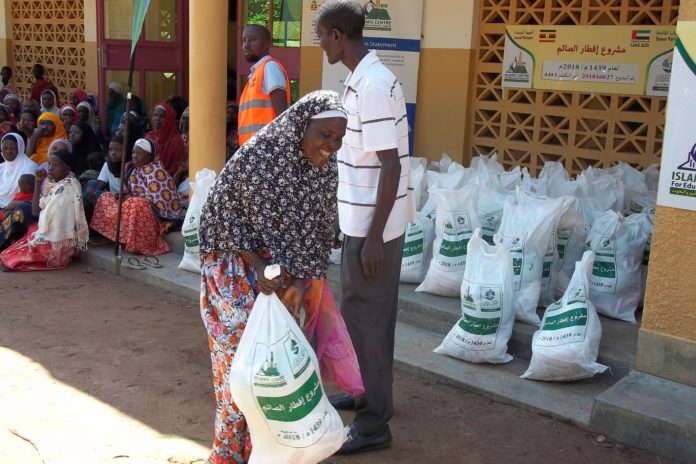
Ramadan: Busoga’s vulnerable families receive food

One of the community members while receiving her package.

Vulnerable communities in Kamuli, Bugiri and Iganga districts were at the weekend left with a smile on their faces after they received free food.

This was after each received food packages from the Islamic Center for Education and Research (ICFER) through its Humanitarian program under the Zakatul Fitr Food Packages initiative.

As part of its Ramadan dedication, each family received food packages that included 5 kilograms of posho, rice and sugar.

Addition to this was one liter of cooking oil, two sacks of salt and one packet of flour.

About 480 food packages were handed out in the districts of Bugiri, Iganga and Kamuli to schools, mosques, district imams and families.

The charitable activity ended with a feast dubbed the ’Ramadthan Grand Iftari’ in Kamuli.

ICFER is a national faith based nonprofit organization founded by the late sheik Twaibu Lutaaya in 1983 with an aim of transforming the lives of vulnerable communities through empowering them with sustainable and long-term solutions to their problems.

ICFER is involved with several local and international partners and philanthropists like Dar Al Ber Society in empowering the vulnerable people in Uganda through specific programs and focus areas like Education support, Healthcare, Orphans & vulnerable children support, shelter construction, water projects, human capital development and economic empowerment.

Through these specific programs and focus areas, the last 35 years has seen ICFER record a number of milestones like handing out over 7000 full scholarships, supported over 10,000 beneficiaries in its orphan programs, built over 25 mosques, had over 150,000 people benefit from its water projects and it has recorded over 2000 beneficiaries from its healthcare program.

Stories Continues after ad

Speaker Kadaga urges Busoga leaders to skill communities

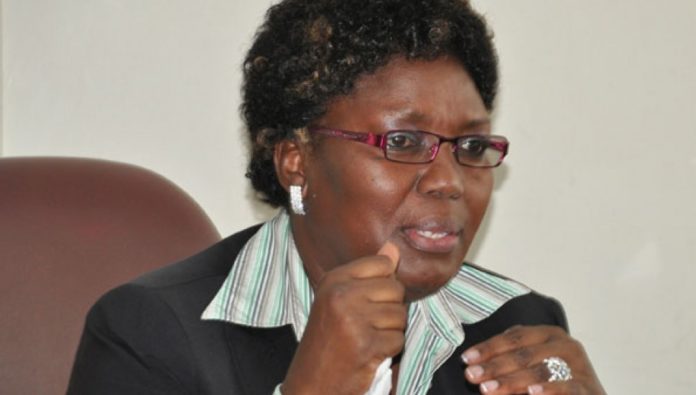
Speaker of Parliament of Uganda, Rebecca Kadaga.

The Speaker of Parliament, Rebecca Kadaga, has urged leaders in Busoga to support their communities to embrace government skilling programmes that are aimed at fighting poverty.

Kadaga made these remarks at the Skills Development Facility Workshop organised by Private Sector Foundation Uganda (PSFU) on May 28, 2018 at Hotel Africana, Kampala.

The Speaker was reacting to a presentation by the Executive Director of Private Sector Foundation (PSFU), Gideon Bagadawa who cited low levels of adoption of the Skills Development Facility (SDF) in Busoga region.
SDF is part of the Uganda Skills Development Project funded by the World Bank, which aims at promoting employer-led short term training in order to address prevailing skills imbalances and shortages in Uganda.

Kadaga said that the SDF project would help fight the high unemployment rates in Busoga region.
“Have you taken time to look at the structure of your population and how many people idle around because they have nothing to do?” She asked. She urged people in the region to grow Matooke instead of travelling to western Uganda looking for the same.

She urged national legislators from the region to help train communities in entrepreneurial and financial management. “We are going to keep being overwhelmed as leaders if we do not energize these people to work hard to emancipate themselves financially,” she said.

Mr Badagawa said that only One billion Shillings had been granted to businesses and groups in Busoga out of US $21 million (about Shs77.7 billion) disbursed throughout the country.

He urged communities and groups in the region to get organised so that they benefit more from the project. “They need to form unions, register and establish themselves as formalised entities,” he said.

Ms Ruth Musoke, the Project Manager SDF said that the programme aims at skilling people across all sectors in the economy.

Stories Continues after ad

Top 10 causes of death revealed, HIV/AIDS not on list

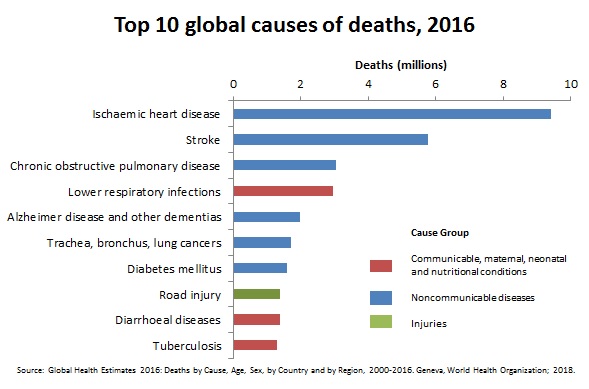
Of the 56.9 million deaths worldwide in 2016, more than half (54 per cent) were due to the top 10 causes, the World Health Organisation says. Ischaemic heart disease and stroke are the world’s biggest killers, accounting for a combined 15.2 million deaths in 2016.

These diseases have remained the leading causes of death globally in the last 15 years.
Chronic obstructive pulmonary disease claimed 3.0 million lives in 2016, while lung cancer (along with trachea and bronchus cancers) caused 1.7 million deaths. Diabetes killed 1.6 million people in 2016, up from less than 1 million in 2000. Deaths due to dementias more than doubled between 2000 and 2016, making it the 5th leading cause of global deaths in 2016 compared to 14th in 2000.

Lower respiratory infections remained the most deadly communicable disease, causing 3.0 million deaths worldwide in 2016. The death rate from diarrhoeal diseases decreased by almost 1 million between 2000 and 2016, but still caused 1.4 million deaths in 2016. Similarly, the number of tuberculosis deaths decreased during the same period, but is still among the top 10 causes with a death toll of 1.3 million.

HIV/AIDS is no longer among the world’s top 10 causes of death, having killed 1.0 million people in 2016 compared with 1.5 million in 2000.

Road injuries killed 1.4 million people in 2016, about three-quarters (74 per cent) of whom were men and boys.
More than half of all deaths in low-income countries in 2016 were caused by the so-called “Group I” conditions, which include communicable diseases, maternal causes, conditions arising during pregnancy and childbirth, and nutritional deficiencies. By contrast, less than 7 per cent of deaths in high-income countries were due to such causes. Lower respiratory infections were among the leading causes of death across all income groups.

Non communicable diseases (NCDs) caused 71 per cent of deaths globally, ranging from 37 per cent in low-income countries to 88 per cent in high-income countries. All but one of the 10 leading causes of death in high-income countries were NCDs. In terms of absolute number of deaths, however, 78 per cent of global NCD deaths occurred in low- and middle-income countries.

Injuries claimed 4.9 million lives in 2016. More than quarters (29 per cent) of these deaths were due to road traffic injuries. Low-income countries had the highest mortality rate due to road traffic injuries with 29.4 deaths per 100 000 population – the global rate was 18.8. Road traffic injuries were also among the leading 10 causes of death in low, lower-middle- and upper-middle-income countries.
Why you need to know the reasons people die

Measuring how many people die each year and why they died is one of the most important means – along with gauging how diseases and injuries are affecting people – for assessing the effectiveness of a country’s health system.

According to WHO, Cause-of-death statistics help health authorities determine the focus of their public health actions. A country in which deaths from heart disease and diabetes rise rapidly over a period of a few years, for example, has a strong interest in starting a vigorous programme to encourage lifestyles to help prevent these illnesses. Similarly, if a country recognizes that many children are dying of pneumonia, but only a small portion of the budget is dedicated to providing effective treatment, it can increase spending in this area.

High-income countries have systems in place for collecting information on causes of death. Many low- and middle-income countries do not have such systems, and the numbers of deaths from specific causes have to be estimated from incomplete data. Improvements in producing high quality cause-of-death data are crucial for improving health and reducing preventable deaths in these countries.

Stories Continues after ad

Global tea production set to rise next decade

Uganda is a major tea producer in Africa.

Global tea consumption and production are projected to keep rising over the next decade, driven by robust demand in developing and emerging countries.

This will create new rural income opportunities and improve food security in tea-producing countries, according to a new report released Monday.

According to the report, tea consumption has grown particularly rapidly in China, India and other emerging economies, driven by a combination of higher incomes and efforts to diversify production to include specialty items such as herbal teas, fruit fusions and flavoured gourmet teas.

The report, which was discussed by the FAO Intergovernmental Group (IGG) on Tea, at its biennial meeting in Hangzhou, China, suggests that tea consumption has also benefited from increased awareness about the beverage’s anti-inflammatory, antioxidant and weight loss effects. Such health and wellbeing benefits are seen as the key drivers of future consumption growth.

Tea production set to increase
World production of black tea is projected to rise annually by 2.2 per cent over the next decade to reach 4.4 million tonnes in 2027, reflecting major output increases in China, Kenya and Sri Lanka – with this China would reach the output levels of Kenya, the largest black tea exporter in the world.

Meanwhile, global output of green tea is foreseen to increase at an even faster rate of 7.5 percent annually to reach 3.6 million tonnes in 2027, largely driven by China, where the production of green tea is expected to more than double from 1.5 million tonnes in 2015-2017 to 3.3 million tonnes in 2027.
Climate change impacts
The IGG report also warns that tea production is highly sensitive to changes in growing conditions. Tea can only be produced in narrowly defined agro-ecological conditions and, hence, in a very limited number of countries, many of which will be heavily impacted by climate change.

Changes in temperature and rainfall patterns, with more floods and droughts, are already affecting yields, tea product quality and prices, lowering incomes and threatening rural livelihoods. These climate changes are expected to intensify, calling for urgent adaptation measures. In parallel, there is a growing recognition of the need to contribute to climate change mitigation, by reducing carbon emissions from tea production and processing.
The report, therefore, urges tea-producing countries to integrate climate change challenges, both on the adaptation and mitigation front, into their national tea development strategies.

Trendy product for young people
Global demand for tea is also benefiting from a new clientele. Young urban consumers in large producing countries like China and India have emerged as the fastest growing segment, eager not only to pay a premium for specialty teas but also curious to know more about the product they consume – its quality, origin and contribution to sustainable development.

Young, upper-middle class consumers are looking for fashionable products to be integrated into their lifestyles, which now also include gourmet quality tea, and consuming them in the sophisticated environments of specialty teashops and exclusive restaurants, hotels and cafés.

Promoting health benefits to boost demand
While world tea consumption has increased over the last decade, traditional importing European countries, with the exception of Germany, have seen a decline in consumption levels. Overall, the European tea market is largely saturated. Per capita consumption has been declining for more than a decade, facing competition from other beverages, particularly bottled water.

Over the next decade, Western countries in general are expected to see lower consumption growth. In the UK, for instance, tea consumption is projected to decrease as black tea struggles to maintain consumers’ interest amid increased competition from other beverages, including coffee.

The report argues that the decline in tea consumption in the traditional European markets could be stalled or even reversed by diversifying into other segments, such as organic and specialty teas, and by promoting their health and wellbeing benefits.

The strategy of promoting the health benefits of tea has also proved effective for other markets. For example, loose-leaf tea is seeing new growth in the United States, not least as a result of increased public health consciousness.

The analysis in the IGG document was based on data received from member countries, supplemented by data from FAOSTAT and the International Tea Committee (ITC) as well as other sources.

Stories Continues after ad

Police should investigate Bagyenda’s wealth and not the journalists

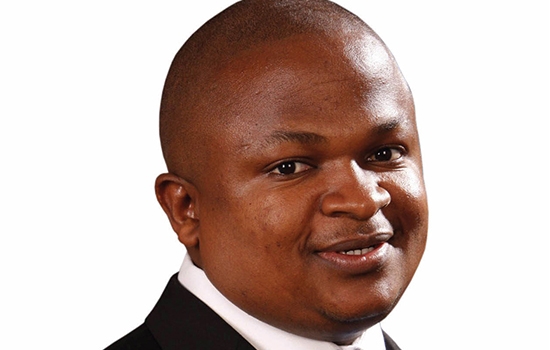
Mr. Kyamutetera

By Muhereza Kyamutetera

For months now, Justine Bagyenda, the sacked Executive Director, Supervision at Bank of Uganda has been in the headlines over her unexplainable wealth.

Although both the Inspectorate of Government (IGG) and the Financial Intelligence Authority (FIA) have both formally admitted to placing Bagyenda under formal investigation a couple of months ago, the two institutions are tight-lipped about their findings thus far.

The police who have since been silent in this debacle, through their Director of Cyber and Financial Crimes, a one Mr. Kototyo William, instead decided to issue criminal summonses against editors of seven online news publishers that have fiercely reported about this case.

Apparently the summonses stem from a complaint filed by Bagyenda at police in which she claims that the stories published about her are “false, defamatory and extremely damaging” and have caused “untold mental and psychological distress” not only to her, but also family members.

However, the media houses which published Bagyenda’s vast wealth have since stood by their story and have challenged the police not to shoot the messenger but rather go on to investigate the said claims.

The journalists’ firm stand could now be vindicated by a 23rd March 2018 draft report by the Auditor General; unearthing rot at the Central Bank- particularly in Bagyenda’s Department, over the way they handled or rather mishandled the closure of several banks.

The report is a result of an audit ordered by the Parliamentary Committee on Commissions, Statutory Authorities & State Enterprises (COSASE) on 28th November 2017; pursuant to section 13 (3) of The National Audit Act 2008. The audit that sought to examine the circumstances surrounding the closures of Teefe Trust Bank, Greenland Bank, International Credit Bank, Cooperative Bank, National Bank of Commerce, Global Trust and Crane Bank. The audit itself was sparked off by an outcry from the public and Crane Bank’s shareholders over the takeover and rushed sale of Crane Bank, over what they believe was a giveaway price to dfcu Bank.

Bank of Uganda refused to cooperate especially over the closure of National Bank of Commerce and Crane Bank, pleading the sub judice rule, since the two closures are subject to court suits- although they have since been compelled to cooperate by the Speaker of Parliament.

The preliminary report that largely covers the closure of International Credit Bank Limited, Greenland Bank and Global Trust Bank shows that loans worth Shs135 billion from the three banks were sold to M/S Nile River Acquisition Company in 2007 at $5.25m (Shs8.9 billion), a price that was a mere 26 per cent of the total secured loan portfolio and 7= per cent of the total loan portfoli0- leading to a loss of Shs126billion.

This discrepancy needs to be investigated as it could provide clues to who could have benefitted from this deal.
The audit further notes that BoU failed to recoup money worth Shs6.6 billion that the three banks held in foreign banks and went on to write off the funds from six foreign accounts, despite failing to prove through any correspondences with the said banks, that they tried to collect the money, raising fears that the said money could have been recouped but it went into private pockets.

The draft report also shows that BoU failed to prove that GTB assets worth Shs23 billion were transferred to dfcu, when dfcu took over the bank in July 2014. Additionally, 25 certified land titles that had been taken over by GTB as collateral by the time it was closed in 2014 were not transferred by BoU to dfcu.
“BoU did not transfer these titles to the purchaser (dfcu) contrary to the agreement. Management (of BoU) should place caveats on all the lost titles to protect the property and ensure that the titles are recovered and handed over to dfcu,” the audit recommends.

It is interesting to note that the period after 2007, when the recoveries of the said defunct loans started, also coincides with the period in which Bagyenda, under whose docket the recoveries fell, went on a property acquisition spree.

Between 2007 and 2016 Bagyenda either single-handedly, jointly with her children or using her children as proxies acquired and or registered 14 properties- in prime locations in Kampala, Mbarara and Ntungamo Municipalities.
Rather than intimidate journalists, the police should instead use their resources to investigate the link between Bagyenda’s wealth and the findings of the Auditor General.

Whereas the Auditor General is investigating BoU, the Police should instead be looking into the sources of her wealth.

Available leaked records show that Bagyenda in 2014, held bank balances equivalent of Shs1.6 billion in her shilling and dollar accounts at DTB Bank. Between 20th January 2014 and 15th May 2017 she made additional cash and wire deposits to her dollar account totaling to $295,000 (Shs880 million).

Most of these moneys were briefly fixed and then either sent to her DTB shilling account or her other account at Barclays Bank. From her Barclays account, she wired a total of Shs693 million in 47 weekly wire (RTGS) transactions of between Shs10 million- Shs30 million to a Kenny Muwonge’s account No. 2120011273 in Centenary Bank. On reaching Muwonge’s account, the money would be immediately withdrawn in cash and or via mobile money.

From the DTB shilling account, between 1st of March 2017 and 8th September 2017, she wired a total of Shs950 million- in 4 tranches of Shs350 million, 150 million, 100 million to Tibeingana & Co Advocates a law firm owned by city lawyer and property developer Deox Tibeingana.

Leaked mobile money transactions from MTN show, Bagyenda made mobile money transactions to the tune of Shs499,428,906 million in just a period of three years, to a phone number linked to her biological son- a one Robert Muhumuza.

But more importantly, these transactions were not reported to the authorities by either the banks, or the mobile phone companies as required by Section 6 (2) b of The Anti-Money Laundering Act (2013).

The act mandates all financial institutions, law firms real estate agents, casinos, brokerage firms, investment bankers, registrar of companies, registrars of land, Uganda Investment Authority, NGOs and all Licensing Authorities to report to the Uganda Financial Intelligence Authority (FIA), all transactions equal to, or above the amount of 1,000 currency points (Shs20,000,000). This was later upgraded to 5,000 currency points (Shs100, 000,000) as per the amended anti-money laundering act that commenced on 26th May 2017.

Instead of the journalists, it should be Bagyenda, the banks and the various beneficiaries of her transactions that should be recording statements.

Let me conclude by quoting Nicholas Opiyo, a human rights lawyer, who opined on twitter that: “In a serious criminal justice system, a public official suspected of illicit wealth accumulation – who hasn’t denied the same but only claims invasion of privacy – would be under police investigation-not courageous online journalists who have exposed these claims.”

But maybe, again in the words of Opiyo: “when a thief starts chasing after the people who caught him/her, you know he/she is no ordinary thief.”

Stories Continues after ad

Uganda’s coffee exports drop 9.3 percent in April

Uganda’s coffee exports in the month of April 2018 dropped 9.3 per cent to 295,194 60-kilo bags, according to the latest report released by the Uganda Coffee Development Authority (UCDA).

The coffee exports which underperformed in April compared to March fetched the country the much needed foreign exchange of US $32.73 million which also showed a decline of 16.66 per cent when compared to March earnings.

UCDA attributes the decrease in both quantity and value to an end of the main season in the central and eastern regions.
The report shows that the country’s full year coffee exports (May 2017 to April 2018) totaled 4.66 million bags worth US $521 million.

Uganda, Africa’s number one exporter of coffee, grows both Arabica and Robusta types. Arabica, known for its sweet aroma is grown on the slopes of Mount Elgon in Eastern Uganda and fetches a high price on the world market compared to Robusta which is grown in the lowlands, even though the country exports the latter in bigger quantities than the former.

Ethiopia, Africa’s number one producer of coffee, consumes most of the crop domestically, leaving less for export.
Uganda’s coffee exports during the month of April went to EU countries (183,987 bags lower than 233,958 bags exported in the previous month). Sudan imported 37,714 bags (12.78 per cent) compared to 45,175 bags (13.55 pervcent) the previous month.

The USA imported 25,133 bags (8.51 per cent) compared to 12,283 bags (3.68 per cent). Morocco imported 12,797 bags (4.34 per cent) compared to 9,060 bags (2.72 percent) and India 12,598 bags (Coffee exports to Africa amounted to 55,621 bags, a market share of 18.84 per cent compared to 69,638 (20.89 per cent) bags the previous month.

Globally, coffee exports for March 2018 were 10.81m bags, which was 0.9 per cent lower compared to March 2017. Total exports for the first six months of coffee year 2017/18 were 59.96 million bags, which was a decrease of 0.6 per cent.

The 2017/18 global production is still estimated at 159.66m bags compared to 157.69 million bags, an increase of 1.2 per cent from last year.

Arabica production is estimated to reduce by 4.6 per cent to 97.42 million bags while Robusta is projected to increase by 12.1 per cent to 62.24m bags. Africa’s production is expected to increase by 3.2 per cent from last year with an output of 17.63 million bags.

Global consumption is projected to increase by 1.3 per cent at 159.92 million bags with major increases noted in Asia and Oceania countries and South America.

Stories Continues after ad