Stanbic Bank
Stanbic Bank
18.7 C
Kampala
Stanbic Bank
Stanbic Bank
Home Blog Page 1562

EALA legislators call for absorption of planned assembly budget

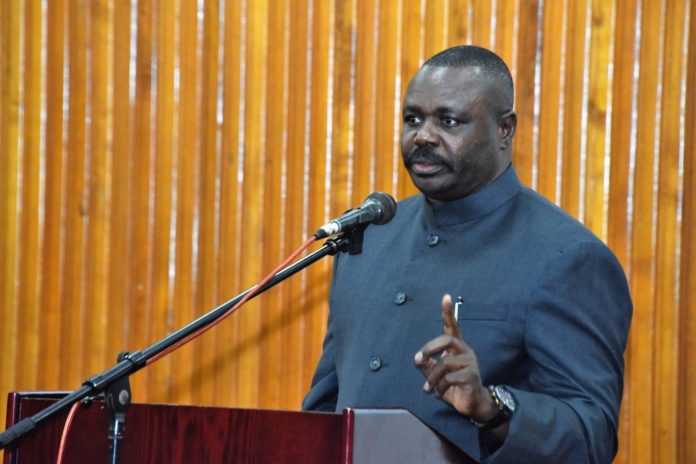
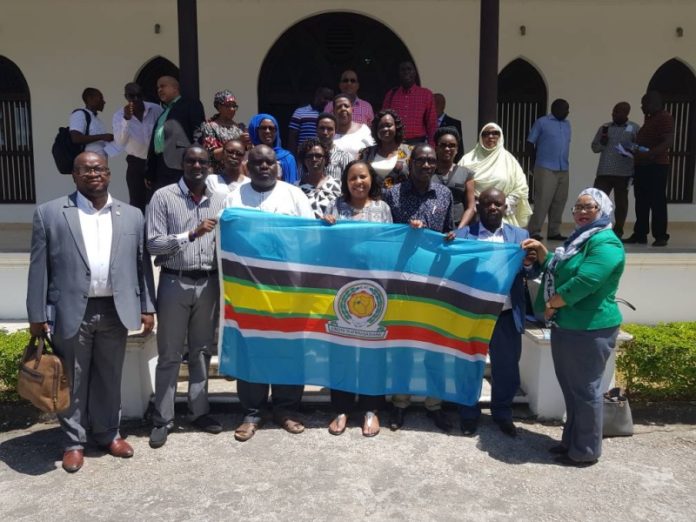
EALA legislators pose for a group photo

Kampala: The Committee on Accounts in the East African legislative assembly (EALA) has called for proper, coherent and consistent budgetary planning saying the assembly has always failed to absorb its planned budget.

According to EAC Audited Financial Statements for the Year ended 30th June 2016 that was presented to EALA, the community had a budget of US $ 112,233,039 however the actual expenditure totalled to US $59,664,208 hence an overall budget performance of 65 per cent.

Speaking to EALA yesterday, the Chairman of the Committee on Accounts, Dr. Jumanne Ngwaru Maghembe said EAC Institutions, projects and programmes across board have a challenge of budget absorption, this therefore calls for proper budgetary planning, coherency and consistency in the budgeting process.

“The committee recommends Council of Ministers to direct the Audit Commission to follow up and report on annual basis to the Assembly through EALA Committee on Accounts on the status of the Assembly’s recommendations’ implementation’” He said during the session in Kenya.

He said the Committee observed a weak Audit function at the EAC adding that inadequate staffing is affecting the audit function on all the Organs and Institutions of EAC.

“In the regard, an immediate upgrade of the Audit function in to a fully-fledged department to ensure effectiveness is therefore necessary…” read in part of the 149 page report.

“On non-implementation of the previous audit recommendations, the Committee wants a proper mechanism to enable the Assembly to get periodical report(s) on the status on implementation of its recommendations from the Council of Ministers,” he said.

The Report further called for timely remittances of contributions by Partner States saying delays make implementation of EAC programs difficult.

“When funds are remitted towards the end of the financial year, they are not sent to the specific institution to which the money was budget for, but deposited to the reserve account,” the reads in part.

Other challenges include inadequate and weak regulatory framework governing the financial and procurement regimes at the EAC, weak compliance and verification systems of goods and services procured and weak disciplinary mechanisms to reprimand staff at the EAC among others.

The 4th Assembly that is running until June 15th, 2018 in the Kenyan capital, legislators are expected to debate various bills including the EAC Community Supplementary Appropriation Bill, 2018, the East African Community Appropriation Bill, 2018 and the Administration of the EALA (Amendment) Bill, 2018.

Stories Continues after ad

Is there connivance between FIA Board and top BoU official to frustrate Bagyenda Investigations?

Embattled former Executive Director in charge of Supervision at Bank of Uganda Justine Bagyenda.

By Peter Musisi

Following a recent letter that a Kampala youth group wrote to the Prime Minister Ruhakana Rugunda, demanding that government explains why the Financial Intelligence Authority (FIA) has not come out with any report concerning money laundering allegations slapped on the former director of supervision at Bank of Uganda, Ms Justine Bagyenda, the Authority’s executive director Mr Sydney Asubo, on Thursday came out, claiming unconvincingly that the investigations were ongoing.

Instead a report in Sunday Vision indicated that FIA would investigate city socialites like Bryan White, Jack Pemba among others but the question is of what is importance are these socialites to the Ugandan when top government official swindling tax payers’ money aren’t investigated? We want FIA to investigate the source of the wealth of top BoU officials.
Mr.Asubo claimed in the media that two months were a short time to conclude investigations on money laundering. Investigation into such a case, he said, cannot be rushed as concerned people want.

However, there is a problem at FIA as regards investigating Ms Bagyenda, who according to recent leaked documents had billions of shillings on her bank accounts. A whistleblower said then that the money is not in tandem with the salaries she earned in six years at BOU. Extra leaks revealed that Ms Bagyenda owns real estate properties around Kampala, though some sources say some belonged to her late husband.

Ms Bagyenda up to now is a member of the FIA Board, headed by Leo Kibirango who once served at BOU as governor. Kibirango, Dr Louis Kasekende, the BOU Deputy Governor and Ms Bagyenda share a long banking experience. The fact is that the FIA cannot investigate Ms Bagyenda since she sits on its board.

Reports indicate that Mr Kibirango as the Board Chair of the FIA is not interested in the agency investigating Bagyenda over illicit accumulation of wealth. He sees her as one of his own. That is the only reason why Mr Asubo has not done what he is supposed to do on Ms Bagyenda.

Meanwhile the public is also waiting to hear when the FIA board will drop Ms Bagyenda before serious investigations into her financial dealings commence. In the circumstances it only fair that FIA announces officially that Ms Bagyenda is n longer member of the board to pave way for a serious investigation into her wealth.

FIA seems to have even ignored calls from MPs to investigate Ms Bagyenda. For instance Budadiri West MP Nathan Nandala Mafabi wants Ms Bagyenda behind bars in Luzira over money laundering.

Nandala who is the former head of Parliament’s Public Accounts committee says it is ironic that Bagyenda who has been heading the Anti-Money Laundering committee at BOU was involved in acts akin to money laundering.

“That lady Bagyenda has been the head of Anti-Money Laundering committee and the law we passed, stated that whoever participates in money laundering has to be imprisoned for 20 years. That is why Bagyenda should have been in Luzira by now, and the law stipulates that the money she stole should be returned,” Nandala said at Parliament in March as he addressed the media.

However, much as Kibirango and others are determined to shield Ms Bagyenda, they should understand that she on the Inspector General of Government’s tracker on cases of abusing the leadership code that requires politicians and senior government officials to declare their wealth. Sources say she has in the past appeared at the IGG offices for questioning. This is worsened further by the Uganda Revenue Authority (URA), which is demanding that she pays taxes she allegedly evaded. There are documents to this effect.

Kibirango and company stand to be isolated on this matter if they cannot act. Many are watching and continue asking questions.
For a young group to come up demanding that the FIA gives the latest on the investigation into Ms Bagyenda’s alleged illicit wealth, it speaks volumes even as Mr Asubo seems to say he depends on President Museveni to carry out his mandate.

Peter Musisi is a Concerned Uganda

Stories Continues after ad

I did not stop BoU audit-Deputy Speaker Oulanyah

Speaker Jacob Oulanyah

The Deputy Speaker of Parliament, Jacob Oulanyah, has come out to clear his name, saying his ruling on the recent motion to investigate Bank of Uganda by parliament was not did not mean the central bank free.

“There was notice that a motion be moved to investigate BOU and I allowed it. But during debate, it was raised that the issue of BOU and Crane Bank was before court,” Oulanyah said as he clarified his ruling on the matter during the plenary sitting last week.

He said that parliament received a letter from lawyers stating that there were five cases filed in court on the same facts contained in the motion.

“My ruling on the motion was clear that parliament could not continue debating the issue because it would tantamount to subjudice,” said Oulanyah.
He said his ruling forced the Auditor General (AG) to seek guidance from the Speaker of Parliament Rebecca Kadaga after BOU top managers refused to cooperate with the AG’s investigators. The BOU top executives had been advised by the Solicit General not to cooperate based on Oulanyah ruling then.

Backwards, on May 10, 2018 Kadaga in a letter, instructed the Auditor General to continue with the audit of BOU, saying her deputy’s ruling had nothing to do with the investigations into the central bank that has had its share of criticisms of recent for mismanagement of the sale defunct banks like Crane Bank, Teefe Bank, Greenland Bank, International Credit Bank, Cooperative Bank, Bank of Commerce and Global Trust Bank.

Oulanyah emphasised that the ruling he made stopping debate on the matter did not stop the AG from carrying out the audit on BOU yet. Deputy Governor Dr Louis Kasekende was using Oulanyah’s ruling to help the Bank invade an audit as demanded by parliament. Parliament was shocked that BOU had never produced any report concerning the liquidation and sale of the banks yet government some of the taxpayers’ money was used in the processes.

Parliament’s Committee on Commissions, Statutory Authorities and State Enterprises (COSASE) had instructed the Auditor General to do a broad forensic audit into the operations of Bank of Uganda and demand accountability of Shs200b, which BO injected into the Crane Bank before it was sold off to rival dfcu Bank.

Following Kadaga’s instructions, the AG is conducting of BOU. In the letter Kadaga said any government institution established by law cannot invade investigation if need arises.

Stories Continues after ad

Citizens to hold first ever World Bicycle Day

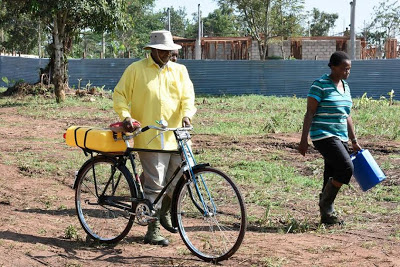
President Yoweri Museveni surprised Ugandans by fetching water on a bicycle in a demonstration to irrigate their crops during dry seasons.

Citizens of Uganda and others across the world will on June 3, 2018, celebrate the first ever official World Bicycle Day, according to the United Nations (UN).

The UN glorifies the bicycle as a simple, affordable, reliable, clean and environmentally fit sustainable means of transportation. It is a symbol of sustainable transportation and conveys a positive message to foster sustainable consumption, UN says in a brief statement.

“World Bicycle Day encourages countries to adopt best practices and means to promote the bicycle among all members of society, and welcomes initiatives to organize bicycle rides at the national and local levels as a means of strengthening physical and mental health and well-being and developing a culture of cycling in society,” it adds.

According to the UN, the World Bicycle Day encourages Member States to devote particular attention to the bicycle in cross-cutting development strategies and to include the bicycle in international, regional, national and subnational development policies and programmes;

Further it encourages Member States to improve road safety and integrate it into sustainable mobility and transport infrastructure planning and design, in particular through policies and measures to actively protect and promote pedestrian safety and cycling mobility, with a view to broader health outcomes, particularly the prevention of injuries and non-communicable diseases;

It also encourages stakeholders to emphasize and advance the use of the bicycle as a means of fostering sustainable development, strengthening education, including physical education, for children and young people, promoting health, preventing disease, promoting tolerance, mutual understanding and respect and facilitating social inclusion and a culture of peace;

The Day encourages Member States to adopt best practices and means to promote the bicycle among all members of society, and in this regard welcomes initiatives to organize bicycle rides at the national and local levels as a means of strengthening physical and mental health and well-being and developing a culture of cycling in society.

In Uganda the bicycle is a major means of transport especially in the rural areas where people use it for transportation of goods to and from the market as well as transporting themselves to different destinations.
In Eastern Uganda especially in Busoga sub region in eastern Uganda, it is common observing women and girls riding bicycles loaded with water cans and other goods.

“We grew up riding bicycles alongside our brothers as we went to fetch water,” says Esther Babirye from Namutumba. She says during her school days, she would ride the bicycle to school. This she says, helped her attend classes in time.
In Uganda the bicycle is used by health groups such as village health teams (VHTs) to reach their clients or the sick. “Government gave us these bicycles and they have eased our transportation and work,” says Isaac Mulokwa, a VHT member Bududa District.

The bicycle is also a source of income in Uganda as some citizens, especially the youth use it transport people and goods as well as knife grinding at a price. “Every day I make an average of Shs10, 000 as I carry passengers between Wandegeya and Bwaise,” says Abdul Kiryowa. Wandegeya and Bwaise are one of Kampala’s popular suburbs where some businesses operate 24/7.

Other people use the
In Uganda the bicycle is a sports item as citizens both in towns and rural areas use it to compete in races where winners are awarded. Uganda Cycling Fedartion is the Umbrella organisation with the purpose of promoting and managing the cycling sport in the country.

Stories Continues after ad

Uganda sends food aid to flood-affected families in Somalia

Sultan Warsame Aliyow Ibrow, speaks during a handover ceremony of food donated by the UPDF soldiers serving under the African Union Mission in Somalia (AMISOM), to the residents of the Lower Shabelle region that recently hit by the floods in Somalia, on 1 June 2018. AMISOM Photo / Omar Abdisalan.

Uganda yet again extended its humanitarian hand as government on June 1, 2018 donated foodstuff to flood-affected families in Golwayn, in Somalia’s Lower Shabelle region.

The lorry-loads of assorted food consisting of rice, wheat flour, sugar, cooking oil and milk, were delivered through the Ugandan AMISOM contingent.

Uganda’s Deputy Ambassador to Somalia, Maj. Gen. Nathan Mugisha flagged off the food convoy.

“Uganda is not only here to do the security part only. We feel sympathetic with the people and we join the wider international community in bringing rescue to especially the displaced communities of Golwayn who have been displaced by the enemy into IDPs (camps); but now have been displaced again by the flooding River Shabelle,” Maj. Gen. Mugisha said, while handing over the donation to Golwayn elders.

The food will benefit needy families who have borne the brunt of the heavy downpour.

According to the UN Office for the Coordination of Humanitarian Assistance, the flooding has affected more than 750,000 people with more than 229,000 displaced. Communities most affected by the flooding live along the Shabelle and Jubba rivers. The flooding, caused by the unusually heavy rains, has also led to fatalities and damage to infrastructure.
Ambassador Mugisha called for more support from other well-wishers, to the flood-affected families.
Brig. Paul Lokech, the Uganda contingent commander noted that the flooding had also adversely impacted on agriculture and movement of persons. He said some of the displaced families had sought shelter and safety near the AMISOM military defences.
“The areas where the people should be farming is all flooded. There is no productive activity taking place,” said Brig. Lokech.
He added, “That therefore means the next season is going to be very difficult for our people. Because if our people cannot produce this year because of the flooding, then that means next year there is going to be problems regarding food. So, we anticipate this flooding is going to have a negative impact on the agricultural production in Lower Shabelle”.

Sultan Warsame Alio Ibrow, a elder and chief of Golwayn who received the food donation expressed gratitude to the Ugandan government and AMISOM for the assistance and called for more humanitarian interventions to assist affected families.

“There is no area that has not been affected by the floods in areas with close proximity to River Jubba and River Shabelle. Some people who have fled from villages in Lower Shabelle including Gaburow, Bulla Sheikh, Madulow up to Janaale areas, are now squatting in Golwayn, as internally displaced,” Sultan said.

The elder estimated that at least 750 displaced families from other regions, had moved to Golwayn in search of food and shelter.

Stories Continues after ad

Hunky Maurice Kirya to headline at Mavuno Market Place launch

Musician Maurice Kirya will be the headline act at Mavuno Kampala

Kampala: Award winning Ugandan artist Maurice Kirya is set to headline at the launch of Mavuno Kampala’s Market Place program which will take place on Sunday 3rd June at the Kampala Parents School.

Speaking ahead of the launch, the Lead Pastor for Mavuno Kampala Pastor Waweru Njenga said that it was a pleasure to have Maurice Kirya kick off the Market Place program, the newest change experience programs that Mavuno provides.

“The Market Place Program is a discipleship experience based on the book of Daniel. With this program we aim at teaching Christians how to influence in their places of work – just like David did – by teaching them how to handle work place issues such as politics, integrity, corruption, competition and sexual harassment, among other many issues.

Our main aim as a church is to consistently turn ordinary people into fearless influencers of society”, said Pastor Waweru, also famously known as ‘Pastor Wa’.

Mavuno Kampala is well known for its change experience programs based on Christian principles. Some of these include SIMAMA, OMBI, HATUA, LEA and NDOA. In 2015 NDOA, a project that focuses on strengthening marriage and family life, scooped the Church Project of the Year Award in the Heaven Inspired Triumph (HITS) gospel awards.

The Market Place programme will go on for 8 weeks. The launch on Sunday 3rd June will start at 10am and will be hosted by Isaac Rucci, the legendary Limit-X singer, and Susan Nsibirwa, head of marketing and communication at Vision Group and also Chairman – Uganda Media Owners Association. Isaac and Susan are both members of Mavuno Kampala.

Assistant Lead Pastor of Mavuno Kampala, Pastor Mike Onen, recognized the impact of the multiple award winning artist on the society and reason for his presence at the launch:

“Maurice has been singing professionally for over ten years now and he has impacted the airwaves since he released his maiden album in late 2009. Having toured over 35 countries and 40 cities across Africa, Europe and America and also having featured on BBC, CNN, Voice of America and RFI, we want to learn how Christians can influence in our various industries and thrive; we therefore look forward to hearing from him on Sunday” said Pastor Mike Onen.

Maurice Kirya holds multiple accolades from E-World Music Awards (LA), Museke Music Awards (New York), KORA Award, KISIMA Awards (Kenya), PAM awards (Uganda). He continues to be an inspiration and mentor to many young Ugandan and African musicians.

Stories Continues after ad

Umeme opens new service centre in Pallisa

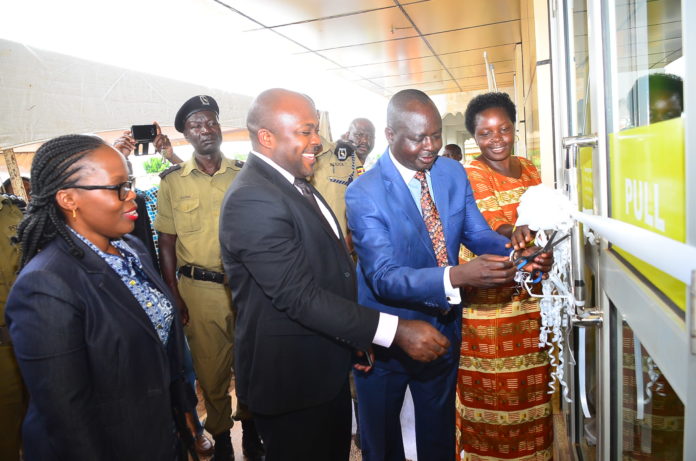
Umeme officials and others opening the new service centre in Pallisa

Mbale: Uganda’s national electricity distributor, Umeme has opened up a new service centre in Pallisa Town in eastern Uganda, aimed at providing timely customer care service to the residents who hitherto were depending on Mbale branch, costing them time and transportation fees.

“Our service strategy has always been focused on process simplification, automation and investments to improve network performance,” Mr. Selestino Babungi, the Umeme Managing Director, said as the launch of the service centre that will see more people in that area connected faster to electricity grid.

Babungi said that more new services centres would be opened in Kapchorwa, Sironko, Bubulo and Kumi as part of the company’s grand plan to bring services closer to the customers.

Umeme has branch in Mbale Town that has existed for 63 years, serving districts such as; Pallisa, Budaka, Bulambuli, Bukedea, Kumi, Kapchorwa, Bubulo, Manafwa, Bududa and Sironko among others.

“We have 37 service centres across the country, but some of them stretch over a radius of up to 80km, which makes it difficult for our customers to access some of the services. The opening up of several satellite offices will bridge this gap,” Babungi said.

In 2017, the company rolled out customer outreach programs in rural areas with the aim of bringing services closer to customers including education on dangers of power theft and vandalism, safe use of power, energy efficiency tips and e-payment options.

Mobile service desks were set up in high growth areas and potential customers proactively engaged to connect electricity to their homes.

Before the initiatives, illegal connections in the sub-region cost Umeme an estimate of sh20b annually and in a move to avert the situation, the company launched operations against illegal power users in the area at the start of last year.

Paul Ssempira, the Umeme Mbale district manager, notes that there has been a 30 percent increase in the number of new connections to 8,431 in 2017 from 3,541 in 2016.

The company managers say the region contributed up to 10 percent of the 19 percent losses registered at the end of 2016. But interventions saw the company record lower energy loss of 17.2 percent in 2017, as sighted in its 2017 annual report released recently to the shareholders.

“The region alone registered up to 60 percent energy losses in 2016, but this dropped to 45 percent in 2017. The 60 percent of the losses are categorized into 45 percent commercial losses (power theft) and 15 percent technical losses,” Ssempira said.

The company’s losses in terms of money in the region dropped to Shsh15b in 2017 after it intensified its operations against illegal users and vandals.

Stories Continues after ad

Uganda will forever remember Nyerere-Museveni

President Yoweri Museveni has said that Uganda will forever remember the contribution made by former President of Tanzania, the late Mwalimu Julius Nyerere, in the liberation of the country.

“By observing t June 1, each year, we, the Uganda government with the support of the Catholic Church, are signifying our appreciation to Mwalimu,” he said.

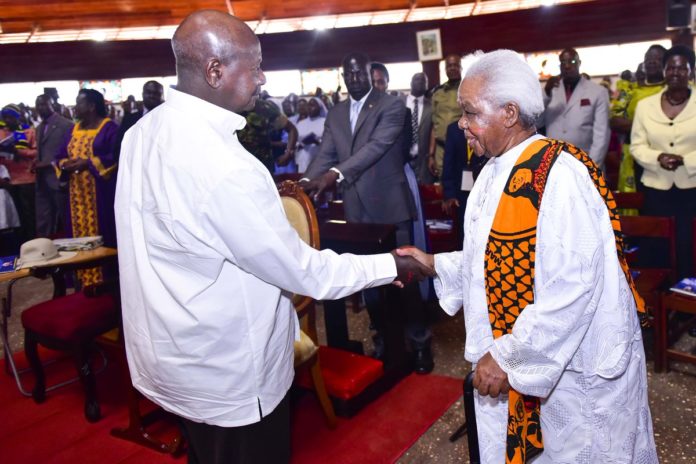
Museveni was yesterday morning among pilgrims from Tanzania led by Mama Maria Nyerere and are in the country for the Julius Nyerere Day that is observed on June 1, and for the annual Uganda Martyrs’ Day celebrations to be held on Sunday June 3, 2018.

The Nyerere Day that was first started in Musoma Diocese in Tanzania has been set aside annually by the Government of Uganda to pray at Namugongo Basilica for the beatification of Mwalimu Julius Nyerere to Sainthood.

President Museveni described the late Mwalimu Nyerere as a devoted Catholic, patriot, and a Pan-Africanist. He noted that the former Tanzanian leader became a great African leader because he managed to unify the people of Tanzania, who are diverse in their ethnicity, by not following the line of sectarianism.

“Being a devoted person in any religion should not mean being sectarian. If Mwalimu had done that, he would not have managed Tanzania,” he observed.
The President, therefore, thanked Archbishop Cyprian Kizito Lwanga of Kampala Archdiocese, for allowing the devoted to officially hold prayers at the Uganda Martyrs’ Shrine in Namugongo for Mwalimu Nyerere. He noted that the prayers held annually at Namugongo will reinforce those of the Christians in Musoma where the whole process started.
Mr. Museveni told the congregation that Mama Maria is today continuing with the work started by the late Mwalimu Nyerere of unifying people through politics, by now promoting unity through the Church.

The President also pointed out that the linkages between the people of Tanzania and those of Uganda have, for long, existed as manifested by the similarities in culture and language. He added that even Mama Maria was only coming back home as she first had her Education at Nsuube in Uganda.

“We are, therefore, very happy to see that the Tanzanian pilgrims come every year to be with us as well as to pray to God to expedite the beatification of Mwalimu Nyerere,” he said.

President Museveni reiterated his gratitude to the people of Tanzania for supporting their brothers and sisters in Uganda in regaining their freedom. He said the Uganda Martyrs persevered in the fire and did not denounce their faith and similarly Nyerere was also in fire, as the plan during Amin’s regime, was to surround Tanzania and Zambia with hostile governments that could bring down the government of Tanzania.

“To support freedom fighters in Southern Africa and Uganda was risky for Mwalimu and the people of Tanzania,” he noted.
The Archbishop of Kampala Archdiocese, the Most Rev. Dr. Cyprian Kizito Lwanga, who started his remarks by leading in the song‘Marching United in Christ’ said the visiting congregation from Tanzania and all other pilgrims to Namugongo, were marching together with the Martyrs because of our faith in God. He thanked President Museveni and the Government of Uganda for supporting Namugongo Basilica as well as declaring 3rdof June every year as a public holiday in commemoration of the Uganda Martyrs.

He urged Christians to remember God who gave the Martyrs the courage to die for their faith. He asked the congregation to pray through the intervention of the late Nyerere for miracles to occur in order to enhance the process of his beatification.

The Archbishop said that Nyerere was a great leader in Africa and a servant of God who deserves our remembrance and prayers for his beatification. He also thanked Mama Maria and the pilgrims from Tanzania for loving Uganda and the Uganda Martyrs by visiting the country.

The representative of the Government of Tanzania, Ms Mary Chiando, thanked President Museveni for gracing the occasion. She also thanked Archbishop Cyprian Kizito Lwanga for hosting the pilgrims from Tanzania adding that this was an opportunity for them to learn a lot about the faith of Uganda Martyrs.

The representative of Mama Maria Nyerere’s family, Rev. Sr. Eledina Micheal, described President Museveni as a true father of the people of Uganda and Tanzania because of his large heart.

Rev. Fr. Antonius Maria Mamsery, in a homily, said Mwalimu Nyerere served all countries in Africa selflessly especially in their liberation struggles. He added that Mwalimu Nyerere was a devoted Catholic who relied on divine intervention when faced with big challenges.

‘Nyerere never fought for only political freedom but also for the liberation of Christians and everyone in Tanzania and Africa in general,” he said.
Deputy Chief Justice, Justice Aliphonce Owiny Dolo and his wife, among others, attended the Mass.

Stories Continues after ad

Why investors won’t get excited by your product spec

By Martin Zwilling

Most technical entrepreneurs I know demand the discipline of a product specification or plan, and then assume that their great product will drive a great business. Serious investors, on the other hand, look for a professional business plan or summary first, and hardly ever look at the product plan. Is it any wonder why so few entrepreneurs ever find the professional investors they seek?

Just for clarification, I characterize a product plan as a formal description of your product or service, with a quick business description at the end for effect. A business plan is a careful layout of the business you are building, with a quick product overview in the intro to set the stage. In reality, you need both, to clarify for yourself and team that you have a viable business solution.

A product plan has tremendous value inward facing, telling your product people what to build, while the business plan has maximum value outward facing, explaining to the rest of the world how your new company will survive and prosper. A product plan is never a substitute for a business plan.

Because the product plan is aimed internally, it can assume the reader has the relevant technology and jargon background. Here are the major elements of the best product plans:
Market requirements section. This first section of every product plan defines the market, sizes the opportunity, and discusses individual needs and requirements that will be provided by your product and service. These requirements must be based on market analysis, expert input, and existing customer feedback.

Technology, architecture, and feature descriptions. This section of the product plan details every element of the product or service that is your solution. It allows all members of your team, including marketing, support, and sales, to size and build the business plan processes they need to find customers, deliver, and maintain grow the business.
Development schedule and checkpoints. A product plan must include the timeline and milestones involved in product research and development. Each of these activities should have associated costs and resource requirements. Related activities must be defined, including performance expectations, quality certification, and proof of concept.
Quality testing and approval processes. Product certification or product qualification requirements and processes are a key part of every product plan. This section of the plan would include the definition of specific test processes, how results will be measured, and who has responsibility for execution and approval.

Now let’s talk about the basic components of a business plan. Since this document is outward facing, it is important to keep the terminology and tone consistent with that of your customer set, investors, and business partners. It does need to include a high-level summary of the components in the product plan, with key additional sections as follows:

Definition of customer problem, followed by your solution. The customer pain point must be defined before the solution is presented, so it doesn’t look like you have a solution looking for a problem. Use concrete terms to quantify the value of solution, like twice as fast or half the cost, rather than fuzzy terms, like cheaper and easier to use.

Opportunity segmentation and competitive environment. The market for your solution should be quantified in non-technical terms, with data sourced from professionals in the industry, rather than your own opinion. List key competitors and alternatives, highlighting your sustainable competitive advantages, such as patents and trademarks.
Provide details on the business model. Every business, including non-profits, needs a business model to survive.

Providing your product or service free to customers may sound attractive in marketing materials, but you need
revenue sources to survive. Free is a dirty word to investors, since it’s hard to get a financial return from free.
Executives, marketing & sales, financial projections, and funding. These are additional critical sections of a business plan to define who is running the business, business strategy activities, and financial expectations. There are many good books and Internet articles describing each of these sections, so I won’t cover the details here.

In principle, there is very little overlap between these two plans, so it never makes sense for an entrepreneur to build one without the other. Yet I’m still often approached by aspiring entrepreneurs who have neither. If you are still in the idea stage, meaning you have nothing but a passionate verbal description of an idea, approaching investors is a waste of time and a recipe for failure.

Savvy entrepreneurs always remember that they are the key investor in their company, so they measure themselves against the same standards as professional investors. That means they invest first in a set of plans.

Stories Continues after ad

Sustainable development requires a higher domestic revenue effort

By Christina Malmberg Calvo

Less than one million people and about 40,000 firms are registered as tax payers in Uganda. That’s less than 7 per cent of the total working age population, and less than 10 per cent of firms with a fixed location, respectively.

While this is low on both scores, it represents a significant improvement over the last couple of years thanks to the enormous efforts by Uganda Revenue Authority to improve tax administration. A large proportion of persons and firms remain outside the tax bracket, however. Some households are too poor to pay taxes, and many small businesses operate in the informal economy and are hard-to-reach. That said, many people and firms deliberately evade taxes or are granted generous exceptions. This is something that can and should be addressed right away.

Uganda collects taxes equivalent to 14 per cent of GDP. This is too low; it’s below the government’s own target of 16 per cent set three years ago, and below what the country can collect—an estimated 18-23 per cent of gross domestic product (GDP.) It is also below what its neighbors collect—Kenya 18 per cent, Rwanda 16 per cent.

A low tax effort contributes to fiscal deficits and limits opportunities for financing infrastructure and social services. While governments can borrow to fund vital infrastructure and human capital, they cannot do so indefinitely without running up debt, an issue that is quickly emerging as a concern in many African countries. An improved tax collection is therefore, critical to sustainably finance human capital and infrastructure while containing the rise in external debt. In addition, public investments, whether funded through domestic or external resources, need to be well managed—carefully prioritized, competitively procured, well supervised and maintained. When the latter is not the case, value for money is compromised. An increasing debt service is especially hard to stomach when public investments are ill-managed.

In recent years, aid flows to Uganda have slowed while the country needs to scale up the financing of important infrastructure, and continue to build human capital through the provision of better education and health services on the back of a rapidly-increasing population. Uganda needs to urgently increase the mobilization of domestic revenues to stay its development course and not compromise fiscal stability. If, for instance, revenues collected over the past three years had met the target of 16 per cent instead of just 14 per cent, the additional 2 per cent would have been sufficient to triple government’s spending in the health sector in FY2016/17, or fully finance the Entebbe-Kampala expressway without having to borrow.

So, what can Uganda do to raise more domestic revenues? An obvious first step is to reduce policy discretion, i.e., decrease the granting of tax exemptions. That could yield 4-5 per cent of GDP in additional revenue. Second, make more people and firms pay taxes. Third, the government needs not only to promote equity in tax enforcement and administration, but also improve transparency and accountability while demonstrating a clear link between taxes and public services and strengthening the social contract.
The government has in recent years improved public expenditure and budget transparency. It is now a high priority to improve transparency and accountability in the collection and management of public revenues.

The above are key recommendations from the 11th edition of the Uganda Economic Update series released today in Kampala. The report, “Financing Growth and Development: Options for Raising Domestic Revenues in Uganda,” reviews the state of the economy and focuses on how Uganda can mobilize more domestic revenues to provide better access to and quality of public services.

The Government of Uganda is in the process of formulating a medium-term domestic revenue strategy. This process provides an opportunity to review past approaches to revenue mobilisation, discuss options for tax policy and tax administration, and recommend reforms that will put the revenue-to-GDP ratio on an upward trajectory. It also provides an opportunity for the government and broader public to establish a new social contract.

Contracts rest on a sense of mutual responsibility with the rights and obligations of all parties clearly defined. A new social contract in Uganda can provide the basis for the government to deliver better public services to citizens and firms, while requiring citizens and firms to appropriately pay their taxes. Making bold decisions now to diversify and increase tax revenues will better position Uganda to use future oil windfall for strategic physical and human capital investments, and also to save for a future when the oil runs out.
The Writer is the World Bank Country Manager for Uganda

Stories Continues after ad