Stanbic Bank
Stanbic Bank
20.1 C
Kampala
Stanbic Bank
Stanbic Bank
Home Blog Page 1563

EU envoy acclaims role of CSOs in developing Uganda

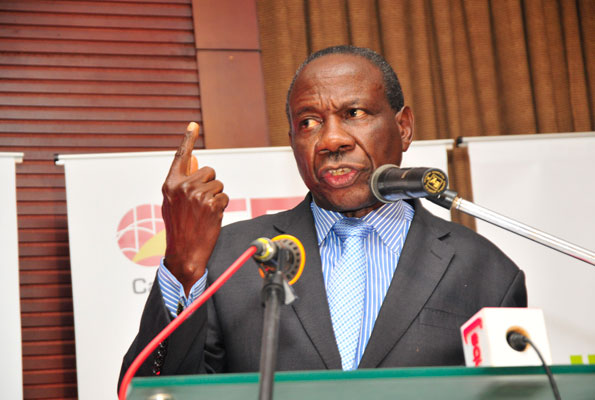
Ugandan civil society organisations can play a crucial role for the development of the country, the Head of the European Union (EU) Delegation in Uganda, Amb. Attilio PACIFICI said Thursday in Kampala.

“We believe that CSOs can and should play a crucial role for the development of any country. We also firmly believe in the strong benefits for everyone resulting from a constructive collaboration between state agencies and civil society organisations,” PACIFICI said yesterday at the launch of a Shs118 billion ‘Civil Society in Uganda Support Programme (CUSP)’ at Sheraton Kampala Hotel.

He said the programme would enhance the efforts to promote a conducive environment for CSOs, promote a meaningful and structured participation of CSOs in domestic policies and increase local CSOs’ capacity to perform their roles as independent actors more effectively.

“The programme we are launching today will support the implementation of the legal framework providing the conditions for the work of civil society in Uganda – such as the NGO Act. The programme will also support the promotion of institutionalised consultation processes between the state and civil society,” he said.

Amb. PACIFICI said there is a huge underutilised potential for interaction between civil society and the state on domestic policies. “The CUSP programme will contribute to strengthen the capacities of state and civil society actors to use existing consultative processes more effectively and to build trust between state and civil society,” he added.

The programme, he said, would provide technical and financial support to a wide range of civil society organisations (including NGOs, trade unions, employer federations and so on) to build their capacity.

The programme will complement other EU financed programmes to support civil society such as the Democratic Governance Facility (DGF) and the European Instrument for Democracy and Human Rights.

“This new programme will not only support CSOs operating out of Kampala but will also operate through regional hubs. The hubs in Gulu and in Mbale will be launched soon and additional hubs in other regions may be established in the future,” he said.

Guests at the launch of the programme included; Chairperson of the National Planning Authority, Dr. Wilberforce Kisamba Mugerwa, the Chargé d’Affaires of the German Embassy, Ms. Petra Kochendörfer, the Country Director of GIZ Uganda, Mr. Christian Schnurre, and a Member of the Board of the NGO Bureau Mrs. Margaret Sekaggya.

The audience was composed of representatives of government ministries, civil society, the media and other invited guests.

“CUSP’s definition of civil society includes all actors that are non-state and non-profit”, emphasised Ms. Petra Kochendörfer. “Hence, the programme will address a wide range of civil society actors in the fields of infrastructure, agriculture and governance”, she added.

Stories Continues after ad

Magara suspects still on remand as prosecution vows to adduce tight evidence

Courtesy Photo: Late Suzan Magara portrait, "the Lady" painted by Daniel Lagen.

Kampala: The eight suspects in the murder of Susan Magala have today further been remanded to Luzira prison by Buganda road magistrates Charles Yeteise after prosecution asked for more time to adduce evidence the will lead to conviction of suspects.

Ms. Magara, 28, was in February kidnapped by unknown assailants on her way home in Lungujja, Lubaga Division, tortured for three weeks and killed after her agonizing family paid ransom of over Shs700 million.

Appearing before court Magistrate Charles Yeteise ordered prison warders to remove hand cuffs from the eight murder suspects saying there is enough security at court, “ When you go back, do your things, but not before a courts of law.”

The chief Magistrate’s statement came in wake of president Museveni’s argument that during and after Court, suspects should remain hand cuffed after Musa Galiwango and Kiddawalime Muhamad who were on murder charges escaped from Masaka high court.

During the session, suspects asked for their transfer from Luzira prison on revelation that they are being tortured by interrogation officers as a way of extracting information from them.

“We need special treatment due to injuries and great harm that is always inflicted on our bodies, in prison we don’t receive all the required treatment,” Mr Ssali Muzamiru told court.

Courtsey Photo: Suzan Magara suspected killers appearing before High Court today

However justice Yeteise implored them to inform their lawyers saying with time their issues will be worked on basing on lawyers’ findings.

In reaction to the torture of suspects, unidentified prison warder said suspects sustained those injuries during the time of their arrest and they receive all the required treatment.

The matter was then adjourned to June 15, 2018 for further hearing.

The suspects were in April arrested from Usafi Mosque in operation that was conducted by a joint force of Police, Uganda people’s Defence force (UPDF) and Chieftaincy Military Intelligence (CMI) after receiving information zeroing them to the murder of Ms. Magara among other illicit activities.

The suspects include: Yusuf Lubega, Hussein Wasswa, Muzamiru Ssali, Hajara Nakandi, Abubaker Kyewolwa, Mahad Kasalita an Imam at Usafi Mosque, Hassan Kato Miiro and Ismail Bukenya.

Stories Continues after ad

NRM concedes defeat in Rukungiri by election

NRM candidate, Winfred Matsiko casting her vote.

Rukungiri: National Resistance movement (NRM) has conceded defeat in the just concluded Rukungiri by election saying they have lost the race instead with there are good signs of winning bigger battle in this area.

In a statement released by NRM spokesperson Rogers Mulindwa, the party applauded its members for effort they put in the Rukungiri by election form nomination to the polling.

“We continue to express dismay over the errant party members who opposed party’s position and never walked the journey. Our support in Rukungiri district has continued to grow, we now have hope in the future elections,” he said in Rukungiri.

He however revealed that NRM remains the giant, in the 36 by-elections of both legislators and District Chairpersons, NRM has won 27, and FDC two (Jinja East and Rukungiri), DP 1 (Kyotera) and the remaining post were taken up by independent candidates.

Further said noted that central executive committee of NRM will convenes for advice and pave a way forward about results of that just concluded by election.

Rukungiri woman parliamentary seat has been won by fad’s candidate betty Muzanira who garnered 50,611 votes beating her close rival Winfred Matsiko of National Resistance Movement party who polled 46,379 votes as others two candidates got less than 2000 votes.

Rukungiri woman parliamentary seat fell vacant after appellant court judges led by former Deputy Chief Justice, Stephen Kavuma nullified the election of National Resistance Movement’s (NRM) candidate Winfred Matsiko over voter bribery following electoral petition that was filed by Forum for Democratic Change candidate (FDC) Betty Muzanira.

Stories Continues after ad

Standards agency to inspect used vehicles imported into Uganda

Car bond

As government plans to ban importation of vehicles older than 15 years into the country, The Uganda National Bureau of Standards (UNBS) has come up to alert dealers of used motor vehicles that it will commence inspecting that category of vehicles shipped after June 1, 2018.

“All used motor vehicles shipped after the 1/06/2018 will be inspected for roadworthiness here in the country … by UNBS inspectors prior to their release from the Customs controlled areas until further notice. Dr. Ben Manyindo, the UNBS Executive Director says in the latest public notice.

He says the decision is in line with his agency’s ‘Inspection and Clearance of Imports Regulations 2018.’
But Eagle Online understands the contracts of private companies which have been doing the inspection of vehicles have expired, the reason UNBS will do the work itself. The companies include; East Africa Automobile (EAA), Jabal Kilimanjaro Auto Elect. Mech or Japan Export Vehicle Inspection Centre (JEVIC).

However, the UNBS boss says his agency will still recognise valid Certificates of Roadworthiness issued before June 1, 2018.
According to Dr. Manyindo says used motor vehicles imported into the country are assessed against the US 845:2008 – Road vehicles — Code of practice which is a compulsory Uganda Standard.

Dealers have been advised to obtain further details from UNBS Head Offices, UNBS staff at customs entry points or from its website.

The companies have been inspecting the vehicles at a fee of USD 140, US $200, US $125, USD220 and US $200 for vehicles originating from Japan, Singapore, United Arab Emirates, South Africa and United Kingdom, respectively.
Members of Parliament yesterday amended the Traffic and Road Safety law, banning the importation of vehicles older than 15 years and maintaining the 50 per cent environmental levy on imported vehicles eight years older.

The government maintains that older vehicles are prone to mechanical malfunction and that limiting their importation into Uganda would reduce on road carnage and environmental pollution.

A United Nations Road Safety Performance Review of Uganda estimated Shs4.4 trillion as the overall annual cost of road accidents in the country. The UN report is supported that of Parliament’s Finance Committee which says that importation of older vehicles into the country has exposed it to high levels of pollution and that disposing of junk cars is burdensome.

Despite government’s safety and environmental concerns, car dealers say the move to ban the importation of vehicles above 15 years will cost jobs to Ugandans but also increase the price of vehicles.

MPs Allan Ssewanyana (Makindye West) and Silas Aogon (Kumi Municipality) concurred with the used car dealers that the law favours the rich and discriminates the Ugandan poor who don’t have money to buy expensive cars.

Exemptions
The vehicles exempted from the impending ban are special purpose motor vehicles including: breakdown lorries, crane lorries, fire fighting vehicles, concrete mixer lorries, road sweeper lorries, spraying lorries, mobile workshops, forklifts, mobile drilling rigs and mobile radiological units.

Other vehicles exempted from the ban are work trucks, tanks and other armoured fighting vehicles, cesspool emptiers, water boswer, bullion spreaders, bitumen spreaders, bucket trucks, aircraft refuellers, spraying trucks, workshop vans and mobile banks.

Agricultural or forestry tractors, earth moving motor vehicles, dumping machines and road rollers are also not affected by the Bill.
Motor vehicles which are in transit before the commencement of this Act and which arrive in Uganda by September 30, 2018 will also be exempted from the ban.

Regionally, Kenya controls importation of used cars to eight years or older whereas Rwanda, Burundi, Tanzania and South Sudan have no limits as yet.

The East African community partner states have no agreement on restriction as regards importation of used vehicles though in 2009 it was decided by the bloc’s council of ministers that no vehicle made before 2009 would be imported into the region.

Stories Continues after ad

Ugandan businesswomen to benefit from $500m fund

Ugandan businesswoman Amina Hersi Moghe.

Ugandan businesswomen will be among the beneficiaries of a new US $500 million fund targeting women-led businesses in Africa over the next decade to increase their participation in investment.

The African Women’s Leadership Fund is a brainchild of the United Nations Economic Commission on Africa (Uneca), UN Women, the African Union Commission and the African Women Leadership Network.

Uneca Executive Secretary Vera Songwe says that the Fund’s sponsors hope to address a significant gender imbalance in finance and investment.

“Women are less represented in many organisations and very few are leaders. This in turn makes them less represented in key decision-making for the continent,” Ms Songwe says.

In Africa, only five per cent of chief executives are women; 18 per cent of businesses lack women in senior roles; only 29 per cent are senior managers while 44 per cent of women hold line roles, a 2016 report by Mackinsey & Company notes.
The fund’s strategy is to ensure that at least 65 per cent of its investment capital reaches women entrepreneurs and women-led companies. The rest — 35 per cent — will go to technical assistance in the form of capacity building, leadership training, mentorship and business development.

The fund hopes to find emerging women managers who will eventually serve as examples of the potential that they and their peers could have if given the support they need.

The fund targets each of the continent’s five regions of North Africa, East Africa, Central Africa, West Africa, and Southern Africa and will evolve over time to address the unique traits of each market and reflect each region’s priorities as they change.

Ms Songwe says the success of the fund will lead not only to economic empowerment of African women, but also contribute to increasing their role across all aspects of the continent’s development, including politics, civil society, education, science and technology.

Stories Continues after ad

Migration in Africa plays growing development role, report reveals

Prof. Mukhisa Kituyi

African migration could boost growth and positively transform the structure of the continent’s economy, UNCTAD’s 2018 Economic Development in Africa Report says.

“Population movements across borders often offer individuals a chance for a better life, with the social and economic benefits extending to both source and destination countries, as well as future generations,” UNCTAD Secretary-General Mukhisa Kituyi said as he launched the report yesterday in Addis Ababa.

“Our analysis shows this to be true for millions of African migrants and their families. Yet much of the public discourse, particularly as it relates to international African migration, is rife with misconceptions that have become part of a divisive, misleading and harmful narrative.”

The new report, subtitled “Migration for Structural Transformation”, does much to counter this narrative. Historically and in line with established trends, the report says that most African migrants move within the continent.
In 2017, the report says, 19 million international migrants moved within Africa and 17 million Africans left the continent. In addition, Africa is a migration destination for 5.5 million people who came from outside the continent.

The report says that in 2017, the top five intra-African migration destinations (receiving countries in descending order) were South Africa, Cote d’Ivoire, Uganda, Nigeria, and Ethiopia (all exceeding 1 million migrants), the report says.

According to the report, the contribution of migrants to GDP was measured at 19 percent in Côte d’Ivoire (2008), 13 percent in Rwanda (2012), 9 percent in South Africa (2011) and 1 percent in Ghana (2010).

Meanwhile, remittance inflows from outside and within Africa rose on average from $38.4 billion (2005–2007), to $64.9 billion (2014–2016). These accounted for 51 percent of private capital flows in Africa in 2016, up from 42 percent in 2010. This is why both intra and extra-continental migration are needed for supporting Africa’s structural transformation.

THe report contributes to a better understanding of the implications of intra-African migration for the continent’s socio-economic transformation.”

The average age of Africa’s international migrants in 2017 was 31 years – the lowest median age globally.

In 2017, female migrants comprised almost half of all international migrants in Africa (47 percent). The absolute number of international female migrants increased from 6.9 million in 2000 to 11.6 million in 2017.

Africa hosts the bulk of the world’s refugees and internally displaced people.

The report’s analysis of the role of intra-continental migration in Africa’s development trajectory makes it a reference document that aims to assist in defining an African position in the Global Compact for Safe, Orderly and Regular Migration to be adopted in Marrakesh in December 2018.

Stories Continues after ad

Gov’t dragged to court over mobile money tax

Finance Minister, Matia Kasaija who is worried of the sinking economy.

Parliament has endorsed government plans to tax mobile money transactions in the next financial year but little did the legislators know that a citizen had run to court earlier asking for an injunction, reasoning that currently there is no law Uganda regulating that business run by telecom companies.

On Wednesday May 30, parliament approved the tax amendment bill where among others each mobile money transaction in the country will be subjected to a 1 per cent excise duty.

Mathew Kiwunda, an advocate of the High Court has particularly sued the Attorney General and the Minister of Finance, Planning and Economic Development. He contends that government has failed to pass a law for the operationalisation, licensing and regulation of mobile money services in Uganda. He argues that failure to have the related law in place is unlawful, irrational and unreasonable.

Mr Kiwunda is to be represented by M/S Muwema &Co Advocates and Solicitors on September 4, 2018 when court will hear his petition. He petitioned court on May 7, 2018. And the petition was received by court on May 8, 2018 under case No. 103 of 2018.
The Ministry of Finance and that of Justice and Constitutional Affairs confirmed receiving Mr Kiwunda’s petition on May 30,2018, the same day MPs said that the 1 percent tax be imposed on mobile money transactions in the coming financial year 2018/19 as government widens the tax base to fund development projects and service delivery.

The plaintiff wants court to compel government to present a bill to parliament and parliament to enact an appropriate legislation without delay for the operationalisation, licensing and regulation of mobile money services in Uganda.
He further wants court to prohibit government from continuing to level, impose or collect any tax or taxes on all mobile money transactions in Uganda until proper legislation relating to the service is put in place. Kiwunda who says he uses mobile money services, also wants costs of the application be provided.

Kiwunda claims mobile money services…were introduced…without a supporting legal framework under the Financial Institutions Act N0.2 of 2004 or the Uganda Communications Act, 2013.

Despite Bank of Uganda providing guidelines on mobile money transactions in the country, Kiwunda says it does not have legal bindings since it doesn’t have regulatory control of the telecoms sector now handling business estimated to be more than Shs40 trillion annually.

Stories Continues after ad

FDC takes Rukungiri seat in the hotly contested by-election

FDC candidate Betty Bamukwatsa talking to the media after casting her vote.

Forum for Democratic Change candidate,Betty Muzanira has been declared the winner of the hotly contested Rukungiri district Woman Member of Parliament.

Muzanira got 50,611 votes beating her close rival Winfred Matsiko of National Resistance Movement party who got 46,379 votes.The others in the race got less than 2000 votes.

The ruling NRM party was determined to retain the district seat but Forum for Democratic Change (FDC) and the opposition seems to have been resolved to marshal against an evidently tumultuous environment to clinch yet another seat in Parliament.

Rukungiri district has 16 sub counties, 87 parishes, 280 polling stations and 177,086 registered voters.

The four candidates who participated for the Rukungiri District Woman MP position: Winfred Matsiko (NRM), Betty Muzanira (FDC), Fabith Kukundakwe (PPP) and Prisca Sezi Mbaguta (independent). Two independent candidates: Atukunda Sheilla and Rwakitonera Elizabeth withdrew from the race days to the polling date, citing financial reasons.

Rukungiri woman parliamentary seat fell vacant after appellant court judges led by former Deputy Chief Justice, Stephen Kavuma nullified the election of candidate Winfred Matsiko over voter bribery following electoral petition that was filed by Betty Muzanira.

The by-election pitted opposition kingpin Kizza Besigye and President Yoweri Museveni as they two stormed the district to address rallies for their candidates. Rukungiri is a home to Besigye.

Stories Continues after ad

Court yet to deliver verdict on age limit case— Judiciary

Judiciary's Senior Communications Officer Solomon Muyita

Judiciary has cautioned the public over false information that the Constitution Court delivered its verdict in age limit case.

Mr Solomon Muyita, judiciary’s public relations officer, said court will deliver its verdict on notice.
“As per usual Court practice, all the patties in the petitions shall be notified in advanced of the judgment date through their counsel in advance as soon as court is ready,” he noted.

He also noted that given the importance of the matter, the public will be notified through media and arrangements would be made for the media to cover the delivery of the judgment at Mbale high court.

In December last year Parliament passed age limit bill lifting presidential age limit that was capped at 75 years, giving a leeway for President Yoweri Museveni who is currently 73 years to stand for presidency in 2021 and on the same day they also voted to extend their term in office from five to seven years.

Dissatisfied with what happened in Parliament, six opposition legislators led by Winnie Kiiza, Uganda Law Society, Male Mabirizi among other concerned citizens petitioned the Constitutional Court challenging the ‘Age Limit Act’.

They argued that the process of enacting the bill was marred with violence, assault of legislators, storming of Special Forces Command (SFC) in Parliamentary chambers and violations of human rights which among others contradicts with Parliamentary rules and procedures.

It’s upon that, that a panel of five judges of Constitution Court, led by, the Deputy Chief Justice Alfonse Owiny-Dollo, sat in Mbale to listen to the arguments. They are yet to give their ruling.

Stories Continues after ad

AfDB issues ten-year CAD 60m “Feed Africa” bond

Headquarters of African Development Bank.

The African Development Bank (AfDB) on May 30, issued its second “Feed Africa” bond for CAD 60 million, sold to Japan Post Insurance Co., Ltd., the sole investor in the transaction, with Citigroup Global Markets Limited acting as the arranger and lead manager of the transaction. The bond has maturity date of May 30, 2028.

As part of its High five priorities, the Bank adopted a “Feed Africa” Strategy for Agricultural Transformation in Africa 2016-2025, investing US $24 billion over ten years to help end extreme poverty; eliminate malnutrition; end dependency on food imports, and move Africa to the top of the value chains in its areas of comparative advantage.

The Bank will make its best efforts to direct an amount equal to the net proceeds of the issue of notes to lending projects that aim to Feed Africa”, subject to and in accordance with its lending standards. Note proceeds will be included in the Bank’s ordinary capital resources and used for its general operations in accordance with the Agreement establishing the African Development Bank.

AfDB’s mandate is to spur sustainable economic development and social progress on the continent to contribute to poverty reduction.
To do so, it mobilizes and allocates resources for investment in Africa, and provides policy advice and technical assistance to support development efforts. Eighty member countries comprising 54 African countries and 26 non-African countries subscribe to the Bank’s authorized capital of approximately US $100 billion.

In 2015, the Bank developed a new strategic operational agenda, the High 5s, to accelerate the implementation of its Ten-Year Strategy 2013-2022: Light up and power Africa, Feed Africa, Industrialize Africa, Integrate Africa, and improve the quality of life for the people of Africa.

Stories Continues after ad