Stanbic Bank
Stanbic Bank
20.1 C
Kampala
Stanbic Bank
Stanbic Bank
Home Blog Page 1564

Re-double your efforts in the fight against insecurity-Mubajje tells security organs

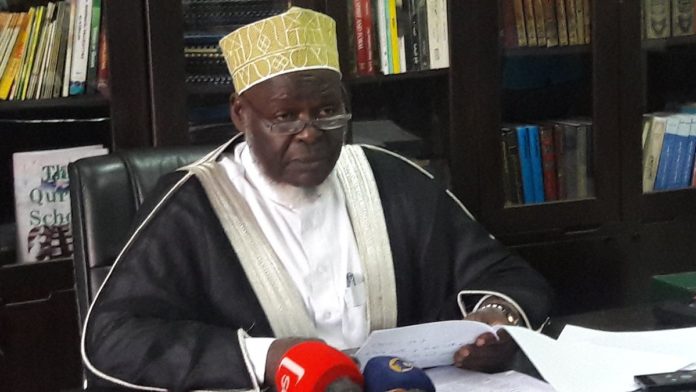
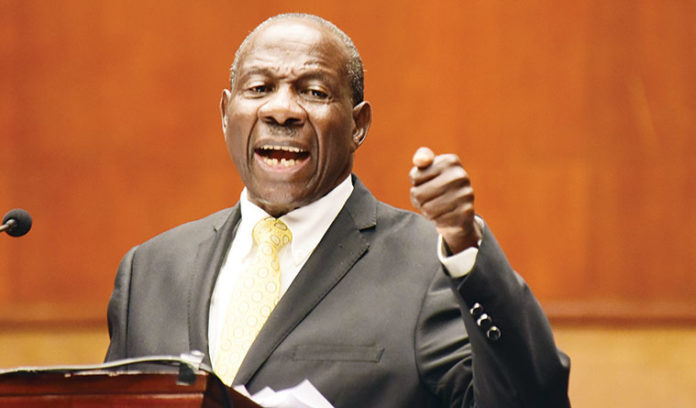
Mufti Sheikh Ramadhan Mubajje, the Chairman of the IRCU addressing the media

Kampala: The chairperson for inter-religious council of Uganda His Eminence Sheikh Shaban Ramadan Mubajje has called upon security organs to redouble their efforts in the fight against insecurity in the country.

In the recent past the country has witnesses various kidnaps, torture and murder of innocent citizens as they demand ransom form agonizing family members.

“We sternly condemn these heinous, ungodly acts that contradict the national motto for God and my Country, holy Books are unequivocal on the sin of murder, “you shall not murder and whoever murders will be liable to judgment Mathew 5:21”,” Sheik Mubajje said in a statement release this morning.

According to Sheikh Mubajje, continuous kidnappings and murders subjected to women by unknown assailants are worrying to women and Uganda at large. He said that they raise more questions than answers for security agencies. “Despite knee-jack arrests, do not seem to have identified the alleged criminals nor understand the motives behind these crimes”.

Adding “Police should speed up investigations and judicial citizens are desirous to understand the root cause of kidnaps and murders, We have not heard of any fully investigated case where prosecution adduces water tight evidence resulting into a verdict beyond reasonable doubt. The Quran does not mince words either as attested to in Surah an-Nissa 4:93 that whoever kills a believer intentionally, his punishment is hell, he shall abide it and Allah will send his wrath on him and curse him and prepare for him a painful chastisement.”

He further noted that as religious leaders, they strongly denounce and condemn the inhuman act of spilling innocent blood, “MPs should review current laws to ensure that they are sufficiently deterrent to digitalized crime,”
He implored parents, faith leaders and communities to be more vigilant and become each other’s keeper, particularly parents.

However according to Inspector General of Police (IGP) Martin Okoth Ochola in the last four months, 42 cases have been reported and investigated. With 42 cases reported but 15 were involved in murder while 10 cases were of self-kidnap. Ochola revealed that eight victims were rescued alive as seven victims went missing.

Stories Continues after ad

Bigirimana elected as chief negotiator for Africa at ILO

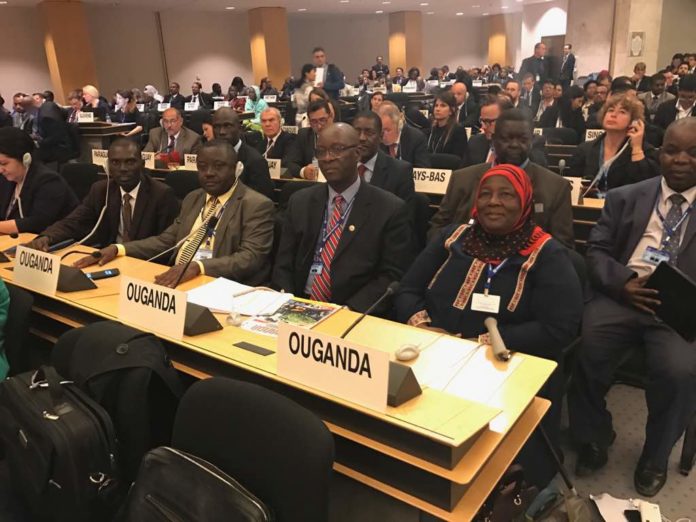
Gender Minister Janat Mukwaya (front R), Permanent Secretary, Pius Bigirimana and other Uganda delegates at the ILO conference in Geneva on Monday.

The Permanent Secretary Ministry of Gender, Labour and Social Development, Pius Bigirimana has been appointed as the Chief Negotiator for Africa at the International Labour Organisation (ILO’s) Standard Setting Committee on Ending Violence at Work.

This was at the ongoing annual International Labour Conference that got under way in Geneva, Switzerland.

The committee comes into existence as the ILO embarks on a process geared towards the adoption of possible new standard or standards on prevention and protection against violence and harassment at work.

The standards are meant to protect workers, whatever their occupation, and whether in formal or informal, urban or rural areas.

The committee will negotiate a guiding framework on how to prevent and address effectively violence and harassment at work.

Its deliberations will culminate into issuance of new instrument or instruments to meet the current needs of work, but also responsive to the new risks concerning violence and harassment at work.

The move has been described as “timely and groundbreaking” because never before has the ILO or any international organization adopted a norm on violence and harassment in the world of work.

In his opening statement as Chief Negotiator for Africa, Bigirimana noted that violence in the world of work remains a global challenge and it therefore presents a strong case for an international labour standard.

“It’s a considered view of the Africa Group that the international standard should take the form of a Convention supplemented by a Recommendation because a Convention leaves no doubt about the international community’s commitment to influence domestic or municipal legislation towards ending violence and harassment in the world of work,” Bigirimana submitted.

He further stated that a Convention opens up state parties to scrutiny by the international Labour Organisations Committee on the Application of Standards, which over the years has proved to be an effective vehicle of securing compliance with international standards.

He also noted that because of cultural differences, accommodation, understanding and tolerance would be necessary especially on the issue of Lesbian, Gay, Bisexual, Transgender and Intersexual (LGTBI).

He then advised the meeting that where because of cultural relativism a common position is not reached on the issue of LGBTI, the Convention should provide for member states adopting municipal legislation that take into account their national contexts but without seeking to impose their national values on others.

He also stated for avoidance of doubt and in line with previous United Nations practice that, the expression of LGTBI should not appear in the proposed Convention and supplementary Recommendation.

Bigirimana is part of the Ugandan delegation led by Janat Mukwaya, Minister of Gender, Labour and Social Development. Other members of the Ugandan delegation include Mr. Peter Werikhe, Secretary General National Organisation of Trade Unions and Douglas Opio, the Executive Director of the Federation of Uganda Employers.

Stories Continues after ad

Panic as PS Keith Muhakanizi sacks CAOs

RIP Keith Muhakanizi.

Twenty local government accounting officers (Chief Administrative Officers) are in panic and will have to look for jobs elsewhere after being sacked by the Permanent Secretary in the Ministry of Finance and Secretary to the Treasury, Keith Muhakanizi, on grounds that they failed to account for public resources.

Muhakanizi made the revelation in a letter to the Permanent Secretary in the Ministry of Local Government, Ben Kumumanya who had written a letter on May 14, 2018 submitting a list of officers for appointment as Accounting Officers for Local Government Votes in financial year 2018/19.

“In accordance to Section 11 subsection 2 (g) of the Public Finance Management Act (2015), some of the officers referred to in your letter above, are not eligible for appointment as Local Government Accounting Officers for FY2018/19,” Muhakanizi wrote to his counterpart in a letter dated May 24,2018.

The cited section says: “The Secretary to the Treasury shall appoint or designate accounting officers in accordance with this Act, except that the Secretary to the Treasury shall not appoint or designate a person an accounting officer where, according to the report of an Internal Auditor or the Auditor General, that person has not accounted for the public resources or assets of the vote for a financial year.”

The Act requires that all government accounting officers submit the budget performance reports and Budget Framework Papers to the Ministry of Finance by specific dates.

Budget performance reports for the first and second quarters are supposed to be submitted by October 31 of every year while Budget Framework papers are submitted by every January 31.

Muhakanizi instead has advised his colleague Kumumanya that should the status of the sacked employees remain as of May 24, he will be required to nominate other officers to replace them.

Muhakanizi in a letter he wrote On March 16, 2018, The Ministry of Finance directed the Local Government ministry to sack 61 district chief administrative officers (CAOs) and municipal council Town Clerks for failing to submit accountability for budget funds as required by the law.

They included:
Christopher Okumu- Masindi
Peter Matsiko – Kisoro Mun. Council
Ishmail Ochengel – Arua
Milton Kato- Gulu
David Kawooya – Iganga
William Kanyesigye- Jinja
Danstan Balaba – Kabarole
Ben Paul Otim Ogwete- Kamuli
Simon Peter Kandole- Kapchorwa
Mathias Ndifuna- Kasese
Eria Magumba- Katakwi
Sarah Nakalungi- Kiboga
Sulaiman Kasozi- Kisoro
Joseph Lomongin- Kitgum
Anthony Martin Lukwago- Masaka
Isa Mbooge-Serere
Bernard Ojwang-Mitooma
Stephen Oloya-Napak
Innocent Birekeyaho-Nwoya
Eria Magumba-Kole
Agago Peter Mulondo-Agago.
Michael Wanje-Kween
Chelimo Alex- Moyo
Francis Amulen- Mpigi
Aloysius Aloka- Nakapiripirit
Geoffrey Okaka- Nebbi
Ssebunya Denis- Pader
Alex Kwizera-Rakai
Joseph Balisanyuka- Soroti
David Lubuuka-Yumbe
Donath Eswilu-Isingiro
Mukasa Kizito-Kaliro
Pius Epaju-Amolatar
Abdu Batambuze –Budaka
Dorothy Ajwang Magoola-Oyam
George William-Dokolo
John M. Behangana-Makindye Mun Counicl
Peter Masiko –Kisoro Mun Council
Joseph Ssebudde –Mityana Mun Council
Stephen Lokope-Kitgum Mun Council
Ronald Ross Baganzi-Kamuli Mun Council
Moses Lorika-Nebbi Mun Council
Ayub Kisubi-Bugiri Municipal Council
Godfrey O. Ogwang-Pakwach
Hanny Turyaheebwa-Rukiga
Edith Mutabazi-Nakaseke
Martin Kiplangat-Amuru

Martin Kisule-Maracha
Francis Opolot-Buyende
Patrick Olila-Lamwo
David W Wamburu-Kiryandongo
Henery Makumbi-Luuka
Esau Ekachelan-Namayingo
Kasajja Kairu-Arua Mun. Council
Deo Ndimo- Fort Portal Mun. Council
Francis Barabanawe-Gulu Mun. Council
Swaibu Balaba-Moroto Mun. Council
Leonard Tumusiime-Masindi Mun. Council
Lillian Kobusingye-Rukungiri Mun. Council
John Bosco Akera –Omoro

Stories Continues after ad

Embrace ICT for technological advancement- Minister Nantaba

Idah Nantaba

Kampala: State Minister for Information and Communications Technology (ICT) Nantaba Aidah has urged girls to embrace ICT as schools uphold it at all levels for technological advancement in the country.

Speaking at Girls in Information and Communication Technology (ICT) day celebrations held at Nabisunsa girl’s school, Nantaba challenged girls to start thinking outside the box and take on ICT as the main target of the day to extend both formal and informal education opportunities to those interested.

“My worry is that only 17 per cent of jobs globally in ICT are held by women, the other percentage is covered by men, this must stop as they embrace ICT to excel and break the digital divide,” She noted.

According to Nantaba out of 830 million youth in world, only 80 per cent of them in 104 countries are online with 94 per cent of young people in developed countries using internet, 67 per cent in developing countries and 30 per cent in less developed countries.

“There was once a time when a girl needed to have a big bum to succeed in life and today you only need brains. ICT will help you in realize your dreams because I believe that girls have equal opportunities just like the men to create the future and decide what it should look like,”

Nantaba emphasized that with technological era; there will be less work to do with papers adding that it is time for schools to adopt ICT lectures for technological advancement.

Girls in information and communication technology (ICT) is an international day that is recommend by the United Nations ICT agency connecting the world through spectrum management, brokering standards and bridging the Digital Divide.

Stories Continues after ad

Zinedine Zidane resigns as Real Madrid manager

Zinedine Zidane manager of Real Madrid.

Spain: Zinedine Zidane has reportedly decided to stand down as Real Madrid manager after leading the club to three Champions League titles in two-and-a-half seasons in charge.

Zidane is expected to reveal his decision in a hastily-arranged press conference in the Spanish capital on Thursday. Radio station Cadena SER said he had decided to quit.

On February 18, Zidane told the Spanish media: “Being a coach is extremely tiring – more so at a club like Real Madrid, when I feel there is nothing more to give, I’ll walk away.”

Stories Continues after ad

FIA says investigations into Justine Bagyenda’s wealth still on

Embattled former Executive Director in charge of Supervision at Bank of Uganda Justine Bagyenda.

The Executive Director of the Financial Intelligence Authority (FIA), Mr Sydney Asubo, has said Thursday that investigations into the alleged illicit wealth of former Director of Supervision at Bank of Uganda (BOU), Justine Baggyenda are still on course, despite yesterday’s petition by a group of youths in Kampala that he has failed to do his job, two months after the whistleblower complained.

The Whatsapp network, dubbed, ‘Youth Power Research Uganda (YPRU)’, yesterday petitioned Prime Minister Dr Ruhakana Rugunda to order the top executives of the FIA to investigate Bagyenda over what they say accumulating illicit wealth as well investigating as her and other BOU officials for their role in the collapse and sale of Crane Bank, National Bank of Commerce and Greenland Bank, among other banks.

Asubo said that two months are too short for the FIA to come to do a thorough report, further stating that his office has not ignored the investigations as alleged by the group whose members feel he is not competent to do the job.
The FIA is a government agency established by the Parliament of Uganda to monitor, investigate, and prevent money laundering in the country. It is also responsible for the enforcement of Uganda’s anti-money laundering laws and the monitoring of all financial transactions inside the country’s borders.

“We commend you for government achievement as per Hakuna Mchezo Kyankwanzi Resolution. However, would like to report to you that some government agencies like the Financial Intelligency Authority…has not yet lived to the expectations of Ugandans as regards investigating some Bank of Uganda officials who are believed to have accumulated illicit wealth which led to collapse of our banks like Crane Bank which used to employ many youths,” the group’s Head of Publicity, Mathius Ssempala, wrote in a May 30, 2018 letter which was sent and received by the Office of the Prime Minister on the same date. It was letter copied to President Yoweri Museveni.

YPRU, an amalgamation of 100 Whatsapp groups with an estimated 3000 members, says its business is to promote social and economic transformation of the youth through advocacy.

The group claims that Mr Asubo has failed to investigate Ms Bagyenda over Shs19b that was said to be on three different bank banks, even as the matter was reported by the whistleblower over two months ago. Some of the banks that have Bagyenda’s money, according to the recent leaked documents include GT Bank, Barclays and Diamond Trust Bank.

“Even after two months after petitioning, there is no any single draft report made hence casting fear amongst anti-corruption crusaders to think that Mr Asubo, the Executive Director of FIA is no longer competent for the job,” the letter reads in part.

Meanwhile the group has commended Speaker of Parliament Rebecca Kadaga for advising the Auditor General to go ahead and audit BOU as to how three banks, including Crane Bank, could be hastily closed without considering the impact to jobs of the youths and financial penetration. “Many stakeholders like the youths want culprits punished if there was collusion syndicate to profit,” the letter further reads.

The group says investigations into BOU will increase confidence in investors as well as increase foreign direct investments the country. “We do not want any stone … unturned,” the letter concludes, praying that government will consider the group’s recommendation.

Stories Continues after ad

Don’t blame the hustler blame the game” in response to Muwema

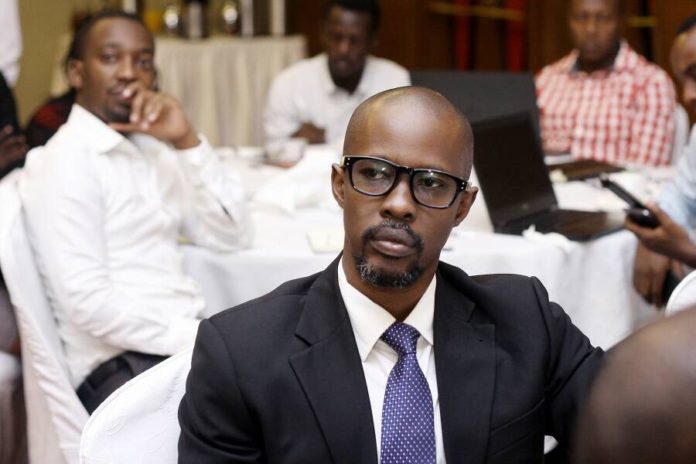
Mr. Izama at a recent function.

“Every hood gat’ their own hustlers But this is the hustler’s anthem HUSTLE HARD” – Ace Hood

By Angelo Izama

Dear Editor,

In his most recent article your columnist Mr. Fred Muwema, while ignoring most of my arguments to his earlier gratuitous conflation of the crimes of kidnapping with the broader issue of counterfeiting, once again provided little by way of evidence or even argument to back up his claim that proper regulation of counterfeiting can lead us to the doors of violent kidnappers.

It appears his purpose is to draw your readers’ attention to the negative effects of counterfeiting by piggybacking on the current public sense of insecurity following the spate of violent murders and kidnaps in Uganda. Let us agree that counterfeiting can be harmful and that criminal entrepreneurs may on occasion engage in distribution of counterfeit products as well as kidnapping.
However, there is little value to public policy on crime detection and prevention to suggest an evidentiary lead claimed in his first article that to fight kidnaps one must fight counterfeiting.

Moreover, before we return to the serious matter of flaccidity of law enforcement in general and elite capture of the regulatory space – let us observe the following. Terrorist organisations may dabble in kidnapping and ransoming without needing to supplement their income from running counterfeiting operations. Likewise, counterfeiting networks need not operate kidnapping operations to be successful and often do not.

There can be a link, but it must be taken on the merit of each case.
In the port area of Kismayo, Somalia for example, a thriving illicit economy is probably benefiting Al Shabab militants who separately kidnap and kill their victims. These terrorist networks are reportedly taxing transit of the illegal charcoal trade transiting through the port areas as well as other imports – not excluding counterfeited products. In Kampala, according to one estimate over 60 per cent of spirits, whiskeys and wines are counterfeit. It does not follow that the proprietor of Brisk Bar on Wampewo in Kololo is running a kidnapping ring or that “Charlie” and “Elvis” or Ange Noir/Guvnor as well as Silk Lounge, both popular bars and clubs are criminal masterminds with a ransoming side income.
In fact, there are more serious aspects of organized crime in East Africa such as the drugs and narcotics trade that allegedly involve unofficial cover of certain elements in security to guarantee passage through airports and ports – that have no connection to kidnapping for ransom but may explain some other types of violence associated with such protection rackets.

It would be helpful for Muwema to consider that the particularities of the kidnap and ransom epidemic right now along with other crime waves such as the human/child sacrifice wave in recent times as well as the school and market fires (and Iron Bar hitmen). If one were to situate counterfeiting within these waves – will it show some evidentiary link? Probably not.

Mr. Muwema, in calling attention to some of the harm caused by counterfeit products, is also only kicking the can down the road of the issues bedevilling illicit economies. The dark economy in Somalia is an outgrowth of state failure for example and it follows that one cannot jump to regulation without understanding the context within which illegal and harmful activities occur. As a matter of fact, illicit economies are critical for the survival of disadvantaged sections of our community, the “marginalized and underprivileged” or to put it directly to the majority outside the narrow elite that live and operate in controlled (and protected) spaces. Without a commentary on their so-called criminality – these illegal economies are the legitimate “hustle” of the underprivileged. To “hustle hard” is to survive by any means necessary where opportunities are unavailable. This is the only morality worth paying attention to – survival.

A lot of social mobility depends on illicit economies. “Fake it till you make it” is not an empty aphorism for the hustlers in Kampala’s 67 slums who may be counterfeiting the bulk of products for common use. They see these activities as real avenues to progress and it is likely Mr. Muwema’s downtown clients who pay in cash (and not cheques or credit cards) will have a connection to the informal economy where the hustle is hard and to survive one has to hustle hard (though I recently learned that over 80 per cent of law firms in Uganda are themselves not registered to pay tax so we know the hustle is everywhere).
If Muwema were to walk up the strip of bars and clubs next to his office at night – the hundreds of “ghetto Cinderellas” who color the night life of Kampala and give it its reputation as a fun-loving city shall likely be dressed in Asian knock-offs but are still essential patrons to Casablanca, Big Mikes, O’Leary’s or Riders.

An artefact from this cross pollination from downtown hustle to uptown respectability is how it is accepted in Uganda that lower denomination dollar bills have a lesser value.

I remember going to exchange dollars at a forex bureau in Forest Mall in Kampala. My US $20 bills were segregated by year and given a lower value. I told the teller nowhere in the world does the same dollar have different values and asked why it was in Uganda. She said this was how business was done. A graduate from Makerere University, I reminded her that the “tradition” of putting a higher value on more recent bills originated downtown from the “Magendo” era when scarce forex had led to an increase in fake currency. To make things work the downtown traders, the forebears of the Kampala City Traders Association (KACITA), many of who were smugglers of coffee and other items, devised a culture on dealing with only latest bank notes. Many of them became legitimate businessmen and realised their hustle. One of them (convicted for money fraud in the United States), my friend Al Haj Nasser Ntege Sebaggala, became Mayor.

As the head of the Uganda National Bureau of Standards Dr. Ben Mayindo observed this month, speaking about fake products in the market “We know them (counterfeiters) but we cannot kill them because these local industries are the backbone of industrialization, they employ Ugandans and develop the economy”. The Anti-Counterfeiting Tsar (Dr. Mayindo) did not have to jump to a fantastical association of fake products with violent criminality but he did concede that the fake industry today is the real one tomorrow (I will leave out the story of Movit Products Limited for another day).

Finally, and returning to the general question of the political economy of crime. As Charles Tilly, the British sociologist theorised in “War Making and State Making as Organised Crime, illicit economies like other protection rackets benefit the elite. It is unlikely that Muwema will purchase fake drugs (I hope not) but I bet every 80 cents of a dollar from a counterfeit drug ends up with some elite fat cat. It is the elite that can organise protection from regulation and regulators. It is the elite who also seek to extract value from the control of these activities.

When I first encountered the story of fake Hepatis B vaccines – my reaction was to read it as an attempt by one group of elite racketeers to corner the million-dollar market (mostly private) of Hep B vaccine. How else would one explain away the regulatory oversight that had allowed millions of so-called vials into the market already? It was someone’s racket. There are many of them and in the last article I mentioned specifically the racket around sacket alcohol and sports betting which have successfully avoided taxation being better protected for now.

Finally,these rackets can get out of hand and distort law enforcement capacity in general. They can also get violent. After the 2006 election and forced to think about political transitions I initially looked to Pakistan and Egypt (because of the large role the military plays in politics) as well as Indonesia (which had a dirty democracy superintended by military rulers who started off with a nationalist ideological socialism like the National Resistance Movement (NRM).

In 2010, I had an interaction on both issues (crime and governance) with the former Inspector General of Police Gen. Kale Kayihura (the last time we also met). It was a brief breakfast at which Gen. Kayihura (who first caught my attention as the ideological captain of the Uganda Peoples’ Defence Forces (UPDF) as Political Commissar. He used the term “centrifugal forces” to warn about change in Jinja and forever had my interest). The meeting was meant to talk about the upcoming election. I had been briefly held for writing in the Monitor (together with Henry Ochieng), that entrenched regimes risked triggering people power protests.

This meeting was to precede the people power upsets in Tunisia and then Egypt which formed the policy of violent crackdown by the Uganda police on protests in general. However, at the time we met to discuss a view I had on the position of the police. I suggested to the General that increasing crime including the iron bar affair were being driven by the deteriorating economy which was hurting particularly the inner cities.
I drew a comparison between rising inflation and crime (looking at the police crime statistics themselves that showed that majority of crimes had an element of the economy in them). I urged the General, therefore, not to conflate the wave of criminal instability with some overtly political reason (such as urban insurgency) since the same crime could clear if economic conditions improved. In similar vein the police could do little to change the economy which was a matter for other government departments.

Suffice to say this conversation had no impact on the official policy of the Uganda police which cracked down hard on the economic crisis after the election typified by the “Walk to Walk” protests that occurred under severe economic strain and high inflation. Later Gen. Kayihura would also adopt a view that employing high numbers of young people as crime preventers could serve as a solution to keep both crime and protest low. It did not work.

Today the political economy of crime looks closer to Mexico. Violent criminality in that country exists side by side with a thriving democracy and shows how out of hand things can get. At that point even if one concluded that criminal network dabble in many enterprises including counterfeiting – it will not help Muwema’s argument.

The hustle in some of Mexico’s drug towns is truly hard.

Stories Continues after ad

Parliament finally bows to Museveni’s orders to tax mobile money social media

Finance Minister: Matia Kasaija.

Parliament yesterday bowed to President Museveni’s orders and approved proposals to tax mobile money transactions and social media, meaning Ugandans come the financial year 2018/19 will have to painfully dig deeper into their pockets to enjoy the two services.

The decision followed a heated debate by Members of Parliament (MPs) on the report of the Finance Committee on suggestions presented by the government through the Excise Duty (Amendment) Bill which is aimed at raising more revenue domestically to fund infrastructural government projects as well as delivery of services.

The approval means that each person using social media platforms like WhatsApp, Twitter, Facebook, You Tube, Viber and Skype among others, will be subjected to a daily levy of Shs200 while each mobile money transaction will be subjected to a 1 per cent excise duty. The government is projecting to collect Shs284 billion from the measures.

Also approved is the Shs200 levy on every litre of cooking oil, Shs100 for every litre of diesel and petrol, Shs650 on each litre of Opaque beer, Shs150 per litre on ready to drink spirits and Shs200 for every litre of non-alcoholic beverages with the exception of fruit or vegetable juices.

However, MPs in the same Bill reduced excise duty on soft drinks from 13 to 12 per cent and exempted sugar confectionaries including chewing gum, sweets and chocolates to enhance Uganda’s competitiveness in the East African region where countries have exempted confectionaries.

However during the debate, MPs showed different opinions on the tax measures. The Leader of Opposition Winifred Kiiza, Bungokho North MP Gershom Sizomu Wambedde, Manjiya MP John Baptist Nambeshe, Bukoto East MP Florence Namayanja, Kassanda County MP Patrick Nsamba Oshabe and several others opposed the 1 per cent tax on mobile money transactions saying that it would exclude the majority of Ugandans from financial transactions.

Aruu Country MP Odonga Otto supported the tax on social media, saying Ugandan citizens can afford it on a daily basis.

The proposed tax measures were ordered by the President in a March 12 letter to Finance minister Matia Kasaija.
“I am not going to propose a tax on internet use for educational, research or reference purposes… these must remain free. However, olugambo on social media (opinions, prejudices, insults, friendly chats) and advertisements by Google and I do not know who else must pay tax because we need resources to cope with the consequences of their lugambo,” Mr Museveni wrote.

The government expects to generate Shs951 billion from all the proposed new policy measures and anotherShs272b from administrative efficiency. In the financial year 2018/19, government plans to collect a total of Shs16.2 trillion tax revenue, which is a task the Uganda Revenue Authority (URA). In the current financial year that ends in early June this year, URA was tasked to collect just above Shs15 trillion as tax revenue.

In the financial year 2016/17, URA collected Shs13 trillion which was less than half of the national budget of Shs 29 trillion. In order to cover the deficit, the government had to borrow externally and domestically, as well as sourcing from development partners. Analysts say URA is unlikely to collect Shs15 trillion tax revenue in the current financial year given the slow growth of the economy.

Despite the approval of new tax measures, MPs on the ICT and the Budget Committees of Parliament recently urged President Museveni and Minister Kasaija to put more efforts in the fight against corruption and other forms of financial indiscipline in government institutions in order to save the funds needed for service delivery.

The legislators referred to a 2016 survey by the Public Procurement and Disposal of Public Assets Authority (PPDA) that revealed the embezzlement of public money through inflated procurement deals, pointing at Education and Defence ministries among the worst thieving government agencies.

The PPDA survey blamed political meddling in the procurement processes, impunity and a decadent culture that loves wealth accumulation in the shortest time possible. In 2005, the World Bank estimated that Uganda loses more than US $300 million through corruption and procurement malpractices every year.

Further a number of Civil Society Organizations including Tax Justice Alliance Uganda and Consumer Education Trust and Civil Society Budget Advocacy Group (CSBAG) among others, argue that the proposed taxes are regressive to the ordinary Ugandans.

“Mobile money is currently a tool used by a cross section of Ugandans. We observe that this tax is regressive, it does not consider the income differences in the population and will hinder financial inclusiveness,” Nelly Businge from the Tax Justice Alliance said recently.

Mr Businge advised the committee to differ the tax until a thorough and comprehensive plan to tax internet and online services is formulated.

Livingstone Ssewanyana, Foundation for Human Rights Initiative (FHRI) executive director is of the view that as government widens the tax base it should be mindful of access to information. He says social media tax is an attempt to undermine individual freedoms of Ugandans, further statting that People are already paying VAT, PAYE, and Property Tax and are complaining. He says social media tax will further burden Ugandans. “Government collects a lot of money already, what it needs to deal with is corruption,” he says.

The World Bank has in the recent times urged government to widen its tax base to collect revenues domestically instead of relying on external borrowing that has continued to raise the country’s debt.

In March this year, Bank of Uganda warned that the country’s public debt which had reached US $15.1 billion or 50 per cent of the gross domestic product. It was US $ 6 billion three years ago. BOU said the huge debt could among others affect the country’s economic growth because of reduced public investment.

Stories Continues after ad

Global tour firm awards Kabira Country Club certificate of excellence

Kabira Country Club

Kabira Country Club in Kampala is celebrating yet another milestone after it was last week awarded the prestigious Certificate of Excellence from Trip Advisor, an American travel and restaurant website company that majors in providing hotel and restaurant reviews, accommodation bookings and other travel-related content.

The certificate is in recognition of the good services that Kabira Country Club offers to clients. Vismay Maniyar, the general manager of Kabira Country Club, said such international appraisal, especially by customers and guests, inspires them to be a better hotel.

“It gives us the boost we need to be better every day. We shall always go an extra mile to make our guests happy and contented. We shall work hard to make sure that the vision of our managing director Mr. Rajiv Ruparelia to have world class hospitality at Kabira country Club is fulfilled.” Said Maniyar.

Kabira Country Club is the number one boutique hotel in Kampala, with a world class restaurant, gymnasium, accommodation and a heated swimming pool. It is also the perfect hotel for a relaxing get away and venue to hold special events, weddings and business meetings in Kampala.

The hotel offers a wide range of accommodation options ranging from Single room, double rooms to three bedroom duplex Penthouse. The rooms and Suites offer 24-hour room service, air-conditioning, Satelite TV, bathtub and many other amenities.

It also has world class sporting and recreational facilities like a fully equipped gym which cater for a wide range of fitness and wellness needs. The hotel has 2 heated swimming pools, 3 squash courts, a sports field, four clay floodlit tennis court and floodlit basketball court and spa.

The offers world class facilities for conferences, meetings, seminars and workshops. Conference halls are equipped with latest Audio and Video systems to give your seminars, workshops, business meetings & conferences the digital look and interactions you need.

Stories Continues after ad

Security tight in hotly contested Rukungiri by-election

NRM candidate, Winfred Matsiko casting her vote.

Citizens’ Coalition for Electoral Democracy in Uganda (CCEDU) says security is tight much as it has deployed its observers to monitor the Rukungiri district woman MP by-election in all the 16 sub counties, town councils and divisions.

Although the campaigns ended without serious incidents, CCEDU says the district remains a sea of security personnel and equipment. “Security remains generally very tight as per this morning – May 31, 2018,” it says in its press release.

Observers say several roadblocks have been mounted at specific entry and exit points of Rukungiri district. For instance, last night, roadblocks were erected at Buyanja (Omukiragiro) on Ntugamo-Rukungiri road and at Nyakibaare at the junction of Nyarushanje and Nyakishenyi sub counties. The roadblocks are being manned by military Police.

“From the on-set, this by-election can be described as a highly securitized affair especially judging from the number of senior military officers present and active in the district as well as the level of deployment of the rank and file security personnel,” the NGO says.

FDC candidate Betty Bamukwatsa talking to the media after casting her vote.

Apparently the Electoral Commission (EC) itself is trying to manage an ostensibly overbearing security apparatus to ensure that voters exercise their franchise in a reasonably calm environment without undue interference or intimidation. The observers on the ground say it is certainly not going to be an easy job for any of the election stakeholders considering the high stakes in this by-election.

The ruling National Resistance Movement (NRM) is determined to retain the district seat but Forum for Democratic Change (FDC) and the opposition seem resolved to marshal against an evidently tumultuous environment to clinch yet another seat in Parliament.

Rukungiri district has 16 sub counties, 87 parishes, 280 polling stations and 177,086 registered voters.

There are four (4) candidates vying for the Rukungiri District Woman MP position: Winfred Matsiko (NRM), Betty Muzanira (FDC), Fabith Kukundakwe (PPP) and Prisca Sezi Mbaguta (independent). Two (2) independent candidates: Atukunda Sheilla and Rwakitonera Elizabeth withdrew from the race days to the polling date, citing financial reasons.

Observers are paying keen attention to three (3) of the 16 sub counties including: Nyakishenyi, Nyarushanje and Bwambara, which are said to be potential hotspots, based on occurrences in previous elections.

Unlike in previous by-elections of this nature, delivery of polling materials to the furthest sub counties of: Bikurungu town council, Nyakishenyi sub county, Bwambara sub county and Nyarushanje sub county was done yesterday (30thMay) to ensure that materials are at polling stations in time to allow for opening of polling stations at the designated 7:00am hour.

Today, EC begun dispatching polling materials to the other 12 sub counties at around 4:00am and by 6:00am, the process had been almost completed. Polling materials were being transported from the Rukungiri district EC offices.

Stories Continues after ad