Stanbic Bank
Stanbic Bank
20.1 C
Kampala
Stanbic Bank
Stanbic Bank
Home Blog Page 1565

Firm accuses Minister Anite of derailing UTL bidding process

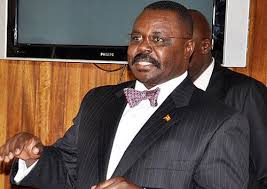
Evelyn Anite

As Ugandans wait for the investors to take over the indebted Uganda Telecom (UTL), a firm that was among the first to bid has come out, accusing the State minister for investment Evelyn Anite of derailing the bidding process that should have produced the best bidder by now.

Mauritius Telecom says Anite is fronting two new firms that did not participate in the four rounds of the bidding process. They are; Afrinet, a subsidiary of Kenya’s Safaricom,. The firm is said to be represented by Kampala businessman Bob Kabonero who initially was the front for Telecel Global. We could not verify this from Kabonero as his telephone number was off.

The other firm that the bidders say Anite wants to be included is Hamilton Telecommunications. Hamilton is being fronted by a senior minister and a member of of the first family. according to sources, Mauritius says they are being frustrated by Anite. Mauritius has Reportedly complained of the entire process being a fraud. Apart from Mauritius Telecom, the other firm that is reportedly performed well in the four stage bidding process, is Teleology Holdings Limited. Teleology Holdings Limited actually offered to pay US $500 million during the bid process for the sale of 9mobile in Nigeria. It emerged as the preferred bidder beating MTN Nigeria and Dangotel

Mauritius says firm says Anite has usurped the powers of the Provisional Administrator Bemanya Twebaze who is also the executive director of the Uganda Registration Services Bureau. UTL went into receivership effective April 28, 2017, following its heavy indebtedness amounting to Shs533 billion. Anite could not answer our calls.

“I shall refer you to the request of expression of interest for acquisition of UTL in the New Vision dated 10th January 2018. This expression of interest closed on 25th January 2018. We are now in huge shock and wondering how these two companies have been solicited. It is now a question of transparency of the bidding process,” the company says.

The investors of the company now looking upon God and President Yoweri Museveni to save the situation. “Only divine intervention from God and or H.E.Y.K. Museveni can salvage the UTL situation from Anite and The Administrator,” they say.

The first round saw 11 firms bid to take over UTL. Some of the companies were; China Telecom, , Telecel Global, Teleology Holdings Ltd., Liquid Telecom and Baylis Consortium.

The companies underwent a rigorous exercise as regard their technical and financial capabilities which left only seven in the second round where further scrutiny was done, leaving only five companies, even though China Telecom did not submit at this level.

It is at the third round that new companies emerged, one-Neubacher allegedly supported by Foreign Affairs Minister Sam Kutesa and his business associates. The Administrator opted for the third round in the hope that he would get a company with huge monies to pay off UTL’s creditors. No company among the first bidders had the figure required for the sale of UTL assets.

Further Cabinet’s pronouncement on its commitment to extent UTL’s service licence for 20 years, extend frequency band width, provide tax waivers and free access to the national backbone meant that the Administrator had to make bidders to revise their bids and thus the fourth round. Afrinet and Hamilton Telecommunications did not participate in any of the rounds.

According to investors of Mauritius Telecome, the administrator should have announced the best bidder by April 2018. More fear is that the administrator’s term of operation expired on May 22, 2018.

Stories Continues after ad

Cigar smoking: ‘World No Tobacco Day’ to be marked today

Musician Keko smoking

Uganda will join the rest of the world today to celebrate The World No Tobacco Day, according to the United Nations World Health Organisation (WHO).

Every year, May 31, WHO and partners mark World No Tobacco Day (WNTD), highlighting the health and other risks associated with tobacco use, and advocating for effective policies to reduce tobacco consumption.

However, the focus of World No Tobacco Day 2018 is “Tobacco and heart disease.” The campaign will increase awareness on the: Link between tobacco and heart and other cardiovascular diseases (CVD), including stroke, which combined are the world’s leading causes of death.

It will also focus on feasible actions and measures that key audiences, including governments and the public, can take to reduce the risks to heart health posed by tobacco.

According to WHO, World No Tobacco Day 2018 coincides with a range of global initiatives and opportunities aimed at addressing the tobacco epidemic and its impact of public health, particularly in causing the death and suffering of millions of people globally.

The actions include initiatives, which aim to reduce cardiovascular disease deaths and improve care, and the third United Nations General Assembly High-level Meeting on the Prevention and Control of NCD , being held in 2018.

How tobacco endangers the heart health of people worldwide
World No Tobacco Day 2018 will focus on the impact tobacco has on the cardiovascular health of people worldwide.

WHO says that tobacco use is an important risk factor for the development of coronary heart disease, stroke, and peripheral vascular disease.

“Despite the known harms of tobacco to heart health, and the availability of solutions to reduce related death and disease, knowledge among large sections of the public that tobacco is one of the leading causes of CVD is low,” says WHO.

Facts about tobacco, heart and other cardiovascular diseases
Cardiovascular diseases (CVD) kill more people than any other cause of death worldwide, and tobacco use and second-hand smoke exposure contribute to approximately 12% of all heart disease deaths. Tobacco use is the second leading cause of CVD, after high blood pressure.

The global tobacco epidemic kills more than 7 million people each year, of which close to 900 000 are non-smokers dying from breathing second-hand smoke. Nearly 80% of the more than 1 billion smokers worldwide live in low- and middle-income countries, where the burden of tobacco-related illness and death is heaviest.

The WHO measures are in line with the WHO Framework Convention on Tobacco Control (WHO FCTC) and can be used by governments to reduce tobacco use and protect people from NCDs. These measures include: Monitoring tobacco use and prevention policies, protecting people from exposure to tobacco smoke by creating completely smoke-free indoor public places, workplaces and public transport, offering help to quit tobacco (cost-covered, population-wide support, including brief advice by health care providers and national toll-free quit lines.

Others are; warning about the dangers of tobacco by implementing plain/standardized packaging, and/or large graphic health warnings on all tobacco packages, and implementing effective anti-tobacco mass media campaigns that inform the public about the harms tobacco use and second-hand smoke exposure and enforcing comprehensive bans on tobacco advertising, promotion and sponsorship and Raising taxes on tobacco products and make them less affordable.

In Uganda as government finalises the 2018/19 budget, the Economic Policy Research Centre (EPRC) in its policy brief ‘Using taxation to control tobacco consumption in Uganda’ has urged that government slaps a 70 percent tax on the retail price of cigarettes, which could make it a costly venture for the youth.

In Uganda it noted that although the percentage of tobacco use has reduced over the past five years from 10.5 per cent in 2012/13 to 5.4 per cent in 2016/17, smoking prevalence among the youth has remained higher than the national rate,” says the brief in part.

The Uganda Global Youth Tobacco Survey Report (2008) established that up to 15.6 per cent of the students had ever smoked cigarettes while the national was 8.5 per cent as of 2010.

Despite signing and ratifying the World Health Organization Framework Convention on Tobacco Control (WHO FCTC) in June 2007 Uganda, the EPRC says, has not levied the WHO-recommended 70 per cent on retail price for cigarettes.
Goals of the World No Tobacco Day 2018 campaign

World No Tobacco Day 2018 aims to: Highlight the links between the use of tobacco products and heart and other cardiovascular diseases, Increase awareness within the broader public of the impact tobacco use and exposure to second-hand smoke have on cardiovascular health, Provide opportunities for the public, governments and others to make commitments to promote heart health by protecting people from use of tobacco products.

Stories Continues after ad

European Union to pump shs118b in Ugandan Civil Society

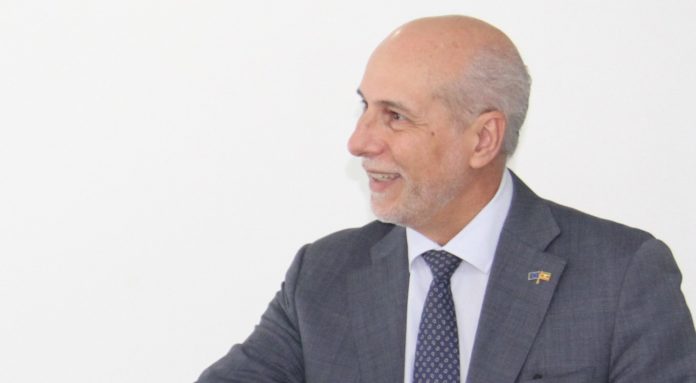
EU Head of Delegation to Uganda, Ambassador to Uganda Attilio PACIFICI

The local civil society organisations (CSOs) in Uganda now stand a chance to perform their advocacy role better as the European Union and Germany will tomorrow avail Shs118b (Euro26.9m) grant for strengthen their capacities.

The money will come through the project-Civil Society in Uganda Support Programme (CUSP) to be launched tomorrow at the Sheraton Kampala Hotel.

“The EU believes in the strong role Civil Society Organisations play for any country’s development. The EU firmly believes in the benefits of a fruitful and constructive collaboration between state agencies and civil society organisations,” the EU Media Advisory says.

High profile delegates expected at the launch of the project are; European Union Head of Delegation to Uganda, H.E Ambassador Attilio PACIFICI, The Chargé d’Affaires of the German Embassy, Ms. Petra Kochendörfer, The Chairperson of the National Planning Authority, Dr. Wilberforce Kisamba Mugerwa, The Country Director of GIZ Uganda, Mr. Christian Schnurre and Representatives of Civil Society Organisations.

The launch of the project comes at the time when government of Uganda is planning tough measures aimed at checking the financial sources of the CSOs. Most CSOs receive their financial support through wire services and government fears this could be form part of illicit financial flows.

The recently launched Financial Intelligence Authority (FIA) is mandated to scrutinize the financial stand of the CSOs which say government wants to use FIA to curtail their advocacy role especially that that touched on democracy and human rights.

The law demands that commercial banks alert the government or other investigative authorities of any suspicious transactions and large cash movements by NGOs, individuals or any other entity.

Stories Continues after ad

Two withdraw candidature in Rukungiri by-election

EC Chairman Justice Byabakama addressing journalists in Kampala recently

Rukungiri: The chairperson for Electoral commission Justice Simon Byabakama has revealed that two people have withdrawn their candidature as political temperature raised in Rukungiri by-election slated for 31st may 2017.

According to statement released by Justice Byabakama, the commission registered six candidates however two have withdrawn citing financial implications.

“I wish to inform all stakeholders that on 21st May 2018 and 29th May 2018, respectively, candidates Atukunda Stella (Independent) and Rwakitonera Elizabeth (Independent) officially wrote to the Electoral Commission, informing us about the withdrawal of candidature for the District Woman Representative to Parliament for Rukungiri,” he said in a statement release in this evening.

The remaining candidates include: Bamukwatsa Betty Forum for Democratic Change (FDC), Kukundakwe Fabith People’s Progressive Party (PPP), Matsiko Winfred Komuhangi National Resistance Movement (NRM) and Sezi Prisca Bessy Mbaguta Independent.

He noted that the Commission has issued a notice of withdrawal and it will be posted at all the two hundred and eighty (280) polling stations in Rukungiri District, notifying the electorate not to cast their votes for candidates who have withdrawn from the race.

Justice Byabakama warned the general public that whoever votes for any of the two candidates, who have withdrawn from the race, will have rendered his or her vote invalid.

He asked candidates, supporters and police to observe peace and law as the clock ticks towards polling day, “Polling shall be by universal adult suffrage starting at 7:00am and ending at 4:00pm and thereafter, counting of votes and announcing of results by the respective Presiding Officer shall take place,” he added.

Further said the commission has established complaints desk for any a query desk and toll free numbers for transparency of the election process.

“I call upon the voters to come out early and freely cast their vote because everything is ready, let us all work together to achieve a credible exercise,” he concluded.

Stories Continues after ad

Best students in USE’s University Challenge rewarded

USE University Challenge

When Robin Ahimbisibwe a 3rd year student at Makarere University heard about the Uganda Securities Exchange (USE) University Challenge, he found it as an opportunity for him to learn how to trade in shares.

He thus rushed online and signed up.

“For a long time I had wanted to learn how to trade, but the requirements for me to trade were too complicated, says Ahimbisibwe. When I heard about the University Challenge I wanted to learn, so I just went online and signed up.”

Unknown to him, was that months later he would be Shs10 million richer.

“The first month was challenging,” he says. “but I had too much money and a lot of choices to trade, I did not know which one would work.” He says

Each participating student got Shs35, 000,000 virtual startup capital to trade with using real-time data of shares and bonds prices streamed from the USE.

“I read a lot, and asked a lot of questions on the discussion forums.”

He notes that this is what helped him make trading decisions.

The USE University Challenge is an annual virtual trading competition targeting students in institutions of higher learning.

The challenge, according to Paul Bwiso the USE CEO is aimed at raising awareness among the younger generation on investing in the stock market and helping them create a culture of saving and investing early on though the exchange.

Ahimbisibwe is among the 214 students who participated in the challenge last year. He won Shs10 million shillings’ worth of shares for emerging the winner.

Martha Rukundo, a student from Kyambogo University emerged third.

“I now know how to trade when I get actual money,” says Rukundo. She gets Shs2.5 millon to invest in the Exchange.

The two, together with Nashir Jombe from Makerere University were considered by a panel of judges to have made the soundest investment decisions.

“We also judged them on the reasons they gave for trading as well as their portfolio balance and valuation,” says Andrew Mwima one of the judges.

“We noted that most of the students concentrated their investments in one instrument and never practiced diversification,” notes Mwima.

“We hope that in the next challenge they will diversify their investments.”

Bwiso added that the University Challenge will be annual in a bid to continue enhancing financial management and investment among the youth.

Stories Continues after ad

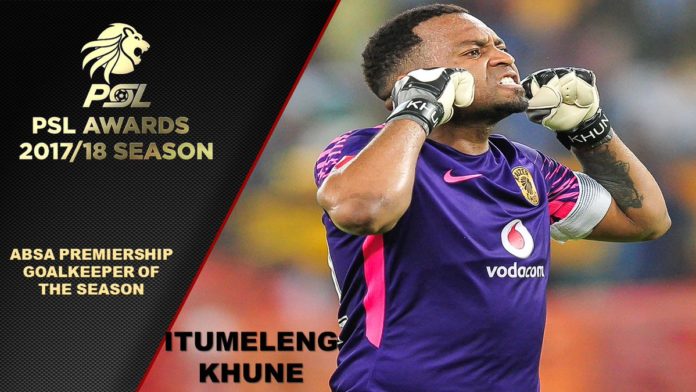
Khune pips Denis Onyango to PSL goalkeeper of the season award

Khune wins Goalkeeper of the season ahead of Onyango

Kaizer Chiefs goalkeeper Itumeleng Khune has been voted the ABSA Premier Soccer League (PSL) goalkeeper of the season ahead of Mamelodi Sundowns’ Denis Onyango.

The 30-year-old South Africa’s number one managed to keep 16 clean sheets in 27 league matches compared to Onyango’s 12 clean sheets in this season.

Denis Onyango has previously won the award two times in his career while in South Africa (2015 and 2016).

Mamelodi Sundowns manager Pitso Mosimane won the Coach of the season after leading Sundowns to an eighth league title while their forward Percy Tau won the Player of the Season and the Players’ Player of the Season awards.

The Sundowns marksman also shared the top scorer award with Polokwane City’s Rodney Ramagalela after the two players finished the season at 11 goals.
The awards ceremony was held at Sandton Convention Centre, Johannesburg on Tuesday night.

Full list of the PSL Award winner 2018:

MTN Last Man Standing: Ronwen Williams (SuperSport United)

Telkom Knockout Player of the Tournament: Amr Gamal (Bidvest Wits)

Nedbank Cup Most Promising Player: Lebohang Maboe (Maritzburg United)

Nedbank Cup Player of the Tournament: Lebohang Maboe (Maritzburg United)

Multichoice Diski Challenge Most Precious Find: Siboniso Conco (Lamontville Golden Arrows)

Multichoice Diski Challenge Player of the Tournament: Itumeleng Shopane (Kaizer Chiefs)

Goalkeeper of the Season: Itumeleng Khune (Kaizer Chiefs)

Defender of the Season: Siyanda Xulu (Maritzburg United)

Midfielder of the Season: Siphesihle Ndlovu (Maritzburg United)

Young Player of Season: Siphesihle Ndlovu (Maritzburg United)

Goal of the Season: Siphelele Magubane (Lamontville Golden Arrows)

Coach of the Season: Pisto Mosimane (Mamelodi Sundowns)

Player’s Player of the Season: Percy Tau (Mamelodi Sundowns)

Footballer of the Season: Percy Tau (Mamelodi Sundowns)

Stories Continues after ad

The case for a competitions authority

Baker Mugaino.

By Baker Mugaino

In 2010 the East African Community became a Common Market with one of the objectives being that single a market will increase competitiveness.

This in turn would make the existence of monopolies difficult and thus greater benefits to consumers. Under the Common Market, inter-regional trade has consistently been liberalized with the aim of achieving zero tariffs among member states. By opening up her boarders, Uganda increased its trade competitiveness in the EAC which has increased regional trade and pressure on the local firms to be production efficient. This may in future lead to high quality, low priced goods for both regional and domestic consumers.

Notably also the EAC is in the process of signing free trade agreements with America and the European Union. This means the opening up of Uganda’s boarders to the more advanced and efficient firms of the west. The question then becomes not whether Uganda’s firms may compete, but if its economy is protected from the effects arising from offshore anti-competitive practices that may arise.
It therefore, needs no mention that having a competition policy will enable Uganda enjoy the benefits of regional and global trade liberalization.

What is competition law?
Competition law is a set of rules and remedies that governments may adopt to prohibit and challenge practices by private enterprises and public authorities that restrict or distort the contestability of a territorial market. For example……
On the other hand, anti-competitive practices refer to a wide range of business practices in which a firm or group of firms may be engaged in order to restrict inter-firm competition to maintain or increase their relative market position and profits without necessarily providing goods or services at lower costs or of higher quality. These practices include price fixing, cartel formation, monopoly and abuse of dominant positions.

How the competition policy can help
A competitive legal regime helps in regulating these anti-competitive practices to satisfy consumer welfare. This creates social stability by protecting the lowest class from economic power.

In Uganda the government policies of privatisation and trade liberalisation are evidence of government’s intentions to promote competition and non-interference in the market. However, there is no comprehensive policy and law that addresses anti-competitive trade practices, although a bill is being prepared.

Uganda also has a series of statutory monopolies in the utility sector that set their own prices subject to approval of the relevant minister. There is no professional central investigative authority to monitor and coordinate their activities. Yet the existence of anticompetitive practices in essential commodities increases the cost of living and poverty. The policy would….
The existence of international cartels in the cement industry, a vital construction ingredient, increases government’s cost of providing infrastructure such as roads and hospitals. This infrastructure is essential for attracting investment (consequently) increasing the countries competitiveness in the region. With a competition policy in place….

Competition regime also increases the effectiveness of government procurement through its control of collusive tendering. This leads to the efficient use of the limited government funds in the provision of infrastructural services.
However, the absence of competition policy may also attempt firms to engage in multinational anticompetitive practices that distort Uganda’s market leading to not only to higher cost of commodities but also reducing the potential of local firms to export to the liberalised regional market.
That aside research has shown that foreign firms are most likely to invest in developing countries with competition legislation. This is because competition policy provides foreign investors with level playing field and creates stable and predictable markets.
Worse still, although Uganda’s investment policy aims at attracting foreign capital to boost the industrial base, such foreign direct investments without regulation may lead to market distortions that retard developmental projects.

Therefore, without competition law and policy, Uganda’s aspiration of successful export strategies is debatable because other EAC countries are a better alternative to the attraction of capital that is essential for industrialization. In order to gain from her investment policy, Uganda needs a competition policy to regulate the opened up regional EAC market, increase certainty, protect her infant countries, attract capital and improve efficiency in direct investments.

Baker Mugaino is the Principal Legal Officer at the Ministry of East African Affairs

Stories Continues after ad

Eight ways your local university can benefit your startup

Martin zwilling

Most aspiring entrepreneurs look to their alma mater, or any university, as a source of classes that can help them, but neglect to think outside the box or take advantage of all the other resources to be found there.

The lesson of finding help, connections, and even funding where other people may never look is one that makes all the difference in the entrepreneur lifestyle.

As a startup advisor and investor, living in an area with several local universities, I’m continually surprised by how little many entrepreneurs know about the resources available from these institutions. Even if you are no longer a student, or not enrolled now, it can pay big dividends to get to know people there and explore the possibilities, including the following:

Potential to get technical work done as a class project. Every university has grad students and professors who are anxious to find a project with high commercial potential to use as the basis for a thesis or an advanced class project. They have equipment and smart students that would otherwise cost you a fortune through an outside contract.

Online or evening entrepreneurship classes for anyone. If you need help building your first business plan or financial model, it’s getting easier and easier to find what you need, as well as connections to peers and investors, without an expensive business consultant. Visit the university library for access to otherwise costly business reports.

Access to intellectual property and current research. Most universities have a file of patents from project work that they are willing to license to any entrepreneur for business commercialization, with little or no cost up front. Other project and research reports in their library are a rich source of new ideas, if you are still looking for a place to start.

Get help with grant funding and incubator resources. Every startup needs to start their funding search looking for grants, with no equity dilution, as well as contests and foundations. These often lead to angel investors and venture capital investments later, or connections to local company venture funds for selected focus and technology areas.
Find technical and legal guidance and advisors. The best university professors are anxious to get involved in real-world business ventures as advisors to maintain their currency and improve their academic credibility. Their value to you is great industry connections, free legal advice, shared learning, and credibility for you with investors.
Attract a co-founder and key team members. Universities are a great source of hungry and passionate people looking to get involved with the next big thing, or an opportunity to change the world. They have connections to industry associations and entrepreneur organizations that can kick-start your networking efforts, both locally and globally.

Access to entrepreneurs-in-residence, business mentors. Most schools have a rich pipeline of real-world executive volunteers available for mentoring. These also get used for guest lectures in business classes, judges for business plan competition, and introductions to accredited investors. They can also connect you to area businesses.
Visibility to startup job opportunities and career guidance. Even if you are not a student, you can visit the job center to see what’s happening in your area that may be of interest, or check out what your competition is doing. If looking for help, you can find interns willing to work for the experience, and real insights into new customer segments.

For example, I live in Arizona, home of Arizona State University and Embry-Riddle Aeronautical University. Both provide entrepreneurial guidance for aspiring entrepreneurs, have technology resources, and access to expert staff members. I have done volunteer work at both these schools, and I’m not even an alumnus from either one. I’m betting you can find something similar at a university near you.

Stories Continues after ad

Improve highway hospitals, Deputy Speaker Jacob Oulanyah says

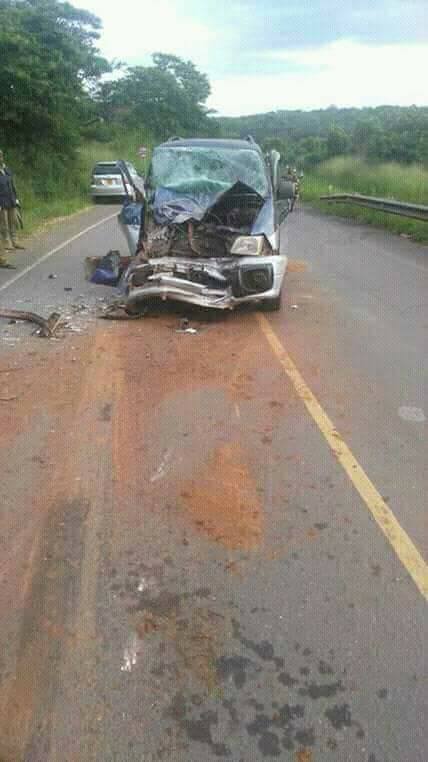
Rweckage of MP Gutomoi's vehicle.

The Deputy Speaker of Parliament, Jacob Oulanyah, has urged the Ministry of Health to improve facilities in all hospitals along major highways in the country, following a fatal accident in Kiryandongo last Friday, killing over 20 people on spot and leaving others fighting for their lives as a result of serious injuries on their bodies.

“The emergency and intensive care units of Kawolo, Kiryandongo, Masaka and Mbarara hospitals among others should be improved and strengthened to function fully. Airlifting patients to Mulago Hospital is not only expensive but will not necessarily save lives,” he said yesterday.

Oulanyah called upon the Minister of Works with other stakeholders in the sector to organise a national roundtable that can be used to tackle some of the problems on the Ugandan roads.

“There should be a national roundtable dialogue lasting three days in the course of this year. I am hopeful that at the end of the dialogue, the citizens can say enough is enough and start a new chapter on the use of our roads,” he said.

As a remedy to road accidents, the Minister of State for Transport, Aggrey Bagiire, said that the ministry was planning amend several laws. “In a bid to reduce road carnage in Uganda, the ministry is currently undertaking to amend the Traffic and Road Safety Act, Cap.351,” he said, adding that the ministry plans to have speed governors installed all commercial vehicles and equipped with GPS trackers and recorders as well.

He said the ministry intends to have mandatory inspection of road worthiness and introduction of a Graduated Driving License, which will require drivers of commercial vehicles to undergo refresher courses and training.
The Chairperson Lango Parliamentary Group, Felix Okot Ogong ( Dokolo South), said that hospitals need upgrading to handle emergency cases better.

Deputy Speaker, Parliament of Uganda Jacob Oulanyah.

MP Odonga Otto (Aruu South) called for patriotism among Ugandans instead of stealing from accident victims. “The public was rushing to steal and drink beer and not saving lives of those who were hurt. A police officer at the level of Assistant Superintendent of Police was in the car yet the injured people needed his skills at that moment. What happened to patriotism?” He asked.

Cecilia Ogwal (FDC, Dokolo) said that government should end reactionary methods of responding to situations. “Why should the government react to issues after they have happened? The Road Safety Policy was passed four years ago; there is no mention of how the policy is working. What are we doing? When this happens they bring reactionary solutions,” she said.

Meanwhile Charles Angiro Kutmoi Abac Acon, MP Erute North constituency got involved in an accident around Karuma bridge this morning on his way from Lira to Kampala.

Reports say his Noah vehicle registered UAV 089 G rammed into a trailer in the early morning, leaving him in a critical condition with a broken leg; he was rushed to Kiryandongo hospital.

The head on collision with a trailer happened in the area of Karuma bridge while the MP was heading to Kampala and the Lorry moving opposite direction, it is reported that he was alone in the van
Sources at the scene say the occupants of the trailer fled and abandoned him, he was saved by good Samaritans traveling from Kampala direction who found him seated at the metal rails of the bridge and helped him to Kiryandongo hospital where he getting urgent medical attention for broken left leg.

It is said he was bleeding profusely but had obtained first aid at the scene. They had to wrap sticks to tie the broken leg in position before rushing him for treatment.

Stories Continues after ad

Mps okay Defence Ministry’s Shs369b supplementary budget

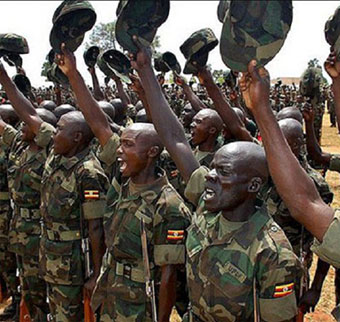
Officers of the UPDF

Parliament’s Committee on Budget on Tuesday approved the Ministry of Defence and Veteran Affairs to get an extra Shs369.9 billion in the supplementary budget tabled by the Ministry’s State Minister, Bright Rwamirama.

According to Rwamirama, Shs60.9 billion is for special meals, Shs22.3 billion will buy fuel for land forces and Shs13.1 billion is meant for the air force’s fuel bill. On the other hand, Shs24.6 billion is for clothing and Shs2 billion will go towards clearing medical expenses while Shs247 billion is classified expenditure.

The committee members supported the request for the supplementary budget, saying that the country’s security largely depends on the effectiveness of the ministry responsible for keeping Ugandans from external aggression as well as rebel activities.

The Committee Chairperson, Amos Lugoloobi (Njeru North) said it is a risk to let the ministry operate on a budget deficit. “How can the ministry in charge of a country’s security survive on borrowing from suppliers of important items like food, fuel and staff clothing? This can cause problems not only to the force, but to the suppliers too,” he said.

Col. Felix Kulayigye (UPDF Representative) was worried that the ministry’s image would get tainted if it continued borrowing without paying back. “The ministry needs to urgently settle debts not only to save its image, but also to be able to perform effectively,” he said.

Peter Ogwang (Usuk County) said the ministry had enabled the current developments by maintaining peace and stability.

“Our sons and daughters have sacrificed but as legislators and a country, we seem not to be prioritising the Ministry of Defence. These gentlemen and women should be well facilitated to protect our country,” he said.

Alex Byarugaba, the Isingiro South MP, stated that the issues upon which money was requested for are key in the operations of the military. “We have given a lot of money to institutions that have had a lot of questionable expenditures with no results. At least the UPDF has not let us down so far,” he said.

Meanwhile MP Opolot Patrick Isiagi (Kachumbala County) faulted the ministry for requesting less than what is required to cover for all the medical expenses. “The ministry requires Shs3.8 billion for medical expenditures but has requested for Shs2 billion in the supplementary budget. Health should be prioritised and arrears cleared to zero,” he said.

Further Butambala Country MP Muwanga Kivumbi (DP) questioned the need for classified expenditure, saying it was not necessary. “The utilization of this money should be interrogated because such funds can be used for political activities. Legislators should pick interest in knowing where government resources are channeled before approving it,” he said.

Responding to MP Kivumbi’s queries, Minister Rwamirima said classified expenses are used for the intended purpose.
“We cannot put items under classified expenditure into the public domain because we shall be jeopardising our security,” he said.

Stories Continues after ad