Stanbic Bank
Stanbic Bank
18.2 C
Kampala
Stanbic Bank
Stanbic Bank
Home Blog Page 1565

World to celebrate bees tomorrow

Honey bee swarm on a tree limb

Uganda will join the rest of the world tomorrow to celebrate for the first time the World Bee Day as designated by the United Nations (UN) last year.

As the world marks the first ever bee celebration, scientists are concerned that the bees and other pollinators, such as butterflies, bats and hummingbirds, are increasingly under threat from human activities.

The pollinators are so important that they allow many plants, including many food crops, to reproduce. Not only do pollinators contribute directly to food security, but they are key to conserving biodiversity – a cornerstone of the Sustainable Development Goals, the UN says.

They also serve as sentinels for emergent environmental risks, signaling the health of local ecosystems.

Invasive insects, pesticides, land-use change and monocropping practices may reduce available nutrients and pose threats to bee colonies.

To raise awareness of the importance of pollinators, the threats they face and their contribution to sustainable development, the UN designated May 20 as World Bee Day.

“World Bee Day presents an opportunity to recognise the role of beekeeping, bees and other pollinators increasing food security, improving nutrition and fighting hunger as well as in providing key ecosystem services for agriculture,” says the director of the UN Food and Agriculture Organisation, Jose Graziano Silva.

Why this date?

May 20, coincides with the birthday of Anton Janša, who in the 18th century pioneered modern beekeeping techniques in his native Slovenia and praised the bees for their ability to work so hard, while needing so little attention.

Janša came from a family of beekeepers in Slovenia, where beekeeping is an important agricultural activity with a long-standing tradition.

According to the UN, observing World Bee Day each year will draw attention to the essential role bees and other pollinators play in keeping people and the planet healthy. It provides an opportunity for governments, organizations, civil society and concerned citizens everywhere to promote actions that will protect and enhance pollinators and their habitats, improve their abundance and diversity, and support the sustainable development of beekeeping.

The proposal set forth by the Republic of Slovenia, with the support of Apimondia, the International Federation of Beekeepers’ Associations and FAO, to celebrate World Bee Day on May 20 each year met with approval by the United Nations General Assembly in 2017.

World Bee Day intends to shine a light on the habitat of pollinators to improve the conditions for their survival so that bees and other pollinators may thrive.

 Timeline

20 May 1734 – Breznica, Slovenia Birth of Anton Janša, who came from a long line of beekeepers, became a pioneer of modern apiculture. Bees were a frequent topic of conversation with neighbouring farmers, who would gather at the village and discuss farming and bee-keeping practices.

1766 – Anton enrolled in the first bee-keeping school in Europe.

1769 – Janša worked fulltime as a beekeeper.

1771 – Published the book Discussion on Bee-keeping in German.

1773 – Death of Jansa by typhus

2016 – At the FAO Regional Conference for Europe, the Republic of Slovenia proposed World Bee Day to be celebrated on 20 May each year, with the support of Apimondia, the International Federation of Beekeepers’ Association.

2017 – Proposal for World Bee Day was submitted for consideration at the 40th Session of FAO Conference

2017 – UN General Assembly unanimously proclaimed 20 May as World Bee Day

20 May 2018 – First Observance of World Bee Day


Stories Continues after ad

Eight early indications of trouble ahead for your venture

Martin Zwilling

As a company executive, or a business advisor, we have to always be on the alert for indications that your business, while looking calm on the surface, has strong undercurrents starting that can lead to disaster. You don’t want to be in one of those high-flying companies, like Webvan, Pets.com, and eToys that almost made it to the big time, before fading or crashing into oblivion.

You can’t always believe what you hear after the fact from company executives, or even industry analysts. Popular rationales include attempting to grow too fast, product quality problems, and missing the market, but the realities often go much deeper. Here are some early signals I see too often, which are recoverable if recognized and acted on sooner rather than later:

Competing or toxic cultures start to build momentum. Everyone on the team must share the same purpose, values, and goals. Unhappy employees usually indicate that multiple agendas exist, such as some people driven by customers, and others by technology. The founder or top executives must set one culture by words and actions.

Company leaders don’t maintain trust and transparency. When I do due diligence for investors, and I find team members hesitant or openly negative when talking about the leadership team, there is likely a trust issue, or at least a failure to communicate. Leaders need to “say what they mean and mean what they say” all the time and every time.

More passion is being applied to a product that is not ready. If your solution doesn’t work, or can’t be delivered in the marketplace, no amount of determination or passion will save you. For high technology solutions, almost working is failing. Business leaders need to be realists, to understand when to pivot and when to fall back in recovery mode.

Poor cash flow management is leading to bad decisions. Vendors and most people on your team need to be getting paid on a predictable basis, or their loyalty quickly turns to retribution. Soliciting timely and adequate funding is more critical than development. Too much money can have the same negative effect on focus and decision making.

Uncontrolled team conflict is killing productivity and motivation. The best business teams don’t shy away from some healthy friction and heated debates between team members and leaders, to recognize innovative insights and make change happen. Yet we all know that there is a fine line here, beyond which heated debates generate so much emotion and drama that the entire team becomes dysfunctional, stalling progress.

Great technology is touted as the long-term business savior. No matter how amazing your technology, a successful business requires marketing, solution delivery, and customers with a problem and the right amount of money to spend. Even if early-adopters are quick to jump, make sure the mass market appreciates your solution.

Plans and priorities are changing at an accelerating rate. In these times of rapid market evolution, it’s good to see plan change agility. Yet, this change ability must be managed, and not allowed to degenerate into chaos, with less and less communication from the top. If you don’t know where you are going, you probably won’t get there.

Putting more focus on blame than resolution and prevention. Every business makes mistakes when taking risks for growth and innovation. Companies in trouble tend to assume a victim mentality and blame factors outside their control, rather than learn from experience. Team members need to be rewarded for taking risks, rather than punished.

These signals are usually accompanied by a variety of others, including key leaders jumping ship, overall reduction in morale, rapid organizational changes, and micromanagement. If you see these symptoms in your own company, there still may be time for recovery, or it may be time to join the exit before disaster strikes.

The best antidote I know for heading off all these problems is building an advisory team early, consisting of no more than five external advisors, who have individual expertise and experience in similar business domains, and then actively listening to their perspective and recommendations. Don’t let the waves of change become a tsunami that you don’t see coming until it is too late.


Stories Continues after ad

Trump can’t tell HIV from HPV but takes ‘scary’ interest in my daughter – Bill Gates

Bill Gates

Donald Trump doesn’t know the difference between HIV and HPV, but knows in “scary” detail what the daughter of Microsoft co-founder Bill Gates looks like, Gates himself has said.

While speaking at an event at the Bill & Melinda Gates Foundation, the tech guru and billionaire philanthropist said that the US president inquired about the difference between HIV and HPV on two separate occasions.

President-Donald-Trump

Recalling his two dealings with the president – first in 2016 in New York, then at a meeting at the White House last year – Gates said that “both times he wanted to know if there was a difference between HIV and HPV so I was able to explain that those are rarely confused with each other.”

Gates also noted: “When I first talked to [Trump] it was actually kind of scary how much he knew about my daughter’s appearance. Melinda [Gates’s wife] didn’t like that too well.” Trump had encountered Gates’s daughter Jennifer, now 22, at a horse show in Florida.

A video of Gates’s comments was obtained by MSNBC’s All in with Chris Hayes show, which broadcast the footage on Thursday.

HIV, or human immunodeficiency virus, causes AIDS, while HPV, or human papillomavirus, is an infection that can trigger cervical cancer. Gates previously claimed that he turned down an offer from Trump to serve as the White House science adviser.


Stories Continues after ad

Why the Auditor General delayed to investigate Bank of Uganda

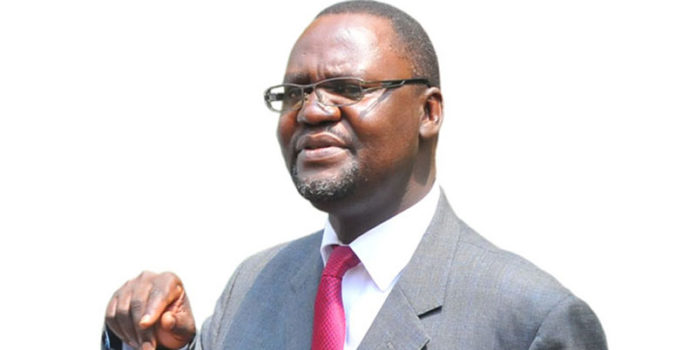
Abdu Katuntu

A team from the Office of the Auditor General yesterday launched its investigations into the Bank of Uganda for liquidating and presiding over the sale of several defunct banks such as Crane Bank and National Bank of Commerce. Eagle online understands BOU Deputy Director Dr. Louis Kasekende has been trying so much to block investigations, including approaching the Auditor General.

But finally On May 15, 2018, the Auditor General John F.S.Muwanga wrote to the Bank of Uganda Governor Prof. Emmanuel Tumusiime-Mutebile informing him that his team would be resuming the exercise commencing on Thursday May 17,2018, as advised by speaker Rebecca Kadaga on May 10, 2018.

“I have received the clarification from the Right Hon. Speaker in a letter ref AP116/161/01 dated 10th May, 2018 and copied to you guiding me to proceed with the audit and submit the report to Parliament as required by law,” Muwanga said in his letter to Mutebile.

The Auditor General has asked BOU Governor to provide the team with the necessary cooperation as investigations go on.

Muwanga has copied the same letter to the Solicitor General Francis Atoke who is on record for advising top management and the BOU not to cooperate with investigators from the Office of the Attorney General as well as parliament on the account that the investigations could affect the case between BOU and Crane Bank. It is yet to be heard in court.

On April 26, 2018, MP Abdu Katuntu, the Chairman of the Committee on Commission, Statutory Authorities and State Enterprises (COSASE) wrote to the Speaker of Parliament, informing her of why his committee wanted the Office of the Auditor General to do a special audit of the defunct banks. The committee had established that there has never been any audit on defunct banks which were taken over by BOU.

“There was never any report by Bank of Uganda on all the defunct banks. It has been over 20 years since some of these banks were taken over by Bank of Uganda,” Katuntu.

Katuntu in the letter said an interim draft report submitted by the Auditor General on April 10, 2018 “raises very disturbing findings” even as Bank of Uganda refused the auditors to access any information in regard to two banks-Crane Bank and National Bank of Commerce. The report was a result of a brief audit of the other defunct banks.

“Without prejudice, the interim/draft report clearly raises issues that should attract the attention of a serious institution,” Katuntu said.

In his April 26 letter to Speaker Kadaga Katuntu accused BOU Deputy Governor Dr. Louis Kasekende of trying to use parliamentary processes to stop the investigations on defunct banks by the Auditor General.

“The audit process directed by Committee has nothing to do with the Bank of Uganda roles in the supervision of the financial institutions. Therefore it is wrong for the Deputy Governor to insinuate that the Committee’s directive is a contradiction of the speaker,” he said adding that the Auditor General has a constitutional duty to audit all public entities.

On August 3, 2017, the Deputy Speaker of Parliament Jacob Oulanya penned a directive to the house saying: “Please note that the motion to investigate Bank of Uganda over its role in the supervision of financial institutions has been deferred. Parliament shall continue monitoring the progress of the case.” Dr Kasekende tried to use this statement to frustrate the Auditor General’s investigations.

Katuntu urges that: “We shall be setting a terrible precedent to have public institutions decide what shall be audited.”

In the Letter dated November 28, 2017, Katuntu wrote to the Auditor General calling for a special audit on defunct banks, saying that, COSASE, while interacting with Bank of Uganda noted with concern that there was no accountability on closed banks in the country.

“The members noted that is a very serious matter which needs to be addressed urgently to manage the challenges in the financial sector. This is therefore to request you undertake a special audit on the closure of commercial banks by Bank of Uganda,” Katuntu the Chairman of COSASE wrote.

The committee wants the Auditor General to investigate issues such as; Status on the banks on closure, cost of liquidation, assets and liabilities of the said banks at closure and current status, non-performing assets, non-recoverable assets and who is recovering the assets.The report was supposed to be submitted by March 2018.


Stories Continues after ad

Don’t harass journalists, go for Bagyenda-Anti corruption activist urges CID

Cissy Kagaba

The Executive Director of the Anti-Corruption Coalition Uganda Cissy Kagaba has cautioned the Directorate of Criminal Investigation (CID) against summoning seven journalists to record statements following baseless allegations against them by Justine Bagyenda, the former director of supervision at the Bank of Uganda.

Reports in the media indicate that the CID intends to summon the seven journalists to record statements on charges of criminal libel and offensive communication.

The journalists to be summoned work with online publications that have of recent helped expose financial scandals at the Bank of Uganda, leading to the ongoing investigation on the institution by the Auditor General, John Muwanga.

The journalists lined up for the impending summoning are; Richard Wanambwa (Eagle Online), Giles Muhame (Chimp Reports), Deo Senono (Business Focus), Bob Atwine (Spy Reports), Darius Mugisha (Matooke Republic), Andrew Irumba (Spy Uganda and John Njoroge (CEO Magazine).

According to the media reports, police alleges that the journalists from the affected media platforms published leaked bank details as well as mobile money transactions of Ms Bagyenda. Some are alleged to have published photographs of Bagyenda’s real estate properties.

“We ally to the fact that the Uganda Police received a complaint from Justine Bagyenda in respect of publications of her private bank details by  some media houses, and it’s on that basis that police has now summoned some  journalists to appear before it on 22.5.18,” she said.

Vincent Ssekatte, the Spokesperson of CID has confirmed the summonses written and signed by the deputy director of CID in charge of financial crimes William Wilber Kototyo, who is supposed to have retired on August 8, 2016 but had to plead to renew his public service contract.

“Records available in your file indicate that you were born on 8th August 1956. This means that you clocked the mandatory retirement age of 60 years on 8th August 2016,” former IGP Kale Kayihura reminded Kototyo in a letter over a year ago.

That aside, Ms Kagaba wonders why the CID is planning to summon the journalists, well knowing that the banks acknowledged the authenticity of the bank details. “There is no justice if people cannot see what is happening, media houses in most cases fulfill the first act of justice, and will help ordinary citizens know what is happening,” she says.

“We respect the fact that Bagyenda as a citizen and under the law is entitled to seek redress if and when she feels her rights have been violated, we strongly caution the Uganda police to steer clear of fears and public perception that they are being used by the official to intimidate and gag the media, whose only “crime” is exposing alleged illicit enrichment. In democratic and technologically developed societies the media is an effective weapon in exposing corruption,” she says.

Ms Kagaba has further argued the police to remain professional, neutral and handle the complaint with utmost integrity and regard to public interest. She says public overrides the merits of Bagyenda’s complaint in so far as the public has to know.

William Wilber Kototyo (L) wrote the summonses

“We also urge the Inspectorate of Government together with the Uganda Police to follow up and thoroughly investigate the allegations as published by the media houses against Bagyenda and we continue to salute the gallant men and women of the press for their fearless contribution to the continued struggle of a corruption free country,” she says.

She says corruption has been and continues to be a destructive element in the governance of Uganda and various perception index reports have confirmed as such. “The government continues to have a litany of laws and agencies to address corruption related issues, however much more still needs to be done especially even when the fourth estate is hunted for allegedly exposing the vice,” she says.

With the various pronouncements against corruption, one would expect government to laud any agency or individual that attempted to expose any suspicious corruption tendency, she says. “That would broadly build public trust in government as regards its will to address corruption,” she says.

The above notwithstanding, she has urged the media practitioners to operate within the confines of established laws of the country.

In what appears to be outside of his job description, Wototyo has asked the journalists to appear at the CID with documents such as certificate of incorporation, company licence, articles of association, authorization from the Uganda Communications Commission, details of location of the businesses and details of the company directors.

The affected journalists are not taking the matter lightly and have sought the services of their lawyers, with some advising the CID to send summonses to the legal experts.


Stories Continues after ad

Stanbic Bank unveils business incubator programme for SMEs

PM Dr Ruhakana Rugunda speaking at the function

Stanbic Bank Uganda has officially unveiled a business incubator project that will help equip local small and medium enterprises (SMEs) with skills needed to sustain their enterprises.

Dubbed “StanbicBizIncubator”, the programme targets SMEs in the oil and gas sector.

According to Stanbic Bank’ CEO Patrick Muheirwe, the programme will train 3000 SMEs per year but has urged women to participate in the programme, given that only 2 out of 34 of the first cohort of business incubators graduated on Friday were females.

Presiding over the launch of the incubator programme, Prime Minister, Dr. Ruhakana Rugunda said: “This Business Incubation Hub will empower more SMEs to grow their businesses.” He said government intends to run 94 training centres for skills development.

Selected SMEs will go through a 10 months training on business analysis, financial literacy and quality management. Business sustainability is a major problem among Ugandan businesses; only 30% live to their 3rd birthday.

The incubator project will enable Ugandan businesses be equipped with the necessary skills, knowledge and understanding to enable them participate in the oil and gas sector and to run their businesses in a sustainable and profitable way.

The programme will offer participants will with business skills, networking opportunities, learning environment through workshops and trainings and mentorship to Ugandan businesses.

The businesses that participated in the first cohort of this programme are; Albertine JSK construction Ltd, AKA Construction Uganda Ltd, AGA Great Works Ltd, Aero-photo Engineering Systems, Adapt Technical services, BMP Engineering services and Brothers & Partners Ltd

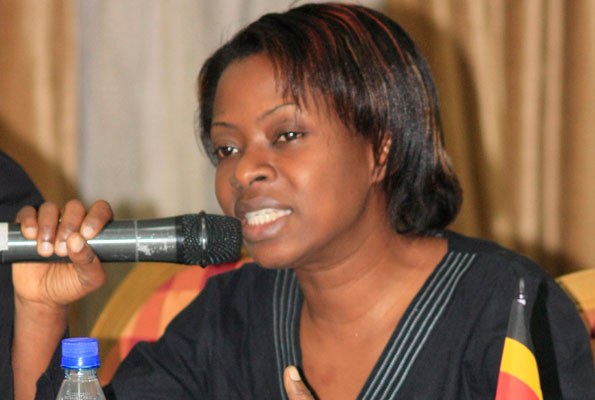
Jacqueline Musiitwa, the executive director of Financial Sector Deepening Uganda, while speaking at the function said she was “very excited to have taken part in ideating the concept.” She said SMEs are the heart of economic growth in Uganda.

Companies in for the next intake are; Mobi-tex Engineering Malt (U) Ltd, Mclean company, OSI Construction, Omega General Electricals, Pearl Engineering, Plumb base, Patronics services, Pharm Investments.


Stories Continues after ad

Desist or we resist: Regional CSOs threaten demo over oil activities in world heritage parks

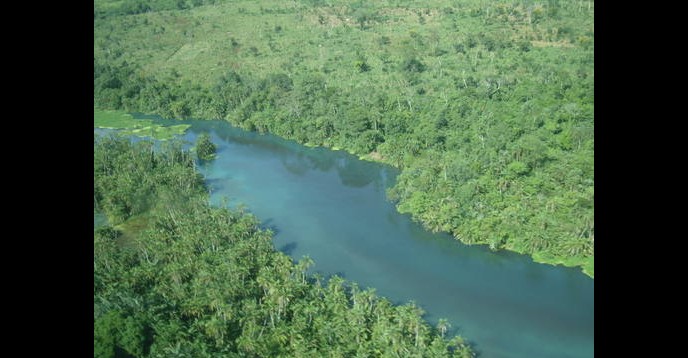
Section of Virunga National Park

The Great Lakes Advocacy Coalition for Conservation of Natural Resources (GLACCNR), an alliance of civil society organisations (CSOs) from Uganda and the Democratic Republic of Congo (DRC), has urged the governments of the two neighbouirng countries of cease all efforts to explore for oil in the eco-sensitive Greater Virunga landscape.

The 25-member coalition, which works for the sustainable use of transboundary resources in the Great Lakes Region, is making the calls following renewed efforts by the DRC government to redraw borders of two national parks, the UNESCO World Heritage Virunga and Salonga national parks, to allow for oil exploration in the parks.

“The DRC’s minister for hydrocarbons called for a meeting late last month (April 2018) with the view of discussing plans to redraw the parks’ borders to allow for oil exploration in the parks,” the environmental activists say in their May 16 communiqué to two governments.

They say Uganda’s government also remains committed to exploring for oil in Ngaji oil block covers Lake Edward, a Ramsar site, and part of Queen Elizabeth National Park, a UNESCO Humanity and Biosphere Reserve.  Lake Edward,Queen Elizabeth and Virunga national parks are located in the Greater Virunga landscape.

The GLACCNR, working with host communities in the districts of Kasese, Kanungu, Hoima, Buliisa, Kibaale,Ntoroko,Rubirizi, Rukungiri and North Kivu in the DRC, has warned that failure to heed their call will result in mobilisation of communities for massive and peaceful demonstrations to resist the two governments’ plans.

The association has also called upon regional and international bodies like the United Nations Educational, Scientific and Cultural Organisation(UNESCO),United Nations Environment Programme (UNEP), the International Union for Conservation of Nature (IUCN), the World Bank and others who work to conserve nature to use their influence on the two governments to save the Greater Virunga from the pending oil threats.

“Both the governments of Uganda and the DRC need to be mindful that through treaties including the 2007 Ngurdoto-Tanzania agreement, they committed to work together to manage transboundary resources for the good of citizens of both countries. They also signed the Paris Agreement on Climate Change, the 2015 Sustainable Development Goals (SDGs) and others where they committed to avoid activities that endanger communities,” they say.Redrawing the boundaries of Virungaand Salonga national parksand conducting oil activities in Lake Edward in addition to Queen Elizabeth National Park is against the commitments of the above agreements, they say.

They say the parks and other protected areas in the Greater Virunga are of great political, economic and socio-cultural value to communities, the Great Lakes region and the international community.

Some of the other protected areas in the landscape include Bwindi Impenetrable and Rwenzori Mountains national parks (World Heritage sites), Kibaale and Semuliki national parks in addition to Lake George.

The protected areas support farming, tourism, fishing and meet the water, electricity, cultural in addition to the recreational needs of millions of Ugandan, DRC, South Sudanese, Sudanese and Egyptian citizens.

Lake Edward, they say, empties itself in the White Nile which is the headwaters of River Nile; degradation of the Greater Virunga landscape poses a threat to all the Nile riparian states including South Sudan, Sudan and Egypt.

The activists fear that should the oil exploration activities continue, food and water insecurity will occur as well as flooding caused by increasing temperatures, eroding the climate resilience of already poor and vulnerable communities. “Other negative consequences will be faced by communities while the governments enrich a few people in authority who use their positions to corruptly gain wealth at the communities’ expense,” they say.

Uganda will recall that in the last two months alone, Kasese district lost four people to floods caused by climate changes that are destroying snow on Mt. Rwenzori.

“We cannot allow our governments to endanger a critical biodiversity area like the Greater Virunga which has sustained the lives of millions of our people for generations,” the CEO of Africa Institute for Energy Governance (AFIEGO), Dickens Kamugisha, says.

“This is not the first time the DRC and Uganda governments have attempted to allow oil exploration in the Greater Virunga landscape.Since 2015, the governments have directly and indirectly continued to call on investors to explore for oil in the landscape, even when the communities and civil society are against the move.

The activists have lauded the communities and other civil societies that have continued to resist efforts to exploit oil in the Greater Virunga. “The two governments should continue to respect the views of their citizens and completely abandon any plans for oil exploitation in the area,” they say.

“We are therefore ready to mobiliseand work with host communities once again if our government does not drop the plans to redraw the two parks’ boundaries and if it fails to commit to ceasing from exploring for and exploiting oil in the Greater Virunga,” Mr Bantu Lukambo of Innovation pour le Développement et la Protection de l’Environnement (I.D.P.E), says.

GLACCNR members say the two governments should instead take advantage of regional and global energy initiatives including the Sustainable Energy For All (SE4ALL), SDG 7, the Paris Agreement on Climate Change, Power Africa and the Energy Africa among others to invest in renewable clean energy such as solar, wind and others as better energy development options that can easily meet the energy needs of all, especially the poor and vulnerable.


Stories Continues after ad

Mozambique presidents calls for economic ties with Uganda

The President of Mozambique, Filipe Jacinto Nyusi, has called for closer economic and political ties between Mozambique and Uganda.

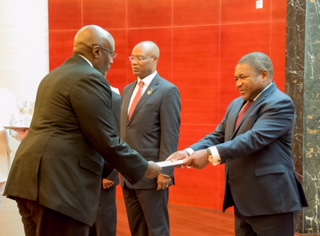
Receiving the credentials from Amb. Richard Kabonero, High Commissioner of Uganda to Mozambique at the office of the President in Maputo, President Nyusi recalled the strong historical ties in the liberation struggle between Frelimo and President Yoweri Museveni.

Nyusi was particularly happy that Ambassador Kabonero had come on the eve of the State Visit of President Museveni to Mozambique where a number of bilateral agreements are to be signed.

He welcomed Ambassador Kabonero to Mozambique and wished him a success full tour of duty.
Amb. Kabonero conveyed the best wishes from President Museveni and the people of Uganda.He promised to work tirelessly to strengthen the historical ties particularly in education and agricultural sectors.

President Yoweri Museveni is expected in Mozambique on Thursday for a state visit and is expected to pay a historical visit to Montpeuz in Cape Delgado District where he joined the Frelimo liberation fighters during the war of independence against the Portuguese in the 70s and was able to train a number of Ugandan fighters including Generals Salim Saleh, Ivan Koreta and late Rwandese freedom fight, Fred Rwigyema.​


Stories Continues after ad

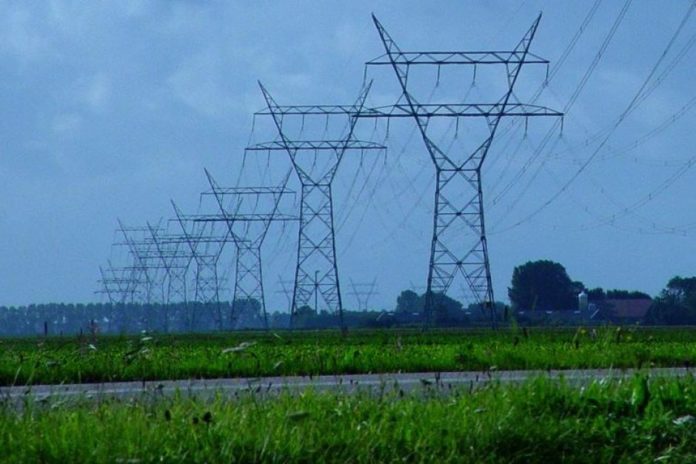
Uganda receives Shs163b for power transmission line

Transmission line

Uganda will receive Shs163.24b (€37.1 million) from the Agence Française de Development.

(AFD) after the two parties signed a financing agreement for the upgrading of a key transmission line, sources say.

The financing of the 400 kv transmission line upgrade project will cover a distance of 135 kilometers between the towns of Masaka and Mbarara, according to a statement from the AFD.

At the end of the upgrade, it is expected the transmission line will help in the evacuation of power from different sources and enable exports of electricity to neighbouring countries such as Rwanda and the Democratic Republic of Congo.

Germany’s KfW is the co-financier of this project, which follows feasibility studies that were financed by the European Union Infrastructure Trust Fund three years ago.

Uganda continues to face a lot of challenges in the transmission of its power. Many electricity generation projects such as Karuma and Isimba hydro power plant are expected to come on line over the next nine months, with worries that the transmission network might not be able to evacuate all this power.

Government has come up with policies that will compensate large consumers that are able to put up power distribution networks. Also, the Nile Equatorial Lakes Subsidiary Action Programme regional interconnection project is expected to ease on the burden of the transmission network.


Stories Continues after ad

Hima Cement to launch Tororo grinding station in May

Hima Cement will launch its new grinding station in Tororo in May in what should ease cement prices in the country, which had shot up by about 20 per cent in April.

The grinding station is valued at US $40 million and it is expected to increase Hima Cement’s capacity to produce about 1.9 million tonnes per year from the current one million tonnes.

The launch of the Tororo station comes a Few months after Hima Cement got a new chief executive officer, Nicolas George, who, among his other plans, is to get the company’s Kasese plant operating at near full capacity.

For much of March and April, the main cement companies – Hima and Tororo Cement – were undertaking maintenance works, creating a shortage of cement in the country.

Kampala Cement, the other company, is said to have exploited this shortage and sold most of its cement, nearly wiping out its clinker in order to meet market demand.

Also, it is believed that the biggest cause of the price jump was down to traders hoarding the cement. That was partly why the minister of Trade, Industry and Cooperatives Amelia Kyambadde, warned that she would allow cheap imported cement in the market if the price did not reduce.

Imported cement would not only push prices further down, but it would hurt the big cement companies as their margins would narrow.


Stories Continues after ad