Stanbic Bank
Stanbic Bank
24.8 C
Kampala
Stanbic Bank
Stanbic Bank
Home Blog Page 1568

Ugandan researchers to benefit from Shs125b grant

ASS President, Prof Felix Dapare Dakora.

Ugandan scientists are among those to benefit from a new sub-Saharan Africa Shs92.5 billion (£25 million) grant scheme, ‘Future Leaders – African Independent Researchers (FLAIR) Fellowships’.

The scheme which opened days ago offers talented African early career researchers who have the potential to become leaders in their field, the opportunity to develop an independent research career in a sub-Saharan African institution.

The programme is being run in partnership with the African Academy of Sciences (AAS) and the Royal Society, with support from the UK’s Global Challenges Research Fund.

The other aims of the FLAIR fellowship programme are; enabling African researchers to address areas of global significance across the natural sciences through high-quality research, advancing knowledge and innovation which aims to benefit their country and address aspects of the Sustainable Development Goals.

The awards will contribute towards institutional research capacity strengthening and establishing good financial grants practice in African universities and research institutions but also establish mutually beneficial long-term links between African Fellows and UK researchers to harness the expertise of the UK research base through equitable partnerships and enhancing knowledge exchange and translation into sustainable policy and practical benefits.

Speaking at the opening of the grant applications, Professor Richard Catlow, Foreign Secretary of the Royal Society said: “We are delighted to have joined in partnership with the African Academy of Sciences, and are looking forward to working together with support from the Global Challenges Research Fund, to launch the FLAIR Fellowships.”

He said FLAIR will help to establish the next generation of leading African scientists who are able to forge independent paths in research, whilst addressing the global challenges that are directly relevant to their countries and developing countries more broadly.

He said FLAIR also provides an opportunity for the future leading scientists to tap into the network of scientific excellence that both the Academies’ represent, to take advantage of training and mentoring opportunities, as well as building lasting connections and international collaborations with peers across Africa and UK scientists.”

On his part, Prof. Felix Dapare Dakora, AAS President said: “The AAS sees postdoctoral training as a critical stepping-stone to a successful research career and to promote globally competitive research in African universities and research institutions.”

He said ASS’s partnership with the Royal Society will enable it to address critical gaps in the continent’s research capacity to ensure thriving ecosystems and “catalyse science-driven enterprises as well as to help African scientists to develop their careers and to support them to provide solutions to improve the quality of lives for all Africans.”

Each fellowship will receive up to Shs750 million (£150,000) per year, for two years initially, to include funding for research fellow’s salary, research expenses, equipment, training, travel and subsistence and institutional overhead.
In addition the scheme will provide a wider programme of support to develop fellows as independent research leaders including training and mentoring, and opportunities to network and develop international collaborations.

Among other conditions to fulfill, the applicant must be an early career researcher with no more than 10 years of research experience since their PhD by the closing date of the round and must hold the fellowship in a research institution in a sub-Saharan African country.

Eligible countries include: Angola, Benin, Botswana, Burkina Faso, Burundi, Cameroon, Cape Verde, Central African Republic, Chad, Comoros, Republic of the Congo, Democratic Republic of the Congo, Cote d’Ivoire, Djibouti, Equatorial Guinea, Eritrea, Ethiopia and Gabon.

The others are; The Gambia, Ghana, Guinea, Guinea-Bissau, Kenya, Liberia, Madagascar, Malawi, Mali, Mauritania, Mauritius, Mozambique, Namibia, Niger, Nigeria, Rwanda, Sao Tome and Principe, Senegal, Seychelles, Sierra Leone, Somalia, South Africa, South Sudan, Sudan, Swaziland, Tanzania, Togo, Uganda, Zambia and Zimbabwe.

Stories Continues after ad

Revenue models that can keep your business thriving

Every new business quickly realizes that revenue coming in every period on a committed basis is the Holy Grail to survival and growth. Based on traditional research, getting new customers is five to ten times harder than getting additional revenue from existing customers. Thus the subscription model (low fixed monthly payments), has become the norm for new products and services.

In fact, subscription pricing has been around for a long time for magazines, cloud-based software, and gaming, but now I’m seeing it used for just about anything, including for more stylish clothes via Mr.Conection, gourmet foods via TryTheWorld, and toys for your kids via Pley. If you are an entrepreneur not using this model, it may be time to consider a pivot.

In fact, in a classic book “The Automatic Customer,” by John Warrillow, who runs the successful subscription based research business The Value Builder System™, I saw the nine most common variations on the subscription model today. If you are looking to start a new business in any domain, it’s definitely worth your time to check your fit for one of these models:

Membership website model. With this model, you provide website access to insider information for a regular subscription payment. It works best in a tightly defined niche market, like antique car owners, or rare-coin junkies, or woodworking enthusiasts, where experts hare hard to find, and members can gain from interacting with each other.

All-you-can-eat content model. By providing access to a large variety of titles, like NetFlix with streaming movies, or Hulu for TV shows, with new content added regularly, there is always a reason to keep up your subscription. If you already have many followers for some limited free offerings, this also becomes a natural freemium upgrade.

Private club model. On the other end of the spectrum, if your service or experience is in limited supply, make it a status offering for the strivers out there who want to act and feel like affluent consumers. Here the key is to convince customers that you have something really rare, and maybe even entice them into a long-term but affordable relationship.

Front-of-the-line model. If you can help with a relatively complex product or service, this one is especially appealing to customers who are not overly price sensitive, or ones for whom waiting in line can have catastrophic consequences. It works for the need to resolve IT issues in a small business, to avoiding long lines at popular clubs and hotels.

Consumables model. You should consider this subscription model if you sell things that naturally run out, like Easypeasies diapers or Birchbox for cosmetics. People are willing to pay for convenience, but don’t underestimate the logistical challenges in fulfilling orders and providing services to thousands of subscribers in out-of-the-way places.

Surprise box model. This model involves shipping a curated package of goodies to your subscribers each period. It may have started with wine club memberships, but has now been extended to include BarkBox for family dog treats, Standard Cocoa for those who love chocolates, and SpicySubscriptions for lovemaking paraphernalia.
Simplifier model. Everyone these days wants to simplify their life, so this subscription model works well for personal service businesses, like pet grooming, tutoring, window cleaning, and even bookkeeping. The key is making sure the customer doesn’t have to remember the scheduling, deal with immediate variable payments, or worry about quality.

Network model. This model works best where your product or service utility improves as increasing numbers of people join in. It was popularized with dating sites and LinkedIn, but now is popping up with many services, like Zipcar for car-sharing, Spotify for music sharing, and WhatsApp for international messaging for a low predictable fee.

Peace-of-mind model. This one is an extension of the insurance model into new domains. For example, Amber Alert GPS will make sure your kids don’t wander outside of safe zones, Site24x7 will let you know if your web site is down, and Social Studio monitors social networks so you know what people are saying about your brand.

If your startup is in the Business-to-Business (B2B) world, you need to realize that the subscription model has evolved considerably since SalesForce.com introduced Software as a Service (SaaS) way back in 1999. Popular variations of cloud subscription services now include offerings billed as Platform as a Service (PaaS), and Infrastructure as a Service (IaaS).

So now may be the time to start or transform your business into a recurring revenue engine with subscriptions, or just add an option to get some extra sales growth. But be aware, these models bring with them a whole new psychology of selling, supporting, and measuring your success with customers. Do your homework before jumping in with both feet.

Stories Continues after ad

Dembe FM’s Eddy Ssendi in verbal fight with Toolman over Qute Kaye

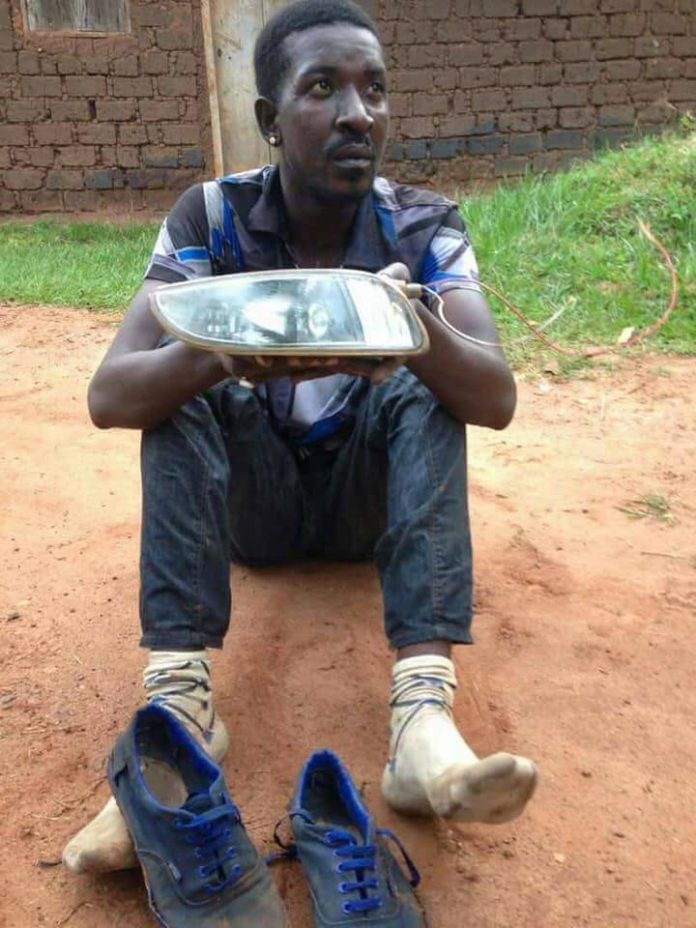
Courtesy Photo: Singer Cute Kaye paraded with his stolen car indicators

Kampala: A war of words has erupted between self-styled music critic, Edward Ssendi and musician, Freddrick Kibalama a.k.a Toolman.

The verbal war sparked off by the current situation singer has been ongoing for two days now.

It all began when Dembe Fm’s presenter Ssendi blamed Qute Kaye’s woes on drug addiction and failure to plan for his earnings when he was still on top, something that did not go down well with the now German based artist, who advised that all that Kaye needs now is help and not being judged.

“Eddy Sendi I am surprised is blaming cute Kaye. I was on the peak of my time between 2007 to 2008 together with Cute Kaye, Fina (Mugerwa), Dr Hilderman, Henry Tigan and more. And I remember very well I was charging 1.5m upcountry. At the time, Eddy Sendi was working for a telecom company. Himself called me one time to perform in Tororo and Mbale on company promotion shows and at each show, he was offering Shs150k because we will travel in a company coaster.

“I might have been smart with my money and I had a good bargaining power than Qute kaye, but there was a lot of exploitation from such guys like Eddy Ssendi,” the ‘Kisulumuzo’ hitmaker revealed.

The revelation didn’t go down well with Ssendi who hit back by calling Toolman a failed artiste.

“Tune into Dembe fm on Saturday 2nd June as I answer back to Uganda’s poor version of Shaba Ranks. Thank God none of my sisters had to marry a man, they are all married to men and not the other way round,” he took a swipe at Toolman, remarks that have heavily been criticised by the public.

Nevertheless, Toolman has responded, advising send to Ssendi to act in a way that befits his age.

“Edward Sendi I believe you above 40. I don’t usually respond to people but I had to because at ur age, you worked everywhere you worked and later come to the entertainment industry as a refugee of work. The music industry is not an agriculture industry of sort that now we can’t because there is no rain. The music industry is for musiciabs and if you decided to be a critic, I expected some sense of professionalism in you.

“You don’t have to talk only good things but talk responsibly about people. It’s not written anywhere that whoever is in the music industry will end up as a winner; Some will fall and some will raise. Just know Qute Kaye is our own and behind your ngalabi you should hold to that.”

Stories Continues after ad

Alcohol and drug abuse lead in causing mental illness- Butabika Boss

Ministry of Health PS, Diana Atwine

Kampala: The executive director for Butabika hospital Dr. David Basangwa has revealed that drugs and alcohol abuse, cerebral Malaria, Psychological Trauma from accidents and kidnaps is among the leading Causes of Mental illness in Uganda.

In monthly media breakfast meeting held under theme “Embracing prevention: The status of Mental Health in Uganda” Dr. Basangwa said young people fancy smoking shisha, weed and the sundry of catastrophic drugs that negatively influence their thinking and reasoning capacity has greatly contributed to metal illness among youth.

“Government has adequately invested in training of health workers in mental health to ensure adequate care, general health workers at various health levels are now in position to recognize patients with mental illness, offer treatment, and if need arises, refer the patients in time,” he said at ministry of health headquarters in Kampala.

He noted that due to influence of drugs among other causes, Butabiika hospital admits over 9,000 patients per year however 30,000 patients are handled in outpatient department (OPD).

“One of our achievements as an institution is the reduction of the stigma attached to mental disorders, ministry of health has started to recognize the role Mental Health in the development of the country, this is a step in the right direction,” Dr. Basangwa said.

According to Dr. Basangwa, financial crunch with a highly indebted population, Gender based Violence, Conflicts, Low education, Poor health care primary causes contributing to poor mental Health in the country.

Subsequently Dr. Hafsa Lukwata revealed that in 2009, with support from African development bank (ADB) government invested $25million for improvement of Mental Health Facilities and training of health workers.

Currently Uganda has 30 psychiatrists and 700 psychiatric nurses actively engaged in mental health care, the number is inadequate, “During the doctor’s strike, its only mental health workers who did not participate and didn’t neglect patients” she added.

The meeting was concluded by the incineration of a 40ft container full of shisha pots and related apparatus that were picked from different bars and restaurants during the police raids.

Consequently the permanent secretary for ministry of health called upon government to put in more effort to enforce laws against smoking and drug abuse.

Stories Continues after ad

FIA on spot over failure to apprehend Bagyenda

Embattled former Executive Director in charge of Supervision at Bank of Uganda Justine Bagyenda.

All is not well at the Financial Intelligence Authority (FIA) following the establishment by investigators grilling Bank of Uganda that the Authority has not instituted an inquiry into Justine Bagyenda’s bank accounts. Bagyenda is a former director of supervision at BOU who was only sacked months ago.

In March this year, two banks- Diamond Trust Bank and Barclays Bank apologized to Ms Bagyenda over the leaked details of her fat accounts she holds at the banks.

“The bank regrets the unlawful act leading to disclosure of our said customer’s information in the media and sincerely apologies to Ms Justine Bagyenda for the inconvenience this regrettable incident may have caused,” read the March press release by Barclays Bank.

The leaked bank documents show that Ms Bagyenda’s bank accounts in the last six years had a balance of Shs20 billion which FIA was supposed to investigate but have not done so.
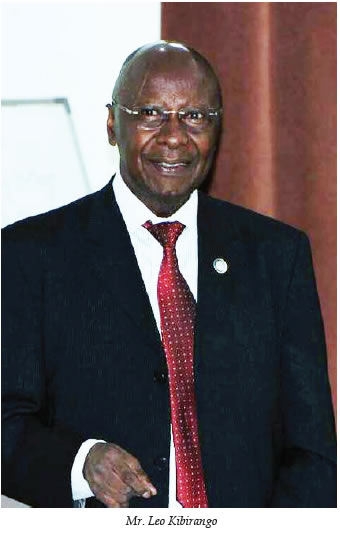
Also in March this year, former chairperson of Public Accounts Committee of Parliament, Nathan Nandala Mafabi (Budadiri West), while addressing the media at parliament requested that Bagyenda be charged with money laundering. According to sources, FIA board Chairperson Leo Kibirango is reportedly against the authority investigating Bagyenga and is said to have warned officials at FIA.

Nandala said despite her status as the in charge of Supervision, Bagyenda could have aided money laundering given that the fact that she has lot of money in her accounts which she cannot legally explain how she earned it.

“We are going to carryout investigations and we are going to deal with those banks because they have been doing illegal things with Bagyenda. Actually those banks should be closed because they have been involved in money laundering. That lady Bagyenda has been the head of Anti-Money Laundering committee and the law we passed, states that whoever participates in anti-money laundering has to face prison for 20 years and that is why Bagyenda should have been in Luzira and the law accepts that the money she stole, should be returned,” Nandali said on March 19.

FIA’s head, Sydney Asubo, in March told Eagle Online that they had got sufficient information from whistleblowers which they were working hard to corroborate.

Bagyenda has been on the board of Financial Intelligence Authority which is overseeing anti-money laundering law.
On March 21, Ms Bagyenda was grilled by the Inspector General of Government (IGG) Irene Mulyagonja over illicit accumulation of wealth and unexplained fat bank accounts. Bagyenda was asked to explain the source of a staggering wealth in city banks that is said to be amounting to billions of shillings and millions of dollars. However sources at IGG said Bagyenda could not furnish decisive evidence on the sources of the money.

The IGG also quizzed Bagyenda about a hard-hitting non-compliance report by Uganda Revenue Authority (URA) that indicates that her tax accountabilities could be Shs7 billion.

AGAINST THE AUDIT: Leo_Kibirango.

In March, leaked documents from telecommunication giant, MTN revealed that former Executive Director in charge of Supervision, Justine Bagyenda made mobile money transaction of close to Shs500 million on her number in three years.
The documents showed that Bagyenda and her son, a one Robert Muhumuza both could have transacted to Shs500 million although most of the transactions on their numbers where deposits from other number. Much of the money didn’t last as it is immediately dispatched to other accounts.

Eagle Online early reported that in two years, embattled Bank of Uganda Executive Director Justine Bagyenda wired Shs683 million to an account in Centenary Rural Development Bank held in the name of Kenny Muwonge.

According to the documents, ‘Kenny Muwonge’s’ account in Centenary Rural Development Bank is SA 2120011273 (Mukwano Arcade branch/Ben Kiwanuka Street) and details indicate Ms Bagyenda used to send the money in tranches of Shs20, 000,000 using the bank’s real time gross system (RTGS). RTGS is a system of payment made online from one bank to another and the payment goes through Bank of Uganda. It is real time because it takes two hours- you just make payment instructions to your banker instead of issuing cheques.

The Bank details in possession of Eagle Online cover the period 2014 to 2017. Ms Bagyenda, according to the documents, however, started making the electronic transfers to Kenny Muwonge on September 10 2015, with an initial Shs20, 000,000 transfer from her Barclays Bank (Kampala Road Branch) Account. Similar transfers went on into 2016 where she was more less the only creditor to the Kenny Muwonge account. Anyhow, between 2014 and 2017, the account had seen Shs2 billion pass through it, in 37 transactions with Mr. Muwonge.

Bagyenda, whose contract at BoU was supposed to end June 2018, was in a reshuffle announced by BoU governor Emmanuel Tumusiime-Mutebile, retired. In her place Mutebile appointed Dr Tumubweine Twinemanzi.

Financial Intelligence Authority is a government agency established by the Parliament of Uganda to monitor, investigate, and prevent money laundering in the country. It is also responsible for the enforcement of Uganda’s anti-money laundering laws and the monitoring of all financial transactions inside the country’s borders.

Kibirango worked with Bagyenda at BoU. Other board members of the board are, Grace Akullo, Patrick Ocailap and Patricia Mutesi

Stories Continues after ad

Economic recovery and equity rally swell public sector assets by $2.5tn

Bars of gold.

The global economic recovery and upturn in equity markets boosted central banks, sovereign fund and public pension fund assets by US $2.5 trillion in 2017 according to Global Public Investor (GPI), published annually by the Official Monetary and Financial Institutions Forum (OMFIF), the London- and Singapore-based think tank.

The US $2.5trillionn surge, representing a 7.3 per cent rise from 2016 to US $36.2trillionn, is the largest such increase in the five years since OMFIF began tracking the assets under management of the 750 institutions covered in GPI 2018.

GPI assets grew across all types and all continents, with one exception: there was a US $32 billionn decline in Middle East central bank holdings.

The largest percentage increase in assets was among European public investors, whose holdings rose by US $7.6 trillionn, 12 per cent higher than the previous year. Central banks led this performance. The Swiss National Bank added US $133 billion, bringing its total assets to US $812 billionn, 20 per cent higher than the year before. As with other investors, the SNB profited greatly from large gains in its foreign equity holdings.

Asia was the second-best performing region after Europe, as assets grew by US $950 billion. With US $13.7 trillion in holdings, it remains the world’s most important GPI hub and is home to the world’s three largest public investors: the People’s Bank of China, Japan’s Government Pension Investment Fund and the Bank of Japan.

Central banks around the world benefited from the rise in the price of gold, reflecting the precious metal’s significance in their reserves. They added more than 371 tonnes of gold during 2017, bringing total holdings to almost 31,800 tonnes, the highest level since the 1990s.

On currencies, 18 per cent of public investors surveyed by OMFIF intend to increase their exposure to renminbi over the next 12-24 months, and none plan to decrease. This is the highest response for all currencies, which illustrates the renminbi’s growth as a critical trade and investment currency.

Data shows that institutions are also adjusting their investment strategies to reflect their commitment to responsible ownership. They are increasingly investing in sustainable assets, with 36 per cent of public investors responding that they plan to increase their green bond investments over the next 12-24 months, with the equivalent figure at 18 per cent for green equities.

Stories Continues after ad

UIA licenses over 190 projects in 2018

To leave Office: UIA ED, Jolly Kaguhangire

The Uganda Investment Authority (UIA) in its latest report says it has licenced 193 projects during the first three quarters of financial year 2017/18 against a target of 225 projects representing 85.8 per cent of the target.

According to the report, local investors registered the highest value of planned investment of US $387 million which accounted for 52 per cent compared to foreign investors at US $357.7 million, accounting for 48 per cent of all the licensed projects in 2017/18.

The top four sectors were manufacturing at 56.5 per cent, Mining & Quarrying (11.4 per cent), Electricity, Gas and Water (10.7 per cent) and Agriculture, Forestry & Fishing (4 per cent).

The report highlights top five source countries for investment as; Ethiopia (US$ 227 million), Uganda ($28.8 million), India (US $21 million); USA (US $9 million) and China (US $4.8 million).

Meanwhile during the period under review, UIA says it facilitated 483 investors to access work permits, tax related services, business registration services, and environment related issues against the target of 150 companies. An estimated 108 companies were provided aftercare services against the target of 105 as at end of March 2018.

UIA monitored 643 projects, with the majority covered under the Investor Census 2017 which focused on projects located in Kampala, Mukono and Wakiso districts.

Employment
According to UIA, The total planned employment is 19,072 jobs, with THE manufacturing sector accounting for 49.6 per cent, Agriculture at 14 per cent, Electricity, Gas & Water at 9.3 per cent and Community & Social services at 7.8 per cent.

UIA in its report adds that the distribution of employment by source of investment shows that direct domestic investment (DDI) will account for 62 per cent of the total planned employment as compared to Foreign Direct investment (FDI) which will account for 38 percent of the jobs.

Current status of KIBP
According to UIA, the 2,200 acre Kampala Industrial and Business Park (KIBP) located 11 km East of Kampala in Namanve, has been al¬located to 291 prospective investors for development in various sub-sectors such as agro processing, mineral processing, ICT, logistics and freight, warehousing, general manufacturing as well as Tourism promotion activities.

Data shows that 30 industries are currently in operation within the KIBP directly employing 15,000 Ugandans within the park while 82 projects have commenced construction creating an additional 17,000 indirect/ short term/ contract/ technical jobs during this period.

While 129 companies are still in the pre-start stages thus; surveying, processing deed plans and titles, environmental impact assessment certificates, architectural designs, geotechnical and hydrological studies. “These too create employment to the various white collar professional job opportunities for Architects, physical planners, Environmental Consultants, Civil Engineers, Quantity Surveyors etc,” says the UIA report.

The report shows that 50 investors were allocated land in 2017.However, since 2013, 164 companies have had their approvals withdrawn from the facility for non-performance.
They include; MK Publishers, Kibao Ltd, Nutrimix feeds, Oscar Industries, Meera Investments, Surgipharm, Rwenzori, Dott Services, Wina Classic, Shumuk, Fang Fang, Nationwide properties, Akright, National Housing and Construction Corporation, among others.

Other business parks
Luzira Industrial and Business Park located in Nakawa Division in Kampala covers 70 acres with 10 investors, eight of whom are operational. One of the key investors in the Park is Quality Chemicals Ltd sitting on about 15 acres of land.

Bweyogerere Industrial Estate located in Wakiso District covers 50 acres of land and has 10 investors, four of whom are operational; three are under Construction stage while three are doing pre-start phase studies. One of the key investors in the Park is Uganda National Bureau of Standards (UNBS) sitting on about 15 acres of land.

Stories Continues after ad

Reply to comment on fakes and kidnaps article

Mr Muwema

By Fred Muwema

Dear Editor,
Eagle online.

Just when Angelo was penning his response to my article on fakes and kidnaps where he tried to discount the menace of counterfeits, the Government of Uganda was declaring three days of mourning due to a nasty road carnage caused by fake brakes that left 22 dead in Kiryandongo District.

I say fake brakes because I watched with dismay on TV when one of the lucky survivors lying in pain on a hospital bed narrated that the driver of the bus had tried to stop the bus but the brakes failed. A 2016 report by the Ministry of Transport indicated that 95 per cent of road accidents are caused by human error and mechanical condition of the vehicles. This is where counterfeits in the form of fake driving permits and fake vehicle parts lurk. This is the savage image of counterfeits that most people choose not to see.

Angelo’s views may appeal to many people who pay scarce attention to the immense devastation that counterfeits are causing to whole communities and economies in Africa and to those who may not understand it as a causative factor of heinous crime. As a person who has endured a 10 year knowledge sojourn traversing the counterfeit wilderness here and in other countries with a hand luggage of more than 20 years in criminal law practice, I know better than to join Angelo in finding a false equivalence between counterfeits and the tragedy of kidnaps.

The relatives of the victims of the bus carnage are in as much grief and pain as the relatives of the victims of the kidnaps so much so that they are all inconsolable, not because the deaths are different, but because they amount to the same thing. It may not be easy to explain the equivalence of two complex subjects in a few lines and I don’t claim to do so now, but let me give some hints.

In a May 23, 2018 NTV interview, the Minister of Security Gen. Elly Tumwine made a statement linking the recent increase of kidnap cases in Uganda to terrorist activity. It is possible many people dismissed the Minister’s talk because he did not elaborate. Those who know will tell you that worldwide, counterfeiting business is a major source of terrorist funding. Kidnaps are an active ingredient of terrorism, and therefore, it is not false to juxtapose counterfeiting with kidnapping.

It would have been nice for the Uganda Police to fully investigate this nexus between counterfeit and kidnaps but alas, only two per cent of the 4000 murder cases (many a result of kidnap) have been investigated and successfully prosecuted in the last four years. This neglect of duty by the Police is also counterfeit behavior which we have come to accept as normal.

In my article titled “Counterfeits, a Security Threat” which was published six years ago in the New vision of May 23, 2012 at page 10, I quoted a report by the international Anti – counterfeiting Coalition which stated that drug traffickers, money launderers and terrorists find it safer now days to raise and clean their money through counterfeit businesses because this business is easy to set up without the risk of suffering harsh punishment under drug trafficking or money laundering laws. I still identify with this view and maintain that fighting fakes will help in the fight against the kidnaps.

Like they say, what you do not know does not hurt you. Most Ugandans do not know much about counterfeits in terms of its dangerous effects that is why they may not think of it to be as dangerous as the kidnaps we all dread. We are losing the war against counterfeits and paying the price with our lives because we tend to trivialize the issue.

When I was growing up, there was no children’s section at the Cancer Institute in Mulago. Today the Children’s section is as big as the section for adults and behold the sight of little children fighting for their lives can move even the most hardened soul to tears. But amidst all this, we are not alarmed by recent media reports that some criminals are importing and selling fake cancer drugs on the market neither are we outraged by the fake Hepatitis B vaccine which is now incubating in the bodies of millions of Ugandans.

Business continues as usual and we continue to choke on the fake medicines and yet we remain unaware of our conspiracy in the grave consequences like death, which may greet us as a result. I admit that it may not be fair to compare the mortalities caused by fake drugs to those of kidnaps since they all represent a tragic loss of human life. No death can be sanitized because its cause is more popular than the other and for me I think that it is worse when we try to reduce this issue to an academic exercise.

Angelo appeared to be slighted by my use of statistics of kidnaps and those of fake products when he accused me of “atomizing the victims of crime as statistics for reference.” I don’t know how anyone can get a correct equivalence between any two fields of study without comparing their statistics. What I know is that it is statistics which breathe life into what we call facts on any subject.

Angelo made an impassioned reference to his coverage of the LRA insurgency as a Journalist but I think he needed statistics to put this disaster in its true context. It is the statistics of the 60,000 to 100,000 children who were abducted by the LRA in four African countries between 1987 – 2012 that raised World outrage leading to the indictment of Dominic Ongwen in the ICC for the massacres and kidnappings.

We need to face the reality sooner rather than later. Counterfeits may not sound as fashionable as kidnaps but that is just semantics. They are both killing us, we need to stand up and stop them.

Fred Muwema
Director Legal & Corporate Affairs
Anti-Counterfeit Network Africa
28th May, 2018

Stories Continues after ad

Barclays Group becomes ABSA in July

Shareholders of Barclays Africa Group Ltd have given approval for the entity’s name to be changed to Absa Group Limited in July, setting in motion the start of one of the largest rebrand projects in Africa at this time.

“The vote in support of our name change in July marks another milestone in our separation from Barclays PLC to become an independent African bank with global reach,” said Wendy Lucas-Bull, Chairman of Barclays Africa Group Ltd.

“This is the start of a brand journey that will galvanise our operations across Africa behind a single brand and purpose.”

According to the press release, as part of the process, the new name must be registered by South Africa’s Companies and Intellectual Property Commission.

In accordance with the timetable shared with shareholders, the name change is expected be effective on July 11, 2018.

The group’s share code on the Johannesburg Stock Exchange (JSE) will change from BGA to ABG on 11 July.

The group name change will not affect functionality of Absa or Barclays products and services in Africa.

The group’s Barclays-branded banks in Botswana, Ghana, Kenya, Mauritius, Mozambique, Seychelles, Tanzania, Uganda and Zambia, will continue to trade as ‘Barclays’ even after the group name changes to Absa in July.

The Barclays-branded banks in these countries will be rebranded at a later stage, subject to regulatory approvals in those markets.

Following the sell-down by Barclays PLC of its majority shareholding in Barclays Africa Group to a minority position in 2017, the two companies are separating.

As part of the separation agreement, Barclays Africa Group, will cease using the Barclays brand in Africa in 2020.

“We will in the future have a brand that is reflective of our African identity – this as an enormous opportunity as we create a banking group that Africa will be proud of,” Lucas-Bull said.

Stories Continues after ad

Flags at half-mast for accident victims

Kampala: Uganda flags at various public offices flies at half-mast as the country mourn victims who perished in a tragic motor accident that occurred in Kiryandongo district along Gulu high way.

According to police report 22 people including juveniles died on Friday when a Gaagaa Bus registration number UAK 562 L collided with a cargo lorry and a tractor registration number UAU 872 M.

Carnage: The Gaaga bus in which was involved in accident where 22 people perished.

When contacted, Deputy Spokesperson for Uganda police Patrick Onyango said the basis of the tragic accident has not been established however the injured persons among other survivors were airlifted to Mulago and Nsambya hospital for treatment.

“So far the survivors of the accident are okay and doctors are working to see that they get well” he said in a phone interview.

Over the weekend, president Museveni declared three days of national mourning and vowed to contribute shs5million to families that lost their loved one as shs3 millions goes to everyone who sustained injuries.

Flags flying at half-mast at Uganda Parliament in memory of the 22 who perished in a road accident.

However according to an anonymous source in state house, state House Comptroller Ms. Lucy Nakyobe has set out to deliver President’s donation to victims of the Kiryandongo accident starting with patients at Mulago Hospital and later Nsambya Hospital.

Consequently this website paid a courtesy visit to parliament, police headquarters Naguru and sundry to establish whether president’s directives have been implemented. We established that at both places flags were flying at half-mast however at the time we reached various places like Kira road police stations among some schools, flags had not been raised.

At Uganda National Bureau of Standards (UNBS) the three days of mourning of the victims of the road accident in Kiryandongo have been observed as flags fly at half-mast.

Stories Continues after ad