Stanbic Bank
Stanbic Bank
19.8 C
Kampala
Stanbic Bank
Stanbic Bank
Home Blog Page 1574

EAC and ILO sign MoU to improve work environment in region

Officials signed the MOU

The East African Community and the International Labour Organization (ILO) on Thursday signed a Memorandum of Understanding (MoU) aimed at improving the work environment in the region.

The MoU which was signed at the EAC Headquarters in Arusha, Tanzania by EAC Secretary General Amb. Liberat Mfumukeko and Mr. Wellington Chibebe, the Director of the ILO Country Office in Dar es Salaam, Tanzania will, among other things, address issues such as youth employment, extension of social security, and Gender Equality and Empowerment of Women at the work place.

The MoU is a follow up to another one that was signed between the two organisations in 2001. The 2002 MoU enabled the EAC and ILO to develop and launch a five-year East African Decent Work Programme (2010-2015).
Amb. Mfumukeko said that the revised MoU provides for the development of a framework for the harmonisation of the EAC Partner States’ policies on social security in line with the ILO Convention on Social Security (Minimum Standards) No. 102 of 1952.

“The MoU further provides for the expansion of micro, small and medium enterprises for employment creation. Also included is the development of an EAC labour migration policy as one of the facilitators of labour mobility in the Community,” said the SG.

Amb. Mfumukeko said the Community was striving to address youth unemployment as a matter of priority, adding that having well educated but unemployed youth out of work was a time bomb.
He disclosed that EAC Partner States were addressing the issue by seeking to make agriculture as an attractive income generating venture for the youth.

Noting that matters of Entry/Work Permit/Residence Permit have an impact on the immigration function in the Partner States, the EAC Secretariat would convene a joint meeting of the Chiefs of Immigration and Directors of Labour before June 2018to finalize the harmonization of Entry/Work/Residence permits.
A meeting of technical officers from EAC and ILO held from April 30 to May 2, 2018 agreed to enhance collaboration in the implementation of a two-year project towards the extension of social security benefits to migrant workers in the EAC.

In his remarks, ILO Country Director Wellington Chibebe said that his organisation would work with the EAC to accelerate regional integration and at the same time ensure that the drivers of integration, that is the free movement of labour, goods and services enhance livelihoods of the millions of working women and men and their families.
“We welcome the signing of this new Memorandum of Understanding, which will be based firmly on a new DWP for East Africa, addressing strategically prioritized areas agreed upon by the ILO on one side and the EAC and the East African social partner organisations on the other side,” said Mr. Chibebe.

Mr. Chibebe said that giving financial assistance to the needy instead of equipping them with vocational skills was akin to creating culture of perpetual dependency.
Also represented at the two day forum were the East African Trade Unions Confederation (EATUC) and the East African Employers Organisation (EAEO).

Stories Continues after ad

Song writer Rafiki opens own studio

Oman Rafiki

Seasonal song writer Oman Rafiki has been in the studio long enough to know that the world of music retail is changing fast, with digital distribution bringing new opportunities for independent record labels.

To keep up with the fast evolving industry, the artistic writer has decided to open his own studio and record label.

Named ‘Route Entertainment’, the label located in Soya, Bunga along Nanjala road already has work starting with this weekend in a bid to sign artistes.

Inspired by the vision of giving artistes opportunities to express their art in an organised and friendly environment, the label bears the hallmarks of attracting the next big names in local music.

The signings are already underway with former dancer Sharon Peyton being the first to join the Soya based label which will also give ground to different songwriters can come together to make music.

Peyton has followed the paths of a number of artistes like Sheeba and Jackie Chandiru who transitioned from dancing to singing with the latter being her inspiration.

Peyton has featured in multiple music videos and worked with various artistes who has inspired her to work hard and she could join the ranks of Vinka, Sheeba and Irene Ntale with the touch of Rafiki.

“Music is a journey we chose to move forever, so it’s a business we expect to stay in forever. We have not started this to fail, we are record label, so we basically sign artists, write music do singles, music videos and we also advise artists on how to go by the copyright law,” explained Rafiki.

Rafiki has been behind the making of hits like Kabulengane by Bebecool, Kano kozze by Winnie nwagi, Teeka sente wolaba, Kyolowoza by Irene
ntale, Oli Malaika kikaki by Vinka, Chips na ketchup, Mboozi za malwa and also arranged the FUFA anthem into music among others.

Stories Continues after ad

Airtel Uganda resumes country-wide sale of SIM

Airtel Uganda has this morning announced that is has resumed the sale of new SIM cards across select points across the country.

The announcement comes after official communication from Uganda Communications Commission to lift the ban on the issuance of new SIM cards to mobile device owners.

The company also announced an increment in the number of centres where its customers can acquire new SIM cards and replace misplaced ones. Previously, customers could swap misplaced SIM cards and acquire new ones from select service points but with the announcement, they can now do this at over 300 authorized centres which include agent locations and Airtel shops country wide.

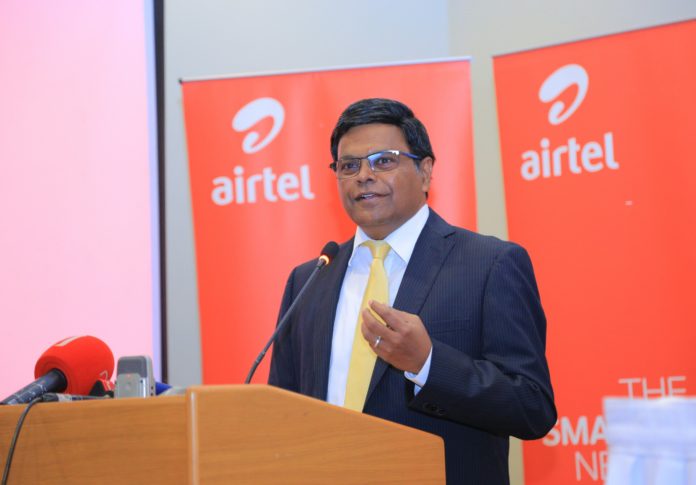
Making the announcement, Airtel Uganda’s Managing Director; V.G Somasekhar noted that go-ahead from UCC will ease the process for its new customers who have not been able to register to the network caused by the inability to purchase new SIM cards.

“The communication from Uganda Communications Commission will allow our customers; both new and existing to get new SIM cards faster and more conveniently.

Our new subscribers across the country can acquire and register to join our network while and existing customers can replace lost SIM cards at over three hundred points countrywide. We have authorized points of distribution and Airtel shops in all regions.”

Somasekhar went on to elaborate the requirements for both SIM card acquisition and replacement.

To acquire a new Airtel SIM card, one must present an original National identity card if they are Ugandan, a passport for foreigners, refugee card for refugees.

In addition, the individual has to present a letter from Police valid for 21 days of issuance stating the loss of the SIM card for a card replacement and an existing line for a 4G swap.

New Sims, replacements and upgrades can only be done by the SIM card owner and not their representatives and they cost Shs2, 000.

He concluded by reiterating the communication company’s commitment to both its customers and regulatory procedure.

Stories Continues after ad

Steps to due diligence on your potential investors

By Martin Zwilling
Even though the color of their money is always green, all startup investors are not the same.

Struggling entrepreneurs are often so happy to get a funding offer that they neglect the recommended reverse due diligence on the investors. Taking on equity investors to fund your company is much like getting married – it is a long-term relationship that has to work at all levels.

Investor due diligence on a startup is not a mysterious black art, but is nothing more than a final integrity check on all aspects of your business model, team, product, customers, and plan.

Reverse due diligence on the investor is a comparable process whereby the entrepreneur seeks to validate the track record, operating style, and motivation of every potential partner.

If all this checking sounds a bit paranoid and unnecessary, it may be time to take another look at some questionable investor practices and onerous term sheet requests. Beyond the technical issues, if the chemistry isn’t right, the impact on your startup and future business is likely to be similar to that of a bad marriage. It’s no fun for either side.
Thus, here are the minimum steps that I recommend to every entrepreneur in completing an effective reverse due diligence effort:

Get a perspective from peer investors. Of course you need to discount any investor competitive positioning, but local investment group leaders will quickly tell you the strengths and terms of active investors in your area.
If your investor is unknown, or peers offer no positive attributes, take it as a red flag. A sample of three views is adequate.
Personally visit another startup funded by this investor. Through networking with other entrepreneurs, you should find one or more to visit that have relationships with this investor. Another approach is to ask the investor for references, where their involvement has made a real difference, leading to success.

Do research on investor visibility via Google and social media. Start by checking the profile and credentials of investor principals on LinkedIn and industry associations. Check for positive or negative news articles, press releases, relationships, and support of community organizations.

Invite the investor to dinner or fun-related activity. Outside of work is where you can best evaluate the chemistry match, and decide whether you can enjoy and learn from the relationship. Enjoy a sports event together, or find common non-profit causes to participate in. As with any relationship, it doesn’t pay to close in a heated rush.
Conduct a routine credit and background check. Look for investor experience in your business domain, as well as evidence of integrity and trustworthiness.

Check the content of the investor’s website, and pay particular attention to the source of funds. Personal funds imply the most commitment, and offshore funding is most suspect.
Investor agreements should always be reviewed by an attorney who is familiar with startup equity investment deals. To get the terms you want, it’s better to start with your own term sheet. It’s even better to let the attorney do the negotiating, since many innocent-sounding protective and governance provisions can have long-term negative consequences to you.

While I recognize that there continues to be a shortage of venture capital for new entrepreneurs, compared to the demand, don’t succumb to the temptation to take funds from investors that you are not totally comfortable with. The result will likely be business demands that you can’t meet loss of key personnel, potential lawsuits, and certainly not the fun lifestyle you expected.

The only successful entrepreneur-investor relationships are win-win ones. That means you and your business must benefit from both the money and mentoring from the investor, and the investor will win from getting a larger return sooner. Win-win relationships get better over time, whereas win-lose go downhill fast and rarely survive the honeymoon period. Know your partner well before you get married.

Stories Continues after ad

Continental Parliament head vows to promote good governance

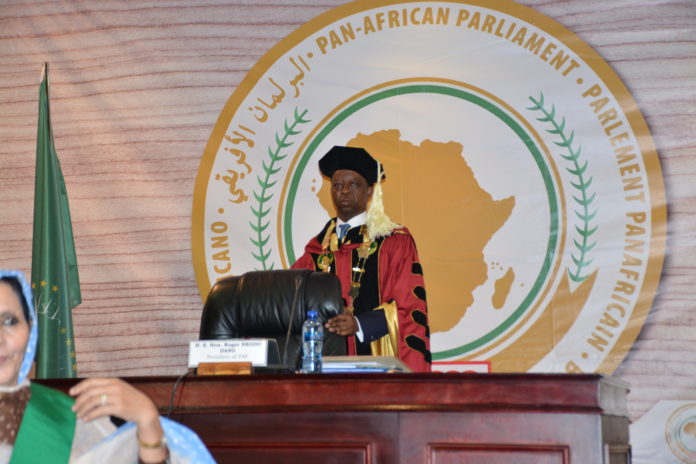
Pan African Parliament President Roger Nkodo Dang

Newly re-elected president for Pan African Parliament (PAP) Roger Nkodo Dang has vowed to serve will loyalty and allegiance to the African Union in a bid to promote principles of good governance on African continent.

In a three hot seated election Mr. Nkodo Dang defeated, Fortune Charumbira from Zimbabwe and Mustapha El Gendy of Egypt garnering 133 votes out of 224 votes cast making him the first president to be re-elected since the establishment of PAP in 2004.

Speaking after taking oath of office, Dang lauded his supporters for trusting him for the third consecutive time as vice president and president.

“You have demonstrated that I am capable to fulfil functions of President of PAP,” he said.

Fortune Charumbira who conceded defeat said that this is a process in a democracy adding that the will of the people has been seen through the numbers, “I congratulate Nkodo Dang for being trusted to head Parliament for another term,”

The re-election of Central Africa brings to the fore the sticking issue of a rotational presidency in the Pan African Parliament.

Northern and Southern region have not had opportunity of being at the helm of PAP leadership, a fact not lost to some MPs who see rotation as a principle espoused by the African Union, which rotates its leadership every year.

“We condemn such behavior. The PAP needs to ensure that it fully implements the rotational system to ensure that each region is afforded the opportunity to serve in the Presidency,” said South African MP Mandla Mandela.

“The incumbent has won and that means he has the confidence and support of the Members,” Hon. Felix Okot Ogong (Uganda) said, adding that however, “The unwritten law in the PAP is that the presidency should be rotational. I think we now need to amend our rules to make the Presidency rotational so that other regions get to the helm of leadership at the PAP.”

The PAP also held elections for its Vice Presidents. The Bureau of the Pan African Parliament consists of the President and four Vice Presidents elected to represent the North, Central, and Eastern, Western and Southern regions.

Hon. Stephen Julius Masele from Tanzania was elected First Vice President representing the Eastern Region. The others were Hon. Haidara Aichata Cisse from Mali (Western Region) elected Second Vice President and Hon. Bouras Djamal from Algeria, representing the Northern Region, as PAP’s Third Vice President.

The Southern Region however, did not submit a candidate. The PAP will conduct elections at a future date to elect the Fourth Vice President of the Southern Region.

Uganda’s Members to PAP are: Hon. Jacquiline Amongin (NRM, Ngora); Prof. Ogenga Latigo (FDC, Agago North); Hon. Anifa Bangirana Kawooya (NRM, Ssembabule); Hon. Felix Okot Ogong (NRM, Dokolo South) and Hon. Babirye Kadogo (Ind. Buyende).

Stories Continues after ad

New report calls for ‘gender-sensitive’ trade policies help empower East African women

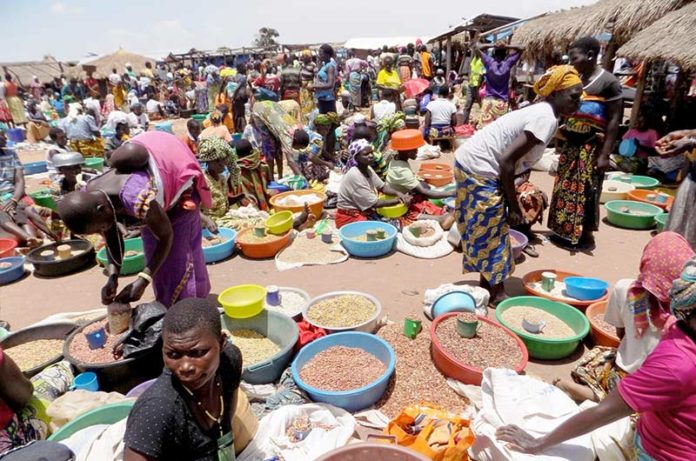
Women-vending-food-stuff in Kampala.

The United Nations Conference for Trade and Development (UNCTAD) says that East African countries can put better policies in place to address gender inequalities and bring women further into the workforce.

In its new report, East African Community Regional Integration: Trade and Gender Implications, UNCTAD analyses the impact of regional integration on women’s employment and quality of life in the five East African Community (EAC) countries of Burundi, Kenya, Rwanda, United Republic of Tanzania and Uganda — the sixth, South Sudan, joined in 2016.
“Gender equality is not a natural outcome of the development process and there is a need to proactively promote gender equality policies,” UNCTAD Secretary-General Prof. Mukhisa Kituyi said, adding: “The analytical work in this report is accompanied by practical ideas.”
One key of the key recommendations is to close the education gender gap and improve skills training so women can compete more for higher-paying jobs. Another is to create a regional credit mechanism to support women entrepreneurs.
Gender chapters could also be included in future free-trade agreements, along with uniform monitoring of how the important 2017 EAC Gender Equality and Development Bill is being put into practice.

“This new analysis is another UNCTAD contribution to the debate on how we, together, can make trade policy more gender-sensitive, and pave the way for more inclusive prosperity that leaves no one behind,” Prof. Kituyi explained.

Although the economy has already shifted away from farming towards services, and to a lesser extent, industry, 96 per cent of women in Burundi, 76 per cent in Kenya, 84 per cent in Rwanda, 71 per cent in Tanzania and 77 per cent in Uganda still work in agriculture.

Women also shoulder a higher share of unpaid care work, which, in turn, limits their availability and flexibility to do paid work.
And despite equal property rights, says the report, women’s land ownership remains low in many countries: just 35 per cent in Kenya and Uganda own their own land and 46 per cent in Rwanda.

Based on the report’s findings, UNCTAD has also released a document designed to benefit women in the region, called Advocating for gender-sensitive trade policymaking in the East African Community.
The research was funded by the Netherlands through TradeMark East Africa and conducted by UNCTAD’s Trade, Gender and Development Programme.

Stories Continues after ad

COMESA – EU signs €15m cross-border trade programme

Cross border trade.

COMESA and the European Union have signed a 15 milliom Euros Cross Border Trade Programme to facilitate small-scale cross-border trade flows.

Secretary General Sindiso Ngwenya and Head of EU Delegation to Zambia and COMESA Alessandro Mariani penned the agreement on May 8, 2018 says part of the press release obtained by Eagle Online.

According to the press release, the programme is financed under the 11th European Development Fund (EDF) to increase formal small-scale cross-border trade flows in the COMESA/tripartite region. It will support governance reforms, institutional capacity building, improved border infrastructures and better data collection and monitoring.
Ultimately, it will result in higher revenue collection for governments at the borders and higher incomes for small-scale cross-border traders.

The signing of the Agreement, the press release says, heralds the beginning of implementation of the planned activities at the targeted border areas in the COMESA region.
The beneficiaries are primarily small-scale traders, in particular women traders, that regularly cross the borders in the COMESA/tripartite region to sell and buy goods, as well as the associations who represent them and defend their interests.
“COMESA recognises the importance of small scale cross border trade, and ICBT. While providing short/medium-term solutions for poor households, ICBT is not an ideal situation, neither for traders nor for governments,”Ngwenya said.
The programme will address the extent of corruption, bribery and harassment experienced by small-scale traders. It will also ensure that Cross-Border Traders Associations (CBTAs) (and similar business associations) in targeted countries have their capacities reinforced in a sustainable way to effectively defend the interests of their members and deliver appropriate support services.

Under the programme, gender disaggregated statistical data and analysis on small-scale cross-border trade shall be systematically collected, compiled, harmonized and disseminated.

The aim is to increase evidence-based knowledge on the topic and inform better trade policy-making processes at national and regional level as well as ensuring that adequate and gender sensitive basic border infrastructures for small-scale traders are built/upgraded at selected border areas.

Stories Continues after ad

Angella Katatumba demands Shs1b compensation from ‘Chicken Tonight’

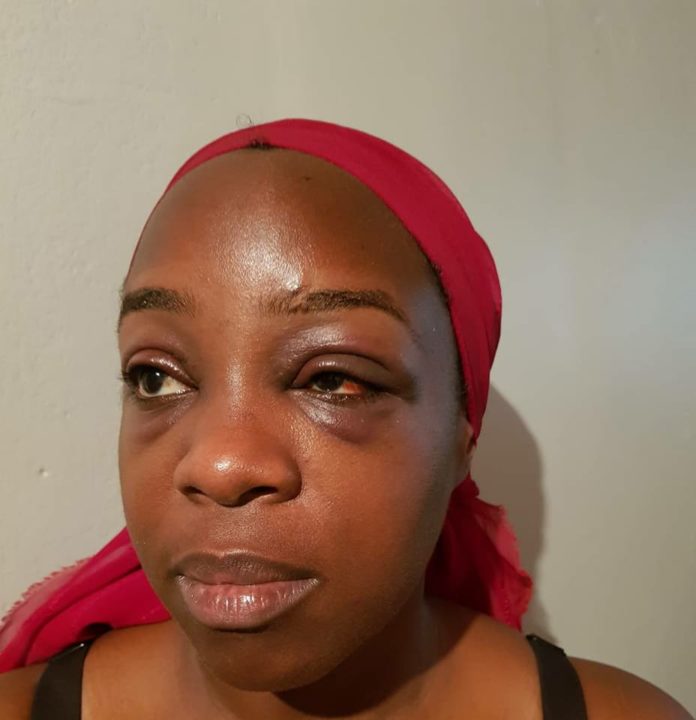
BRUISED: Angela Katatumba after being beaten and now demanding Shs1 billion.

Embattled singer Angella Katatumba is demanding Shs1 billion compensation from management of ‘I Feel Like Chicken Tonight’ as the result of being battered she the outlet’s staff in Kabalagala branch.

Katatumba’s lawyers from Mulindwa Associates & CO. Advocates wrote on May 10, 2018 to the company’s management of their client’s intention to sue should the company fail to pay the Shs1b within a week.

“It is within your knowledge and public domain that our client was battered by your company’s staff Olubrwoth Choka Rodgers, Okiror Denis and Kaddu John on the 1stday of April 2018 during the course of their duty at I Feel Like Chicken Tonight Kabalagala Branch and also stole her money worth Shs6.2 million,” the letter reads in part.

The lawyers say police examination found that Angella Katatumba had suffered grievous bodily harm that was to be attended to at the International Hospital Kampala (IHK).

The lawyers say their client-Angella Katatumba upon examination by IHK medics was found to have developed post-concussion syndrome, anterior Hyphema and erythema around the left eye.

As a result, the lawyers say Angella is undergoing anti-convulsant therapy to be reviewed monthly for an estimated two years.
They add that Katatumba intends to travel abroad for further management of her illness and to rule out any defects.
“This is therefore to demand Shs1,000,000,000…in compensation and damages plus our legal fees…within 7 days from the date hereof,” wrote Katatumba’s lawyers.

Three employees of the Chicken Tonight outlet are already out of Luzira prison have been granted bail by the Makindye Chief Magistrate Elias Kakooza.

The three have been on remand at Luzira Prison for allegedly assaulting Katatumba and her guest, Jamaican artiste Kuzi Kz.
Earlier the trio, represented by David Onyango, denied all charges levelled against them, saying they were defending themselves against the two complainants who started a fight after misunderstandings with the waiter.

Stories Continues after ad

Bamugemereire commission on land had no business in Amongi land issues, over stepping its mandate

Mr. Kidandaire

By Joel Kidandaire

The Commission of Inquiry into Land is on the spot over the harsh treatment of lands Minister Betty Amongi who for two days was subjected to nothing short of humiliating, degrading and inhumane treatment. I am still coming to terms with the fact that a lady can refer to an adult, mother and Minister as, ‘young lady’ in a condescending show of power relations.

If one watched the trial of the 2010 Kampala twin bombing suspects linked to the international terror group Al-Shabaab at the War Crimes Division of the High Court, wherein current Deputy Chief Justice Owiny Dollo was presiding judge and current Mbale resident High Court judge Justice Susan Okalany the lead prosecutor, the suspects were treated with respect and dignity that falls within the concept of presumption of innocence enshrined in article 28 of the 1995 constitution.

Accordingly, one would wonder, if the High Court can treat suspects of mass murder, terrorism and treason whose victims to this day live with scars and some of whom attended court to watch the perpetrators face justice, how about a minister who is accused of breaches of the Leadership Code of Conduct and alleged land grabbing? Clearly, from the conduct of the chairperson of the commission, which wasn’t unique to Amongi anyway, one would be forgiven for concluding that the Lady Justice lost control of her emotional stability with due respect.

The case of R v Sussex Justices, Ex parte McCarthy is a leading English case on the impartiality and recusal of judges. It is famous for its precedence in establishing the principle that the mere appearance of bias is sufficient to overturn a judicial decision.
One can only imagine how many applications for judicial review will be filed in the High Court challenging some of the commission’s proceedings.
That said, I wish to comment on the issue of the dispute. From my reading of the facts, the Departed Asians Custodian Board is under the Ministry of Finance, Planning and Economic Development and the line minister is its board chairperson. The Attorney General, Minister of Trade, Minister of Lands, Minister of Local Government sit on this board that meets monthly to review budgets and play an oversight role.

The day to day running of the affairs of the board is the mandate of the secretariat where a minister wouldn’t have a role. In fact, one doesn’t have to be a lands minister to influence acquisition of property since the secretariat is the one that looks into applications.

In 1983, government of Uganda came up with the Expropriated Properties Act to take care of properties of Asians expelled by President Idi Amin that weren’t claimed on return of the Asians. That property then vested in government through the board which can sell the same but before its sells it can make a decision to let it out to a citizen of Uganda on temporary basis.

That decision on which person (artificial or natural) takes charge of the property is made by the secretariat not the board where the minister sits. In fact, sometimes, state ministers in the lands ministry can attend these monthly board meetings if their boss isn’t available. To accuse the Lands Minister of conflict of interest and influence peddling is to impeach the integrity of the entire board since one member alone cannot make a decision.
This then raises a triable point of law on whether there was actually conflict of interest on the minister’s part.

At what point does one accuse her of influence peddling when the board doesn’t make the decision on who can be allocated what property for a temporary period of time, in which case they actually pay rent to government?
The first time Amobet Limited, the company of the minister and her sister first applied to be temporarily allocated these properties was 2010. The applications were rejected. The company, per the minister’s explanation, had lost interest in further pursuit of the same as it tried out other opportunities in Juba, South Sudan. Around 2016 the secretariat of the board reconsidered and gave them some of the now challenged properties. Of course the coincidence here is that it is around this time that Amongi was appointed minister so she would struggle persuading many minds.

Rent was paid to government for six months but the company couldn’t take possession of the property thanks to claimants and now claims its rent back from government.
One can smell the influence of the minister in trying to ensure her company takes possession to the chagrin of the Asians who lay claim of an interest in the property. Of course if there was abuse of power on the part of the minister it must be exposed and she pays the price.

However, this matter is in court. One wonders then, why the commission wanted to poke its nose in matters before court and where court is better placed to declare the right position as the commission’s recommendations have no force of law. They are only that—recommendations that can be accepted or rejected by the powers that be.
Isn’t there interference with the work of courts by the commission and violation of the subjudice rule? My gut feeling is that, the commission is over stepping its mandate.
Lastly, if there was conflict of interest, and as lawyers we can argue about that all day given the facts at hand, again, it is my view that the Inspector General of Government under the Leadership Code Act is the right platform for investigation of the minister for any breaches if any.

It was even more surprising that the commission asked the minister to render an account of all her properties, and inquired into her personal dealings such as buildings she has recently acquired. Clearly, public officials declare their wealth to the IGG annually and again, the IGG is best placed to ask these questions as and when the need arises. The Commission is good for dramatic value and playing to the gallery but even in doing so, it should go slow on biting more than it can chew and over stepping its mandate. Otherwise allow me thank the good Lady Justice for the wonderful job she is doing and salute the sobriety of her commissioners who have dedicated time to inquire into this intricate question of land. For God and my Country.

Mr. Joel Kidandaire is a businessman, lawyer and Bar Course student at LDC.

Stories Continues after ad

New report calls for Ugandans to pay more taxes

Keith Muhakanizi, PS Ministry of Finance.

The highlight of the latest Uganda Economic Update is to be launched in Kampala on May 11, 2018.

The reports says the government collects lesser taxes than it should be collecting and urges tax administrators to innovate and collect more to enable the country limit on its borrowing.

The Update accordingly discusses how Uganda can avoid the debt trap and raise more domestic revenue to finance long-term development and service delivery to Ugandans.

“This edition of the Economic Update has a special focus on mobilizing domestic revenue to finance the country’ development. Uganda currently collects only 14 percent of Gross Domestic Product (GDP) in tax, which is less than 40 per cent of its tax potential,” says the World Bank.

The report will officially be launched at UMA Conference Hall in Lugogo, Kampala.
Five panelists representing government, private sector and civil society have been lined up to discuss the report that urges the government to collect more taxes for national development.

They panelists are; Keith Muhakanizi: Permanent Secretary- Ministry of Finance Planning and Economic Development, Ishak Lukenge: Chairman -Uganda Manufacturers Association (UMA), Daniel BirungI: Executive Director- African Fine Coffees Association (AFCA), Doris Akol: Commissioner General-Uganda Revenue Authority (URA) and Julius Mukunda: Executive Director- .Civil Society Budget Advocacy Group (CSBAG).

Government in the financial year 2018/19 intends to task URA collect about Shs16 trillion compared to just over Shs15 trillion URA is to collect in the current financial year 2017/18.

President Yoweri Museveni recently blamed the Finance Ministry and URA for doing less to collect more taxes. The president would want the tax base expanded and recently suggested social media tax, causing uproar in the public domain.

A narrow tax base has forced government into borrowing to fund development projects. And the World Bank in August 2017 said the country’ debt burden had hit hits US $11.2 billion. Tax economists have warned that Uganda’s debt is nearing unsustainable levels.

Stories Continues after ad