Stanbic Bank
Stanbic Bank
23.3 C
Kampala
Stanbic Bank
Stanbic Bank
Home Blog Page 1576

Angella Katatumba demands Shs1b compensation from ‘Chicken Tonight’

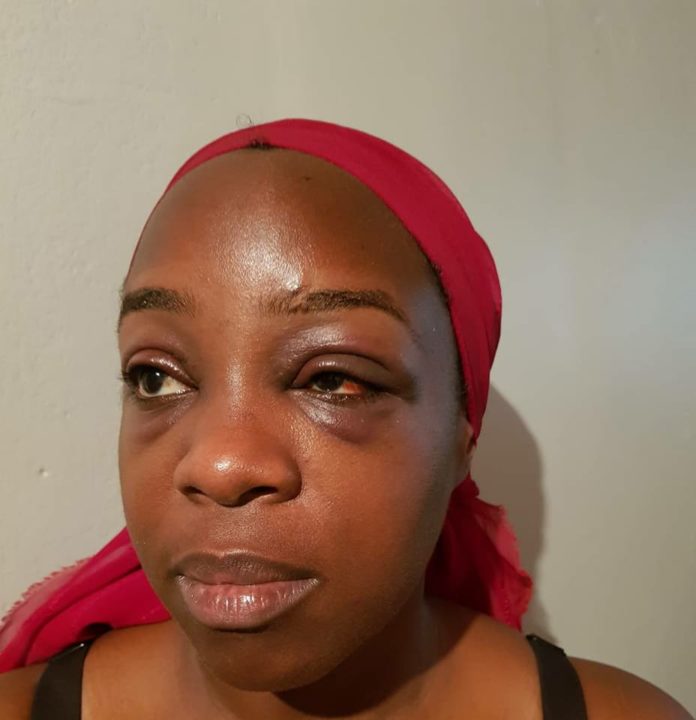
BRUISED: Angela Katatumba after being beaten and now demanding Shs1 billion.

Embattled singer Angella Katatumba is demanding Shs1 billion compensation from management of ‘I Feel Like Chicken Tonight’ as the result of being battered she the outlet’s staff in Kabalagala branch.

Katatumba’s lawyers from Mulindwa Associates & CO. Advocates wrote on May 10, 2018 to the company’s management of their client’s intention to sue should the company fail to pay the Shs1b within a week.

“It is within your knowledge and public domain that our client was battered by your company’s staff Olubrwoth Choka Rodgers, Okiror Denis and Kaddu John on the 1stday of April 2018 during the course of their duty at I Feel Like Chicken Tonight Kabalagala Branch and also stole her money worth Shs6.2 million,” the letter reads in part.

The lawyers say police examination found that Angella Katatumba had suffered grievous bodily harm that was to be attended to at the International Hospital Kampala (IHK).

The lawyers say their client-Angella Katatumba upon examination by IHK medics was found to have developed post-concussion syndrome, anterior Hyphema and erythema around the left eye.

As a result, the lawyers say Angella is undergoing anti-convulsant therapy to be reviewed monthly for an estimated two years.
They add that Katatumba intends to travel abroad for further management of her illness and to rule out any defects.
“This is therefore to demand Shs1,000,000,000…in compensation and damages plus our legal fees…within 7 days from the date hereof,” wrote Katatumba’s lawyers.

Three employees of the Chicken Tonight outlet are already out of Luzira prison have been granted bail by the Makindye Chief Magistrate Elias Kakooza.

The three have been on remand at Luzira Prison for allegedly assaulting Katatumba and her guest, Jamaican artiste Kuzi Kz.
Earlier the trio, represented by David Onyango, denied all charges levelled against them, saying they were defending themselves against the two complainants who started a fight after misunderstandings with the waiter.

Stories Continues after ad

Bamugemereire commission on land had no business in Amongi land issues, over stepping its mandate

Mr. Kidandaire

By Joel Kidandaire

The Commission of Inquiry into Land is on the spot over the harsh treatment of lands Minister Betty Amongi who for two days was subjected to nothing short of humiliating, degrading and inhumane treatment. I am still coming to terms with the fact that a lady can refer to an adult, mother and Minister as, ‘young lady’ in a condescending show of power relations.

If one watched the trial of the 2010 Kampala twin bombing suspects linked to the international terror group Al-Shabaab at the War Crimes Division of the High Court, wherein current Deputy Chief Justice Owiny Dollo was presiding judge and current Mbale resident High Court judge Justice Susan Okalany the lead prosecutor, the suspects were treated with respect and dignity that falls within the concept of presumption of innocence enshrined in article 28 of the 1995 constitution.

Accordingly, one would wonder, if the High Court can treat suspects of mass murder, terrorism and treason whose victims to this day live with scars and some of whom attended court to watch the perpetrators face justice, how about a minister who is accused of breaches of the Leadership Code of Conduct and alleged land grabbing? Clearly, from the conduct of the chairperson of the commission, which wasn’t unique to Amongi anyway, one would be forgiven for concluding that the Lady Justice lost control of her emotional stability with due respect.

The case of R v Sussex Justices, Ex parte McCarthy is a leading English case on the impartiality and recusal of judges. It is famous for its precedence in establishing the principle that the mere appearance of bias is sufficient to overturn a judicial decision.
One can only imagine how many applications for judicial review will be filed in the High Court challenging some of the commission’s proceedings.
That said, I wish to comment on the issue of the dispute. From my reading of the facts, the Departed Asians Custodian Board is under the Ministry of Finance, Planning and Economic Development and the line minister is its board chairperson. The Attorney General, Minister of Trade, Minister of Lands, Minister of Local Government sit on this board that meets monthly to review budgets and play an oversight role.

The day to day running of the affairs of the board is the mandate of the secretariat where a minister wouldn’t have a role. In fact, one doesn’t have to be a lands minister to influence acquisition of property since the secretariat is the one that looks into applications.

In 1983, government of Uganda came up with the Expropriated Properties Act to take care of properties of Asians expelled by President Idi Amin that weren’t claimed on return of the Asians. That property then vested in government through the board which can sell the same but before its sells it can make a decision to let it out to a citizen of Uganda on temporary basis.

That decision on which person (artificial or natural) takes charge of the property is made by the secretariat not the board where the minister sits. In fact, sometimes, state ministers in the lands ministry can attend these monthly board meetings if their boss isn’t available. To accuse the Lands Minister of conflict of interest and influence peddling is to impeach the integrity of the entire board since one member alone cannot make a decision.
This then raises a triable point of law on whether there was actually conflict of interest on the minister’s part.

At what point does one accuse her of influence peddling when the board doesn’t make the decision on who can be allocated what property for a temporary period of time, in which case they actually pay rent to government?
The first time Amobet Limited, the company of the minister and her sister first applied to be temporarily allocated these properties was 2010. The applications were rejected. The company, per the minister’s explanation, had lost interest in further pursuit of the same as it tried out other opportunities in Juba, South Sudan. Around 2016 the secretariat of the board reconsidered and gave them some of the now challenged properties. Of course the coincidence here is that it is around this time that Amongi was appointed minister so she would struggle persuading many minds.

Rent was paid to government for six months but the company couldn’t take possession of the property thanks to claimants and now claims its rent back from government.
One can smell the influence of the minister in trying to ensure her company takes possession to the chagrin of the Asians who lay claim of an interest in the property. Of course if there was abuse of power on the part of the minister it must be exposed and she pays the price.

However, this matter is in court. One wonders then, why the commission wanted to poke its nose in matters before court and where court is better placed to declare the right position as the commission’s recommendations have no force of law. They are only that—recommendations that can be accepted or rejected by the powers that be.
Isn’t there interference with the work of courts by the commission and violation of the subjudice rule? My gut feeling is that, the commission is over stepping its mandate.
Lastly, if there was conflict of interest, and as lawyers we can argue about that all day given the facts at hand, again, it is my view that the Inspector General of Government under the Leadership Code Act is the right platform for investigation of the minister for any breaches if any.

It was even more surprising that the commission asked the minister to render an account of all her properties, and inquired into her personal dealings such as buildings she has recently acquired. Clearly, public officials declare their wealth to the IGG annually and again, the IGG is best placed to ask these questions as and when the need arises. The Commission is good for dramatic value and playing to the gallery but even in doing so, it should go slow on biting more than it can chew and over stepping its mandate. Otherwise allow me thank the good Lady Justice for the wonderful job she is doing and salute the sobriety of her commissioners who have dedicated time to inquire into this intricate question of land. For God and my Country.

Mr. Joel Kidandaire is a businessman, lawyer and Bar Course student at LDC.

Stories Continues after ad

New report calls for Ugandans to pay more taxes

Keith Muhakanizi, PS Ministry of Finance.

The highlight of the latest Uganda Economic Update is to be launched in Kampala on May 11, 2018.

The reports says the government collects lesser taxes than it should be collecting and urges tax administrators to innovate and collect more to enable the country limit on its borrowing.

The Update accordingly discusses how Uganda can avoid the debt trap and raise more domestic revenue to finance long-term development and service delivery to Ugandans.

“This edition of the Economic Update has a special focus on mobilizing domestic revenue to finance the country’ development. Uganda currently collects only 14 percent of Gross Domestic Product (GDP) in tax, which is less than 40 per cent of its tax potential,” says the World Bank.

The report will officially be launched at UMA Conference Hall in Lugogo, Kampala.
Five panelists representing government, private sector and civil society have been lined up to discuss the report that urges the government to collect more taxes for national development.

They panelists are; Keith Muhakanizi: Permanent Secretary- Ministry of Finance Planning and Economic Development, Ishak Lukenge: Chairman -Uganda Manufacturers Association (UMA), Daniel BirungI: Executive Director- African Fine Coffees Association (AFCA), Doris Akol: Commissioner General-Uganda Revenue Authority (URA) and Julius Mukunda: Executive Director- .Civil Society Budget Advocacy Group (CSBAG).

Government in the financial year 2018/19 intends to task URA collect about Shs16 trillion compared to just over Shs15 trillion URA is to collect in the current financial year 2017/18.

President Yoweri Museveni recently blamed the Finance Ministry and URA for doing less to collect more taxes. The president would want the tax base expanded and recently suggested social media tax, causing uproar in the public domain.

A narrow tax base has forced government into borrowing to fund development projects. And the World Bank in August 2017 said the country’ debt burden had hit hits US $11.2 billion. Tax economists have warned that Uganda’s debt is nearing unsustainable levels.

Stories Continues after ad

Museveni extends tenure of land probe by 18 months as he appoints new members

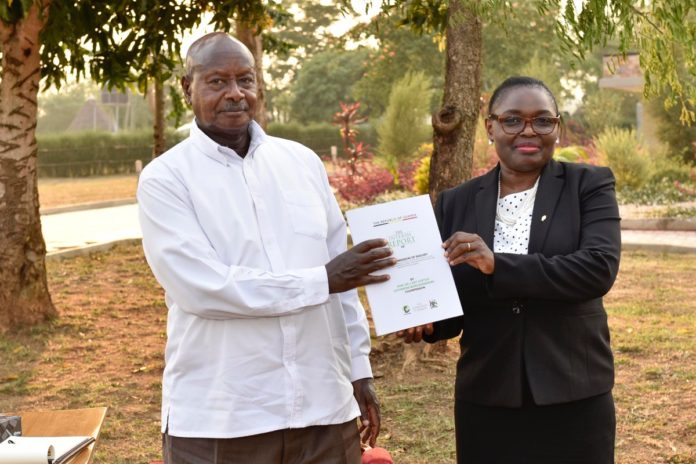
President Museveni receiving a report from Justice Catherine. Bamugemereire.

Kampala: President Yoweri Museveni has extended the tenure of Commission of Inquiry into Land Matters by 18 months after expiry of the six months extension.

According to legal notice no.6 of 2018 of the Commissions Terms of Reference, Museveni rejuvenated their contract that expired yesterday May 9th 2018 to November 2019.

In the contract, Museveni, appointed Dr. Douglas Singiza as the Commission’s new Secretary replacing Justice Olive Kazaarwe Mukwaya who was recently appointed a Judge of the High Court.

Accordingly, Eagle Oline has reliably learnt that Daniel Rutiba has also been appointed to as Deputy Secretary, Susan Jagata as Deputy Lead Counsel and Andrew Odit the Assistant Lead Counsel of the Land Probe Commission.

Quoting legal Amendment Notice No. 2 of 2017 dated November 5, President Museveni renewed commission’s contract to six month after it had expired on November 9th 2017, he wrote ‘…this Notice shall be deemed to have come into force on the 10th day of November 2017…, The Commission shall execute its mandate under this Notice’
since it was established, the has grilled various government ministers including and these include Junior Minister for Water and Environment Ronald Kibuule, Minister for Lands Betty Amongi, and handed over various reports and recommendations that included abolishing of Milo land tenure system.

The committee headed by Justice Catherine Bamugemereire was appointed on December 8, 2016 and sworn in on February 17, to inquire into the Effectiveness of Law, Policies and Processes of land Acquisition, Land Administration, Land Management and Land Registration in Uganda.

Other Commissioners include: Owekitiibwa Robert Ssebunnya, Mrs. Mary Oduka Ochan; Mrs. Joyce Gunze Habaasa; Dr. Rose Nakayi; Mr. Fredrick Ruhindi and Mr. George Bagonza Tinkamanyire. The support team has: Mr. Ebert Byenkya (Lead Counsel) and Mr. John Bosco Rujagaata Suuza (Assistant Lead Counsel).
However, the probe has come under public scrutiny on its expenditure. Recently parliament called for its accountability before any funds could be released. The commission has so far spent Shs13 billion in 11 months.

Stories Continues after ad

Prudential pays Shs1.5b bonuses to customers

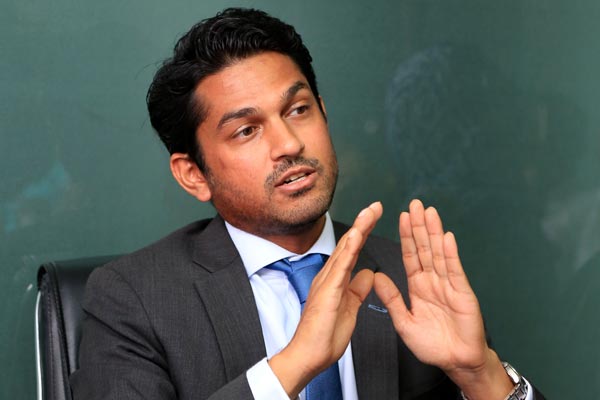
Prudential Uganda CEO Arjun Mallik.

Prudential Uganda has Thursday announced bonuses worth Shs1.5 billion to be paid to its customers who hold different insurance policies with the company.

But the bonus will go to customers who have been consistent in paying their premiums and have completed at least one year with the company as at December 2017.

According to the officials, the policies are added to the guaranteed amount and paid upon maturity of the policy, loss of life or disability.

Speaking at the media dialogue held at the Pearl of Africa Hotel in Kampala, the Chief Executive Officer Arjun Mallik said: “There has been a double-digit increase in bonus from Shs700 million last year, reflecting a solid investment performance.”

Mallik said Prudential invests money in carefully selected assets on behalf of customers, who receive a share of the profits as bonus each year.

He said Prudential Uganda last year had a significant large pool of funds as a result of increased number of their customers choosing to plan their financial future with the company. “This has to do with our products addressing crucial needs and our track record of honouring every single genuine claim ever since we entered this market,” he said.
Mallik said the company’s innovative products and strong execution have driven growth across all the company’s business lines, adding that the company has for the last two years doubled its market share with the average revenue growth of 322 per cent.

Worldwide, Prudential manages assets worth US $900 million.

According to the Insurance Regulatory Authority 2017 half –year results, Life insurance generated premiums worth Shs75 billion in 2017, up from Shs60 billion in the period 2016.

Stories Continues after ad

Court halts Sheikh Siraje Kawooya’s bail application, sends him to Luzira Prison.

Kawooya

Kampala: Sheikh Siraje Kawooya has today been denied bail after Court of Appeal Judge Christopher Madrama dismissed his application to pursue his appeal over conviction and sentence to life imprisonment.

Sheikh Kawooya was last year convicted of murder, terrorizing of Muslim clerics and sentenced to life imprisonment by a panel of three High Court judges Justices Ezekiel Muhanguzi, Jane Kiggundu and Percy Tuhaise.

Citing deteriorating health and presumption of innocence, through his lawyers Friday Kagoro, Kawooya applied for bail before his conviction and sentencing.

However in his ruling, Justice Madrama said Kawooya’s conviction reduced his chances of presuming him innocent and the kind of offence has hindered court to release the applicant on bail.

Speaking to media after court session, applicant’s lawyer said his client is dissatisfied with court’s ruling and vowed to re-apply his bail application to a panel of three judges, “The law provides for it and with hope he will be released to challenge International Crimes Division (ICD) of the High Court’s decision that convicted him,” he added.
He was sentenced to life imprisonment along with Sheikh Kamoga Yunus, Multa Bukenya and Fahad Bukenya as Sheik Yusuf Kakande and Fahad Kalungi were sentenced to 30 years in prison.

Stories Continues after ad

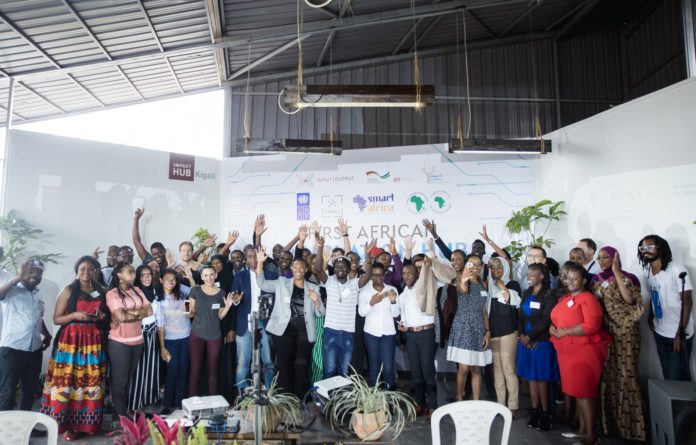
450,000 innovators endorse African Innovation Policy

Participants at the event.

About 90 innovation hubs representing more than 450,000 innovators and networks across 32 countries have endorsed the African Innovation Policy Manifesto in Kigali Rwanda.

The representatives of the innovation groups were in Rwanda, to co-design better innovation and entrepreneurship policies.

The event was organized on the sidelines of the Transform Africa Summit in Kigali that took place from May 8-9 under the theme “Accelerating Africa’s Single Digital Market”.

The Summit brought together stakeholders within the ICT space in the continent to discuss the role and power of digital technologies, including blockchain, the Internet of Things (IoT), Big Data, Artificial Intelligence, Virtual and Augmented reality, among others.

Participants discussed key public policy areas and to co-write the i4policy communiqué in view of accelerating digital transformation and contributing to more equitable, inclusive and sustainable development of economies and societies. Participants took ownership of the sessions by leading and facilitating the discussions as well as volunteering to translate for their French-speaking peers.

The first version of the i4policy vision was first drafted in October 2016 when a smaller group of African innovation hubs, bloggers, entrepreneurs and community catalysts, met in Kigali to discuss their public policy challenges.

The current manifesto was achieved through collaborative discussions, with input from the innovation hub managers physically at the event, as well as communities participating virtually from across the continent.

The policy manifesto focuses on seven key areas: education, research and development; digital infrastructure; public multidisciplinary spaces; business registration; finance for innovation and entrepreneurship; local and regional markets; and taxation systems.

The African Innovation Hub Convention was also an opportunity for the leaders of existing hub networks and associations active around the continent to share their work and progress with the gathering, with a view to strengthening existing networks and ties between innovation communities on content as well as policy visions.

Rym Jarou, the Talent and Capacity Building Manager at Smart Tunisia spoke about how the recently passed Tunisian Startup Act came to be and shared learnings from that process that can serve as a useful example for startup ecosystems and their respective policy makers across the continent.

“It is time for innovation for policy in Africa”, said Markos Lemma from Iceaddis, Ethiopia. “We are not asking our governments to listen to us anymore. Instead, we will work with them to co-create policies that work for the innovation community. It is not a demand-supply relationship we want to have with policy makers. We want to have a relationship of cooperation and collaboration,” she said.

The hub gathering was co-organised by i4policy, Jamaafunding, Kumasi Hive, the African Agribusiness Incubator Network and Impact Hub Kigali with support from Deutsche Gesellschaft für Internationale Zusammenarbeit (GIZ), the International Organization of la Francophonie (OIF), the United Nations Development Programme (UNDP) and the African Development Bank Group (AfDB) among others.The African Union Commission attended as observers.

In many African countries, there are significant barriers to growth for small and medium enterprises, and it gets even more difficult for innovative startups that leverage technologies outside the scope of current legislation, according to Dana Elhassan, at the African Development Bank.

“Our mandate at the African Development Bank is to foster inclusive growth for the economies of our member states. But a theoretical, top down approach is no longer sufficient for the purposes of guiding the governments who look to us for advice. Interacting with innovators and entrepreneurs in the context of this bottom-up policy deliberation gives us an opportunity to use our convening power to recommend policy interventions that best serve the interests for which they are intended”, she said.

The i4policy Alliance has begun formalizing a legal structure, bottom-up governance structure and values. A second hub gathering will be organized later this year to validate the legal structure and importantly to provide a practical bottom-up training for hub managers on policy support methodologies developed by the community. For example, Kumasi Hive together with 29 other hubs in Ghana formed the Tech and Business Hubs Network (TBHN) to work with the Government to improve the regulatory environment for innovation.

Participants called for the:
● Easing mobility for Africans to travel in Africa
● Adopting the African Declaration on Internet Rights and Freedoms
● simplifying the regulatory environment: starting and closing a business and paying taxes must be easier and cheaper and fines should be reduced
● redesigning education curricula together with a broad coalition of partners, such as labs and civic spaces, to emphasize critical thinking and digital skills, among others
● Increased investment in R&D to accelerate indigenous innovation

Stories Continues after ad

Sadolin opens more two color centres in Kampala

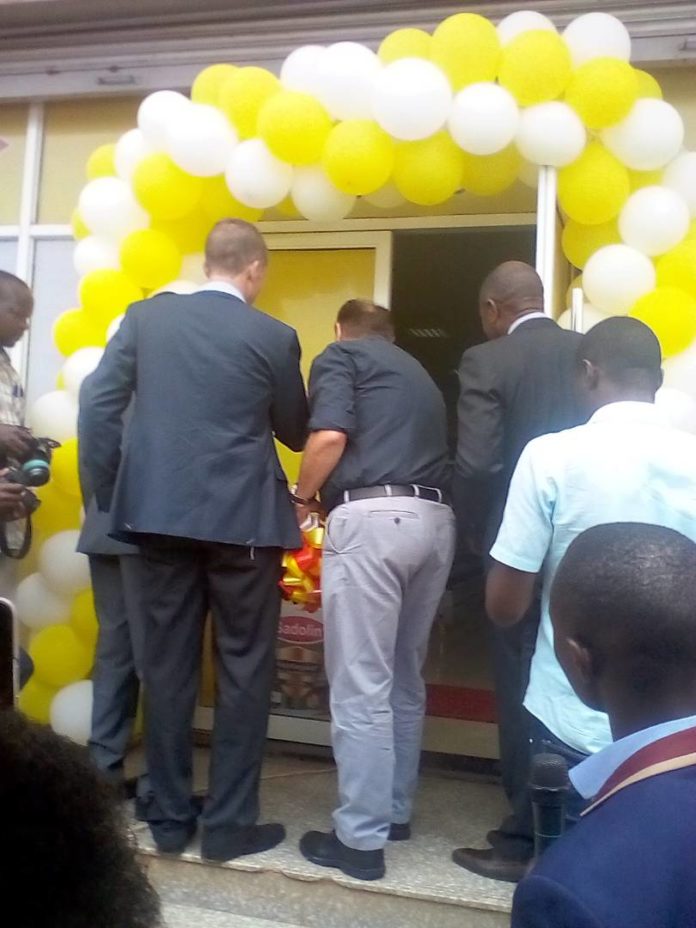
Uganda’s major paint maker, Sadolin has opened two more color centres-one in Ntinda and the other in Nakawa Industrial Area in a bid to bring its services and products nearer to clients.

According to Matia Ssebiranda, the Marketing Manager of AkzoNobel which owns the Sadolin brand, the color centres are being established through franchise agreements with local entrepreneurs and Sadolin.

The launch of the two color centres in Ntinda and Nakawa Industrial Area bring the number to three in Uganda and East Africa, Sadolin having launched the first one recently at Freedom City Shopping Mall in Makindye Division.

Speaking at the inauguration of the color centre in Nakawa Industrial Area, AkzoNobel’s planning and Execution Manager, Deon Nieuwoudt said the new concept of the color centres was the best option in the color business where clients are helped to buy the color of their choice, which can be obtained out of the mixture of the existing ones.

Nieuwoudt said AkzoNobel was committed to expanding the Sadolin footprint in Uganda through firming up franchise agreements with local entrepreneurs, a development, he said helps in job creation. He said Sadolin had trained color experts and placed them in color centres to attend to clients’ needs.

“The concept of the color centres aims to extend Sadolin product to customers through experiential shopping and to give local entrepreneurs the opportunity to expand their business frontiers by being part of the Sadolin chain while tapping into our expertise,” he said.
He said that the innovation of establishing color centres will enhance the company’s customer care, proximity of the Sadolin product as well as partnership with local entrepreneurs.

He said that the new innovation of color centres come with a business model where entrepreneurs can be helped by Sadolin to acquire bank loans for their business needs. Under the color centres’ model local investors can invest from Shs50m upwards but Nieuwoudt said even small business units would benefit in the near future.

James Kiwanuka, the proprietor of the Nakawa’s Sadolin Color Centre James Kiwanuka while speaking at the launch said the new innovation would boost the construction industry as it provided new shopping experiences but also that it boosts tax collections and employment.

The Chairman of the Construction and Hardware Dealers Association (CHADA), Hajji Abbas Mutyaba commended Sadolin for the new innovation in the local color/paint business saying: “This establishment signals growth and expansion in both the paint and construction industry.” He said new color centres would entice investors to expand as well as distribute products at competitive standards.

Sadolin produces emulsion products, gloss products, wood paint and custom-made paints in ranging from pack sizes of half a litre to 20 litres.

Stories Continues after ad
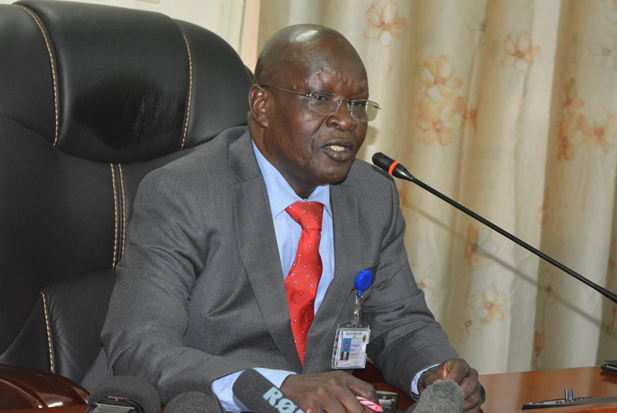
Salva Kiir sacks South Sudan Central Bank Governor, deputy

Dr Othom Rago Ajak

governor Dr Othom Rago Ajak just after a year in office.

It is not clear why the two senior bank officials were removed from their positions.

The dismissals come amidst continuing ballooning inflation rates and fluctuating market prices and just months after the president revealed that the country is broke.

Dr Othom was appointed to the government’s main monetary reserve in January 2017 after the former bank governor Kornelio Koryom was relieved.

During his appointment, he had promised to improve the economic situation of the country.

Stories Continues after ad
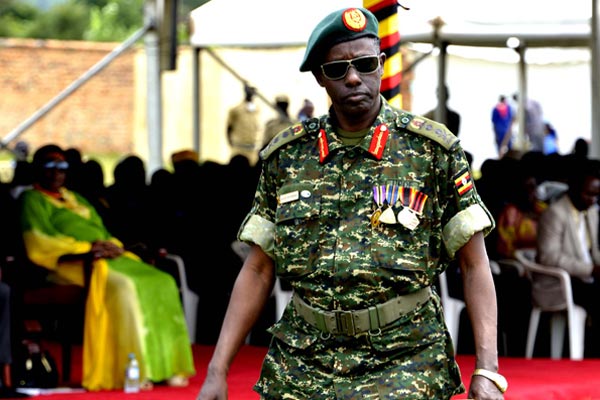
You are misplaced, Gen. Tumwine tells MPs over Nommo Gallery

Gen. Elly Tumwine.

Security Minister, Gen. Elly Tumwine has fired back at legislators who called for him to quite Nommo Gallery over allegations of nonpayment of rent.

Nommo Gallery is a subsidiary of Uganda National Cultural Centre (UNCC).
In a phone interview with Eagle Online, Gen. Tumwine says the facts are clear as those of 2013 and that his company Creations Limited does not owe Nommo Gallery any single penny.

“The facts are clear as those of 2013 and there is no single arrear owned by me to Nommo Gallery. It is very sad that a parliamentary committee has never invited me for an interface but just went ahead to make recommendations based on hearsay.” Gen. Tuwmine said.
He added “The Speaker wrote to the line minister demanding to establish whether it was true that I was receiving payment as alleged from government and there was no evidence on those allegations.”
Early this week, Parliament directed that Gen. Tumwine vacates Nommo Gallery, on allegation that he occupies the facility since 1998.

Kadaga said, “The issue of Nommo Gallery is a serious indictment of this house that we have been budgeting for Nommo when it has been appropriated by one individual. If we don’t treat this impunity, one day, someone will come and take over Parliament and claim that it is his house claiming that he fought in the bush; so this House directs Gen. Tumwine to pay off the rent but also to vacate because it is a public facility.”

The Speaker of Parliament, Rebecca Kadaga’s order followed the release of a report by the Parliamentary Committee on Gender, Labour and Social Development, which indicated that Gen Tumwine owes in excess of Shs1.6 billion in accumulated rent arrears. Asked by Eagle Online whether it is factual that he owes Shs1.6 billion in arrears to the facility, Gen. Tumwine said, “I have never occupied any government land and I don’t owe the facility any rent arrears.

The land was given to Artisans by government in 1964 and so it isn’t government land. Mind you I don’t also receive any money from government as alleged that Nommo Gallery receives Shs44.6 million” he said.

The issue of Nommo Gallery has dragged on since 2013 when it emerged that Gen. Tumwine had been occupying the facility for over years without remitting rent to Ministry of Gender.

Stories Continues after ad