Stanbic Bank
Stanbic Bank
20.6 C
Kampala
Stanbic Bank
Stanbic Bank
Home Blog Page 1603

Uganda has 250 prisoners on death row

Archbishop Stanley Ntagali of Church of Uganda prays for inmates at Luzira Upper Prison recently

Uganda has over 250 inmates on death row, Amnesty International has indicated in its 2017 global review of the death penalty published Thursday.

The report which show that almost 1000 inmates were executed globally indicates however, that Uganda did not carry any executions or death sentences in 2017 despite the existence of the law. The AI figures exclude China which regards executions as classified information.

Uganda falls under countries that retain the death penalty for ordinary crimes like murder. Other countries in this category are Afghanistan, Antigua and Barbuda, Bahamas, Bahrain, Bangladesh, Barbados, Belarus, Belize, Botswana, Chad, China, Comoros, Cuba and the Democratic Republic of the Congo. Others include Somalia, South Sudan, Sudan, Syria, Taiwan, Thailand, Trinidad and Tobago, United Arab Emirates, USA, Viet Nam, Yemen and Zimbabwe.

Uganda last carried out execution in 2003 but President Yoweri Museveni said in January he would order the hanging of prisoners on death row in a bid to curb rampant killings in the country.

Uganda’s neighbours, Kenya and Tanzania fall under countries that retain the death penalty for ordinary crimes such as murder “but can be considered abolitionist in practice in that they have not executed anyone during the last 10 years and are believed to have a policy or established practice of not carrying out executions”. Rwanda abolished death sentence some years back.

In Kenya, the report says, at least 21 death sentences were imposed. No executions were carried out. In December the Supreme Court declared the mandatory imposition of death sentences in murder cases to be unconstitutional. The judgment meant that judges would have discretion; they would not have to automatically sentence to death a defendant convicted of murder.

Other countries in this category include. Algeria, Brunei Darussalam, Burkina Faso, Cameroon, Central African Republic, Eritrea, Ghana, Grenada, Laos, Liberia, Malawi, Maldives, Mali, Mauritania, Morocco/Western Sahara, Myanmar, Niger, Papua New Guinea, Russian Federation,109 Sierra Leone, South Sri Lanka, Swaziland, Tajikistan, Tonga, Tunisia, Zambia.

The report says Sub-Saharan Africa made great strides in the global fight to abolish the death penalty with a significant decrease in death sentences being imposed across the region, Amnesty International says in the report.

Guinea became the 20th state in sub-Saharan Africa to abolish the death penalty for all crimes, while Kenya abolished the mandatory death penalty for murder. Burkina Faso and Chad also took steps to repeal this punishment with new or proposed laws.

“The progress in sub-Saharan Africa reinforced its position as a beacon of hope for abolition. The leadership of countries in this region gives fresh hope that the abolition of the ultimate cruel, inhuman and degrading punishment is within reach,” said Amnesty International’s Secretary General Salil Shetty.

“With governments in the region continuing to take steps to reduce and repeal the death penalty well into 2018, the isolation of the world’s remaining executing countries could not be starker.

“Now that 20 countries in sub-Saharan Africa have abolished the death penalty for all crimes, it is high time that the rest of the world follows their lead and consigns this abhorrent punishment to the history books.”

“It is high time that the rest of the world follows their lead and consigns this abhorrent punishment to the history books,” said AI’s Shetty.

The organization recorded a drop in the number of executing countries across sub-Saharan Africa, from five in 2016 to two in 2017, with only South Sudan and Somalia known to have carried out executions. However, with reports that Botswana and Sudan resumed executions in 2018, the organization highlighted that this must not overshadow the positive steps being taken by other countries across the region.

Elsewhere in Africa, Gambia signed an international treaty committing the country not to carry out executions and moving to abolish the death penalty. The Gambian President established an official moratorium (temporary ban) on executions in February 2018.

Developments across sub-Saharan Africa in 2017 exemplified the positive trend recorded globally, with Amnesty International’s research pointing to a further decrease in the global use of the death penalty in 2017.

Amnesty International recorded at least 993 executions in 23 countries in 2017, down by 4% from 2016 (1,032 executions) and 39% from 2015 (when the organization reported 1,634 executions, the highest number since 1989).

At least 2,591 death sentences in 53 countries were recorded in 2017, a significant decrease from the record-high of 3,117 recorded in 2016. These figures do not include the thousands of death sentences and executions that Amnesty International believes were imposed and implemented in China, where figures remain classified as a state secret.

“The death penalty is a symptom of a culture of violence, not a solution to it. We know that by galvanizing the support of people worldwide, we can stand up to this cruel punishment and end the death penalty everywhere,” he adds.

The report only covers the judicial use of the death penalty and does not include figures for extrajudicial executions. Amnesty International says it only reports figures for which it can find reasonable confirmation, although the true figures for some countries are significantly higher.

“Some states intentionally conceal death penalty proceedings; others do not keep or make available data on the numbers of death sentences and executions,” it says.

Stories Continues after ad

Stanbic Bank is best primary dealer in 2017

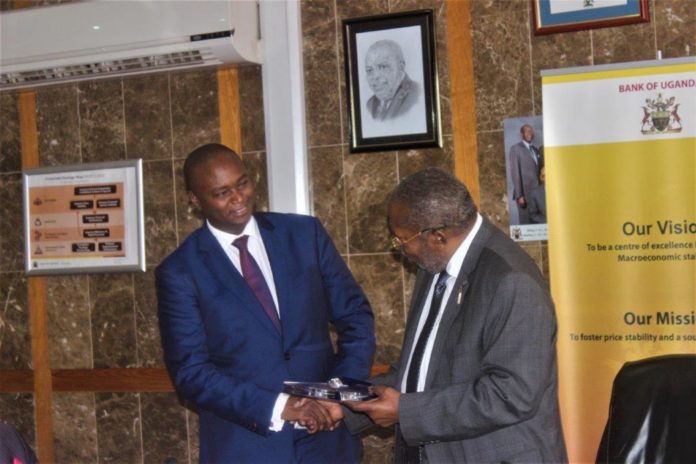
BOU Governor Emmanuel Tumusiime-Mutebile handing over the plaque to Stanbic Bank MD who is also UBA Chairman.

Stanbic Bank Uganda for the sixth consecutive year has emerged the best performing bank in Uganda government securities in 2017.
“Ladies and gentlemen, I am pleased to recognize Stanbic Bank Uganda Limited as the best performing bank in Uganda government securities for the Year 2017. And this makes Stanbic bank the winner for the sixth consecutive year,” said Bank of Uganda (BOU) Governor Prof. Emmanuel Tumusiime-Mutebile yesterday in Kampala.
Mutebile lauded Stanbic Bank for the role it has played, “especially for participating in the primary auctions, market making capabilities, consistent pricing as well as timely market intelligence.”
He also applauded the contribution of all the commercial banks towards the marked improvement in the development of the Government securities market. BOU records show Uganda has over 20 commercial banks.
The participating banks, Mutebile said, have also enhanced liquidity in the secondary market transactions where total turnover in the secondary market increased by 29 per cent to Shs5.1trillion in 2017, from Shs3.6 trillion in 2016.
In the same vein, he said, the ratio of secondary market turnover to the total outstanding stock of government treasury securities increased significantly to 41.0 per cent in 2017 from 28.9 per cent in 2016.
This is the 13th time BOU has held such an event.
Launched in 2005, the Primary Dealer (PD) system aims to promote participation in Uganda government securities markets, to foster the development of financial markets, to improve the secondary market trading system as well as to ensure efficiency in the operations related to the government securities market at the central bank.
Both Treasury bills and Bonds are traded on the primary market for new issuances (the first hand market), and on the secondary market for existing bonds (Second hand bonds). Treasury bills auctions are held fortnightly (every two weeks) while Treasury bonds occur according to a timetable issued by the Bank of Uganda.
Who can participate in government securities? They include commercial banks, Insurance companies, Private companies, government agencies, pension funds, individuals (of at least 18 year-old), primary dealer banks and offshore investors.

Stories Continues after ad

Economic growth: BOU denies Mutebile, Kasekende GDP figures

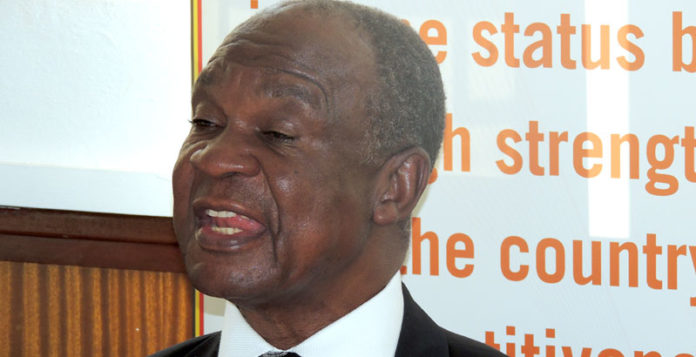
NPA CHAIRMAN: Dr. Kisamba Mugerwa wants more effort for Uganda to gain middle income status by 2020.

The Bank of Uganda (BOU) has denied it compiled the gross domestic product (GDP) figures that have caused controversy in the local media, saying that that is the responsibility of the Uganda Bureau of Statistics (Ubos).

“The Governor in his monetary statement of April 2018 referred to a growth rate of 6.3 per cent in the calendar year 2017. The Deputy Governor referred to a GDP growth rate of 6.9 per cent in the second half of the current year 2017. Both of these figures are taken directly from the quarterly GDP data published by the Uganda Bureau of Statistics (Ubos) which are available on this website,” said Charity Mugumya, Director of Communications.

Ms Mugumya today wrote a letter in response to one of the newspapers that said Governor Emmanuel Tumusiime Mutebile, his deputy Dr. Louis Kasekende and Chairman of the National Planning Authority (NPA) Dr. Wilberforce Kisamba Mugerwa had given contradicting GDP growth rates to the public as they discussed issues concerning the economy of Uganda at different for a this week.

The Chairman of NPA referred to a projected GDP growth rate of 5.5 per cent for the 2017/18 fiscal year, which has not ended. As such there’s nothing inconsistent in the different GDP figures given by these three gentlemen and certainly nothing warrants the allegation that they are lying.

Ms Mugumya said BOU only uses GDP growth rates as provided by Ubos, the managers of national statistics.
Mugerwa’s issue with the rate he quoted is that it cannot be relied on to deliver the country to the middle income status by the year 2020 while the BOU officials used to figures to show that the economy was rebounding, helped by the increased investments in agriculture and the services sector among others.

Stories Continues after ad

New Total branch in Kyaliwajala expands fuel stations to 129

Total Uganda now boasts of 129 service stations in the country and 26 of these are in Kampala and its surrounding areas.

This was revealed Tuesday by Total Uganda chairman, Jean-Christian Bergeron while launching Total Kyaliwajjala service station.

According to the Managing Director of Total Uganda, Florentin de Loppinot, the new station is a mark of the company’s commitment to deliver better energy and top of the range services and products to more Ugandans.

“We are excited to open Total Kyaliwajjala today because it acts as a model in demonstrating Total’s commitment to upgrade the standard of its services and bring them closer to our customers.”

The new installation has a modern and contemporary design that offers Total a leverage to offer more than TOTAL Excellium fuels and Quartz Lubricants to our customers.

Jean-Christian Bergeron, in his remarks said; This service station is part of Totals global plan to ensure that all our service stations meet the highest quality and safety standards while offering a diversified range of products and services to meet customer needs.

“Today as we open Total Kyaliwajjala, we promise our customers that we shall continue to bring more convenience in towns near you,” he added.

Meanwhile, Bergeron also revealed that they are in a process of branding all stations that formerly belonged to Gapco.

This is after Total bought off Gapco Uganda, Kenya and Tanzania.

Stories Continues after ad

Jinja chairman in hiding for fear of arrest

Kirunda Mubarack

It has today April 11, 2018 entered the third day since Kirunda Mubarack, the chairman of Jinja Central Division in Jinja Municipality is nowhere to be seen. But in repeated Whatsapp messages Kirunda claimed to have decided to go into exile for fear of being arrested.
“I am aware the regime wants to arrest me on fabricated cases related to the recent Jinja East by-election which we won as Forum for Democratic Change,” Kirunda posted on various Whatsapp groups on Monday April 9, 2018 a few minutes after police in Jinja arrested Jinja Municipal council speaker Morrison Bizitu.
“I am on my way to America where I will hide until I am sure that these guys (police) are no longer looking for me,” added the outspoken Kirunda.
But it has today been established by this writer that indeed Kirunda is hiding. “He could be within town (Jinja) but hiding because he is wanted. A staff at Kirunda’s office at Jinja Central Division who never wanted to be named has told us that the chairman was last seen at office on Monday afternoon.
Of recent, Kirunda has been making very provocative statements against the police and the government.
Kiira Regional police commander, Superintendent of Police Onesmus Mwesigwa could neither confirm nor deny that the police was looking for Kirunda but stated that the police had the mandate to arrest any individuals suspected to have committed crimes.
The comical chairman – Kirunda is a close friend to Jinja Municipal Council speaker, Morrison Bizitu who was arrested on Monday and whisked to Kiira Road police station where he has since been detained on charges related to electoral offenses.
“We have arrested him because of some offenses he is suspected to have committed during the recent Jinja East by-election,” a plain clothe operative from CIID headquarters told reporters on Monday as Bizitu was being whisked away.
Unconfirmed reports indicate that Bizitu, Kirunda and two other prominent opposition politicians in Jinja town played a big role in ensuring that some of the polling officials were supporters of their candidate, Paul Mwiru. Mwiru was declared winner with 6,654 votes against NRM’s Nathan Igeme Nabeeta who got 5,034 votes.
It is alleged that the ‘Mwiru supporters’ who served as polling officials illegally added ghost voters in the registration database. Ten of these were also arrested from their various workplaces or homes on Monday, briefly held at Kiira Regional Police headquarters before they were taken to CPS – Jinja where they are detained.
Section 29 of the Election Commission Act states that any person who by himself or herself or any other person procures the registration of himself or herself or any other person on a voters roll for a constituency, knowing that he or she or that other person is not entitled to be registered on that voters roll or is already registered on it or on another voters roll; or by himself or herself or any other person procures the registration of a fictitious person, commits an offence and is liable on conviction to a fine not exceeding thirty currency points or to imprisonment not exceeding one year or to both.

The ruling party – NRM rejected Mwiru’s victory on grounds of alleged malpractice. Secretary General, Justine Kasule Lumumba told a press conference a day after the elections that the party legal team was evaluating the available evidence to see whether they would challenge Mwiru’s victory in court.

By the time of filing this story there were reports that the former Walukuba-Masese LCIII chairman, Musisi Kibugudu Badman (Democratic Party) was being held at Kiira Regional Police headquarters on charges similar to those of Bizitu. Details about his arrest coming soon.

Stories Continues after ad

Mutebile, Kasekende defence of Crane Bank deal and why the public can’t believe them

It is now official. There is no doubt that Bank of Uganda (BOU) did not sell but gifted former Crane Bank to its competitor DFCU Bank in January 2017, according to Deputy Governor, Dr. Louis Kasekende, who said recently that the bank at that time was in a situation where the value of its assets was much less than liabilities, hence not suitable for any investors to buy it.
Kasekende’s revelation was confirmed on April 6, 2018 by his boss Prof. Emmanuel Tumusiime-Mutebile in Kampala that indeed Crane Bank was not sold. “In fact, Crane Bank was not sold to DFCU. A sale was not possible, given that Crane Bank was massively insolvent when the BOU intervened and took it over,” Mutebile said during the UBA informal dinner at Citibank Managing Director’s residence.
The ‘gift’ to the DFCU bank in January 2017 created excitement in Uganda’s banking industry because in late November 2016, Mutebile had stated that Crane Bank was not about to fail. BOU had taken over the management of Crane Bank in October 2016.
Speaking at the Annual Bankers Dinner in Kampala in November 2016, Mutebile told the gatherers that Crane Bank was not about to fail as a commercial Bank. He said the undercapitalization of the bank at the time would not warrant a bank failure. At that time, he never mentioned of the Shs260 billion negative net worth of the bank, which his deputy- Kasekende, recently said caused its insolvency.
Mutebile said at the function that: “So, those of our people who claim that the bank has collapsed are fools. The bank is alive and well, if not kicking,” he said at the annual event that is always attended by top bank executives. Many believed what Mutebile told them because he was the regulator and expected him to know what was really happening with Crane. They were to be shocked when Mutebile announced in January 2017 that DFCU had taken over Crane Bank.
Much as BOU had taken over Crane Bank, Mutebile would go ahead to tell executives that 2016 had been a tough year for the banking sector as profitability and income were all affected by an economy in distress.
“We cannot deny that it has been a difficult year for the industry because of the very low asset growth with sharp depreciation in asset quality and a decline in returns on equity. This has been a very difficult year,” he said adding that the rise in non-performing loans (NPLs) had created a big challenge. Crane Bank had its NPLs grow from Shs145 billion in 2015 to Shs200 billion.
During that the bankers’ meeting in 2016, Mutebile did not tell the public that Crane Bank was facing problems of its own mismanagement or extensive inside lending. That information only came a few days ago as Kasekende addressed guests at the 20th Year Anniversary dinner for the Uganda Securities Exchange.
The BOU Annual Supervision Report, December 2016 indicates that before transferring majority of Crane Bank liabilities and assets, a vigorous bidding exercise was followed as ten institutions showed interest. Mutebile and Kasekende in their arguments do not tell us whether all the ten institutions wanted Crane Bank for free. Reports indicate that some investors wanted to offer cash for this deal but BOU overlooked them in favour of DFCU, which, according to the agreement will only pay some money in the future, but it is earning profits now.
Reports that BOU excluded former Crane Bankers shareholders from negotiations is matter of concern, actually the former Executive Director in charge of Supervision at BoU Justine Bagyenda told journalist at Parliament that they did transact without consulting shareholders of CBL. However, Bagyenda contradicts herself in the same interview that shareholders to any bank are useless without depositors but in this case, CBL had both shareholders and sound depositors.
They say that contravened the Financial Institutions Act, 2014. Yet they argue that the agreement between BOU and DFCU does not state the value of liabilities and assets taken over by DFCU. “There is no transparency here,” said an analyst when asked to comment on the matter. It is important to know the exact value of those liabilities and assets,” he added.
Argument by analysts is that BOU, having invested hundreds of billions of shillings (taxpayers’ money), they should have asked for some cash immediately as they handed over Crane Bank to DFCU. Yet analysts say it is unfair for BOU to pay back taxpayers money using assets of Crane Bank, yet DFCU Bank is already enjoying profits from the acquision of Crane Bank. DFCU announced annual profits of Shs127b in 2017, a considerable portion of it attributed to Crane Bank acquision.
Analysts are asking how DFCU made all those profits from the acquision of Crane Bank which was deemed insolvent. DFCU will be asked the investments it made to reap the huge profits within that period especially in the first six months of 2017 when it reported net profit of Shs115b. Yet it attributed the huge profits to Crane Bank acquisition.
That is one of the reasons why the Auditor General wants to carry out investigations into the activities of BOU. The statements by Mutebile and Kasekende are not convincing. Parliament is also interested in the operations of BOU. “That simply means something is wrong much as Mutebile and Kasekende want the public to believe all is fine at the BOU,” says another local financial analyst who once worked with the BOU.
Despite the scandal, BOU top officials are stuck to the argument that their role is to foster price stability and a sound financial system. Yet analysts say that in performing that role, they have unfairly hurt some players in the industry-consider the Crane Bank case.
Mutebile and Kasekende say that the resolution of Crane Bank was successful, maybe on their side, but analysts say it was a blunder they are now regretting. Already they have spent hundreds of millions of taxpayers’ money on legal fees and BOU is not sure it will win the impending legal battle in court with Crane Bank shareholders who say despite the challenges they faced, they were working to recapitalize the bank, more so the process to recover loans worth billions of shillings.

DFCU is partly owned by the Commonwealth Development Corporation (CDC) a British government-owned company, together with other foreign multinationals like Rabo Development from the Netherlands and NorFinance from Norway who are shareholders in Arise B.V together with Norfund, a Norwegian government owned Private Equity firm and FMO, the Dutch Development Bank.
Last year, a company called Arise BV was formed after the companies, Norfund, Norfinance FMO, and Rabobank, all of which had shares in different commercial banks in Sub Saharan Africa, transferred their shares to form one company, Arise BV.
DFCU Shareholding percentages
Arise BV 58.71 per cent
CDC Group of the United Kingdom 9.97 per cent
National Social Security Fund (Uganda) 7.69 per cent
Kimberlite Frontier Africa Naster Fund 6.15 per cent
2 undisclosed Institutional Investors 3.22 per cent
SSB-Conrad N. Hilton Foundation 0.98 per cent
Vanderbilt University 0.87 per cent
Blakeney Management 0.63 per cent
Retail investors 11.19 per cent
BoU staff retirement benefit scheme is 0.59 per cent

Stories Continues after ad

FUFA inspects venues for Stanbic Uganda Cup final

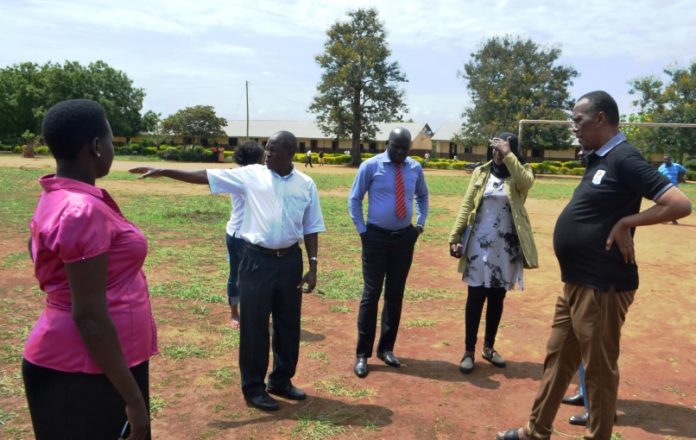
Inspection team at one of the stadiums.

A seven man team from the Federation of Uganda Football Associations conducted an inspection of the facilities in Kumi Municipality where this year’s Uganda Cup final will be held.

The inspection team was led by FUFA Executive committee members Hamid Juma, Agnes Mugena, Richard Ochom (also the mayor of Kumi Municipality), John Odong (Chairperson, North East Region Football Association), Hajjati Aisha Nalule (FUFA Competitions Director), Ahmed Hussein (FUFA Communications manager), and Esther Musoke (FUFA Marketing Director).

Among the facilities inspected were the three proposed football fields; Boma play-ground, Kumi Technical School and Bishop Maraka College field, according to the Fufa website.

The dressing rooms (changing rooms), toilets, security concerns, the CSR project attached to the tournament were some of the issues that were ascertained before checking the playing surfaces.
The inspection team will convene and make resolutions before revisiting the facilities after a fortnight to confirm the venue for the final.

The final will be played on 27th May 2018.

Meanwhile, the quarter final draws for the remaining clubs will be held on Thursday, 12th April 2018 at FUFA house in Mengo starting 10am.

The eight remaining clubs are the holders KCCA, Sports Club Villa Jogoo, Vipers, Proline, Kansai Plascon, Kitara, Synergy Football club, Kampala Junior Team (KJT).

Last year’s final was held in Arua, at Onduparaka’s home ground where KCCA defeated Paidha Black Angels 2-1.
SC Villa and KCCA have won the Uganda Cup nine times, while URA is on three trophies. Express FC is the record winner of the Uganda Cup at 10.

Stories Continues after ad

Kadaga urges Ugandans abroad to invest home

Speaker Rebecca Kadaga listening to Fahad Kateregga of Aziz Property Investments at the 8th AIM Conference.

The Speaker of Parliament Rebecca Kadaga has implored Ugandans in diaspora to invest back home saying government will offer them tax holidays for growth of their businesses.

Kadaga made the remarks at the 8th Annual Investment Meeting (AIM) in Dubai, bringing together countries engaging in trade with the United Arab Emirates with a major focus on foreign direct investments (FDIs).

Under the theme, Partnership for Inclusive Growth and Sustainable development Kadaga said, Ugandans in diaspora have the capacity to start businesses in Uganda adding that government is willing to support you. She engaged in discussion on the use of technology to the growth of the economy, and expressed her concern over the need to re-tool judges, lawyers and lawmakers to appreciate the need to expedite laws on technology.

“Technology is moving very fast and the laws to accompany the changes must be done quickly. We are in talks with the investors to see how they can help us in this regard,” said Kadaga.

“What are your plans for Sub-Saharan Africa? You are talking about Egypt, yet your airlines receive huge ticket inflows from Africans traveling to the UAE for business,” Kadaga noted in the three days forum.
She noted that most Sub- Saharan African economies have been left out of the progress of financial growth putting them on a parallel growth pattern compared to Middle East countries.

The meeting that launched on 09 April 2018, was opened by the Minister for Economy of the United Arab Emirates, H.E. Sultan Bin Saeed Al Mansoori, who noted that for cross investments to be possible, regional economic and investment data would have to be considered.

“Development efforts, policies of economic diversification and enhancement of productive capacities adopted by a number of countries have led to improved Gross Domestic Product (GDP) rates,” Al Mansoori noted.
He added that it was critical to address some of the major foreign direct investment issues facing both developed and developing countries so as to strengthen investment directed towards global economic growth.

Stories Continues after ad

Electricity: Bujagali loan repayment period pushed to 2032

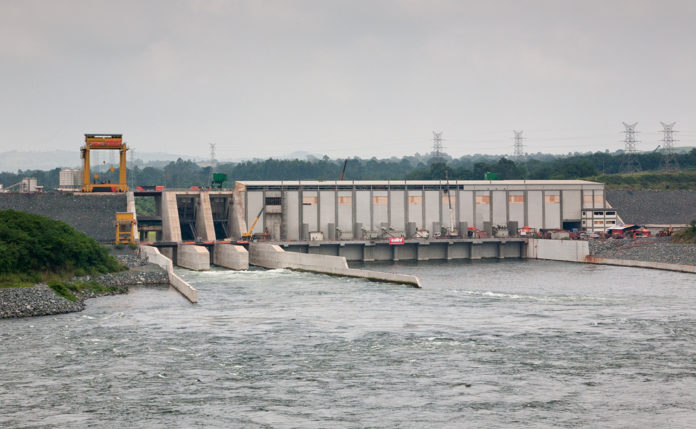
The Dam at Bujagali Falls - Jinja, Uganda. Pictured in June 2011.

The government has started the process of modifying Bujagali Energy Limited’s license for the Bujagali 250MW hydropower dam after it agreed with the lenders to spread the loan repayment period by 10 years.

After negotiations that took more than two years, the government recently agreed with the World Bank’s International Finance Corporation, the lead lender, to spread the payment of the outstanding loan amount of US $402 million to the year 2032.

The Bujagali loans were split into two: the senior loan and the subordinate loan. The senior loan, which formed the largest amount of the entire credit facility, was supposed to be paid back by the year 2023, while the smaller but more expensive subordinate loans were to be serviced by 2027. The new changes mean that government will pay smaller interest payments but in total the amount will be more because of the spread. Due to this, the tariff from Bujagali, which is locked in at $0.11/ kWh and is one of the highest around the region, is expected to reduce in the short term but move up in the longer term.

The impact of this refinancing is expected to be felt in the tariff for the third quarter of this year. At 250MW, the Bujagali dam is currently the biggest power project in Uganda today. The dam accounts for more than a quarter of Uganda’s energy supply.

Reports say the Uganda Electricity Transmission Company Limited, with other government agencies, is amending the Implementation Agreement, the Power Purchase Agreement and the Liquidity Facility Agreement to incorporate the new terms of the financing. The approval of all this paperwork is expected to be done by the end of April 2007. The new amendments will supersede the agreement that was signed in 2007.

The closure of the negotiations brings to an end a long and tedious process for both sides. Tickled with the availability of a large amount of money from China, Uganda, and in particular President Museveni, started getting agitated over the expenses it was incurring from the Bujagali power dam – financial expenses and also in regards to the tariff.

The Bujagali dam, which was enjoying a cool 19 per cent return on investment under a take-or-pay arrangement, became a source of criticism in a number of Museveni’s speeches. It was partly as a result of the pressure from Museveni that Uganda looked to take a haircut on the interest payments on Bujagali. Facing political pressure, one of the shareholders in Bujagali Energy Limited, Sithe Global, looked for a way out.

The company started negotiating with a Norwegian company, SN Power AS, to buy its shares. Our sources say SN Power AS needed a guarantee that it would enjoy the 19 per cent return on equity as Sithe Global, which had been negotiated 10 years ago. Government argued that under the current circumstances, that figure needed to be knocked down to at least 15 per cent or else it would not sanction the Sithe Global-SN Power deal. SN Power declined and its negotiations with Sithe Global were then terminated in January 2017.

The African Development Bank also came up with another suggestion, also in late January 2017. The bank suggested to Uganda’s government that it would float a credit guarantee facility in the form of a $500 million bond. The bond was to be restructured in such a way that it would be repaid in 15 years. The bond holders were to be paid using revenue generated from the Bujagali dam. This suggestion was not sanctioned because the interest payments on the bond were higher than what government desired. In the end, the government was left with the option of offering a waiver of a 30 per cent corporation tax for Bujagali Energy Limited in exchange for a spread in the payment of the loan.

Stories Continues after ad

Debts force Black Mountain Resources to exit Namekara vermiculite mines

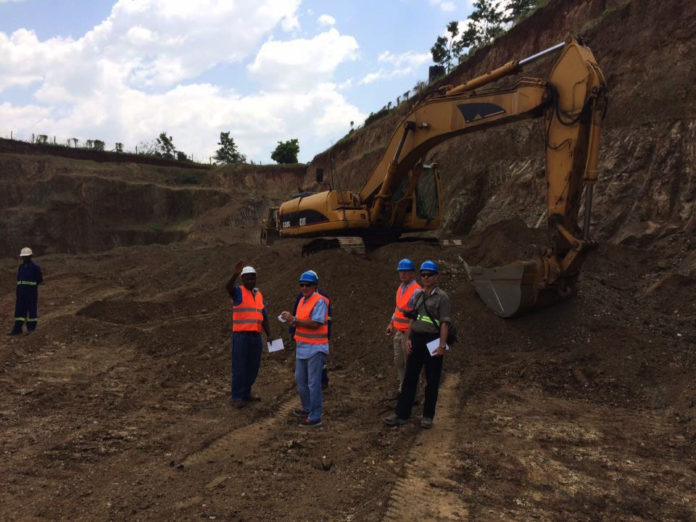
Namekara Vermiculite Mines

Australian company Black Mountain Resources has decided to sell its license for the Namekara vermiculite mine in exchange for a debt relief of about US$4.2m from one of its shareholders.

The company has struggled to pay off its debts, explaining that the demand for vermiculite on the international market had slumped. “The market conditions for consistent sales of vermiculite products have impacted on the Company’s ability to achieve the intended cash flow from the Namekara Vermiculite Mine as initially intended, and the company has been unable to consistently service its debt obligations, without extensions. Given this, and subject to shareholder approval, the company proposes to dispose of the Company’s 100% interest in the Namekara Vermiculite Mine,” Black Mountain Resources announced in February.

In March, after releasing its annual report for the year ended December 2017, Blackmountain Resources confirmed that it had “entered into a restructuring Heads of Agreement with its major creditor Richmond Partner Masters Limited under which it will dispose of its wholly owned subsidiary Namekara Mining Company Ltd and its Namekara Vermiculite Mine.” The sale of the license will see Blackmountain’s debt drop to US$460,000.

Analysts say that; “With vermiculite being a new source of income for Black Mountain Resources, the company is bound to face a number of challenges in the pricing of its product in order to grow its clientele, and an erratic commodity market, all of which could hit its bottom line.” The sale of the license comes less than five months after the company exited the mining industry in the United States of America, where it held some silver assets, claiming it needed to focus on developing the Namekara vermiculite mine.

The sale is bound to take the development of the Nameraka mine a couple of steps back even though some specialists consider the large flakes of vermiculite at the site to be world-class. Richmond Partners Master Limited, an investment firm that is a shareholder in Black Mountain Resources Limited, is now scouting for a mining company that can take up the Namekara vermiculite license.

When Richmond Partners Master finally lands on that company, it will cease being a shareholder in Black Mountain Resources Limited. Blackmountain Resources has now instead said it will concentrate on the phosphate resources and other minerals, at the nearby Busumbu mine for which it controls a 75 per cent interest in a mining license.
Black Mountain says it plans to invest at least $1 million each year for the next three years in the Busumbu phosphate project, taking it into commercial production within two years.

Black Mountain says its plans for the Busumbu phosphate include resource definition drilling, preliminary mine planning and optimisation studies, among others. The company considers the Busumbu project to be “one of two world-class” phosphate deposits in Uganda.

Stories Continues after ad