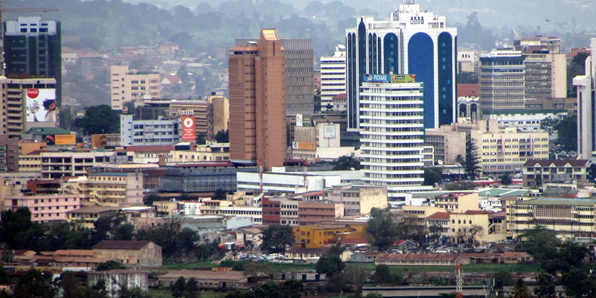
Kampala is the best city to live in East Africa, according to the latest global survey of capitals offering quality life.
The New York-based consultancy Mercer, in its 2018 quality of living survey, ranks Uganda’s capital at position 172 out of 231 cities, having improved by one position to cement its score as the region’s best city to stay.
To rank the cities, the survey examined the levels of traffic congestion, quality of public transport, electricity supply and banking services.
Other indicators include crime levels, education, political stability, housing, food availability and entertainment.
Kenya’s Nairobi came in second at position 186 while Rwanda’s Kigali came in third at position190, having improved two positions, while Tanzania’s Dar es Salaam stagnated at position 199.
The ranking offers a preview of a country’s level of development and the city’s ability to attract and retain investors, expatriates and tourists.
It also guides multinationals in their assessment of the pay for their staff in different countries in which they have operations.
“Factors such as climate, disease and sanitation standards, ease of communications, and physical remoteness can often affect the success of a foreign assignment,” says the report.
Moreover, the local political and social environment, political violence, and crime may give rise to potentially uncomfortable, inconvenient, or even dangerous situations. To encourage mobility, reliable information is needed to help calculate fair, consistent expatriate compensation for hardship locations, says the report.
Kampala which is run by Kampala City Capital Authority (KCCA) headed by executive director Jennifer Musisi has in the past few years witnessed the expansion of roads to cut traffic jams, garbage collection as well as installation of streetlights and widening of sewerage channels.
Port Louis of Mauritius emerged Africa’s best city to live in after being ranked at position 83 globally followed by South Africa’s Durban and Cape Town.
Globally, Vienna emerged top for nine years in a row, followed by Zurich while the bottom is Baghdad in Iraq.
KCCA’s mission is to offer quality services to city dwellers. An independent survey released by the World Bank in December last year reveled that about 90 percent of Kampala residents are satisfied with KCCA’S improved roads, signalized junctions, street lights and walkways.
Kampala voted East Africa’s best city to live in
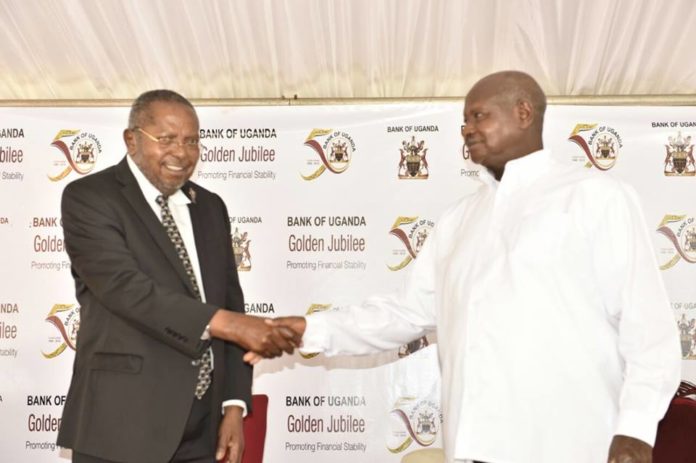
Sort out thieves at BoU Museveni tells Mutebile
President Yoweri Museveni has ordered Bank of Uganda Governor, Emmanuel Tumusiime Mutebile to ‘sort’ out ‘thieves’ at Bank of Uganda.
Museveni who met the Inspector General of Government and a team from BoU on Monday at State House after cabinet lectured the two sides to sort out bickering that could easily hurt the economy but also warned of thieves at BoU.
A tough talking Museveni told me Mutebile that BoU had performed well but the emerging reports that individuals at the central bank had amused wealth were disturbing and such individuals should be fished out.
According to sources at the said meeting, Museveni who seem to have equipped himself well with the current literature on the central bank argued that corruption at the bank could easily manipulate staff not to perform their duties as they are compromised by the sector the supervise.
“What is coming out of the bank isn’t good and that is an area where IGG should get involved by arresting those that are corrupt. Mutebile you should put your ears on ground and sort out these thieves. Otherwise I will come for them myself you don’t” Museveni said while looking directly in the face of Deputy Governor Louis Kasekende.
This website has learnt that at the said meeting, Mutebile tabled board minutes of the last board that gave him powers to restructure staff at the bank. It ought to be to be known that Mutebile is both governor and chairman of the board.
Eagle Online couldn’t verify whether the president’s call to Mutebile to sort out thieves was triggered by the revelation by leaked bank account details that revealed that former Executive Director in charge of Supervision at BoU, Justine Bagyenda had huge sums of money in several banks accounts. Bagyenda is now being investigated by Financial Intelligence Authority, Inspectorate of Government and Uganda Revenue Authority for allegations of money laundering and tax evasion from income on her properties.
According to sources, the president is said to have told the IGG pay attention to areas of investigation if there is any and not to be drawn in individual conflicts by personal interests between government officials.
The meeting which was known by few individuals was first denied to having taken place by the Minister of Information and Communication Frank Tumwebaze when he told a government daily that wasn’t true that the meeting was taking place. The paper had written earlier on its online version that Museveni was meeting the two sides.
Museveni’s meeting comes at the time when the IGG and Governor Mutebile are locked in exchange over whether IGG has powers to investigate Mutebile.
Recently, the IGG faced with the conundrum as to whether the Bank of Uganda Governor acted within his powers to make administrative changes at the Central Bank, one of which involved the retirement of Justine Bagyenda, the erstwhile Director of Bank Supervision. Ms. Bagyenda has since sought the protection of the IGG, who in turn has reportedly blocked the changes made by Mutebile.
‘This is to direct the Board of Directors of BoU not to ratify any actions or decisions taken by the Governor on or around February 7, 2018 in relation to the impugned appointments and transfers until such time as the investigation by the Inspectorate has been concluded or until this office directs otherwise’, the IGG’s March 12 letter states in part.
But in his five-page strongly-worded letter which he copied to among others President Yoweri Museveni, Speaker Rebecca Kadaga and Prime Minister Dr. Ruhakana Rugunda and finance minister Matia Kasaija,. Mutebile draws the attention of the IGG to Article 162 (2) of the Constitution that guarantees the independence of the BoU from direction of any authority in the country. Others copied in include the Attorney General, the Auditor General and members of the BoU Board of Directors. ‘In performing its functions, the Bank of Uganda shall conform to this Constitution but shall not be subject to the direction or control of any person or authority,’ the Article states in part.
Mutebile adds: ‘The Article in question is clear, unequivocal and unambigious on the Independence of the Bank of Uganda and the fact that Bank of Uganda is not subject to the direction or control of any person or authority and therefore no outsider, including your office can interfere with the decisions of the Bank of Uganda’.
Writing in his column in the Daily Monitor, seasoned lawyer, Peter Mulira says the powers given to the Inspectorate and to the IGG are not executive powers and they are limited to enabling powers to carry out the functions set out in Article 225.
“These powers are reserved for the Director of Public Prosecutions under Article 120 of the Constitution and can only be exercised by him following police investigations. In short the Inspectorate’s power to prosecute any person is qualified by Article 120.”
He added “If the Governor of the Bank of Uganda were to succumb to the directives of the Inspectorate, he would be in breach of this provision of the Constitution.”
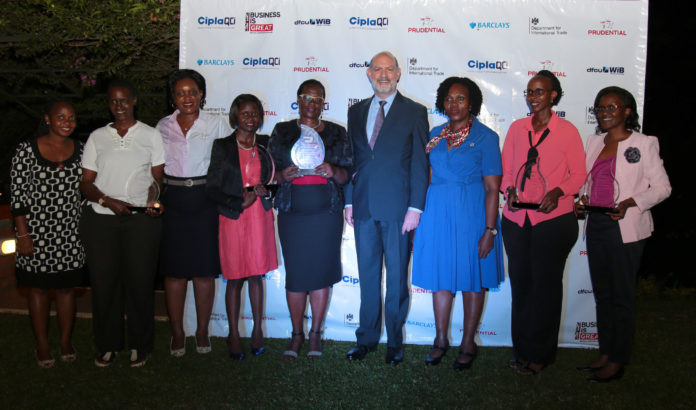
‘CHOGM businesswomen’ mark 11 years
Members of the dfcu Women in Business programme have marked over a decade since its launch in Uganda during the 2007 Commonwealth Heads of Government Meeting (CHOGM) held in Kampala.
To mark this momentous day and ahead of the 2018 CHOGM that will be held in London in April, the British High Commissioner Peter West CMG hosted a reception at his residence to celebrate the achievements registered, using the opportunity to also recognise five exceptional women who are part of the dfcu Women in Business programme.
“I welcome this opportunity to congratulate and recognise talented Ugandan Women in Business. The initiative for celebrating women in business was launched during the Commonwealth Heads of Government Meeting in Uganda in 2007 by dfcu Bank.
Next month the UK will host CHOGM in London under the theme ‘Towards a Common Future,” High Commissioner West said, adding that trade and gender equality are among the priorities that the Commonwealth Heads of State will discuss.
The Women in Business programme, which was started by dfcu Bank and enjoys a mentorship partnership from the Cherie Blair Foundation, founded by former British Prime Minister Tony Blair’s wife Cherie, now boasts of over 35,000 members.
Of these 23,000 have been trained in running a business and financial management, with a key focus on increasing the women’s access to financial services and credit facilities.
Although women make over 50% of Uganda’s population, a huge percentage of this number do not have adequate access to finance but the Women in Business programme is addressing this inequality.
This lack of access is attributed to low financial literacy, such as, keeping adequate profit and loss accounts, writing business plans and articulating projections -all are key skills in accessing bank credit.
Of the over 35,000-member pool, 4,000 are, thanks to the programme now credit-ready, and have received business loans from dfcu Bank to boost their businesses.
Meanwhile, earlier in 2012, the Women in Business program constituted a five all-female Women in Business Advisory Council, which has a wide scope of expertise to support the bank in gender focused strategy formulation as well as build the capacity and develop the business skills for the women to enable them to continuously make informed business decisions as a primary goal.
According to Rosemary Mutyabule, a member of the dfcu Bank Women in Business Advisory Council, dfcu understands the difficulty women face with limited working capital, lack of collateral to secure loans, limited market information, networks and so much more.
“Financial literacy, which is a core element of the programme, plays a major role in ensuring that women who make up a higher percentage of the population have the requisite knowledge, skills and confidence to make informed choices as far as financial management is concerned and more importantly take advantage of the financial services available.
“When women are more financially literate, they are more productive and are able to make a significant contribution to the economy,” she adds.
A further milestone that was achieved since the Women in Business campaign was launched in 2007, was the opening of the Women in Business Advisory Center in 2015.
This is a one-stop-shop for critical business services like financial and business-to-business advisory services.
The dfcu Women in Business program has signed a Memorandum of Understanding with the Uganda Law Society, Institute of Certified Public Accountants as well as Makerere University School of Business to further train their members on crucial business matters of law of contracts, accounting best practices and best business management practices.
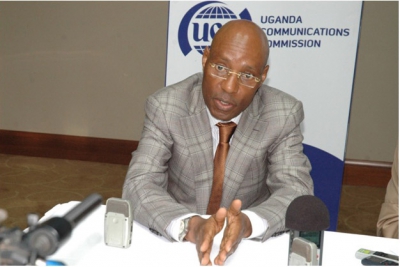
UCC revokes 22 FM radio licenses over ‘witchcraft’ advertising
The Uganda Communications Commission (UCC) has Tuesday suspended the license of Nation Media Group (NMG) affiliate Dembe FM and 22 other radio stations for promoting and advertising witchcraft content and, aiding and abetting electronic fraud.
In a statement UCC boss Godfrey Mutabazi said the other stations whose licenses have been suspended include Metro FM; Nile FM; Kagadi Broadcasting Services; Emambya FM; Village Club FM; Radio Kitara and Packwach FM. Others are: Tropical FM, Apex FM, Bamboo FM, Ssebo FM, Eastern Voice FM, EyeFM, Victoria FM, RFM, Kiira FM, Tiger FM, Greater African Radio, Dana FM, Gold FM, Hits FM and Radio 5.
Of the closed stations, two belonged to veteran radio presenter DJ Nesta, who previously worked at Endigyito FM, one of the biggest radio stations in Western Uganda, before relocating to UBC Radio where he briefly worked before moving to Fort Portal to set up Gold FM.
His other station, Hits FM, was based in Kamwenge.
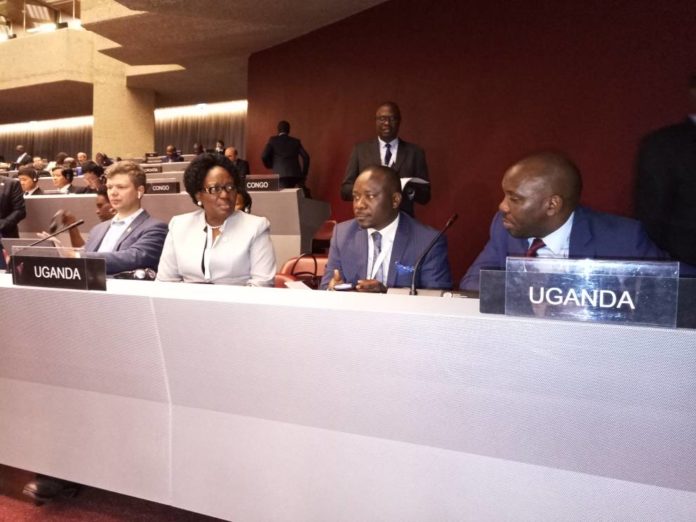
Kadaga blames African leaders for worsening refugee crisis
The Speaker Rebecca Kadaga has criticized African leaders for the rising number of African refugees to Europe and North America, who make dangerous crossings through the Mediterranean, while fleeing harsh economic conditions and conflicts in their countries.
In the recent past, up to 13 million Africans have endured the deadly journey through the Mediterranean and other dangerous routes to Europe, with many living under constant threat of arrest and deportation.
“Today, many of our countries are independent, yet the violation of human rights, insecurity, exclusion from social and economic opportunities, conflict, injustice and corruption have caused the involuntary migration of millions, to a life of uncertainty, torture, slavery and incarceration in squalid conditions and in detention camps in Europe,” said Kadaga.
The Speaker was presenting at the 138th Inter-Parliamentary Union Assembly in Geneva under the theme ‘Strengthening the Global Regions for migrants and refugees; the need for evidence based policy solutions’.
Kadaga hailed Uganda’s refugee policy, but said the United Nations High Commission for Refugees (UNHCR) should extend infrastructure and environmental support to the country.
“Our hosting of refugees has come at a cost in terms of the destruction of the environment. The refugees do not come with firewood from their countries; they have destroyed our environment. It is important the UNHCR puts in place re-afforestation programs for the host countries,” said Speaker Kadaga.
Uganda has been hailed as an ideal refugee hosting country, a credential boosted by the Refugee Summit held in June 2017.
In presence of international dignitaries including the Secretary General of the United Nations Antonio Guterres, the country raised over $350 million.
Experts blame the growing number of mainly African immigrants to Europe on harsh political environments, unemployment and the ever growing population.
East African Legislative Assembly Speaker Martin Ngoga said Parliaments should address income inequality, which he said is a main cause of ‘refugeeism’.
“It is imperative for Parliaments to ensure that the Member States and regional blocs re-affirm commitments to the observance of peace and security, and address inequalities and parity to resource allocation,” said Ngoga.
The conference comes at a time when rightist anti-immigration parties are having growing political influence in Europe and the Americas.
Ugandan youth survive on less than US$800 per year
Over two thirds of the youths in Uganda aged between 18 and 34 survive on less than US$800 per year as a result of investing in unproductive business ventures, the Global Entrepreneurship Monitor Youth Survey Report indicates.
The report indicates that despite government’s intervention to eradicate unemployment in the country, the youth still face the same challenges because government schemes operate on a small scale thereby limiting positive impacts towards addressing the problem.
Further, according to report, 21.6 per cent youth display a woeful lack of knowledge about government and other schemes that would help them in their entrepreneurial ambitions.
‘Uganda’s young people are under educated and ill equipped to manage commercial enterprises beyond the one person startup phase, therefore as a result they end up failing of earning less than $ 800,’ states part of the report.
In 2014 government released Shs 265 billion under the Youth Livelihood Fund but most of the money was misappropriated, with the youth investing in wrong business ventures. In an audit of the program’s performance by 2018 only 16 billion has been recovered and only 30 districts have recovered more than 80 per cent of the money disbursed.
Meanwhile, the Permanent Secretary in the Ministry of Labour Pius Bigirimana has said that the Youth Entrepreneurship Venture Capital Fund was established in conjunction with the Centenary Bank though which a budget of Shs25 billion will be disbursed.
“From Shs 100,000 to Shs 5 million or 20 per cent injected equity for youth group investments, funds have been accessed to support, start and expand their business enterprises,” Mr. Bigirimana said in an interview with Eagle Online, adding however, that government is working hard to fix unemployment issues among the youth.
According to Mr. Bigirimana, easing unemployment is one of the reasons why Uganda signed a labour export Memorandum of Understanding with countries in the Middle East like Saudi Arabia.
And contacted, the Youth Female MP Anne Adeke Ebaju said much more is needed to engage upcountry youth to benefit from new business initiatives.
She also implored government to tighten immigration controls at its borders to stop the trafficking of girls to Arabic countries, saying most of them are sexually molested by their employers basing on the fact that some labour companies confiscate their travel documents.
Termination of Umeme contract was long overdue – MPs
Members of Parliament have applauded the move by President Yoweri Museveni, ordering the non-renewal of the Umeme contract to provide power services in the country.
However, the MPs that talked to Eagle Online said Umeme’s contract should have been terminated long time ago because the company had failed to deliver services effectively.
The legislators’ reaction follows a letter written to the Energy Minister Irene Muloni not to renew Umeme’s contract, citing the high cost of electricity and ineffectiveness in administration and operation. This has prompted legislators to cast aspersions about the President’s directive and its impact.
According to Busiro East MP Medard Lubega Ssegona, citing the recommendation report by the adhoc committee which was appointed to investigate Umeme, the President’s decision has come late.
He says the President either was adamant or just didn’t understand what was going at the South African-owned company as electricity prices kept rising.
“In our report, we complained about the company’s infectiveness the high power tariffs which Ugandans were incurring,” he says.
Ssegona further stresses that the Minister of Energy and Mineral Development Irene Muloni has been aware of the mess at Umeme although she never took action.
Ndorwa East MP Wilfred Niwagaba also shares Ssegona views, saying that the Parliamentary report was ‘self-explanatory’ and the President delayed to take action.
He says that because President Museveni wants to President for life, he will always take decisions and directives that suit his interests.
Rwemiyaga County MP Theodore Sekikubo said the cancellation of Umeme’s is in line with the parliamentary report which established there was breach of contract and ineffectiveness.
The outspoken MP says one of the terms of the contract with Umeme was to reduce the cost of electricity in order to protect the environment.
“However, this has not been the case which led to environmental degradation as people are opting for other sources of energy,” says Sekikubo.
He also adds that Uganda has the most expensive electricity compared to the countries in the region, including those that we export our power to.
According to Kiira Municipality’s Ibrahim Ssemuju Nganda, Uganda should have never contracted Umeme to generate power, and advises government to establish ‘a company that is serious’ in order to handle the supervision of generating and distributing power across the country.
Meanwhile, in a sitting chaired by the Speaker Rebecca Kadaga on Thursday, March 27, 2014 voted in favor of the recommendations of the Adhoc Committee on Energy on the Performance of the Electricity sub-sector in Uganda.
The Adhoc Committee was composed in 2011 following complaints of gross mismanagement in the electricity and energy sector, and the Committee chaired by Jacob Oboth Oboth tabled its report in Parliament in November 2013, after which the government was requested to respond to the recommendations.
In the report the MPs indicated that ‘the contract should be terminated due to the gross illegalities and manipulations encountered in the procurement of the Umeme Concession and the scandalous provisions of these power distribution agreements signed between Government of Uganda and Umeme Limited’.
Members also passed the recommendation that the Eskom concession be terminated following the committee’s findings that despite the reported level of investment by Eskom in the Kiira – Nalubaale hydropower plants, the generation capacity of the two plants had continued to deteriorate.
The committee also noted that at the time of takeover by Eskom Uganda Limited in 2002, the two plants were generating 280 Megawatts but this had reduced to 140 Megawatts.
Umeme, a South African owned company was contracted by government of Uganda in 2011 to generate and distribute power, replaced Uganda Electricity Board.
Fortebet excites Lira clientele with gifts
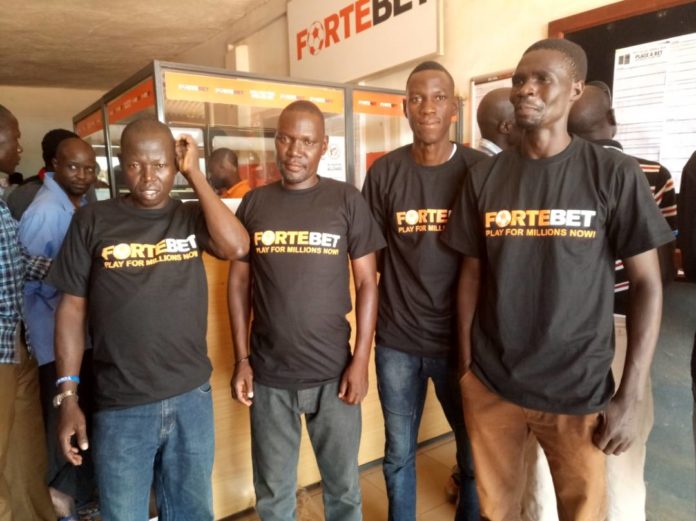
Work almost came to a standstill in Lira town as Fortebet flooded its customers with great gifts over the weekend. The gifts were given out at all the four Fortebet branches which include Lira Main, Lira Dillane House, Lira and Lira Teso Centre.

Over 120 customers that were found at the respective branches received at least a gift which included Fortebet pens, wristbands, caps, T-shirts and European team jerseys.
“We do this every weekend. This weekend, we promised to appreciate our customers in Lira and we are now doing exactly that,” said John Nanyumba, Fortebet Media manager, while handing over gifts to the company customers at Lira Main branch.
He added: “We do not conduct any draw for someone to get these gifts. One just needs to show evidence that he bets with us and we give him/her what he deserves to get.”

The Lira Branch manager, Bonny Opio handed over a jersey, a cap, a pen and a wristband to one of the big bettors (user names oulanya b and oulanya c) at the branch.

Fortebet did not only give out gifts to bettors but also traced for young football talents and gave them balls, handed over by Lira Dillane House branch manager Tawufigue Siraji Mwenyi at Lira P.7 playground.
“You are aware that Fortebet has been very instrumental in promoting and supporting Uganda’s football industry. We are 100% committed to supporting the growth of young talents. That is why we give out these balls,” said Nanyumba.
Nation newspaper columnists quit en masse
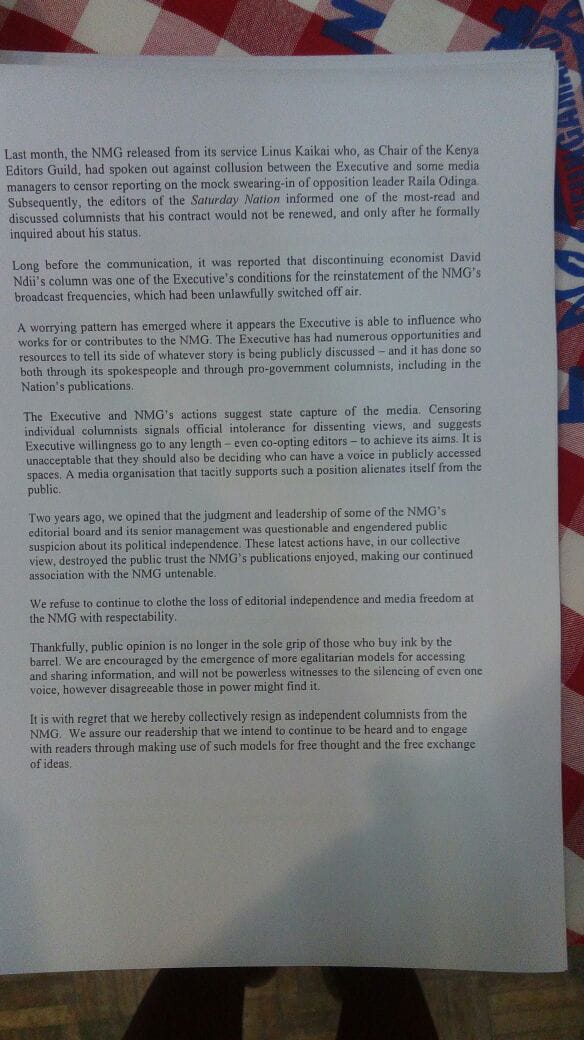
Eight leading columnists of the Nation newspaper in Kenya have decided to stop contributing, protesting against the discontinuation of their colleague Dr. David Ndii’s column in the Saturday Nation, and a series of staff termination including that of Linus Kaikai, Daily Nation Managing Editor Dennis Galava and leading cartoonist Godfrey Mwapemba aka Gado.
Dr. Ndii, a staunch supporter of opposition icon Raila Odinga, is a leading economist and sources said the discontinuation of his column in the Saturday Nation peeved the other columnists, who have since accused the Nation newspaper of stifling media freedoms.
About a month ago Dr. Ndii was told to stop writing his column by Nation Managing Director Tom Mshindi after the columnist reportedly accused the International Monetary Fund (IMF) and the Central Bank of Kenya (CBK) of ‘cooking’ figures about Kenya’s economy.
‘Two years ago a number of us wrote to the NMG Board of Directors in an act of good faith to express our concern about what we saw as a systemic process to constrain independent voices within the company, contrary to its stated editorial policy to promote diversity and freedom of the media…’ the letter by the columnists indicates in part.
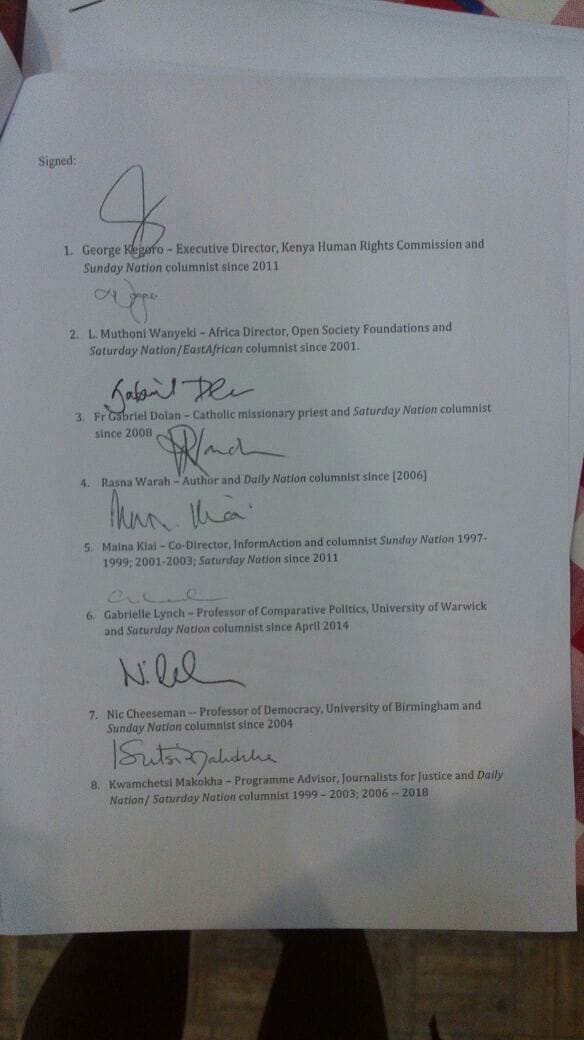
Among those who signed the letter are George Kegoro of the Kenya Human Rights Commission; Muthoni Wanyeki, the Africa Director of Open Socirty Foundation; Catholic Missionary Fr. Gabriel Dolan; Rasna Warah, Maina Kiai of InformAction, Kwamchetsi Makokha and Professors Gabreille Lynch and Nic Cheeseman.
The columnists have been writing for the Daily Nation; Saturday and Sunday Nation for years, some dating back to 1999.
FDC’s Mwiru to swear in today
Forum for Democratic Change (FDC) MP-elect Paul Mwiru is today expected to be sworn in as the Jinja East legislator following his win in the hotly contested bye-election.
Two weeks back, Jinja district returning officer Rogers Sserunjogi declared Mwiru as the winner with 6654 votes against his closest rival Nathan Igeme Nabeta of the National Resistance Movement (NRM), who garnered 5043 votes.
Other candidates in the race were Faisal Mayemba Masaba (117), Paul Geraldson Mugaya (48), Richard Henry Nyanzi (47), Francis Wakabi (24), and Monica Abuze (18) and Hatimu Isabirye Mugendi who got only seven votes.
The Jinja East parliamentary seat fell vacant after a panel of three appelate court judges threw out Igeme Nabeta, who was wrongly declared MP by then Jinja district returning officer Anthony Mwaita in 2016. Consequently, the judges ordered for fresh elections.