Stanbic Bank
Stanbic Bank
18.1 C
Kampala
Stanbic Bank
Stanbic Bank
Home Blog Page 1612

Uganda, Russia in water and environment cooperation talks

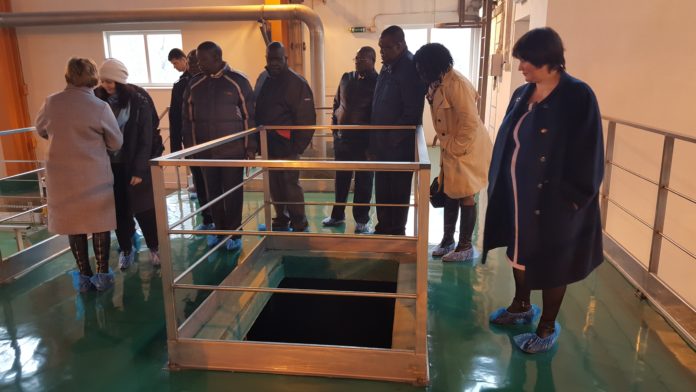
Members of the Uganda and Russian delegation tour a water treatment plant. All photos/ courtesy

A Ugandan delegation from the Water and Environment Sector arrived in St Petersburg for a five day business visit with officials from Vodokanal, the company responsible for water supply and waste management in the metropolis.

The cooperation talks are a result of an October 2017 meeting between Uganda’s Ambassador to Russia Johnson Agara Olwa and officials from the Office of the Governor of St. Petersburg, held on the side-lines of the Inter-parliamentary Union meetings in Russia last year.

The delegation was led by Eng. Aaron Kabirizi, Director Water Development at the Ministry of Water and Environment. The other delegates included: Ambassador Olwa; Mr Paul Mafabi, Director Environment Affairs at the Ministry of Water and Environment; Dr. Tom Okurut, Executive Director of National Environment Management Authority; Eng. Richard Matuwa, Assistant Commissioner, Urban Sewerage, Ministry of Water and Environment;Eng. Johnson Amayo- Deputy Director Technical Services, National Water and Sewerage Corporation and Ms Susan Okodi, First Secretary at the Uganda embassy in Moscow.

The Ugandans met the Vice Governor of St. Petersburg, Mr Oleg Aleksandrovich Markov who assured them about St. Petersburg readiness to cooperate with Uganda in several sectors including; Water and Enviroment , Health Sector , Education, Tourism and Hospitality , Transportation and construction among others.

Mr Markov also mentioned that it would be important for Uganda and St Petersburg to sign a memorandum of understanding as a framework for cooperation, and also suggested a city to city cooperation between Kampala and St. Petersburg.

Uganda and Russia hold Joint Permanent Technical Cooperation meetings annually and this coming May 2018 the meetings will be held in Moscow. This will provide an opportunity to consider and sign a number of Memorandums of Understanding between different sectors in the two countries.

The delegation held extensive discussions with the officials of Vofokanal, visited South-West Water Treatment Plant, Visited the Island of Valaam to look at the technical solutions for water treatment and Waste water treatment for small settlements.

The delegation also visited the Water academy which will be opening in September this year. The management of Vodokanal and the leadership of the Governor’s office in St. Petersburg have invited Ugandan students to join the academy and are looking forward to receiving them this September.

The Memorandums of Understanding will consider issues of training, technological transfer and technical support among others.


Stories Continues after ad

Debt as an obstacle to the sustainable development goals

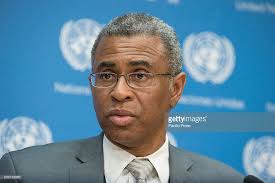
Elliott Harris

In 2015, 193 countries adopted the 17 Sustainable Development Goals (SDGs) as an overarching policy roadmap through 2030. These goals are predicated on the idea that for a sustainable future, economic growth must go hand-in-hand with social inclusion and protection of the environment.

Our respective institutions, the United Nations Department of Economic and Social Affairs (UNDESA) and the International Monetary Fund (IMF), fully support these goals.

From the UN perspective, they represent a down payment on a more peaceful, prosperous, and cooperative world, especially in increasingly perilous times. For the IMF, they help underpin economic stability and sustainable and inclusive economic growth.
In 2017, most types of development financing flows increased, helped by an upturn in the world economy, increased investment, and supportive financial market conditions. Yet less than three years after adoption, the implementation of the SDGs is running into a major hurdle—rising public debt in some developing countries. This is the sobering message of a new report on financing for development issued by the UN, in collaboration with the IMF and almost 60 other agencies.
Here’s the problem: as noted recently by IMF Deputy Managing Director Tao Zhang, 40 per cent of low-income countries face high risk of debt distress or are unable to service their debt fully—this is up from 21 per cent just five years ago. On top of this, several developing countries are also falling behind in terms of per capita income, induced by such factors as fragility and conflict—these include vulnerable countries like Haiti, D.R. Congo, and Chad.
A key problem is that many of these countries are not able to raise enough public revenue. There are many reasons for this—narrow tax bases, continued over-reliance on extractive industries, and weak tax administration. But tax evasion is also part of the problem. The low tax take in low income developing countries—where the median tax
revenue is just 13.3 per cent of GDP—can be traced in part to informality and tax evasion.
In light of this, the first step of any reform strategy must surely be to raise more revenue at home. But in a world where business activity has become increasingly global, domestic efforts alone will not be enough. We will also need enhanced international collaboration on tax. It is encouraging that governments are developing new international standards on exchange of tax information—we need to make sure that developing countries also benefit from this.
Official development assistance (ODA) also has a vital role to play. According to recently released data, ODA amounted to $146.6 billion in 2017.

But this amounts to less than half the internationally-agreed target of 0.7 per cent of gross national income. And a growing share of ODA is being deployed for emergencies such as in-country refugee costs and humanitarian aid. While such aid is critical, it leave less available for long-term public investments in sustainable development. ODA inflows toward the poorest and most vulnerable countries have stagnated and remain concentrated in a few of them. Donor countries need to step up their assistance in this area.

Private investment in support of the SDGs
Given the large investment needs, attracting more private investment will be critical. But the least developed countries still struggle to do so at scale, particularly in sectors outside extractive industries. The report calls on developing countries to continue building competitive business environments, including by improving institutional and regulatory frameworks and developing project pipelines and investible projects—especially in infrastructure.
More recently, policymakers have also focused on sharing risks with private investors, through instruments such as guarantees and public-private partnerships. If done correctly, such blending activities can potentially unlock additional SDG investments. For now, they are mostly bypassing countries where the need is greatest.
Only 7 per cent of private finance so far mobilized was directed toward projects in the least developed countries.
There is also a risk that such activities will also add to debt burdens, including through contingent off-balance sheet liabilities. These risks need to be managed carefully.

Growing debt risks
The recent growth in debt is not all bad news, however. Greater access to international financial markets and lending by new creditors such as China has unlocked much-needed financing for infrastructure investments in recent years. And investment in productive capacity, if done right, can lead to higher income that offsets debt service. The report recommends that assessments of debt sustainability take this important channel into consideration.

But problems arise when debt is already high, when resources are not spent well (including in the presence of corruption and governance weaknesses), or when a country is hit by natural disasters or economic shocks such as sudden reversals of capital flows. Another issue is that the new wave of private credit often comes with higher interest rates and shorter maturities. And coordination among creditors has become harder, which creates problems when debt restructuring is needed.

When the risk of debt crisis is high, a quick response to lessen the immediate financial stress can make all the difference between rapid recovery and long-lasting harm. We need to think hard about innovative solutions here.
For example, a greater use of state-contingent debt instruments—which reduce or delay a country’s debt obligations during crises—can provide some relief in some cases. By reducing default risks and risk premiums, they also expand available fiscal space for investment.

Another interesting idea is debt-for-climate swaps—these entail concessional funders buying back outstanding debt, freeing up resources to fight climate change and helping regions hit hard by climate-related disasters.
Now is the time
The bottom line is that we only have twelve years left in which to implement the SDGs. The current upswing in the global economy opens up a vital window of opportunity, but we must make sure that the financing agenda is not derailed by mounting public debt.

The UN and the IMF are united in this common cause. This is demonstrated by our collaborative report, which puts forth recommendations on public finance and debt, private investments, trade, and other critical priorities for SDG financing. Our institutions are committed to deepening our support for the SDGs, in the service of our member countries, to secure a more prosperous and peaceful world.

The Writer is the UN Assistant Secretary-General for Economic Development and Chief Economist in the Department of Economic and Social Affairs.

Stories Continues after ad

Janet Museveni to commission 54 primary schools

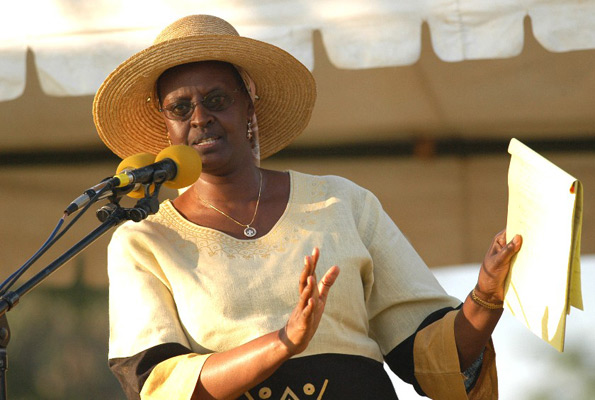
First Lady and Minister for Education and Sports, Janet Museveni.

Minister of Education and Sports Janet Museveni is set to officiate at the commissioning and handover of 54 primary schools to district local governments in six districts slated for 2nd to 30th May 2018.

Through the Uganda Teacher and School Effectiveness Project (UTSEP),the commissioning will take place at Birere mixed primary school in Isingiro district, Awaliyo primary school in Arua district), Abololil primary school in Alebtong district and Chebelat primary school in Kapchorwa district.

Commissioning of the other schools will be handled by the State Minister for Primary Education Rosemary Nansubuga Seninde accompanied by district local leadership.

The US $ 33 million investment has been financed by the Global Partnership for Education (GPE) through the World Bank to the Ministry of Education and Sports.

UTSEP signed a grant agreement with Education Ministry whose aim was to support government in improving teacher and school effectiveness in the public primary education system.
Through the grant, the Ministry is constructing 138 schools in 31 districts, financing the construction of classrooms, functioning girls’ and boys’ toilets, and access to water in the needy schools. These schools were selected through a combined needs and effort-based assessment.

So far, the construction of 54 schools has been completed through a centralized procurement modality. The completion of 84 other schools is underway and is expected to be finalized by December 2018.

Each of these schools is receiving quality classroom blocks built to high standards; school administration blocks, water and sanitation facilities and teacher housing. A minimum of 112,000 pupils are expected to benefit from this investment alone.

At this function, stakeholders are expected to attend the commissioning ceremonies including among others; Area Members of Parliament (MPs), Resident District Commissioners (RDC’s), LC V Chairpersons, LC III Chairpersons, Area Councilors, Sub-County Chiefs, Head teachers, School Management Committees, parents, pupils and community members.

Stories Continues after ad
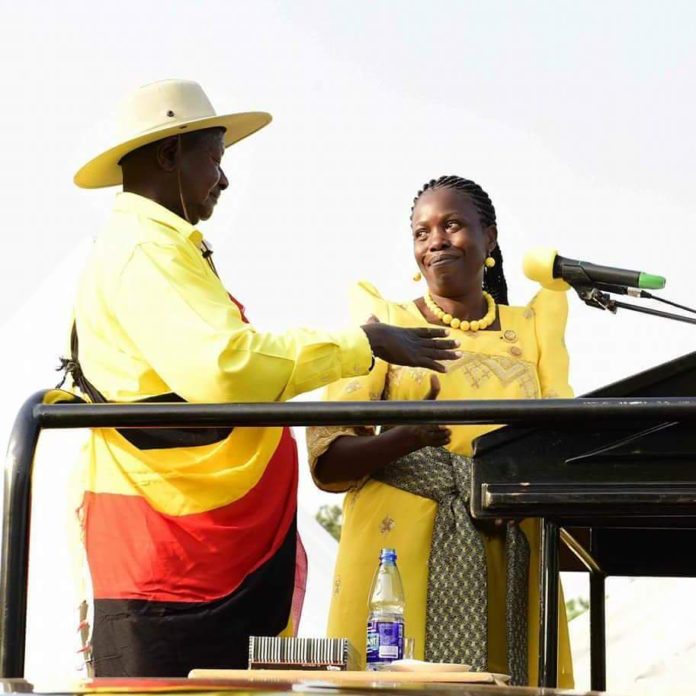
City revellers to hold 2km night race courtesy of Tusker Lite

The Tusker Lite brand of Uganda Breweries Limited (UBL) is poised to light up the streets of Kampala with Uganda`s first-ever night run on June 9 this year.

The two kilometre run to be flagged off at 7pm will give revellers a unique opportunity to break a sweat while having fun at the same time.

Organised under the theme Light the Night, the start and finish point of the Tusker Lite Kampala Night Run will be Torino Bar and Restaurant in Kololo.

According to Estella Muzito, UBL’s Head of Beer, this is an event which will combine glamour and excitement, and Tusker Lite is really excited to be at the heart of this unique experience coming to Kampala for the first time.

“There are few things that can beat the pleasure of a night run with friends that is capped by a great party with fun people,” Ms.  Muzito added.

Speaking on behalf of the event organisers, Walter Muleyi confirmed Police had provided assurance that the participants in the night run will be safe.

“We have secured Police and KCCA permissions for this event. There will be security deployment along the entire route and traffic will be managed during the short time the run lasts,” he said.

Meanwhile, organisers say the night will get even better as the end of the run will mark the beginning of the glow in the dark after party, where the finish point will turn into a hive of activity for the runners-turned-partygoers, with drinks and adrenaline jerking games on offer until late in the night.

Participants will set off from Torino Bar and Restaurant, heading for Upper Kololo, through Impala Avenue, onto Lugogo Bypass and then returning to the set-off point.

At the finish line, each participant will be ushered inside for the rest of the night’s activities which will include dancing challenges and German shots, with various prizes at stake.

In keeping in tune with the events fun theme, participants in the run can look forward to an evening where they literally glow in the dark, thanks to various fancy glow accessories that will be available to runners. These will range runners’ kit to glowing wrist bands and other accessories.

Prizes will be given for categories including: shortest time to reach the finish line; first runner-up; second runner-up; most creative runner; most stylish runner; most lit/glowed up runner and; best squad. The prizes will include vouchers for designer sports gear, medals and gym bags.

To top off the night run, will be performances from Fik Fameica, Cindy, Beenie Gunter, Latinum and Allan Toniks with DJ Simples, Ciza and DJ Mary Jo.

Buy a six-pack at selected supermarkets and register for the run. You can also buy tickets at Torino Bar, Definition Store Acacia Mall and online via quicket.co.ug for only Shs30, 000.


Stories Continues after ad

Govt to promote tourism alongside oil and gas sector – PM Rugunda

Former Prime Minister, Dr David Livingstone Ruhakana Rugunda.

Government will deliver the best supporting services to the Oil and Gas sector, while at the same time promoting tourism in Uganda, Prime Minister Ruhakana Rugunda has said.

Speaking at an oil and gas forum at the Serena Hotel, Dr. Rugunda noted that the government was also focusing on skills training for the oil and gas sector professionals.

“We are aware of lack skills in the Oil and Gas sector. However, government in collaboration with private companies is bridging the gap through training of Makerere and Kyambogo (university) that award certificates in oil and gas, welding and fabrication in a bid to make the best use of oil resources,” Dr. Rugunda said.

Dr. Rugunda also noted that the Uganda National Roads Authority (UNRA) is constructing roads in Hoima, Masindi, and Kisoro to connect areas with oil to the crude oil pipeline.

Further, Dr. Rugunda said, electricity is being extended to areas where the Oil and Gas operations are set to be executed, and two big dam projects are being carried out in Karuma and the 183.2 megawatts Isimba Hydroelectric Power Station.

Earlier, the Minister for Trade and Cooperatives Amelia Kyambadde said that alongside creating over 13, 000 jobs for Ugandans, emphasis has given to protecting the environment especially in regard to promoting tourism in Uganda.

It is estimated that Uganda has over 6.5 billion barrels of oil of which about 1.7 billion barrels are recoverable, and commercial production is expected to begin by 2020.


Stories Continues after ad

EA court throws out Basajjabalaba application against criminal prosecution

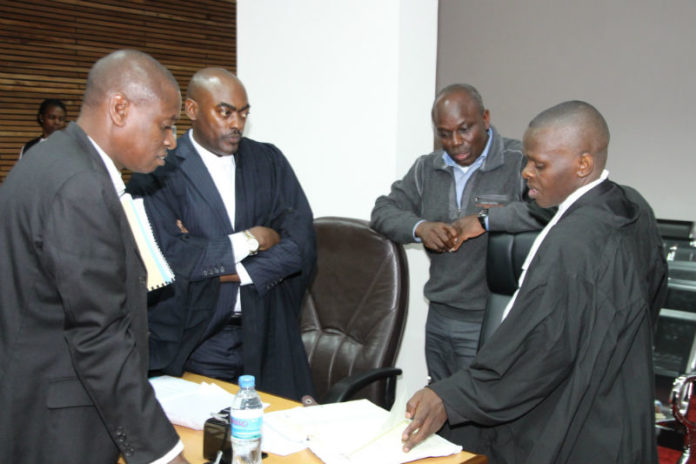
Basajjabala's lawyers Fred Mukasa Mbidde (second left) and others lost the case

The First Instance Division of the East African Court of Justice (EACJ) has declined to grant ex parte orders to businessman Hassan Basajjabalaba, to stop the government of Uganda from summoning him for criminal investigation.

In a ruling delivered by Judges Lady Justice Monica Mugenyi (Principal Judge), Justice Isaac Lenaola (Deputy Principal Judge), and Justice Fakihi A. Jundu, the panel rejected an ex-parte application filed by Mr Joseph Kyazze and Fred Mukasa Mbidde, counsel for Basajjabalaba on April 17, 2018, under a certificate of urgency premised under Article 39 of the Treaty for the Establishment of the East African Community and Rule 21 (2) of the Rules of procedure of the court.

The application was triggered by a letter dated April 9, 2018, requiring Bassajjabalaba to appear before the CID at Kibuli on April 24, 2018, to provide further information in the matter under investigation to facilitate the ongoing preparations for the hearing of the criminal case against him.

In the application Basajjabalaba was seeking ex-parte restraining orders against the Republic of Uganda and its agencies, specifically the Uganda Police and any other security agency, to wit: that the summons issued on April 9, 2018, requiring the attendance of Basajjabalaba before the Criminal Investigation Department (CID) to be interrogated or questioned in relation to criminal case No. 3 of 2018, should not be implemented until the hearing of a Reference pending before Court.

Other orders sought are in respect of restraining orders to stop the arrest of the Applicant they are being charged in any court and the reconstitution of any bench of the Constitutional Court of Uganda to re-fix for hearing de-novo (hearing the matter afresh) of the petition No. 3 of 2013, pending delivery of judgment by that Court.

However, court after listening to the arguments, said that it was not satisfied that the Applicants had made a case to warrant the grant of ex parte order in their favour and consequently declined to do so.

Court noted that, it is aware that the applicant on May 8, 2013, obtained orders in petition No.12 of 2013 by the Constitutional Court in Uganda, in which the Respondent (Government of Uganda) was prohibited from court using the processes of any court, so as to initiate and prosecute the Applicants for any charges arising out of or in connection with the issues forming the subject matter of the criminal case mentioned earlier.

The Constitutional Court also ordered that all pending charges and proceedings against the Applicant in the same criminal case No. 3 of 2013 be stayed.

According to Court, the orders issued by the Constitutional Court of Uganda are broad enough to cover the Applicants complaints before it at the ex-parte stage.

The Court also said that, it does not see irreparable injustice the Applicants may suffer if it does not grant any ex-parte orders, as they are already the beneficiaries of protective orders issued by the Constitutional Court of Uganda.


Stories Continues after ad

Parliament rejects construction of new analytical labs

Defence and Internal affairs committee chairperson Judith Nabakooba with President Museveni during campaigns.

The parliamentary committee on defense and internal affairs has recommended that the Directorate of Government Analytical Laboratory (DGAL) equips the existing regional laboratories with the requisite equipment as opposed to constructing new structures.

While on a field visit to eastern Uganda, the members led by chairperson, Mityana Woman MP Judith Nabakooba, noted that despite the completion of the forensic laboratories in Mbale, Mbarara and Moroto in 2014, the said laboratories have not been fully operationalized due to lack of funding.

DGAL provides a full range of general scientific analytical, forensic and advisory services that facilitate effective legal proceedings to dispense justice, safeguard public and environmental health and safety, as well as promote trade.

Meanwhile, in a report the committee members also noted that despite President Yoweri Museveni directing the funding of DGAL in 2016, there has been no funding effected. The members also noted that DGAL is understaffed, with only 50 out of 124 staff it is supposed to have countrywide, affecting its overall operations.

And, according to the committee members, the current case backlog stands at 5,556 criminal cases, 1,524 DNA cases and 3,292 toxicological cases.

“DGAL is still unable to reduce case backlog which negatively impacts the administration of justice,” part of the report reads.

They also noted that government should sponsor the upgrade of DGAL staff through trainings in developed countries where technology has advanced.

“As technology advances, criminals are also advancing their tactics; thus calling for urgency in adapting to the different modern sophisticated methods to match the increasing sophistication in crime,” the report adds.


Stories Continues after ad
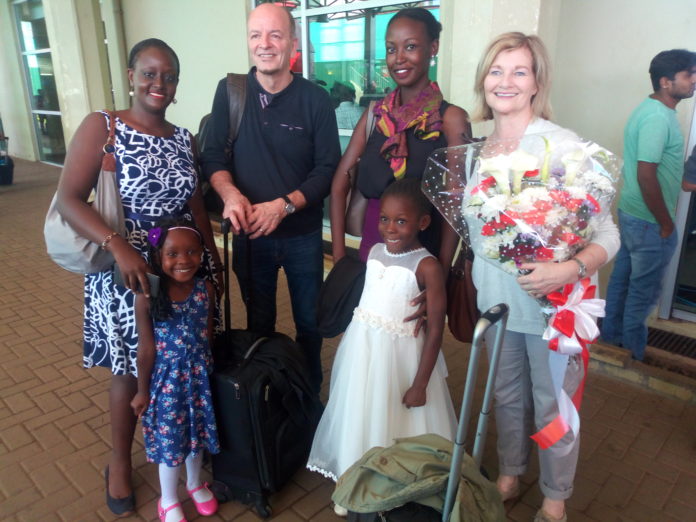
Celebrated gospel artiste Robin Mark arrives in Uganda

Robin Mark in company of his wife, Jacqueline, on arrival in Uganda

“Just about ready to fly tomorrow in a big metal bird to Kampala the capital of beautiful Uganda! Excited to lead worship at the Virtuous Women’s Conference there over three nights of praise, teaching and reflection!” celebrated gospel musician and pastor, Robin Mark, promised his Ugandan fans Wednesday on social media.


And as promised, Robin arrived in Uganda Thursday at 2:45pm in company of his wife, Jacqueline.

The couple was received by church leaders from Christ Heart Ministries and journalists before driving off to Kampala.

The veteran artiste is in Uganda for the Virtuous Women’s Conference where he is to lead worship at the event.

“I am honoured to be part of this 3 day celebration,” said an excited Robin.

The Virtuous Women’s Conference is scheduled to last three days beginning with today.

The conference will kick off today in Jinja at Omega Christian Hotel from where it will shift to Imperial Royale, Kampala on Saturday before winding up on Sunday at Christ’s Heart Church Mukono.


Stories Continues after ad
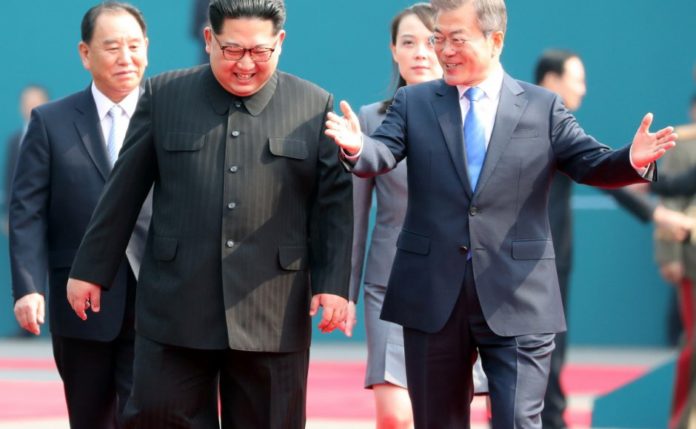
North Korea’s Kim crosses world’s most militarised point

North Korea leader Kim Jong Un with his southern counterpart Moon Jae-in

Kim Jong Un made history when he became the first North Korean leader to cross the heavily fortified Demilitarized Zone into South Korea on Friday morning.

Kim was met by South Korean President Moon Jae-in ahead of the historic inter-Korean summit set to take place throughout the day. The two leaders are expected to discuss the potential denuclearization of the Korean Peninsula and efforts to forge a peace treaty between their countries.

Experts, however, remain skeptical about the meeting, with some warning that the North will not give up its nuclear arms easily.

As Kim crossed into the South, he shook hands with Moon before bringing his counterpart back over the border to the North for another handshake. They then held hands and crossed back into the South, where Kim was met with an honor guard.

A coterie of senior North Korean officials accompanied Kim, including his sister, Kim Yo-jong, who has become one of the most recognizable envoys from the North after her appearance at the 2018 Winter Olympics.

The leaders then ventured into the South’s Peace House, which had been outfitted head to toe in custom furniture and artwork heavy with symbolism. Kim signed a guest book and the two leaders went in for negotiations.

“A new history begins now ― at the starting point of history and the era of peace,” Kim’s notation read, alongside his signature and the date.

Opening comments between the pair were cordial, with Kim cracking several jokes about noodles and even the early-morning missile launches conducted by North Korea in recent years.

“Today, I’m here with a mindset that I would fire a flare to kick-start a new history of peace, prosperity and better inter-Korean ties,” Kim said in his opening remarks to Moon. “I hope that we will have heart-to-heart conversations on issues of mutual interest, and bring about good results today.”

Moon responded with praise for his counterpart for helping turn the DMZ from “a symbol of division into one of peace.”

“I’d like to thank you for your brave decision to make this summit happen,” Moon said. “I hope that we have broad, frank talks today so that we can reach an agreement and produce what the peoples of our countries and the whole world dearly desire to see: Peace.”

The first round of talks broke promptly at noon, and the two leaders went to eat lunch separately. Kim was driven back to North Korea in a limousine as a dozen bodyguards in Western-style suits jogged next to the vehicle.


South Korean officials have expressed optimism ahead of the summit.

“I think the summit will be considered successful if we can clearly put into words North Korea’s clear intention to denuclearize,” Im Jong-seok, Moon’s chief of staff, told reporters on Thursday, according to The Washington Post.

Kim is expected to meet with U.S. President Donald Trump in the coming months, and Friday’s summit is poised to set the groundwork for those discussions.

Trump himself has toned down criticism of Kim in recent weeks and just days ago said the North Korean leader has been ‘very honourable’ going into the negotiations.

“We think that’s a great thing for the world,” Trump said. “We’re having … very good discussions. Kim Jong Un, he really has been very open and I think very honorable from everything we’re seeing.”


Stories Continues after ad
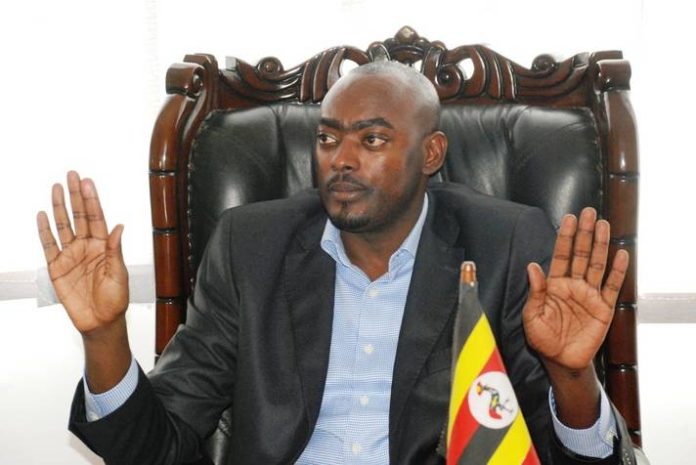
Court allows Mbidde’s application to join case challenging the election of EALA Speaker

Fred Mukasa Mbidde

The First Instance Division granted leave to Uganda’s EALA representative Fred Mukasa Mbidde, to join as an intervener in the case challenging the legality of the election of the Speaker of the East African Legislative Assembly (EALA) that was filed by the Attorney General of the Republic of Burundi versus the Secretary General of the East African Community (EAC).

Mbidde’s application for intervention was made under Rule 36 (4) of the Court Rules of procedure which provides that “If the Court is satisfied that the application for leave to intervene is justified, it shall allow the intervention and fix a time within which the intervener may submit a statement of intervention and the Registrar shall supply to the intervener copies of the pleadings.”

The Court in its ruling said that, it has carefully considered the merits of the Application and deduce no injustice or prejudice whatsoever to be suffered by the First Respondent (Republic of Burundi) in the event that it is allowed.
The Court added that, on the contrary, “We deem it to be in the interests of justice as well as the best interests of the Community that a Member of the house who was present when the decisions underlying the impugned election were made, be granted leave to intervene in the matter.”

During the hearing in March 2018, Mr. Donald Deya, representing Hon. Mbidde said that, if the order sought by the Republic of Burundi in this case was granted, it would affect the Applicant (Mbidde) and other Members of the Assembly and the substantive Speaker, which will deprive the work of EALA that had spent six months without operating, hence a risk if he is not involved in the matter.

Deya also argued that the Applicant filed the matter on his own behalf and on behalf of other EALA Members interested in the case.
Deya added that because the Applicant and other Members of EALA were present on the day of the election, therefore they have knowledge, evidence, information and insights about the election process which he wants to bring to the attention of the Court which will assist the court to arrive at the best decision.

The Court’s ruling on the argument above, said that, the express wording of the Resolution of the House that was availed to it, in turn reads as follows: “Now therefore, this House do resolve to: 1) grant leave to Fred Mukasa Mbidde and any other Member of the Assembly who may want to intervene, and or to appoint lawyers to represent it in the case Reference No. 02 of 2018 in the East African Court of Justice ; 2) Grant leave to Hon Fred Mukasa Mbidde to use the records of the House in case Reference No. 02 0f 2018.”

The Court therefore from the above wording of the Resolution, said that, it does not amount to authorizing Hon Mbidde to act on behalf of such other Member of the House as would be interested in intervening in the said Reference (Case).
The Republic of Burundi in the main case (Reference) is challenging the election of the Speaker of EALA, arguing that, the Assembly did not follow Rule 12 of the Rules of Procedure of the Assembly, which requires the quorum of one third (1/3) of the elected Members from each Partner State, yet Burundi and the United Republic of Tanzania did not participate in the elections.

Burundi is therefore asking court to declare that the election violated rule 12 (1) of the EALA Rules of Procedure and order for the re-election of the Speaker in accordance with the Rules of Procedure.
Mbidde (Applicant) was present in Court to receive the Ruling. The ruling was delivered by Honorable Judges Lady Justice Monica Mugenyi (Principal Judge), Justice Isaac Lenaola (Deputy Principal Judge), and Justice Fakihi A .Jundu,

Martin Ngoga (the current Speaker) from the Republic of Rwanda was elected Speaker of EALA on 19th December 2017. Rt Hon Ngoga polled 33 votes in the second round of voting against Leontine Nzeyimana of Burundi who amassed 3 votes while Adam Kimbisa of the United Republic of Tanzania did not receive any vote. Ngoga replaced Daniel Kidega from the Republic of Uganda whose term expired. According to the Treaty, the position of the Speaker of EALA is rotational.

Article 40 of the Treaty provides that: A Partner State, the Secretary General or a resident of a Partner State who is not a party to a case before the Court may, with leave of the Court, intervene in that case, but the submissions of the intervening party shall be limited to evidence supporting or opposing the arguments of a party to the case.

Stories Continues after ad