Stanbic Bank
Stanbic Bank
20.6 C
Kampala
Stanbic Bank
Stanbic Bank
Home Blog Page 1619

Tech, low prices responsible for East Africa’s rapid growth – report

An official demonstrates how issues are handled

East Africa is the fastest growing region in Africa and according to a new report released by FinTechs, it has a combined GDP growth rate of 6.2 per cent.

Growth in the region has been driven by low commodity prices, regional integration efforts as well as heavy public investments. In addition, a decreasing inflation rate, low depreciation rates and a stable tax revenue to GDP ratio have all contributed to over 315 per cent increase in FDI inflows to the region over the last decade.

Private sector innovation has led to a technology revolution in the region. In particular, the M-Pesa revolution, government investments in Konza City, and the launch of innovation labs in the country have made Kenya the technology hub of Africa. This niche market is estimated to be worth $1billion by 2019.

This revolution has also brought about an increased flow of VC funding to the region. In 2016, out of a total of $121.9 million invested in East Africa startups, Kenya accounted for 76 per cent of this amount.
Identifying the immense technological opportunities present not just in the region, but also the continent, multinationals have set up offices to leverage the market.

Kenya serves as the regional office for most of these multinationals which include Google, IBM, Oracle, and Visa International.

East Africa has one of the fastest growing population in the world; growing at 2.7 per cent CAGR compared to the global rate of 1.2 per cent, creating a huge demand for basic services which includes financial services.

Given the already low penetration of formal financial services across all the countries, this increasing population is bound to widen the gap further and with a larger portion of the population concentrated in the rural areas, there is an increased need to come up with innovative ways of increasing access and usage of financial services especially in the rural areas henceforth the main reason behind Fintechs success in the region.

Apart from Kenya, the deposit penetration and access to banking services in the other East Africa countries is relatively low.

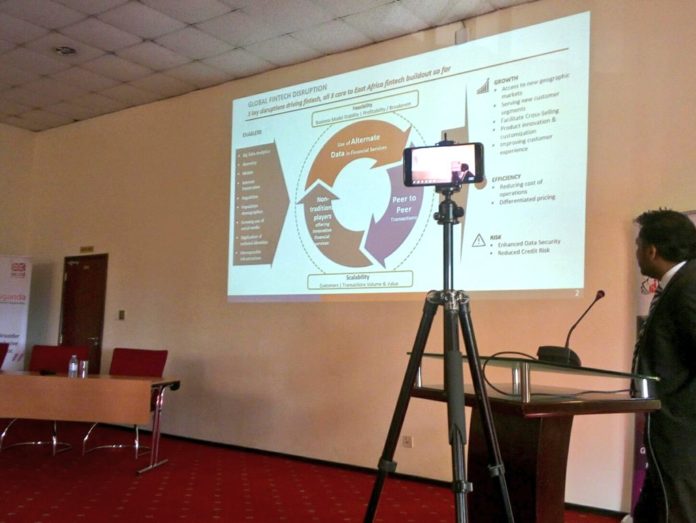
It’s thus not surprising that East Africa has always been hailed as the torchbearer to the fintech industry, driven by the same key – Use of alternate data, Peer to peer transactions, and the rise of non-traditional players offering financial services.

But the principle enabler in the region has been strong mobile and internet penetration, in the bottom of the pyramid segments, which have driven success using basic ussd technology.

Although currently low at 19 per cent, internet penetration in the region has been growing driven by a number of factors including the increase in smartphone adoption, rising middle class, increase in purchasing power, as well as ICT developments in the region.

Internet penetration subsequently enables e-commerce, online payment and processing, social media activities, distribution of financial services and the collection of large amount of data resulting from these activities. All these activities give rise to FinTechs.

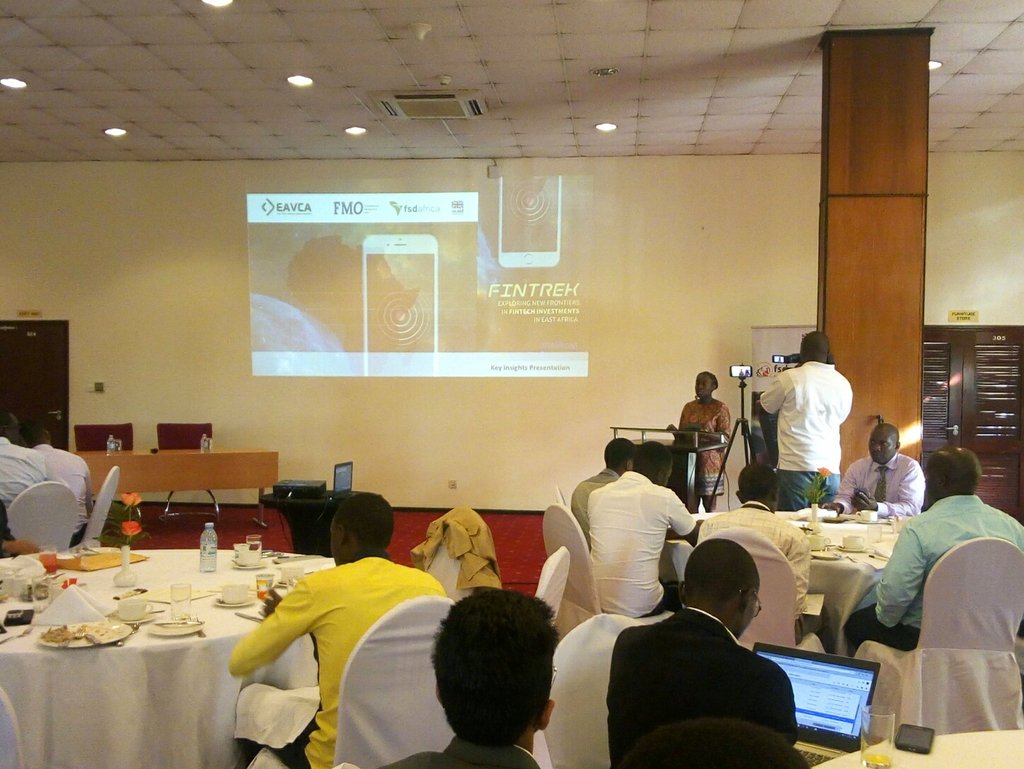
Commenting on the findings, Evans Osano, the Capital Markets Development Director at FSD Africa, said: “We are excited to have supported the Fintrek market research report together with FMO, Intellecap and EAVCA as partners and launching it to the investment marketplace as a whole.”

“The Fintech sector in East Africa is gaining momentum and has grown tremendously; CAGR 65 per cent in the last seven years. Fintech innovations continue to disrupt financial markets. We expect this disruption to spread further into the capital markets,” Osano added.

Given the increased interest from investors in this sector looking for potential investment opportunities not only for sectoral and risk diversification but also better returns, Osano said they believe the findings of this report will augment investments and partnerships within the Fintech space.

Speaking at the same event,  Financial Sector Deepening Uganda (FSDU) Executive Director Jacqueline Musiitwa said that the FinTech industry have developed fast and is increasingly getting acknowledged as a financial services sector of the 21st century.

Universally, it is accepted that FinTech has the potential to reduce costs and improve efficiency, allow customers to transact seamlessly and in real time, and improve providers’ understanding of customer behaviour and needs, allowing for the personalisation of financial services.

FinTech innovation in global financial markets is disrupting incumbent players in the financial market.

“At FSDU we strive to promulgate and enhance the cause to include majority of women, men and other disadvantaged Ugandans and refugees who are financially excluded to be able to access financial services. We do this by ensuring that we generate evidence and use such evidence to supports devolution of inclusive policies and products.”

 

Stories Continues after ad

Protect girls and women for a successful Commonwealth – Kadaga

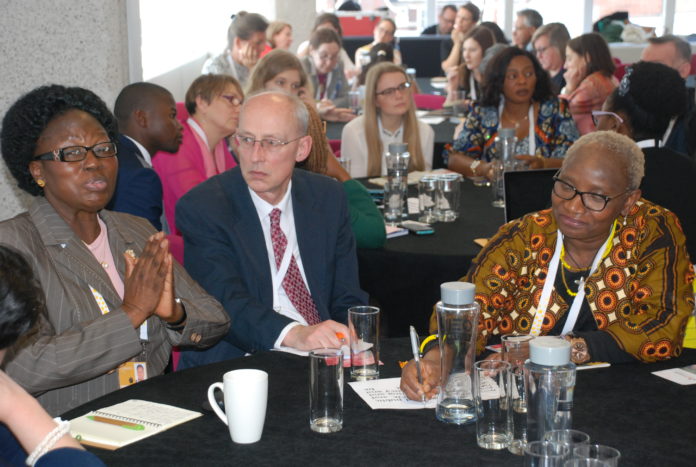
Speaker Rebecca Kadaga speaking to delegates at fourth CWWF in London.

The Speaker of Parliament Rebecca Kadaga has called on heads of state of the Commonwealth member countries to come out with actions and way forward on issues pertaining to the protection of the rights of women and girls especially in developing countries.

“For CHOGM 2019, the heads of state should be asked to report among themselves on how far they have gone with the issue of combatting violence and achieving SDGs,” Kadaga said.

The Speaker made the remarks on the third day of the fourth Commonwealth Women’s Forum that sought to discuss issues which commonwealth heads of state could pick on for discussion during the 2018 Commonwealth Heads of Government Meeting.
The meeting that themed on eliminating harmful practices: child and early forced marriage and female genital mutilation, raised concern from women activists from countries where prevalence was very high.

Kadaga told the meeting that there was an urgent need to set up cross-border strategies especially in sub-Saharan Africa, to limit crossovers by perpetrators of female genital mutilation.
“Nobody is taking interest on the continent. They talk about it but I’ve never heard the African Union speak about FGM on the continent yet more than half the countries that practice it are in Africa,” said Kadaga.

Presenters at the meeting noted that it was necessary to involve the family and community at large, in the fight against FGM and early child marriages, adding that political will and apt legislation would go a long way in achieving success.

Also on the agenda was the involvement of women in leadership and electoral positions, which participants cited as far from success given that many societies hadn’t embraced emancipation of women as yet.

“Our laws are not specific on violence against women. They deal with disruption of elections at polling stations, but not with actual violence that goes on in homes and against female candidates,” Kadaga told the meeting.

She also made mention of the perennial issue of education where so many children were out of school; and commended governments like Ghana and Sierra Leone for committing to free quality education for 12 years.
The three day Commonwealth Women’s Forum also discussed empowerment of women with disabilities, eliminating child mortality in commonwealth member countries and promoting girl child education among others.

Stories Continues after ad

We want him out: NRM’s Igeme drags FDC’s Paul Mwiru to court

ANT's Paul Mwiru

The much anticipated petition by the ruling National Resistance Movement (NRM) party challenging the election of the Forum for Democratic Change (FDC)’s Paul Mwiru as Jinja East legislator has become practical.
NRM lawyers today presented the petition to the High Court in Jinja, praying that Mwiru’s victory is nullified.
Mwiru was declared winner of the hotly contested race against NRM’s Nathan Igeme Nabeeta.
According to the results announced by the Electoral Commission, Mwiru got 6,654 while his closes challenger; Nabeta got 5,043. The two were followed by an independent candidate – Faisal Masaba who managed 117 votes.
The rest of the candidates trailed scoring below one hundred votes each. This was the fourth time the two were facing off. And if NRM, which has decided to challenge the result in court wins, there might be a fifth face-off ahead.
Although voting was delayed by the downpour that started around 6am and went on throughout the afternoon, voters turned up in good numbers at the various polling stations.
Rigged
But a day after the elections, NRM Secretary General, Justine Kasule Lumumba called a press conference and rejected the results.
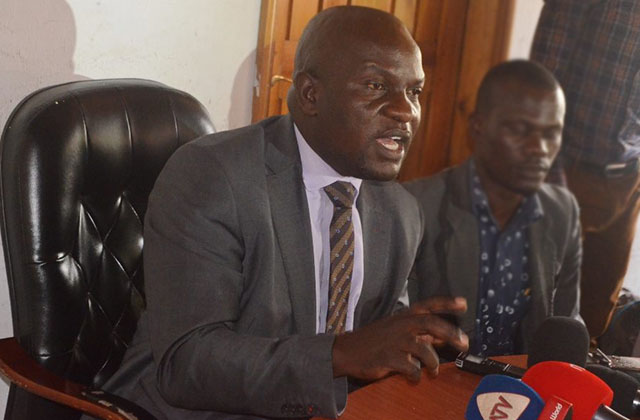
At the press conference Lumumba who was flanked by the party spokesman, Rogers Mulindwa, Jinja West MP, Moses Grace Balyeku and Igeme himself.
Lumumba said that the election was riddled with electoral malpractices including, multiple voting by known members of the opposition, voter bribery, intimidation, violence against Nabeta’s supporters.

“We are in possession of evidence that the election was riddled with malpractices and we have submitted this evidenced so far collected to our legal team to assess and advise us on our next move,” said Ms Lumumba.

Lumumba added that if the legal team finds it suitable, they will challenge the results in the courts of law.
“Known NRM supporters were warned of dire consequences should NRM emerge victorious; goons were stationed at residences of many NRM supporters to scare them away from polling stations,” she said

NRM further charged that the chairman of its election taskforce had been roughed up and windscreens of their buses smashed by opposition supporters. During a briefing on cabinet decisions at the Uganda Media Centre on Tuesday March 20, 2018, information minister Frank Tumwebaze said Lumumba had briefed ministers on the legal action the party intends to take.

Arrests
Since Monday April 9, 2018, police in Jinja in collaboration with other security operatives have been carrying out arrests in Jinja Municipality East.
Among those who were only released on police bond after five days of detention is at various police stations are Jinja Municipal council Speaker Morrison Bizitu, former Walukuba Masese Division LC III chairman, Muhammed Musisi Kibugudhu Badman, Jinja Central Division councilor representing PWDs, Joseph Kintu and another FDC supporter, Peter Nagano. These were arrested together with 10 Electoral Commission officials who presided over the recently conducted Jinja East by election.

It is alleged that the ‘Mwiru supporters’ who served as polling officials illegally added ghost voters in the registration Database.

Section 29 of the Election Commission Act states that any person who by himself or herself or any other person procures the registration of himself or herself or any other person on a voters roll for a constituency, knowing that he or she or that other person is not entitled to be registered on that voters roll or is already registered on it or on another voters roll or by himself or herself or any other person procures the registration of a fictitious person, commits an offence and is liable on conviction to a fine not exceeding thirty currency points or to imprisonment not exceeding one year or to both.

Evidence
Butalejja Resident District Commissioner, Richard Gulume Balyaino told this writer on Saturday last week that “our camp has been receiving evidence to confirm that Mwiru rigged.” Gulume, a resident of Jinja and who was in the Igeme campaign team said the party had obtained video footage, audios, still photos and confessions from some of the FDC stalwarts who executed the rigging, voter bribery, intimidation of voters and threatened violence.

In fact several election observers claimed that the election was marred by violence, intimidation, voter bribery and other electoral malpractices coupled with heavy.
The Igeme camp also accused the heavily deployed police of connivance with Mwiru to only look on as he broke the electoral laws.

In the aftermath, the Kiira Regional Police Commander, Gerald Twishime and the Jinja Central Divisional Police Commander, Martin Mbabazi were suspended and put under investigations.
Ready
But on knowledge that the ruling party has gone to court, the FDC camps says it is not at all scared. FDC vice president eastern region, Salaam Musumba said last evening: There we go again!
“They (NRM) learnt nothing and forgot nothing. If they had a good case like that, why did they first arrest innocent people? Ok we go to court,” one FDC supporter said.

Jinja Central Division LC III chairman, Kirunda Mubarak said NRM was simply again wasting their resources. In fact he described the petition as a fake dollar saying that they (FDC) had the trust and the will of the citizens of Jinja East.
Notwithstanding the FDC’s take, a journalist who covered the election and spoke on condition of anonymity said the NRM claims hold water. The journalist said he had witnessed incidents at Main Street primary school polling station, where opposition youths prevent those perceived to be NRM supporters from proceeding to vote.

“I have the footage my brother. And remember at one press conference Mwiru himself incited his supporter when he told them to kill anyone who would stand in their way,” says the reporter.
Should the NRM win the case in court, Mwiru and Igeme will go for the fifth contest.

Stories Continues after ad

Court refuses to compel Facebook to disclose TVO’s identity, location

Facebook

Ugandan lawyer sued Facebook Ireland over allegedly defamatory posts by an anonymous blogger
A Ugandan lawyer who has sued Facebook Ireland over allegedly defamatory posts by an anonymous blogger has lost his appeal seeking the identity and location of the blogger.

The Court of Appeal said lawyer Fred Muwema’s right to also bring defamation proceedings against a blogger who goes under the pseudonym TVO (Tom Voltaire Okwalinga) was outweighed by the risk to life or bodily integrity of TVO from the Ugandan authorities if his identity is disclosed.

Mr Muwema claims he was defamed in a number of posts by TVO.
He brought defamation proceedings and sought orders to have the posts taken down by Facebook Ireland because it provides the social media service to all users outside of the US and Canada.
The posts were removed but Mr Muwema also sought the identity of TVO so that he could join him in the defamation proceedings against Facebook, which denies his claims.

Facebook opposed revealing TVO’s identity without a court order. It argued there was evidence to show, if the identity was disclosed, TVO would be exposed to arrest and ill-treatment at the hands of the Ugandan authorities.
TVO has posted material critical of the Ugandan government which also wants to know his identity.

In the High Court last year, Mr Justice Donald Binchy refused to order identity disclosure saying the threat to TVO was sufficiently serious that Mr Muwema’s right to a good name had to take second place to TVO’s right to life and bodily integrity.
Facebook had provided evidence from award-winning Ugandan human rights lawyer, Nicholas Opiyo, who said a man called Shaka Robert, who he said was widely believed to be TVO, had been subjected to abuse of his rights by the Ugandan authorities over online activism.

Mr Opiyo represents Mr Robert and says his client has been held in a detention centre in Kierka, Kampala, notorious for torture, and held incommunicado in breach of his constitutional rights.
Despite getting a court order directing Mr Robert’s release, Mr Opiyo said the authorities had refused to comply and instead charged Mr Robert with “disguising himself as TVO between 2011 and 2015” and with posting statements on Facebook to “disturb the right of privacy” of Ugandan President Yoweri Museveni.

Mr Robert was eventually released on bail but when he attempted to travel for a holiday, was again arrested at Entebbe Airport and accused of theft before being later released in the dead of night, Mr Opiyo said.
Anyone arrested on suspicion of being TVO is subjected to extreme abuse of their rights, often in violation of court orders, he said.
Mr Muwema, in his appeal, said the High Court had placed too much weight on the “hearsay affidavit evidence” of Mr Opiyo and of Facebook’s own lawyer in Ireland, Jack Gilbert, and an Amnesty International report.
It was argued the trial judge placed too little reliance on Mr Muwema’s affidavit which said, among other things, that Facebook’s claims about Uganda were unnecessarily alarmist.

Mr Muwema also said the justice system in Uganda is generally fully functional and serves justice to everyone, including government critics and “compares favourbly to other leading countries in Africa”.
Facebook opposed the appeal.

Giving the decision of the three-judge Court of Appeal, Mr Justice Michael Peart said he would not interfere with the High Court decision.
It was inevitable the risk established by the evidence should be considered to outweigh Mr Muwema’s right to bring proceedings against TVO, he said.

Mr Muwema, he noted, already has a defamation case against Facebook and, if successful, will be compensated. Facebook is defending the claim, including on the basis that it is not a publisher of the defamatory material, the judge also noted.

Stories Continues after ad

Queen Elizabeth backs son Prince Charles to take over Commonwealth role

Prince Charles

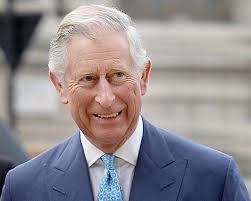
Queen Elizabeth II has said it is her ‘sincere wish’ that her son, Prince Charles, carries on her work as leader of the Commonwealth ahead of a critical decision on who shall serve as head of the group due on Friday.

Speaking at the opening of the Commonwealth Heads of Government meeting in London on Thursday, her Majesty said she never could have guessed that in 1952 when she became leader of what was then eight nations, it would later comprise 53 and 2.4 billion people.

“It is my sincere wish that the Commonwealth will continue to offer stability and continuity for future generations, and will decide that one day The Prince of Wales should carry on the important work started by my father in 1949,” she said, ahead of her 92nd birthday on Saturday.

“By continuing to treasure and reinvigorate our associations and activities, I believe we will secure a safer, more prosperous and sustainable world for those who follow us: a world where the Commonwealth’s generosity of spirit can bring its gentle touch of healing and hope to all.”

The comments are the first by the monarch to tacitly address the issue of succession at what is widely regarded to be her last Heads of Government meeting as she no longer travels long distances.

The next biannual summit will take place in Malaysia and she recently sent Prince Charles as her representative to the Commonwealth Games on the Gold Coast.

However the Queen also noted she was “mindful as always that this summit of Commonwealth leaders draws its mandate and authority from our member countries collectively” in declaring the summit open.

Leaders will discuss the issue of succession at a leaders’s retreat on Friday at Windsor, where Prince Harry and Meghan Markle will marry in just under one month’s time.

While the monarch does not have to serve as head of the Commonwealth, Australia supports the “continuation of the British monarch” in the role, Foreign Minister Julie Bishop said this week.

UK Prime Minister Theresa May also paid tribute to the Queen in her opening speech, offering “heartfelt thanks” for her service in the role over many decades.

“Over many years you have been the Commonwealth’s most steadfast and permanent champion,” she said.

“You have seen us through some of our most serious challenges. And we commit to sustaining this Commonwealth, which you have so carefully nurtured.

“For your service, for your dedication, for your constancy – we thank you.”

Prince Charles described the meeting as an “occasion to celebrate with renewed pride our remarkable Commonwealth family.”

“The modern commonwealth has a vital role to play in building bridges between our countries,” he said.

“I pray that this CHOGM meeting will not ony revitalise the bonds between our countries but give the Commonwealth a renewed relevance to all its citizens.”

It’s the first time the UK has hosted the summit since 1997 in which leaders will meet to discuss global issues like climate change, trade, security and democracy.

On Thursday evening UK time, the Queen will host a dinner at Buckingham Palace for heads of government and their spouses and partners ahead of a leader’s retreat on Friday at Windsor Castle


Stories Continues after ad

Regional funder commits $1.05m for data collection

Map of East Africa

TradeMark East Africa (TMEA) and the Northern Corridor Transit and Transport Coordination Authority (NCTTCA) have signed a financing agreement worth US$ 1.05m to enable the agency to collect and analyse data on transportation of goods and persons along the corridor, information that will be vital for decision making.

Acording to a release the TMEA was represented by Country Director for Kenya, Ahmed Farah, while NCTTCA was represented by Ag. Executive Secretary, Fred Tumwebaze, and the money will be disbursed to the NCTTFA Secretariat over a 3-year period (2018 – 2021).

The Northern Corridor is a key transport route in East and Central Africa. The main Northern Corridor artery is served by a combination of transport modes and infrastructure facilities that include: the Maritime Port of Mombasa; road network; rail network; inland water routes; inland container depots; and, an oil pipeline. All these form part of the Northern Corridor infrastructure used in facilitating the flow of goods across Member States.

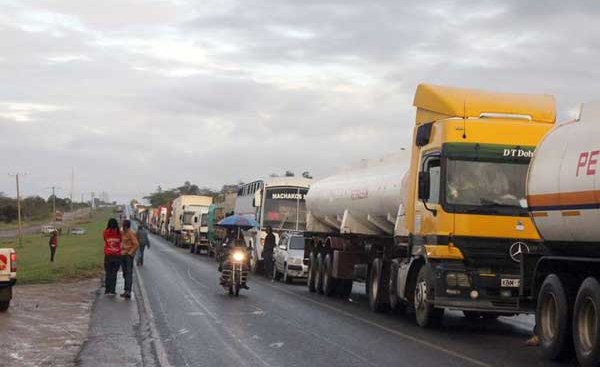
It is estimated that of 96% of goods from the Port of Mombasa are transported by road leaving the remaining percentage to be through the railway mode, inland waterways and pipelines.

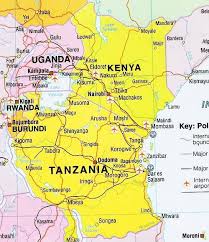
NCTTCA member countries include Kenya, Uganda, Rwanda, Burundi, South Sudan and the DR Congo.

NCTTCA oversees the corridor monitoring framework known as Northern Corridor Transport Observatory, which is a performance monitoring tool that informs interventions geared towards reducing costs and delays of transportation and other related logistic a, challenges.

Traffic on the Nortthern Corridor in Kenya

With the new financing, the Authority will improve monitoring of the Northern Corridor performance with regards to movement of people and goods.

It will adopt modern technologies, including mobile based and online systems, to enhance its capability to monitor trade and transport flows, bottlenecks and impact of interventions.

Data collected will support evidence-based advocacy and decision making. This initiative will complement monitoring the implementation of the Mombasa Port Charter.

NCTTCA collects data from over 20 stakeholders in all the member countries, the contributors being revenue authorities, roads authorities, ports and railway authorities, transport associations and private sector institutions closely affiliated to trade and transport.

An alternative transport network serving the landlocked Great lakes region is through Tanzania, in the Central Corridor. The 1,400 km-long corridor uses lake transport on the Lake Tanganyika to Kigoma in Tanzania, and then road or rail to Dar-Es-Salaam on the Indian Ocean.


Stories Continues after ad

UK MP implores Museveni to quit

Paul William

The United Kingdom Member of Parliament (MP) for Stockton South Dr. Paul Williams has urged President Yoweri Museveni to leave power, saying that the Ugandan leader is ‘a barrier’ to development.

Dr. Williams asked the UK International Development Secretary Penny Mordaunt to use the Commonwealth Heads of Government Meeting (CHOGM) to tell President Museveni that it’s time to go. President Museveni is in United Kingdom for the 25th Commonwealth Heads of Governments Meetings (CHOGM)

According to Dr. Williams, Museveni has been in power since 1986 and one of the good governance pointers includes the President leaving office.

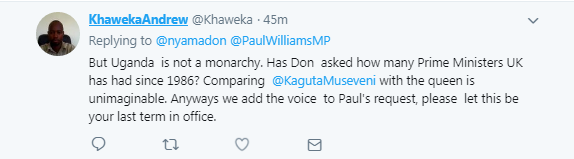
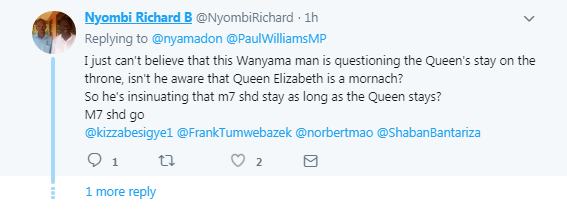
However, Dr. Williams has thrown a spanner in the wheels of this prickly issue, presidential press secretary Don Wanyama taking to social media and saying: “Dr. Paul Williams still possesses a colonial mentality where he thinks Western metropolis should determine what happens in Africa.”

Mr. Wanyama added: “Paul Williams show Ugandans some respect. We know what’s best for us. Have you stopped to ask how long the Queen has been on the throne?”

In his reply Dr. Williams wrote: “Still? I wasn’t even born when there were colonies. Nope – it’s just about good governance and telling millions of Ugandans that the world is with them.”

Immediately after tweeting, Wanyama replied saying, “you might want to know that president Museveni was voted by millions of Ugandans. I guess from your perspective they don’t count. You have no right to stand on imaginary Mt Sinai and issue edicts to us. We might have failed on colonialism but we shall resist neo-colonialism.”

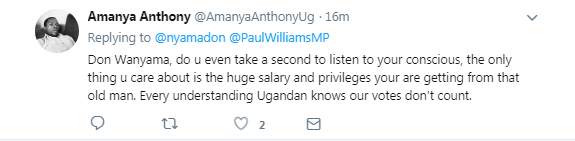
However, Wanyama’s exchanges attracted mix reactions from Ugandans.

Ivan Okuda: If a 3rd world country can’t breathe without foreign aid as we saw with Uganda when donor aid was withdrawn following the anti-gay law debacle, shouldn’t Paul whose tax his government uses to sustain basic social services and development projects here have a say? He should! Everyday! Louder!

Don Wanyama: Oh! What you call foreign aid is actually recovery of what was stolen from us during the exploitation ages. Can Belgium give aid to Congo? C’mmon!

Kevin Martin: Replying to @nyamadon and @PaulWilliamsMP We all believe in change and change is inevitable. We need to have a Constitution not bent to the will of individuals and give chance for the peoples voice to be heard. The economy and country are in dire need of a new direction #CallForChange


Stories Continues after ad

Coca-Cola celebrates success of 2000 jobs for youths

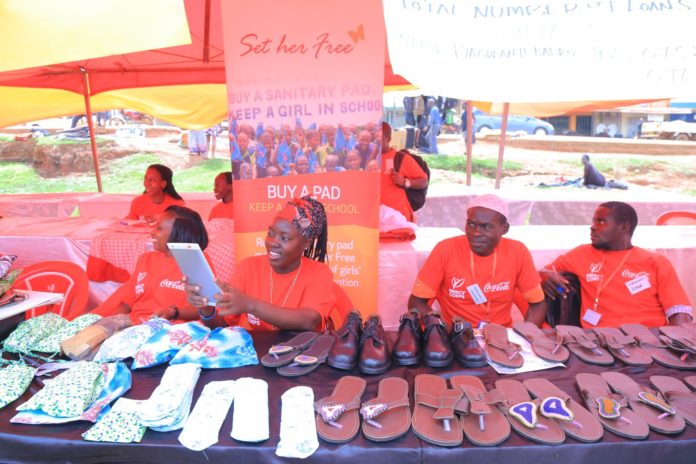
The youths from Kawempe and Wakiso exhibit some of their work

Coca-Cola Africa Foundation and Century Bottling Company together with Mercy Corps are celebrating the benefits of the YES! Initiative, which skills youths in a bid to fight unemployment.

Launched in 2015, the three-year program has provided training and links to both employment and entrepreneurship opportunities for over 2000 youths in Kawempe Division, Kampala and parts of Wakiso District.

The project used community-run ‘YES HUBS’ which offered training focused on job readiness, life and technical skills and financial literacy and provided the youth with the opportunity to join peer networking and savings groups.

Together with other private sector partners, YES! created opportunities for youth to realize new and more secure livelihood opportunities.

Speaking on behalf of the Coca-Cola system in Uganda, Maureen Kyomuhendo, the Public Affairs and Communications Manager Coca-Cola Beverages Africa Uganda noted that youth employment is the bedrock of long-term economic health, social cohesiveness and sustainability around the world.

“While 10-12 million young Africans enter the workforce each year, less than half this number of employment opportunities are available. Against this backdrop, The Coca-Cola Africa Foundation (TCCAF) partnered with Mercy Corps and other partners in different Countries to launch the Youth Empowered for Success (YES!) Program; a bold initiative that has enabled youth across Africa to access new economic opportunities including jobs, skills training, mentorship and financial services. In Uganda, we are excited to be celebrating over 2000 youth in the 1st three years of the project,” Ms. Kyomuhendo noted.

In his message, Conrad van Niekerk, the Managing Director Coca-Cola Beverages Africa Uganda commented: “I would like to applaud our partners – Mercy Corps and the youth here in Kawempe & Wakiso that participated in the program for demonstrating to the World that youth empowerment can be achieved. Seeing what the youth have showcased today – a lot of effort was put in through their hubs”.

The end game, which is about driving economies and promoting a positive narrative around youth as entrepreneurs, innovators, economic leaders, and employers has been achieved.

The challenge is to ensure that the empowerment will have a lasting ripple effect across their families, communities, businesses, countries, and globally – which is what Coca-Cola seeks to do”.

On our part, we shall continue to identify and embrace opportunities which will empower more youth, he concluded.

Mercy Corps thanked The Coca-Cola Africa Foundation and Century Bottling Company for the partnership, with Sean Granville- Ross, the Mercy Corps Regional Director, overwhelmed by the accomplishment of the youth beneficiaries.

He applauded the commitment of all the partners and invited everyone to learn, mingle, network, engage and be inspired by all that can be accomplished when youth, the private sector and communities come together to create a brighter future.

Different youth groups, in their ‘hubs’ showcased their businesses and skills that they attained through the YES! Program.

Stories Continues after ad

Uganda tea exports increase by 12 percent

Tea ready for export

Uganda’s tea exports increased 12.4 percent in April 2018 to reach 839,824kgs up from 747,003 kgs exported in the same month last year, according to the latest East African Tea Export Auction report.


However, despite an increase in supply, prices increased to US$1.6 (Shs5, 808) up from US$1.3 (Shs4, 700) per kg.

Tea prices, according to the players in the tea industry, have been stable in the last three-years, even though they expect some increase in the near future.


Regionally, tea exports at the Mombasa Auction have increased, according to the East African Tea Export Auctions report that was released after tea auctions held between April 9 and 10.

All the other five EAC countries of Kenya, Rwanda, Burundi, Tanzania and Mozambique registered a growth in exports at the tea auction. The increase, the report says, is attributed to the growth in demand and a rise in the production of the crop.

According to the report more than 7.4m kgs were sold up from 6.4 million bags sold around the same time last year. This indicates an increase of 8.2 per cent.

The other countries, including DR Congo, Malawi, Madagascar and Ethiopia registered no trade.

According to the report, Kenya exported 5.7m kgs compared to 5.4m kgs it exported last year.

Rwanda, Burundi and Tanzania exported 401,000kgs, 196,632kgs and 280,496 kgs, respectively.  Mozambique exported 25,772 kgs up from 8,408kgs indicating a 67 per cent increase.

The weekly tea auction in Mombasa is an important reference point for the global tea industry. It takes place on Mondays and Tuesdays for secondary and primary grades respectively.

In the auction, the teas are sold under the factory marks (gardens) and sorted into the various leaf size known as grades. Each batch of a single leaf grade is given a unique invoice number before being packed into a standard paper sacks.

And each tea factory is represented by a selling broker who is responsible for cataloguing the teas for sale. The buyers in the auction are categorized differently.

Those that buy and ship individual lots on client’s orders, those who buy teas for blending and the ones that buy on their accounts either for stock or trading.


Stories Continues after ad

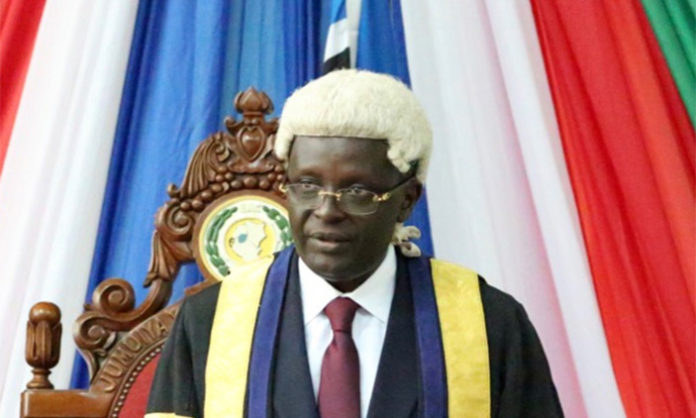
EALA passes Oaths Bill with amendments

EALA Speaker Martin Ngoga

The East African Legislative Assembly (EALA) late yesterday extensively debated and passed the East African Community Oaths Bill, 2018, paving way for employees of the Community and persons giving evidence before the East African Court of Justice, the Assembly and related quasi bodies to swear oath of affirmation.

The debate, which resumed following its interruption on March 15, 2018, was preceded by the presentation to the House of the Report of the Committee on Legal Rules and Privileges Committee by Chairperson, Fatuma Ndangiza (Rwanda).

At debate, the Assembly stated the Bill lacked provisions for sanctioning individuals who violate the oath or affirmation, lie under oath or disclose pertinent and confidential information and called for the Committee on Legal, Rules and Privileges in consultation with the Chairperson of the Council of Ministers to include the requisite penal provisions.

The EAC Oaths Bill, 2018 is important to the Community because it legislates for the oaths or affirmation to be taken by people employed by or provides service to the Community, as well as to individuals giving evidence before the East African Court of Justice, the Committee of the East African Legislative Assembly and Quasi-Judicial Bodies of the Community.

According to Article 72 (1) of the Treaty for the Establishment of the East African Community, requires all staff of the Community to pay allegiance to the Community and provides in part that “in the performance of their functions, that staff of the Community shall not seek or receive instruction from any Partner State of from any other authority external to the Community.

The report observes that the laws providing for oaths do not ordinarily provide for sanctions against the breach of the oath or affirmation. Members further observed that penalties for breach of confidentiality or secrecy are usually provided for by either the penal or criminal laws of a jurisdiction or specifically provided for in laws relating to protection of confidentiality or secrecy.

The Oaths Bill, 2018 seeks to provide for the obligation to take oaths or affirmation and to prescribe the actual oaths or affirmations. To include sanctions in the Bill would be going into territory that should be the subject of another law on confidentiality, it adds.

The report notes that until a specific law on confidentiality information or secrecy is developed, there are other laws in the Community and in the Partner States that may be used to punish those that breach confidentiality, including the EAC Staff Rules and Regulations, Rules of Procedure of the East African Court of Justice, the East African Legislative Assembly (Powers and Privileges) Act, 2003 and the Rules of Procedure of the East African Legislative Assembly.

Stories Continues after ad